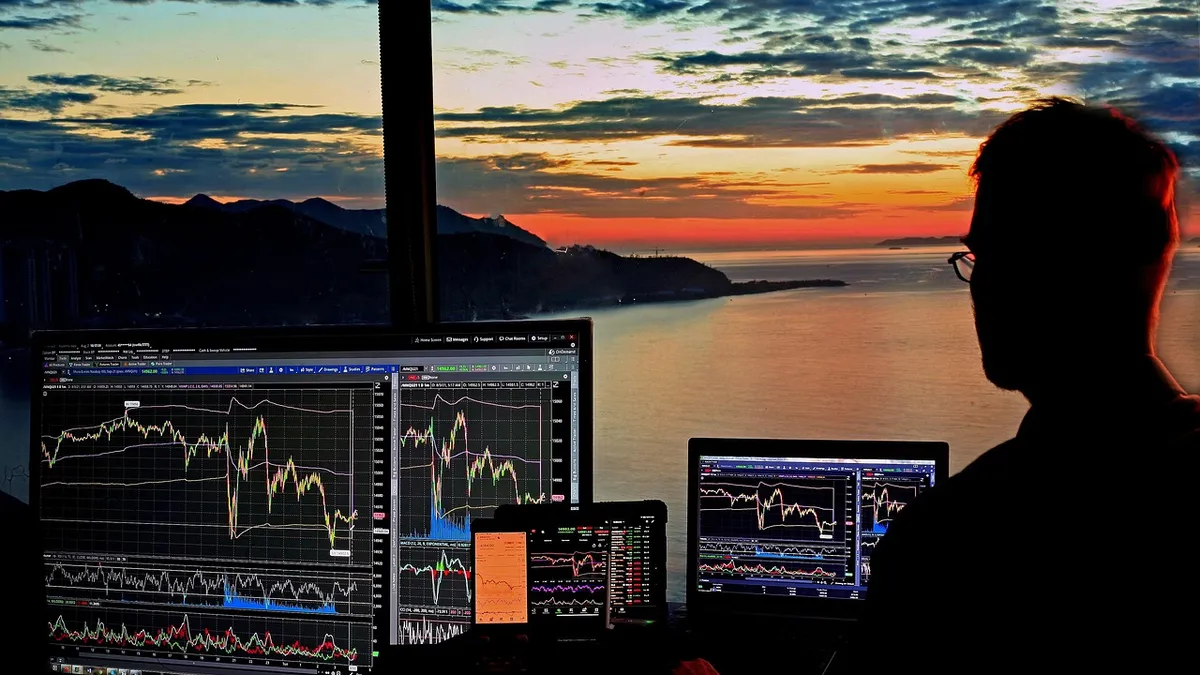
Trading signals explained simply: they are alerts that tell you when to buy or sell a financial instrument, based on technical analysis, market data, or a provider’s strategy — so you are not staring at charts alone at midnight trying to guess what the market will do next. At Crazii JTVertex, we work directly with Australian traders who are taking their first serious steps into the market, and this guide on trading signals explained for Australian beginners in 2026 draws on real experience — not textbook theory. By the time you finish reading, you will know exactly what a trading signal is, how to read one, which mistakes to avoid, and how to decide whether signals are the right tool for where you are right now.
Note: This article is general information only and does not constitute personal financial advice. Trading CFDs, forex, and other leveraged products carries significant risk of loss. Please consider your own financial circumstances and read all relevant Product Disclosure Statements before acting on any information here. If in doubt, speak with a licensed financial adviser.
Not sure where to start with trading tools?
Crazii JTVertex helps Australian beginners build a clear, structured path — starting with the right tools before choosing a platform.
See how we can helpTable of contents
- 01 What are trading signals and how do they actually work?
- 02 What types of trading signals do Australian beginners encounter?
- 03 How do you read a trading signal without getting it wrong?
- 04 What are the biggest mistakes beginners make with trading signals?
- 05 How do trading signals fit into an Australian beginner’s strategy in 2026?
- 06 Frequently asked questions about trading signals for beginners
What are trading signals and how do they actually work?
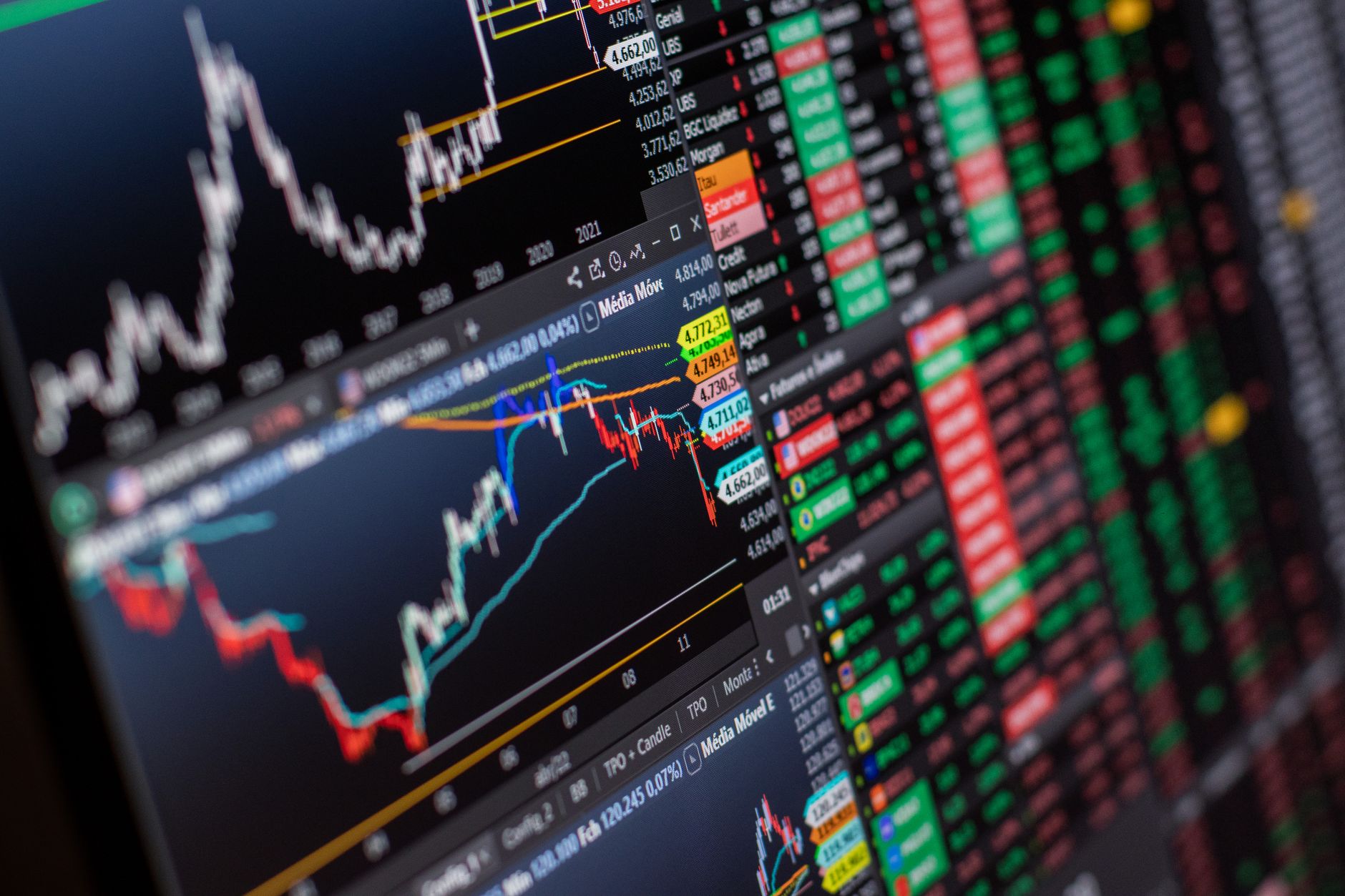
Key points: A trading signal is an alert — generated by a system, analyst, or algorithm — that suggests a specific trade action: buy, sell, or hold. It typically includes an entry price, a stop-loss level, and a take-profit target, giving you a structured decision rather than a gut feeling.
The evidence: According to ASIC’s Report 828 (published January 2026, covering FY2023–24), 26,243 retail clients in Australia used copy-trading services — a format that automates signal execution entirely. That is a meaningful number, but it also means the vast majority of retail traders are still making execution decisions manually. Signals are the bridge between analysis and action, and most Australians are crossing that bridge on foot.
Expert tip: Crazii JTVertex looks at one thing before trusting any signal source: the trade history log, not the win-rate headline. A provider claiming 80% accuracy with only 12 trades recorded is meaningless. We personally will not take a signal source seriously until it has at least 100 completed trades in its history — and even then, we checks whether those trades were taken during trending markets only, because signals that only fire in one market condition will leave you stranded the moment conditions shift.
Signal fires
The provider’s system detects conditions that match its strategy rules and sends an alert to subscribers.
You receive the alert
Via Telegram, email, app notification, or directly inside MetaTrader — depending on the provider’s delivery method.
You evaluate and decide
You check the entry price is still valid (signals go stale fast), confirm your risk parameters, and choose to act or pass.
You manage the trade
You set your stop-loss and take-profit as indicated, then monitor — not obsessively, but with a clear exit plan already in place.
What types of trading signals do Australian beginners encounter?
Key points: Trading signals fall into four main categories — manual (analyst-generated), automated (algorithm-driven), copy-trading (auto-executed), and social signals (community-sourced). Each carries a different risk profile, time demand, and learning curve. Knowing which type you are using changes how you should evaluate and act on it.
Want to see which signal tools Australian traders are actually using?
The best trading signals and tools for Australian traders in 2026 are covered in depth in our pillar guide — with real comparisons, not sponsored rankings.
Read the full guideThe evidence: ASIC’s Report 828 notes that 74% of retail clients acquired via paid online advertising lost money in FY2023–24 — worse than the already-sobering sector average of 68%. That tells you something important: the flashiest, most-marketed signal services are not the safest ones to follow.
Expert tip: We has seen traders subscribe to five different Telegram signal channels simultaneously, thinking more signals means more opportunities. What actually happens is signal conflict — one channel says buy EUR/USD, another says sell it, and the trader freezes or, worse, takes both trades and hedges themselves into a fee-heavy standstill. Pick one source. Understand it fully. Then decide whether it earns a place in your process.
| Signal Type | Who generates it | Execution | Best suited for | Key risk |
|---|---|---|---|---|
| Manual (analyst) | Human trader/analyst | You act manually | Learners who want context | Inconsistency, delay |
| Automated (algo) | Algorithm/system | You act manually or via EA | Those who want speed and consistency | Overfitting to past data |
| Copy trading | Lead trader | Auto-executed in your account | Those with limited time | No learning, blind reliance |
| Social signals | Community members | You act manually | Experienced traders cross-checking ideas | No accountability, no track record |
How do you read a trading signal without getting it wrong?

Key points: Every valid trading signal contains four core components — the instrument, the direction, the entry price, the stop-loss, and the take-profit. Missing or ignoring any one of these turns a structured trade idea into a gamble. Reading a signal correctly means checking all five components before touching the execute button.
The evidence: ASIC’s Report 828 found that among active retail traders — those with 50 or more open positions per month — 19% of those who would otherwise have been profitable ended up losing money after fees in FY2023–24. Think about what that means: more trades, more fees, worse outcomes. Reading a signal correctly includes deciding when not to trade it.
Expert tip: Crazii JTVertex uses a simple filter before acting on any signal: if the current spread on the instrument is more than 20% of the signal’s stop-loss distance, we passes on the trade. For example, if the stop is 20 pips away and the spread is 5 pips, you are already 25% of the way to your stop before the trade even opens. Most beginners never calculate this. It is one of the quieter ways fees erode profitability — and it is exactly what ASIC’s data shows at scale.
Ready to see the best signal tools available to Australian traders?
Crazii JTVertex has reviewed and ranked the top platforms — so you can compare before you commit to anything.
See the top signal appsWhat are the biggest mistakes beginners make with trading signals?

Key points: The three most damaging mistakes Australian beginners make with trading signals are: following signals without understanding the underlying logic, ignoring position sizing and treating every signal as an equal bet, and chasing win-rate without examining drawdown. All three are fixable — but only if you know they exist.
When you do not understand why a signal was generated, you cannot evaluate whether it is still valid by the time it reaches you. You also cannot learn from it. Blind following creates dependency — and dependency is the opposite of becoming a capable trader. Ask every provider: what is the underlying strategy? If they cannot or will not answer, that tells you everything.
A signal that says “BUY gold” does not tell you how much to risk. That decision is yours. Beginners often risk the same dollar amount on every trade regardless of the stop-loss distance — which means a wide-stop signal carries far more risk than a tight-stop signal even though they feel identical. Position sizing is not optional. It is the difference between a losing streak and an account wipeout.
A provider with a 78% win-rate sounds impressive. But if their average loss is three times their average win, they are mathematically losing money over time — and so are you. Always ask for the average risk-to-reward ratio alongside the win-rate. A 50% win-rate with a 2:1 reward-to-risk ratio outperforms a 78% win-rate with a 1:3 ratio every single time.
The evidence: ASIC’s Report 828 reports that 133,674 retail clients lost money in FY2023–24, with net losses exceeding $458 million — of which $73 million was fees alone. To put that in terms you can feel: $73 million in fees means the average losing client paid roughly $546 in fees on top of their trading losses. Fees are not a footnote. They are a structural drag that signals cannot overcome if your position sizing and provider selection are off.
Expert tip: We once followed a signal provider for three weeks with a strong win-rate, then watched the account drawdown 22% in a single session when the provider held a losing trade through a major news event without a stop-loss. The lesson: always check whether the provider’s historical signals include stop-losses on every trade. If there are trades in their history with no defined exit, that is a red flag we will not ignore again. Personally, we treats any drawdown above 20% in a signal provider’s history as a disqualifying factor — not as a statistic, but as a personal heuristic based on that experience.
How do trading signals fit into an Australian beginner’s strategy in 2026?
Key points: Trading signals are a tool, not a strategy. For Australian beginners in 2026, the right sequence is: choose the right tools first, then select a trading platform, then integrate signals into a defined process. Signals work best as a learning accelerator and a decision-support layer — not as a replacement for your own understanding of the market.
The evidence: The Australian CFD client base contracted significantly following ASIC’s product intervention measures — from approximately 515,000 active clients per quarter pre-intervention to around 119,300 active clients per quarter in FY2023–24. That 76% reduction reflects a more serious, more informed retail trading population. The casual, FOMO-driven trader has largely exited the market. The ones who remain are building real processes.
Expert tip: Crazii JTVertex treats signals as a second opinion, not a first opinion. Before acting on any signal, we checks whether the trade makes sense on a higher timeframe chart. If a 15-minute signal says buy, but the daily chart shows a clear downtrend, we passes — regardless of how good the signal looks in isolation. This single filter has saved more losing trades than any other habit we has built. It takes 90 seconds. Most beginners never do it.
Frequently asked questions about trading signals for beginners
Key points: The questions below are the ones Australian beginners ask most often about trading signals — answered directly, without padding. If your question is not here, the contact page at Crazii JTVertex is the fastest way to get a real answer.
Are trading signals legal in Australia?
Yes, using trading signals is legal in Australia. However, providers who charge for signals and manage trades on your behalf may require an Australian Financial Services (AFS) licence. Always check whether a paid signal provider is ASIC-authorised before subscribing. Using signals to inform your own manual trading decisions does not require a licence on your part.
Do trading signals work for complete beginners?
They can — but only if you understand what the signal is telling you and why. Signals used without understanding create dependency, not skill. The most effective use of signals for beginners is as a learning tool: receive the signal, study the chart, understand the reasoning, then decide. Over time, you develop your own judgement alongside the signal’s guidance.
How many trading signals should a beginner follow per day?
Fewer than you think. ASIC’s data shows that more active traders — those with 50 or more positions per month — faced worse net outcomes after fees in FY2023–24. For beginners, one to three well-understood signals per day is a more sustainable starting point than chasing every alert. Quality of execution matters more than quantity of trades.
What is the difference between a trading signal and copy trading?
A trading signal is an alert you receive and act on manually. Copy trading automates that step — when the signal provider opens a trade, it opens automatically in your account at a proportional size. Copy trading removes the execution decision but also removes the learning. Signals keep you in the decision loop. For beginners who want to develop skills, manual signals are the better starting point.
Can I trust free trading signals?
Some free signals are genuinely useful — MetaTrader’s MQL5 marketplace lists over 3,200 signal providers, many with verifiable track records. Others are loss leaders designed to upsell you into paid services or affiliate products. The question is not whether a signal is free or paid — it is whether the provider shows a transparent, audited trade history with clearly defined stop-losses on every trade.
Have a specific question about signals or getting started?
Crazii JTVertex offers direct support for Australian traders — no automated responses, no sales scripts.
Get in touch directly
Leave a Reply