
The best crypto buy sell signals cut through the noise of volatile markets by giving you a structured, rules-based entry and exit point — so you stop trading on gut feeling and start trading on evidence. At Crazii JTVertex, we’ve spent years working with Australian retail traders who came to us after making the same costly mistake: letting emotion call the shots. This guide on best crypto buy sell signals that remove emotional guesswork will show you exactly how to read, evaluate, and act on signals without second-guessing yourself at 2 am. By the time you finish reading, you’ll have a clear framework for choosing signals that match your risk tolerance — and you’ll know the three red flags that quietly drain accounts before traders even notice them.
Important note: This article is general information only and does not constitute personal financial advice. Crypto and CFD trading carries significant risk of loss. Please consider your own financial circumstances and read all relevant disclosure documents before trading. Past performance of any signal is not a reliable indicator of future results.
Ready to trade with a structured edge?
Crazii JTVertex connects Australian traders with curated signal tools and a community that holds you accountable — not just hype.
Join Crazii NowTable of contents
- 01 What Are Crypto Buy Sell Signals and How Do They Actually Work?
- 02 Why Do the Best Crypto Buy Sell Signals Outperform Emotional Trading?
- 03 How to Evaluate a Crypto Signal Provider Before You Risk a Dollar
- 04 The 3 Biggest Mistakes Traders Make With Crypto Buy and Sell Signals
- 05 Which Crypto Signal Tools Work Best for Australian Retail Traders?
- 06 Frequently Asked Questions About Crypto Buy and Sell Signals
What Are Crypto Buy Sell Signals and How Do They Actually Work?

Key points: Crypto buy sell signals are rule-based alerts — generated by technical indicators, algorithms, or analyst review — that tell you when conditions favour entering or exiting a position. They remove the need to interpret raw charts yourself, replacing guesswork with a repeatable decision trigger.
The evidence: According to ASIC’s Report 828 (published January 2026, covering FY2023–24), 68% of Australian retail CFD clients lost money — 133,674 people, with net losses exceeding $458 million in a single financial year. That figure includes $73 million in fees. The implication is stark: the majority of retail traders are making decisions that consistently cost them money, and fees compound the damage even for those who would otherwise break even.
Expert tip from Crazii JTVertex: The first signal system I ever built had seven conditions before it would fire. It barely triggered. Then I stripped it back to three conditions and the win rate dropped because I’d removed the filters that mattered most. The lesson: more conditions isn’t always better, but the right two or three conditions — particularly one that confirms trend direction and one that confirms momentum — outperform a dozen loosely related indicators stacked together. If your signal fires more than twice a day on a single asset, something is probably miscalibrated.
Identify the signal type
Determine whether the signal is indicator-based (RSI, MACD, Bollinger Bands), pattern-based (breakout, reversal), or sentiment-based (on-chain data, social volume). Each type works differently across market conditions.
Check the confirmation layer
A single-indicator signal is a suggestion. Two confirming indicators pointing the same direction is a signal worth considering. Three is worth acting on — provided risk parameters are set first.
Define entry, stop-loss, and target before you open the position
This is where emotion gets evicted. If you write down your exit before you enter, the decision is made in a calm state — not mid-candle when adrenaline is making the call.
Why Do the Best Crypto Buy Sell Signals Outperform Emotional Trading?

Get structured crypto signal access through Crazii
Stop trading on instinct. Crazii JTVertex gives you access to curated tools and a community of traders who use rules-based systems — not emotion.
Access Signal ToolsKey points: Emotional trading creates inconsistent decision-making — the same chart pattern triggers a buy on Monday and a freeze on Thursday, depending on how the trader feels. Rules-based signals enforce consistency by removing the human mood variable from the equation, which is the single biggest edge available to retail traders.
The evidence: ASIC’s Report 828 found that 5% of retail clients would have made a net profit but ended up in a loss position solely because of fees. Fees flipped one in twenty otherwise-profitable traders into the red — without a single bad trade decision involved.
Expert tip from Crazii JTVertex: I tracked my own trade journal for three months and found that 70% of my losing trades happened within the first 20 minutes after a major news event. Not because the signal was wrong — because I was overriding the signal with a “feeling” about where the market was heading. The fix was simple but uncomfortable: a self-imposed 20-minute no-trade window after any high-impact event. It’s not in any textbook. It’s just what the data from my own account showed me.
How to Evaluate a Crypto Signal Provider Before You Risk a Dollar
Key points: A credible crypto signal provider shows a verified track record of at least 100 completed trades, discloses drawdown figures alongside win rates, and does not promise guaranteed returns. Any provider that cannot show you a transparent trade history with losses included is not worth your time or capital.
The evidence: MetaQuotes’ MetaTrader platform hosts over 3,200 free and commercial signal providers through its built-in marketplace (MQL5, accessed June 2026). Scale is not the same as quality — but the volume means that verifiable track records exist and can be compared directly on the platform before you subscribe to anything.
| Evaluation Criterion | Red Flag | Green Flag |
|---|---|---|
| Trade history volume | Fewer than 50 completed trades | 100+ completed trades, full history visible |
| Win rate presentation | Win rate only, no loss data | Win rate + average risk-reward ratio disclosed |
| Drawdown disclosure | Not mentioned or hidden | Maximum drawdown stated with recovery period |
| Return claims | “Guaranteed profits” or specific % returns promised | Historical results shown with risk disclaimer |
| Fee transparency | Fees buried or undisclosed | All subscription and per-trade costs stated upfront |
Expert tip from Crazii JTVertex: One thing we always check that almost nobody else does: the signal provider’s performance during a sideways, low-volatility period. Any system can look good in a trending market. The ones worth following are the ones that either stayed flat or had a clearly defined “no signal” protocol during choppy conditions — rather than forcing trades and bleeding out slowly. If you can’t find data from a consolidation period in their history, ask for it directly. Their response tells you everything.
The 3 Biggest Mistakes Traders Make With Crypto Buy and Sell Signals

Use signals the right way from day one
The AIMS platform gives Australian traders a structured environment to act on signals with proper risk controls built in — not bolted on later.
Open an AIMS AccountKey points: The three most common signal mistakes are: following signals without a stop-loss, over-leveraging because the signal “looks certain,” and abandoning a valid signal system after a losing streak that falls within normal drawdown parameters. Each mistake is emotionally driven, not analytically driven.
A signal tells you when to enter. It does not protect you if the market moves against you. Traders who follow buy signals without placing a stop-loss are essentially driving without a seatbelt — the signal worked fine, but the risk management was missing. Every signal entry needs a defined exit on the downside before the position opens. This is non-negotiable, not optional.
This is where emotional trading sneaks back in through the side door. A trader receives a high-confidence signal and decides to increase position size beyond their normal risk parameters because “this one looks different.” ASIC’s data shows that 85% of retail clients lost money trading options CFDs in FY2023–24 — a product class where leverage amplifies both gains and losses. The signal quality doesn’t change the mathematics of leverage. A 20% drawdown on a 5x leveraged position is a 100% account loss.
Every signal system has losing periods. A system with a genuine long-term edge will still produce losing streaks of five, seven, even ten trades in a row — that’s statistically normal. Most retail traders interpret a losing streak as evidence that “the signals stopped working” and switch to a different provider, starting the cycle again. Daniel from Brisbane did exactly this three times before he understood that the system wasn’t broken — his expectation of it was. Switching systems during drawdown locks in the loss and resets the clock on any edge you were building.
The evidence: Among Australian retail CFD clients acquired through paid online advertising, 74% lost money in FY2023–24 — worse than the sector average of 68% (ASIC, Report 828, January 2026). Traders who arrive via hype-driven channels tend to have higher expectations and lower preparation. The entry point matters as much as the tool.
Which Crypto Signal Tools Work Best for Australian Retail Traders?
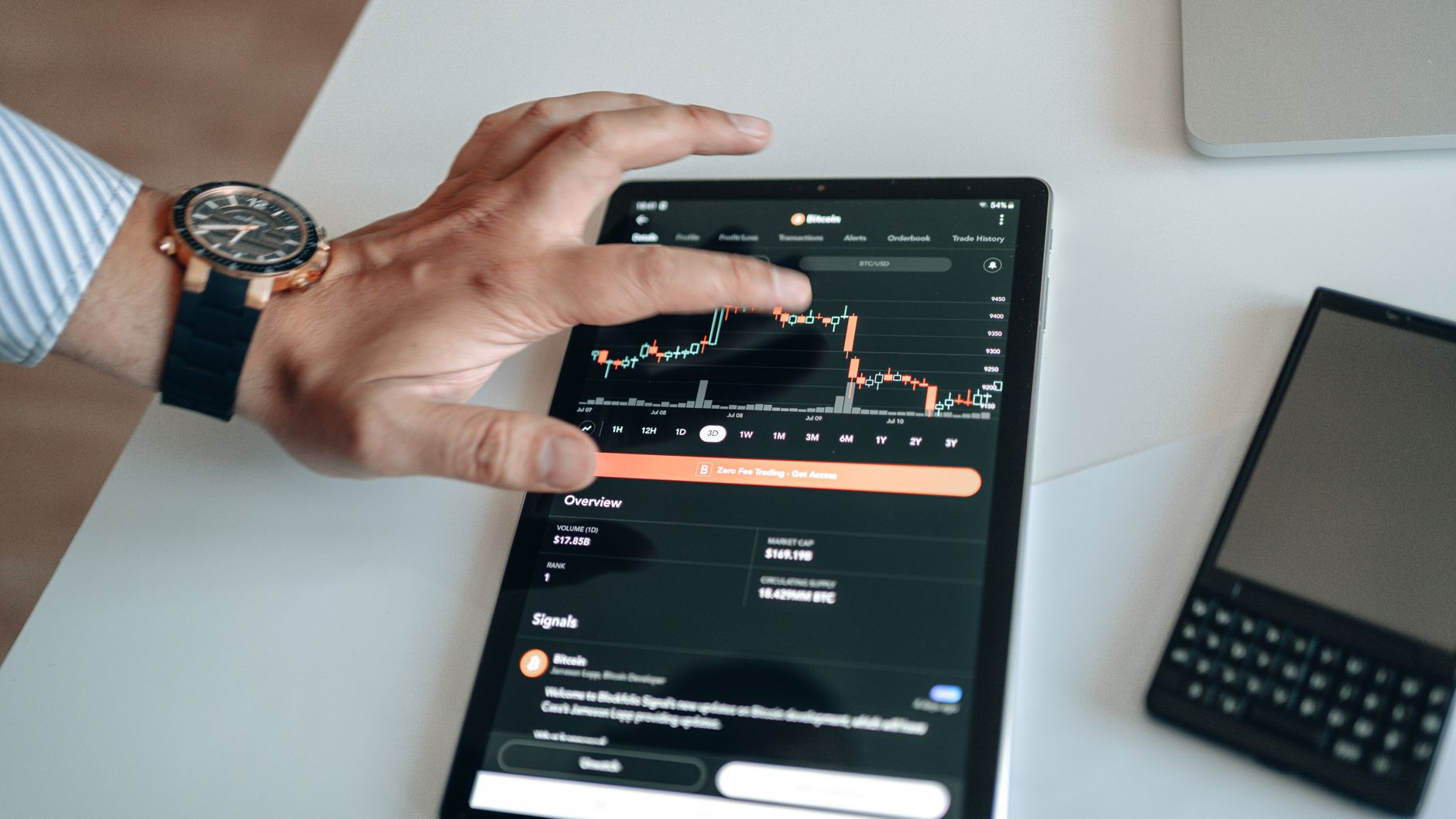
Key points: For Australian retail traders, the most practical crypto signal tools combine accessibility (available during AEST trading hours), transparent track records, and integration with ASIC-aware platforms. MetaTrader’s signal marketplace, curated Telegram channels with verified history, and structured copy-trading platforms each serve different experience levels and risk profiles.
| Signal Tool Type | Best For | Key Advantage | Watch Out For |
|---|---|---|---|
| MetaTrader Signal Marketplace | Traders already using MT4/MT5 | Verified track record, 3,200+ providers, direct copy execution | Quality varies enormously — filter by minimum 100 trades |
| Curated Telegram Signal Channels | Traders wanting community context | Real-time alerts, analyst commentary, community discussion | Unverified providers are common — check history before following |
| Indicator-Based Platform Alerts | Self-directed traders building their own system | Full control over parameters, no subscription dependency | Requires technical knowledge to set up correctly |
| Copy Trading Platforms | Beginners wanting automated execution | Removes manual execution error, follows verified trader | ASIC notes 26,243 retail clients used copy trading in FY2023–24 — growth area but still high-risk |
Expert tip from Crazii JTVertex: We always tell traders to paper-trade a new signal system for at least four weeks before committing real capital. Not because the signal needs proving — but because you need to prove to yourself that you can follow it when it gives you a loss. The traders who skip this step are the ones who abandon systems at exactly the wrong moment. Four weeks of paper trading costs you nothing and shows you everything about your own psychology under pressure.

Frequently Asked Questions About Crypto Buy and Sell Signals

Key points: The most common questions about crypto buy sell signals centre on accuracy, cost, legality in Australia, how to start safely, and whether signals work in bear markets. Each answer below is grounded in the actual mechanics of how signals function — not marketing claims.
Are crypto buy sell signals legal for Australian traders?
Yes. Using crypto signals as a trading tool is legal in Australia. However, if a signal provider is giving personalised financial advice (rather than general market information), they may need to hold an Australian Financial Services Licence. Always check whether the provider is ASIC-registered if they are making specific recommendations about your capital.
How accurate are the best crypto buy sell signals?
No signal is accurate 100% of the time — any provider claiming otherwise is misleading you. A well-constructed signal system with a genuine edge might achieve a 55–65% win rate with a favourable risk-reward ratio. The accuracy that matters is not win percentage alone, but expected value per trade over a statistically meaningful sample of completed trades.
Can crypto signals work in a bear market?
Some can. Signals built on trend-following logic tend to underperform in sideways or choppy conditions but can capture short-side moves in a sustained downtrend. The key is knowing what market regime your signal system was designed for — and not using it outside those conditions. A signal provider with a transparent bear-market track record is worth significantly more than one with only bull-market data.
Do I need to be an experienced trader to use crypto buy sell signals?
No — but you do need to understand basic risk management before you act on any signal. Knowing how to set a stop-loss, understanding position sizing relative to your account, and having a realistic expectation of drawdown are the minimum requirements. Signals reduce emotional error; they don’t replace foundational knowledge about how markets work.
How do fees affect the performance of crypto signal systems?
Significantly. ASIC’s Report 828 found that fees turned 5% of otherwise-profitable Australian retail traders into net losers in FY2023–24. For active traders (50+ positions per month), that figure rose to 19% of the otherwise-profitable group. A signal system that generates high trade frequency will accumulate fees quickly — always calculate your net-of-fees expected return, not the gross signal performance.
Talk to Crazii JTVertex about your signal setup
If you want a second opinion on the signal tools you’re considering — or you’re not sure where to start — join the community and ask directly. No sales pitch, just practical guidance from traders who’ve been through it.
Join the Telegram GroupImportant note: Trading crypto and CFDs involves substantial risk of loss and is not suitable for all investors. The information in this article is general in nature and does not account for your personal financial situation, objectives, or risk tolerance. Always read the Product Disclosure Statement and consider seeking independent financial advice before trading. ASIC’s MoneySmart website (moneysmart.gov.au) provides free, unbiased information for Australian retail investors.
Leave a Reply