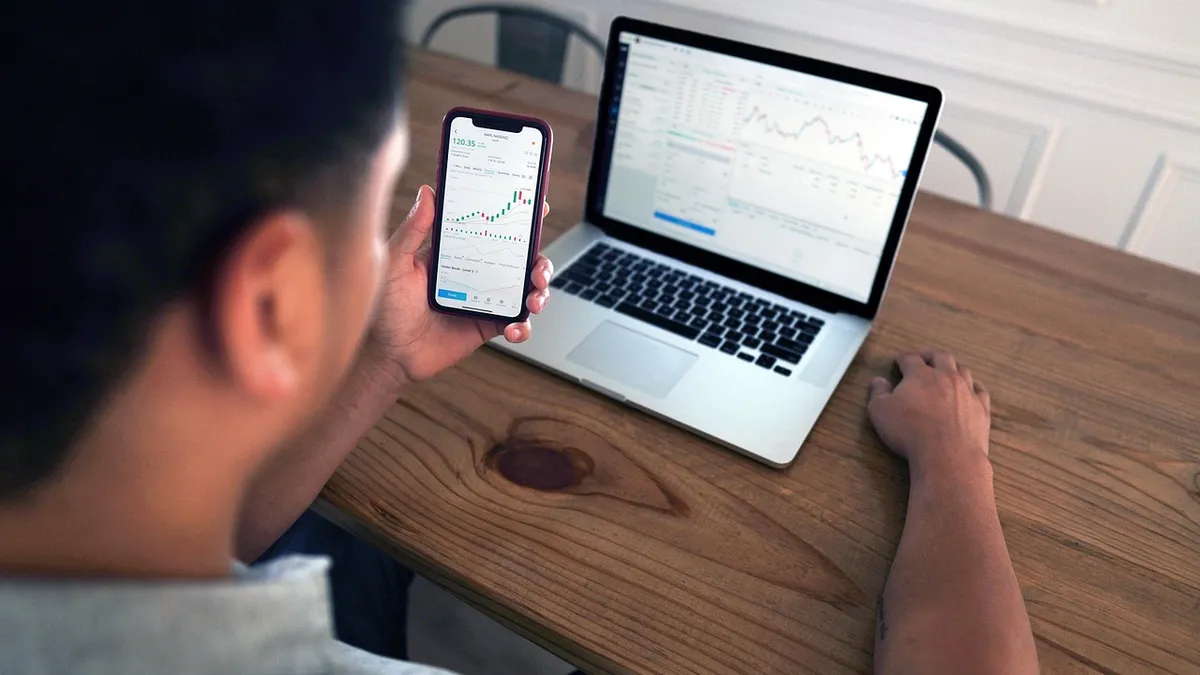
The best trading signals Discord servers give Australian traders a structured edge — but only if you know which ones are worth your time and which ones will quietly drain your account. At Crazii JTVertex, we’ve spent years inside these communities, watching what separates a genuinely useful signals server from a hype machine dressed up in professional branding. This guide on best trading signals Discord servers active traders actually trust is built on that real experience — not a list scraped from a forum. By the time you finish reading, you’ll know exactly which server types suit your trading style, what red flags to walk away from immediately, and how to evaluate any community before you risk a single dollar following their calls.
Important note: This article is general information only and does not constitute personal financial advice. Trading CFDs, forex, and other leveraged products carries significant risk of loss. Please consider your own financial circumstances and read all relevant disclosure documents before acting on any signals or information. According to ASIC Report 828, 68% of retail CFD clients in Australia lost money in FY2023–24.
Want signals that fit your actual trading schedule
Join the Crazii JTVertex community on Telegram for real-time support, trade ideas, and a group of Australian traders who actually talk through their reasoning.
Join the GroupTable of contents
- 01 What makes a trading signals Discord server worth trusting
- 02 How do Discord trading signals actually work for Australian traders
- 03 The biggest mistakes traders make when joining signals Discord servers
- 04 Comparing the best types of trading signals Discord communities
- 05 How to evaluate any Discord trading signals server before you commit
- 06 Frequently asked questions about trading signals Discord
What makes a trading signals Discord server worth trusting in 2026?
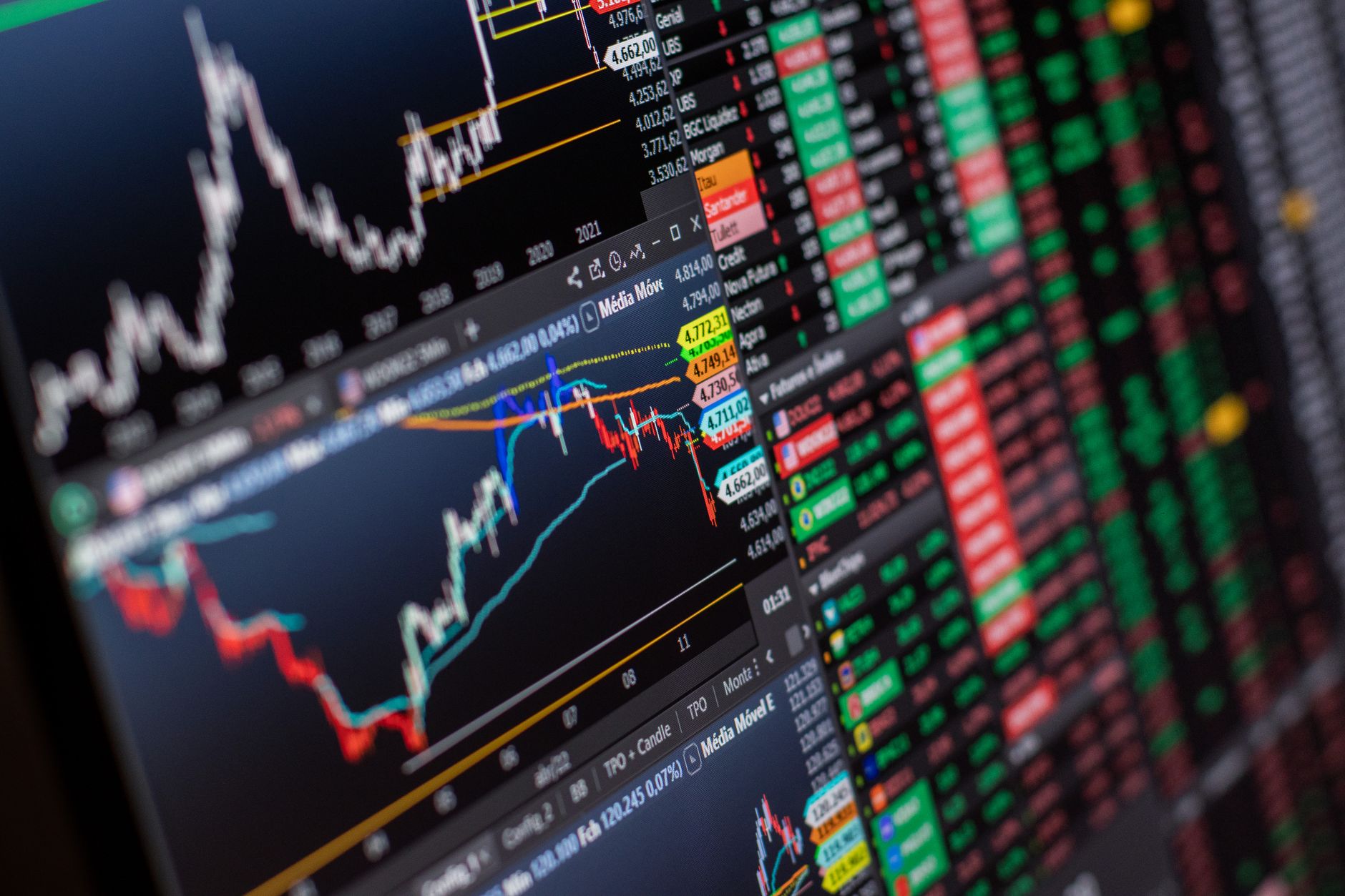
Key points: A trustworthy trading signals Discord server shows verifiable trade history, explains the reasoning behind every call, and never promises consistent profits. Transparency about losses is the single clearest signal of a legitimate community — not the win rate they advertise.
The evidence: ASIC’s Report 828 (published January 2026) found that 68% of retail CFD clients in Australia lost money in FY2023–24, with net retail losses exceeding $458 million including $73 million in fees alone. That means the market environment is genuinely difficult — and any signals server claiming to consistently beat it deserves deep scepticism. Source: ASIC Report 828, 20 January 2026.
Expert tip: Crazii JTVertex has a specific test for any signals server: ask in the public chat what their worst losing streak was in the past six months. Legitimate admins will answer without hesitation. The ones who deflect, delete your message, or pivot to their win rate — those are the ones to walk away from. It sounds simple. But in years of evaluating these communities, that one question filters out more than half of them immediately.
How do Discord trading signals actually work for Australian traders?

Key points: Discord trading signals are real-time trade alerts posted in dedicated channels, typically including entry price, stop loss, and take profit levels. For Australian traders, the key challenge is time zone alignment — most signals are built around London or New York sessions, which run from roughly 8pm to 4am AEST.
The evidence: ASIC Report 828 notes that among active traders placing 50 or more open positions per month, 19% of otherwise-profitable clients lost money after fees in FY2023–24. More activity, executed without proper timing and context, correlates with worse outcomes — not better ones. Source: ASIC Report 828, 20 January 2026.
Expert tip: We specifically looks for signals servers that post Asian-session setups — not as an afterthought, but as a core part of their coverage. The AUD/USD, AUD/JPY, and NZD/USD pairs have genuine liquidity during the Asian session, and a good signals community will have analysts who focus there. If a server’s entire coverage stops at midnight AEST, it’s not built for Australian traders regardless of what the landing page says.
Trading tools that actually suit Australian hours
Crazii JTVertex works with traders across Australia to match the right signals tools to their schedule — not the other way around.
Talk to Crazii JTVertex
What are the biggest mistakes traders make when joining Discord signals servers?

Key points: The three most damaging mistakes are following signals without understanding the reasoning, joining too many servers at once, and treating a signals community as a substitute for a trading plan. Each of these mistakes compounds the others — and together they account for most of the preventable losses in retail trading.
When you don’t know why a signal was called, you don’t know when to exit early, when to hold through a pullback, or when the original thesis has been invalidated. You’re not trading — you’re gambling on someone else’s analysis without the context to manage it. The fix is simple: only follow signals where the analyst explains the setup. If they won’t, don’t follow them.
More signals is not more edge. It’s more noise. When you’re receiving conflicting calls from three different analysts, you end up either paralysed or cherry-picking based on emotion rather than logic. We recommends picking one server, following it for a full month without deviation, and only then evaluating whether to add a second source. One signal provider done well beats four done poorly every time.
This is the expensive one. A signals server tells you what to trade. It doesn’t tell you how much to risk, how to size your position, when to stop trading for the day, or what to do when the signal conflicts with your own analysis. Without a personal trading plan sitting underneath the signals, you’re building on sand. ASIC’s data makes this concrete: 5% of retail clients in FY2023–24 would have been profitable but ended up losing solely because of fees — meaning they had the right trades but no cost-management framework around them.
Expert tip: Crazii JTVertex has a rule that might sound counterintuitive: if a signals server has more than three active trade alerts open simultaneously across different pairs, we treats that as a yellow flag. It suggests the analyst is casting a wide net rather than waiting for high-conviction setups. The best signals communities we has seen rarely have more than two live ideas at once — because real edge is selective, not prolific.
Get a clearer picture before you commit to any signals source
Crazii JTVertex offers a trading roadmap session to help Australian traders assess their current tools, signals sources, and risk management setup.
Book a Roadmap SessionComparing the best types of trading signals Discord communities — which model suits you?

Key points: Discord signals communities fall into four main models: analyst-led, algorithm-driven, copy-trading integrated, and education-first. Each suits a different trader profile. The right choice depends on your available time, current skill level, and whether you want to learn or simply execute.
| Community Type | Best For | Key Advantage | Main Risk |
|---|---|---|---|
| Analyst-led | Traders who want to learn reasoning | Context and explanation with every call | Dependent on one person’s performance |
| Algorithm-driven | Systematic traders, busy schedules | Consistent, emotion-free signal generation | No explanation; hard to evaluate edge |
| Copy-trading integrated | Traders who want automation | Removes execution lag and emotional decisions | Still carries full market risk; fees compound |
| Education-first | Developing traders building their own system | Signals teach you to eventually not need them | Slower to implement; requires active learning |
The evidence: MetaQuotes’ MQL5 platform hosts over 3,200 free and commercial trading signals available for copy trading through MetaTrader 4 and 5. The volume of options makes evaluation more important, not less — because the range of quality is enormous. Source: MetaQuotes, MQL5 Signals, accessed 16 June 2026.
Expert tip: When evaluating an algorithm-driven signals server, we ignores any performance metric based on fewer than 100 completed trades. That’s a personal heuristic, not a statistical rule — but the reasoning is straightforward: with fewer than 100 trades, a lucky streak is statistically indistinguishable from genuine edge. Ask for the full trade log, not the summary.
How do you evaluate any Discord trading signals server before you commit?
Key points: Evaluate a signals Discord server across five dimensions: trade history transparency, loss acknowledgement, session alignment with Australian hours, community culture under pressure, and fee structure relative to expected returns. Any server that scores poorly on even one of these should be treated with caution.
Request or observe a 30-day trade log before joining
Any legitimate signals community should be able to show you a running record of every signal posted in the past month — entry, exit, result, and whether the stop loss was hit. If they can only show you screenshots of winning trades, that’s your answer. A public channel with pinned results is a good sign. A PDF of cherry-picked wins is not.
Spend one week in the free tier before paying for anything
Most legitimate servers have a free or trial tier. Use it — not to get free signals, but to observe how the community operates. Watch how the admin communicates during a losing trade. Watch whether members are encouraged to ask questions or subtly discouraged from doing so. The culture of a community under stress tells you everything about whether it’s built to help you or to retain your subscription.
Check session coverage against your actual availability
Map the server’s active posting times against your schedule in AEST. If signals are consistently posted between midnight and 4am and you’re not awake or automated to receive them, the service has no practical value for you regardless of its quality. This sounds obvious. Most traders skip this step entirely and wonder why they keep missing entries.
Calculate the total cost including subscription fees against realistic returns
ASIC’s data is unambiguous: fees are a material drag on retail trading outcomes. In FY2023–24, $73 million of the $458 million in net retail losses came directly from fees — and 5% of clients who would otherwise have been profitable were pushed into a loss by fee costs alone. Before paying for any signals subscription, calculate what you’d need to make per month just to break even on the fee. If that number feels uncomfortable, it should.
Ask one hard question in the public chat
Before committing, post a genuine question about a past losing trade or ask what the server’s worst drawdown period was. The response — from both the admin and the community — will tell you more than any sales page. Communities that welcome scrutiny are the ones worth staying in.
Expert tip: We also checks whether a signals server explicitly states that their content is not personal financial advice. Under ASIC’s regulatory framework, distributing signals to retail clients without appropriate licensing carries real legal risk. A server that doesn’t include this disclaimer either doesn’t know or doesn’t care — neither is a good sign for an Australian trader operating in a regulated market.

Frequently asked questions about trading signals Discord servers
Are trading signals Discord servers legal in Australia?
Distributing financial signals to retail clients in Australia may require an Australian Financial Services Licence (AFSL) depending on how the service is structured. This is a grey area that ASIC actively monitors. Always check whether a signals provider holds an AFSL or operates under an exemption, and treat any service that avoids the question as a risk.
How many Discord trading signals servers should I follow at once?
One, ideally. Two at most if they cover different asset classes or sessions without overlapping. Following more than two simultaneously creates signal conflict and decision fatigue, which research into retail trading outcomes consistently links to worse performance — not better. Quality of execution matters more than volume of signals.
What is a realistic win rate to expect from a trading signals Discord?
This is a personal heuristic, not a verified statistic: any server advertising a win rate above 75% over a meaningful sample of trades deserves serious scrutiny. Profitable trading does not require a high win rate — it requires that winners are larger than losers. A server with a 55% win rate and a 2:1 reward-to-risk ratio can be genuinely profitable. One promising 85% wins may simply be cutting winners short.
Can I use a Discord signals server with automated copy trading?
Yes, some Discord servers integrate with copy trading platforms or MT4/MT5 signals. ASIC found 26,243 retail clients used copy trading in FY2023–24, noting growing interest in the model. Automation removes execution lag but does not remove market risk — and fee costs still apply to every automated trade, so position sizing and cost management remain essential.
What should I do if a Discord trading signals server disappears or stops posting?
Have a contingency plan before you need one. This means maintaining your own basic trading framework — entry criteria, risk parameters, and a list of alternative resources — so that a single community’s absence doesn’t leave you without a plan. Dependence on one signals source is itself a risk management failure. Treat your signals community as one input, not your entire strategy.
Ready to talk through your trading setup with someone who knows the Australian market
Crazii JTVertex offers direct conversations for traders who want honest, ASIC-aware guidance on tools, signals sources, and platforms — without the sales pitch.
Contact Crazii JTVertexImportant note: This content is general information only and is not personal financial advice. Trading leveraged products including CFDs and forex carries a high risk of loss. ASIC Report 828 (January 2026) found that 68% of Australian retail CFD clients lost money in FY2023–24, with total net losses exceeding $458 million. Consider your own financial situation and read all product disclosure statements before trading. Crazii JTVertex is not a licensed financial adviser.
Leave a Reply