Category: Best Trading Signals Platforms and Tools

  • What Is the Best Trading Signal App for Busy Australian Traders

    What Is the Best Trading Signal App for Busy Australian Traders

    What is the best trading signal app for busy Australian traders? The short answer: it depends on how you trade — but the right tool can mean the difference between acting on a high-probability setup and missing it entirely because you were stuck in a meeting. At Crazii JTVertex, we work directly with Australian retail traders every day, and this guide on what is the best trading signal app for busy Australian traders draws on real experience — not recycled reviews. By the time you finish reading, you will know exactly which app fits your schedule, your risk tolerance, and your trading style, plus the three questions to ask before you trust any signal with your capital.

    Important note: This article is general information only and does not constitute personal financial advice. CFDs and margin FX are high-risk products. According to ASIC Report 828 (January 2026), 68% of retail CFD clients in Australia lost money in FY2023–24. Please consider your own circumstances and read all relevant disclosure documents before trading.

    Start with the right tools, not just any tools

    Join the Crazii JTVertex community and get direct access to signal discussions, platform walkthroughs, and traders who are already in the market.

    Join the Group

    🛠️ Tools Crazii JTVertex Uses and Recommends

    Signal Platform

    Crazii — Signal Feed and Community

    You are watching charts at 11 pm after a full workday. Crazii brings curated signals and trader discussion into one place so you stop second-guessing entries alone.

    Try Crazii
    Execution Platform

    AIMS — Broker Platform for Australian Traders

    A signal without a fast, reliable execution platform is a missed trade. AIMS is the execution layer that sits underneath the signal workflow.

    Open an Account
    Table of contents

    What is the best trading signal app, and why does it matter for Australian traders?

    What is the best trading signal app, and why does it matter for Australian traders?
    💡

    Key points: The best trading signal app for Australian traders is one that delivers timely, asset-specific alerts with clear entry, stop-loss, and take-profit levels — suited to your schedule and risk profile. No single app is universally best; fit matters more than features.

    Here is the thing nobody tells you upfront. Most traders do not lose because they lack knowledge. They lose because they act too late, too early, or on the wrong signal entirely. According to ASIC Report 828 (January 2026), 68% of retail CFD clients in Australia realised a net loss in FY2023–24 — that is more than 133,000 people losing a combined $458 million in a single financial year. To put that in human terms: imagine every person in a mid-sized Australian suburb like Toowoomba losing money on their trades in the same twelve months. A trading signal app is not a magic fix for those numbers. But it is the layer between raw market data and a decision you can actually act on — especially when you have a job, a family, and approximately forty-five minutes per day to look at charts. Think of Marcus, a 34-year-old project manager from Brisbane. He started trading forex in 2023 with genuine enthusiasm, two monitors, and a plan. By month three, he was spending more time hunting for setups than actually trading them. He was not undisciplined. He was overwhelmed. The market does not pause for school pick-up. The right signal app solves a specific problem: it tells you when a setup that matches your criteria has formed, so you can evaluate it quickly and act — or pass. It does not replace your judgement. It filters the noise so your judgement has something worth working on. For Australian traders specifically, timing adds another layer of complexity. The Sydney session overlaps with Tokyo from roughly 7 am AEST, and the London open hits around 5–6 pm AEST — right in the middle of the evening. If your signal app does not push alerts in real time, you are trading yesterday’s setups.

    The evidence: ASIC Report 828 found that 26,243 retail clients used copy trading in FY2023–24, with ASIC noting “a growing interest in copy trading.” This reflects a broader shift: Australian traders are increasingly looking for structured signal-based approaches rather than going it alone. Source: ASIC, Report 828, January 2026.

    Expert tip: Crazii JTVertex has reviewed dozens of signal services over the years. One pattern stands out — the services that look the most impressive in a screenshot (perfectly timed entries, clean green arrows on every candle) are almost always the ones that cherry-pick their history. The first thing We checks is whether the signal provider shows losing trades in their track record. If every signal is a winner, walk away. That is not a signal service; that is a highlight reel.

    1

    Define your available trading window first

    Before evaluating any app, write down the exact hours you can realistically monitor or act on trades. Australian session, London open, or US open — your signal app must align with this window, not the other way around.

    2

    Match signal frequency to your capacity

    A service sending fifteen signals per day is useless if you can only act on two. More signals is not better — relevant signals are better.
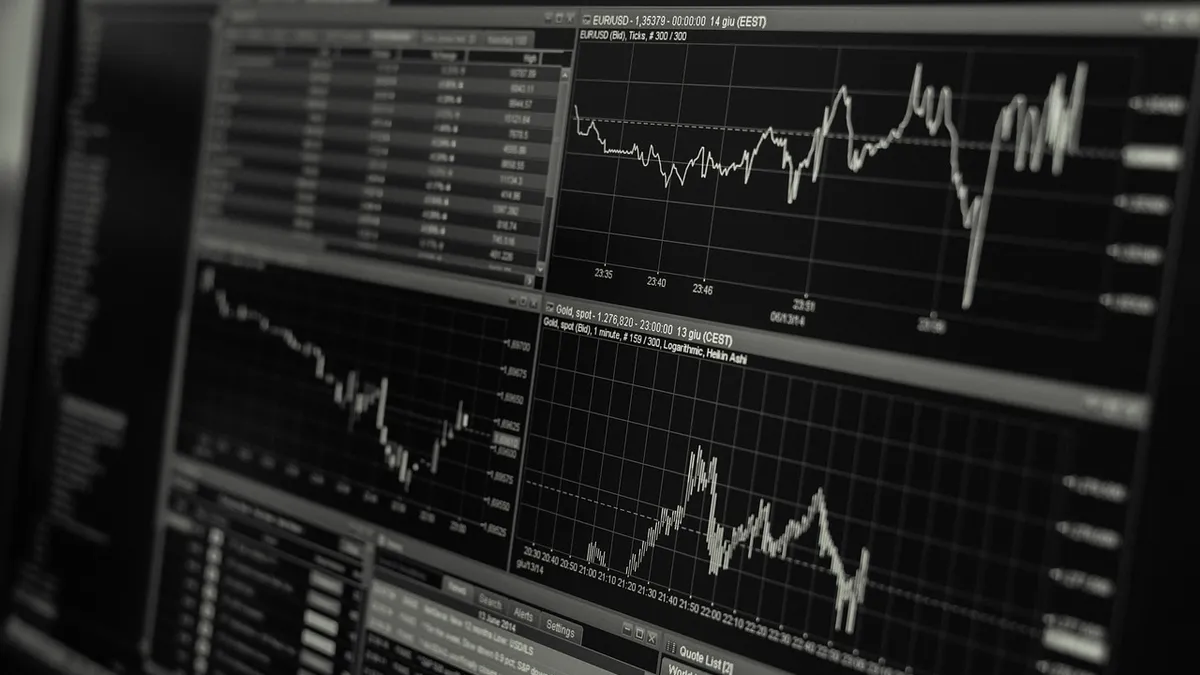
    what is the best trading signal app for Australian traders Crazii JTVertex
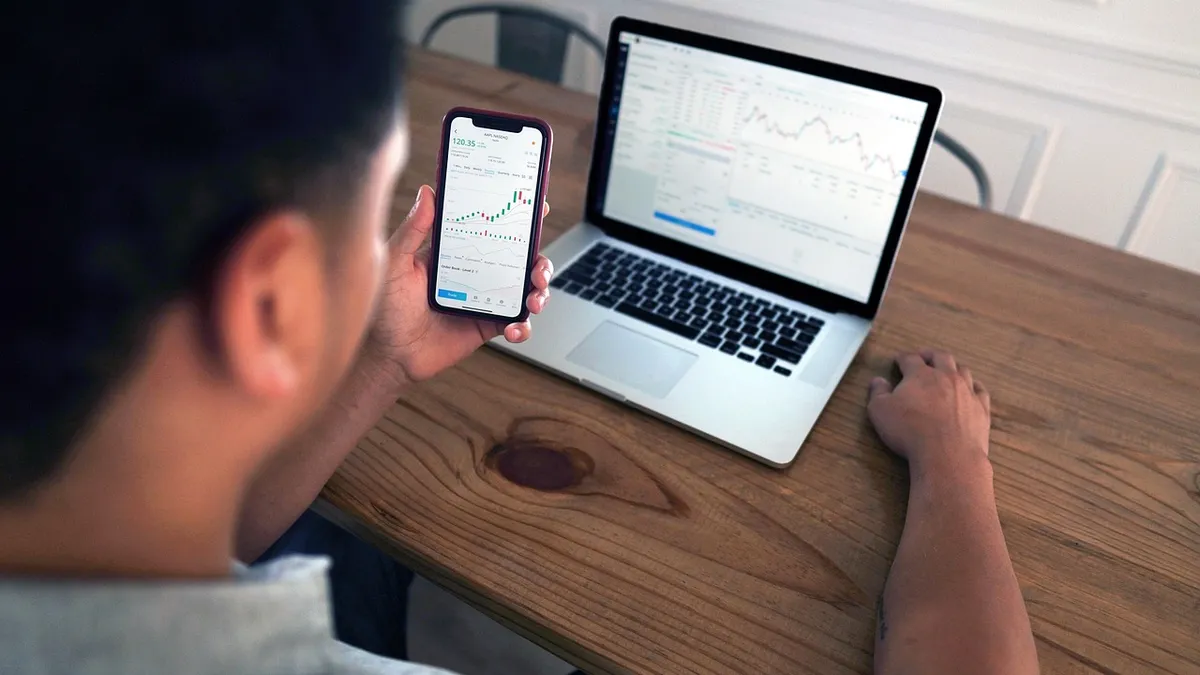
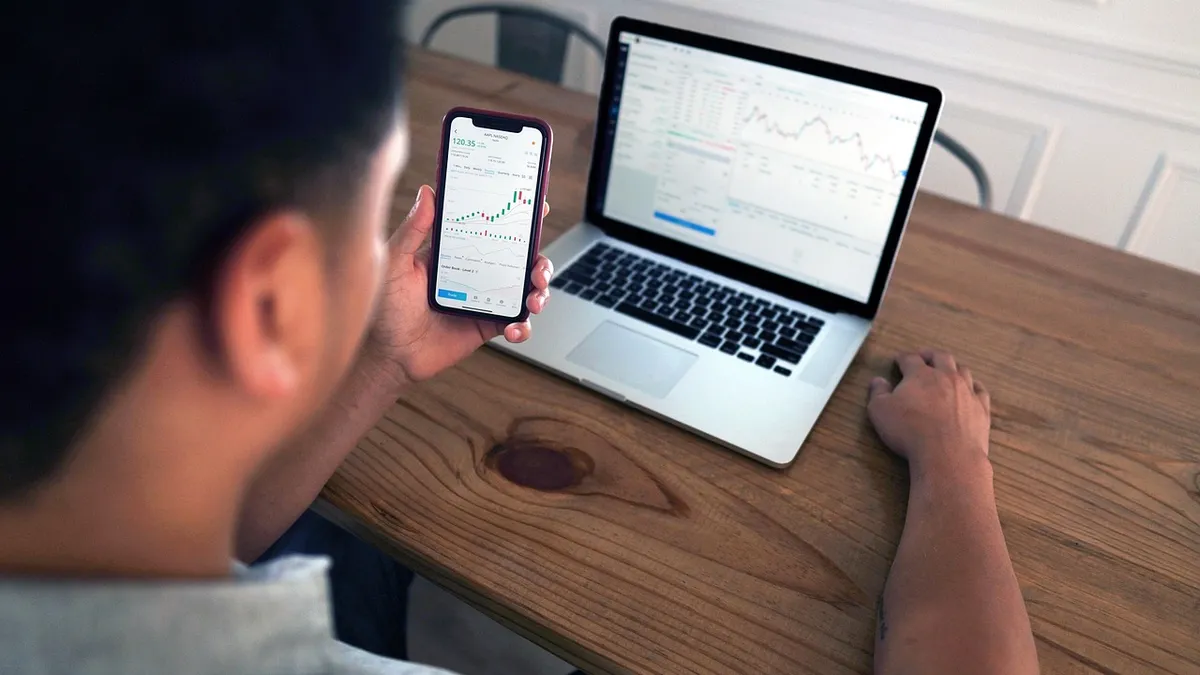
    Choosing the best trading signal app starts with matching alert timing to your actual schedule — not the other way around. · Photo: 3844328 / Pixabay
    The question is not which app has the most features. The question is which app fits your life — and then supports your growth from there. That distinction is worth sitting with before you read another review.

    How do trading signal apps actually work — and what separates good signals from noise?

    How do trading signal apps actually work — and what separates good signals from noise?
    💡

    Key points: Trading signal apps generate alerts based on technical indicators, price action patterns, or analyst analysis — then deliver them via push notification, Telegram, or in-platform feed. Quality signals include entry price, stop-loss, take-profit, and a rationale. Signals without these four elements are guesswork dressed up as analysis.

    So how does a signal actually get to your phone? There are three main generation methods, and understanding the difference will save you from subscribing to the wrong type entirely. The first is algorithm-based signals — automated systems scanning price action across multiple instruments and timeframes, triggering alerts when predefined conditions are met. Think: RSI dropping below 30 on the daily chart while price touches a key support level. Fast, consistent, emotionless. The weakness is that algorithms do not adapt to context. A technically valid signal during a major news event can blow straight through your stop-loss before you blink. The second is analyst-generated signals — a human trader or team identifies a setup, writes it up with context, and pushes it to subscribers. Slower, but often richer in reasoning. The risk here is provider quality. You are trusting someone else’s edge, and that edge needs to be verifiable. The third — and increasingly common for Australian retail traders — is copy trading signals through platforms like MetaTrader, which hosts over 3,200 free and commercial signal providers in its MT4/MT5 marketplace (MetaQuotes, MQL5.com, accessed June 2026). Copy trading means your account automatically mirrors another trader’s positions. It sounds passive, but it carries its own risks: you are exposed to their drawdowns, their position sizing, and their bad days.

    The evidence: ASIC Report 828 (January 2026) noted that among active traders placing 50 or more open positions per month, 19% of otherwise-profitable clients ended up in a loss after fees. More activity does not equal more profit. A signal app that generates fewer, higher-quality alerts often produces better outcomes than one flooding your screen with noise.

    Marcus — our Brisbane project manager — tried an algorithm-based service first. It sent him eleven alerts on a Tuesday. He acted on four. Two worked. Two did not. He had no idea why any of them triggered, which meant he had no way to improve. He was not trading; he was gambling with extra steps. What changed his results was switching to a service that explained the reasoning behind each signal: which level was being tested, what the risk-to-reward ratio was, and — critically — what would invalidate the setup. That context turned a passive subscriber into an actual trader.

    Expert tip: We personally will not follow any signal provider with fewer than 100 completed trades in their public history — that is a personal heuristic, not a rule from any textbook. Below that sample size, the win rate is statistically meaningless. A provider showing 87% wins from 23 trades is showing you nothing except that they have not been tested yet.
    For the deeper picture on navigating signal quality when markets get volatile, the guide on best trading signals to follow when markets are unpredictable covers exactly that scenario. Good signals share four non-negotiable components: entry price (or entry zone), stop-loss level, take-profit target, and a brief rationale. If any of those are missing, the signal is incomplete — and an incomplete signal puts all the risk-management burden back on you, which defeats the purpose of using a service in the first place.
    how trading signal apps work for Australian retail traders Crazii JTVertex
    Understanding signal generation methods helps Australian traders choose apps that match their risk management approach. · Photo: Pexels / Pixabay
    The market does not care which app you use. It only cares whether your entries, exits, and position sizing are sound. A signal app is a tool that helps you get those three things right more consistently. That is all it is — and that is enough.

    Want signals with full context, not just arrows?

    Crazii delivers signal discussions with entry rationale, invalidation levels, and a community of Australian traders working through setups together.

    Access Crazii Signals

    Which trading signal app features should busy traders prioritise?

    Which trading signal app features should busy traders prioritise?
    💡

    Key points: Busy Australian traders should prioritise real-time push alerts, mobile-first design, clear risk parameters per signal, and an asset coverage that matches their preferred markets. Speed and clarity beat feature volume every time.

    You are probably reading this on your phone between tasks. That tells you something about what you actually need from a signal app. The feature that matters most is not the one that looks best in a demo. It is the one that gets information into your hands fast enough to act on it. Here is how Crazii JTVertex thinks about the feature hierarchy for time-pressed traders.
    Feature Why it matters for busy traders Red flag if missing
    Real-time push notifications A signal delivered 20 minutes late is a different trade entirely Email-only delivery
    Entry, stop-loss, take-profit in every alert Removes the need to calculate risk manually under time pressure Entry only, no risk levels
    Transparent signal history (wins and losses) Lets you verify the provider’s actual edge before committing capital Only winning trades shown
    Asset coverage matching your market Forex majors, gold, and indices are the most relevant for Australian retail traders Signals only for obscure instruments
    Community or analyst commentary Context turns a signal into a learning opportunity, not just a click Signals with zero explanation
    Mobile-first interface You are not at a desktop for most of your trading day Desktop-only platform
    Here is something most signal app reviews skip entirely: the cost of fees at scale. ASIC Report 828 found that 5% of retail clients would have been profitable in FY2023–24 but ended up in a loss specifically because of fees. That is one in twenty traders flipped from green to red by transaction costs alone. A signal app that generates high trade frequency can accelerate that problem — more signals means more trades, and more trades means more fees eating into your margin. This is why Crazii JTVertex takes a firm position: fewer, higher-quality signals with clear risk parameters beat a high-volume feed every single time for the average busy trader.

    Expert tip: When We evaluates a signal service, the second thing checked — after the track record — is the average number of signals per week. Anything above fifteen per week for a part-time trader is a warning sign. You will end up taking trades you have not properly evaluated just because the notification arrived, and that is how discipline breaks down quietly, one “quick trade” at a time.
    Marcus eventually settled on a service sending four to six signals per week across forex majors and gold. He could review each one in under three minutes, set his orders, and go back to work. His screen time dropped. His decision quality went up. The two are connected. For traders interested in gold signals specifically — one of the most popular instruments for Australian retail traders — the resource on best trading signals for gold that cut through market noise goes deeper on what separates reliable gold alerts from the flood of noise in that space. The right features are not the most features. They are the ones that reduce friction between a valid setup and a well-executed trade — consistently, on a schedule that fits your actual life.
    trading signal app features for busy Australian traders Crazii JTVertex
    Prioritising real-time alerts and transparent signal history helps Australian traders evaluate apps beyond surface-level features. · Photo: sergeitokmakov / Pixabay

    What are the most common mistakes traders make when choosing a signal app?

    What are the most common mistakes traders make when choosing a signal app?
    💡

    Key points: The three most damaging mistakes when selecting a trading signal app are: choosing based on win rate alone, ignoring fee impact at scale, and subscribing to a service whose trading style does not match your risk tolerance or available time. Each of these mistakes can turn a profitable signal into a net loss.

    You are reading this section because something has not worked before. Maybe a signal service looked great until it did not. Maybe you are trying to avoid the mistake before it costs you. Either way — this is the section that earns its place.
    Mistake 1
    Choosing on win rate without checking drawdown

    A 78% win rate sounds extraordinary. But if the losing 22% of trades each take three times the profit of a winning trade, the account bleeds out slowly. Always ask: what is the maximum drawdown, and over what period? Crazii JTVertex treats any signal provider showing a peak-to-trough drawdown above 20% as a personal red flag — that is a heuristic based on experience, not a universal rule, but it has saved considerable capital.

    Mistake 2
    Ignoring how fees compound at high signal frequency

    ASIC Report 828 (January 2026) found that among active traders placing 50 or more open positions per month, 19% of otherwise-profitable clients ended up losing after fees were applied. In plain terms: they were making money on their trades but losing it on the cost of making those trades. A signal app that encourages high trade frequency can quietly accelerate this problem without you noticing until the quarterly statement arrives.

    Mistake 3
    Subscribing to a service built for a different trader

    A scalping signal service sends alerts that are valid for minutes. If you cannot check your phone during a meeting, those signals expire before you can act. A swing trading service sending three to five signals per week is a fundamentally different product — and the right one for most busy Australians. The mismatch between signal style and trader lifestyle is responsible for more failed subscriptions than any other single factor.

    The evidence: ASIC Report 828 (January 2026) also found that 74% of new retail clients acquired via paid online advertising lost money in FY2023–24 — worse than the sector average of 68%. This matters because the signal services with the loudest advertising budgets are not necessarily the ones with the best track records. The correlation often runs the other way.
    Reading to this point, you might be thinking: this all sounds reasonable, but how is Crazii JTVertex different from any other service making the same claims? That is a fair question. And it is exactly what the next section addresses directly. For a thorough look at how to evaluate signal legitimacy before you commit, the article on whether top trading signals are legit or just another overhyped service works through the verification process step by step.
    common mistakes choosing trading signal app Australian traders Crazii JTVertex
    Avoiding fee drag and mismatched signal style are the two most overlooked factors when Australian traders evaluate signal apps. · Photo: TheInvestorPost / Pixabay

    See how the Crazii signal approach works in practice

    Access the full ecosystem — signals, platform, and community — built specifically for the Australian trading workflow.

    Explore Crazii Now

    How does Crazii compare to other trading signal apps for Australian traders?
    How does Crazii compare to other trading signal apps for Australian traders?
    💡

    Key points: Crazii combines a curated signal feed with a community layer and direct broker integration via AIMS, making it a more complete workflow than standalone signal apps. For Australian traders building from their first tool toward a full trading setup, this layered approach reduces friction at every step.

    Most signal apps stop at the signal. You get the alert, and then you are on your own — figuring out which platform to use, how to size the position, whether the spread makes the trade viable. That gap between signal and execution is where most of the practical difficulty lives.
    Feature Crazii + AIMS Generic signal app MT4/MT5 Signals marketplace
    Signal delivery method Community feed + Telegram alerts Push notification only Auto-copy within platform
    Analyst context per signal Yes — rationale included Rarely No — automated copy only
    Broker integration Direct via AIMS Broker-agnostic (you manage) MT4/MT5 brokers only
    Community support Active Telegram group None or forum None
    Transparent loss history Yes Varies widely Visible on MQL5 provider page
    Suited to busy traders Yes — swing-focused, low frequency Depends on service Passive, but drawdown risk applies
    The USP here is not just signals. It is the bigger picture that those signals sit inside. Trading tools are the first step — the platform you execute on is the second. Crazii JTVertex is built around that two-step sequence deliberately, because a trader who has the right tool but the wrong platform (or no platform at all) is still stuck. Imagine a Tuesday evening: 6:47 pm AEST. The London session has been open for forty minutes. You have just put the kids to bed. You open the Crazii community feed on your phone and see a gold setup flagged twenty minutes ago — entry zone, stop-loss below the prior swing low, take-profit at the next resistance level. The reasoning is three sentences. You check the chart on AIMS, the spread is acceptable, you set the order in under four minutes, and you are done. The trade runs overnight while you sleep. That is not a fantasy. That is what the right workflow actually looks like.

    Expert tip: Crazii JTVertex recommends treating the signal app and the broker platform as a single system, not two separate decisions. The number of traders We has spoken to who use a quality signal service but then execute on a platform with wide spreads or slow order fills — and wonder why results do not match expectations — is significant. The signal gets you to the door. The execution platform determines whether you actually get in at the right price.
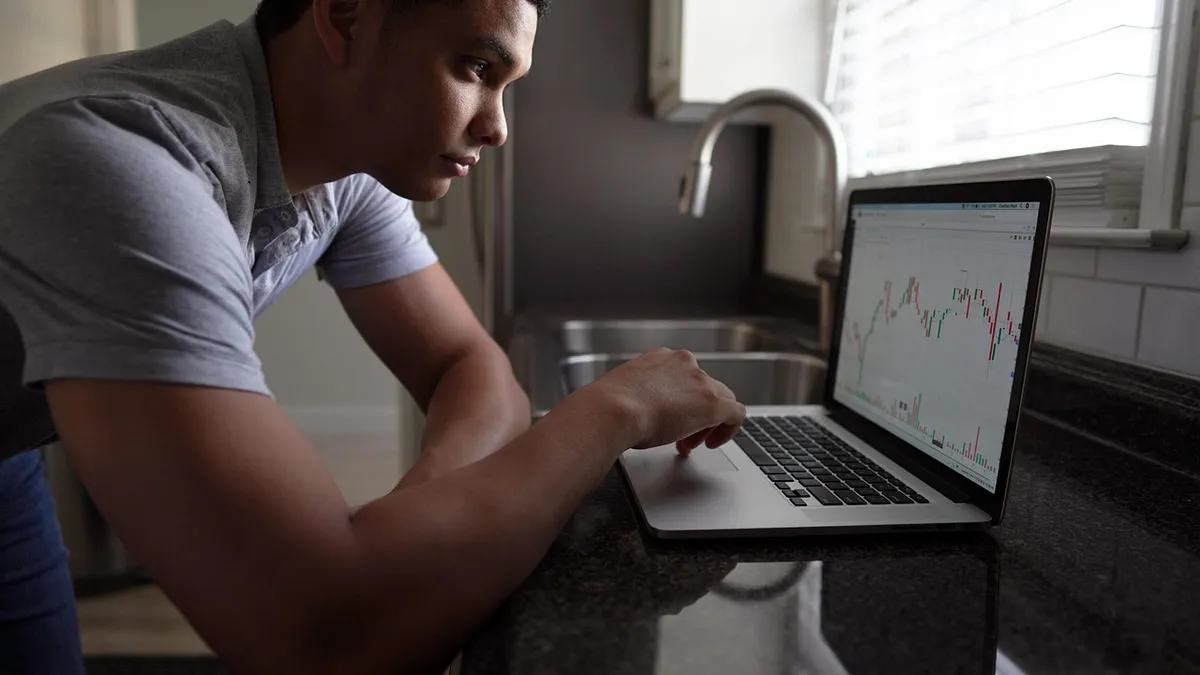
    For a broader view of the full signal and tools landscape available to Australian traders in 2026, the pillar guide on best trading signals and tools for Australian traders 2026 covers the complete picture across platforms, signal types, and evaluation frameworks. The honest answer to “which is best” is this: Crazii is best for traders who want context alongside their signals, who are building toward a full trading workflow rather than just chasing alerts, and who want an Australian-focused community rather than a faceless subscription. It is not the right fit for high-frequency scalpers or traders who want fully automated copy execution with zero involvement. That is the pratfall — and it is worth saying clearly.
    Crazii vs other trading signal apps comparison Australian traders Crazii JTVertex
    Comparing Crazii to generic signal apps and MT4 marketplace options helps Australian traders find the right fit for their workflow. · Photo: TheInvestorPost / Pixabay

    Frequently asked questions about trading signal apps
    Frequently asked questions about trading signal apps
    💡

    Key points: The most common questions about trading signal apps centre on cost, reliability, ASIC compliance, and how to evaluate providers before committing. These answers address the five concerns that most often cause Australian traders to hesitate.

    Are trading signal apps legal and regulated in Australia?

    Trading signal services are not themselves ASIC-licensed financial products, but the brokers you execute on must be ASIC-regulated. Always verify your broker holds an Australian Financial Services Licence. Signals are general information — they are not personal financial advice, and reputable providers will say so clearly.

    How much should I expect to pay for a quality trading signal app?

    Subscription costs vary widely. The MetaTrader signals marketplace includes free providers as well as paid subscriptions. Crazii JTVertex does not recommend choosing on price alone — a free service with a poor track record costs far more than a paid service with a verifiable edge. Evaluate the track record first; then assess whether the cost is proportionate to your account size.

    Can I use a trading signal app if I am a complete beginner?

    Yes, but with a clear-eyed understanding of the risk. ASIC Report 828 (January 2026) found that 68% of retail CFD clients lost money in FY2023–24. Signals do not remove that risk — they help structure your decision-making. Beginners should start with a demo account, paper-trade the signals for at least four weeks, and only move to live capital once they understand how the service behaves across different market conditions.

    What is the difference between a trading signal app and copy trading?

    A trading signal app sends you an alert; you decide whether to act. Copy trading automatically replicates another trader’s positions in your account without manual input. Copy trading is more passive but means you absorb another trader’s drawdowns and position sizing directly. ASIC noted 26,243 retail clients used copy trading in FY2023–24, reflecting growing interest — but growing interest does not equal guaranteed suitability.

    How do I know if a trading signal provider is trustworthy?

    Three checks: first, look for a verified trade history showing both wins and losses over at least 100 completed trades. Second, confirm the provider discloses their methodology — not just results. Third, be sceptical of any service showing only winning trades or claiming guaranteed returns. No legitimate signal provider can guarantee profits, and ASIC-aware services will never use that language.

    Ready to talk through the right setup for your trading goals?

    Reach out directly — Crazii JTVertex works with Australian traders at every stage, from choosing the first tool to building a repeatable process.

    Contact Crazii JTVertex

    Important note: This content is general information only and does not constitute personal financial advice. CFDs, margin FX, and related instruments are high-risk products. Past signal performance does not guarantee future results. Consider your own financial circumstances and risk tolerance, and read all relevant Product Disclosure Statements before trading. ASIC Report 828 (January 2026) confirms that the majority of Australian retail CFD clients lose money.


  • Best Trading Signals to Follow When Markets Are Unpredictable

    Best Trading Signals to Follow When Markets Are Unpredictable

    The best trading signals to follow when markets turn unpredictable are not the loudest ones — they are the ones built on verified logic, clear risk parameters, and a track record you can actually audit. Drawing on years of hands-on experience in Australian retail trading, Crazii JTVertex has put together this guide so you can cut through the noise and make signal decisions that hold up when volatility spikes. By the time you finish reading this article, you will have a practical framework for evaluating, filtering, and acting on signals — even on days when the charts look like a seismograph during an earthquake.

    Note: This content is general information only and does not constitute personal financial advice. Trading CFDs and margin FX products carries significant risk of loss. Please consider your own financial circumstances and read all relevant disclosure documents before acting on any signal or strategy mentioned here.

    🛠️ Tools Crazii JTVertex Uses When Markets Get Choppy

    Signal Access

    Crazii — Real-Time Signal Feed

    Staring at five indicators and still unsure which way to lean? A curated signal feed cuts that decision fatigue before the market opens.

    Access Crazii Signals
    Trading Platform

    AIMS — Execute With Confidence

    A signal is only as good as the platform that fills it. AIMS gives Australian traders the execution speed and spread transparency that volatile sessions demand.

    Open an AIMS Account
    Table of contents

    What makes a trading signal worth following in volatile markets?

    What makes a trading signal worth following in volatile markets?
    💡

    Key points: A signal worth following in volatile markets combines a verified win rate across at least 100 completed trades, a defined stop-loss level, and a risk-to-reward ratio stated before entry — not after. Without all three, you are trading on hope, not evidence.

    Here is the honest starting point most signal guides skip: the market does not care about your signal provider’s marketing copy. When volatility spikes — think a surprise RBA rate decision, a flash crash in crude, or a US non-farm payrolls print that lands 200,000 jobs away from consensus — most signals fail. Not because the underlying logic is wrong, but because the signal was never designed for conditions like that. It was backtested on a smooth trending market and sold to you during one. So what separates a signal that holds up from one that falls apart? Three things, full stop. First, a verifiable trade history. Not a screenshot. Not a PDF with curated highlights. An auditable record — ideally on a third-party platform — showing every entry, every exit, and every loss. Minn, a 34-year-old project manager from Brisbane who started following signals last year, told me she spent three weeks comparing providers before choosing one. The deciding factor was not the win rate. It was that the provider showed her the losing months too. That kind of transparency is rarer than it should be. Second, a pre-defined stop-loss on every signal. This is non-negotiable. A signal that arrives without a stop level is not a signal — it is a tip, and tips in volatile markets are expensive. The stop tells you the maximum the signal is designed to risk. Without it, you have no way to size your position correctly, and position sizing is where most retail accounts quietly bleed out. Third, a stated risk-to-reward ratio before the trade opens. A 1:1.5 minimum is a reasonable personal heuristic — meaning for every dollar risked, the signal targets at least $1.50 in return. That is not a universal law, but it is the floor Crazii JTVertex applies when screening any new signal source.

    The evidence: According to ASIC’s Report 828 (published January 2026, covering FY2023–24), 68% of retail CFD clients in Australia lost money — 133,674 clients with net losses exceeding $458 million in a single financial year. That is not a fringe outcome. That is the base rate. A signal without defined risk parameters pushes you firmly into that majority.

    Expert tip from Crazii JTVertex: One thing most people never check: the maximum consecutive losses in a signal’s history. A provider might show a 65% win rate, but if they once hit 12 losing trades in a row, your account needs to survive that drawdown before the edge plays out. Minn nearly quit after her provider hit a seven-trade losing streak — but because she had checked the historical max drawdown upfront, she had sized positions small enough to ride it out. That single preparation decision saved her account.

    1

    Pull the full trade log, not the highlight reel

    Ask for a complete export of all trades, including losses, over at least six months. If the provider cannot or will not supply this, that is your answer.

    2

    Check the drawdown depth and duration

    Look for the worst losing streak in the history. Your account must be sized to survive it. If the maximum drawdown would wipe more than 20% of your capital, treat that as a red flag — though that threshold is a personal guideline, not a regulatory standard.

    3

    Confirm every signal carries a stop-loss level

    Before you subscribe or follow, request a sample of recent signals. If any arrive without a stop, move on.

    best trading signals to follow in volatile markets — Crazii JTVertex
    Understanding what makes trading signals reliable during unpredictable market conditions · Photo: sergeitokmakov / Pixabay

    Which types of trading signals actually hold up when conditions shift?

    Which types of trading signals actually hold up when conditions shift?
    💡

    Key points: In unpredictable markets, trend-following signals degrade fastest. Mean-reversion signals on higher timeframes and volatility-adjusted signals that widen stops during high-VIX periods tend to survive better — because they are built with the assumption that conditions will change.

    Not all signal types are created equal. And the type that worked brilliantly for three months in a trending EUR/USD can become a money-burning machine the moment that trend breaks. Let us be direct: trend-following signals are the most popular and the most fragile in choppy conditions. They are designed to catch momentum. When momentum is absent — when the market is chopping sideways or reversing on every news event — these signals trigger entries that immediately reverse. You end up stopped out repeatedly, paying the spread each time, before the trend eventually resumes. ASIC’s own data notes that among active traders making 50 or more open positions per month, 19% of otherwise-profitable clients lost money purely because of fees. Think about that. They were right on direction but wrong on frequency. Mean-reversion signals work differently. They look for price to stretch too far from a statistical average and bet on it snapping back. In volatile, range-bound markets, this approach has a structural advantage — but it requires wider stops and more patience. The RSI, for example, uses 30 as the oversold threshold and 70 as the overbought threshold (as defined by J. Welles Wilder). A mean-reversion signal that fires when RSI hits 28 on a 4-hour chart and price is sitting at a major support level is a very different proposition from a scalping signal firing on a 1-minute chart during a news release. Volatility-adjusted signals represent the more sophisticated end of the spectrum. These signals adapt their stop-loss and target levels based on current market volatility — typically using the Average True Range (ATR) as a multiplier. When volatility doubles, the stops widen proportionally. This prevents the signal from being stopped out by normal market noise while still capping the risk per trade. Minn eventually settled on a combination: a mean-reversion signal on the daily chart for her core positions, and a volatility-adjusted signal for shorter-term opportunities. She describes it as “having a seatbelt and an airbag” — each one handles a different type of impact.

    The evidence: MetaQuotes reports that the MetaTrader platform hosts over 3,200 free and commercial signals in its built-in marketplace. The sheer volume means the quality range is enormous. Most of those signals have no volatility-adjustment mechanism whatsoever — they were built for one market condition and left running regardless.

    Expert tip from Crazii JTVertex: Here is something the signal comparison articles never mention: look at what month the signal provider’s worst drawdown occurred. If their deepest loss happened during a low-volatility period, that is a serious warning sign — it means their system struggles even when conditions are easy. The providers worth following tend to have their worst months during genuine macro shocks, not during ordinary market chop. That distinction tells you a lot about whether the edge is real.

    Signal Type Best Market Condition Weakness in Volatile Markets Key Indicator Used
    Trend-Following Strong directional trend Whipsaws in choppy conditions Moving averages, MACD
    Mean-Reversion Range-bound, high volatility Can be overrun by strong breakouts RSI (30/70), Bollinger Bands
    Volatility-Adjusted Any — adapts to conditions Requires wider stops, more capital ATR multiplier
    News-Based Around high-impact events Spreads widen, slippage increases Economic calendar triggers
    For a deeper look at how specific signal bots handle these market conditions systematically, the guide on the best trading signals bot built for consistent daily entries walks through the mechanics in detail.
    types of trading signals for unpredictable markets — Crazii JTVertex
    Comparing signal types and their performance characteristics across different market conditions · Photo: AhmadArdity / Pixabay

    Get signals that are built for volatile conditions

    Crazii JTVertex curates signal access through Crazii — a feed designed with risk parameters baked in, not bolted on as an afterthought.

    Start with Crazii

    How do you evaluate a signal provider before trusting it with real money?

    How do you evaluate a signal provider before trusting it with real money?
    💡

    Key points: Evaluating a signal provider means looking beyond the headline win rate. Check trade volume (fewer than 100 completed trades is insufficient sample size), maximum drawdown, fee structure, and whether the provider’s returns hold up after you subtract the cost of spreads and commissions.

    You are probably thinking: I have seen these evaluation checklists before. They all say the same thing. What makes this one different? Fair point. So let us go past the obvious. The standard advice — check win rate, check drawdown, read reviews — is necessary but not sufficient. Here is what the standard advice misses. Fee drag is invisible until it is not. ASIC’s Report 828 found that 5% of retail clients would have been net profitable in FY2023–24 but ended up in a loss position solely because of fees. That is one in twenty people who were right about the market and still lost money. Before you follow any signal, calculate what the total cost looks like: subscription fee plus the spread cost of every trade the signal generates per month. If you are following a high-frequency signal that fires 40 trades a month and each trade costs you two pips in spread, that is 80 pips of pure cost before a single pip of profit. On a small account, that overhead is brutal. Minn ran this exact calculation on her first signal provider and found that the “profitable” signal she was following was actually generating net losses once she factored in her broker’s spread. She switched to a lower-frequency provider and her results improved — not because the new signal had a higher win rate, but because the trade count dropped by two-thirds. Sample size matters more than win rate. A provider showing 78% wins across 23 trades is statistically meaningless. Crazii JTVertex applies a personal heuristic: ignore any signal with fewer than 100 completed trades in its history. Below that threshold, you cannot distinguish skill from luck. Check the provider’s behaviour during known volatile periods. Pull up the dates of major market events from the past 12 months and cross-reference them with the signal’s trade log. Did the provider pause signals during extreme volatility? Did they widen stops? Or did they keep firing the same signals into a market that had fundamentally changed character? The answer tells you whether there is a human intelligence behind the system or just an algorithm running on autopilot.

    The evidence: ASIC Report 828 also found that 74% of new retail clients acquired through paid online advertising lost money in FY2023–24 — a loss rate worse than the sector average of 68%. Signal providers who rely heavily on paid advertising to acquire subscribers deserve extra scrutiny for exactly this reason.

    Expert tip from Crazii JTVertex: Ask the provider one specific question before subscribing: “What was your worst consecutive losing streak, and what did you do differently after it?” A provider who cannot answer that question — or who gets defensive — has not done the forensic work on their own system. The ones worth following can tell you exactly what happened, why, and what changed. That conversation takes five minutes and has saved me from several costly subscriptions.

    For a thorough breakdown of how to assess whether a specific signal service is legitimate, the article on whether Top Trading Signals is legit or just another overhyped service covers the verification process in granular detail. If budget is a constraint, the guide on how to get good trading signals without paying a fortune is worth reading alongside this one — it covers the free-tier options that actually hold up.
    how to evaluate trading signal providers — Crazii JTVertex
    Key criteria for assessing signal provider credibility before committing real capital · Photo: TheInvestorPost / Pixabay

    Not sure which signal provider fits your trading style?

    Join the Crazii JTVertex community group for honest, experience-based discussion — no sales pitch, just traders comparing notes.

    Join the Group

    What mistakes do Australian traders make when following signals in choppy markets?

    What mistakes do Australian traders make when following signals in choppy markets?
    💡

    Key points: The three most damaging mistakes Australian traders make with signals in volatile conditions are: over-trading by following too many signals simultaneously, abandoning a signal after a losing streak without checking whether the edge is intact, and ignoring the fee drag that turns marginal wins into net losses.

    Mistake 1
    Following too many signals at once

    When markets get choppy, the instinct is to diversify across multiple signals to reduce risk. The opposite usually happens. Following five different signals simultaneously means five sets of positions, five sets of fees, and five times the cognitive load when the market moves against you at 2 am. Minn made this mistake in her second month — she was tracking four signal providers and could not remember which stop belonged to which trade. She closed two positions at the wrong levels. Concentration, not diversification, is the answer when conditions are uncertain.

    Mistake 2
    Abandoning a signal mid-drawdown without checking the edge

    A losing streak feels like evidence that the signal is broken. Sometimes it is. But often it is just the normal statistical variance of a working system. The mistake is quitting without distinguishing between the two. Before abandoning any signal after losses, check three things: Is the drawdown within the historical range you reviewed before subscribing? Has the market regime changed in a way the signal was never designed for? Has the provider changed anything about the signal parameters? If all three answers are “no,” the signal is probably still intact and you are experiencing normal variance at the worst possible emotional moment.

    Mistake 3
    Treating signals as a substitute for understanding

    This is the one nobody wants to hear. A signal tells you when and where — it does not tell you why. Traders who follow signals without understanding the underlying logic cannot adapt when conditions change. They cannot decide whether to skip a signal during a major news event, or whether to reduce position size when volatility doubles. They are passengers, not drivers. The goal of using signals should be to learn from them, not to outsource your thinking permanently. Signals are a starting point, not a destination.

    The evidence: ASIC’s Report 828 data shows that among active traders — those with 50 or more open positions per month — 19% of those who would otherwise have been profitable lost money after fees in FY2023–24. More trading, more fees, worse outcomes. The data does not support the instinct to trade more when markets are uncertain.

    Expert tip from Crazii JTVertex: The most useful thing Crazii JTVertex ever did during a volatile period was create a “signal pause” rule: if the market’s average daily range expands to more than double its 20-day average, no new signals are followed until it contracts. It feels like missing opportunities. In practice, it avoids the worst whipsaw losses. The market will still be there next week.

    This is also where the broader context of the best trading signals and tools for Australian traders in 2026 becomes relevant — because the right tool selection upstream prevents most of these downstream mistakes.
    common trading signal mistakes in choppy markets — Crazii JTVertex
    Mistakes Australian traders make when following signals during periods of high market volatility · Photo: 3844328 / Pixabay

    Ready to follow signals with a proper framework behind them?

    The AIMS platform gives you the execution infrastructure to act on signals cleanly — with transparent spreads and fast fills when it matters most.

    Open AIMS Account

    How does copy trading compare to following signals manually when markets are unpredictable?

    How does copy trading compare to following signals manually when markets are unpredictable?
    💡

    Key points: Copy trading automates the execution of another trader’s positions in real time, while manual signal following requires you to place each trade yourself. In volatile markets, copy trading removes execution delay but also removes your ability to filter signals based on current conditions — a meaningful trade-off.

    Here is a question worth sitting with for a moment: if you could automate everything, would you? Copy trading is attractive precisely because it removes the friction. You connect your account to a provider, set your allocation, and the trades mirror automatically. No alarm at 3 am, no hesitation at the entry point, no emotional second-guessing. According to ASIC’s Report 828, 26,243 retail clients used copy trading in FY2023–24 — and ASIC noted “a growing interest” in the approach. That number will keep rising. But here is what the copy trading marketing does not tell you. When you automate execution, you also automate your inability to pause. In a manual signal setup, you can look at a signal, check the current spread on your broker, note that a major data release is 20 minutes away, and decide to skip that entry. In a copy trading setup, the trade fires regardless. During high-volatility events, spreads widen significantly — sometimes to multiples of their normal level — and the fill price you receive can be materially worse than the price the signal provider received. That slippage is invisible in the provider’s track record but very visible in your account statement. Manual signal following requires more discipline and more time. But it gives you one thing copy trading does not: a filter layer. You are the last line of defence between a signal and your capital. In predictable markets, that filter layer is mostly unnecessary. In unpredictable ones, it is where the difference between a good month and a bad month often lives. The practical answer for most Australian traders is a hybrid: use copy trading for a portion of the account on a provider with a long, verified track record, and follow signals manually for the portion where you want to apply your own judgement. That structure gives you automation where it helps and control where it matters. What copy trading is not — and this is worth stating plainly — is a managed account. ASIC’s Report 828 found that only 121 retail clients used managed-account services in FY2023–24. The distinction matters legally and practically: in a managed account, another person makes decisions on your behalf with a formal mandate. In copy trading, you are choosing to mirror another trader’s decisions, and the responsibility for the outcome remains yours.

    The evidence: The MetaTrader platform alone hosts over 3,200 free and commercial signals in its built-in marketplace. The range means you can find both high-quality and deeply problematic providers in the same interface. The platform does not distinguish between them for you.

    Expert tip from Crazii JTVertex: When Crazii JTVertex evaluates a copy trading provider, the first filter is not win rate — it is the ratio of the provider’s account size to the typical follower’s account size. If the provider is trading a $200,000 account and you are copying with $5,000, position sizing distortions can make their “normal” trade a catastrophic oversize for you. Always check what the minimum copy allocation is relative to the provider’s actual position sizes. This detail is buried in most platform interfaces but it matters enormously.

    copy trading versus manual signal following for Australian traders — Crazii JTVertex
    Comparing copy trading automation with manual signal execution across different market volatility scenarios · Photo: Pexels / Pixabay

    Frequently asked questions about the best trading signals to follow

    Frequently asked questions about the best trading signals to follow
    💡

    Key points: The questions below address the most common points of hesitation Australian traders raise before committing to a signal provider or copy trading service — answered directly, without padding.

    Are free trading signals worth following, or do paid signals perform better?

    Free signals are not inherently worse than paid ones, but they are harder to verify. Paid providers have a commercial incentive to maintain a public track record. Free signals — particularly those shared in Telegram groups or social media — often lack any auditable history. Evaluate both by the same standard: full trade log, sample size above 100 trades, and stated stop-loss on every entry.

    How many signals should I follow at the same time?

    As a personal guideline, Crazii JTVertex recommends following no more than two signal sources simultaneously, especially during volatile periods. More than that and position management becomes difficult, fee drag multiplies, and the cognitive load of monitoring multiple open trades increases the chance of execution errors.

    What should I do if a signal fires during a major news event?

    Check the economic calendar before every trading session. If a high-impact event — such as an RBA decision, US non-farm payrolls, or a CPI release — falls within 30 minutes of a signal’s entry window, consider skipping that entry. Spreads widen during news events and the fill price you receive may be significantly worse than the signal’s intended entry level.

    How do I know if a signal provider’s track record is real?

    Request a third-party verified account statement rather than a screenshot or PDF. Platforms like Myfxbook or the MetaTrader Signals marketplace provide independently verified trade histories. If a provider cannot point you to a third-party verification, treat the claimed results with caution and request a trial period before committing capital.

    Is following trading signals suitable for beginners?

    Signals can be a useful learning tool for beginners, but only if the beginner also understands what the signal is doing and why. Following signals without that understanding means you cannot adapt when conditions change, cannot decide when to skip an entry, and cannot evaluate whether a losing streak is normal variance or a broken system. Use signals to learn, not to avoid learning.

    Want a direct conversation about which signals suit your situation?

    Reach out through the Crazii JTVertex contact page — no obligation, no sales script. Just a straight answer to where you are in your trading journey.

    Get in Touch

    Note: Trading signals, CFDs, and margin FX products are high-risk instruments. ASIC’s Report 828 (January 2026) found that 68% of Australian retail CFD clients lost money in FY2023–24, with net losses exceeding $458 million. Past signal performance does not guarantee future results. This article is general information only — not personal financial advice. Please read all product disclosure statements and consider your own financial circumstances before trading.

  • Best Trading View Buy Sell Signal Setups That Work in 2026

    Best Trading View Buy Sell Signal Setups That Work in 2026

    The best trading view buy sell signal setups that actually work in 2026 are not the flashiest ones — they are the ones you can read in under three seconds and act on with a clear head. At Crazii JTVertex, we have spent years in the Australian market watching traders chase every blinking arrow on their screen, only to exit positions at exactly the wrong moment. This guide, built on real screen time and the latest ASIC data, walks you through the setups worth your attention — and the ones quietly draining your account. By the time you finish reading, you will know which signal configurations to build, which to bin, and the one step that separates traders who stay profitable from those who quietly disappear from the market by year-end. That is the promise. Let us keep it.

    Ready to trade with a clearer edge?

    Join the Crazii JTVertex community and get access to real-time signal discussions, setup breakdowns, and a support group that actually responds.

    Join the Group Chat
    Table of contents

    What Makes a TradingView Buy Sell Signal Setup Actually Work?

    What Makes a TradingView Buy Sell Signal Setup Actually Work?
    💡

    Key points: A TradingView buy sell signal setup works when it combines a momentum indicator, a trend filter, and a clearly defined entry rule — not when it has the most arrows on the chart. Fewer signals with higher confluence beat more signals with lower accuracy every single session.

    Here is the honest truth most signal guides skip: the setup is not the signal. The signal is just the trigger. What makes it work is everything around it — the trend context, the timeframe alignment, and the discipline to wait for the full picture before you click buy or sell. Think about Marcus, a 34-year-old electrician from Brisbane who started trading AUD/USD on the side in 2024. He loaded TradingView with six different buy/sell indicators, all firing at once, all disagreeing. Within three months he had taken 47 trades and felt exhausted. The chart looked like a Christmas tree. He was not trading a system — he was reacting to noise. The setups that genuinely work share three structural qualities. First, they have a trend filter — something that tells you whether the broader market is moving up, down, or sideways before the signal fires. Second, they have a momentum trigger — an indicator that confirms the move has energy behind it, not just price drifting. Third, they have a defined exit rule built in from the start, not added as an afterthought when the position goes against you.

    The evidence: According to ASIC Report 828 (published January 2026, covering FY2023–24), 68% of retail CFD clients in Australia lost money — that is more than two-thirds of the market. The data does not say signals are the problem. It says undisciplined use of leverage without a structured approach is. A well-built signal setup is one layer of that structure.

    The trend filter does not need to be complicated. A 200-period exponential moving average on the daily chart tells you the direction of the dominant flow. If price is above it, you are looking for buy signals on lower timeframes. Below it, you look for sell signals. Simple. Boring. Effective. The momentum trigger is where most traders get creative — and sometimes get into trouble. RSI crossing above 30 from oversold territory, or MACD histogram flipping positive after a bearish run, are classic triggers for a reason. They have been tested across decades of market data. The RSI standard thresholds are 30 for oversold and 70 for overbought — not 32, not 68, exactly 30 and 70as Wilder defined them.

    Expert tip: Crazii JTVertex has noticed that traders who set up alerts on TradingView instead of watching the chart live make better decisions. When you stare at a chart for two hours, your brain starts seeing patterns that are not there. The alert fires, you check the context, you decide. That small change — reactive checking instead of active watching — removes a surprising amount of emotional noise from the trade.

    What Marcus eventually did was strip his chart back to two things: a 200 EMA and a standard RSI. His signal count dropped from 47 trades in three months to about 12. His results changed noticeably. Not because the signals were magic. Because he finally had a rule that said no. That is the part nobody puts on the thumbnail.
    best trading view buy sell signal setup with EMA and RSI on TradingView chart — Crazii JTVertex
    A clean TradingView buy sell signal setup using a trend filter and momentum trigger — the foundation of any working system. · Photo: TheInvestorPost / Pixabay

    Which TradingView Buy Sell Signal Indicators Are Worth Your Time in 2026?

    Which TradingView Buy Sell Signal Indicators Are Worth Your Time in 2026?
    💡

    Key points: In 2026, the TradingView indicators worth using for buy sell signals are those with transparent logic, adjustable parameters, and a track record you can backtest yourself. Avoid any script that promises “automatic profits” — no indicator does that, and ASIC regulations are clear on what constitutes financial advice.

    Want a curated signal setup you can actually use?

    Crazii JTVertex works with AIMS — a platform built for traders who want structure, not guesswork.

    Try AIMS Now
    You are reading this because you want a shortlist. Here it is — but with the reasoning behind each choice, because a tool you understand is worth ten tools you just copy. The TradingView Pine Script community is enormous. There are thousands of free and paid scripts available on the platform. The problem is not scarcity. The problem is that most traders cannot tell the difference between a well-coded indicator and one that repaints — meaning it changes its historical signals after the fact, making the backtest look better than reality.
    Indicator Signal Type Best Used For Key Risk
    RSI (14) Momentum Identifying oversold/overbought zones at 30/70 Fails in strong trending markets
    MACD (12,26,9) Trend + Momentum Confirming trend reversals and continuations Lags on fast-moving pairs
    Bollinger Bands (20,2) Volatility Spotting breakouts and mean-reversion entries Whipsaws in choppy conditions
    EMA 200 Trend Filter Defining the dominant trend direction Slow to respond to sharp reversals
    Volume Profile Structure Identifying high-value price zones Less reliable on low-liquidity assets
    The repainting issue is the single biggest trap in TradingView scripts. An indicator that repaints will show you a perfect buy arrow on a candle that has already closed — but when you were in that trade live, the arrow was not there, or it was pointing the other way. Always test any new script on a live chart for at least two to four weeks before trusting it with real capital.

    The evidence: ASIC Report 828 notes that 74% of retail clients acquired via paid online advertising lost money in FY2023–24 — worse than the sector average of 68%. Many of those ads promote “plug-and-play” signal tools. The data is not coincidental. Traders who rely on marketed signal products without understanding the underlying logic tend to fare worse.

    For Australian traders specifically, the pairs and instruments you trade matter for indicator selection. AUD/USD during the Sydney-London overlap behaves differently to gold during the New York session. A signal setup calibrated for one will misfire on the other. This is not a flaw in the indicators — it is a context problem.

    Expert tip: When Crazii JTVertex evaluates any TradingView script, the first thing checked is whether it has a “barstate.isconfirmed” condition in the Pine code. Scripts without this condition almost always repaint. You do not need to understand the full code — just search for that phrase in the script editor. If it is missing, treat the signal history with real scepticism.

    For traders who want a broader view of which platforms and tools support signal-based trading in Australia, the best trading signals and tools for Australian traders in 2026 covers the full landscape — including how TradingView fits into a broader trading toolkit.
    TradingView buy sell signal indicators comparison chart for Australian traders — Crazii JTVertex
    Comparing core TradingView signal indicators — understanding each tool’s limitations is as important as knowing its strengths. · Photo: TheInvestorPost / Pixabay

    How Do You Build a Buy Sell Signal Setup That Filters Out the Noise?

    How Do You Build a Buy Sell Signal Setup That Filters Out the Noise?
    💡

    Key points: Building a buy sell signal setup that filters noise means using at least two non-correlated indicators on the same chart, setting alerts instead of watching live, and defining your entry criteria before the market opens — not while a candle is forming. Structure removes emotion.

    So what does the actual build process look like? Step by step, not in theory.
    1

    Choose your trend filter first

    Open TradingView on the daily timeframe for your chosen instrument. Add the 200 EMA. Do not add anything else yet. Spend one week simply noting whether price is above or below it each day. This single habit reframes how you read every signal that comes after.

    2

    Add one momentum indicator — just one

    Drop to your trading timeframe (many Australian retail traders use the 4-hour or 1-hour chart). Add RSI set to 14 periods. Your rule: only take buy signals when RSI crosses back above 30 from below, and only when daily price is above the 200 EMA. Only take sell signals when RSI crosses below 70 from above, and daily price is below the 200 EMA. That is your entire entry system. Write it down.

    3

    Set your alert, then close the chart

    TradingView’s alert system is genuinely underused. Set a price alert or indicator alert for your entry condition. When it fires, you open the chart, check the context in thirty seconds, and decide. This is not laziness — it is discipline. Traders who watch charts continuously overtrade. The data on active traders with 50 or more open positions per month is telling: according to ASIC Report 828, 19% of otherwise-profitable active traders ended up losing money after fees in FY2023–24. More activity, worse outcomes.

    4

    Define your stop and target before you enter

    This is where most setups collapse. The entry is clear, but the exit is vague. Before any trade, write down: where does this setup become wrong? That is your stop. Where does it reach its logical target? That is your exit. If you cannot answer both questions before clicking buy or sell, the setup is not ready.

    5

    Run it on paper for 20 trades before going live

    This is the step that separates traders who build lasting systems from those who cycle through setups every month. Twenty trades is enough to see whether a setup has a structural edge or whether it was just lucky in the first five. It takes patience. It also takes about four to eight weeks depending on how often your signal fires — and that is fine.

    Marcus — the Brisbane electrician from earlier — ran exactly this process after stripping his chart back. He spent six weeks paper trading his simplified setup before committing real capital. His observation after the paper period: “The signals were boring. That was the point.”

    Expert tip: Crazii JTVertex recommends ignoring any signal provider or script with fewer than 100 completed trades in their public history. That is a personal heuristic, not a statistical rule — but it is grounded in the reality that small sample sizes hide losing strategies. Fifty trades can look brilliant by chance. A hundred trades starts to show the truth.

    For traders who are new to this process and want a gentler starting point, the guide on what are the best trading signals for beginners right now walks through the fundamentals before you get to the build stage.
    step-by-step TradingView signal setup build process for noise filtering — Crazii JTVertex
    A structured five-step build process for a TradingView buy sell signal setup — clarity before capital. · Photo: TheInvestorPost / Pixabay

    Build your setup with the right platform behind you

    Crazii JTVertex connects you to a trading environment where signal setups are supported with real community feedback — not just algorithms.

    Explore Crazii

    What Are the Most Common Mistakes Traders Make With Buy Sell Signals?

    What Are the Most Common Mistakes Traders Make With Buy Sell Signals?
    💡

    Key points: The most common mistakes with TradingView buy sell signals are using too many indicators at once, ignoring the broader trend context, and treating every signal as mandatory. A signal is a suggestion. Your job is to decide whether the context supports acting on it.

    You already know signals can work. So why do so many traders end up on the wrong side of the statistics?
    Mistake 1
    Stacking correlated indicators and calling it confluence

    Adding RSI, Stochastic RSI, and CCI to the same chart feels like triple confirmation. It is not. All three are momentum oscillators derived from price. They will agree most of the time — and they will all be wrong at the same time. True confluence comes from non-correlated sources: a momentum indicator plus a volume indicator plus a trend filter. Different data inputs, not different names for the same calculation.

    Mistake 2
    Taking signals against the daily trend

    A buy signal on the 15-minute chart during a strong daily downtrend is not an opportunity. It is a counter-trend scalp with the full weight of the larger timeframe working against you. The signal fires, you enter, price bounces briefly, then continues lower. The indicator was technically correct on the 15-minute. The context was wrong. Always check the daily before you act on anything below it.

    Mistake 3
    Treating every signal as a trade

    This one is quiet and expensive. According to ASIC Report 828, fees alone flipped 5% of retail clients from profit to loss in FY2023–24 — meaning those traders would have made money if they had simply traded less. Think about that: one in twenty profitable traders ended the year in the red purely because of transaction costs. Every unnecessary trade has a cost. Selectivity is a skill, and it is one that the signal-heavy approach actively works against.

    Mistake 4
    Using a signal setup without a defined drawdown limit

    A 20% drawdown on your trading account is a meaningful warning sign — not a fact about where you must stop, but a personal heuristic worth taking seriously. If a setup loses 20% of your account before producing a winning run, the setup may be fundamentally flawed, or the position sizing is too aggressive. Either way, continuing without reviewing the approach is the mistake. The setup should have a review trigger built in before you start, not after the damage is done.

    The evidence: ASIC Report 828 reports that 85% of retail clients lost money trading options CFDs in FY2023–24 — the highest loss rate of any product category in the report. Options CFDs carry additional complexity on top of standard CFD risk. If your signal setup involves these products, the bar for setup quality and risk management is proportionally higher.

    Here is the number that should sit with you: 133,674 retail clients lost money in Australian CFD markets in FY2023–24, with net losses exceeding $458 million. That is not a statistic about bad luck. It is a statistic about the cumulative cost of undisciplined signal use, over-trading, and inadequate risk management. Translated into something more tangible: that is roughly the cost of a house deposit, lost every year, across the Australian retail trading population. The traders who avoid this pattern are not smarter. They are more selective.
    common trading signal mistakes on TradingView with indicator overload — Crazii JTVertex
    Indicator overload is one of the most common — and most avoidable — mistakes in TradingView signal setups. · Photo: geralt / Pixabay

    TradingView Signal Setups vs Manual Chart Reading: Which Is Better for Australian Traders?

    TradingView Signal Setups vs Manual Chart Reading: Which Is Better for Australian Traders?
    💡

    Key points: TradingView signal setups and manual chart reading are not opposites — the best approach for most Australian retail traders is a hybrid: use signals to flag opportunities, then apply manual context to decide whether to act. Pure automation without discretion tends to underperform in volatile or news-driven conditions.

    This is the question that sits underneath most of the others. And the honest answer is: it depends on what you are trying to solve. If your problem is that you miss entries because you cannot watch the chart all day — a signal setup with alerts solves that. You are working a full-time job, you are trading AUD/USD or gold on the side, and you need a system that flags opportunities without requiring you to be glued to a screen at 2pm on a Tuesday. That is a real problem. Signal setups with TradingView alerts are a real solution. If your problem is that you take too many bad trades because you are impulsive — adding more signals will make it worse, not better. More signals means more temptation to act. What you need in that case is a rule-based filter that reduces the signal count, not one that increases it.
    Approach Best For Key Advantage Key Limitation
    TradingView Signal Setup (automated alerts) Part-time traders, busy schedules Removes screen time; reduces emotional trading Can miss contextual nuance in fast markets
    Manual Chart Reading Full-time traders, experienced discretionary traders Adapts to changing market conditions in real time Time-intensive; prone to emotional bias
    Hybrid (signals + discretionary filter) Most Australian retail traders Efficiency of automation plus human context check Requires discipline to not override the system constantly
    The copy trading data from ASIC is worth noting here. In FY2023–24, 26,243 retail clients used copy trading services — a number ASIC describes as reflecting “a growing interest.” That is a meaningful segment choosing to follow signals or strategies set by others rather than building their own. Whether that approach works depends entirely on whose signals you are copying and whether you understand the risk profile of what you are following.

    The evidence: MetaQuotes reports over 3,200 free and commercial signals available on the MetaTrader platform alone. The sheer volume means selection quality matters enormously — and personal heuristics like checking trade count history (the author’s rule of thumb: look for at least 100 completed trades before trusting a signal provider’s track record) become a practical filter in a crowded marketplace.

    For traders who need signals on the go — not just on desktop TradingView — the breakdown of what is the best trading signal app for busy Australian traders covers the mobile-first options that pair well with a TradingView desktop setup. Marcus, by the way, eventually settled on the hybrid approach. He uses TradingView alerts to flag his RSI/EMA setup conditions, then spends two minutes checking the daily chart before deciding whether to enter. He does not enter every alert. That is the point.

    Expert tip: Crazii JTVertex has found that traders who write a one-sentence trade rationale before entering — literally typing “entering because RSI crossed 30 from below on 4H, daily trend is up” into a trade journal — make materially fewer impulsive exits. The act of writing forces a moment of conscious decision-making that breaks the reflex loop. It takes 20 seconds. It changes the outcome of the trade more often than any indicator adjustment.

    And for those moments when the market stops behaving the way any signal suggests it should, the guide on best trading signals to follow when markets are unpredictable is worth reading before those conditions arrive — not during them.
    TradingView signal setup vs manual chart reading comparison for Australian retail traders — Crazii JTVertex
    Signal setups and manual reading work best together — the hybrid approach suits most Australian retail traders in 2026. · Photo: sergeitokmakov / Pixabay

    Frequently Asked Questions About TradingView Buy Sell Signal Setups

    Frequently Asked Questions About TradingView Buy Sell Signal Setups
    💡

    Key points: The most common questions about TradingView buy sell signal setups centre on accuracy, indicator choice, timeframe selection, and risk. The answers below reflect real trading experience and publicly available data — not theoretical ideals.

    Are TradingView buy sell signal indicators accurate?

    No indicator is accurate in isolation. Accuracy improves when signals are filtered by trend context and confirmed by a second non-correlated indicator. The goal is not a high signal count — it is a high-quality signal count. Fewer, better signals with defined risk parameters consistently outperform high-frequency signal approaches in retail trading environments.

    What is the best timeframe for a TradingView buy sell signal setup?

    For most Australian retail traders with limited screen time, the 4-hour chart offers a practical balance between signal frequency and noise reduction. Day traders may prefer the 1-hour or 15-minute chart, but these require active monitoring. Always check the daily chart for trend direction before acting on signals from any lower timeframe.

    Can I use TradingView buy sell signals for ASX stocks?

    Yes. TradingView supports ASX-listed equities, and the same signal logic — trend filter plus momentum trigger — applies. However, ASX stocks have lower liquidity outside market hours, so signal setups that rely on volume data should be interpreted with the trading session in mind. Signals generated outside ASX trading hours carry less weight.

    Do TradingView buy sell signal scripts repaint?

    Some do, and this is a serious issue. A repainting script changes its historical signals after the candle closes, making past performance look better than it was in real time. To check: look for “barstate.isconfirmed” in the Pine Script code. Scripts without this condition are more likely to repaint. Always verify any new script on a live chart before trusting its backtest results.

    Who should not use automated TradingView buy sell signal setups?

    Traders who do not understand what the underlying indicator measures should not rely on automated signals without further education. Signal setups are tools, not decisions. If you cannot explain why a signal fired, you cannot evaluate whether the context supports acting on it. Building that understanding first — even if it takes a few extra weeks — is the more reliable path.

    Note: This content is general information only and does not constitute personal financial advice. Trading CFDs, margin FX, and other leveraged products carries significant risk — according to ASIC Report 828, 68% of retail CFD clients in Australia lost money in FY2023–24. You should consider your own financial circumstances, objectives, and risk tolerance, and read all relevant Product Disclosure Statements before trading. If in doubt, seek advice from a licensed financial adviser.

    Want to talk through your setup before you go live?

    Crazii JTVertex is available for direct questions — reach out through the contact page or join the group chat for community support from traders who are in the market daily.

    Contact Crazii JTVertex
  • Best Trading Signals Group on Telegram Worth Joining in 2026

    Best Trading Signals Group on Telegram Worth Joining in 2026

    The best trading signals group on Telegram can be the difference between entering a trade with confidence and staring at a chart at midnight wondering if you’ve just made a costly mistake. At Crazii JTVertex, we’ve spent years inside these communities — testing, filtering, and yes, losing money on the bad ones — so you don’t have to repeat those same lessons. This guide covers exactly what makes a Telegram signals group worth joining in 2026, what to walk away from immediately, and how to use signals as a proper first step in your trading toolkit. By the end, you’ll have a clear framework to evaluate any group yourself — and know precisely which ones deserve a spot on your screen.

    Start with the right community

    Join the Crazii JTVertex group chat for signals discussion, market commentary, and direct support from traders who actually trade.

    Join the Telegram Group
    Table of Contents

    🛠️ Tools to Pair With Your Signals

    Trading Platform

    AIMS Trading Platform

    Signals mean nothing without a reliable platform to execute them. AIMS gives Australian traders fast execution and the instruments they actually need.

    Open an Account
    Signal Analysis Tool

    Crazii Signal Dashboard

    Track, filter, and act on signals without tab-switching chaos. Built for traders who want clarity, not noise.

    Try Crazii Free

    What Makes a Trading Signals Group on Telegram Actually Worth Joining?

    What Makes a Trading Signals Group on Telegram Actually Worth Joining?
    💡

    Key points: A worthwhile Telegram trading signals group provides verified trade history, clear entry and exit levels, transparent risk disclosures, and an active moderator who explains the reasoning — not just the numbers. Without these, you’re following noise, not signals.

    Here’s the honest truth most signal providers won’t say out loud: the majority of Telegram groups exist to benefit the admin, not you. That’s not cynicism. That’s pattern recognition from years of watching traders — including traders we has spoken with directly — hand over their trust (and their capital) to groups that post winning screenshots but never show the full account statement. So what actually separates a group worth your time from one that’ll cost you money? The first thing to look at is trade history transparency. A credible group will show a running log of every signal sent — entries, exits, stop-losses, and outcomes. Not cherry-picked wins. Everything. If a group only posts “look at this trade” after it’s already closed in profit, walk away. The second marker is the reasoning behind each signal. Does the admin explain why they’re entering? Which timeframe? What’s the invalidation level? Signals without context turn you into a button-presser, not a trader. And button-pressers are the ones who panic-close at the worst moment. Third — and this is where most traders skip too quickly — check whether the group acknowledges risk. According to ASIC’s Report 828, published in January 2026, 68% of retail CFD clients in Australia lost money during FY2023–24. That’s not a scare statistic; it’s a calibration tool. Any signals group that doesn’t acknowledge this reality is either uninformed or deliberately misleading you.

    The evidence: ASIC’s Report 828 (January 2026) found that 133,674 retail clients lost money trading CFDs in FY2023–24, with net losses exceeding $458 million — including $73 million in fees alone. That figure means fees, on average, eroded profit for clients who might otherwise have broken even.

    Expert tip: Crazii JTVertex personally ignores any signal group with fewer than 100 documented trades in its history. Not 100 winning trades — 100 total trades, wins and losses combined. Below that threshold, any win rate is statistically meaningless. This is a heuristic from experience, not a guaranteed filter, but it’s cut through a lot of noise over the years.

    The fourth marker is community behaviour. Scroll back through the group’s message history. Are members asking questions and getting real answers? Or is every comment a string of fire emojis and “sir, when moon?” The culture of a group reflects the quality of its leadership. We will say this plainly: a signals group is a starting point, not a strategy. The best ones teach you to think; the worst ones teach you to depend. For a broader look at the tools that sit alongside signals in a complete trading setup, the guide on best trading signals and tools for Australian traders in 2026 covers the full picture.
    best trading signals group on Telegram evaluation criteria — Crazii JTVertex
    What separates a credible Telegram trading signals group from a screenshot-only operation · Photo: AhmadArdity / Pixabay

    How Do Telegram Trading Signals Work — and What Should You Expect?

    How Do Telegram Trading Signals Work — and What Should You Expect?
    💡

    Key points: Telegram trading signals are structured trade alerts — typically including an instrument, direction (buy or sell), entry price, stop-loss, and take-profit levels. They are tools for informed decision-making, not automated instructions. You still execute the trade yourself and carry the full risk.

    Meet Marcus. He’s a 34-year-old project manager from Brisbane who started trading forex on the side two years ago. He joined three Telegram signal groups in his first month, followed every alert without question, and by month three had lost a meaningful portion of his starting capital. Not because the signals were always wrong — some were good — but because he had no idea what to do when the market moved against him before hitting the take-profit. That’s the gap most signal groups never address. A Telegram trading signal is, at its core, a structured message. A well-formatted one looks something like: instrument (EUR/USD), direction (buy), entry zone (1.0850–1.0870), stop-loss (1.0820), take-profit levels (1.0920, 1.0980). Simple. Clean. Actionable. What it doesn’t tell you is what to do if the entry never triggers. Or if news drops mid-trade and volatility spikes past your stop. Or if you’re asleep when the signal fires at 3am AEST because the London session just opened.

    The evidence: MetaQuotes’ MQL5 marketplace hosts over 3,200 free and commercial trading signals across MT4 and MT5 platforms as of June 2026 — which means the supply of signals vastly exceeds the average trader’s ability to evaluate them. Volume is not quality.

    This is why the best trading signals groups on Telegram pair every alert with context. They tell you the session (London, New York, Asian), the catalyst if there is one, and — critically — the conditions under which the signal is no longer valid. That last part is what Marcus was missing. He kept holding trades that had already failed on their own logic because nobody told him when to let go.

    Expert tip: We always checks whether a signal specifies an “invalidation condition” — a scenario that means the trade idea is wrong regardless of price. For example: “if price breaks above 1.0900 before entry, skip this trade.” Groups that include this detail are operating at a fundamentally different level. Most don’t bother. That’s your filter.

    The execution side matters as much as the signal itself. You need a platform that can handle the instruments the group covers, with execution fast enough to hit the entry zone before it closes. Pairing signals with a reliable broker is step two in the process — which is exactly why we recommends checking out what is the best trading signal app for busy Australian traders before committing to any workflow. Marcus, by the way, didn’t quit. He found a group that explained its reasoning, started paper-trading the signals before using real capital, and eventually built enough context to manage his own entries. That process took about four months. Worth it.
    how Telegram trading signals work for Australian retail traders — Crazii JTVertex
    The anatomy of a well-structured Telegram trading signal and what each component means for your execution · Photo: 3844328 / Pixabay

    Want signals with context, not just numbers?

    The Crazii JTVertex Telegram group shares trade ideas with reasoning, session context, and real discussion — not just entry and exit alerts.

    Join the Group

    Which Types of Telegram Signal Groups Suit Australian Traders Best?

    Which Types of Telegram Signal Groups Suit Australian Traders Best?
    💡

    Key points: Australian traders face a unique timing challenge — the ASX session overlaps poorly with London and New York. The best-fit signal groups for Australian traders either focus on the Asian session, cover forex pairs active during AEST hours, or provide advance alerts you can set and monitor without staying up past midnight.

    If you’re trading from Sydney or Melbourne, your market hours create a specific problem that traders in London or New York never have to think about. The London session opens at 8pm AEST. New York overlaps from 11pm to 3am. That’s when the highest-volume, most liquid forex moves happen — and most signal groups are built around those windows. So either you’re trading at midnight, or you’re waking up to signals that expired six hours ago. This is a structural issue, not a personal discipline problem. And it means the type of signals group you join matters enormously.
    Group Type Best For AEST Timing Risk Level
    Forex (Major Pairs) Liquidity, tight spreads Late night / early morning High
    Crypto Signals 24/7 market access Anytime Very High
    ASX / Equity CFDs Local session alignment 10am–4pm AEST High
    Asian Session Forex AUD/JPY, AUD/USD pairs 8am–4pm AEST Moderate–High
    Advance-Alert Groups Traders with day jobs Flexible Varies
    For most Australian retail traders — particularly those working full-time — advance-alert groups are the most practical fit. These groups post signals before the relevant session opens, giving you time to set your orders and walk away. The trade manages itself via stop-loss and take-profit levels. You don’t need to be glued to a screen. Asian session groups are underrated for Australian traders. The AUD/USD and AUD/JPY pairs see their most relevant price action during hours that align with a normal working day in Australia. A group focused on this window lets you trade during business hours without the lifestyle disruption.

    The evidence: ASIC Report 828 (January 2026) noted that among active traders executing 50 or more open positions per month, 19% of those who would otherwise have been profitable ended up in a net loss after fees. More trading activity, not less, correlated with worse outcomes — which makes the “set and monitor” approach more defensible than high-frequency signal-following.

    Expert tip: Crazii JTVertex has a personal rule: if a signal requires you to monitor it actively for more than 30 minutes after entry, the risk management in that signal is probably inadequate. A properly structured trade should be able to run on its own. If you find yourself babysitting every position, the group’s signal quality — not your discipline — is the problem.

    One more consideration: instrument coverage. Some Telegram groups specialise in a single asset class (forex only, crypto only, commodities only). Others cover everything. For newer traders, a focused group is almost always better. Trying to follow signals across five asset classes simultaneously is how you end up half-managing four losing trades at once. For traders who want to go deeper on signal setups that work across different market conditions, the breakdown of best TradingView buy sell signal setups that work in 2026 is worth reading before you settle on a group type.
    Telegram trading signal group types for Australian traders — Crazii JTVertex
    Comparing signal group types by session timing and suitability for Australian retail traders · Photo: Pexels / Pixabay

    Find the right signals for your schedule

    Crazii JTVertex covers Asian session and advance-alert signals designed around Australian trading hours — not London or New York.

    Explore Crazii Signals

    What Are the Biggest Mistakes Traders Make When Following Telegram Signals?

    What Are the Biggest Mistakes Traders Make When Following Telegram Signals?
    💡

    Key points: The three most costly mistakes when following Telegram trading signals are: entering trades late after missing the entry zone, ignoring the stop-loss because “it looks like it’ll recover,” and over-sizing positions because the signal “looks certain.” None of these errors come from bad signals — they come from how traders respond to them.

    Mistake 1
    Entering a trade after the entry zone has already closed

    The signal says entry at 1.0850–1.0870. You see it an hour later when price is at 1.0910. You enter anyway because you don’t want to miss the move. Now you’re chasing — and your stop-loss is suddenly much closer relative to your entry than the signal intended. This is one of the most common ways traders turn a well-structured signal into a losing trade. If you missed the zone, the trade is gone. Wait for the next one.

    Mistake 2
    Moving or removing the stop-loss mid-trade

    Price hits your stop, you close — and then the trade reverses and goes to take-profit without you. That hurts. So next time, you move the stop further away “just to give it room.” Now you’re not following signals anymore; you’re improvising. And improvised risk management is how small losses become large ones. The stop-loss in a signal is part of the trade’s logic. Removing it changes the trade entirely.

    Mistake 3
    Over-sizing because the signal “looks strong”

    A signal that “looks certain” is still a signal with risk. ASIC’s data makes this uncomfortable to ignore: 68% of retail CFD clients in Australia lost money in FY2023–24. That means even the clients who thought they had good setups were mostly wrong. Position sizing should be consistent regardless of how confident the signal feels. One outsized trade can wipe out weeks of disciplined gains.

    The evidence: ASIC Report 828 (January 2026) found that 5% of retail clients would have made a net profit but ended up losing solely because of fees. Think about that: one in twenty profitable traders was flipped into a loss by transaction costs alone. Over-trading amplifies this effect directly.

    Marcus — remember him from Brisbane — made all three of these mistakes in his first three months. The one that cost him most was Mistake 2. He moved his stop-loss four times on a single EUR/USD trade, convinced the setup was still valid. It wasn’t. The signal had already failed on its own terms. He just couldn’t see it because he was emotionally attached to being right.

    Expert tip: We uses a rule that sounds almost too simple: if the reason you’re still in a trade has changed from the reason you entered, close it. Signals have a specific logic. When that logic is invalidated — by price action, by news, by time — the trade is over, whether or not you’ve hit your stop. Most traders don’t close early enough. That’s the expensive habit.

    There’s also a less-discussed mistake: following too many groups simultaneously. We has seen traders subscribed to six or seven signal channels at once, receiving conflicting alerts on the same instrument from different providers. When two signals contradict each other, the trader either freezes or picks the one that confirms what they already want to do. Neither is a trading strategy. One solid group, understood deeply, is worth more than seven mediocre ones followed passively.
    common mistakes following Telegram trading signals — Crazii JTVertex
    The three mistakes that turn valid trading signals into losing trades — and how to avoid them · Photo: sergeitokmakov / Pixabay

    How to Evaluate Any Trading Signals Group Before You Commit

    How to Evaluate Any Trading Signals Group Before You Commit
    💡

    Key points: Before joining any Telegram trading signals group, verify four things: a documented trade history of at least 100 signals with full outcomes, a stated win rate with average risk-reward ratio, transparent stop-loss usage, and a moderator who responds to questions. If any of these are missing, the group is not ready for your capital.

    You’re reading this, and maybe you’re thinking: this all sounds reasonable, but how do I actually tell a good group from a bad one in practice? Fair question. Let’s make it concrete.
    1

    Request or find the full signal history

    Ask the admin for a log of the last 100 signals — entries, exits, and outcomes. Not a screenshot gallery of wins. A full log. If they can’t or won’t provide this, that tells you everything. Legitimate operations track their own performance because it’s how they improve.

    2

    Calculate the risk-reward ratio, not just the win rate

    A group can have a 40% win rate and still be profitable if each win returns three times the risk. Conversely, an 80% win rate can be a losing strategy if the losses are five times larger than the wins. Look at both numbers together. A win rate without a risk-reward ratio is a marketing stat, not a performance metric.

    3

    Check how the group handles losing streaks

    Every signals provider has losing streaks. The question is what they do during one. Do they go quiet? Double down with higher-risk signals? Or do they acknowledge the drawdown, explain what’s happening, and maintain consistent position sizing? Behaviour during a drawdown reveals more about a group’s integrity than any winning streak ever will.

    4

    Test with paper trades before real capital

    Spend two to four weeks following the signals on paper — recording every alert, simulating entries and exits at the stated levels, and tracking your hypothetical P&L. This costs nothing and teaches you whether the signals fit your schedule, your instruments, and your execution capability. It’s a step most traders skip because they’re impatient. Don’t be impatient with your own money.

    5

    Assess the community, not just the signals

    Scroll back through six months of group messages. Are members discussing trade logic? Asking questions and receiving thoughtful answers? Or is it a one-way broadcast with fire emojis and no discussion? The best groups function as communities of learning. The worst function as one-person broadcast channels with a mute audience.

    The evidence: ASIC Report 828 (January 2026) recorded 26,243 retail clients using copy trading services in FY2023–24 — a figure ASIC described as reflecting “a growing interest in copy trading.” That growth makes signal and copy-trade evaluation skills more important, not less, because the supply of providers is expanding faster than the average trader’s ability to filter them.

    Expert tip: Crazii JTVertex treats a maximum drawdown above 20% as a personal red flag in any signal provider’s history — not a hard rule, but a prompt to ask deeper questions. A 20% drawdown means a trader starting with $10,000 was at $8,000 at some point. That’s the kind of number that causes people to abandon their strategy at exactly the wrong moment. This is a personal heuristic, not a statistical threshold.

    For traders who want to understand how signals behave across different market conditions — not just in trending markets — the article on best trading signals to follow when markets are unpredictable covers the scenarios most signal providers conveniently avoid discussing. Marcus ran a two-week paper-trade test on the group he eventually committed to. He found that about a third of the signals fired outside his available hours — useful information that changed how he sized his participation. He didn’t try to catch every signal. He caught the ones that fit his life. That’s a sustainable approach.
    how to evaluate Telegram trading signal groups step by step — Crazii JTVertex
    A five-step evaluation process for assessing any Telegram trading signals group before committing real capital · Photo: sergeitokmakov / Pixabay

    Frequently Asked Questions About Telegram Trading Signal Groups

    Frequently Asked Questions About Telegram Trading Signal Groups
    💡

    Key points: The most common questions about Telegram trading signal groups centre on cost, reliability, legal status in Australia, how to avoid scams, and whether free groups can match paid ones. Short answers follow — with the honest caveats most providers leave out.

    Are free Telegram trading signal groups worth using?

    Some are, most aren’t. Free groups often exist to funnel you towards a paid product or a specific broker. That’s not automatically bad — but know the incentive. Evaluate a free group by the same criteria as a paid one: full trade history, stated risk-reward, and responsive moderation. If a free group passes those tests, the price is irrelevant.

    Is it legal to follow trading signals in Australia?

    Following trading signals is legal. Providing signals as financial advice without an Australian Financial Services Licence (AFSL) may not be. As a recipient, your responsibility is to understand that signals are general information, not personal financial advice. Always consider your own circumstances and risk tolerance before executing any trade. When in doubt, consult a licensed financial adviser.

    How do I spot a Telegram trading signal scam?

    Red flags include: no verifiable trade history, guaranteed profit claims, pressure to deposit with a specific broker immediately, and admins who disappear after losses. Legitimate groups acknowledge risk, show full performance records, and don’t promise outcomes. If the group sounds too good to be true at 11pm when you’re tired, it almost certainly is.

    How many Telegram signal groups should I follow at once?

    One to two, maximum. Following more creates conflicting signals, decision fatigue, and the illusion of diversification without the reality of it. Depth of understanding in one good group outperforms shallow participation in five average ones. Pick carefully, then commit to learning the group’s methodology rather than just copying its alerts.

    Can trading signals replace learning how to trade?

    No. Signals are a tool, not a substitute for understanding. A trader who only follows signals without learning the underlying logic is permanently dependent on someone else’s judgement — and has no framework for evaluating whether that judgement is sound. Use signals as a learning accelerant, not a shortcut around the learning itself.

    Note: This content is general information only and does not constitute personal financial advice. Trading CFDs, forex, and related instruments carries significant risk. According to ASIC Report 828 (January 2026), 68% of retail CFD clients in Australia lost money in FY2023–24. You should consider your own financial situation, objectives, and risk tolerance, and read all relevant disclosure documents before trading. If you need personalised advice, consult a licensed financial adviser.

    Ready to talk through your signals strategy?

    Get in touch with Crazii JTVertex directly — for guidance on which group type suits your schedule, your instruments, and your current level.

    Contact Crazii JTVertex
  • Best Trading Signals Discord Servers Active Traders Actually Trust

    Best Trading Signals Discord Servers Active Traders Actually Trust

    The best trading signals Discord servers give Australian traders a structured edge — but only if you know which ones are worth your time and which ones will quietly drain your account. At Crazii JTVertex, we’ve spent years inside these communities, watching what separates a genuinely useful signals server from a hype machine dressed up in professional branding. This guide on best trading signals Discord servers active traders actually trust is built on that real experience — not a list scraped from a forum. By the time you finish reading, you’ll know exactly which server types suit your trading style, what red flags to walk away from immediately, and how to evaluate any community before you risk a single dollar following their calls.

    Important note: This article is general information only and does not constitute personal financial advice. Trading CFDs, forex, and other leveraged products carries significant risk of loss. Please consider your own financial circumstances and read all relevant disclosure documents before acting on any signals or information. According to ASIC Report 828, 68% of retail CFD clients in Australia lost money in FY2023–24.

    Want signals that fit your actual trading schedule

    Join the Crazii JTVertex community on Telegram for real-time support, trade ideas, and a group of Australian traders who actually talk through their reasoning.

    Join the Group
    Table of contents

    What makes a trading signals Discord server worth trusting in 2026?

    What makes a trading signals Discord server worth trusting in 2026?
    💡

    Key points: A trustworthy trading signals Discord server shows verifiable trade history, explains the reasoning behind every call, and never promises consistent profits. Transparency about losses is the single clearest signal of a legitimate community — not the win rate they advertise.

    Here’s the uncomfortable truth most “best Discord servers” lists won’t say out loud: the majority of signals communities are built around the appearance of performance, not actual performance. The screenshots look good. The testimonials are glowing. The admin posts at 2am with conviction. And then three months later, you’re down and they’ve moved on to the next cohort. So what does a genuinely trustworthy server look like from the inside? The first thing Crazii JTVertex looks for is a public trade log — not screenshots, but a running record that includes losing trades with the same prominence as winners. Any community that only posts the wins is curating a highlight reel, not running a signals service. Real traders lose. A server that pretends otherwise is already lying to you. The second thing is reasoning. A signal that says “Buy EURUSD at 1.0850, TP 1.0920, SL 1.0800” tells you nothing you can learn from. A signal that explains why — the structure, the confluence, the session timing — teaches you something even if the trade doesn’t work out. That distinction matters enormously for your long-term development as a trader. Third: community behaviour under pressure. When a trade goes against the signal, watch how the admin responds. Do they go quiet? Do they pivot to a new call without acknowledging the loss? Or do they walk through what happened and what they’d do differently? The response to a bad trade tells you more than a hundred winning ones.

    The evidence: ASIC’s Report 828 (published January 2026) found that 68% of retail CFD clients in Australia lost money in FY2023–24, with net retail losses exceeding $458 million including $73 million in fees alone. That means the market environment is genuinely difficult — and any signals server claiming to consistently beat it deserves deep scepticism. Source: ASIC Report 828, 20 January 2026.

    Expert tip: Crazii JTVertex has a specific test for any signals server: ask in the public chat what their worst losing streak was in the past six months. Legitimate admins will answer without hesitation. The ones who deflect, delete your message, or pivot to their win rate — those are the ones to walk away from. It sounds simple. But in years of evaluating these communities, that one question filters out more than half of them immediately.

    Think about what this means practically: if you’re following signals from a community that only shows wins, you have no baseline for when things go wrong. And things will go wrong — that’s not pessimism, that’s the verified reality of Australian retail trading. The question is whether your signals community prepares you for that or hides it from you.
    best trading signals Discord server evaluation criteria Crazii JTVertex
    What separates a trustworthy trading signals Discord from a highlight-reel operation · Photo: TheInvestorPost / Pixabay
    The next section covers something most traders skip entirely — and it costs them weeks of wasted time following signals they don’t understand.

    How do Discord trading signals actually work for Australian traders?

    How do Discord trading signals actually work for Australian traders?
    💡

    Key points: Discord trading signals are real-time trade alerts posted in dedicated channels, typically including entry price, stop loss, and take profit levels. For Australian traders, the key challenge is time zone alignment — most signals are built around London or New York sessions, which run from roughly 8pm to 4am AEST.

    Meet Jordan. He’s a 34-year-old project manager from Brisbane who started trading forex on the side in 2023. Jordan joined three different signals Discord servers in his first six months, followed every alert he could, and still ended the year down. Not because the signals were necessarily wrong — but because he was executing them four hours late, during the Asian session, when the market conditions the signal was built around had already shifted. This is the most common and least-discussed problem with Discord trading signals for Australians. The mechanics of how signals work are straightforward. An analyst or algorithm identifies a trade setup — usually based on technical analysis, price action, or a combination of indicators — and posts the details in a Discord channel. Members receive a notification, review the signal, and decide whether to enter the trade manually. Some platforms also offer copy trading, where trades execute automatically on your account when the signal fires. The problem for Australian traders is structural. Most active signals communities are built around the London open (around 7pm–8pm AEST) and the New York session (midnight to 4am AEST). If you’re working a regular job, those hours are either your dinner time or the middle of the night. By the time you see a signal posted at 1am and wake up at 6am, the entry, the move, and sometimes even the take profit have already played out.

    The evidence: ASIC Report 828 notes that among active traders placing 50 or more open positions per month, 19% of otherwise-profitable clients lost money after fees in FY2023–24. More activity, executed without proper timing and context, correlates with worse outcomes — not better ones. Source: ASIC Report 828, 20 January 2026.

    That figure is worth sitting with. 19% of traders who were profitable before fees ended up losing — because of the cost and friction of high-frequency activity. Translate that to your situation: every late entry on a stale signal is a fee-generating event that eats into your edge before you’ve even started.

    Expert tip: We specifically looks for signals servers that post Asian-session setups — not as an afterthought, but as a core part of their coverage. The AUD/USD, AUD/JPY, and NZD/USD pairs have genuine liquidity during the Asian session, and a good signals community will have analysts who focus there. If a server’s entire coverage stops at midnight AEST, it’s not built for Australian traders regardless of what the landing page says.

    Jordan eventually found a community that posted its London-session ideas the evening before — with clear invalidation levels — so he could set limit orders before bed and let the trade manage itself. That one structural change made the signals actually usable for his life. Not more signals. Better timing. For a broader look at how signals tools fit together with your overall trading setup, the best trading signals and tools for Australian traders in 2026 guide covers the full picture — platforms, apps, and communities together.

    Trading tools that actually suit Australian hours

    Crazii JTVertex works with traders across Australia to match the right signals tools to their schedule — not the other way around.

    Talk to Crazii JTVertex
    how Discord trading signals work for Australian traders time zones Crazii JTVertex
    Understanding session timing is critical for Australian traders using Discord signals communities · Photo: TheInvestorPost / Pixabay
    But timing is only one of the mistakes traders make. The next section covers the three that cost people the most — and one of them is almost never talked about.

    What are the biggest mistakes traders make when joining Discord signals servers?

    What are the biggest mistakes traders make when joining Discord signals servers?
    💡

    Key points: The three most damaging mistakes are following signals without understanding the reasoning, joining too many servers at once, and treating a signals community as a substitute for a trading plan. Each of these mistakes compounds the others — and together they account for most of the preventable losses in retail trading.

    Jordan is back. Six months into following signals, he was in four different Discord servers simultaneously. Every morning he’d wake up to 47 unread notifications, conflicting calls on the same pair, and no clear sense of which signal to prioritise. He wasn’t trading. He was reacting.
    Mistake 1
    Following signals without understanding the reasoning

    When you don’t know why a signal was called, you don’t know when to exit early, when to hold through a pullback, or when the original thesis has been invalidated. You’re not trading — you’re gambling on someone else’s analysis without the context to manage it. The fix is simple: only follow signals where the analyst explains the setup. If they won’t, don’t follow them.

    Mistake 2
    Joining multiple servers and trying to trade all of them

    More signals is not more edge. It’s more noise. When you’re receiving conflicting calls from three different analysts, you end up either paralysed or cherry-picking based on emotion rather than logic. We recommends picking one server, following it for a full month without deviation, and only then evaluating whether to add a second source. One signal provider done well beats four done poorly every time.

    Mistake 3
    Using signals as a substitute for a trading plan

    This is the expensive one. A signals server tells you what to trade. It doesn’t tell you how much to risk, how to size your position, when to stop trading for the day, or what to do when the signal conflicts with your own analysis. Without a personal trading plan sitting underneath the signals, you’re building on sand. ASIC’s data makes this concrete: 5% of retail clients in FY2023–24 would have been profitable but ended up losing solely because of fees — meaning they had the right trades but no cost-management framework around them.

    Expert tip: Crazii JTVertex has a rule that might sound counterintuitive: if a signals server has more than three active trade alerts open simultaneously across different pairs, we treats that as a yellow flag. It suggests the analyst is casting a wide net rather than waiting for high-conviction setups. The best signals communities we has seen rarely have more than two live ideas at once — because real edge is selective, not prolific.

    There’s also a fourth mistake that almost nobody mentions, and it’s this: ignoring the community’s behaviour toward sceptics. When someone in the chat asks a hard question — “why did this signal fail?” or “what’s your actual win rate over the last 90 days?” — watch what happens. Communities that silence or mock those questions are protecting a narrative, not running a service. If you’re also looking at app-based alternatives to Discord, the guide on what is the best trading signal app for busy Australian traders walks through the mobile options that work well alongside a Discord community.
    common mistakes joining Discord trading signals servers Australian traders
    The three mistakes that turn a promising signals community into a costly distraction · Photo: TheInvestorPost / Pixabay
    Now that you know what to avoid, here’s how to compare the actual types of communities available — because not all Discord signals servers are built the same way.

    Get a clearer picture before you commit to any signals source

    Crazii JTVertex offers a trading roadmap session to help Australian traders assess their current tools, signals sources, and risk management setup.

    Book a Roadmap Session

    Comparing the best types of trading signals Discord communities — which model suits you?

    Comparing the best types of trading signals Discord communities — which model suits you?
    💡

    Key points: Discord signals communities fall into four main models: analyst-led, algorithm-driven, copy-trading integrated, and education-first. Each suits a different trader profile. The right choice depends on your available time, current skill level, and whether you want to learn or simply execute.

    Not all signals communities are trying to do the same thing. Some are built around a single expert analyst posting their personal trades. Others are algorithm-driven, firing signals based on coded criteria with no human interpretation. Some integrate directly with copy trading platforms. And a growing number are education-first — where the signal is almost secondary to the explanation.
    Community Type Best For Key Advantage Main Risk
    Analyst-led Traders who want to learn reasoning Context and explanation with every call Dependent on one person’s performance
    Algorithm-driven Systematic traders, busy schedules Consistent, emotion-free signal generation No explanation; hard to evaluate edge
    Copy-trading integrated Traders who want automation Removes execution lag and emotional decisions Still carries full market risk; fees compound
    Education-first Developing traders building their own system Signals teach you to eventually not need them Slower to implement; requires active learning
    The copy-trading model deserves a specific note for Australian traders. ASIC Report 828 recorded 26,243 retail clients using copy trading in FY2023–24 — a number ASIC explicitly flagged as reflecting “a growing interest” in the model. That’s roughly one in five active CFD traders experimenting with automated signal following. The appeal is obvious: no alarm at 2am, no late entries, no emotional override. But here’s what that same report makes clear: copy trading doesn’t remove market risk. It removes execution friction. The underlying positions still carry the same exposure, and the fee structure — which ASIC found pushed 5% of otherwise-profitable retail clients into a loss — applies just as heavily to copy-traded accounts as manually executed ones. Think of it this way: copy trading is like hiring someone to drive for you. They might be a better driver. But if the road is dangerous, you’re still in the car.

    The evidence: MetaQuotes’ MQL5 platform hosts over 3,200 free and commercial trading signals available for copy trading through MetaTrader 4 and 5. The volume of options makes evaluation more important, not less — because the range of quality is enormous. Source: MetaQuotes, MQL5 Signals, accessed 16 June 2026.

    Expert tip: When evaluating an algorithm-driven signals server, we ignores any performance metric based on fewer than 100 completed trades. That’s a personal heuristic, not a statistical rule — but the reasoning is straightforward: with fewer than 100 trades, a lucky streak is statistically indistinguishable from genuine edge. Ask for the full trade log, not the summary.

    Jordan eventually settled on an education-first community. The signals were less frequent — sometimes only two or three per week — but every one came with a full breakdown of the setup, the risk parameters, and what would invalidate the trade. Within four months, he was starting to identify similar setups himself before the signal was posted. That’s the difference between a signals service that builds dependence and one that builds capability. For traders who want to complement their Discord community with a visual charting approach, the best TradingView buy sell signal setups that work in 2026 is worth reading alongside this guide.
    comparing Discord trading signals community types for Australian traders Crazii JTVertex
    Four Discord signals community models compared — analyst-led, algorithmic, copy-trading, and education-first · Photo: TheInvestorPost / Pixabay
    Knowing which type of community you want is half the battle. The other half is knowing how to vet any specific server before you hand over your time — or your money.

    How do you evaluate any Discord trading signals server before you commit?

    How do you evaluate any Discord trading signals server before you commit?
    💡

    Key points: Evaluate a signals Discord server across five dimensions: trade history transparency, loss acknowledgement, session alignment with Australian hours, community culture under pressure, and fee structure relative to expected returns. Any server that scores poorly on even one of these should be treated with caution.

    You’ve probably read this far and thought: “This all sounds reasonable, but how do I actually apply it when I’m looking at a real server?” Fair question. Here’s the practical framework Crazii JTVertex uses — built from years of being inside these communities, not just reviewing them from the outside.
    1

    Request or observe a 30-day trade log before joining

    Any legitimate signals community should be able to show you a running record of every signal posted in the past month — entry, exit, result, and whether the stop loss was hit. If they can only show you screenshots of winning trades, that’s your answer. A public channel with pinned results is a good sign. A PDF of cherry-picked wins is not.

    2

    Spend one week in the free tier before paying for anything

    Most legitimate servers have a free or trial tier. Use it — not to get free signals, but to observe how the community operates. Watch how the admin communicates during a losing trade. Watch whether members are encouraged to ask questions or subtly discouraged from doing so. The culture of a community under stress tells you everything about whether it’s built to help you or to retain your subscription.

    3

    Check session coverage against your actual availability

    Map the server’s active posting times against your schedule in AEST. If signals are consistently posted between midnight and 4am and you’re not awake or automated to receive them, the service has no practical value for you regardless of its quality. This sounds obvious. Most traders skip this step entirely and wonder why they keep missing entries.

    4

    Calculate the total cost including subscription fees against realistic returns

    ASIC’s data is unambiguous: fees are a material drag on retail trading outcomes. In FY2023–24, $73 million of the $458 million in net retail losses came directly from fees — and 5% of clients who would otherwise have been profitable were pushed into a loss by fee costs alone. Before paying for any signals subscription, calculate what you’d need to make per month just to break even on the fee. If that number feels uncomfortable, it should.

    5

    Ask one hard question in the public chat

    Before committing, post a genuine question about a past losing trade or ask what the server’s worst drawdown period was. The response — from both the admin and the community — will tell you more than any sales page. Communities that welcome scrutiny are the ones worth staying in.

    Expert tip: We also checks whether a signals server explicitly states that their content is not personal financial advice. Under ASIC’s regulatory framework, distributing signals to retail clients without appropriate licensing carries real legal risk. A server that doesn’t include this disclaimer either doesn’t know or doesn’t care — neither is a good sign for an Australian trader operating in a regulated market.

    If you want to extend your research beyond Discord and look at Telegram-based communities, the best trading signals group on Telegram worth joining in 2026 covers the equivalent landscape with the same level of scrutiny. Who should not use a signals Discord server at all? If you’re brand new to trading and haven’t yet built a basic understanding of risk management, position sizing, and how the instruments you’re trading work — signals will accelerate your losses, not prevent them. The signals are only as useful as your ability to execute them intelligently. Start with education first.
    how to evaluate Discord trading signals server five step framework Crazii JTVertex
    A five-step evaluation framework for any trading signals Discord server — applied before you commit · Photo: geralt / Pixabay

    Frequently asked questions about trading signals Discord servers

    Frequently asked questions about trading signals Discord servers

    Are trading signals Discord servers legal in Australia?

    Distributing financial signals to retail clients in Australia may require an Australian Financial Services Licence (AFSL) depending on how the service is structured. This is a grey area that ASIC actively monitors. Always check whether a signals provider holds an AFSL or operates under an exemption, and treat any service that avoids the question as a risk.

    How many Discord trading signals servers should I follow at once?

    One, ideally. Two at most if they cover different asset classes or sessions without overlapping. Following more than two simultaneously creates signal conflict and decision fatigue, which research into retail trading outcomes consistently links to worse performance — not better. Quality of execution matters more than volume of signals.

    What is a realistic win rate to expect from a trading signals Discord?

    This is a personal heuristic, not a verified statistic: any server advertising a win rate above 75% over a meaningful sample of trades deserves serious scrutiny. Profitable trading does not require a high win rate — it requires that winners are larger than losers. A server with a 55% win rate and a 2:1 reward-to-risk ratio can be genuinely profitable. One promising 85% wins may simply be cutting winners short.

    Can I use a Discord signals server with automated copy trading?

    Yes, some Discord servers integrate with copy trading platforms or MT4/MT5 signals. ASIC found 26,243 retail clients used copy trading in FY2023–24, noting growing interest in the model. Automation removes execution lag but does not remove market risk — and fee costs still apply to every automated trade, so position sizing and cost management remain essential.

    What should I do if a Discord trading signals server disappears or stops posting?

    Have a contingency plan before you need one. This means maintaining your own basic trading framework — entry criteria, risk parameters, and a list of alternative resources — so that a single community’s absence doesn’t leave you without a plan. Dependence on one signals source is itself a risk management failure. Treat your signals community as one input, not your entire strategy.

    Ready to talk through your trading setup with someone who knows the Australian market

    Crazii JTVertex offers direct conversations for traders who want honest, ASIC-aware guidance on tools, signals sources, and platforms — without the sales pitch.

    Contact Crazii JTVertex

    Important note: This content is general information only and is not personal financial advice. Trading leveraged products including CFDs and forex carries a high risk of loss. ASIC Report 828 (January 2026) found that 68% of Australian retail CFD clients lost money in FY2023–24, with total net losses exceeding $458 million. Consider your own financial situation and read all product disclosure statements before trading. Crazii JTVertex is not a licensed financial adviser.

  • Best Trading Signals Channel on Telegram Compared in 2026

    Best Trading Signals Channel on Telegram Compared in 2026

    The best trading signals channel on Telegram can be the difference between entering a trade with clarity and fumbling through charts at midnight wondering where it all went wrong. At Crazii JTVertex, we have spent considerable time evaluating what actually works for Australian retail traders — not what looks good on a landing page. This comparison of the best trading signals channels on Telegram in 2026 cuts through the noise so you can make a decision backed by evidence, not hype. By the end of this article, you will know exactly which channels deserve your attention, which red flags to avoid, and how to use signals as a genuine edge — not a crutch.

    Important note: This content is general information only and does not constitute personal financial advice. Trading CFDs, forex, and other leveraged products carries significant risk. Please consider your own financial circumstances and read all relevant disclosure documents before acting on any signal or recommendation. According to ASIC Report 828, 68% of retail CFD clients in Australia lost money in FY2023–24.

    🛠️ Tools Crazii JTVertex Recommends for Australian Traders

    Signals + Community

    Crazii Telegram Group

    Tired of signals with zero context? Join a community where every call comes with a rationale, not just an arrow pointing up or down.

    Join the Group
    Trading Platform

    AIMS Trading Platform

    Signals mean nothing without a reliable execution platform. AIMS gives you the infrastructure to act on calls without slippage killing your edge.

    Open an Account

    Want signals that actually come with context?

    Crazii JTVertex curates calls for Australian market hours — with reasoning attached, not just entry prices.

    Join the Telegram Group
    Table of Contents

    What Makes the Best Trading Signals Channel on Telegram Worth Following?

    What Makes the Best Trading Signals Channel on Telegram Worth Following?
    💡

    Key points: The best trading signals channel on Telegram delivers verified trade history, clear entry and exit logic, and consistent communication during active market hours. Follower count means nothing. Track record over at least 100 documented trades is the only number that matters.

    Here is a question worth sitting with: if a channel has 47,000 subscribers but no verifiable trade log, what exactly are you following? Most traders join Telegram signals channels the same way they pick a restaurant — based on how busy it looks. A crowded channel feels credible. It is not. Crazii JTVertex has reviewed dozens of channels over the past two years, and the ones with the loudest marketing are rarely the ones with the cleanest track records. What actually separates a worthwhile channel from noise comes down to four things. First, documented trade history with timestamps. Not screenshots of winning trades. A full log — wins, losses, partial fills, and the ones that hit stop-loss at 3 am Sydney time. Anyone can cherry-pick a month of green trades. Consistent documentation over six months or more is where credibility lives. Second, the reasoning behind each signal. An entry price and a stop-loss posted without context is not a signal — it is a guess dressed up in formatting. The channels worth following explain why: which level is being respected, what the broader market structure looks like, and what would invalidate the trade. That context is what turns a notification into actual learning. Third, timing that suits your market. Australian traders operate in a timezone that sits awkwardly relative to London and New York sessions. A channel optimised for European open hours is largely irrelevant if you are in Melbourne and those signals fire at 5 am. This is a detail most comparison articles skip entirely. Fourth, risk management embedded in the signal itself. Position sizing guidance, risk-to-reward ratios, and clear stop placement are not optional extras. According to ASIC Report 828, 5% of retail clients who would have been profitable in FY2023–24 ended up in a net loss purely because of fees and over-trading. In other words, a signal channel that encourages frequent entries without accounting for transaction costs is quietly working against you.

    The evidence: ASIC Report 828 (January 2026) found that among active retail traders placing 50 or more open positions per month, 19% of those who would have been profitable ended up in a net loss after fees. That is roughly one in five active traders undone not by bad signals, but by trading too often. A good signals channel is one that helps you trade less, not more.

    Expert tip from Crazii JTVertex: We has a personal rule: ignore any signals channel that cannot show a consecutive 90-day log including losing trades. The channels that only post winners are not curating quality — they are curating your perception. The first time we applied this filter, it eliminated about 80% of the channels we was considering. That number is not a statistic from a report. It is a count from a spreadsheet we still have open.

    Quality Indicator Strong Channel Weak Channel
    Trade history Full log, wins and losses, timestamped Screenshots of profitable trades only
    Signal reasoning Entry logic, invalidation level explained Entry price and stop-loss, no context
    Timing Aligned with AEST/AEDT trading hours Optimised for European or US sessions only
    Risk management Position sizing and R:R included Entry only, risk management left to you
    Transparency Loss trades acknowledged publicly Losses quietly ignored or deleted
    best trading signals channel on Telegram evaluated by Crazii JTVertex
    What separates a credible Telegram signals channel from a noisy one — key quality indicators for Australian traders. · Photo: TheInvestorPost / Pixabay
    If you want a broader view of how signals tools stack up across different platforms beyond Telegram, the best trading signals and tools for Australian traders in 2026 guide covers the full landscape.

    How Do Telegram Trading Signal Channels Compare in 2026?

    How Do Telegram Trading Signal Channels Compare in 2026?
    💡

    Key points: In 2026, Telegram signals channels split into three tiers: free community channels with inconsistent quality, paid subscription channels with verified track records, and broker-affiliated channels with potential conflicts of interest. Knowing which tier you are in changes how you use the information.

    Not sure which tier of signals channel suits you?

    Crazii JTVertex runs a Telegram community built specifically for Australian traders who want context alongside every call.

    See How It Works
    Let we introduce you to someone. James is 34, works in project management in Brisbane, and started trading forex on weekends about eighteen months ago. He joined three different Telegram signals channels in his first month. Two were free. One charged $49 USD per month. By month four, he had followed signals from all three — and could not tell you which channel had actually helped him and which had quietly cost him money. He had no way to measure it. That is the trap most traders fall into. And it is more common than you might think. The Telegram signals landscape in 2026 broadly falls into three categories, and understanding which one you are dealing with changes everything about how you should use it. Free community channels are the most populated tier. Some are genuinely useful — run by experienced traders who share analysis as a way of building an audience or community. Others are lead-generation funnels for brokers or courses. The problem is that without a verified track record, you cannot tell the difference from the outside. The channel with 85,000 members might be run by someone who has been profitable for three years, or by someone who started it last Tuesday. Paid subscription channels sit in the middle tier. The subscription fee creates a small filter — operators who are not serious rarely maintain a paid channel for long. But the fee alone is not a quality signal. What matters is whether the operator publishes a full performance log, including drawdown periods, and whether they have been operating long enough for the track record to mean something. We’s personal heuristic, which is an opinion not a statistic: ignore any paid channel with fewer than 100 documented trades in their history. Below that threshold, the sample size is too small to draw conclusions. Broker-affiliated channels are the third tier, and they require the most caution. A signals channel operated by or closely affiliated with a broker has a structural incentive to generate trading activity — because more trades means more spread or commission revenue. This does not mean the signals are bad. But it does mean you should hold them to a higher standard of independent verification. ASIC Report 828 noted that 74% of new retail clients acquired via paid online advertising lost money in FY2023–24 — a figure worth keeping in mind when a channel is actively marketed to you. For James, the turning point came when he started logging every signal he received — not just the ones he acted on — and tracking outcomes independently. Within six weeks, the pattern was clear. One channel was giving him high-frequency signals with small risk-to-reward ratios. The fees on those trades were quietly eating into any marginal profits he made. The other two channels, despite lower signal frequency, had cleaner outcomes when measured properly.

    The evidence: MetaQuotes reports over 3,200 free and commercial signals available through the MetaTrader marketplace as of June 2026. The sheer volume of options makes independent evaluation essential — there is no central vetting body, and quality varies enormously across providers.

    Expert tip from Crazii JTVertex: When we evaluates a new channel, the first thing we checks is not the win rate — it is the average risk-to-reward ratio on losing trades. A channel that consistently cuts losses at 1R and lets winners run to 2R or 3R will be profitable over time even with a win rate below 50%. Channels that advertise “90% win rates” almost always achieve that by taking tiny profits and letting losses run. That is the number that does not appear in the marketing material.

    For a detailed look at how real traders have tested these channels over extended periods, the analysis in best trading signals sites tested by traders over six months is worth reading before you commit to a subscription.
    Telegram trading signal channels compared by tier and quality in 2026 — Crazii JTVertex
    Three tiers of Telegram signals channels in 2026 — how each type differs in accountability and use case. · Photo: TheInvestorPost / Pixabay

    What Are the Biggest Mistakes Traders Make When Choosing a Signals Channel?

    What Are the Biggest Mistakes Traders Make When Choosing a Signals Channel?
    💡

    Key points: The three most damaging mistakes when selecting a trading signals channel are: prioritising follower count over verified track records, ignoring timezone misalignment, and treating signals as a substitute for understanding rather than a supplement to it. Each mistake compounds the next.

    You are probably thinking: “I would not fall for the obvious stuff.” Most traders think that. Then they join a channel with 60,000 members because it feels credible, follow a signal at 2 am because it looked urgent, and wonder why their account looks different three weeks later. Here are the mistakes that actually cost money.
    Mistake 1
    Confusing social proof with signal quality

    A large subscriber count tells you about a channel’s marketing ability, not its trading performance. Telegram channels can be grown through paid promotion, cross-posting, and giveaways. We has seen channels with under 2,000 members consistently outperform channels with 50,000 subscribers, simply because the smaller channel maintained a rigorous trade log and the larger one did not. Follower count is the least useful metric you can use when evaluating a signals channel.

    Mistake 2
    Ignoring timezone and session alignment

    This is the mistake that hurts Australian traders specifically. A signals channel optimised for the London open fires alerts around 6 pm to 8 pm AEST — manageable. But if the channel’s best signals come during the New York session, that is 11 pm to 1 am AEST. Acting on signals when you are half-asleep, rushing to enter before the level moves, is a reliable way to execute poorly on an otherwise decent setup. The signal quality is irrelevant if the timing does not suit your life.

    Mistake 3
    Using signals as a replacement for understanding

    This is the most expensive mistake of all, and it takes the longest to show up. A trader who follows signals without understanding why they were generated cannot adapt when market conditions change. They cannot filter out signals that do not suit their risk tolerance. And they cannot improve over time. Signals used well are a supplement to a developing skill set. Signals used as a shortcut create dependency — and dependency on someone else’s judgement is not a trading strategy.

    The evidence: ASIC Report 828 recorded 133,674 retail clients losing money in FY2023–24, with net losses exceeding $458 million including $73 million in fees alone. That $73 million in fees is worth pausing on — it means a meaningful portion of retail losses were not from bad trades, but from the cost of making trades. High-frequency signal following amplifies this problem directly.

    Who should not follow a Telegram signals channel at all? If you have less than three months of trading experience and no understanding of how to read a basic price chart, signals will likely cause more harm than good. You will not know when to ignore a signal, when to adjust your position size, or when market conditions have changed enough to invalidate the setup. That is not a judgement — it is a practical observation about how signals work in real conditions.
    common mistakes when choosing a forex signals Telegram channel — Crazii JTVertex
    Three costly mistakes Australian traders make when evaluating Telegram signals channels in 2026. · Photo: TheInvestorPost / Pixabay

    Why Do Most Free Telegram Trading Signals Fail Australian Traders?

    Why Do Most Free Telegram Trading Signals Fail Australian Traders?
    💡

    Key points: Free Telegram trading signals fail most Australian traders not because the analysis is always wrong, but because free channels lack accountability structures, consistent documentation, and the timezone-specific context that makes signals actionable in the Australian market.

    Free signals with no accountability are costing you more than a subscription would

    Crazii JTVertex offers structured signals with documented reasoning — built around Australian market hours.

    Access the Channel
    Here is what we have never seen written plainly anywhere else: the problem with most free signals channels is not that the signals are bad. Sometimes they are fine. The problem is that there is no mechanism for accountability when they are not. When a paid channel has a bad month, subscribers leave and revenue drops. That creates pressure to improve, explain, or at minimum acknowledge what went wrong. When a free channel has a bad month, nothing happens. The operator can simply stop posting for two weeks, return with a new setup, and the audience resets. There is no cost to being wrong. That asymmetry matters enormously. It shapes behaviour in ways that are invisible to the subscriber but very visible in outcomes over time. James — the Brisbane trader from earlier — eventually left all three channels he had been following. Not because the signals were uniformly bad, but because he realised he had no way to hold any of them accountable. One channel deleted a sequence of losing trades from its history. Another stopped posting for three weeks after a run of bad calls, then returned as if nothing had happened. He was not getting signals. He was getting selected highlights. The second structural problem for Australian traders specifically is that most free channels are built around European or American audiences. The analysis is framed around London session dynamics, New York open momentum, or overnight US equity moves. For a trader in Perth or Brisbane, that context requires translation — and the translation is work that the channel does not do for you. ASIC Report 828 noted that 26,243 retail clients used copy trading in FY2023–24, with usage concentrated among a small number of issuers. That concentration suggests most traders are accessing signals through a handful of well-marketed platforms rather than independently evaluating quality. The crowd tends to follow the loudest channel, not the most accurate one.

    The evidence: ASIC Report 828 found that 74% of new retail clients acquired through paid online advertising lost money in FY2023–24 — compared to 68% across the sector overall. Channels that grow through aggressive promotion attract clients who are newer and less experienced on average. That is not a coincidence.

    Expert tip from Crazii JTVertex: We once followed a free channel for six weeks specifically to document its performance independently. The channel claimed a monthly win rate above 70%. We’s log showed 51% — still above 50%, but nowhere near the claimed figure. The discrepancy came from two sources: the channel counted partial take-profit hits as full wins, and it quietly removed three signals that never hit entry. Neither of these practices is illegal. But they are worth knowing about before you trust someone else’s numbers.

    For traders who want to understand how community-driven signals environments compare to Telegram, the comparison in best trading signals Discord servers that active traders actually trust offers useful perspective on what accountability looks like across different platforms.
    why free Telegram trading signals fail Australian retail traders — Crazii JTVertex
    The accountability gap that makes most free Telegram signals channels unreliable for serious Australian traders. · Photo: TheInvestorPost / Pixabay

    How Should You Evaluate a Forex Signals Telegram Channel Before Committing?

    How Should You Evaluate a Forex Signals Telegram Channel Before Committing?
    💡

    Key points: Evaluating a forex signals Telegram channel before committing requires a structured four-step process: verify the trade history independently, assess risk-to-reward ratios across at least 100 trades, test timezone alignment over two weeks, and check whether the channel acknowledges losing periods publicly.

    So how do you actually do this without spending six months and a significant portion of your account finding out the hard way? Here is a practical process that takes about two weeks and costs nothing.
    1

    Request or locate the full trade history

    Ask the channel operator directly for a complete log of signals — not a highlights reel. A credible operator will share this without hesitation. If the response is evasive, or if the only records available are screenshots of profitable trades, that tells you everything you need to know. Look for at least 100 documented trades with entry, exit, and outcome recorded. Fewer than that and the sample is not large enough to be meaningful.

    2

    Calculate the average risk-to-reward ratio independently

    Do not rely on the channel’s own win rate claim. Take the trade log and calculate the average profit on winning trades versus the average loss on losing trades. A channel with a 45% win rate but an average 2.5R winner and 1R loser is more valuable than a channel claiming 80% wins with 0.5R winners and 2R losers. The maths is not complicated, but almost no one does it.

    3

    Observe for two weeks without trading

    Join the channel and watch it operate in real time for two weeks before placing a single trade based on its signals. Note when signals fire relative to AEST/AEDT. Note whether the operator posts updates when a trade is running, or only when it closes in profit. Note whether losing trades are acknowledged or quietly ignored. Two weeks of observation costs nothing and reveals more than any marketing material.

    4

    Check how the channel handles a losing streak

    Every signals channel will have losing periods. The question is how the operator responds. Do they explain what changed in the market? Do they acknowledge the drawdown and adjust their approach? Or do they go quiet and resurface when conditions improve? How a channel handles adversity is more revealing than how it handles a winning run. Scroll back through the channel history and find a losing period — then read what was posted during and after it.

    The evidence: ASIC Report 828 noted that only 32% of retail CFD clients made money in FY2023–24, with net profits of $172 million after paying $26 million in fees. That means even the profitable minority paid significantly for the privilege. Choosing a signals channel that helps you reduce trade frequency and improve selectivity directly addresses the fee drag that erodes returns.

    Expert tip from Crazii JTVertex: One thing we do before recommending any channel is check whether they have ever publicly posted a trade that went against them in real time — not just the final result, but the uncomfortable middle: “this trade is down 30 pips and here is why we am still holding it.” That level of transparency is rare. When we find it, we pay close attention. It suggests the operator is teaching, not performing.

    For traders who want independent validation of how signals channels have performed over extended periods, the detailed breakdown in best trading signals Trustpilot ratings decoded for smart traders shows how to read review data without being misled by it.
    how to evaluate a forex signals Telegram channel step by step — Crazii JTVertex
    A four-step evaluation process for Australian traders assessing any forex signals Telegram channel before committing. · Photo: geralt / Pixabay

    Frequently Asked Questions About Telegram Trading Signal Channels

    Frequently Asked Questions About Telegram Trading Signal Channels
    💡

    Key points: The most common questions about Telegram trading signal channels centre on cost, reliability, legal status in Australia, how to avoid scams, and whether signals can genuinely improve trading outcomes. Short answers follow — each one based on verifiable information, not marketing claims.

    Are Telegram trading signals channels legal in Australia?

    Providing financial product advice in Australia generally requires an Australian Financial Services (AFS) licence under the Corporations Act. Signals that constitute personal financial advice without a licence may breach ASIC regulations. General market commentary and educational analysis occupy a different category. If a channel is giving you specific trade recommendations, it is worth checking whether the operator holds an AFS licence or is operating under an exemption.

    How many trades should a signals channel have on record before I trust it?

    We treats 100 documented trades as the minimum threshold worth evaluating. Below that number, a good run can look like a track record when it is actually luck. This is a personal heuristic, not an industry standard — but it is the filter we apply before recommending any channel to Australian traders.

    Can I use Telegram signals alongside copy trading?

    Yes, and many traders do. ASIC Report 828 noted that 26,243 retail clients used copy trading in FY2023–24. Using Telegram signals as a way to understand the reasoning behind trades you are also copying via a platform can accelerate learning — as long as you are not doubling your exposure by acting on both simultaneously without adjusting position sizes accordingly.

    What is a realistic win rate for a credible signals channel?

    Win rate alone is not a useful metric without knowing the average risk-to-reward ratio. A channel with a 40% win rate and consistent 3R winners outperforms a channel with a 75% win rate and 0.5R winners over time. We would be sceptical of any channel claiming sustained win rates above 70% without a full, independently verifiable trade log to support it.

    Should I follow signals from multiple channels at once?

    We would not recommend it, particularly early on. Following multiple channels simultaneously makes it impossible to attribute outcomes to any one source, increases the likelihood of conflicting signals, and can push trade frequency higher — which ASIC data shows is associated with worse net outcomes for retail traders. Start with one channel, evaluate it properly, then decide whether a second adds genuine value.

    Ready to talk through which signals approach suits your situation?

    Crazii JTVertex is available for direct questions — no scripts, no sales pitch, just a straight conversation about what makes sense for where you are right now.

    Get in Touch

    Important note: Trading signals, CFDs, margin forex, and related products are high-risk financial instruments. This article is general information only and does not constitute personal financial advice. Past performance of any signals channel is not a reliable indicator of future results. ASIC Report 828 (January 2026) found that 68% of retail CFD clients in Australia lost money in FY2023–24, with aggregate net losses exceeding $458 million. Please read all relevant Product Disclosure Statements and consider your own financial circumstances before acting on any signal or market commentary.

  • Best Trading Signals Today That Serious Traders Are Watching Now

    Best Trading Signals Today That Serious Traders Are Watching Now

    The best trading signals today are not hard to find — but knowing which ones are actually worth acting on is a different story entirely. At Crazii JTVertex, we have spent years in the Australian retail trading market watching traders make the same costly mistake: they grab a signal, jump in, and then wonder why the result does not match the promise. This guide — Best Trading Signals Today That Serious Traders Are Watching Now — will show you exactly how to read, filter, and act on signals the way traders who consistently stay on the right side of the market actually do it. By the end, you will have a clear framework for evaluating any signal you encounter today, this week, or six months from now.

    Important note: This article is general information only and does not constitute personal financial advice. Trading CFDs, forex, and other leveraged products carries significant risk. According to ASIC Report 828 (January 2026), 68% of Australian retail CFD clients lost money in FY2023–24. Please consider your own circumstances and read all relevant product disclosure documents before trading.

    🛠️ Tools Crazii JTVertex Uses Right Now

    Signal Access

    Crazii Community & Signals Group

    You are watching signals in isolation. Join the group where Australian traders share live setups, filter noise together, and hold each other accountable to the plan.

    Join the Telegram Group
    Trading Platform

    AIMS Trading Account

    Having signals without a reliable execution platform is like having a map and no car. AIMS gives Australian traders the infrastructure to act when the signal fires.

    Open an AIMS Account

    Start With the Right Signal Stack

    Crazii JTVertex has built a community where serious Australian traders filter signals together — not alone at midnight.

    Access Crazii Now
    Table of Contents

    What Are the Best Trading Signals Today and Why Do Most Traders Read Them Wrong?

    What Are the Best Trading Signals Today and Why Do Most Traders Read Them Wrong?
    💡

    Key points: The best trading signals today combine a clear entry price, a defined stop-loss, a target level, and a stated rationale. A signal missing any one of these four components is incomplete — and acting on an incomplete signal is one of the most common ways Australian retail traders absorb unnecessary losses.

    Here is something most signal services will never tell you. A signal is not a trade. It is a hypothesis. That distinction sounds minor. It is not. When you treat a signal as a trade — something to execute immediately, without context — you hand your decision-making to someone else’s model, someone else’s risk tolerance, and someone else’s account size. None of those things are yours. Let me introduce you to Marcus. He is a 34-year-old project manager from Brisbane who started following a popular Telegram signals channel in early 2024. The signals looked clean: entry, stop, target. He followed them for three months. Then he stopped, frustrated, because his results did not match the channel’s published win rate. The problem was not the signals. It was that Marcus was entering at market open when the channel posted signals based on the previous session’s close. He was always half a candle late. That gap — between when a signal is generated and when you act on it — is where most retail traders lose money they should not have lost. A proper trading signal contains four non-negotiable elements: an entry price or zone, a stop-loss level, a take-profit target, and the reasoning behind the setup. The reasoning matters most. Without it, you cannot evaluate whether the market conditions that justified the signal still exist by the time you read it.

    The evidence: According to ASIC Report 828 (January 2026), 74% of retail clients acquired via paid online advertising lost money in FY2023–24 — worse than the sector average of 68%. Signals marketed aggressively through ads tend to attract traders who have not yet built a framework for evaluating signal quality. The signal is rarely the problem. The framework is.

    Expert tip from Crazii JTVertex: We used to ignore the “reasoning” field in signal alerts entirely — just looked at entry and target. The first time we actually read the rationale and realised the setup had already invalidated before we even opened the chart, we saved a losing trade. That one habit change — reading the why before the what — is worth more than any indicator setting people argue about online.

    The signals worth watching today are not necessarily the ones with the highest win rates published on a leaderboard. They are the ones you can independently verify before you place the order. If you cannot look at your chart and see what the signal provider saw, you are flying blind at someone else’s altitude. For a broader view of how signals fit into a complete trading toolkit, the guide on best trading signals and tools for Australian traders in 2026 walks through the full stack from platform to execution.
    best trading signals today explained with entry stop and target levels — Crazii JTVertex
    A complete trading signal includes entry zone, stop-loss, and take-profit — not just a direction call. · Photo: sergeitokmakov / Pixabay

    Which Trading Signal Types Are Serious Traders Actually Watching Right Now?

    Which Trading Signal Types Are Serious Traders Actually Watching Right Now?

    See the Signals Crazii JTVertex Is Watching Live

    The Telegram group is where setups get discussed in real time — before the move, not after.

    Join the Group
    💡

    Key points: Serious traders today watch three primary signal types: technical indicator-based signals (RSI, MACD, moving average crossovers), price-action signals (structure breaks, key level reactions), and copy-trading signals via platforms like MetaTrader. Each type suits a different trading style and risk profile.

    So what are the traders who are actually making money watching? Not a single source. That is the answer nobody wants, but it is the honest one. The traders we see consistently navigate volatile sessions are running a layered approach. They use technical signals as a trigger, price-action structure as a filter, and broader market context as a gate. All three have to align before a position opens. **Technical indicator signals** are the most widely distributed. RSI readings below 30 signal oversold conditions; above 70 signals overbought — these are Wilder’s original thresholds and they remain the standard. MACD crossovers flag momentum shifts. Moving average alignments (particularly the 50 and 200 period MAs) identify trend direction. These signals are objective, repeatable, and easy to backtest. Their weakness: they lag. By the time the indicator confirms, price has already moved. **Price-action signals** are faster but require more skill to read consistently. A break of a significant structural level — a prior weekly high, a multi-session consolidation zone — tells you something about market intent that no indicator can. These signals require no calculation. They require chart time. Lots of it. **Copy-trading signals** via MetaTrader are worth understanding separately. MetaTrader hosts over 3,200 free and commercial signal providers across MT4 and MT5 (MetaQuotes, MQL5, accessed June 2026). That is not a small number. The challenge is that 3,200 options with no filtering framework is not a resource — it is a trap.

    The evidence: ASIC Report 828 (January 2026) notes that 26,243 Australian retail clients used copy trading in FY2023–24, with usage concentrated among a small number of issuers. The growing interest in copy trading is clear. What is less clear to most new traders is that copying a profitable signal provider does not transfer that provider’s risk management discipline to your account.

    Expert tip from Crazii JTVertex: We will not touch a copy-trading signal provider with fewer than 100 completed trades in their history. That is a personal heuristic, not a rule — but the reason is simple: anything under 100 trades is a sample size that can be explained by luck alone. We also look at maximum drawdown before win rate. A provider with a 20% drawdown on their record has already shown you what losing feels like in their system. If you cannot stomach that drawdown, do not copy them regardless of the win percentage.

    Signal Type Speed Skill Required Best For Key Weakness
    Technical Indicators (RSI, MACD) Lagging Low–Medium Trend confirmation Late entries in fast markets
    Price-Action Structure Leading High Precision entries Requires significant screen time
    Copy Trading (MT4/MT5) Real-time Low (to start) Learning while doing Drawdown risk not always visible
    For a detailed comparison of platforms that carry these signal types, the review of the best trading signals websites reviewed for Australian retail traders goes deep on what each platform actually delivers. Marcus — remember him from Brisbane — eventually moved away from following a single Telegram channel and started layering. He used the channel’s calls as an initial filter, then checked the setup against the weekly structure on his own chart before entering. His results did not become perfect. But they became his. That ownership matters more than most traders realise.
    trading signal types comparison technical price action copy trading — Crazii JTVertex
    Technical, price-action, and copy-trading signals each serve a different role in a serious trader’s toolkit. · Photo: TheInvestorPost / Pixabay

    How Do You Filter a High-Quality Signal From a Noise Trade?

    How Do You Filter a High-Quality Signal From a Noise Trade?
    💡

    Key points: A high-quality trading signal passes three filters before you act: the setup is visible on your own chart independent of the alert, the risk-to-reward ratio is at least 1:2, and the signal aligns with the current session’s liquidity and volatility profile. Signals that fail any one of these filters are noise, regardless of the source’s track record.

    You are reading a signal right now. It looks clean. Entry at 1.0845, stop at 1.0810, target at 1.0915. The risk-to-reward is just over 2:1. Do you take it? The answer depends entirely on what you do in the next 90 seconds. Pull up your own chart. Find the level the signal is referencing. Ask: does this setup make sense to me, right now, based on what price has been doing? If you cannot see it — if the chart looks like noise and you are taking the trade on faith — that is not trading. That is gambling with extra steps. Here is the filtering framework we actually uses, broken into three steps:
    1

    Verify the Setup Independently

    Open your chart before reading the signal rationale. Find the key level yourself. If you can identify the same zone the signal provider is referencing without being told, the setup is real. If you cannot find it, the signal is not for your current skill level — and that is fine. Forcing a trade you cannot read is how accounts drain quietly over weeks.

    2

    Check the Risk-to-Reward Before Anything Else

    We will not take a signal with a risk-to-reward below 1:2. That is a personal heuristic, stated plainly. The reason: even with a 45% win rate, a consistent 1:2 RR keeps you profitable over time. Drop below 1:2 and you need to win more than half your trades just to break even — and fees will eat into that margin further. ASIC data shows fees turned one in twenty otherwise-profitable retail traders into net losers in FY2023–24. The maths of RR is not optional.

    3

    Match the Signal to the Current Session

    A forex signal generated during the London session may be completely irrelevant by the time the Sydney session opens. Liquidity conditions, spread widths, and volatility profiles change across sessions. A signal that fires at 3:00 PM London time and lands in your inbox at 6:00 AM Sydney time has aged. Check whether the price has already moved through the entry zone before you do anything else.

    The evidence: ASIC Report 828 (January 2026) found that among active traders executing 50 or more open positions per month, 19% of otherwise-profitable clients ended up in a net loss after fees. More signals acted on does not mean better results. Selectivity — the discipline to filter and pass on most signals — is what separates consistent traders from churners.

    Expert tip from Crazii JTVertex: The signal we passed on is always more interesting to we than the one we took. We keep a “signals declined” log — just a quick note of what the setup was and why we skipped it. Reviewing that log weekly has taught we more about market structure than any course we have paid for. Most traders only journal their trades. Nobody journals their non-trades. That asymmetry is a real edge.

    If you want to see how signal software handles this filtering process automatically, the comparison of best trading signals software for serious traders in 2026 covers the tools that do the heavy lifting on verification.
    how to filter high quality trading signals from noise using risk to reward — Crazii JTVertex
    Filtering signals by independent verification, risk-to-reward, and session context removes most noise trades before they cost you. · Photo: TheInvestorPost / Pixabay

    What Does the Australian Data Say About Signals and Retail Outcomes?

    What Does the Australian Data Say About Signals and Retail Outcomes?

    Trade With a Community That Understands the Australian Market

    The data is sobering. The right framework and the right people around you change the outcome. Crazii JTVertex is building both.

    Join Crazii Today
    💡

    Key points: ASIC’s most recent data (Report 828, January 2026, covering FY2023–24) shows that 68% of Australian retail CFD clients lost money, with net losses exceeding $458 million in a single financial year. Understanding this data does not mean avoiding trading — it means trading with clear eyes about where the risks actually sit.

    Let us talk about the number that most signal services bury in their fine print. 68%. That is the proportion of Australian retail CFD clients who lost money in FY2023–24, according to ASIC Report 828 published in January 2026. Not globally. Not historically. In Australia. Last financial year. To translate that into something concrete: out of every 100 retail traders in Australia, 68 finished the year with less money than they started. The aggregate net loss across the sector exceeded $458 million, including $73 million in fees alone. That $73 million in fees — think of it as the cost of being active in the market without a disciplined edge. It is the price of noise trades. The 32% who made money? They netted $172 million in profits after paying $26 million in fees. That is a real number. It means profitability is possible. It is just not the default outcome. Here is the data point that should change how you think about signal volume. Among active traders — those opening 50 or more positions per month — 19% of clients who would have been profitable were pushed into a net loss purely by fees. More signals, more trades, more fees. The relationship is direct.

    The evidence: ASIC Report 828 (January 2026) also notes that 5% of all retail clients would have made a net profit but ended up losing because of fees. That is one in twenty traders who did everything right technically and still lost money because of transaction costs. This is why signal quality — and selectivity — matters more than signal quantity. Fewer, better trades with lower fee drag is the structural advantage available to retail traders right now.

    Expert tip from Crazii JTVertex: We ran the numbers on we’s own trading in a period where we was following every signal that came through the group. The win rate looked reasonable. But when we subtracted fees and spread costs from each trade, the picture changed. The trades we took on thin conviction — the ones where we thought “maybe this works” — were almost uniformly fee-negative. The trades where we had genuine conviction from independent analysis were the ones that survived the fee drag. That experience is what pushed we toward fewer, higher-conviction entries.

    The active CFD client base in Australia has contracted sharply — down approximately 76% from pre-intervention levels of around 515,000 active clients per quarter to roughly 119,300 per quarter in FY2023–24 (ASIC Report 828, January 2026). That is not a market in decline. That is a market that got harder. The traders who remain are, on average, more informed and more selective than the cohort that left. Being in that 32% is not about finding the best signals. It is about building the framework to evaluate any signal you encounter. The signal is the starting point. Your process is the edge. For a broader look at how Telegram-based signal channels fit into this picture, the analysis of best trading signals channels on Telegram compared in 2026 breaks down what the serious communities are actually doing differently.
    Australian retail CFD trading outcomes 2023 2024 ASIC data signals impact — Crazii JTVertex
    ASIC Report 828 (January 2026) data: 68% of Australian retail CFD clients lost money in FY2023–24, with net losses exceeding $458 million. · Photo: TheInvestorPost / Pixabay

    Common Mistakes Traders Make When Following Signals Today

    Common Mistakes Traders Make When Following Signals Today
    💡

    Key points: The three most damaging mistakes Australian retail traders make with signals are: acting on signals without independent chart verification, ignoring the stop-loss level in the original signal, and following too many signal sources simultaneously. Each mistake compounds the others and accelerates account drawdown.

    Marcus came back to we six months after he started layering his approach. He had a question that surprised we: “Why did it take me so long to realise I was making these mistakes?” The honest answer is that signal mistakes are invisible until they accumulate. Each individual bad trade feels like bad luck. The pattern only becomes clear in the journal. Here are the mistakes we see most often — and they are not the ones most trading educators talk about.
    Mistake 1
    Moving the stop-loss after entry

    The signal gave you a stop at 1.0810. Price moves against you to 1.0820 and you move the stop to 1.0780 “to give it room.” You have just turned a defined-risk trade into an undefined-risk trade. The original stop was placed where the setup was invalidated. Moving it means you are now holding a position that has already told you it is wrong. This is the single most common way retail traders turn small losses into large ones.

    Mistake 2
    Following more than three signal sources at once

    There is a point where more signal sources create more confusion, not more opportunity. When two sources conflict — one calling long, one calling short on the same pair — most traders either freeze or pick the one that matches their existing bias. Neither is analysis. We cap at three sources maximum, and we actively look for confirmation between them rather than treating each as independent. Divergence between sources is a signal to wait, not to pick a side.

    Mistake 3
    Treating options CFD signals like standard CFD signals

    ASIC Report 828 (January 2026) found that 85% of retail clients lost money trading options CFDs in FY2023–24 — significantly worse than the 68% loss rate for standard CFDs. Options CFDs carry additional complexity through time decay and volatility pricing that standard signals do not account for. If a signal source is pushing options CFD setups without explicitly addressing these factors, that is a red flag regardless of the provider’s overall track record.

    The evidence: The 85% loss rate for options CFD retail clients (ASIC Report 828, January 2026) versus 68% for standard CFDs is a meaningful gap. It reflects not just product complexity but the reality that most signal services are not built to account for options-specific risk factors. The signal that works on a standard CFD does not automatically translate to an options CFD context.

    Expert tip from Crazii JTVertex: The mistake we am most embarrassed about: we once followed a signal from a provider with a published 78% win rate without checking what their average risk-to-reward looked like. Turns out their average winner was 0.8R and their average loser was 1.6R. Mathematically, a 78% win rate at those ratios produces a losing expectancy. We did not check. We lost. The lesson: win rate without RR context is a number designed to impress, not inform.

    common trading signal mistakes stop loss management and signal source overload — Crazii JTVertex
    Moving stop-losses after entry and following too many signal sources are the two mistakes that quietly drain accounts over time. · Photo: TheInvestorPost / Pixabay

    Frequently Asked Questions About the Best Trading Signals Today

    Frequently Asked Questions About the Best Trading Signals Today
    💡

    Key points: The most common questions about trading signals today centre on reliability, cost, copy-trading risks, and how to evaluate a signal provider’s track record. These answers address the real concerns Australian retail traders bring to signal services — not the polished questions that look good on a FAQ page.

    Are free trading signals as reliable as paid ones?

    Not always — but price does not determine quality. Some free signal providers on MetaTrader’s marketplace (which hosts over 3,200 signals) have strong verified track records. The question is not cost; it is transparency. A free signal with a full trade history, stated risk-to-reward, and clear rationale outperforms a paid signal that shows only win rate. Evaluate the methodology, not the price tag.

    How do I know if a trading signal provider is legitimate in Australia?

    Check whether the provider or the platform they operate through holds an Australian Financial Services Licence (AFSL) if they are providing financial product advice. Signals that constitute personal financial advice require licensing under Australian law. If a provider is unlicensed and making specific recommendations for your circumstances, that is a compliance concern worth taking seriously before you hand over money or access.

    Can copy trading signals help me learn to trade, or do they replace learning?

    They can do either — and which one happens depends entirely on how you engage with them. Passive copying without studying the trades produces dependency, not skill. Active copying, where you review each copied trade and ask why the provider entered and exited, builds pattern recognition over time. The 26,243 Australian retail clients using copy trading in FY2023–24 (ASIC Report 828, January 2026) were a mixed group. The ones who treated it as an education tool tended to develop better independent judgement.

    How many signals should I act on per week?

    Fewer than you think. ASIC data shows that higher trading frequency correlates with worse outcomes after fees, particularly for retail clients. We would rather take two high-conviction signals per week than ten marginal ones. Quality over volume is not a cliché here — it is the structural reality of how fees compound against active traders. Start with a maximum of three to five signals per week and track your results before scaling up.

    What is the biggest red flag in a trading signal service?

    A signal service that shows win rate without showing average risk-to-reward, maximum drawdown, and total trade count is showing you the number that flatters them most. Any service that guarantees profits or uses language like “easy money” is not just misleading — it is operating outside what ASIC-regulated communication standards permit. Walk away from any provider who cannot show you a complete, unedited trade history.

    Ready to Trade With a Framework, Not Just a Signal?

    Crazii JTVertex offers direct access to the community, the tools, and the support structure that Australian traders actually need. The conversation starts here.

    Get in Touch

    Important note: This content is general information only and is not personal financial advice. Trading leveraged products including CFDs and margin forex involves significant risk of loss. ASIC Report 828 (January 2026) confirms that 68% of Australian retail CFD clients lost money in FY2023–24, with net losses exceeding $458 million. You should consider your own financial situation, objectives, and risk tolerance, and read all relevant Product Disclosure Statements before making any trading decisions. Past performance is not indicative of future results.

  • Best Trading Signals Website Reviewed for Australian Retail Traders

    Best Trading Signals Website Reviewed for Australian Retail Traders

    The best trading signals website for Australian retail traders is not the one with the flashiest dashboard — it is the one that gives you a clear, actionable edge without hiding the risks that come with every trade. In this review, Crazii JTVertex breaks down exactly what separates a signals platform worth your time from one that quietly drains your account through fees, noise, and false confidence. Crazii JTVertex has spent years working inside the Australian retail trading space, and this review of the best trading signals websites is built on that direct experience — not recycled rankings. By the time you finish reading, you will know which features to demand, which red flags to walk away from, and how to use signals as a first step toward a real trading process that fits the Australian market in 2026.

    Start with the right tools before you pick a platform

    Join the Crazii JTVertex community on Telegram for signal discussions, market context, and support from traders who understand the Australian market.

    Join the Group
    Table of contents

    What Makes a Trading Signals Website Worth Using for Australian Traders?

    What Makes a Trading Signals Website Worth Using for Australian Traders?
    💡

    Key points: A genuinely useful trading signals website delivers verified, time-stamped signals with transparent performance history, clear risk parameters, and context suited to Australian market hours — not just a stream of entry prices with no accountability behind them.

    Here is the honest answer most review sites will not give you: the majority of signals websites are built around the provider’s revenue, not your results. That matters because ASIC’s Report 828 — published January 2026, covering FY2023–24 — found that 68% of Australian retail CFD clients lost money over the financial year. That is more than two-thirds. 133,674 retail clients recorded net losses exceeding $458 million in a single year, with $73 million of that figure made up of fees alone. In other words, fees were not a footnote — they were a structural part of why people lost. A signals website sits at the very start of that chain. Pick the wrong one, and you are paying a subscription to receive noise that costs you twice: once in the subscription fee, and again in the trades you take on bad information. So what does “worth using” actually look like? Three things matter above everything else. First, the signal history must be verifiable and third-party audited — not a screenshot in a Telegram group. You want to see trade-by-trade logs, including losing trades, with timestamps that can be cross-referenced against market data. Any provider who only shows winning trades is showing you marketing material, not a track record. Second, the signals must include risk context: stop-loss levels, position sizing guidance, and maximum drawdown periods. An entry price without a stop is not a signal — it is a guess with a number attached. Third, the platform must be transparent about how signals are generated. Algorithmic? Manual analyst? Copy-trading feed? Each has different failure modes, and you deserve to know which one you are trusting with your capital.

    The evidence: ASIC Report 828 (January 2026) found that 74% of new retail clients acquired via paid online advertising lost money in FY2023–24 — worse than the sector average of 68%. Clients drawn in by promotional material, including signals marketing, consistently underperform those who come in through more considered channels.

    Expert tip: Crazii JTVertex’s personal rule: ignore any signals provider whose published win rate sits above 80% without a minimum of 200 completed trades in the log. In practice, most genuine signal strategies run 55–65% win rates over large sample sizes. Anything higher and the sample is either cherry-picked, or the risk-reward ratio is so skewed toward tiny wins that a single bad trade wipes months of gains. That is a heuristic from watching dozens of services — not a published statistic.

    Feature Minimum Standard Red Flag
    Trade history 200+ trades, third-party verified Screenshots only, no timestamps
    Risk parameters Stop-loss + position size included Entry price only
    Signal source Clearly disclosed (algo/analyst/copy) Vague “proprietary system”
    Performance reporting Includes losing months Only highlights winning periods
    Fee transparency All costs disclosed upfront Free trial → hidden upsell
    best trading signals website reviewed for Australian retail traders — Crazii JTVertex
    Evaluating the best trading signals website for Australian retail traders in 2026 · Photo: AhmadArdity / Pixabay

    How Do Trading Signal Platforms Actually Work — and Why Do Most Retail Traders Still Lose?

    How Do Trading Signal Platforms Actually Work — and Why Do Most Retail Traders Still Lose?
    💡

    Key points: Trading signal platforms generate entry and exit recommendations via algorithms, human analysts, or copy-trading feeds. Understanding the mechanism behind your signals is essential — because the same signal can produce different outcomes depending on execution speed, broker spread, and individual risk tolerance.

    Let us meet Alex. He is 34, works in logistics in Brisbane, and started trading forex on evenings and weekends about 18 months ago. He subscribed to a signals service after seeing it advertised on social media. The signals looked good in the screenshots. He followed them for three months. He did not lose catastrophically. But he did not make money either. What happened? Alex was receiving signals generated for a European trading session. By the time he woke up in Brisbane and executed the trade, the market had already moved. The signal was technically correct — for someone in Frankfurt at 9am. For Alex at 5pm AEST, the entry was stale and the spread had widened. That is the mechanism problem most reviews skip entirely. Trading signal platforms work through one of three models. Algorithmic signals use rule-based systems — technical indicators like RSI (where the standard oversold level is 30 and overbought is 70, as defined by Wilder), moving average crossovers, or volatility breakouts — to generate trade ideas automatically. Analyst-driven signals come from a human or team who interprets market conditions and publishes recommendations manually. Copy-trading platforms, like the built-in MT4/MT5 Signals marketplace which hosts over 3,200 free and commercial signal providers, allow you to mirror another trader’s account in real time. Each model has a different lag profile. Algorithmic signals are fast but mechanical — they do not adapt to news events or sudden liquidity shifts. Analyst signals carry interpretation risk: the analyst’s view may be sound, but if their risk tolerance is different from yours, the same signal creates a different outcome. Copy trading is the most automated, but ASIC’s FY2023–24 data shows that 26,243 retail clients used copy trading — and the aggregate loss picture for retail clients remained the same. The underlying reason most retail traders still lose even with good signals comes down to three compounding factors: execution lag (like Alex experienced), fees eroding marginal profits, and position sizing that does not account for the trader’s actual account size or risk capacity.

    The evidence: ASIC Report 828 found that among active retail traders — those with 50 or more open positions per month — 19% of otherwise-profitable clients ended up in a net loss after fees. More trading, triggered by more signals, correlated with worse outcomes. That is not an argument against signals. It is an argument for using them selectively.

    Expert tip: Crazii JTVertex’s approach when testing a new signal provider: run it in demo for a minimum of four weeks before committing real capital, and track not just win/loss but the time between signal publication and the moment you could realistically have executed. If that gap is consistently more than 15 minutes on your broker, the signal’s edge is already degraded. This is the check almost nobody does — and it is why two traders can follow the same service and get completely different results.

    For a deeper comparison of which platforms have been tested by real traders over extended periods, the review of the best trading signals site tested by traders over 6 months covers exactly that ground.
    how trading signal platforms work for Australian CFD traders — Crazii JTVertex
    Understanding signal platform mechanics helps Australian traders avoid execution lag and fee drag · Photo: AhmadArdity / Pixabay

    Get structured signal guidance built for Australian trading hours

    Crazii JTVertex works with traders through AIMS — a platform designed around real execution, not just signal delivery.

    Register with AIMS

    Which Features Should You Compare When Choosing the Best Trading Signals Site?

    Which Features Should You Compare When Choosing the Best Trading Signals Site?
    💡

    Key points: When comparing trading signals sites, prioritise verified track record, session compatibility with Australian market hours, transparent fee structure, and clear risk management parameters — these four factors separate genuinely useful platforms from subscription traps.

    You are probably thinking: every review says the same thing — “look for transparency, track record, risk management.” So what actually makes this comparison different? This is where most traders stop at the surface. They compare subscription prices and move on. The real comparison lives one level deeper. Here is what to actually put side by side. Session alignment is underrated. Australian traders operate primarily during the Asian session and the early hours of the European open. A signals service calibrated for New York close or London open will consistently deliver entries that are either already past their optimal point or require you to be awake at 3am AEST. Before subscribing to anything, ask: when are the majority of signals published, and what session do they target? Track record depth matters more than win rate. A provider showing 78% wins across 40 trades is statistically meaningless — that sample size is too small to distinguish skill from luck. The standard we applies: look for providers with at minimum 100 completed trades in the public log, ideally 200+. Below that threshold, you are evaluating marketing, not performance. Fee structure versus signal frequency. ASIC’s data makes this concrete: $73 million of the $458 million in retail losses in FY2023–24 came from fees alone. That means fees — broker spreads, overnight funding, and subscription costs — are not a minor consideration. They are a primary driver of whether a marginally profitable strategy stays profitable after costs. A signals site that pushes high-frequency trades may be optimising for engagement, not for your net return. Community and context. A signal without market context is an instruction without a reason. The best platforms include a brief rationale with each signal — which level is being respected, what the invalidation point is, and what conditions would make the signal obsolete. That context is what turns a signal into a learning tool rather than a black-box instruction.

    The evidence: MetaQuotes’ MT5 Signals marketplace lists over 3,200 free and commercial signal providers. That breadth means comparison is genuinely difficult without a framework. The providers at the top of the leaderboard by subscriber count are not necessarily the ones with the best risk-adjusted returns — they are often the ones with the most aggressive marketing.

    Expert tip: One filter Crazii JTVertex uses that almost no one else mentions: check the maximum drawdown period, not just the maximum drawdown percentage. A 20% drawdown over two weeks is a very different risk profile from a 20% drawdown that lasted four months. The duration tells you whether the strategy recovered through skill or through the market simply turning in its favour.

    For a broader view of how signals tools fit into a complete trading setup, the best trading signals and tools for Australian traders in 2026 covers the full landscape, including how signals connect to your platform choice.
    Comparison Factor What to Look For Why It Matters for Australian Traders
    Session timing Asian session or AEST-compatible Avoids stale entries from offshore sessions
    Trade history volume 100+ trades minimum, 200+ preferred Statistically meaningful performance data
    Fee disclosure All costs shown before sign-up Fees were $73M of $458M total losses (ASIC, 2026)
    Signal rationale Entry logic + invalidation point included Builds understanding, not just dependency
    Drawdown transparency Duration + percentage both disclosed Duration reveals strategy resilience
    comparing trading signals website features for Australian market hours — Crazii JTVertex
    Feature comparison for trading signals platforms targeting Australian retail traders · Photo: TheInvestorPost / Pixabay

    What Are the Biggest Mistakes Australian Traders Make With Signal Services?

    What Are the Biggest Mistakes Australian Traders Make With Signal Services?
    💡

    Key points: The most damaging mistakes with trading signal services are not technical — they are behavioural. Over-reliance, ignoring fee drag, and abandoning a strategy during its natural drawdown period account for the majority of avoidable losses among Australian retail traders using signals.

    Back to Alex. By month four, he had switched services twice. Each time, he left after a losing streak — right before, as it turned out, the strategy recovered. He was not unlucky. He was doing what most people do: optimising for comfort instead of process.
    Mistake 1
    Treating signals as a substitute for understanding

    A signal tells you what to do. It does not tell you why — and without the why, you cannot adapt when market conditions shift. Traders who follow signals without understanding the underlying logic cannot distinguish a normal drawdown from a strategy that has genuinely broken down. They exit at the worst possible moment, then re-enter a different service at the worst possible moment.

    Mistake 2
    Ignoring the compounding effect of fees on marginal strategies

    ASIC’s FY2023–24 data is stark here: 5% of retail clients would have made a net profit but ended up in a loss purely because of fees. That is one in twenty otherwise-profitable traders, wiped out not by bad signals but by the cost of acting on them. If your signals service pushes frequent trades, run the numbers on what your broker’s spread and overnight funding costs to your total return before you commit.

    Mistake 3
    Scaling position size based on recent wins

    After a run of three or four winning signals, it feels rational to increase position size. It is not. A strategy’s win rate over 20 trades tells you almost nothing about the next trade. Scaling up during a hot streak is how traders turn a manageable drawdown into an account-threatening loss. Position size should be fixed to your risk tolerance — not to your recent emotional state.

    Mistake 4
    Using options CFD signals without understanding the compounded risk

    ASIC Report 828 found that 85% of retail clients lost money trading options CFDs in FY2023–24. That is the highest loss rate of any product category in the report. Options CFDs carry leveraged exposure on top of an already-leveraged product. Signals for these instruments require a level of risk management sophistication that most retail traders have not yet developed. If you are at the signals stage of your trading journey, standard CFDs or forex are the appropriate starting point.

    The evidence: ASIC’s data shows that 74% of new retail clients acquired via paid online advertising lost money in FY2023–24 — compared to 68% across the broader sector. Traders who arrive via promotional signals marketing are disproportionately likely to lose. The mechanism is not the signal itself — it is that promotional channels select for traders who have not yet built a process.

    Expert tip: Crazii JTVertex made Mistake 1 personally — followed a gold signals service for six weeks, hit a three-week drawdown, and exited. The strategy recovered the following month. The lesson was not “signals are bad.” It was that we had not defined in advance what a normal drawdown for that strategy looked like. Now, before following any signals service, the first question is: what is the historical maximum consecutive losing streak, and can I hold through that without changing my position size? If the answer is no, the service is too aggressive for my current account size.

    For a direct comparison of how signal providers are ranked and trusted, the article on who gives the best trading signals and whether you can actually trust them addresses the credibility question directly.
    common mistakes Australian traders make with trading signal services — Crazii JTVertex
    Behavioural mistakes with signal services cost Australian retail traders more than bad signals do · Photo: 3844328 / Pixabay

    Build a process around your signals, not just a subscription

    Crazii JTVertex works with Australian traders through structured tools that connect signal use to real trading discipline. Start with the right foundation.

    Explore Crazii Tools

    Why Is a Trading Signals Tool the Right First Step Before Choosing a Platform?

    Why Is a Trading Signals Tool the Right First Step Before Choosing a Platform?
    💡

    Key points: For Australian retail traders, choosing a trading signals tool before committing to a full trading platform allows you to test your strategy, understand your risk tolerance, and build a consistent process — before the stakes of real execution are fully in play.

    Most traders get this sequence backwards. They open a brokerage account, fund it, and then look for signals to tell them what to do with the money. That is like buying a car and then deciding you want to learn to drive. The right sequence is: signals tool first, trading platform second. Here is why that order matters practically. A signals tool gives you exposure to real market conditions — entry timing, volatility, the psychological weight of watching a trade move against you — without the full commitment of a live account with significant capital. You learn what your actual risk tolerance is, not what you think it is. Those two things are almost always different. Alex, by the time he came to Crazii JTVertex, had already blown through two brokers. Not because the brokers were bad. Because he had never built a process before funding the accounts. He was making decisions in real time, under pressure, with no framework. When he restarted with a signals tool first — tracking signals in a journal, paper trading the entries, measuring his own reaction to drawdowns — he lasted three months before going live again. That time, he stayed. The signals tool phase also reveals something critical about your preferred trading style. Do you respond well to high-frequency signals, or do you find yourself second-guessing every entry when there are too many? Do you prefer clear technical setups or do you want macro context with each trade? You cannot know the answers to these questions from a product page. You find them out by using the tool. This is the exact logic behind Crazii JTVertex’s approach to the Australian market: trading tool is the first step, trading platform is the second. It is not a marketing sequence — it is the sequence that gives you the best chance of being in the 32% of retail clients who made money in FY2023–24, rather than the 68% who did not.

    The evidence: ASIC Report 828 recorded 119,300 active CFD trading clients per quarter in FY2023–24 — down 76% from approximately 515,000 per quarter before the March 2021 product intervention. The intervention worked by forcing better product disclosure and tighter leverage limits. The traders who remained active after the intervention were, on average, better prepared. That is the same principle at work: preparation before commitment.

    Expert tip: The specific question Crazii JTVertex recommends asking before choosing a trading platform after your signals phase: does this broker’s execution speed and spread structure match the type of signals I have been following? A scalping signals service on a broker with wide spreads and slow execution is a structural loss. The signals tool phase tells you what execution environment you actually need — which makes the platform choice obvious rather than overwhelming.

    For traders who want to see how Telegram-based signal channels compare as a signals tool entry point, the comparison of the best trading signals channels on Telegram in 2026 covers that specific format in detail.
    1

    Choose a signals tool aligned with Australian market hours

    Confirm the provider publishes signals during the Asian session or early European open — the windows most accessible to Australian retail traders without disrupting sleep or work schedules.

    2

    Track every signal in a journal for 30 days before going live

    Record entry, stop-loss, target, result, and — critically — your emotional state at the moment you would have executed. The journal reveals your actual psychology under market conditions.

    3

    Define your drawdown tolerance before you need it

    Set a written rule: if this strategy loses X% of my paper account over Y consecutive trades, I will reassess the provider rather than my position size. Having this rule before you need it removes the worst decisions from emotional moments.

    4

    Then choose a trading platform that matches what you have learned

    After 30–60 days with a signals tool, you will know your preferred session, your risk tolerance, your ideal trade frequency, and the execution speed you need. That knowledge makes the platform selection straightforward.

    trading signals tool as first step for Australian retail traders before platform selection — Crazii JTVertex
    Using a signals tool before committing to a trading platform reduces avoidable losses for Australian retail traders · Photo: 3844328 / Pixabay

    Frequently Asked Questions About Trading Signals Websites

    Frequently Asked Questions About Trading Signals Websites
    💡

    Key points: These are the questions Australian retail traders most commonly ask before committing to a trading signals website — answered directly, without promotional framing, with risk acknowledged throughout.

    Are trading signals websites legal for Australian retail traders to use?

    Yes. Using a trading signals service is legal in Australia. However, if a signals provider charges fees and makes personalised trading recommendations, they may need to hold an Australian Financial Services licence. Always check whether the provider is ASIC-regulated or operating under an exemption before subscribing.

    Can a trading signals website guarantee profits for Australian CFD traders?

    No signals service can guarantee profits. ASIC data for FY2023–24 shows 68% of Australian retail CFD clients lost money — signals do not change the underlying risk of CFD trading. Any provider using “guaranteed” or “risk-free” language is making a claim that is both misleading and inconsistent with ASIC’s regulatory expectations.

    How many trades should a signals provider have in their history before I trust them?

    Crazii JTVertex’s personal heuristic is a minimum of 100 completed trades, with 200+ preferred. Below 100 trades, a high win rate is statistically indistinguishable from short-term luck. This is an opinion-based rule of thumb, not an industry standard — but it is a practical filter that removes most unreliable providers.

    What is the difference between copy trading and a trading signals website?

    A signals website delivers trade recommendations that you act on manually. Copy trading automatically mirrors another trader’s positions in your account. Both carry risk. ASIC’s FY2023–24 data recorded 26,243 retail clients using copy trading — and the aggregate loss rate for retail clients remained consistent with the broader sector.

    Should I use a free or paid trading signals service as an Australian beginner?

    Free services can be a useful starting point for learning, but verify the track record with the same rigour you would apply to a paid service. A free service with no verifiable history is not lower risk than a paid one — it is just lower cost. The MetaTrader marketplace alone lists over 3,200 signal providers, free and commercial, with varying quality across the full range.

    How do I know if a trading signals website is right for my experience level?

    If a service does not explain what to do when a signal is invalidated, or does not include stop-loss levels, it is not appropriate for beginner traders regardless of the win rate shown. The right service teaches you to manage the trade, not just enter it. Options CFD signals in particular carry an 85% retail loss rate (ASIC, 2026) and are unsuitable for early-stage traders.

    Is this article financial advice?

    No. This content is general information only. It does not take into account your personal financial situation, objectives, or risk tolerance. Trading CFDs and forex involves significant risk of loss. Before acting on any information here, consider your own circumstances and the relevant product disclosure documents. If in doubt, speak with a licensed financial adviser.

    Note: Trading CFDs, forex, and related instruments involves a high degree of risk and may not be suitable for all investors. ASIC’s Report 828 (January 2026) found that 68% of Australian retail CFD clients lost money in FY2023–24, with net losses exceeding $458 million. This article is general information only — not personal financial advice. Consider your own circumstances and read all relevant Product Disclosure Statements before trading.

    Ready to build your trading process from the right starting point?

    Crazii JTVertex is available to talk through your specific situation — trading hours, risk tolerance, and which signals tools make sense for where you are right now.

    Get in Touch
  • Best Trading Signals TradingView Indicators Ranked This Year

    Best Trading Signals TradingView Indicators Ranked This Year

    The best trading signals TradingView has to offer are not the flashiest ones — they are the ones that hold up when the market stops behaving. As someone who has spent years testing indicators across live accounts, Crazii JTVertex knows that most Australian traders waste months on tools that look brilliant in a backtest and fall apart in real conditions. This guide, published at jtvertex.com.au, ranks the indicators that actually matter — and by the time you finish reading, you will know exactly which ones deserve a place on your chart and which ones are quietly costing you money.
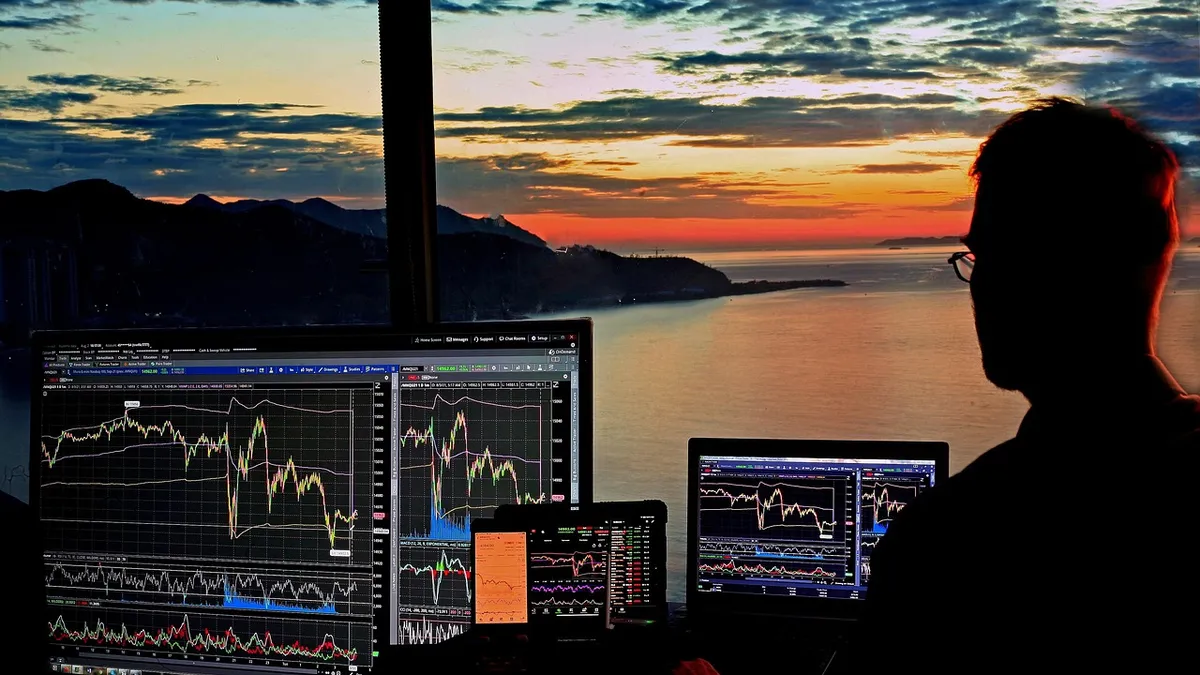
    Note: This content is general information only and does not constitute personal financial advice. Trading signals, CFDs, and margin FX are high-risk products. Always consider your own circumstances, read the relevant product disclosure statements, and seek independent financial advice before trading.

    🛠️ Tools Crazii JTVertex Uses Right Now

    Signals Platform

    Crazii — Live Trading Signals

    Tired of staring at charts for hours and still missing entries? Crazii delivers structured signals so you spend less time second-guessing and more time executing with a plan.

    Join Crazii Signals
    Trading Platform

    AIMS — Execution Platform

    A signal without a reliable platform to execute it is just noise. AIMS gives you the infrastructure to act on your signals quickly and cleanly.

    Open AIMS Account
    Table of contents

    Which TradingView indicators actually generate reliable trading signals?

    Which TradingView indicators actually generate reliable trading signals?
    💡

    Key points: The most reliable TradingView trading signals come from combining momentum, trend, and volume indicators rather than relying on a single tool. RSI, MACD, EMA crossovers, and VWAP consistently outperform exotic alternatives when tested across real market conditions over multiple months.

    Most traders start with the wrong question. They ask “which indicator is best?” when the real question is “which combination confirms an edge without contradicting itself?” Here is the honest answer from someone who has run these setups on live accounts. The RSI (Relative Strength Index) remains the backbone of most signal setups on TradingView because it is genuinely readable. When RSI drops below 30, the asset is considered oversold; above 70, overbought — those are the thresholds J. Welles Wilder established, and they still hold as a starting filter. But used alone, RSI generates too many false entries in trending markets. That is not a flaw in the indicator. That is a flaw in how most people deploy it. Pair RSI with a 20-period Exponential Moving Average and the picture sharpens. The EMA tells you the direction of momentum; RSI tells you whether you are buying strength or chasing exhaustion. When price is above the EMA and RSI crosses back above 30 after a dip, that is a structurally sound long signal. Not perfect. But structurally sound. MACD (Moving Average Convergence Divergence) adds a third layer. A histogram crossing from negative to positive while price holds above the EMA and RSI recovers from oversold territory — that confluence is the kind of signal worth acting on. The three indicators are not redundant. They are measuring different things: trend direction, momentum speed, and momentum relative to price range. VWAP (Volume Weighted Average Price) is underused by retail traders in Australia. Institutions use it constantly. Price reclaiming VWAP after a pullback, especially during the first two hours of a session, is one of the cleaner intraday signals available on TradingView.

    The evidence: According to ASIC Report 828 (published January 2026), 68% of Australian retail CFD clients lost money in FY2023–24. That figure is not an argument against trading — it is an argument for using structured, rules-based signal setups rather than discretionary gut calls. Traders with a defined entry framework are at least working from a repeatable process that can be refined.

    Expert tip from Crazii JTVertex: The one thing nobody tells you about MACD on TradingView is that the default settings (12, 26, 9) are calibrated for daily charts. If you drop to a 15-minute chart without adjusting, the histogram fires so frequently it becomes noise. We personally use (8, 21, 5) on intraday setups — not because it is textbook, but because it reduces lag enough to catch the early part of a move rather than confirming it after it has already run. That is a setting we arrived at after watching entries miss by two candles too many times.

    1

    Set your trend filter first

    Add a 50 EMA to your chart. Only take long signals above it and short signals below it. This one rule eliminates a large proportion of counter-trend false entries before you even look at RSI or MACD.

    2

    Add RSI as your momentum gate

    Set RSI to 14 periods. Use the standard 30/70 thresholds. Only act on signals that align with the EMA direction and show RSI recovering from an extreme — not RSI already at 65 and climbing.

    3

    Use MACD for timing confirmation

    Wait for the MACD histogram to confirm the direction before entering. This delays your entry slightly but dramatically reduces the number of trades you take against momentum.

    best trading signals TradingView indicators RSI MACD EMA setup Crazii JTVertex
    A three-indicator confluence setup for generating reliable TradingView trading signals — trend, momentum, and confirmation working together. · Photo: Pexels / Pixabay
    That is the foundation. Everything else — Bollinger Bands, Ichimoku, Supertrend — layers on top of this core. Do not add complexity until you have mastered the base. And if you want to see how this stacks up against dedicated signal platforms, the best trading signals and tools for Australian traders in 2026 covers the full landscape.

    How do you read TradingView trading signals without misreading the market?

    How do you read TradingView trading signals without misreading the market?
    💡

    Key points: Misreading TradingView signals usually comes down to timeframe mismatch, ignoring market context, and acting on a single indicator in isolation. Reading signals correctly means understanding what the indicator is measuring, not just what it is showing.

    Meet Marcus. He is a 34-year-old project manager from Brisbane who started trading FX pairs in 2023. He had TradingView open every morning before work, a handful of indicators set up, and a genuine willingness to learn. Six months in, he was still losing on more trades than he was winning — not by a catastrophic margin, but enough to feel like the signals were lying to him. They were not lying. He was misreading them. The most common misread is treating a signal as a trade instruction rather than a probability filter. When RSI crosses below 30, that does not mean “buy now.” It means the asset has reached a level where buying pressure has historically been more likely to emerge than selling pressure. That is a conditional statement, not a command. Context is everything. RSI at 28 on a stock in a confirmed downtrend with no catalyst is very different from RSI at 28 on a currency pair that has just bounced off a key support level with volume expanding. The number is the same. The signal quality is not. Timeframe alignment is where Marcus went wrong. He was taking 15-minute signals against a daily trend that was clearly bearish. The short-term indicator said “oversold and bouncing” while the bigger picture said “still falling.” He was fighting the tide with a teacup.

    The evidence: ASIC Report 828 (January 2026) found that among active traders executing 50 or more open positions per month, 19% of otherwise-profitable clients lost money after fees. More trading, triggered by more signals, did not produce better outcomes. Selectivity — taking fewer, higher-quality signals — is a structural edge that most retail traders undervalue.

    The fix is a top-down approach. Start on the daily chart. Identify the trend. Drop to the four-hour chart. Confirm the trend and look for a setup forming. Then drop to the 15-minute chart for entry timing. If all three timeframes agree, the signal is worth acting on. If they conflict, the signal is noise.

    Expert tip from Crazii JTVertex: Here is something we learned the hard way: when a signal fires right before a major economic release — US CPI, RBA rate decision, NFP — the technical picture is almost irrelevant. The market is about to be repriced by news, not by chart patterns. We now have a personal rule: no new entries in the 30 minutes before a tier-one release. That single rule has saved more capital than any indicator tweak.

    Marcus eventually figured this out. He stopped taking every RSI dip as an entry and started asking “what does the daily chart say first?” His win rate improved — not because the indicators changed, but because he changed how he read them. He appears again later in this article, and the difference in his account is worth seeing. If you are exploring whether structured signal services handle this context-reading for you, the review at Is Top Trading Signals Legit or Just Another Overhyped Service is worth your time.
    reading TradingView trading signals timeframe alignment top-down analysis Crazii JTVertex
    Top-down timeframe alignment — how to read TradingView signals in the context of the broader market trend. · Photo: TheInvestorPost / Pixabay

    Want signals that already have context built in?

    Crazii JTVertex publishes structured entries with trend context, not just raw indicator readings.

    Join Crazii Signals

    What separates a paid TradingView signal tool from a free one?

    What separates a paid TradingView signal tool from a free one?
    💡

    Key points: Paid TradingView signal tools typically offer real-time alerts, multi-timeframe confluence scanning, and backtested logic. Free indicators provide the raw building blocks but require you to do the filtering, timing, and context-reading yourself — which is where most retail traders struggle.

    You are probably thinking: the free indicators on TradingView are the same ones the paid scripts use. And you are not entirely wrong. The underlying maths of RSI, MACD, and EMA are public domain. What paid scripts add is the logic layer — the rules that determine when those indicators align in a meaningful way and then alert you automatically rather than requiring you to watch a screen for hours. That distinction matters more than most traders realise. The gap between a free indicator and a paid signal tool is not about the formula. It is about who does the filtering. With free indicators, you are the filter. You decide when RSI plus MACD plus EMA confluence is strong enough to act on. That requires discipline, experience, and time in front of the screen — often a lot of time. Paid TradingView signal scripts automate that filtering. They scan for the confluence conditions you define (or that the script developer has backtested) and fire an alert when those conditions are met. You do not need to watch every candle. You get a notification and then assess whether the context supports the trade.

    The evidence: MetaQuotes’ MQL5 platform lists over 3,200 free and commercial signals in its marketplace as of June 2026. The sheer volume means quality varies enormously. The value of a paid, well-documented signal tool is not exclusivity — it is curation and accountability. A paid script developer who publishes their backtest results and drawdown history is offering something a free indicator simply cannot: a track record with skin in the game.

    What to look for in a paid TradingView signal script before you spend anything: – Published backtest results covering at least 12 months of data, not cherry-picked periods – Maximum drawdown clearly stated (personally, we treats anything above 20% as a red flag — that is a heuristic, not a rule) – Number of trades in the backtest: we would not trust a strategy with fewer than 100 historical trades, because the sample size is too small to be meaningful – Win rate combined with risk-reward ratio — a 40% win rate with a 1:3 risk-reward can be more profitable than a 65% win rate at 1:1

    Expert tip from Crazii JTVertex: The most underrated feature in any paid TradingView signal tool is the alert customisation. Crazii JTVertex specifically looks for scripts that let you set alerts based on confluence conditions across multiple timeframes simultaneously — not just “RSI crossed 30” but “RSI crossed 30 on the 1H while price is above the 4H EMA.” That specificity is what separates a signal worth acting on from background noise. Most traders never configure this properly because it takes 20 minutes to set up properly. That 20 minutes is worth more than a month of watching screens.

    paid vs free TradingView signal indicator comparison Australian traders Crazii JTVertex
    Comparing paid and free TradingView signal tools — what the price difference actually buys you as an Australian retail trader. · Photo: TheInvestorPost / Pixabay

    Not sure which signal setup suits your trading style?

    Join the Crazii JTVertex community on Telegram — active traders share setups, discuss indicators, and help each other filter signal quality.

    Join the Telegram Group

    What are the most common mistakes traders make with TradingView signal indicators?

    What are the most common mistakes traders make with TradingView signal indicators?
    💡

    Key points: The three most costly mistakes with TradingView signals are over-optimising indicators to past data, ignoring fees in profitability calculations, and treating alerts as automatic trade instructions without assessing market context. Each of these mistakes is avoidable with a clear process.

    Here is the thing nobody wants to say out loud: most traders who lose money with TradingView signals are not losing because the signals are bad. They are losing because of how they use them.
    Mistake 1
    Curve-fitting the backtest

    Adjusting indicator settings until the historical chart looks perfect is not strategy — it is post-rationalisation. A MACD setting that produces a beautiful equity curve on last year’s EUR/USD data will likely fail on this year’s data because the market conditions have changed. We have seen traders spend weeks optimising settings on TradingView’s strategy tester and then watch the same setup lose in live trading. The backtest is a tool for validation, not a guarantee of future performance.

    Mistake 2
    Ignoring the fee drag on signal frequency

    ASIC Report 828 (January 2026) found that 5% of retail clients who would have made a net profit in FY2023–24 ended up in a loss position purely because of fees. That is one in twenty profitable traders tipped into the red by transaction costs. For active traders executing 50 or more positions per month, 19% of otherwise-profitable clients lost money after fees. If your TradingView signal strategy fires 15 entries per week, you need to factor in spread, commission, and overnight funding costs before you can honestly assess whether the strategy is working. Most people do not do this calculation until it is too late.

    Mistake 3
    Acting on alerts without checking context

    An alert fires at 2 am Sydney time on a low-liquidity instrument with a major news event in four hours. Most traders either ignore it (and miss the move) or take it automatically (and get caught in the news spike). Neither approach is right. The alert is a prompt to assess, not a command to act. Building a 30-second pre-trade checklist — trend direction, upcoming news, spread width, session liquidity — before executing any signal is a habit that separates disciplined traders from reactive ones.

    Marcus, the Brisbane project manager from earlier, made all three of these mistakes in his first year. The curve-fitting cost him three months of wasted optimisation time. The fee drag cost him real money on a scalping strategy that looked profitable on paper. The context blindness cost him a particularly painful trade on a Thursday morning when the RBA surprised the market. He now runs a pre-trade checklist. His account has been positive for the last two quarters.

    The evidence: In FY2023–24, 133,674 Australian retail CFD clients lost money, with net losses exceeding $458 million — including $73 million in fees alone, according to ASIC Report 828. To put that in plain terms: if you spread $73 million across those losing clients, fees alone cost each one roughly $547 on average, before a single bad trade is counted. Fees are not a footnote. They are a core part of your trading cost structure.

    common mistakes TradingView signal indicators Australian retail traders Crazii JTVertex
    The three mistakes that undermine even well-constructed TradingView signal setups — and how to avoid them. · Photo: TheInvestorPost / Pixabay

    Want a structured approach that accounts for fees and context?

    The AIMS platform pairs with Crazii signals so your execution costs are transparent before you enter any trade.

    Open AIMS Account

    How do TradingView signals compare to other best trading signals platforms available to Australian traders?

    How do TradingView signals compare to other best trading signals platforms available to Australian traders?
    💡

    Key points: TradingView signals are self-managed — you set up the indicators, configure the alerts, and make the call. Dedicated signal platforms handle the analysis and delivery for you. The right choice depends on your available time, experience level, and whether you want to build a skill or access a service.

    This is where most comparison articles go vague. We will be direct. TradingView is a charting platform with signal capability built in. It is extraordinarily powerful for traders who want to build and manage their own signal logic. The Pine Script editor lets you code custom indicators, the alert system is robust, and the community scripts library means you can find almost any indicator someone else has already built. What TradingView does not do is make decisions for you. That is both its strength and its limitation.
    Feature TradingView (Self-Managed) Dedicated Signal Platform (e.g. Crazii)
    Signal generation You configure and interpret Analyst-generated, delivered to you
    Time required High — daily chart monitoring Low — receive and assess alerts
    Skill required Moderate to high Low to moderate
    Customisation Full control via Pine Script Limited to provider’s methodology
    Accountability Entirely yours Shared — provider has a track record
    Best for Experienced traders building systems Traders who want structure without setup
    The honest answer is that TradingView and a dedicated signal platform are not competitors — they are different tools for different stages of a trader’s development. Many experienced traders use both: TradingView for their own analysis and a signal service as a second opinion or as the primary source during busy periods. For Australian traders who are newer to the market, the data from ASIC is sobering: 74% of retail clients acquired through paid online advertising lost money in FY2023–24. That cohort tends to be newer traders who have not yet built a structured approach. A signal platform that provides context, entry levels, and risk parameters is a better starting point than building a TradingView setup from scratch without knowing what you are doing.

    Expert tip from Crazii JTVertex: We use TradingView for chart analysis and Crazii for signal delivery. The combination means we can cross-reference a Crazii signal against we’s own TradingView setup before acting. When they agree, we’s confidence in the trade is higher. When they disagree, we wait. That cross-referencing habit has been one of the most valuable things we has added to my process — not because one source is right and one is wrong, but because disagreement is itself a signal to pause.

    For a broader view of signal communities and Telegram-based services, the comparison at Best Trading Signals Group Telegram Ranked for Accuracy in 2026 is worth reading alongside this article. And if you want to see how specific Telegram signal services performed historically, Best Trading Signals on Telegram That Delivered Results in 2025 covers the track record question in detail.
    TradingView signals vs dedicated signal platforms comparison for Australian traders Crazii JTVertex
    TradingView self-managed signals versus dedicated signal platforms — a practical comparison for Australian retail traders. · Photo: TheInvestorPost / Pixabay

    Frequently asked questions about best trading signals TradingView

    Frequently asked questions about best trading signals TradingView
    💡

    Key points: The most common questions about TradingView trading signals centre on reliability, cost, setup complexity, and whether they work for beginners. The answers depend heavily on how the signals are used, not just which indicators are chosen.

    Are TradingView trading signals reliable enough to trade live?

    TradingView signals are as reliable as the logic behind them. A well-configured multi-indicator setup with proper backtesting can produce consistent signals, but no indicator is reliable in isolation. The reliability comes from the rules you apply around the signal, not the signal itself.

    What is the best free TradingView indicator for generating trading signals?

    RSI combined with a 50-period EMA is the most consistently useful free setup on TradingView for Australian retail traders. MACD adds timing confirmation. These three indicators together provide trend direction, momentum, and entry timing without requiring paid scripts.

    Do TradingView signals work for forex and CFD trading in Australia?

    Yes, TradingView supports forex, indices, commodities, and CFD charting. The signal logic applies across instruments, though each market has different liquidity profiles and session times that affect how signals perform. Always test on the specific instrument you intend to trade.

    How many TradingView indicators should I use for a reliable signal?

    Three to four indicators covering different measurement types — trend, momentum, and volume — is the practical limit before signals start contradicting each other. More indicators do not produce better signals; they produce more noise. We personally use three as a maximum on any single setup.

    Is a paid TradingView signal script worth it for beginners?

    For beginners, a paid script with published backtest results and clear entry/exit rules is often more useful than building a free setup from scratch, because it provides structure. The risk is paying for a script without verifying its track record. Always check the number of historical trades in the backtest before purchasing.

    How do TradingView signals fit into a broader trading plan?

    Signals are one input into a trading decision, not the whole decision. A complete trading plan includes position sizing, risk per trade, maximum daily loss limits, and rules for when not to trade. TradingView signals work best when they sit inside a framework like this rather than driving the entire process.

    Ready to talk through your signal setup?

    Contact Crazii JTVertex directly — get a structured conversation about which tools and platforms suit your trading goals without the guesswork.

    Contact Crazii JTVertex

    Note: Trading CFDs, forex, and other leveraged products involves significant risk of loss. According to ASIC Report 828 (January 2026), 68% of Australian retail CFD clients lost money in FY2023–24. This article provides general information only and is not personal financial advice. Consider your own financial circumstances and read the relevant product disclosure statements before making any trading decisions.

  • Best Trading Signals on Telegram That Delivered Results in 2025

    Best Trading Signals on Telegram That Delivered Results in 2025

    The best trading signals on Telegram that actually delivered results in 2025 were not the loudest channels — they were the most disciplined ones. At Crazii JTVertex, we have spent considerable time inside these channels, tracking what separated the ones worth following from the ones that quietly cost traders real money. This article on best trading signals on Telegram that delivered results in 2025 will walk you through exactly what worked, what failed, and how to evaluate any signal source before you risk a single dollar. By the end, you will have a clear framework to assess any Telegram signal channel — and know precisely which questions to ask before you follow a single trade.
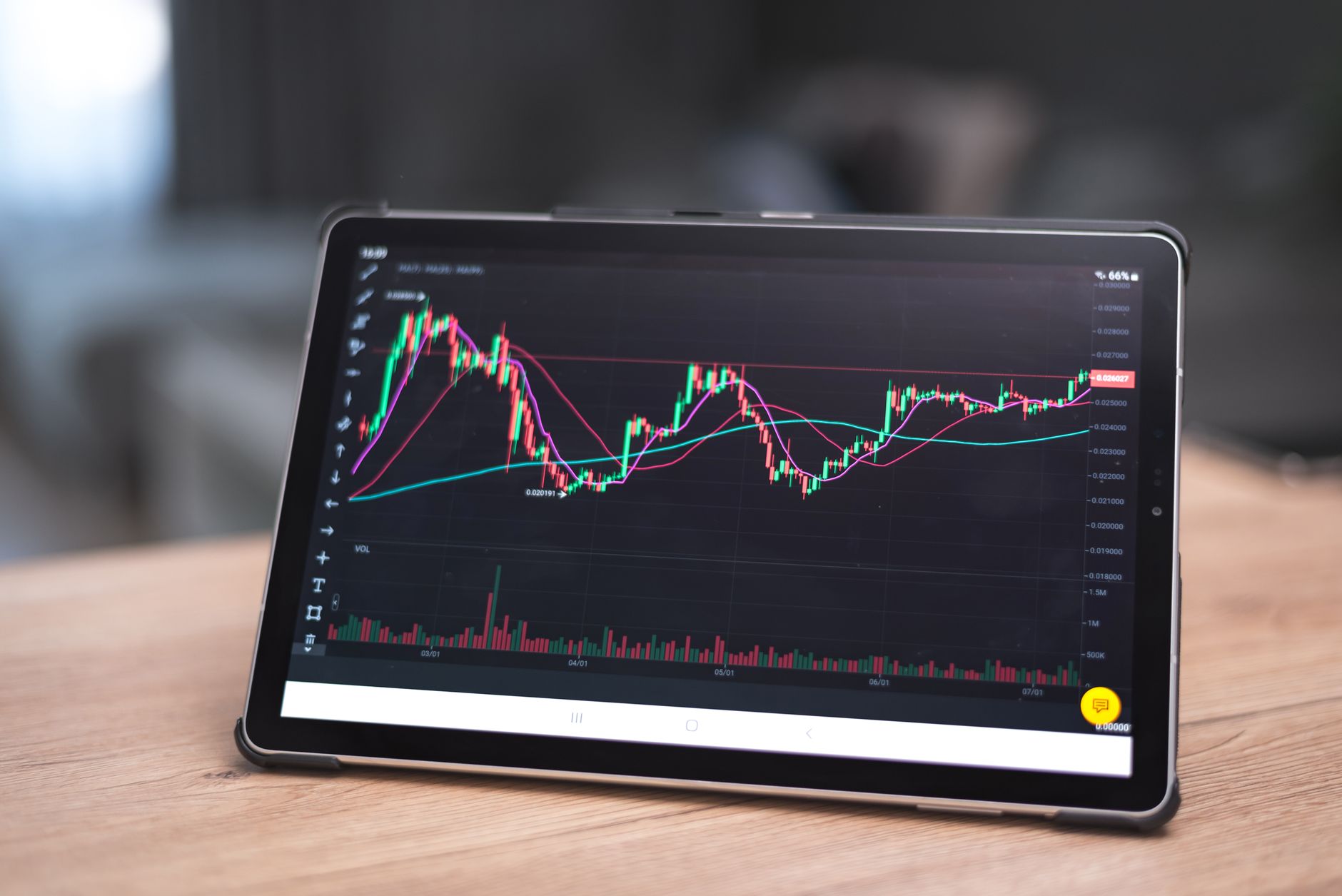
    Start with the right tools before the right signals

    Crazii JTVertex connects Australian traders with verified platforms and signal resources — no hype, no guesswork.

    Explore Crazii JTVertex
    Table of contents

    What made the best trading signals on Telegram actually work in 2025?

    What made the best trading signals on Telegram actually work in 2025?
    💡

    Key points: The best trading signals on Telegram in 2025 combined transparent track records, defined risk parameters on every call, and consistent entry logic — not just a high win rate. Channels that posted stop-loss levels and explained the reasoning behind each trade consistently outperformed those that did not.

    Here is the uncomfortable truth most signal sellers will not say out loud: a 70% win rate means almost nothing without knowing the risk-to-reward ratio on each trade. Mitch, a 34-year-old electrician from Brisbane, joined three Telegram signal channels in early 2025. Two of them boasted win rates above 80%. One was quiet, methodical, and posted maybe four signals a week. By June, the two flashy channels had wiped out most of what he had put in. The quiet one had grown his account by a meaningful margin — not because it won more often, but because when it lost, the losses were small and contained. That contrast is the whole story. What separated the genuinely useful channels in 2025 came down to three things. First, every signal included a defined stop-loss — not optional, not “suggested,” but built into the call. Second, the channel operators explained their reasoning in plain language. Not just “buy gold at 2,310” but “buying here because price is holding above the weekly structure with momentum confirming on the four-hour.” Third, they published their losses publicly. That last point sounds obvious. It is shockingly rare.
    The evidence: According to ASIC Report 828 (published January 2026, covering FY2023–24), 68% of retail CFD clients in Australia lost money during that period, with net losses exceeding $458 million across the sector. That figure includes $73 million in fees alone. The data makes clear that the environment retail traders are operating in is genuinely difficult — signals do not change the underlying market, but disciplined signal use can change how a trader responds to it.

    The channels that worked in 2025 also had one more quality that is hard to quantify: they treated their subscribers as adults. No countdown timers. No “VIP access closing tonight.” Just consistent, reasoned calls with full transparency on outcomes.

    Expert tip from Crazii JTVertex: One thing we noticed that you will almost never read elsewhere — the channels with the best actual results in 2025 typically had a noticeable gap between signals. Three to five days sometimes. The temptation to fill silence with low-conviction calls is enormous when you have subscribers watching. The best operators resisted it. If a channel is posting ten signals a day, that is not diligence — that is noise dressed up as activity.

    1

    Check the stop-loss discipline first

    Before you follow any signal, scroll back through the last 30 calls. If more than a handful are missing a stop-loss level, close the channel. That single filter removes the majority of problematic sources immediately.

    2

    Look at how losses are reported

    A channel that only posts wins is not a signal service — it is a highlight reel. Find the loss posts. Read how they are framed. If losses are blamed on “market manipulation” or simply not posted, that tells you everything you need to know about the operator’s honesty.

    3

    Verify the reasoning, not just the outcome

    The best signal channels in 2025 gave enough context that a trader could learn from the call — win or lose. If the reasoning is absent, you are not building skill. You are just following orders blindly, which is a fragile position to be in.

    For a broader look at how signal tools fit into a complete trading approach, the guide on best trading signals and tools for Australian traders 2026 covers the full picture across platforms and asset classes.
    best trading signals on Telegram 2025 results Crazii JTVertex
    Evaluating Telegram signal channels by track record and risk discipline — Crazii JTVertex · Photo: TheInvestorPost / Pixabay

    How do Telegram trading signal channels compare to other signal delivery methods?

    How do Telegram trading signal channels compare to other signal delivery methods?
    💡

    Key points: Telegram signal channels offer speed and community but lack the built-in accountability of platforms like MetaTrader’s Signals marketplace, which hosts over 3,200 verified signal providers with auditable performance data. The right choice depends on whether you prioritise speed of delivery or verifiability of results.

    So why Telegram at all, when other options exist? That is a fair question — and we will give you a straight answer rather than a diplomatic one. Telegram is fast. When a signal fires at 3 AM Sydney time during a London open move, a push notification on your phone beats an email by minutes. In fast-moving markets, minutes matter. That speed advantage is real and it is why thousands of Australian traders use Telegram-based signals despite the lack of built-in verification. But speed without accountability is dangerous.
    Signal Delivery Method Speed Verifiability Community Support Risk Transparency
    Telegram channels Very fast (push notification) Low (self-reported) High (group chat) Varies widely
    MetaTrader Signals marketplace Moderate (platform-dependent) High (audited by MetaQuotes) Low High (drawdown visible)
    Copy trading platforms Automatic (no manual entry) High (live account tracking) Moderate High (equity curve visible)
    Email/SMS alert services Slow (5–15 minute delay common) Low to moderate None Varies
    MetaTrader’s built-in signals marketplace hosts more than 3,200 free and commercial signal providers — and crucially, every one of them has an audited equity curve you can examine before subscribing. That is a meaningful difference from a Telegram channel where the operator controls what gets posted and what gets quietly deleted. According to ASIC Report 828, 26,243 retail clients in Australia used copy trading services during FY2023–24 — a number ASIC described as reflecting “a growing interest in copy trading.” That is roughly one in five active retail traders experimenting with following someone else’s trades in some form. The interest is real. The question is whether the infrastructure around it is sound.

    Expert tip from Crazii JTVertex: Here is something we learned the hard way — the best use of a Telegram signal channel is not as your sole signal source. Use it as a confirmation layer. If your own analysis points in the same direction as the signal, that confluence is meaningful. If the signal contradicts your read of the chart, that is worth pausing on rather than blindly following. Telegram works best as a second opinion, not a first instruction.

    The traders who got the most from Telegram signals in 2025 were not the ones who followed every call. They were the ones who used the signals to sharpen their own thinking — cross-referencing with their own setups, questioning the reasoning when it did not match what they saw on the chart. If you want to go deeper on signal sources with verified win rates, the article on best trading signals Telegram group with verified win rates 2026 walks through how to read those track records properly.
    Telegram trading signal channels vs MetaTrader signals comparison Crazii JTVertex
    Comparing Telegram signal channels against platform-verified alternatives for Australian traders · Photo: TheInvestorPost / Pixabay

    Connect with a trading community that takes risk seriously

    Join the Crazii JTVertex group for signal discussions, platform guidance, and support from traders who understand the Australian market.

    Join the Telegram group

    What are the most common mistakes traders make when following Telegram signals?

    What are the most common mistakes traders make when following Telegram signals?
    💡

    Key points: The three most damaging mistakes when following Telegram trading signals are entering trades late after missing the original price, ignoring the stated stop-loss because the trade “looks like it will recover,” and following too many channels simultaneously so that conflicting signals create paralysis or overtrading.

    Mitch from Brisbane — remember him? — made all three of these mistakes in his first month. He would see a signal come through, hesitate, watch the price move away from the entry, then enter anyway because he did not want to miss the move. That late entry meant his stop-loss was now proportionally much larger relative to his entry. A signal designed for a 1:2 risk-to-reward ratio became a 1:0.8 trade by the time he got in. Over enough trades, that arithmetic destroys an account.
    Mistake 1
    Entering late and widening your effective risk

    If you miss the stated entry price by more than a small margin, the signal’s original risk parameters no longer apply to your trade. The right response is to skip that signal entirely and wait for the next one — not to chase price. This is the single most common way traders turn a profitable signal source into a losing experience for themselves.

    Mistake 2
    Moving or ignoring the stop-loss

    ASIC data from Report 828 shows that among active traders placing 50 or more open positions per month, 19% of those who would have been profitable had their profits eliminated by fees and overtrading. The pattern is consistent: more activity, worse outcomes. Moving a stop-loss further away from entry to “give the trade more room” is the trading equivalent of doubling down at a poker table because you are already invested. The discipline to take the loss at the stated level is what keeps you in the game.

    Mistake 3
    Following too many channels at once

    Three channels posting conflicting signals on the same pair at the same time does not give you more information — it gives you noise. We personally would not follow more than two signal sources simultaneously, and only if they focus on different markets or timeframes. When channels conflict, most traders default to the most recent signal, which is often the worst-timed one.

    The evidence: ASIC Report 828 found that 5% of retail CFD clients would have made a net profit in FY2023–24 but ended up in a loss position solely because of fees. That means fees — not bad signals, not bad analysis — were the deciding factor for one in twenty traders. If you are following high-frequency signal channels that push you toward more trades, you are almost certainly paying more in spread and commission than you realise. Fewer, higher-conviction trades tend to produce better net outcomes.

    Expert tip from Crazii JTVertex: We used to track every signal channel we followed in a simple spreadsheet — entry, stop, target, outcome, and whether we actually took the trade at the stated price. After three months, the data was confronting. We had a positive expectancy on the signals we missed the entry on and a negative one on the trades we chased. The channel was not the problem. We was the problem. That spreadsheet changed how we trade signals permanently.

    common mistakes following Telegram forex signals Australian traders Crazii JTVertex
    The three most costly signal-following errors seen among retail traders in 2025 · Photo: TheInvestorPost / Pixabay

    Which Telegram signal channels for forex and gold showed verified performance in 2025?

    Which Telegram signal channels for forex and gold showed verified performance in 2025?
    💡

    Key points: Verified performance in 2025 came from Telegram channels that linked to audited third-party track records, focused on a narrow set of instruments (typically XAUUSD, EUR/USD, or GBP/USD), and maintained a minimum of 100 completed trades before making any performance claims. Channels without this baseline should be treated as unverified regardless of their stated win rate.

    Let we be direct here, because this section is where most articles either make things up or get vague. We is not going to name specific third-party Telegram channels and claim they are the “best” — because any channel’s performance changes, operators change, and what was solid in mid-2025 may look very different by the time you read this. What we can tell you is the framework that identifies genuinely verified performance. The personal heuristic we uses: any signal provider with fewer than 100 completed trades in their track record is not worth evaluating yet. That sample size is too small to distinguish skill from luck. This is we’s own rule of thumb, not a statistical standard — but it has filtered out a lot of noise over the years.
    Evaluation Criterion What to Look For Red Flag
    Track record length Minimum 100 completed trades across varied market conditions Under 50 trades, or only trades from a trending period
    Third-party verification Myfxbook, MetaTrader Signals, or broker-verified statements Screenshots only, no live account link
    Maximum drawdown Clearly disclosed; we personally treat anything above 20% as a significant concern Drawdown not disclosed or described as “minimal”
    Instrument focus One to three instruments covered with clear expertise Signals across 15+ instruments with no specialisation
    Risk per trade Stated clearly (e.g., “risk 1% per signal”) No risk guidance, or “depends on your account”
    Loss transparency Losses posted promptly and without deflection Only wins posted, or losses blamed on external factors
    Gold (XAUUSD) was one of the most active instruments for Telegram signal channels in 2025, and for good reason — the volatility created genuine opportunities for traders with clear entry criteria. But it also created the perfect environment for channels to cherry-pick impressive-looking wins while quietly burying the losses. The article on best XAUUSD trading strategy for traders who value precision goes into the specific setup criteria that separate high-probability gold trades from noise.

    Expert tip from Crazii JTVertex: One thing that almost no one talks about — the best Telegram signal channels for gold in 2025 tended to go quiet during high-impact news events rather than posting signals into the volatility. That restraint is a genuine quality signal. Any channel posting XAUUSD calls during NFP or FOMC without an explicit disclaimer about the elevated risk is either reckless or inexperienced. Silence during chaos is sometimes the most professional thing a signal operator can do.

    Mitch eventually found a channel that focused exclusively on XAUUSD, posted every trade including the losses, and linked to a verified Myfxbook account. The equity curve had two significant drawdown periods visible — which initially made him nervous. But those visible drawdowns were actually what convinced him the track record was real. A perfectly smooth equity curve on a live account is almost always fabricated.
    verified Telegram gold forex signal channel performance criteria 2025 Crazii JTVertex
    Key verification criteria for Telegram signal channels covering forex and gold markets · Photo: TheInvestorPost / Pixabay

    Ready to trade with a platform built for Australian conditions

    AIMS gives Australian traders access to competitive conditions with transparent fee structures — register through Crazii JTVertex to get started.

    Open an AIMS account

    How should Australian traders evaluate trading signal sources before committing?

    How should Australian traders evaluate trading signal sources before committing?
    💡

    Key points: Australian traders should evaluate any trading signal source against four criteria before committing funds: verified track record with third-party audit, clear risk parameters on every signal, ASIC-compliant disclosure from the provider, and alignment with the trader’s own instrument knowledge and available trading hours.

    Here is the question you are probably sitting with right now: “This all sounds reasonable, but how do I actually apply it without spending weeks researching every channel?” Fair. Let we give you a practical sequence. The Australian context matters here in a specific way. ASIC Report 828 found that 74% of retail clients acquired through paid online advertising lost money in FY2023–24 — a worse outcome than the already-difficult sector average of 68%. If a Telegram signal channel found you through a Facebook or Instagram ad, that provenance alone is worth noting. It does not make the channel bad, but it is a data point.
    1

    Run the 15-minute audit before you join

    Search the channel name plus “review” and “scam” before subscribing. Look for the Telegram channel’s linked website. If there is no website, no legal entity name, and no disclosure document — that is a meaningful absence. Legitimate signal providers operating in or targeting Australia should be able to tell you clearly what they are and what they are not (e.g., “this is general information, not personal financial advice”).

    2

    Paper trade the signals for two weeks before risking real money

    This sounds slow. It is also the single most effective filter available. Track every signal in a spreadsheet — entry, stop, target, and whether you would have hit the entry at the stated price. After two weeks, you will know whether the channel’s signals are executable in real conditions, not just on a screenshot.

    3

    Match the signal timing to your actual availability

    A channel focused on London session breakouts at 6 PM AEST is usable for most Australian traders. A channel posting New York open signals at 1 AM AEST is not — unless you are prepared to be awake and alert at that hour. Signals you cannot execute at the stated price are not signals. They are noise with a timestamp.

    4

    Understand the instrument before you follow signals on it

    This is the one that most new traders skip. If you do not understand why a XAUUSD signal is being placed — what the key levels are, what the broader trend context is — you cannot evaluate whether the signal makes sense. And if you cannot evaluate it, you are not trading. You are gambling with extra steps. The guide on best trading buy sell signal software for retail traders in 2026 covers the tools that help you build that instrument understanding alongside signal use.

    The evidence: ASIC Report 828 notes that 85% of retail clients lost money trading options CFDs in FY2023–24 — the highest loss rate of any product category reviewed. The more complex and leveraged the instrument, the more critical it is that any signal source you follow has genuine expertise in that specific product. General forex signal channels posting options calls are almost always operating outside their competence.

    Mitch now follows one channel. One. He paper-traded it for three weeks before committing any capital. He understands the instruments it covers. And when the signals do not match what he sees on his own chart, he skips them — which happens more often than you might expect, and that is fine. That selective approach is what the data supports.
    how Australian traders evaluate Telegram signal sources ASIC compliance Crazii JTVertex
    A practical evaluation framework for Australian traders assessing Telegram signal channels · Photo: TheInvestorPost / Pixabay

    Frequently asked questions about Telegram trading signals

    Frequently asked questions about Telegram trading signals

    Are Telegram trading signals legal in Australia?

    Providing financial product advice in Australia generally requires an Australian Financial Services (AFS) licence under the Corporations Act. Telegram channels that provide specific trading recommendations to Australian residents may be operating as unlicensed advisers. Always check whether a signal provider holds or is authorised under an AFS licence before following their calls.

    How many trades should a signal channel have on record before I trust it?

    In we’s view, fewer than 100 completed trades is too small a sample to draw meaningful conclusions about a channel’s edge. This is a personal heuristic, not a statistical standard — but it has filtered out most unreliable sources before they caused real damage. Look for a track record that spans both trending and ranging market conditions.

    Can Telegram signals work alongside copy trading platforms?

    Yes — and the combination can be effective. Use a Telegram channel for context and reasoning, and a copy trading platform (like the MetaTrader Signals marketplace, which hosts over 3,200 providers) for audited, automatically executed trades. The two serve different functions and are not mutually exclusive for an informed trader.

    What is a realistic win rate to expect from a good Telegram signal channel?

    Win rate alone is not a useful metric without knowing the risk-to-reward ratio. A channel winning 45% of trades at a 1:3 risk-to-reward ratio is more profitable than one winning 75% at 1:0.8. Minn would be more interested in a channel’s average risk-to-reward and maximum drawdown than its headline win rate figure.

    Should I risk more per trade when I have high confidence in a signal?

    Minn would not recommend it, and the ASIC data supports caution here. Among active retail traders placing 50 or more positions per month, 19% of those who would otherwise have been profitable ended up in a loss after fees. More activity and larger position sizing tend to amplify losses more reliably than they amplify gains. Consistent position sizing is a structural advantage, not a limitation.

    How do I know if a Telegram signal channel is fabricating its results?

    The clearest indicator is whether the track record is hosted on a third-party platform like Myfxbook or the MetaTrader Signals marketplace, where results cannot be retroactively edited. Screenshot-only track records, no matter how impressive, cannot be verified. A real equity curve will show drawdown periods. If you see only wins, you are seeing a highlight reel, not a track record.

    Note: This article contains general information only and does not constitute personal financial advice. Trading CFDs, forex, and related instruments involves significant risk — ASIC data shows that 68% of retail CFD clients in Australia lost money in FY2023–24. Every trader’s circumstances, risk tolerance, and financial situation are different. Before trading, please read the relevant Product Disclosure Statement and consider whether these products are appropriate for you. If in doubt, speak with a licensed financial adviser.

    Talk to Crazii JTVertex directly

    If you want to work through your signal evaluation process or find the right platform for your trading setup, we is available to help — no sales pitch, just a straight conversation.

    Get in touch