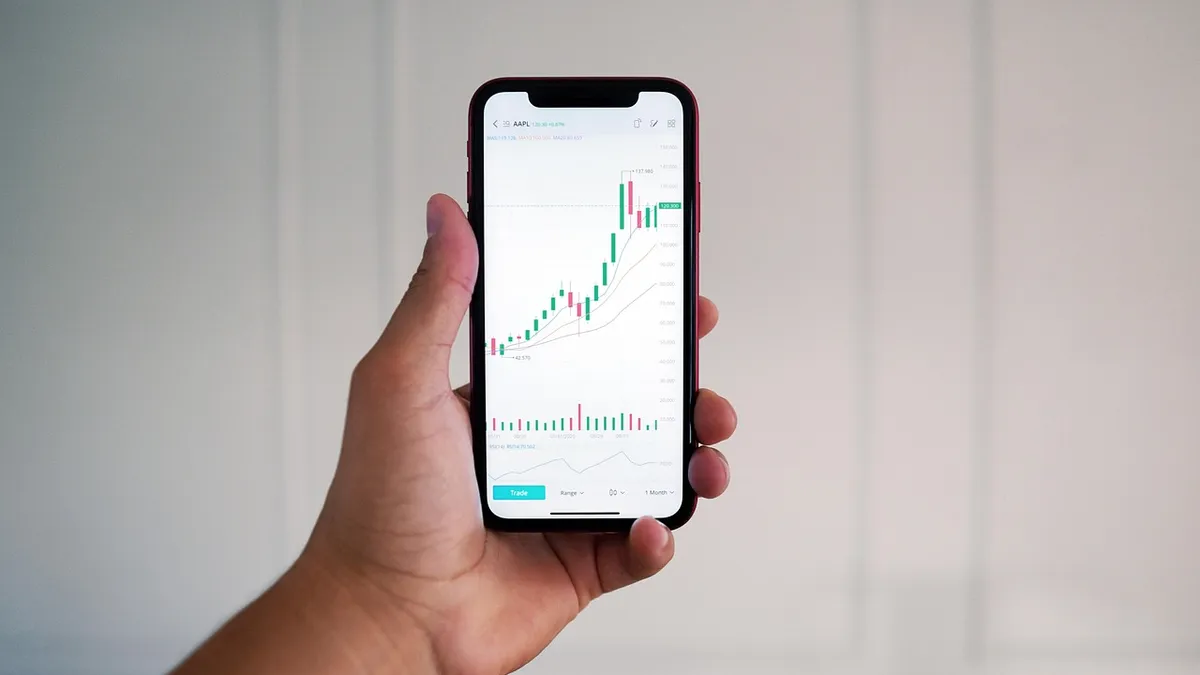
The best trading signals AI tools have changed what it means to be an active trader in Australia — and if you haven’t looked at them seriously yet, you’re likely leaving real opportunity on the table every single night while the markets keep moving. At Crazii JTVertex, we’ve spent considerable time testing, comparing, and trading alongside these tools so you don’t have to start from zero. This guide on best trading signals AI tools that work while you sleep will walk you through exactly what separates the tools worth your attention from the ones that quietly drain your account — and by the end, you’ll know precisely which category each major platform falls into, and what to do next.
Important note: This content is general information only and does not constitute personal financial advice. Trading CFDs, forex, and related instruments carries significant risk. According to ASIC Report 828 (January 2026), 68% of Australian retail CFD clients lost money in FY2023–24. Please consider your own financial circumstances and read all relevant disclosure documents before trading.
See how serious Australian traders are approaching signals in 2026
Crazii JTVertex has put together a free resource hub covering tools, platforms, and the signals that actually matter for the Australian market.
Visit Crazii JTVertexTable of contents
- 01 What are the best trading signals AI tools and how do they actually work?
- 02 Which AI trading signal platforms are worth using for Australian traders in 2026?
- 03 What mistakes do traders make when using AI trading signals?
- 04 How do you evaluate an AI trading signal before trusting it with real money?
- 05 How do AI trading signals fit into a broader Australian trading strategy?
- 06 Frequently asked questions about AI trading signals
What are the best trading signals AI tools and how do they actually work?
Key points: AI trading signal tools scan price data, volume, and market conditions in real time, then generate entry and exit suggestions based on pattern recognition and statistical modelling. The best tools combine multiple data inputs rather than relying on a single indicator — and they run continuously, including overnight when Australian traders are asleep.
The evidence: According to MetaQuotes, the MetaTrader platform alone hosts more than 3,200 free and commercial signal providers through its built-in marketplace (MQL5, accessed June 2026). That scale tells you something important: the demand for automated signal delivery is real and growing, but it also means the quality range is enormous. Most of those 3,200+ providers haven’t been independently verified.
Expert tip: Crazii JTVertex’s personal rule is to ignore any signal provider with fewer than 100 completed trades in their verified history. That’s not a statistic from anywhere — it’s a heuristic built from watching too many “promising” providers blow up after 30 trades when conditions shifted. Under 100 trades, you’re not reading performance. You’re reading luck. This is the author’s personal opinion, not a guarantee of outcomes.
Which AI trading signal platforms are worth using for Australian traders in 2026?
Key points: For Australian traders, the most relevant AI signal platforms integrate with ASIC-regulated brokers, support the instruments Australians actually trade (forex pairs, indices, commodities), and provide transparent verified performance data. The MetaTrader ecosystem, dedicated signal aggregators, and broker-integrated AI tools each serve different trader profiles.
| Platform type | Best for | Key strength | Watch out for |
|---|---|---|---|
| MT4/MT5 Signals marketplace | Traders already on MetaTrader | Verified live-account history, 3,200+ providers | Quality varies enormously — filter carefully |
| Dedicated AI signal aggregators | Multi-broker users wanting curated signals | Often include risk scoring and signal grading | Some rely on backtests rather than live data |
| Broker-integrated AI tools | Beginners wanting an all-in-one setup | Seamless execution, no third-party integration needed | Limited to that broker’s instruments and spreads |
| Copy trading platforms | Traders who want hands-off signal following | Automatic execution, no manual entry required | You share in the provider’s drawdowns too |
The evidence: ASIC Report 828 (January 2026) recorded 26,243 Australian retail clients using copy trading in FY2023–24 — a figure ASIC itself described as reflecting “a growing interest in copy trading.” To put that in perspective: that’s roughly one in five active CFD clients choosing to follow someone else’s signals rather than trade independently.
Ready to connect with a signals community built for serious traders?
Join the Crazii JTVertex group chat for real-time discussion, signal ideas, and support from traders who are actually in the market.
Join the Telegram group
What mistakes do traders make when using AI trading signals?

Key points: The most costly mistakes with AI trading signals aren’t technical — they’re behavioural. Traders override signals when they “feel wrong,” subscribe to providers based on short track records, and ignore how fees erode performance. Understanding these patterns is what separates traders who benefit from signals from those who simply add another cost.
A six-month track record during a trending market tells you almost nothing about how a strategy performs in different conditions. Minn’s personal heuristic: look for at least 100 completed trades across varied market conditions before trusting a provider with real capital. Fewer trades than that and you’re reading a lucky streak, not an edge.
A signal provider showing 80% annual returns means very little if the maximum drawdown was 60% of the account along the way. Most traders can’t psychologically or financially survive a 60% drawdown — they exit at the worst point and lock in the loss. Always check peak-to-trough drawdown figures before subscribing.
This is the most expensive mistake. ASIC data shows that among active traders executing 50 or more open positions per month, 19% of those who would have been profitable before fees ended up losing once fees were counted (ASIC Report 828, January 2026). More activity, more signals followed, more fees — and worse outcomes. AI signals work best as a filter and a prompt, not as a substitute for knowing why a trade makes sense.
Expert tip: Crazii JTVertex has made Mistake 3 personally. Early on, minn followed every signal from a well-rated provider for an entire month — including signals on instruments minn didn’t understand well. The signals that worked felt like skill. The ones that didn’t felt like the tool’s fault. Neither was true. The discipline to skip signals outside your core instruments is something no AI can enforce for you. This is personal experience, shared as a heuristic, not financial advice.
How do you evaluate an AI trading signal before trusting it with real money?
Key points: Evaluating an AI trading signal provider requires checking verified live-account history (not backtests), drawdown depth, trade frequency, fee impact, and instrument specificity. A structured evaluation process before committing capital is the single most effective risk-management step a trader can take with signal tools.
Verify that the track record is from a live account, not a demo or backtest
This is non-negotiable. Backtests are optimised to look good in hindsight — they don’t account for slippage, spread widening, or the psychological reality of following a drawdown in real time. On the MT5 Signals marketplace, providers are required to link to a live or real account. Check that the account type is marked as “real.” If a provider can’t or won’t show live-account performance, move on.
Look at maximum drawdown, not just profit
A drawdown of 20% or more is a flag worth pausing on — not necessarily a disqualifier, but a reason to ask whether you could hold through that kind of loss without exiting early. Most retail traders can’t. The emotional experience of watching your account drop 20% from peak is very different from seeing it as a number on a performance chart.
Check trade frequency and its relationship to fees
ASIC’s data is clear: more trading correlates with worse net outcomes for retail clients, largely because of fees. A signal provider executing 15–20 trades per day might show impressive gross returns — but after spreads, commissions, and swap fees, the net picture can look very different. Ask for or calculate the fee-adjusted return, not just the headline figure.
Confirm instrument alignment with your own trading plan
A signal provider specialising in exotic forex pairs is not particularly useful if you trade gold and the S&P 500. Match the provider’s instrument focus to your own. Signals outside your area of understanding are signals you can’t properly evaluate — which means you can’t make an informed decision about when to follow them and when to skip.
Paper trade for two to four weeks before going live
This step gets skipped constantly. Two to four weeks of paper trading alongside a signal provider costs you nothing and tells you a great deal: how often signals arrive, what the typical holding time is, how you respond emotionally to a losing streak, and whether the execution timing is realistic for your schedule. It also gives you a baseline to compare your live results against later.
The evidence: ASIC Report 828 (January 2026) found that 74% of retail clients acquired through paid online advertising lost money in FY2023–24 — worse than the sector average of 68%. The implication for signal evaluation: if you found a provider through an ad rather than through community research or a trusted referral, apply extra scrutiny. Marketing spend doesn’t correlate with signal quality.
Want a structured starting point for your signal evaluation process?
Crazii JTVertex has partnered with AIMS to give Australian traders access to a professional trading environment with clear performance transparency.
Explore AIMS
How do AI trading signals fit into a broader Australian trading strategy?
Key points: AI trading signals work best as one layer of a broader trading approach — not as a standalone system. For Australian traders, integrating signals with a clear risk management framework, an understanding of the instruments being traded, and awareness of ASIC-regulated platform options creates a more sustainable foundation than signals alone.
The evidence: ASIC Report 828 (January 2026) recorded 119,300 active CFD trading clients per quarter in FY2023–24 — down 76% from approximately 515,000 per quarter before the 2021 regulatory intervention. That reduction reflects a smaller but, in theory, more informed and better-capitalised retail trading population. The traders who remained after the intervention are, on average, more serious about their approach. That’s the cohort that benefits most from structured signal tools.
Frequently asked questions about AI trading signals
Key points: The most common questions about AI trading signals centre on reliability, cost, regulatory compliance, and how to start safely. These answers address the practical concerns Australian retail traders raise most often before committing to a signal tool or provider.
Are AI trading signals legal for Australian retail traders?
Yes. Using AI trading signals and copy trading services is legal in Australia. However, any signal provider or managed account service operating in Australia and charging fees for financial services may need to hold an Australian Financial Services Licence (AFSL). Always check whether the provider you’re using is appropriately licensed before subscribing.
Do AI trading signals guarantee profitable trades?
No signal tool guarantees profitable trades — and any provider claiming otherwise should be treated with significant scepticism. ASIC data shows 68% of Australian retail CFD clients lost money in FY2023–24 (ASIC Report 828, January 2026). Signals improve decision-making inputs; they don’t eliminate market risk.
How much do AI trading signal subscriptions typically cost?
Costs vary widely. The MT5 Signals marketplace includes free providers as well as commercial subscriptions. Paid providers typically range from a small monthly fee to several hundred dollars per month for premium services. Factor subscription costs into your overall fee calculation — ASIC’s data shows fees are a material component of retail losses.
Can I use AI trading signals if I’m a complete beginner?
You can, but with an important caveat. Signals work best when you understand enough about the instrument and strategy to evaluate whether a signal makes sense in context. Beginners who follow signals without any underlying understanding tend to struggle when signals conflict or when market conditions shift. Starting with paper trading alongside a signal provider is strongly recommended before using real capital.
What is the difference between AI trading signals and copy trading?
AI trading signals deliver entry and exit suggestions that you act on manually. Copy trading automatically replicates another trader’s positions in your account proportionally. Copy trading removes the manual step but also removes your ability to filter individual trades. ASIC recorded 26,243 Australian retail clients using copy trading in FY2023–24 (ASIC Report 828, January 2026).
Want to talk through which signal approach suits your situation?
Get in touch with Crazii JTVertex directly — no pressure, no scripts, just a genuine conversation about where you are and what makes sense for your trading.
Contact Crazii JTVertexImportant note: This article is general information only and does not constitute personal financial advice. Trading CFDs, margin forex, and related instruments involves significant risk of loss. According to ASIC Report 828 (published 20 January 2026, data for FY2023–24), 68% of Australian retail CFD clients lost money, with aggregate net losses exceeding $458 million. You should consider your own financial circumstances, objectives, and risk tolerance, and read all relevant product disclosure statements before making any trading decisions. Source: ASIC Report 828, https://download.asic.gov.au/media/tq0he35c/rep828-published-20-january-2026.pdf.
Leave a Reply