Tag: best trading signals ai

  • Best Trading Signals AI Tools That Work While You Sleep

    Best Trading Signals AI Tools That Work While You Sleep

    The best trading signals AI tools have changed what it means to be an active trader in Australia — and if you haven’t looked at them seriously yet, you’re likely leaving real opportunity on the table every single night while the markets keep moving. At Crazii JTVertex, we’ve spent considerable time testing, comparing, and trading alongside these tools so you don’t have to start from zero. This guide on best trading signals AI tools that work while you sleep will walk you through exactly what separates the tools worth your attention from the ones that quietly drain your account — and by the end, you’ll know precisely which category each major platform falls into, and what to do next.

    Important note: This content is general information only and does not constitute personal financial advice. Trading CFDs, forex, and related instruments carries significant risk. According to ASIC Report 828 (January 2026), 68% of Australian retail CFD clients lost money in FY2023–24. Please consider your own financial circumstances and read all relevant disclosure documents before trading.

    See how serious Australian traders are approaching signals in 2026

    Crazii JTVertex has put together a free resource hub covering tools, platforms, and the signals that actually matter for the Australian market.

    Visit Crazii JTVertex
    Table of contents

    What are the best trading signals AI tools and how do they actually work?
    What are the best trading signals AI tools and how do they actually work?
    💡

    Key points: AI trading signal tools scan price data, volume, and market conditions in real time, then generate entry and exit suggestions based on pattern recognition and statistical modelling. The best tools combine multiple data inputs rather than relying on a single indicator — and they run continuously, including overnight when Australian traders are asleep.

    Think about the last time you missed a move. Not because you didn’t know the setup — but because it happened at 2:00 am Sydney time, while you were asleep, and by the time you woke up the trade had already played out. That’s the quiet cost most traders don’t talk about. Not a dramatic blowup. Just a steady drip of missed entries and poorly-timed exits because human attention has limits that markets simply don’t respect. AI trading signal tools exist to close that gap. At their core, they’re software systems that monitor price action, volume, volatility indicators, and sometimes news sentiment simultaneously — then flag conditions that match a pre-defined pattern or statistical edge. The better ones don’t just send you a ping. They explain the reasoning: which conditions triggered the signal, what the historical performance of that setup looks like, and what risk parameters are attached. The mechanism matters here. Traditional signal services often relied on a single indicator — a moving average crossover, an RSI reading below 30 indicating oversold conditions, or a breakout above a key level. AI-driven tools layer multiple signals together and weight them dynamically. An RSI reading of 28 might be ignored if volume is declining and the broader trend is bearish. That same reading combined with a volume spike and a support confluence? That’s a different conversation.

    The evidence: According to MetaQuotes, the MetaTrader platform alone hosts more than 3,200 free and commercial signal providers through its built-in marketplace (MQL5, accessed June 2026). That scale tells you something important: the demand for automated signal delivery is real and growing, but it also means the quality range is enormous. Most of those 3,200+ providers haven’t been independently verified.

    What separates genuinely useful AI signal tools from noise generators is transparency. You should be able to see a verified trade history — not a backtest, not a hypothetical equity curve, but real executed trades with timestamps. You should be able to see drawdown figures. And you should be able to see how the tool performed across different market conditions, not just during a trending bull run.

    Expert tip: Crazii JTVertex’s personal rule is to ignore any signal provider with fewer than 100 completed trades in their verified history. That’s not a statistic from anywhere — it’s a heuristic built from watching too many “promising” providers blow up after 30 trades when conditions shifted. Under 100 trades, you’re not reading performance. You’re reading luck. This is the author’s personal opinion, not a guarantee of outcomes.
    The other thing worth understanding: AI signal tools are not autonomous trading systems unless you connect them to an automated execution layer. Most deliver a signal — you still decide whether to act. That distinction matters enormously for how you think about risk management.
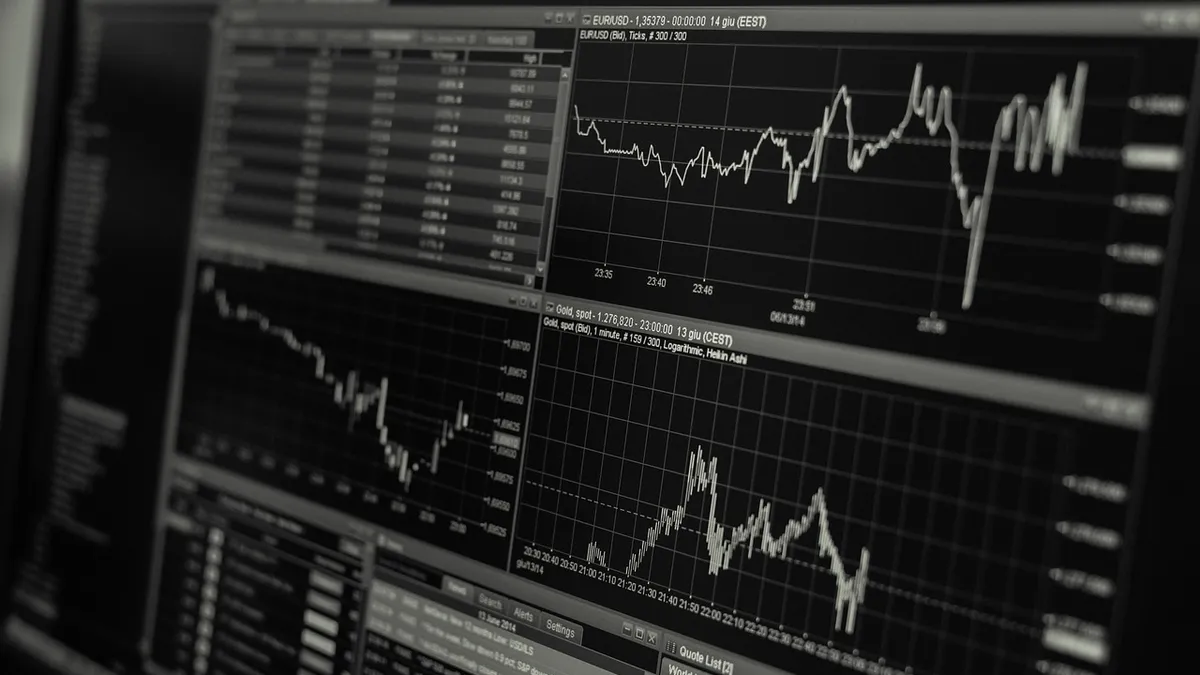
    best trading signals AI tools overview Crazii JTVertex
    How AI trading signal tools process market data to generate actionable entries and exits · Photo: 3844328 / Pixabay

    Which AI trading signal platforms are worth using for Australian traders in 2026?
    Which AI trading signal platforms are worth using for Australian traders in 2026?
    💡

    Key points: For Australian traders, the most relevant AI signal platforms integrate with ASIC-regulated brokers, support the instruments Australians actually trade (forex pairs, indices, commodities), and provide transparent verified performance data. The MetaTrader ecosystem, dedicated signal aggregators, and broker-integrated AI tools each serve different trader profiles.

    Here’s where most comparison articles go wrong. They list every platform alphabetically, assign star ratings, and leave you more confused than when you started. So let’s be direct about what actually matters for your situation as an Australian trader. The first consideration is regulatory compatibility. Any signal tool you use needs to work cleanly with an ASIC-regulated broker. That means MT4/MT5 compatibility is often non-negotiable — the majority of ASIC-regulated CFD brokers in Australia run on MetaTrader infrastructure. The built-in MT5 Signals marketplace (hosted by MetaQuotes at mql5.com) gives you access to thousands of signal providers with verified live-account performance data. You can filter by drawdown, by instrument, by number of subscribers, and by profit factor. The second consideration is instrument coverage. Australian traders tend to focus on AUD/USD, AUD/JPY, gold (XAU/USD), and major indices like the S&P 500 and ASX-adjacent instruments. Not every AI signal tool covers all of these with equal depth. Some are forex-heavy; others are built primarily for equities. Know what you’re trading before you subscribe.
    Platform type Best for Key strength Watch out for
    MT4/MT5 Signals marketplace Traders already on MetaTrader Verified live-account history, 3,200+ providers Quality varies enormously — filter carefully
    Dedicated AI signal aggregators Multi-broker users wanting curated signals Often include risk scoring and signal grading Some rely on backtests rather than live data
    Broker-integrated AI tools Beginners wanting an all-in-one setup Seamless execution, no third-party integration needed Limited to that broker’s instruments and spreads
    Copy trading platforms Traders who want hands-off signal following Automatic execution, no manual entry required You share in the provider’s drawdowns too

    The evidence: ASIC Report 828 (January 2026) recorded 26,243 Australian retail clients using copy trading in FY2023–24 — a figure ASIC itself described as reflecting “a growing interest in copy trading.” To put that in perspective: that’s roughly one in five active CFD clients choosing to follow someone else’s signals rather than trade independently.

    The third consideration is cost structure. Signal subscriptions range from free to several hundred dollars per month. Crazii JTVertex’s view is that the cost of a signal service is only meaningful relative to the edge it provides — but be aware that fees compound quickly. ASIC’s data shows fees were a $73 million component of the $458 million in net retail losses in FY2023–24. That’s roughly $547 in fees per losing client, on average — and that’s before you add signal subscription costs on top. For Australian traders looking at the full ecosystem of tools and platforms, the best trading signals and tools for Australian traders in 2026 pillar guide covers this in considerably more depth, including platform-specific recommendations.

    Ready to connect with a signals community built for serious traders?

    Join the Crazii JTVertex group chat for real-time discussion, signal ideas, and support from traders who are actually in the market.

    Join the Telegram group
    AI trading signal platforms comparison for Australian traders Crazii JTVertex
    Comparing the main categories of AI signal platforms available to Australian retail traders in 2026 · Photo: 3844328 / Pixabay

    What mistakes do traders make when using AI trading signals?

    What mistakes do traders make when using AI trading signals?
    💡

    Key points: The most costly mistakes with AI trading signals aren’t technical — they’re behavioural. Traders override signals when they “feel wrong,” subscribe to providers based on short track records, and ignore how fees erode performance. Understanding these patterns is what separates traders who benefit from signals from those who simply add another cost.

    Let me tell you about Marcus. Marcus is a 34-year-old electrician from Brisbane who started trading forex in 2023. He’s sharp, disciplined in his day job, and genuinely interested in markets. He subscribed to an MT5 signal provider with a six-month track record showing 40% returns. The provider had 800 subscribers. It looked legitimate. Three months later, Marcus had lost a significant portion of his starting capital. Not because the signals were fraudulent. Because the provider’s strategy worked in trending markets and completely fell apart during the choppy, range-bound conditions that dominated for much of that period — and Marcus had no framework for knowing when to pause following. Marcus’s story isn’t unusual. It’s the pattern.
    Mistake 1
    Choosing a signal provider based on short-term returns alone

    A six-month track record during a trending market tells you almost nothing about how a strategy performs in different conditions. Minn’s personal heuristic: look for at least 100 completed trades across varied market conditions before trusting a provider with real capital. Fewer trades than that and you’re reading a lucky streak, not an edge.

    Mistake 2
    Ignoring drawdown in favour of profit percentage

    A signal provider showing 80% annual returns means very little if the maximum drawdown was 60% of the account along the way. Most traders can’t psychologically or financially survive a 60% drawdown — they exit at the worst point and lock in the loss. Always check peak-to-trough drawdown figures before subscribing.

    Mistake 3
    Treating AI signals as a replacement for understanding

    This is the most expensive mistake. ASIC data shows that among active traders executing 50 or more open positions per month, 19% of those who would have been profitable before fees ended up losing once fees were counted (ASIC Report 828, January 2026). More activity, more signals followed, more fees — and worse outcomes. AI signals work best as a filter and a prompt, not as a substitute for knowing why a trade makes sense.

    Expert tip: Crazii JTVertex has made Mistake 3 personally. Early on, minn followed every signal from a well-rated provider for an entire month — including signals on instruments minn didn’t understand well. The signals that worked felt like skill. The ones that didn’t felt like the tool’s fault. Neither was true. The discipline to skip signals outside your core instruments is something no AI can enforce for you. This is personal experience, shared as a heuristic, not financial advice.
    ASIC’s data makes the fee point concrete: in FY2023–24, fees flipped 5% of otherwise-profitable retail clients into a loss. Among active traders, that figure rose to 19%. To translate that into plain terms: if you’re trading frequently and following signals aggressively, fees alone can be the difference between finishing the year up or down — regardless of whether the signals themselves were good. Marcus eventually came back to trading. He narrowed his focus to two instruments, chose a provider with an 18-month verified history, and set a personal rule to pause signal following during major news events. He’s still trading. That’s a better outcome than most.
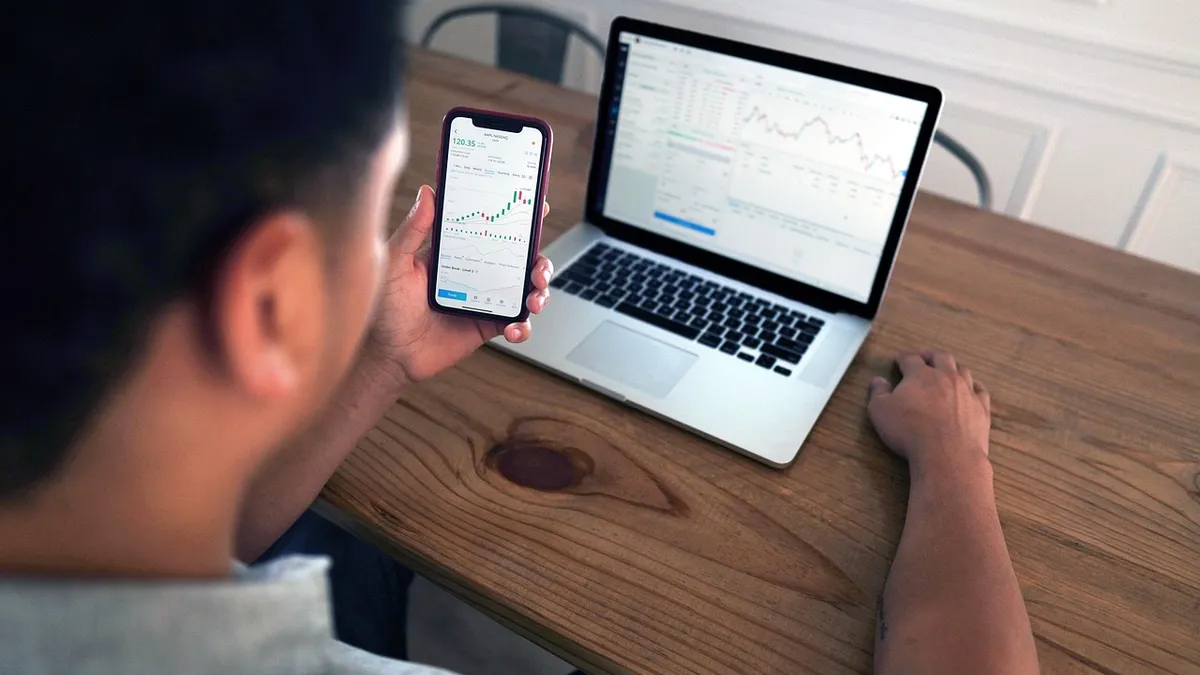
    common mistakes using AI trading signals Australia Crazii JTVertex
    The three most costly mistakes Australian traders make when following AI-generated trading signals · Photo: TheInvestorPost / Pixabay

    How do you evaluate an AI trading signal before trusting it with real money?
    How do you evaluate an AI trading signal before trusting it with real money?
    💡

    Key points: Evaluating an AI trading signal provider requires checking verified live-account history (not backtests), drawdown depth, trade frequency, fee impact, and instrument specificity. A structured evaluation process before committing capital is the single most effective risk-management step a trader can take with signal tools.

    So you’ve found a signal provider that looks promising. The equity curve slopes upward. The subscriber count is respectable. The monthly return figures look solid. What do you actually check before putting real money behind it?
    1

    Verify that the track record is from a live account, not a demo or backtest

    This is non-negotiable. Backtests are optimised to look good in hindsight — they don’t account for slippage, spread widening, or the psychological reality of following a drawdown in real time. On the MT5 Signals marketplace, providers are required to link to a live or real account. Check that the account type is marked as “real.” If a provider can’t or won’t show live-account performance, move on.

    2

    Look at maximum drawdown, not just profit

    A drawdown of 20% or more is a flag worth pausing on — not necessarily a disqualifier, but a reason to ask whether you could hold through that kind of loss without exiting early. Most retail traders can’t. The emotional experience of watching your account drop 20% from peak is very different from seeing it as a number on a performance chart.

    3

    Check trade frequency and its relationship to fees

    ASIC’s data is clear: more trading correlates with worse net outcomes for retail clients, largely because of fees. A signal provider executing 15–20 trades per day might show impressive gross returns — but after spreads, commissions, and swap fees, the net picture can look very different. Ask for or calculate the fee-adjusted return, not just the headline figure.

    4

    Confirm instrument alignment with your own trading plan

    A signal provider specialising in exotic forex pairs is not particularly useful if you trade gold and the S&P 500. Match the provider’s instrument focus to your own. Signals outside your area of understanding are signals you can’t properly evaluate — which means you can’t make an informed decision about when to follow them and when to skip.

    5

    Paper trade for two to four weeks before going live

    This step gets skipped constantly. Two to four weeks of paper trading alongside a signal provider costs you nothing and tells you a great deal: how often signals arrive, what the typical holding time is, how you respond emotionally to a losing streak, and whether the execution timing is realistic for your schedule. It also gives you a baseline to compare your live results against later.

    The evidence: ASIC Report 828 (January 2026) found that 74% of retail clients acquired through paid online advertising lost money in FY2023–24 — worse than the sector average of 68%. The implication for signal evaluation: if you found a provider through an ad rather than through community research or a trusted referral, apply extra scrutiny. Marketing spend doesn’t correlate with signal quality.

    For a deeper look at how to compare specific software options, best trading signals software compared for serious traders 2026 walks through the technical evaluation criteria in detail.

    Want a structured starting point for your signal evaluation process?

    Crazii JTVertex has partnered with AIMS to give Australian traders access to a professional trading environment with clear performance transparency.

    Explore AIMS
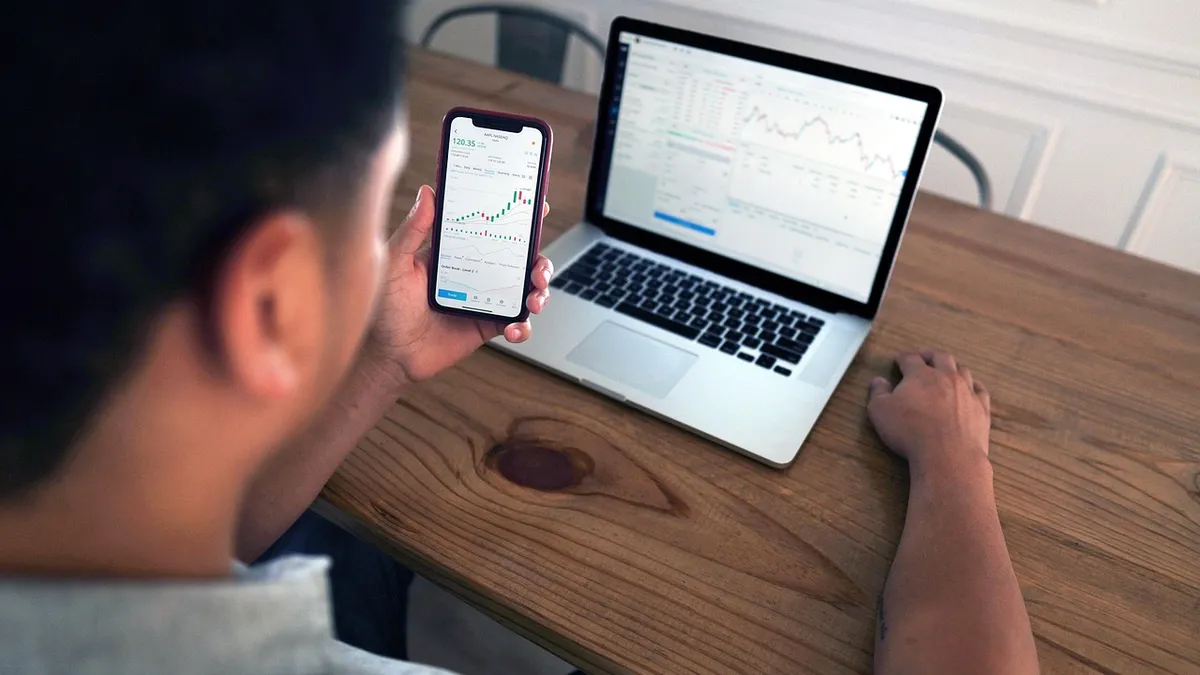
    evaluating AI signal providers live account verification Crazii JTVertex
    A five-step framework for evaluating AI trading signal providers before committing real capital · Photo: TheInvestorPost / Pixabay

    How do AI trading signals fit into a broader Australian trading strategy?
    How do AI trading signals fit into a broader Australian trading strategy?
    💡

    Key points: AI trading signals work best as one layer of a broader trading approach — not as a standalone system. For Australian traders, integrating signals with a clear risk management framework, an understanding of the instruments being traded, and awareness of ASIC-regulated platform options creates a more sustainable foundation than signals alone.

    Here’s a perspective that most signal-focused content won’t give you: signals are the first step, not the whole journey. Crazii JTVertex’s view is that trading tools — including AI signals — are the entry point into a more structured approach to markets. The platform you trade on, the risk parameters you set, the instruments you focus on, and the community you learn alongside all matter just as much as the quality of the signals themselves. A great signal delivered into a poorly managed account is still a losing proposition. Think of it this way. A signal tells you when a door might be opening. Your trading strategy determines whether you walk through it, how far in you go, and how quickly you leave if it turns out to be the wrong room. For Australian traders specifically, there are a few structural considerations worth keeping in mind. The Australian market session overlaps with the Asian session — which means many of the highest-volume forex moves happen outside standard working hours. AI signal tools that operate overnight are therefore particularly relevant for Australian traders in a way that’s different from, say, a UK-based trader who can watch the London open in real time. This is one of the genuine advantages of AI-driven signals for the Australian context: they don’t need to sleep when you do.

    The evidence: ASIC Report 828 (January 2026) recorded 119,300 active CFD trading clients per quarter in FY2023–24 — down 76% from approximately 515,000 per quarter before the 2021 regulatory intervention. That reduction reflects a smaller but, in theory, more informed and better-capitalised retail trading population. The traders who remained after the intervention are, on average, more serious about their approach. That’s the cohort that benefits most from structured signal tools.
    The second consideration is the relationship between signal tools and platform choice. If you’re using AI signals through an MT5 provider, you’ll need an MT5-compatible broker. If you’re using a copy trading platform, you’ll need a broker that supports copy trading infrastructure. Getting the tool-platform combination right before you start is far less painful than trying to migrate mid-strategy. Marcus — the Brisbane electrician from earlier — eventually settled on a combination of MT5 signals for overnight entries and a simple daily review process each morning. He checks what triggered overnight, reviews the open positions, and makes a conscious decision about whether to hold or close. The AI does the overnight watching. He does the morning thinking. That division of labour suits his schedule and his temperament. That’s the model worth building toward: AI signals as a filter and an overnight watchman, human judgement as the final layer. For traders wanting to see what specific signals look like in practice right now, best trading signals today that serious traders are watching now covers current setups and active opportunities. And if your focus is specifically on equities rather than forex or indices, best trading signals for stocks in Australia looks at how AI signal tools apply to the ASX and broader stock market context.
    AI trading signals integrated into Australian trading strategy Crazii JTVertex
    How AI trading signals fit as one layer within a broader, structured approach for Australian traders · Photo: TheInvestorPost / Pixabay

    Frequently asked questions about AI trading signals
    Frequently asked questions about AI trading signals
    💡

    Key points: The most common questions about AI trading signals centre on reliability, cost, regulatory compliance, and how to start safely. These answers address the practical concerns Australian retail traders raise most often before committing to a signal tool or provider.

    Are AI trading signals legal for Australian retail traders?

    Yes. Using AI trading signals and copy trading services is legal in Australia. However, any signal provider or managed account service operating in Australia and charging fees for financial services may need to hold an Australian Financial Services Licence (AFSL). Always check whether the provider you’re using is appropriately licensed before subscribing.

    Do AI trading signals guarantee profitable trades?

    No signal tool guarantees profitable trades — and any provider claiming otherwise should be treated with significant scepticism. ASIC data shows 68% of Australian retail CFD clients lost money in FY2023–24 (ASIC Report 828, January 2026). Signals improve decision-making inputs; they don’t eliminate market risk.

    How much do AI trading signal subscriptions typically cost?

    Costs vary widely. The MT5 Signals marketplace includes free providers as well as commercial subscriptions. Paid providers typically range from a small monthly fee to several hundred dollars per month for premium services. Factor subscription costs into your overall fee calculation — ASIC’s data shows fees are a material component of retail losses.

    Can I use AI trading signals if I’m a complete beginner?

    You can, but with an important caveat. Signals work best when you understand enough about the instrument and strategy to evaluate whether a signal makes sense in context. Beginners who follow signals without any underlying understanding tend to struggle when signals conflict or when market conditions shift. Starting with paper trading alongside a signal provider is strongly recommended before using real capital.

    What is the difference between AI trading signals and copy trading?

    AI trading signals deliver entry and exit suggestions that you act on manually. Copy trading automatically replicates another trader’s positions in your account proportionally. Copy trading removes the manual step but also removes your ability to filter individual trades. ASIC recorded 26,243 Australian retail clients using copy trading in FY2023–24 (ASIC Report 828, January 2026).

    Want to talk through which signal approach suits your situation?

    Get in touch with Crazii JTVertex directly — no pressure, no scripts, just a genuine conversation about where you are and what makes sense for your trading.

    Contact Crazii JTVertex

    Important note: This article is general information only and does not constitute personal financial advice. Trading CFDs, margin forex, and related instruments involves significant risk of loss. According to ASIC Report 828 (published 20 January 2026, data for FY2023–24), 68% of Australian retail CFD clients lost money, with aggregate net losses exceeding $458 million. You should consider your own financial circumstances, objectives, and risk tolerance, and read all relevant product disclosure statements before making any trading decisions. Source: ASIC Report 828, https://download.asic.gov.au/media/tq0he35c/rep828-published-20-january-2026.pdf.

  • Best Trading Signals AI Tools Saving Traders 4 Hours Daily

    Best Trading Signals AI Tools Saving Traders 4 Hours Daily

    Finding the best trading signals ai tools allows you to cut through market noise and reclaim four hours of your day. By automating technical analysis, you avoid the manual grind that leads to burnout. Crazii JTVertex provides the Crazii JTVertex infrastructure to help you streamline your workflow while maintaining a disciplined approach to risk. To understand how these tools fit into a broader strategy, review our guide on best trading signals ai tools saving traders 4 hours daily.

    Start Your AI-Assisted Journey

    Access our curated setup for professional-grade signals and reduce your daily screen time today.

    Get Started
    Table of contents

    Why do most traders waste hours on manual charts?

    💡

    Key points: Manual chart analysis often leads to cognitive fatigue and decision paralysis. By offloading repetitive pattern recognition to advanced algorithmic systems, you shift your focus from data processing to strategic execution, saving an average of four hours daily while reducing emotional trading biases.

    You sit down at 8:00 AM. Your coffee is cold. You spend three hours flipping between timeframes, hunting for a breakout that never happens. This is the reality for thousands of Australian retail traders. You are not alone in this struggle, as the psychological burden of constant monitoring is well-documented in behavioral finance.

    The data confirms the difficulty. According to ASIC Report 828, 68% of retail CFD clients realised a net loss during the 2023–24 financial year. When you spend too much time staring at screens, your decision-making quality drops. You start seeing patterns that do not exist—a phenomenon known as apophenia, which is often exacerbated by sleep deprivation and stress. As noted by the World Health Organization, excessive workplace stress significantly impairs cognitive performance, a factor that directly impacts your ability to execute trades rationally.

    Expert tip: I once spent an entire week manually tracking RSI levels on ten different assets. By Friday, I was exhausted and took a trade just to feel like I had accomplished something. It was a loss. Now, I use alerts to do the heavy lifting.

    Modern automated solutions change the game. Instead of you looking for the trade, the trade finds you. You stop guessing. You start observing. By leveraging machine learning models, you can filter through thousands of data points in milliseconds, a task that would take a human analyst hours to complete manually.

    Professional trader using the best trading signals ai tools with Crazii JTVertex
    Using advanced algorithmic tools to optimise your daily routine · Photo: JessBaileyDesign / Pixabay

    How does AI filtering improve your win probability?

    💡

    Key points: AI filters remove noise by isolating high-probability setups based on historical volatility and price action. By applying strict logic to your entry criteria, you reduce the impact of fees that caused one in twenty otherwise-profitable traders to end the year in a loss.

    Not all signals are created equal. Some are just noise. You need a system that filters out the junk before it reaches your terminal. When you use tools that rank Best AI Trading Signals Engines Ranked for Accuracy in 2026, you gain an edge. The primary advantage of these systems is their ability to maintain consistency, which is the cornerstone of long-term profitability.

    The mechanism is simple. AI monitors multiple indicators simultaneously—RSI, MACD, and Bollinger Bands—across dozens of pairs. It only triggers an alert when all your pre-set conditions meet. This is precision. It is the opposite of the scattergun approach where traders jump into positions based on gut feeling rather than empirical evidence.

    The evidence: ASIC data highlights that active traders, defined as those with over 50 positions per month, often face worse outcomes due to the compounding effect of fees. By using smart filtering to isolate only the highest-quality setups, you naturally reduce your trade frequency without sacrificing potential profit.

    If you want to see how this looks in practice, you might want to look into Best Trading Software With Buy Sell Signals for Busy Traders. It simplifies the bridge between signal and execution, ensuring that you are only interacting with the market when the statistical probability is in your favour.

    Optimise Your Trading Setup

    Get access to professional signal filtering tools that save you time and reduce unnecessary risk.

    Join Now

    Common mistakes to avoid when using automated signals

    💡

    Key points: The biggest mistake is blind trust. Even the most sophisticated algorithmic tools require human oversight. Never treat an alert as a guaranteed profit. Always verify the signal against your own risk management parameters before placing a trade.

    Mistake 1
    Over-leveraging on a single signal. Just because an alert was generated does not mean you should risk 5% of your account. Stick to your risk plan.
    Mistake 2
    Ignoring market context. Algorithms often miss news events. If the RBA is about to make a rate announcement, even a perfect technical signal can fail.
    Mistake 3
    Chasing past performance. A tool that worked perfectly last month might struggle in a different market regime. Always test in a demo environment first.

    You have to be the pilot. The technology is your co-pilot. If you let it fly the plane alone, you will eventually hit turbulence. Remember that 85% of retail clients lost money trading options CFDs last year. High-risk products require high-discipline management, and no amount of automation can replace the need for a solid risk-reward ratio.

    Trader avoiding common mistakes with the best trading signals ai from Crazii JTVertex
    Avoiding common pitfalls when using advanced trading automation · Photo: fancycrave1 / Pixabay

    How to choose the best trading signals ai for your style?

    💡

    Key points: Choose tools that align with your timeframe and asset class. If you trade crypto, look for tools specifically audited for high-volatility environments. Ensure the platform provides transparency on their signal generation methodology.

    Are you a day trader or a swing trader? This changes everything. A tool built for 5-minute scalping will drive you mad if you prefer holding positions for days. You need a tool that matches your heartbeat. For day traders, latency is the enemy; for swing traders, the quality of the trend-following logic is paramount.

    I suggest you look at Best Crypto Trading Signals Reviewed for Australian Traders 2026 if your interest leans towards digital assets. The volatility there is different. It requires a specific type of logic that accounts for 24/7 market cycles, which are distinct from traditional stock market hours.

    Find Your Edge

    We help you navigate the best signal tools available for the Australian market. Save time and trade smarter.

    Get Advice

    Always check the source. MetaTrader alone hosts over 3,200 free and commercial signals. That is a lot of noise. You need to be selective. Look for providers that show clear, verifiable history rather than marketing hype. A reputable provider will always be transparent about their drawdown metrics and average win rates.

    Comparing top-tier AI signal platforms for 2026

    💡

    Key points: Comparing platforms requires looking at data depth, latency, and integration. While MetaTrader is the industry standard for accessibility, dedicated engines often provide superior pattern recognition capabilities for the modern trader.

    FeatureStandard SignalsAI-Driven Engines
    CustomisationLowHigh
    LatencyMediumUltra-Low
    Pattern RecognitionBasicAdvanced
    Risk ManagementManualAutomated

    When you compare these, think about your future. You want a tool that grows with you. Read our comprehensive analysis on Best Trading Signals for Australian Traders 2026 to see how these platforms stack up against local regulatory standards. It is crucial to ensure that the platform you choose integrates seamlessly with your existing broker, as technical friction can lead to slippage and missed opportunities.

    Frequently asked questions about AI trading signals

    Are AI trading signals accurate?

    No signal is perfectly accurate. Modern technology improves probability by removing human bias, but markets are inherently unpredictable. Always use them as a supplement to, not a replacement for, your own analysis.

    Do I need to pay for signals?

    There are thousands of free signals available, especially on platforms like MetaTrader. However, premium services often provide better filtering and lower latency. Evaluate the value based on your own trading volume.

    Can AI signals guarantee profit?

    Absolutely not. Trading involves significant risk. Any provider claiming a guaranteed profit should be avoided. ASIC reporting confirms that even professional traders face losses.

    How do I start using these tools?

    Start by selecting a reputable platform that integrates with your broker. Test the signals on a demo account for at least one month to understand how they perform during different market conditions.

    Is it legal to use AI signals in Australia?

    Yes, but you must ensure you are using services that comply with ASIC regulations. Always check the Product Disclosure Statement of any platform you use.

    How much time can I actually save?

    Most users report saving between 3 to 5 hours daily by automating the initial screening process. This allows you to focus on high-level strategy rather than staring at charts.

    Does AI work for all asset classes?

    While AI is highly effective for liquid markets like Forex and Indices, it may require different configurations for less liquid assets. Always verify the tool’s compatibility with your specific market.

    Note: Trading CFDs and margin FX is high-risk. This content is for general information purposes only and does not constitute personal financial advice. You should consider your own financial circumstances and read the relevant disclosure documents before making any decisions.

    Ready to Refine Your Strategy?

    Contact us for a personal walkthrough of tools that can save you hours every single day.

    Contact Us