Learning how to build a trading strategy that actually holds up when markets turn ugly is the difference between surviving a bear market and watching months of gains disappear in a fortnight. At Crazii JTVertex, we have worked with Australian traders at every level — from those placing their first CFD trade to those managing five-figure accounts — and the pattern is always the same: the traders who endure downturns built their strategy before the crash, not during it. This article will walk you through exactly how to construct a bear-market-resilient trading strategy, step by step, so that by the time you finish reading you will have a clear framework you can start applying this week. That is the promise. We will close it at the end.
Note: This content is general information only and does not constitute personal financial advice. Trading CFDs and margin FX products carries significant risk. You should consider your own financial circumstances and read all relevant Product Disclosure Statements before trading. If in doubt, seek advice from a licensed financial adviser.
Not sure where to start with trading tools?
Crazii JTVertex has put together a free resource hub for Australian traders — signals, tools, and community support in one place.
See the 2026 Trading Tools GuideTable of contents
- 01 What does it actually mean to build a trading strategy for a bear market?
- 02 How do you define your risk parameters before a single trade?
- 03 Which trading signals and tools belong in a bear-market strategy?
- 04 What are the most common mistakes traders make when building a strategy in a downturn?
- 05 How do you test and refine your trading strategy before going live?
- 06 Frequently asked questions about building a trading strategy
What does it actually mean to build a trading strategy for a bear market?
Key points: A bear-market trading strategy is a structured, rules-based plan that defines entry, exit, position sizing, and risk limits specifically for falling or volatile markets. It is built before conditions deteriorate — not as a reaction to them — so decisions are made on logic, not fear.
The evidence: According to ASIC’s Report 828 (published January 2026, covering FY2023–24), 68% of retail CFD clients in Australia lost money over the financial year — that is more than two in three traders. In raw numbers, 133,674 retail clients recorded net losses exceeding $458 million. That figure includes $73 million in fees alone. In other words, for every three Australian traders you know, statistically two of them ended the year behind.
Expert tip: Crazii JTVertex has reviewed hundreds of trader setups, and the single most consistent gap is this: traders define their entry rules in detail but leave their exit rules vague. “I’ll exit when it looks bad” is not an exit rule. The moment you are under pressure, “looks bad” becomes “looks catastrophic” — and by then the loss is already locked in. Write your exit rule before you write your entry rule. Always.
Write down your strategy — every rule, every condition
Open a document right now. Not a spreadsheet, not a mental note. A document. Write the five questions above and answer each one in plain language. If you cannot answer all five, you do not yet have a strategy — you have a trading idea.
Stress-test your assumptions against falling-market conditions
Look at your entry signals. Now ask: would these signals have triggered during the ASX downturn of early 2020 or the rate-hike selloffs of 2022? If your strategy has never been applied mentally to a bear scenario, it has not been built for one.
How do you define your risk parameters before a single trade is placed?

Key points: Risk parameters are the numerical limits — per-trade risk, maximum drawdown, and daily loss cap — that prevent a bad day from becoming a blown account. In a bear market, these numbers must be set more conservatively than in trending conditions, because volatility amplifies both gains and losses.
The evidence: ASIC Report 828 found that among active traders who opened 50 or more positions per month, 19% of those who would otherwise have been profitable ended up losing money after fees. More trading, more fees, worse outcomes. This is not a coincidence — it is a structural reality of leveraged products. Trading less, but with more precision, is not a conservative choice. It is a mathematical one.
Expert tip: Crazii JTVertex has noticed something specific that rarely gets discussed: the worst trades of the day almost always happen in the 20 minutes after a stop-loss is hit. That is when the urge to “get it back” is strongest and judgment is weakest. The daily loss cap is not just a financial limit — it is a psychological firewall. Once it is hit, the session is over. No exceptions, no “just one more”.
| Risk Parameter | Bull Market Setting | Bear Market Adjustment | Why It Changes |
|---|---|---|---|
| Per-trade risk | Up to 2% of account | 1% or lower | Wider spreads, faster moves amplify losses |
| Max drawdown before review | 15–20% of account | 10% or lower | Recovery is slower in falling markets |
| Daily loss cap | 3–5% of account | 2–3% of account | Volatility makes revenge trading more damaging |
| Position count | Multiple concurrent | Fewer, higher conviction | Correlations spike; diversification benefit shrinks |
Want a structured approach to trading signals?
The best trading signals and tools for Australian traders in 2026 — curated by Crazii JTVertex for the local market.
View the full guideWhich trading signals and tools belong in a bear-market strategy?
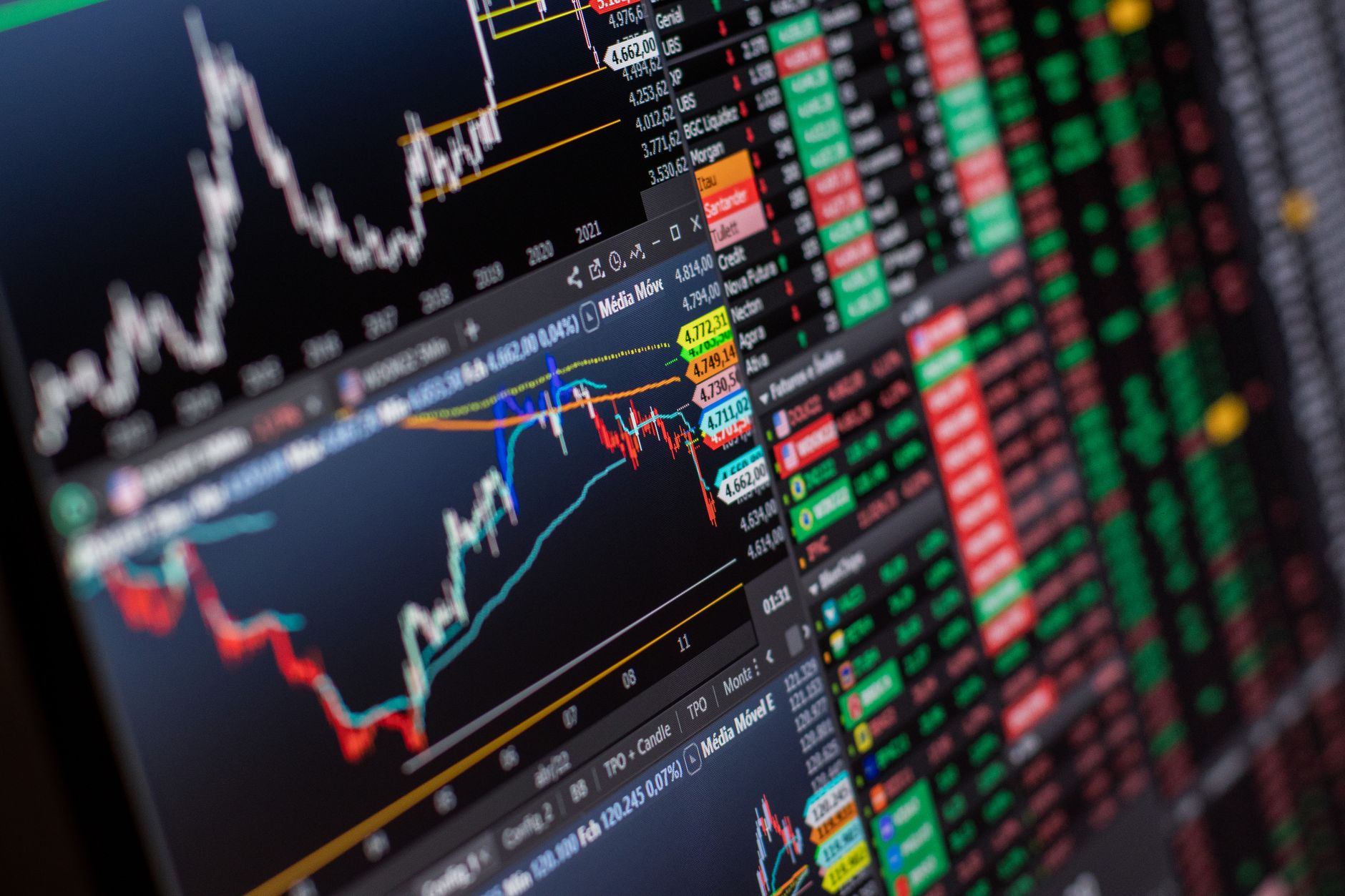
Key points: In a bear market, momentum indicators and trend-following signals need to be paired with volatility filters and confirmation tools. Signals that work in trending upward conditions often produce false entries in choppy, declining markets. Choosing the right combination — and knowing which to ignore — is as important as the signals themselves.
The evidence: ASIC Report 828 noted that 26,243 retail clients in Australia used copy trading services in FY2023–24. That is a growing number. But copy trading does not remove risk — it transfers the decision-making to another trader whose strategy may not be designed for the conditions you are currently in. If you are using copy trading as part of your strategy, understanding who gives the best trading signals and whether you can actually trust them is not optional — it is foundational.
Expert tip: Crazii JTVertex recommends checking whether a signal provider’s drawdown periods coincide with broad market selloffs. If every major loss in their track record happened during the same weeks as the ASX or S&P 500 declining sharply, their strategy is likely long-biased. That is not inherently wrong — but it means their signals will perform worst precisely when a bear market is at its most intense. Match your signal source to the conditions you are preparing for.
What are the most common mistakes traders make when building a strategy in a downturn?

Key points: The most damaging bear-market strategy mistakes are not technical errors — they are behavioural ones. Overtrading, abandoning rules under pressure, and copying strategies built for different conditions are the three patterns that consistently destroy accounts when markets fall.
When a strategy starts losing, the instinct is to trade more — more positions, more frequency, more size. This is the opposite of what the data supports. ASIC Report 828 found that among the most active retail traders (50 or more open positions per month), 19% of those who would otherwise have profited ended up losing money after fees. More activity did not produce better outcomes. It produced worse ones. The fee drag alone flipped one in five active traders from profit to loss.
A strategy optimised for trending upward conditions will produce a different — usually worse — outcome when applied to a bear market without modification. This is not a flaw in the strategy; it is a flaw in the application. Bear markets change volatility, correlation, and the reliability of momentum signals. If your strategy has not been reviewed and adjusted for these conditions, you are using the wrong tool for the job. That is a choice, not bad luck.
Every strategy has drawdown periods. A drawdown during a bear market feels different — it feels like the strategy is broken, the market is broken, everything is broken. That feeling is not reliable information. The correct response to a drawdown is to review whether the rules are being followed correctly, not to abandon the rules entirely. Abandoning a strategy mid-drawdown and switching to something else is how traders compound losses rather than recover from them.
The evidence: ASIC Report 828 also found that 5% of retail clients would have made a net profit but ended up in a loss position purely because of fees. That is one in twenty traders who did the hard work of being profitable — and still lost money because of costs they did not account for. Fees are not a footnote. They are a material part of your strategy’s performance calculation.
Ready to take your strategy further?
Join the Crazii JTVertex community for ongoing signal analysis, strategy discussion, and support from traders who understand the Australian market.
Join the communityHow do you test and refine your trading strategy before going live in volatile conditions?

Key points: Testing a trading strategy before live deployment involves backtesting against historical bear-market periods, then forward-testing in a demo environment under current conditions. Neither step alone is sufficient — backtesting shows historical fit, forward-testing reveals how the strategy behaves in real time without real money at risk.
The evidence: The ASIC data on retail CFD outcomes (Report 828, January 2026) shows that 74% of new retail clients acquired through paid online advertising lost money in FY2023–24. That is higher than the overall 68% loss rate. One interpretation: traders who enter the market through advertising-driven channels may be less prepared — less tested, less structured — than those who have done the groundwork first. Preparation is not a guarantee. But the absence of it is consistently correlated with worse outcomes.
Expert tip: Crazii JTVertex uses a specific rule when reviewing backtest results: if the strategy’s worst drawdown period does not coincide with a known market event (a crash, a rate decision, a geopolitical shock), be suspicious. Drawdowns that happen “for no reason” usually mean the strategy is picking up noise rather than signal. The best strategies have explainable losses — you can point to the market condition that caused them. Unexplainable losses suggest the edge is weaker than the backtest implies.
Select your bear-market backtest periods
Choose at least two distinct bear or high-volatility periods relevant to your market. Apply your strategy rules mechanically. Record every entry, exit, and the outcome. Do not adjust rules mid-backtest.
Run a minimum 30-trade forward test in demo
Thirty trades is a personal heuristic — below that, the sample is too small to draw conclusions. Track not just profit and loss, but rule adherence. Did you follow every rule on every trade? If not, why not? The answer to that question is more valuable than the P&L.
Review and adjust before going live
After forward-testing, review the results with the same critical eye you would apply to someone else’s strategy. Identify the two or three trades where you deviated from your rules. Understand why. Then decide whether the rule needs changing or your discipline does. Usually, it is the latter.
Frequently asked questions about building a trading strategy
How long does it take to build a trading strategy that works in a bear market?
There is no fixed timeline, but a realistic expectation is several weeks of research, backtesting, and demo trading before going live. Rushing this process to start trading sooner is one of the most common and costly mistakes Australian retail traders make.
Can a beginner build a bear-market trading strategy without prior experience?
Yes, but with realistic expectations. A beginner’s first strategy will be imperfect — the goal is to make it rules-based and testable, not perfect. Start with a single instrument, a simple signal set, and conservative risk parameters. Complexity can come later.
Do trading signals work differently in a bear market compared to a bull market?
Yes. Momentum signals and trend-following indicators tend to produce more false entries in choppy, declining markets. Signals need to be paired with volatility filters and confirmation tools to reduce noise. A signal that performed well in 2021 may need adjustment for 2022-style conditions.
How much of my account should I risk per trade in a bear market?
This is a personal decision based on your circumstances, but a commonly used heuristic is keeping per-trade risk below 1–2% of total account equity. In a bear market, erring toward the lower end of that range is prudent because volatility amplifies both gains and losses. This is not financial advice — consider your own situation.
Is copy trading a valid strategy during a bear market?
Copy trading can be part of a strategy, but it does not remove risk — it transfers decision-making to another trader. In a bear market, it is important to understand whether the trader you are copying uses a long-biased strategy, because that strategy will typically perform worst during sustained market declines. Always read the relevant disclosure documents.
Want to talk through your trading strategy?
Crazii JTVertex is available for direct questions — reach out through the contact page or join the community group for ongoing support.
Get in touchNote: This article contains general information only and is not personal financial advice. CFD trading and margin FX are high-risk activities. According to ASIC Report 828 (January 2026), 68% of retail CFD clients in Australia lost money in FY2023–24. Past performance is not indicative of future results. Always read the Product Disclosure Statement and consider your own financial circumstances before trading. For personalised advice, speak with a licensed financial adviser.
Leave a Reply