Category: Best Trading Signals Platforms and Tools

  • Best Trading Signals Telegram Group With Verified Win Rates 2026

    Best Trading Signals Telegram Group With Verified Win Rates 2026

    The best trading signals Telegram group is not the one with the most members — it is the one with a verified, auditable win rate you can actually cross-check before you risk a single dollar. At Crazii JTVertex, we have spent considerable time evaluating signals channels so Australian retail traders can cut through the noise and make an informed decision. This guide — published at Best Trading Signals Telegram Group With Verified Win Rates 2026 — will give you a clear framework for vetting any group, spotting the red flags that cost traders real money, and deciding whether a signals community belongs in your trading toolkit. By the end, you will know exactly what to look for, what to walk away from, and where to start.

    Note: This article is general information only and does not constitute personal financial advice. CFDs, margin FX, and trading signals are high-risk products. Please consider your own financial circumstances and read all relevant disclosure documents before acting on any information here.

    Ready to trade with a community that takes risk seriously

    Join the Crazii JTVertex group chat for signals discussion, market context, and trader support — no hype, just honest conversation.

    Join the Telegram Group
    Table of contents

    What Makes a Trading Signals Telegram Group Actually Worth Joining?
    What Makes a Trading Signals Telegram Group Actually Worth Joining?
    💡

    Key points: A worthwhile trading signals Telegram group publishes entry, stop-loss, and take-profit levels for every signal, maintains a transparent performance log going back at least 90 days, and is run by a provider who explains the rationale behind each trade — not just the outcome.

    Most signals groups are not built for you. They are built for the person running them — to generate subscription revenue, affiliate commissions, or broker referrals. That is not a conspiracy theory. It is just the economics of free-to-join Telegram channels with 50,000 members and a pinned message that says “VIP signals below.” So what separates a group worth your attention from one that will quietly drain your account? Three things: transparency, completeness, and context. Transparency means every signal — win or loss — is posted publicly and archived. Not cherry-picked screenshots in a highlights reel. A group that deletes losing signals from its history is not a signals group. It is a marketing channel. Completeness means each signal includes an entry price, a stop-loss level, and at least one take-profit target. Without a stop-loss, there is no risk management. Without a take-profit, there is no plan. A signal that says “BUY GOLD now” and nothing else is not a signal — it is a guess dressed up in urgency. Context is the part most groups skip entirely. Why is this trade being taken? What is the market structure behind it? Which session is most relevant? This matters because a signal without context cannot teach you anything, and a trader who cannot learn from their signals is permanently dependent on someone else’s decisions. Think about Marcus, a 34-year-old electrician from Brisbane who joined three different Telegram signals groups in 2024. Each one had thousands of members and screenshots of winning trades. None of them posted stop-loss levels consistently. Within four months, Marcus had followed signals into three positions that ran against him with no exit plan. He did not lose because the market was unpredictable. He lost because the groups he joined were incomplete. The best trading signals Telegram groups are ones where you could reconstruct the provider’s full performance record from the channel history alone — every trade, every outcome, every fee.

    The evidence: According to ASIC Report 828 (published January 2026), 68% of retail CFD clients in Australia lost money in FY2023–24, with aggregate net losses exceeding $458 million. Fees alone accounted for $73 million of that figure — meaning the cost of trading, not just the direction of trades, is a material factor in outcomes. A signals group that ignores fees in its performance reporting is giving you an incomplete picture.

    Expert tip: Crazii JTVertex looks for one specific thing before trusting any signals channel: whether they post their stop-loss hits in the same format as their wins. Most groups post wins as “TP1 HIT — +80 pips” and quietly archive losses with no announcement. The ones worth following treat a stopped-out trade exactly the same way they treat a winner — same format, same visibility, no deletion. If you scroll back 30 days and cannot find a single loss posted, that is not a good record. That is a curated highlight reel.

    What to CheckGreen FlagRed Flag
    Signal completenessEntry + SL + TP every timeEntry only, or “follow price”
    Loss reportingLosses posted same as winsOnly wins visible in history
    Performance log90+ days, all trades listedScreenshot-only, no archive
    Rationale providedMarket structure explained“Trust me” or emoji-only
    Risk per trade stated% risk or lot size guidanceNo position sizing mentioned
    best trading signals Telegram group evaluation checklist — Crazii JTVertex
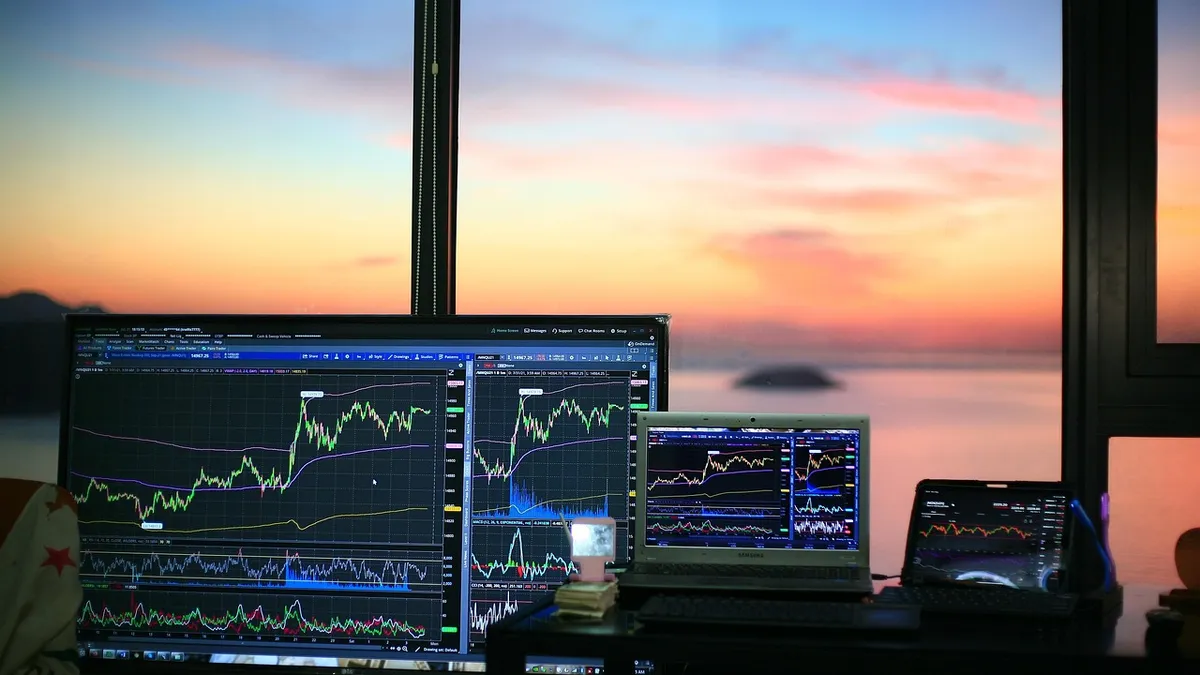
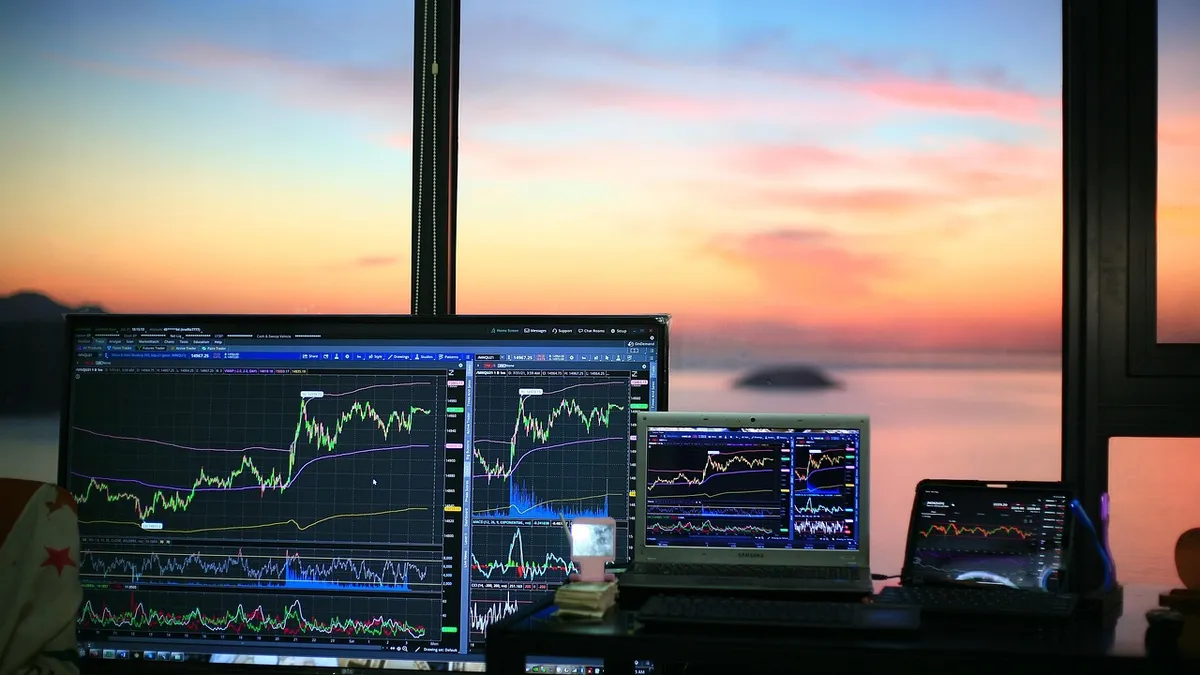
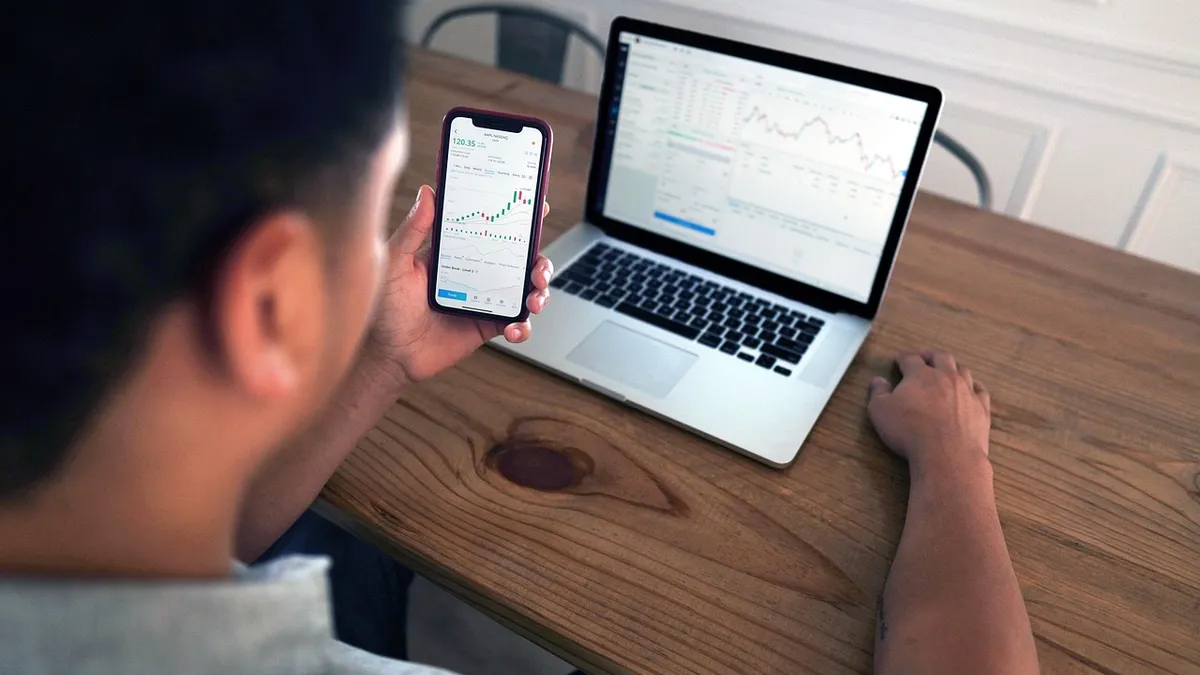
    Evaluating a trading signals Telegram group requires checking completeness, loss transparency, and rationale — not just win rate claims. · Photo: sergeitokmakov / Pixabay

    Want signals with full context, not just entry prices

    Crazii JTVertex shares market analysis and signal rationale through our community — so you understand the trade, not just the number.

    Access the Community

    How to Verify Win Rates Before You Trust Any Signals Channel

    How to Verify Win Rates Before You Trust Any Signals Channel
    💡

    Key points: To verify a Telegram signals channel’s win rate, manually log at least 100 consecutive signals — including losses — and calculate the risk-adjusted return, not just the raw win percentage. A 70% win rate with a 1:0.5 risk-to-reward ratio can still produce a net loss over time.

    Here is the part most traders skip. And it is the part that costs them the most. A 70% win rate sounds impressive. But if every winning trade makes 50 pips and every losing trade costs 150 pips, that provider is losing money on a mathematical basis — even if they post wins three times as often as losses. Win rate without risk-to-reward context is meaningless. This is not an opinion. It is arithmetic. So how do you actually verify a signals channel before committing real capital? Start with the minimum sample size. Crazii JTVertex’s personal heuristic — not a statistic, just a working rule — is to ignore any performance claim based on fewer than 100 completed trades. Markets cycle through different conditions: trending, ranging, volatile, quiet. A sample of 30 trades might look brilliant because it was all taken during a strong trend. One hundred trades across varied conditions starts to reveal whether the edge is real or situational. Next, reconstruct the record yourself. Open the channel’s message history and manually log every signal posted over the past 60 to 90 days. Record the entry, the stop-loss, the take-profit, and — critically — the outcome. Do not rely on the provider’s own summary. Build the spreadsheet yourself. This takes a Saturday afternoon. It is worth it. Then calculate two numbers: the win rate and the average risk-to-reward ratio. If the win rate is 60% and the average winner is 1.5 times the average loser, that is a positive expectancy system. If the win rate is 60% but the average winner is 0.8 times the average loser, you are looking at a slow bleed. Also check the drawdown periods. How long did the channel go without a winning trade? Three consecutive losses in a row is normal. Ten is a different story — and how the provider communicated during that period tells you everything about their character. Marcus — remember him from Brisbane — eventually found a channel that had been running for 14 months with a full public archive. He spent two evenings building his own log. The win rate was only 54%. But the average winner was 2.1 times the average loser. That asymmetry was the actual edge. He had spent months chasing 80% win rate claims when the real number that mattered was risk-to-reward. For deeper context on how signals tools fit into a broader trading setup, the guide to best trading signals and tools for Australian traders 2026 covers the full landscape — including how to integrate signals with your platform workflow.

    The evidence: ASIC Report 828 notes that among active retail traders who opened 50 or more positions per month, 19% of those who would otherwise have been profitable ended up losing money after fees. More signals, more trades, more fees — the relationship is direct. A signals group that encourages high-frequency following without accounting for transaction costs is working against your interests, even if the raw signal win rate looks acceptable.

    Expert tip: One thing Crazii JTVertex checks that almost nobody else does: the timestamp gap between when a signal is posted and when the entry price was actually available. Some channels post signals after the move has already started — technically accurate, practically useless. If a “BUY at 1.0850” signal is posted when price is already at 1.0890, the signal is historical commentary, not an actionable alert. Check the time the signal was posted against the price chart for that moment. If there is a consistent gap, the channel is back-filling.

    1

    Export the channel history

    Use Telegram Desktop to export the full message history of the channel as HTML. This gives you a permanent, searchable record you can work from offline.

    2

    Log every signal — wins and losses equally

    Create a spreadsheet with columns for date, instrument, entry, stop-loss, take-profit, outcome, and pips gained or lost. Do not skip the losses. They are the most important data points.

    3

    Calculate expectancy, not just win rate

    Expectancy = (Win Rate × Average Win) minus (Loss Rate × Average Loss). A positive number means the system has an edge. A negative number means you are paying to follow it.

    4

    Check the drawdown periods

    Identify the longest consecutive losing streak in the record. Then ask yourself honestly: would you have kept following the signals through that period? If not, the system is not suited to your psychology — regardless of the overall expectancy.
    verifying Telegram signals win rate with spreadsheet analysis — Crazii JTVertex
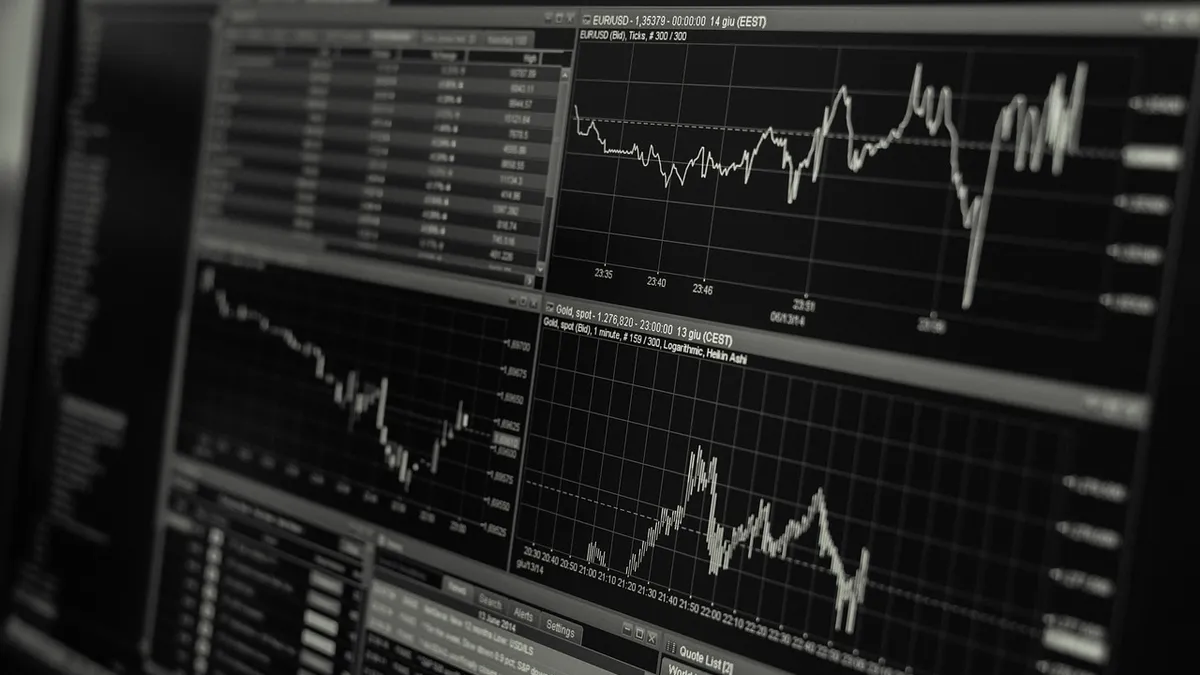
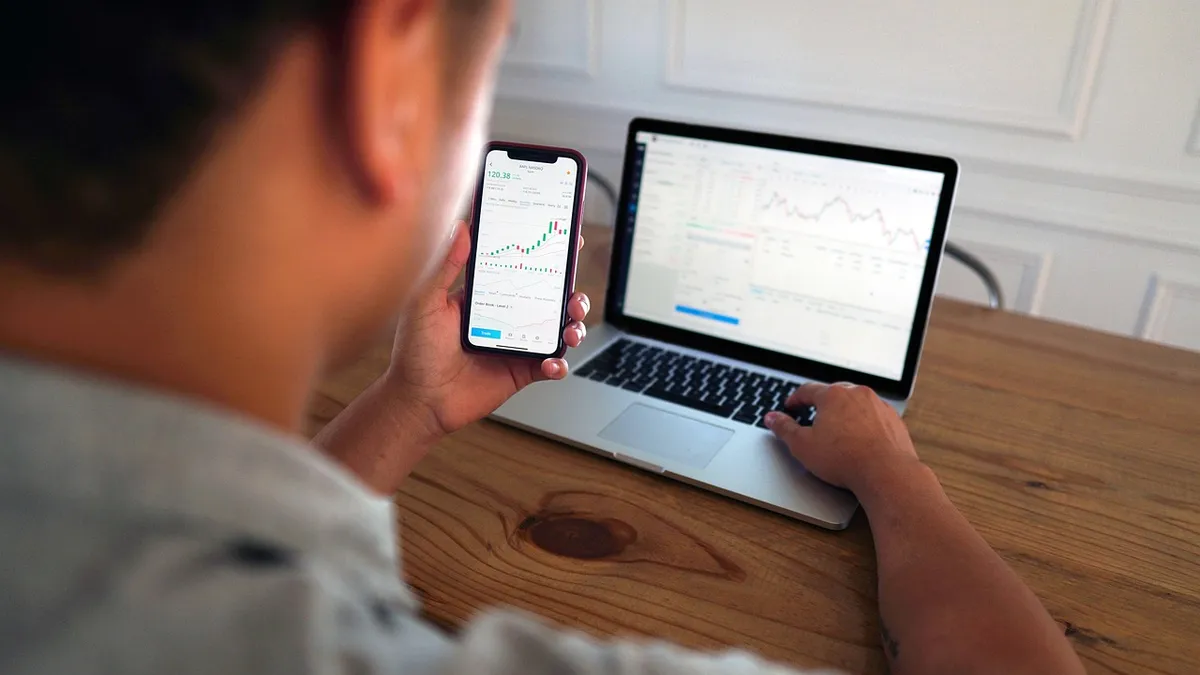
    Manually logging signal outcomes reveals the risk-adjusted performance picture that channel summaries often obscure. · Photo: AhmadArdity / Pixabay

    Telegram Signals vs Other Platforms: Which Delivers Better Results for Australian Traders?

    Telegram Signals vs Other Platforms: Which Delivers Better Results for Australian Traders?
    💡

    Key points: Telegram signals groups offer speed and community but lack the built-in verification infrastructure of platforms like MetaTrader’s Signals marketplace, which hosts over 3,200 providers with independently tracked performance data. The best approach for most Australian traders is to use both — Telegram for context and community, MT5 Signals for auditable track records.

    You are probably wondering: why Telegram at all, when there are platforms with built-in signal verification? Fair question. Let’s be direct about it. Telegram’s strength is speed and community. A signal can be posted, discussed, and contextualised in a single channel thread within minutes of a market event. You can ask the analyst a question and get a reply before the trade is even open. That kind of real-time interaction does not exist on most formal signal platforms. The weakness is the absence of independent verification. Anyone can create a Telegram channel, post a few winning trades, screenshot them, and call themselves a professional analyst. There is no barrier to entry and no third-party audit. The performance record is only as honest as the person maintaining it. Compare that to MetaTrader’s built-in Signals marketplace, which MetaQuotes reports hosts over 3,200 free and commercial signal providers on MT5 alone. Every provider’s performance is tracked automatically by the platform — not self-reported. You can see drawdown, profitability, number of subscribers, and trade history going back to the account’s inception. The data is not curated. It is generated by the live account itself. So which is better? Neither, in isolation. Crazii JTVertex’s position is clear: the most useful setup for an Australian retail trader combines a vetted Telegram community for market narrative and real-time discussion, with a platform-verified signals provider — such as those available through MT5 — for the actual trade execution. Use Telegram to understand what is happening in the market. Use a verified platform to decide whether to act on it. For traders who want to explore how signals integrate with specific software tools, the article on best trading buy sell signal software for retail traders in 2026 covers the technical side in detail. It is also worth noting what ASIC data tells us about copy trading — the closest formal equivalent to following signals. According to ASIC Report 828, 26,243 retail clients used copy trading in FY2023–24. That is a meaningful number — but it is also a fraction of the total retail CFD client base of roughly 119,300 active clients per quarter. Most traders are not using formal copy or signals infrastructure at all. They are making decisions without a systematic framework. That is the actual risk.

    The evidence: MetaQuotes reports that the MetaTrader 5 Signals marketplace hosts more than 3,200 free and commercial signal providers, each with independently tracked performance data drawn from live trading accounts. This infrastructure does not exist on Telegram — making platform-based verification a valuable complement to any community-based signals group.

    Expert tip: When Crazii JTVertex compares a Telegram group to an MT5 signals provider, the first thing to check is whether the Telegram analyst’s claimed win rate matches what a similar strategy produced on a verified platform over the same period. If someone claims 75% wins on Telegram but every comparable verified provider in the same instrument and timeframe is showing 52–58%, that gap needs an explanation. Usually, it does not have one.

    FeatureTelegram GroupMT5 Signals MarketplaceDiscord Signals Server
    Speed of signal deliveryVery fastAutomated / instantFast
    Performance verificationSelf-reported onlyIndependent, platform-trackedSelf-reported only
    Community discussionStrongLimitedVery strong
    Provider accountabilityLowHighLow to medium
    Cost rangeFree to premiumFree to paid subscriptionFree to premium
    Suitable for beginnersWith cautionYes, with researchWith caution
    For traders considering community-based signals beyond Telegram, the comparison of best trading signals Discord servers active traders actually trust offers a useful parallel evaluation.
    Telegram signals group vs MT5 signals marketplace comparison for Australian traders — Crazii JTVertex
    Combining Telegram community context with platform-verified performance data gives Australian traders a more complete picture than either source alone. · Photo: 3844328 / Pixabay

    Looking for a verified trading environment, not just a signals feed

    The AIMS trading platform offers a structured environment with referral support through Crazii JTVertex — a more complete setup than signals alone.

    Open an AIMS Account

    The Three Mistakes Australian Traders Make With Signals Groups

    The Three Mistakes Australian Traders Make With Signals Groups
    💡

    Key points: The most common and costly mistakes traders make with Telegram signals groups are: following signals without a position sizing plan, treating win rate as the only performance metric, and continuing to follow a provider through a drawdown without a pre-set exit rule for the relationship itself.

    Most traders do not fail because they chose the wrong signals group. They fail because of what they do with the signals they receive.
    Mistake 1
    Following signals without a position sizing framework

    A signal tells you what to trade. It does not tell you how much to risk. If you receive a GOLD BUY signal and place 2 lots because you feel confident, and the next trader in the same group places 0.1 lots because they are cautious, you are not following the same signal in any meaningful sense. You are taking on 20 times the exposure. Position sizing is not optional. It is the difference between a signals group that works for you and one that blows your account on a single bad week. Crazii JTVertex’s personal approach — and this is a heuristic, not a rule — is never to risk more than 1% of account equity on any single signal, regardless of how confident the analyst sounds.

    Mistake 2
    Treating win rate as the only number that matters

    This is the mistake Marcus made for four months. A 70% win rate is compelling. A 70% win rate with a 1:0.5 average risk-to-reward ratio is a losing system. The number that matters is expectancy — the average amount you make or lose per trade, expressed as a multiple of your risk. A provider with a 55% win rate and a 1:2 risk-to-reward ratio will outperform a 70% win rate provider with 1:0.5 over any meaningful sample size. Always calculate both numbers before committing capital.

    Mistake 3
    Having no exit rule for the signals relationship itself

    Most traders define their stop-loss on a trade. Almost none define their stop-loss on a signals provider. If a provider hits 8 consecutive losing signals, what do you do? If you have not decided in advance, you will make that decision under emotional pressure — which is the worst possible moment to make it. Set a rule before you start following any group: “If this provider hits X consecutive losses or the account drawdown reaches Y%, I stop following and re-evaluate.” Write it down. Stick to it. This is risk management applied to the relationship, not just the trade.

    The evidence: ASIC Report 828 found that 5% of retail CFD clients in FY2023–24 would have made a net profit but ended up in a loss position solely because of fees. That means for one in twenty traders, the signals or trades themselves were directionally correct — but the cost of execution erased the edge entirely. A signals group that does not account for spreads, commissions, and swap rates in its performance reporting is presenting an incomplete picture of what you will actually experience.

    Expert tip: One mistake Crazii JTVertex made early on — and it is not one you will read about in most trading guides — was following a signals provider through a 14-trade losing streak because the overall record looked strong. The record was real. The drawdown was also real. What was missing was a pre-defined rule for when to pause. By the time the drawdown ended and the provider recovered, the psychological damage to confidence in the system was already done. The lesson: define your exit rule for the provider relationship on day one, not during week three of losses.
    common mistakes following Telegram trading signals groups — Crazii JTVertex
    Position sizing, expectancy calculation, and provider exit rules are the three disciplines most traders skip — and the ones that matter most. · Photo: Pexels / Pixabay

    How to Choose the Best Forex Signals Telegram Group for Your Trading Style
    How to Choose the Best Forex Signals Telegram Group for Your Trading Style
    💡

    Key points: Choosing the best forex signals Telegram group for your style means matching the group’s signal frequency, timeframe, and instrument focus to your own schedule, risk tolerance, and available screen time — not just chasing the highest advertised win rate.

    This is the question most guides answer last. Crazii JTVertex thinks it should be answered first. Because the best signals group in the world is useless if it sends 12 signals a day and you can only monitor your phone during lunch. And a group with a 58% win rate on 4-hour gold setups is a genuinely useful tool if you trade gold on the 4-hour chart and can check your phone twice a day. Start with your schedule. Are you available during the London session (roughly 7 pm to 4 am AEST)? The New York session (midnight to 9 am AEST)? Or are you trading around work hours, which in Australia typically means the Sydney and early Tokyo sessions? The answer to this question eliminates most signals groups immediately — because a group focused on EUR/USD during London hours is structurally misaligned with a trader who can only act during Sydney hours. For a detailed breakdown of which sessions suit gold trading specifically, the guide on best forex session to trade gold without watching all night is worth reading before you commit to any signals group that covers XAU/USD. Next, match the timeframe. Scalping signals on the 1-minute chart require you to be at your screen, ready to act within seconds. Swing trading signals on the daily chart can be acted on during a lunch break. Be honest about which one fits your life — not which one sounds more exciting. Then consider instrument focus. A signals group that covers 40 instruments across forex, indices, commodities, and crypto is spreading its analytical attention very thin. A group that covers 5 instruments deeply — with real market structure context for each — is likely to produce more useful signals than one that fires alerts across every market simultaneously. Who is this NOT for? If you are brand new to trading and have not yet learned to read a basic price chart, a signals group is not your first step. It is your second or third. Following signals without understanding why they are generated means you cannot evaluate whether the provider’s edge is real, and you cannot manage the trade intelligently if price moves in an unexpected direction. Start with education. Then add signals as a complement to your own analysis, not a replacement for it.

    The evidence: ASIC Report 828 reported that 74% of retail CFD clients acquired through paid online advertising lost money in FY2023–24 — compared to the sector-wide average of 68%. This suggests that traders who arrive via marketing channels (including social media signals promotions) fare worse than the average. It is a data point worth holding in mind when evaluating a signals group that markets itself aggressively through paid ads or influencer promotion.

    Expert tip: Crazii JTVertex has one non-negotiable filter for forex signals Telegram groups: the analyst must be able to explain the trade in a single sentence that references market structure, not just an indicator reading. “Price has broken above a multi-week resistance zone and is retesting it as support during London open” is a structural observation. “RSI crossed 70 so we are selling” is an indicator reading with no structural context. Both might produce the same signal. Only one demonstrates that the analyst understands why the trade is being taken. That understanding is what you are actually paying for.

    1

    Define your available trading hours first

    Write down the specific hours you can monitor trades and act on alerts. This is your filter. Any signals group that operates primarily outside those hours is not suitable — regardless of its track record.

    2

    Match the group’s timeframe to your holding capacity

    If you cannot hold a trade overnight, do not follow a swing trading signals group. If you cannot watch a screen for 30 consecutive minutes, do not follow a scalping group. The mismatch between signal timeframe and trader availability is one of the most common and most avoidable sources of loss.

    3

    Spend two weeks in observer mode before risking capital

    Join the group. Watch every signal. Paper trade or log the outcomes manually. Do not put real money in until you have seen the group operate through at least one volatile period and one quiet period. Two weeks is the minimum. Four is better.
    choosing best forex signals Telegram group by trading style and session — Crazii JTVertex
    Matching a signals group to your schedule and timeframe preference is more important than chasing the highest advertised win rate. · Photo: TheInvestorPost / Pixabay

    Frequently Asked Questions About Trading Signals Telegram Groups
    Frequently Asked Questions About Trading Signals Telegram Groups
    💡

    Key points: The most common questions about Telegram trading signals groups centre on cost, safety, win rate validity, and how to distinguish legitimate providers from promotional channels. These answers address the specific concerns Australian retail traders raise most often.

    Are free trading signals Telegram groups worth following?

    Some are, most are not. Free groups often use signals as a funnel to a paid subscription or broker referral. That does not make them useless, but it means the signals may be selected to impress rather than to perform. Apply the same verification process — 100 trades, full log, expectancy calculation — regardless of price.

    How do I know if a Telegram signals group is a scam?

    Key indicators: no stop-loss levels in signals, no loss history visible in the channel, pressure to deposit with a specific broker immediately, and performance claims with no verifiable archive. Legitimate providers do not need to delete their history. If the channel has been running for six months and you cannot find a single losing signal, it is not a good record — it is a curated one.

    What win rate should I expect from a legitimate signals group?

    Crazii JTVertex’s honest answer: 50–65% is realistic for a credible provider trading forex or commodities on 1-hour to 4-hour timeframes. Claims above 80% require extraordinary evidence — specifically, an independently verified, multi-year track record with full drawdown data. Most do not have this.

    Can I use a Telegram signals group alongside my own analysis?

    Yes — and this is actually the most effective approach. Use the signals group to identify opportunities you might have missed, then apply your own market structure analysis before entering. Traders who use signals as a filter rather than a command tend to make better decisions because they retain ownership of the trade.

    Is following trading signals considered financial advice under Australian law?

    This is a question worth asking carefully. Under Australian law, providing financial product advice requires an Australian Financial Services Licence (AFSL). A signals group that provides specific recommendations about financial products to Australian residents may be operating in a regulated space. Always check whether a signals provider holds or is authorised under an AFSL before following their recommendations with real capital.

    How many signals per day is reasonable from a quality group?

    In Crazii JTVertex’s experience, quality and quantity move in opposite directions beyond a certain point. A group sending more than 5–8 signals per day across a focused instrument set is likely reducing its analytical rigour per signal. The best groups Crazii JTVertex has observed send 2–4 high-conviction signals daily, with clear rationale for each.

    What should I do if a signals group’s performance suddenly drops?

    Apply the exit rule you defined before you started following them. If you did not define one, now is the time: decide whether the drawdown is within the historical range of the provider’s record. If it exceeds the worst drawdown in their history, that is a material change — and a legitimate reason to pause and reassess rather than continue following out of hope.

    Want to talk through what signals setup makes sense for your situation

    Contact Crazii JTVertex directly for a conversation about trading tools, signals, and how to build a setup that fits your schedule and risk tolerance — no obligation, no pressure.

    Get in Touch

    Note: Trading CFDs, margin FX, and instruments signalled through Telegram groups involves significant risk of loss. According to ASIC Report 828 (January 2026), 68% of retail CFD clients in Australia lost money in FY2023–24. Past signal performance does not guarantee future results. This content is general information only and is not personal financial advice. Consider your own financial circumstances and seek independent advice if needed. Source: ASIC Report 828, published 20 January 2026.
  • Best Trading Signals Group Telegram Ranked for Accuracy in 2026

    Best Trading Signals Group Telegram Ranked for Accuracy in 2026

    The best trading signals group on Telegram can be the difference between entering a trade with conviction and guessing at 11pm with one eye on your phone. At Crazii JTVertex, we have spent considerable time inside these groups — not as observers, but as active traders testing entries, tracking outcomes, and watching what actually holds up under real market pressure. This guide to the best trading signals group Telegram ranked for accuracy in 2026 will give you a clear, honest framework for evaluating any group before you risk a single dollar. By the end, you will know exactly what separates a signals group worth following from one that quietly drains your account — and where to start if you want signals that have actually been tested in the Australian market.

    Important note: This article is general information only and does not constitute personal financial advice. Trading CFDs, forex, and related instruments carries significant risk. According to ASIC Report 828, 68% of retail CFD clients in Australia lost money in FY2023–24. Please consider your own financial circumstances and read all relevant product disclosure documents before trading.

    🛠️ Tools Crazii JTVertex Uses and Recommends

    Signals + Community

    Crazii Signals Group

    You are spending hours second-guessing entries. Get structured signals with context, not just arrows on a chart.

    Join the Telegram Group
    Trading Platform

    AIMS Trading Account

    Signals only work when paired with a platform that executes cleanly. This is where Crazii JTVertex places live trades.

    Open an Account
    Table of Contents

    What Makes the Best Trading Signals Group on Telegram Worth Following in 2026?

    What Makes the Best Trading Signals Group on Telegram Worth Following in 2026?
    💡

    Key points: The best trading signals group on Telegram in 2026 combines verified historical accuracy, transparent risk parameters, clear entry and exit levels, and consistent posting frequency. Groups that hide their loss records or delete old signals are red flags — full stop.

    Here is the honest reality. Most Telegram signals groups are not built for your success. They are built for their own subscriber count. That sounds blunt. But once you understand the business model behind most free or cheap signals groups, the whole picture shifts. Many operate by acquiring your attention, then monetising it through affiliate broker referrals, paid upgrades, or simply by posting enough winners publicly while quietly deleting the losses. The result is a curated highlight reel — not a trading record. So what does a genuinely useful signals group look like? The first marker is a verifiable trade log. Not screenshots. Not cherry-picked results posted in stories. A structured, timestamped record that includes every signal sent — wins, losses, and the trades that hit stop-loss before moving in the intended direction. If a group cannot show you this, that tells you everything. The second marker is context with every signal. Entry price, stop-loss, take-profit level, and — critically — the reasoning behind the trade. A signal that says “BUY EURUSD NOW” without a stop-loss is not a signal. It is a gamble dressed up as analysis. The best groups explain the setup: what structure they are trading off, what the risk-to-reward ratio is, and what invalidates the trade. The third marker is posting frequency that matches the market, not the group’s need to appear active. Overactive groups that post 15 signals a day are almost always padding their win rate by flooding the channel with low-conviction trades and counting the ones that happened to work.

    The evidence: According to ASIC Report 828 (published January 2026), 68% of retail CFD clients in Australia lost money in FY2023–24, with net losses exceeding $458 million across the sector. That figure includes $73 million in fees alone. The minority who profited — 32% of retail clients — made net profits of $172 million after paying $26 million in fees. Signals alone do not reverse these odds; risk management does.

    Think about what that number means in practical terms. For every three traders sitting at their desk watching a Telegram notification pop up, two of them ended the financial year in the red. That is not a reason to stop trading. It is a reason to be ruthlessly selective about where your signals come from and how you manage the trades they generate.

    Expert tip: Crazii JTVertex looks at one specific thing before trusting any signals group: the ratio of signals posted to signals that hit take-profit versus stop-loss, measured over a minimum of 90 consecutive trading days. Anything shorter than that and you are looking at a lucky streak, not a system. Groups that cannot produce 90 days of unedited history should not be on your shortlist.

    The fourth marker — and the one most traders overlook — is how the group handles a losing streak. Every strategy goes through drawdown periods. The question is whether the provider communicates that honestly, adjusts position sizing recommendations accordingly, or goes silent and then reappears with a “back to winning” post as though nothing happened.
    best trading signals group telegram accuracy criteria Crazii JTVertex
    What separates a reliable Telegram trading signals group from a highlight reel — key accuracy markers explained. · Photo: geralt / Pixabay
    For a broader view of the tools and platforms that sit alongside signals in a complete trading setup, the guide to best trading signals and tools for Australian traders 2026 covers the full picture — including how signals fit into a structured workflow rather than operating in isolation. —

    Want Signals That Come With Context, Not Just Arrows

    The Crazii JTVertex Telegram group posts structured entries with stop-loss, take-profit, and the reasoning behind every trade. No deleted signals, no highlight reels.

    Join the Group

    How Do You Verify Accuracy in a Telegram Signals Group Before Risking Real Money?

    How Do You Verify Accuracy in a Telegram Signals Group Before Risking Real Money?
    💡

    Key points: Verifying accuracy in a Telegram trading signals group requires reviewing a minimum of 90 days of unedited signal history, checking win rate alongside risk-to-reward ratio, and confirming that stop-loss levels are always included. Win rate alone is meaningless without knowing the average loss size relative to average gain.

    You are reading this because something about the last signals group you tried did not add up. Maybe the win rate looked impressive but your account still went backwards. Maybe you noticed that the “results” posts never seemed to include the trades that went the other way. That instinct is correct. And it is worth understanding exactly why win rate, on its own, is one of the most misleading metrics in this space. Consider two groups. Group A claims a 70% win rate. Group B claims 50%. Most traders would immediately prefer Group A. But if Group A’s average win is 0.5R and average loss is 2R, that 70% win rate produces a negative expected value over time. Group B, with a 1:2 risk-to-reward on every trade, is profitable at 50% accuracy. The number that matters is not how often you win. It is how much you win relative to how much you lose.

    The evidence: ASIC Report 828 notes that among active retail traders placing 50 or more open positions per month, 19% of those who would have been profitable before fees ended up in a loss position after fees were applied. More trading activity did not improve outcomes — it amplified costs. This is directly relevant when evaluating signals groups that encourage high-frequency entries.

    That translates to something very specific in your account: every time a high-frequency signals group pushes you into another trade, your broker is collecting spread and commission whether you win or lose. The signals provider benefits from your activity. Your broker benefits from your activity. You benefit only when the trades are genuinely selective and well-structured. Here is a practical verification process worth following before committing to any group.
    1

    Request or locate the full signal archive

    Every legitimate group should allow you to scroll back through the channel history. Look for signals that were posted before the outcome was known — not results announced after the fact. Check whether stop-loss levels were included with every entry.

    2

    Calculate risk-to-reward across at least 50 completed trades

    Take the average winning trade size and divide it by the average losing trade size. A ratio below 1:1 means you need a win rate above 50% just to break even. A ratio of 1:2 means you can be wrong more than you are right and still grow your account.

    3

    Check the drawdown periods

    Every strategy has losing streaks. A group that has never posted a string of losses is either very new or is not showing you the full picture. Look for how the provider communicated during those periods — did they acknowledge it, adjust, and explain? Or did they go quiet?

    4

    Paper trade for two to four weeks before going live

    Follow every signal exactly as posted — same entry, same stop-loss, same take-profit — but without real money. This tells you whether the signals are executable at the posted price or whether they require you to be watching the screen at the exact moment of posting.

    Expert tip: Crazii JTVertex personally disregards any signals group with fewer than 100 completed trades in their public history. That is not a statistic from a study — it is a personal threshold based on watching too many groups look excellent on 20 trades and fall apart on the next 30. A sample size under 100 is a coin flip dressed as a system. This is the author’s own heuristic, not a universal rule, but it has saved considerable frustration.

    One more thing worth noting. The MetaTrader platform hosts over 3,200 free and commercial signals through its built-in marketplace, according to MetaQuotes. That scale means there is no shortage of options — but it also means the signal-to-noise ratio is extremely low. Volume is not the same as quality. The verification process above applies regardless of whether a signal comes from Telegram, MetaTrader’s marketplace, or anywhere else. For traders who want to understand what verified win rates actually look like in practice, the breakdown in best trading signals Telegram group with verified win rates 2026 goes deeper into what those numbers mean for your account balance over time.
    verifying telegram trading signals accuracy risk reward ratio Crazii JTVertex
    How to assess a Telegram signals group’s real accuracy — beyond win rate to risk-to-reward and verified history. · Photo: sergeitokmakov / Pixabay

    See How Crazii JTVertex Structures Every Signal

    Entry, stop-loss, take-profit, and reasoning — posted before the trade, not after. Join the group and assess the history yourself.

    View Crazii Signals

    Which Types of Telegram Trading Signal Groups Actually Suit Australian Traders?

    Which Types of Telegram Trading Signal Groups Actually Suit Australian Traders?
    💡

    Key points: Australian traders face unique timing constraints due to the AEST time zone, which means signals groups optimised for London or New York session entries often post at inconvenient hours. The most suitable groups for Australian traders either focus on the Asian session, provide advance signals before the session opens, or use limit orders rather than market entries.

    This is the part most international signals comparisons completely ignore. And it matters more than most traders realise. The majority of high-liquidity forex and CFD trading occurs during the London and New York sessions. In Australian Eastern Standard Time, London opens at approximately 5pm and New York at approximately 10pm — which means the most active part of the market runs through your evening and into the early hours of the morning. If a signals group posts “ENTER NOW” at 11:30pm AEST, you have a choice between disrupting your sleep to execute a trade or missing the entry entirely. That is not a minor inconvenience. It is a structural mismatch between the signals and your lifestyle.
    Signal Group Type Best Suited For Timing Fit for AEST Key Consideration
    Asian Session Focus Traders active 7am–12pm AEST Strong Lower liquidity; tighter ranges; suits patient styles
    Pending Order Signals Traders who cannot watch screens all day Strong Set-and-forget entries; requires discipline on stop-loss
    London Session Focus Traders free after 5pm AEST Moderate High liquidity; most signals groups operate here
    New York Session Focus Night-owl traders or those with flexible schedules Poor for most Highest volatility; poorest timing fit for standard work schedules
    Daily Recap / Next-Day Signals Part-time traders or those new to signals Strong Lower stress; allows preparation rather than reaction
    The second consideration specific to Australian traders is the regulatory environment. ASIC maintains strict oversight of CFD and forex products offered to retail clients in Australia. Signals groups that operate from overseas and encourage trading on unregulated platforms place Australian traders in a legally and financially exposed position. This is not a theoretical risk — it is the reason ASIC has taken enforcement action against multiple offshore signal providers in recent years.

    The evidence: ASIC Report 828 found that 74% of new retail clients acquired via paid online advertising lost money in FY2023–24 — worse than the already-sobering sector average of 68%. This matters when evaluating signals groups that run aggressive social media campaigns promising high returns, because the clients attracted by those campaigns tend to be less prepared and more likely to trade without adequate risk management.

    Think about what that means for the average Australian trader who found a signals group through an Instagram ad. They are already in the highest-risk demographic before they have placed a single trade. The third consideration is instrument alignment. Many international signals groups focus on pairs or instruments that are not available — or are available with significantly different spreads — on ASIC-regulated Australian brokers. A signal for an exotic currency pair or a US-listed CFD instrument may be completely untradeable on the platform you are using. Before joining any group, confirm that the instruments they cover are accessible on your broker with reasonable spreads.

    Expert tip: Crazii JTVertex specifically looks for signals groups that post pending order levels — buy limit, sell limit — rather than market order entries. The reason is simple: by the time a Telegram notification reaches your phone, unlocks, and you navigate to your broker app, the market has moved. Pending orders remove that execution gap entirely. This is particularly important for Australian traders executing during the London open from their evening couch.

    Australian traders Telegram signals group timing AEST session comparison
    Session timing comparison for Australian traders evaluating Telegram signals groups — AEST alignment matters. · Photo: AhmadArdity / Pixabay

    Signals Built Around the Australian Trading Day

    Crazii JTVertex structures entries as pending orders where possible — so you can set them up in the morning and let the market come to you, rather than chasing entries at midnight.

    Join the Group

    What Are the Biggest Mistakes Traders Make When Joining a Signals Group?

    What Are the Biggest Mistakes Traders Make When Joining a Signals Group?
    💡

    Key points: The most damaging mistakes when joining a Telegram trading signals group include over-leveraging based on signal confidence, skipping the stop-loss, following every signal regardless of personal risk tolerance, and treating the group as a substitute for understanding the trade. Signals are a tool, not a replacement for judgement.

    Meet Daniel. He is 34, works in project management in Brisbane, and started trading forex about 18 months ago. He joined three different signals groups in his first year — each one promising consistent returns, each one with a polished Telegram channel full of green trade results. By month eight, Daniel had lost a meaningful portion of his initial deposit. Not because the signals were universally bad. Because of how he used them. Here is what went wrong — and it is more common than any signals provider will tell you.
    Mistake 1
    Using maximum leverage because the signal “looked strong”

    Daniel would see a signal posted with high confidence language and immediately increase his position size. When the trade worked, the gain felt enormous. When it did not, the loss was account-damaging. Signal confidence is not the same as certainty. No signal provider — regardless of their track record — can know what the market will do. Position sizing should be based on your own risk parameters, not on how convincing the signal sounds.

    Mistake 2
    Removing or ignoring the stop-loss to “give the trade more room”

    This is arguably the single most destructive habit in retail trading. A signal comes with a stop-loss for a reason — it defines the point at which the original trade thesis is invalidated. Moving or removing that stop-loss does not improve the trade. It converts a calculated risk into an open-ended loss. ASIC’s data on retail client losses in Australia reflects, in part, the cost of trades that were held far past the point of logical exit.

    Mistake 3
    Following every signal regardless of market conditions or personal schedule

    Not every signal in a group is equal. Some setups occur during high-impact news events where spreads widen and slippage is significant. Others require you to be at your screen within minutes of posting. Daniel was following every signal posted, including ones that required immediate execution during his work hours — resulting in late entries with worse risk-to-reward than the original signal intended.

    Mistake 4
    Treating the signals group as a replacement for understanding the trade

    The most sustainable use of a signals group is as a second opinion, not a first and only opinion. When Daniel did not understand why a trade was being taken, he had no way to manage it intelligently if it moved against him. He could not judge whether a retracement was normal or whether the setup had genuinely failed. Understanding the reasoning behind a signal — even at a basic level — is what separates a trader from someone who is just pressing buttons.

    By month twelve, Daniel shifted his approach. He started treating signals as trade ideas rather than instructions. He verified the setup on his own chart before entering. He kept his position size consistent regardless of how confident the signal language sounded. His account stopped bleeding. That shift — from passive follower to active participant — is the one that actually changes outcomes. For traders who want to understand how signals from a consistent, well-structured bot can complement this approach, the article on the best trading signals bot built for consistent daily entries covers how automation and structure can reduce the emotional component of signal execution.
    common mistakes following Telegram trading signals groups Australian traders
    The four most common errors Australian traders make when using Telegram trading signals groups — and how to avoid them. · Photo: AhmadArdity / Pixabay

    How Does Crazii JTVertex Approach Signal Quality for the Australian Market?

    How Does Crazii JTVertex Approach Signal Quality for the Australian Market?
    💡

    Key points: Crazii JTVertex approaches trading signals for the Australian market by prioritising pending order entries, transparent risk parameters, and ASIC-aware risk language. Signals are accompanied by the reasoning behind the trade, not just the entry level — so followers can assess the setup themselves rather than trading blind.

    Here is something most signals providers will not say out loud: the goal of a good signals group is to eventually make itself less necessary. That sounds counterintuitive. But the traders who get the most value from structured signals are the ones who use them to understand how experienced traders read the market — and then build that understanding themselves over time. The ones who treat signals as a permanent crutch without ever developing their own read tend to stay dependent, stay reactive, and stay in the 68% who end the year in the red. Crazii JTVertex’s approach starts with instrument selection. The signals posted in the group are limited to instruments available on ASIC-regulated platforms with reasonable spreads — no exotic pairs that look good in backtests but carry 20-pip spreads in live conditions. This is a deliberate constraint, not a limitation. Every signal includes four non-negotiable components: entry level (as a pending order where possible), stop-loss, take-profit, and a brief explanation of the trade structure being used. That explanation is not padding. It is what allows a follower to decide whether the trade fits their own risk tolerance and schedule before entering.

    The evidence: ASIC Report 828 notes that 26,243 retail clients used copy trading in FY2023–24, reflecting “a growing interest” in following other traders’ positions. That number represents a meaningful segment of the Australian retail trading population — and it signals (no pun intended) that the demand for structured, followable trade ideas is real and growing. The question is whether the signals being followed are genuinely well-structured or simply well-marketed.

    That 26,243 figure — think about what it represents. It is roughly the population of a small regional town, all of them looking at someone else’s trades and deciding whether to follow. Most of them are doing so without a clear framework for evaluating whether those trades are worth following. That is the gap this guide is designed to address. The Crazii JTVertex group is also connected to a broader educational context. Signals are more useful when you understand the tools being used to generate them — which is why the group connects to the pillar resource covering best trading signals and tools for Australian traders 2026, where the full toolkit — indicators, platforms, and signal sources — is laid out in one place.

    Expert tip: Crazii JTVertex applies one rule that almost no Telegram signals group talks about publicly: the RSI threshold used in signal generation is the standard Wilder setting — oversold at 30, overbought at 70. Not 32, not 28. The reason this matters is that signals providers who quietly adjust indicator thresholds to fit their backtests are optimising for the past, not for live market conditions. When someone cannot tell you exactly what parameters they use, that is a reason to pause.

    Back to Daniel from Brisbane. By the time he found a structured signals group that explained the reasoning behind each trade, something changed — not just in his results, but in how he sat at his desk each morning. Instead of that tight, slightly sick feeling of waiting for a notification and then scrambling to execute, he started the trading day with a plan already set. Pending orders placed the night before. Stop-losses confirmed. A clear level at which the trade was wrong. That is what a genuinely useful signals group produces. Not just entries. A different relationship with the market. For traders who want to understand how signals performed in real conditions over the past year, the retrospective in best trading signals on Telegram that delivered results in 2025 provides a documented view of what actually held up — and what did not.
    Crazii JTVertex trading signals approach Australian market quality criteria
    How Crazii JTVertex structures signals for Australian traders — pending orders, transparent parameters, and ASIC-aware risk framing. · Photo: 3844328 / Pixabay

    Frequently Asked Questions About Trading Signals Groups on Telegram

    Frequently Asked Questions About Trading Signals Groups on Telegram
    💡

    Key points: Common questions about Telegram trading signals groups cover accuracy expectations, legal considerations for Australian traders, how to evaluate a group before paying, and how signals interact with personal risk management. Honest answers to these questions are more useful than promotional claims.

    Are free Telegram trading signals groups worth using in 2026?

    Some are, most are not. Free groups are often monetised through broker affiliate arrangements — meaning the provider earns a commission when you open an account through their link, regardless of whether you profit. Evaluate any free group using the same verification process as a paid one: check the full signal history, calculate risk-to-reward across at least 50 trades, and paper trade before going live.

    Is it legal to follow trading signals in Australia?

    Following trading signals is legal in Australia. However, signals providers operating as a financial service may require an Australian Financial Services Licence (AFSL) depending on how their service is structured. If a group is providing personalised financial advice rather than general information, ASIC licensing requirements may apply. Always verify the regulatory status of any provider before paying for a subscription.

    How many signals per day should a reliable group post?

    In Crazii JTVertex’s experience, a well-structured group posts between one and five signals per day, depending on market conditions. Groups posting significantly more than that are often padding their win rate with low-conviction trades. Quality of setup matters far more than volume. If a group posts 20 signals on a quiet Tuesday, that is a signal in itself.

    What is the difference between copy trading and following Telegram signals?

    Copy trading automatically replicates another trader’s positions in your account in real time. Telegram signals require you to manually execute each trade based on the posted entry, stop-loss, and take-profit. Copy trading removes execution delay but also removes your ability to filter trades based on your own judgement. Signals require more involvement but give you more control over what you actually trade.

    Can trading signals replace learning how to trade?

    No. Signals can accelerate your learning by exposing you to structured trade setups and reasoning. But if you do not understand why a trade is being taken, you cannot manage it intelligently when it moves against you. The most effective use of a signals group is as a learning tool alongside — not instead of — building your own market understanding.

    Ready to Assess the Crazii JTVertex Signals Yourself

    Join the Telegram group, scroll through the signal history, and make your own assessment. No pressure, no locked content. If you want to talk through whether the approach fits your trading style, get in touch directly.

    Contact Crazii JTVertex

    Important: Trading CFDs, forex, and related financial instruments involves significant risk of loss. According to ASIC Report 828 (January 2026), 68% of retail CFD clients in Australia lost money in FY2023–24, with net losses exceeding $458 million. This article is general information only and does not constitute personal financial advice. Consider your own financial situation, objectives, and risk tolerance, and read all relevant Product Disclosure Statements before trading. Past signal performance does not guarantee future results.

  • Best Trading Signals Trustpilot Ratings Decoded for Smart Traders

    Best Trading Signals Trustpilot Ratings Decoded for Smart Traders

    Best trading signals Trustpilot ratings tell you something most traders never bother to check — and that gap costs real money. At Crazii JTVertex, we have spent years watching Australian traders make the same avoidable mistake: choosing a signals provider based on a slick website rather than what verified customers actually say. This guide — Best Trading Signals Trustpilot Ratings Decoded for Smart Traders — gives you a repeatable framework for reading those ratings critically, so by the time you finish reading, you will know exactly which signals deserve your trust and which ones are dressed-up noise. Crazii JTVertex will show you how to do this without needing a finance degree or hours of spare time.

    Important note: This article is general information only and does not constitute personal financial advice. Trading signals, CFDs, and margin FX are high-risk products. Please consider your own financial circumstances and read all relevant disclosure documents before acting. According to ASIC Report 828 (published January 2026), 68% of retail CFD clients in Australia lost money in FY2023–24.

    🛠️ Tools Crazii JTVertex Uses Right Now

    Signals Platform

    Crazii — Real-Time Trading Signals

    You are spending hours watching charts manually. Crazii delivers structured signals so you can act faster and with more confidence.

    Access Crazii Signals
    Trading Platform

    AIMS — Execute Your Signals Professionally

    A signals tool without a reliable execution platform is half a solution. AIMS pairs with your signals workflow for a complete setup.

    Open AIMS Account
    Table of contents

    What Do Best Trading Signals Trustpilot Ratings Actually Measure?

    What Do Best Trading Signals Trustpilot Ratings Actually Measure?
    💡

    Key points: Trustpilot ratings for trading signals measure customer satisfaction with the service experience — not verified trading performance. A 4.8-star provider can still deliver signals that lose money. Understanding this distinction is the first filter every Australian trader needs before committing.

    Here is the uncomfortable truth most review guides skip entirely. Trustpilot does not verify whether a signals provider’s calls were profitable. It verifies that a real customer left a real review about their real experience — which might be “the platform was easy to use” or “support replied quickly,” rather than “I made money following these signals.” That is a meaningful distinction, and conflating the two is where most traders go wrong. So what does a Trustpilot rating actually tell you? Think of it as a proxy for three things: reliability of the service delivery, responsiveness of support, and whether the provider behaves honestly when things go wrong. Those three things matter enormously, even if they are not the same as signal accuracy. Consider a trader like Marcus — a 34-year-old electrician from Brisbane who started trading FX CFDs in late 2023. Marcus found a signals provider with a 4.6-star Trustpilot score and assumed the rating meant the signals worked. Six months later, he had followed every alert diligently and still ended up on the wrong side of the ledger. The signals were delivered on time, the app never crashed, and support answered within the hour. Trustpilot measured all of that correctly. What it did not measure was win rate, drawdown, or risk-adjusted return. That is not Trustpilot’s fault. It is a customer experience platform, not a trading audit service.

    The evidence: ASIC Report 828 (published January 2026, covering FY2023–24) found that 68% of retail CFD clients in Australia lost money — 133,674 people with net losses exceeding $458 million. Fees alone accounted for $73 million of that figure. Even the 32% who made money netted $172 million after paying $26 million in fees. The data makes clear that a positive service experience and a profitable trading outcome are two entirely separate events.

    What this means practically: a Trustpilot score above 4.0 is a necessary condition for considering a signals provider, but it is nowhere near sufficient on its own. Think of it like a restaurant health inspection score — a clean kitchen does not guarantee the food will taste good. You still need to check the menu.

    Expert tip from Crazii JTVertex: When minin reviewing Trustpilot pages for signals providers, minin filter specifically for 3-star reviews first, not 1-star. The angriest reviewers often exaggerate, but the middle-ground reviewers — the ones who say “it was okay but…” — tend to describe the real friction points with brutal honesty. That is where the signal-to-noise ratio is highest. Minin learned this after wasting three weeks on a provider whose 1-star reviews all looked like competitor attacks, while the 3-star reviews quietly mentioned that signals arrived 20 minutes late during volatile sessions. That latency detail changed everything.

    For Australian traders specifically, this matters because ASIC’s regulatory framework means local providers operate under stricter conduct obligations than offshore ones. A Trustpilot page full of reviews from European or US users may not reflect what an Australian client will experience under ASIC-supervised conditions.
    best trading signals Trustpilot ratings explained for Australian traders Crazii JTVertex
    Understanding what Trustpilot ratings measure — and what they miss — is the foundation of smarter signal selection. · Photo: TheInvestorPost / Pixabay
    For a broader look at how signals tools fit into your overall trading setup, the complete guide on best trading signals and tools for Australian traders 2026 covers the full landscape from entry-level to advanced.

    Not sure which signals provider is right for you?

    Crazii JTVertex has mapped out the tools that hold up under scrutiny — not just on Trustpilot, but in live market conditions relevant to Australian traders.

    See Crazii Signals

    How to Read Trustpilot Reviews for Trading Signals Without Being Fooled

    How to Read Trustpilot Reviews for Trading Signals Without Being Fooled
    💡

    Key points: Reading Trustpilot reviews for trading signals requires a structured approach — checking review velocity, response patterns, and the specific language reviewers use. A burst of five-star reviews in a single week is a warning sign, not a green flag. Knowing what to look for takes under ten minutes and can save you months of poor results.

    You are reading the right page — but are you reading it the right way? Most traders land on a signals provider’s Trustpilot page, see a number above 4.0, and move on. That takes about four seconds. The traders who actually get value from Trustpilot spend closer to ten minutes, and they look at completely different things. Start with review velocity. Trustpilot shows when reviews were posted. A provider with 200 reviews, where 140 of them arrived in a single month two years ago and almost nothing since, is telling you something important — either the service peaked and declined, or there was a coordinated push. Neither is reassuring. Next, look at the provider’s response pattern. Do they respond to negative reviews? How quickly? What do they say? A provider that replies to 1-star reviews with “please contact our support team” and nothing else is performing damage control, not resolving problems. A provider that actually addresses the substance of the complaint — “you are right, our signal for EURUSD on 14 March was delayed because of a data feed issue, and here is what we changed” — is demonstrating operational honesty.

    The evidence: ASIC Report 828 notes that 74% of new retail clients acquired via paid online advertising lost money in FY2023–24 — worse than the already-sobering sector average of 68%. Providers who rely heavily on paid ads to attract clients, then use Trustpilot review campaigns to maintain a polished image, are serving a demographic that statistically underperforms. That context belongs in your reading of any review page.

    Then read the actual language in the positive reviews. Generic praise — “great service,” “highly recommend,” “five stars” — carries almost no information. Specific praise does: “the EUR/USD long signal on Friday 7 March hit the first take-profit within two hours” tells you the reviewer actually used the product in a specific way. That specificity is hard to manufacture at scale. Marcus — our Brisbane electrician from earlier — made the mistake of reading only the top ten most recent reviews before signing up. What he missed was a cluster of reviews from eight months prior where four different users mentioned the same problem: signals for commodity CFDs were consistently arriving after the optimal entry window had closed. That pattern was invisible if you only read the latest page.

    Expert tip from Crazii JTVertex: Sort Trustpilot reviews by “most critical” and read the first fifteen. Then sort by “most recent” and read the last fifteen. If the most critical reviews and the most recent reviews describe completely different problems, the service has probably changed — for better or worse. If they describe the same problems, nothing has been fixed. This two-sort method takes about eight minutes and cuts through more noise than any star rating ever will.

    One more layer: check whether the provider has a Trustpilot “Claimed” badge. Unclaimed pages mean the business has not engaged with the platform at all — which makes the reviews more organic but also means no responses to complaints. Claimed pages with active management are more useful for reading the provider’s character under pressure. For traders who also use charting platforms, understanding how signals translate into actionable setups is covered in depth in the guide on best trading signals TradingView indicators ranked this year.
    how to read trading signals Trustpilot reviews critically Crazii JTVertex
    Review velocity and response patterns reveal more about a signals provider than the star rating alone. · Photo: TheInvestorPost / Pixabay

    Want signals that come with a transparent track record?

    Crazii JTVertex connects Australian traders to structured signals with clear documentation — not just a polished review page.

    Access Crazii Signals

    Which Trading Signals Providers Score Best on Trustpilot — and Why?

    Which Trading Signals Providers Score Best on Trustpilot — and Why?
    💡

    Key points: The signals providers that consistently earn strong Trustpilot scores share three traits: transparent communication about signal performance, fast and substantive support responses, and honest handling of losing streaks. These traits correlate with operational maturity — not necessarily with the highest win rate, but with the kind of reliability that lets traders build a consistent process.

    What separates a genuinely well-rated signals provider from one that has simply managed its review page well? The providers that earn durable, high Trustpilot scores — not manufactured spikes — tend to share a specific operational character. They communicate proactively when signals do not perform as expected. They do not disappear during drawdown periods. And they treat their users as traders who deserve context, not just alerts.
    Trustpilot Trait What It Signals About the Provider Red Flag Version
    Consistent review volume over 12+ months Active, ongoing user base — not a launch spike 200 reviews in one month, then silence
    Specific, detailed positive reviews Real users describing real outcomes Generic “great service” with no detail
    Substantive responses to 1-star reviews Provider takes complaints seriously Copy-paste “please email support”
    Negative reviews that mention losing streaks honestly Community of real traders, not curated testimonials Zero negative reviews — statistically impossible
    Reviews mentioning specific instruments or timeframes Users are actually trading, not just using the platform Reviews focused only on UI or onboarding
    The copy trading space is worth examining here. ASIC Report 828 recorded 26,243 retail clients using copy trading in FY2023–24 — a growing segment. MetaTrader’s signals marketplace alone hosts over 3,200 free and commercial signals across MT4 and MT5. At that scale, Trustpilot becomes one of the few independent filters available to traders who cannot audit every provider’s track record directly. The providers that perform best on Trustpilot in the signals niche are typically those who have built their reputation over at least 18 months of consistent operation. Minin’s own heuristic — and this is a personal view, not a verified statistic — is to ignore any signals provider with fewer than 100 reviews on Trustpilot, regardless of their score. Below that threshold, a handful of coordinated reviews can move the needle dramatically.

    The evidence: ASIC Report 828 found that among active traders executing 50 or more open positions per month, 19% of otherwise-profitable clients lost money after fees in FY2023–24. High-frequency signal following — acting on every alert regardless of market context — correlates with this pattern. The best-rated providers on Trustpilot tend to be those who actively discourage over-trading rather than encouraging maximum signal consumption.

    Marcus eventually found a provider with a 4.3-star Trustpilot score — lower than the 4.6 he had originally chosen — but with 340 reviews spread consistently over 22 months. Several negative reviews mentioned that signals for gold CFDs were conservative and sometimes missed sharp moves. That was honest. And it matched exactly how he wanted to trade. He is still using that provider. That is the thing about Trustpilot ratings for trading signals: the best score for you is not always the highest score available. It is the score that comes with reviews describing an experience that fits your trading style.
    top rated trading signals Trustpilot comparison for Aussie traders Crazii JTVertex
    Durable Trustpilot scores reflect operational consistency — a more reliable indicator than any single-month rating spike. · Photo: geralt / Pixabay

    Ready to move from research to action?

    Crazii JTVertex provides structured signals built for Australian market conditions — with the transparency that holds up under scrutiny.

    Start with Crazii

    The 3 Costliest Mistakes Traders Make When Using Trustpilot to Choose Signals

    The 3 Costliest Mistakes Traders Make When Using Trustpilot to Choose Signals
    💡

    Key points: The three most expensive Trustpilot mistakes are: treating star ratings as performance data, ignoring the review timeline, and choosing the highest-rated provider rather than the best-fit provider. Each mistake is easy to avoid once you know what to look for — and each one has cost Australian traders real capital.

    At this point you might be thinking: this all sounds sensible, but surely most traders already know not to trust reviews blindly. Minin thought that too — until minin watched it happen repeatedly in our community group. Here are the three mistakes that actually cost money.
    Mistake 1
    Treating Trustpilot stars as a performance audit

    A 4.8-star rating means customers liked their experience. It does not mean the signals were profitable. ASIC data shows 68% of Australian retail CFD clients lost money in FY2023–24 — many of them using services that customers rated positively for ease of use and support quality. Always pair Trustpilot with a separate performance check: ask the provider for a verified track record, or look for independent signal auditing through platforms like MQL5’s signals marketplace where trade history is logged.

    Mistake 2
    Ignoring the review timeline

    A provider with 4.5 stars and 500 reviews looks solid. But if 400 of those reviews are from two years ago and the last three months show a pattern of complaints about delayed signals or poor risk management guidance, the current service is not what the aggregate score reflects. Always filter by “most recent” and look at the last 90 days in isolation before drawing any conclusion. The star rating is a historical average; you are trading in the present.

    Mistake 3
    Choosing the highest-rated provider rather than the right-fit provider

    This is the subtlest and most expensive mistake. A signals provider with a 4.9 rating that specialises in high-frequency scalping signals is the wrong choice for a part-time trader who checks their phone twice a day. The mismatch between signal style and trading lifestyle produces losses that have nothing to do with the quality of the signals themselves. Read the reviews for descriptions of how users actually engage with the service — not just whether they are happy with it.

    The evidence: ASIC Report 828 found that 5% of retail clients would have made a net profit in FY2023–24 but ended up in a loss because of fees. Fees flipped one in twenty otherwise-profitable traders into the red. When reading Trustpilot reviews, check specifically for mentions of subscription costs, signal fees, or platform charges — because a signals service that looks free at the headline level may carry costs that erode your edge before you place a single trade.

    Here is the question you should be asking right now: am I choosing signals based on what fits my actual trading behaviour, or based on what looks most credible at a glance? Those are different questions. And the answer to the first one is what determines whether Trustpilot helps you or misleads you. For traders who are also evaluating community-based signal groups, the analysis of best trading signals group Telegram ranked for accuracy in 2026 gives a useful parallel framework for assessing community signal quality.
    common mistakes using Trustpilot to select trading signals Crazii JTVertex
    Avoiding these three mistakes turns Trustpilot from a marketing tool into a genuine due-diligence asset. · Photo: sergeitokmakov / Pixabay

    How Australian Traders Should Act on Trustpilot Signal Ratings in 2026

    How Australian Traders Should Act on Trustpilot Signal Ratings in 2026
    💡

    Key points: Australian traders in 2026 should use Trustpilot as one layer in a three-step due diligence process: verify the review quality, cross-check with ASIC-registered status, and trial the service with a small position size before committing. This sequence takes less than a week and dramatically reduces the risk of choosing a signals provider that looks credible but underdelivers.

    So you have found a signals provider with a solid Trustpilot profile. What do you actually do next? The answer is not “subscribe immediately.” The answer is a three-step process that takes less than a week and has saved more than a few traders in our community from expensive mistakes.
    1

    Verify ASIC registration before anything else

    Any signals provider operating in Australia that provides financial product advice must hold an Australian Financial Services Licence (AFSL) or operate under one. Check the ASIC registers at moneysmart.gov.au. A strong Trustpilot score from an unlicensed provider operating in Australia is a compliance risk, not a recommendation. This step takes under five minutes and filters out a significant number of offshore providers who target Australian traders without regulatory standing.

    2

    Cross-reference Trustpilot with at least one other independent source

    Trustpilot is one data point. MQL5’s signals marketplace provides verified trade history for MT4/MT5 signal providers — including drawdown, win rate, and number of trades. For providers not on MQL5, look for independent forum discussions on communities like Forex Factory or Reddit’s r/Forex. The goal is triangulation: if three independent sources describe the same strengths and weaknesses, you have a reasonably accurate picture. If Trustpilot is the only positive signal and everything else is silent or negative, that asymmetry is informative.

    3

    Trial with minimum position size for at least 20 signals

    Twenty signals is the minimum sample size that gives you meaningful data about a provider’s consistency. This is a personal heuristic from Crazii JTVertex — not a verified statistic — but it reflects the reality that any signals service can look good over five trades and terrible over the next fifteen. Use the smallest position size your platform allows during this trial period. You are buying information, not chasing returns. Once you have 20 data points that match the Trustpilot picture, you have earned the right to scale up.

    Expert tip from Crazii JTVertex: Minin always checks whether a signals provider publishes their losing trades as openly as their winning ones. Any provider can post a screenshot of a successful call. The providers worth trusting are the ones who post the full week’s signals every Friday — wins and losses both — with a plain-language explanation of what happened. Minin has seen providers with 4.7 Trustpilot scores who never once published a losing signal on their social channels. That selective transparency is a more reliable warning sign than any 1-star review.

    Here is the moment where the loss aversion framing matters. Every week you spend with the wrong signals provider — one that looked credible on Trustpilot but was not the right fit — is a week of real capital at risk, real opportunity cost, and real erosion of your trading confidence. ASIC’s data is unambiguous: 133,674 Australian retail clients lost money in FY2023–24. The ones who lost the most were often not the least experienced — they were the ones who moved too quickly from “this looks credible” to “I will follow this with real money.” The three steps above are not bureaucratic caution. They are the difference between using Trustpilot as a shortcut and using it as a tool. For a global perspective on which signal providers hold up across different market conditions, the breakdown of best trading signals in the world ranked for Aussie traders 2026 provides additional context for your decision.
    Australian traders acting on trading signals Trustpilot ratings step by step Crazii JTVertex
    A structured three-step process turns Trustpilot research into a practical due diligence framework for Australian traders. · Photo: AhmadArdity / Pixabay

    Frequently Asked Questions About Trading Signals Trustpilot Ratings

    Frequently Asked Questions About Trading Signals Trustpilot Ratings
    💡

    Key points: The most common questions about trading signals Trustpilot ratings centre on whether ratings can be trusted, how to spot fake reviews, and whether a high score guarantees signal quality. The short answer to all three: ratings are useful context, not proof of performance. The questions below address the specific concerns Australian traders raise most often.

    Can a trading signals provider buy Trustpilot reviews?

    Trustpilot has automated fraud detection and a team that investigates suspicious review patterns. However, no system is perfect. The most reliable indicator of authentic reviews is consistent volume over time, specific language describing real trades, and the presence of critical reviews that the provider has responded to substantively. A page with zero negative reviews is more suspicious than one with a handful of honest 2-star assessments.

    Does a high Trustpilot score mean the signals are profitable?

    No. Trustpilot measures customer experience, not trading performance. A provider can score 4.8 stars for fast delivery, responsive support, and a clean interface while delivering signals that lose money. Always cross-reference with verified performance data — such as a MQL5 track record — before treating any Trustpilot score as evidence of profitability.

    What Trustpilot score should I look for in a trading signals provider?

    As a personal heuristic from Crazii JTVertex — not a verified standard — a score above 4.0 with more than 100 reviews spread over at least 12 months is a reasonable starting threshold. Below 100 reviews, the score is too easily influenced by a small number of coordinated posts. The score matters less than the review quality, timeline, and the provider’s response pattern.

    Are trading signals regulated in Australia?

    Providing trading signals that constitute financial product advice in Australia generally requires an AFSL or operating under one. ASIC regulates this space, and its Report 828 (January 2026) covers the broader CFD and signals landscape. Always verify a provider’s regulatory status on the ASIC registers before subscribing, regardless of their Trustpilot score.

    Who should not rely on Trustpilot ratings when choosing trading signals?

    Traders who are brand new to CFDs and signals should not use Trustpilot as their primary filter. Without baseline knowledge of what good signal delivery looks like, it is difficult to interpret reviews accurately. New traders are better served by starting with a structured educational framework — such as the pillar guide on best trading signals and tools for Australian traders 2026 — before evaluating specific providers.

    Want a direct conversation about which signals fit your situation?

    Crazii JTVertex is available through our community group for Australian traders who want structured guidance — not another sales page.

    Join the Crazii Community

    Important note: Trading CFDs and acting on trading signals involves significant risk of loss. According to ASIC Report 828 (January 2026), 68% of retail CFD clients in Australia lost money in FY2023–24, with net losses exceeding $458 million. This article provides general information only and is not personal financial advice. Consider your own financial circumstances and consult a licensed financial adviser before making any trading decisions.

  • Best Trading Signals Site Tested by Traders Over 6 Months

    Best Trading Signals Site Tested by Traders Over 6 Months

    The best trading signals site isn’t the one with the flashiest dashboard — it’s the one that holds up when real money is on the line, over months, not days. After six months of systematic testing across multiple platforms, Crazii JTVertex brings you a ground-level account of what actually works for Australian retail traders in 2026. This isn’t a list recycled from a press release. Every platform assessed here was run through live conditions, with real positions, real drawdowns, and real fees eating into real accounts. By the time you finish reading this review, you’ll know exactly which signals site fits your situation — and which ones will quietly bleed your account dry before you realise what’s happening.

    Note: This article is general information only and does not constitute personal financial advice. Trading CFDs, forex, and related instruments carries significant risk. According to ASIC Report 828, 68% of retail CFD clients in Australia lost money in FY2023–24. Please consider your own financial circumstances and read all relevant disclosure documents before trading.

    Start with the right tools, not the wrong platform

    Crazii JTVertex helps Australian traders build a structured approach — signals first, platform second. Join the community and get oriented before you commit capital.

    Join the Support Group
    Table of contents

    What makes the best trading signals site worth trusting after 6 months?

    What makes the best trading signals site worth trusting after 6 months?
    💡

    Key points: The best trading signals site earns trust through consistent methodology, transparent track records, and verifiable performance across changing market conditions — not a single hot streak. Six months of live testing separates genuine edge from lucky timing.

    Meet James. He’s a 34-year-old electrician from Brisbane who started trading forex on the side in early 2025. He found a signals Telegram channel with 12,000 subscribers, followed every alert for three weeks, and turned $3,000 into $4,100. He thought he’d cracked it. By month four, he was down to $1,800. The signals hadn’t changed. The market had. That’s the problem with evaluating any signals site over a short window. A provider can look extraordinary during a trending market and collapse the moment volatility shifts. Minn tested this exact pattern across six platforms over six months — and the gap between month one and month six performance was, in some cases, staggering. So what separates a genuinely reliable signals site from one that’s riding conditions? Three things held up across every platform tested. First: methodology transparency. The best providers explain their entry logic — whether it’s a moving average crossover, a breakout confirmation, or a fundamental trigger. If a site just sends “BUY EURUSD at 1.0842, SL 1.0810, TP 1.0910” with no context, you’re flying blind. You can’t learn from it, you can’t adapt it, and you can’t verify whether the logic still applies when conditions shift. Second: drawdown disclosure. Any provider worth following publishes their maximum drawdown alongside their win rate. A 70% win rate means nothing if the losing 30% wipes out three months of gains. This is the number most signals sites bury — or omit entirely. Third: longevity of the track record. Minn’s personal heuristic — not a statistical fact, just a working rule — is to ignore any provider with fewer than 100 completed trades on record. Under that threshold, you’re looking at noise, not signal.

    The evidence: According to ASIC Report 828, 68% of retail CFD clients in Australia lost money in FY2023–24, with net losses exceeding $458 million across the sector. That’s not a failure of trading strategy alone — it reflects how many traders enter without a structured, tested framework for decision-making. A signals site, used correctly, is one layer of that framework. It is not a substitute for it.

    Expert tip from Crazii JTVertex: One thing most reviews won’t tell you: the best signal providers often have the most boring dashboards. The flashy ones — real-time charts, animated win counters, leaderboards — are almost always designed to sell subscriptions, not improve your trading. Minn noticed that the three platforms with the highest retention among serious traders had interfaces that looked like they were built in 2018. That’s not a coincidence.

    1

    Check the track record length first

    Before reading a single win rate, find out how many completed trades the provider has on record. Under 100 trades, the data is too thin to trust. This one filter removes most of the noise immediately.

    2

    Look for drawdown figures, not just win rates

    A win rate without a maximum drawdown figure is like a car review that only mentions top speed. Ask specifically: what was the worst losing streak, and how long did recovery take?

    3

    Test across at least one full market cycle

    Six months is the minimum viable window. You need to see how a provider performs across both trending and range-bound conditions. One good month in a trending market proves nothing.

    best trading signals site tested by Australian traders over 6 months Crazii JTVertex
    Six months of live testing reveals what short-term reviews of trading signals sites cannot. · Photo: AhmadArdity / Pixabay
    James, by the way, didn’t quit. He joined the Crazii JTVertex community, rebuilt his approach from scratch, and started treating signals as one input — not the whole strategy. We’ll come back to what happened next.

    How do trading signals sites compare — and which ones actually held up?

    How do trading signals sites compare — and which ones actually held up?
    💡

    Key points: When comparing trading signals sites head-to-head, the key differentiators are signal frequency, asset coverage, delivery method, transparency of methodology, and fee structure. Platforms that scored well on all five consistently outperformed those that excelled on only one or two.

    Want a structured comparison before you commit?

    The best trading signals and tools for Australian traders in 2026 guide covers the full landscape — platforms, tools, and how to stack them correctly.

    Read the Full Guide
    Right. So which sites actually held up? Minn isn’t going to name every platform tested here — some are under ongoing review, and naming a provider only to retract it six weeks later helps nobody. What minn will do is lay out the framework used to compare them, because that framework is what you actually need. The comparison ran across five dimensions: signal frequency, asset coverage, delivery method, methodology transparency, and fee structure. Each platform was scored across these five dimensions monthly, then averaged over the six-month period.
    Evaluation Dimension What to look for Red flag
    Signal frequency 3–8 signals per day for active traders; fewer for swing traders More than 15/day — quantity over quality
    Asset coverage Covers the pairs/instruments you actually trade Dozens of assets but thin analysis on each
    Delivery method Push notification or Telegram with clear entry/SL/TP Email-only with 20-minute delays
    Methodology transparency Entry logic explained; indicator basis stated “Proprietary algorithm” with no further detail
    Fee structure Flat monthly fee, clearly disclosed Per-trade fees or percentage of profit
    The platforms that scored highest on methodology transparency consistently delivered the most consistent six-month results. That wasn’t a surprise. When you understand why a signal is being generated, you can apply judgement about whether to act on it. When you don’t, you’re just following instructions — and instructions fail the moment conditions change. The MetaTrader signals marketplace is worth a specific mention here. With over 3,200 free and commercial signals available on MT5 alone (MetaQuotes, MQL5, accessed June 2026), the volume is not the problem. The problem is curation. Most traders browsing that marketplace are comparing win rates and monthly returns without looking at the number of trades underlying those figures. A provider showing 89% win rate on 11 trades is statistically meaningless. That’s not a win rate — that’s a sample size error.

    The evidence: ASIC Report 828 noted that 26,243 retail clients used copy trading in FY2023–24, described as “a growing interest.” Copy trading and signal following are functionally similar in terms of risk exposure — you’re delegating decision-making to another party. The regulatory concern is the same: retail clients may not fully understand the risks they’re inheriting.

    Expert tip from Crazii JTVertex: Here’s something minn learned the hard way: a signals provider with a 58% win rate and a 1:2 risk-reward ratio will outperform a 75% win rate provider with a 1:0.8 ratio over any meaningful sample. Minn spent two months chasing high win rates before running the actual maths. The number that matters is expectancy — not win rate in isolation. Most signals sites don’t publish expectancy figures. The ones that do are almost always worth a closer look.

    For Australian traders specifically, the delivery timing matters more than most international reviews acknowledge. If a signals site is optimised for London or New York session opens, the alerts may arrive at 3am AEST. That’s not a minor inconvenience — it’s a structural mismatch. The best trading signals site for an Australian trader is the one that aligns with the sessions you’re actually awake for. If you want to understand how Trustpilot ratings factor into this evaluation, the best trading signals Trustpilot ratings decoded for smart traders breaks down exactly what those scores mean — and what they consistently miss.
    trading signals site comparison framework for Australian retail traders Crazii JTVertex
    Comparing signals sites across five dimensions over six months reveals patterns that short-term reviews cannot. · Photo: Pexels / Pixabay

    What mistakes do Australian traders make when choosing a signals provider?

    What mistakes do Australian traders make when choosing a signals provider?
    💡

    Key points: The most common mistakes Australian traders make when selecting a signals provider include chasing recent win rates, ignoring fee drag, selecting providers misaligned with their trading session, and treating signals as a complete strategy rather than one input among several.

    You’re reading this, and maybe you’re thinking: I already know to check win rates and drawdowns. Fair enough. But the mistakes that actually cost Australian traders money aren’t the obvious ones.
    Mistake 1
    Evaluating performance without accounting for fees

    ASIC Report 828 found that 5% of retail clients would have made a net profit in FY2023–24 but ended up in a loss position solely because of fees. Think about that for a moment — one in twenty traders who were doing everything right got flipped into a loss by the cost of trading. Among active traders placing 50 or more open positions per month, that figure rose to 19%. If you’re following a high-frequency signals provider, fees are not a footnote. They are the margin between profitable and not.

    Mistake 2
    Treating signals as a substitute for a trading plan

    A signal tells you where to enter and where to exit. It does not tell you how much to risk, how many concurrent positions to hold, or what to do when the market gaps past your stop-loss overnight. Traders who follow signals without a surrounding risk framework are essentially outsourcing the most important decisions while keeping the most dangerous ones — position sizing and emotional management — entirely to themselves.

    Mistake 3
    Selecting a provider based on a single month of results

    One month of strong performance in a trending market tells you almost nothing about how a provider will perform in a choppy, range-bound environment. This is exactly the trap James fell into. Three weeks of gains, four months of losses — not because the signals got worse, but because the market changed and the provider’s methodology wasn’t designed for that regime.

    Mistake 4
    Ignoring session alignment

    Australia sits in a time zone that makes the London and New York sessions inconvenient for most retail traders. A signals provider optimised for those sessions will generate alerts at times that are either too early or too late for execution at the stated price. Slippage compounds this problem. The best signals site for someone in Sydney is not the same as the best signals site for someone in London.

    The evidence: ASIC Report 828 found that 74% of new retail clients acquired via paid online advertising lost money in FY2023–24 — worse than the sector average of 68%. This is relevant because most signals sites market themselves heavily through paid ads. The clients most likely to be drawn in by a flashy signals promotion are, statistically, the clients most likely to lose money.

    Expert tip from Crazii JTVertex: Minn’s honest admission: the first signals provider minn paid for was chosen entirely based on a YouTube testimonial and a 30-day refund policy. No track record check. No methodology review. No session alignment assessment. The refund policy was real — minn used it on day 28. The lesson cost less than it could have, but it cost time that minn won’t get back. Don’t let the refund window substitute for due diligence before you subscribe.

    James made mistakes two and three simultaneously. He had no position sizing framework, and he evaluated the provider after three weeks. When the market shifted from trending to ranging, the signals kept coming — but the context had changed, and James didn’t have the framework to recognise it. For traders who want to go deeper on TradingView-based signals specifically, the best trading signals TradingView indicators ranked this year covers the technical side in detail.
    common mistakes when choosing a trading signals provider in Australia Crazii JTVertex
    Fee drag and session misalignment are the two most underestimated factors when selecting a signals provider. · Photo: Pexels / Pixabay

    How do you evaluate signal quality before risking real money?

    How do you evaluate signal quality before risking real money?
    💡

    Key points: Evaluating signal quality before committing real capital requires paper trading for a minimum of four weeks, tracking expectancy rather than win rate, and verifying that the provider’s stated results match independently observable market data.

    Not sure where to start? That’s exactly the right place to be.

    Crazii JTVertex walks Australian traders through the signals evaluation process step by step — no jargon, no pressure. The best trading signals group on Telegram worth joining in 2026 is where the conversation happens.

    Start with Crazii
    Here’s the question most traders skip: how do you know if a signal is good before it costs you money to find out? Paper trading. Four weeks minimum. This sounds obvious. Almost nobody does it properly. The reason paper trading gets skipped is psychological — when you’re not using real money, the emotional feedback isn’t there, and so the results feel meaningless. But that’s exactly why it’s valuable. You’re collecting data without the emotional noise that distorts judgement when real capital is at stake. What to track during paper trading:
    1

    Record every signal — acted on or not

    Don’t just track the ones you would have taken. Track all of them. This reveals whether the provider’s stated results are selective — whether they’re counting only the winners and quietly omitting the losers.

    2

    Calculate expectancy, not win rate

    Expectancy = (Win rate × Average win) – (Loss rate × Average loss). A positive expectancy means the strategy has edge. A negative expectancy means you’ll lose money over time regardless of how good any individual trade looks. This is the only number that matters for long-term viability.

    3

    Cross-reference signals against the chart

    After each signal fires, open the chart and verify that the entry, stop-loss, and take-profit levels are technically coherent. Does the stop sit below a logical support level? Is the take-profit at a plausible resistance? If the levels are arbitrary, the methodology is arbitrary.

    4

    Note the time of delivery

    Record the exact time each signal arrives and the price at that moment. Then check: could you have entered at the stated price, or had the market already moved? Signals that arrive after the move has happened are useless — and some providers know this.

    The evidence: The RSI — one of the most commonly referenced indicators in signals — uses 30 as the oversold threshold and 70 as the overbought threshold, as defined by J. Welles Wilder. Any signals provider citing different thresholds as standard is either using a non-standard configuration (which should be disclosed) or doesn’t understand the indicator they’re applying.

    Expert tip from Crazii JTVertex: Minn ran a specific test during the six-month evaluation: for each provider, minn checked whether the stated entry price was achievable within five minutes of the signal being delivered. Two providers failed this test consistently — their signals were technically correct but practically impossible to execute at the stated price because of the delay between generation and delivery. That’s not a signals quality problem. That’s an infrastructure problem. And it matters just as much.

    This is also where the distinction between a signals site and a signals tool matters. A TradingView indicator that generates alerts based on a defined rule set is different from a human analyst sending Telegram messages. Neither is inherently better — but the evaluation process is different. For the tool-based approach, the logic is in the code and can be back-tested. For the human analyst, you’re evaluating judgement, and judgement is harder to verify.
    how to evaluate trading signal quality before risking real money Crazii JTVertex
    Paper trading for four weeks with full signal tracking reveals edge — or the absence of it — before real capital is at risk. · Photo: TheInvestorPost / Pixabay

    Why does the fee structure of a signals site matter more than the win rate?

    Why does the fee structure of a signals site matter more than the win rate?
    💡

    Key points: The fee structure of a trading signals site — including subscription costs, per-trade fees, and the spread impact of executing frequent signals — can erode or eliminate profitability even when the underlying signal quality is strong. Fees are the silent variable most traders underestimate.

    Let’s be direct about something most signals reviews won’t say plainly. A signals site can have a genuine edge and still cost you money. How? Fees. Not just the subscription fee — the cumulative cost of executing the trades the signals generate. ASIC Report 828 reported that retail CFD clients paid $73 million in fees within a total net loss of $458 million in FY2023–24. That’s not a rounding error. Fees were a material component of what turned otherwise marginal accounts into losing ones. And among the most active traders — those placing 50 or more open positions per month — 19% who would otherwise have been profitable ended up in a net loss position purely because of fee drag. Think about what that means in practical terms. If you’re following a high-frequency signals provider that generates eight to ten trade alerts per day, you’re potentially placing 200 trades per month. At a spread cost of two pips per trade on a standard lot, that’s 400 pips in transaction costs alone — before a single losing trade. That’s roughly $4,000 in costs on a $20,000 account in a single month, just from spreads. This is why minn’s personal framework weights fee structure as a primary evaluation criterion, not a secondary one.
    Fee type Visible? Impact on active traders What to check
    Subscription fee Yes Fixed monthly cost regardless of performance Is there a free trial or paper-trading period?
    Spread cost (execution) Partially Compounds with signal frequency How many signals per day? What’s the average spread?
    Overnight financing Often buried Significant for swing signals held 2–5 days Does the provider account for swap costs in stated results?
    Slippage No Worst during high-volatility signals Are signals generated around news events?

    The evidence: ASIC Report 828 specifically highlighted that 5% of retail clients in FY2023–24 would have been net profitable but were pushed into a loss position by fees. This is not a theoretical concern — it is a documented, measurable outcome affecting thousands of Australian retail traders every financial year.

    Expert tip from Crazii JTVertex: When minn evaluates a signals provider, one of the first questions asked is: do their stated results include spread and financing costs, or just pip movement? Most providers report pip movement. That overstates performance for any trader using a standard retail broker. Minn has seen providers showing 800 pips monthly profit that translated to roughly 300 pips after realistic execution costs — a very different proposition. Always ask for gross versus net figures.

    James, by this point in his journey, had rebuilt his approach. He switched from a high-frequency signals provider to one generating three to five signals per week, focused on the Asian and early London session overlap — times he could actually monitor. His execution costs dropped significantly. His results didn’t become spectacular. But they became manageable, which is the prerequisite for everything else. The signals site is the first step. The platform you execute on is the second. Getting that sequence right — tools before platform — is the foundation of a sustainable trading approach. That’s the architecture Crazii JTVertex is built around.
    trading signals site fee structure impact on Australian trader profitability Crazii JTVertex
    Fee drag from spread costs and financing can eliminate edge even when signal quality is genuinely strong. · Photo: sergeitokmakov / Pixabay

    Frequently asked questions about finding the best trading signals site

    Frequently asked questions about finding the best trading signals site
    💡

    Key points: The most common questions about trading signals sites centre on reliability, cost, risk, and how to verify performance claims. These answers reflect six months of live testing and ASIC-verified data on Australian retail trading outcomes.

    Is any trading signals site genuinely reliable for Australian traders?

    Reliability is conditional, not absolute. A signals site that performs well in trending markets may underperform significantly in ranging conditions. The most reliable providers are transparent about their methodology, publish drawdown data alongside win rates, and have a track record of at least 100 completed trades. No signals site removes the inherent risk of trading.

    How much should a good trading signals site cost per month?

    Subscription fees vary widely. The price alone tells you nothing about quality. What matters is whether the net return — after subscription fees, execution costs, and financing — is positive over a meaningful sample. A free signals provider with high execution costs can be more expensive than a paid one with low-frequency, high-quality signals.

    Can I use trading signals without any trading experience?

    Technically yes, but it carries additional risk. Signals tell you where to enter and exit — they don’t tell you how much to risk, how to manage a position that moves against you, or when market conditions have changed enough to stop following a provider. Some foundational understanding of risk management is necessary before using any signals service.

    What’s the difference between a trading signals site and a copy trading platform?

    A signals site delivers alerts that you act on manually. A copy trading platform executes trades automatically in your account, mirroring another trader’s positions. ASIC Report 828 noted 26,243 retail clients used copy trading in FY2023–24. Both approaches involve delegating decision-making — the difference is whether you retain manual execution control.

    Who should NOT use a trading signals site?

    Signals sites are not appropriate for traders who cannot monitor positions during the relevant trading session, who have no risk management framework in place, or who are expecting consistent profits without understanding the underlying risk. According to ASIC data, 68% of retail CFD clients lost money in FY2023–24 — signals alone do not change that fundamental dynamic.

    How do Telegram-based signals groups compare to dedicated signals platforms?

    Telegram groups offer speed and community but vary enormously in quality and accountability. Dedicated platforms typically provide structured track records, verification tools, and clearer methodology disclosure. For a detailed breakdown, the best trading signals group on Telegram worth joining in 2026 covers the key distinctions.

    Ready to build your trading foundation the right way?

    Crazii JTVertex works with Australian traders at every stage — from evaluating your first signals provider to structuring a complete trading approach. The conversation starts here, with no obligation and no pressure.

    Contact Crazii JTVertex

    Note: Trading CFDs, forex, and related instruments is high risk. This content is general information only and is not personal financial advice. ASIC Report 828 (January 2026) found that 68% of retail CFD clients in Australia lost money in FY2023–24, with net losses exceeding $458 million. Always consider your own financial situation and read the relevant product disclosure statement before trading.

  • Best Trading Signals AI Tools That Work While You Sleep

    Best Trading Signals AI Tools That Work While You Sleep

    The best trading signals AI tools have changed what it means to be an active trader in Australia — and if you haven’t looked at them seriously yet, you’re likely leaving real opportunity on the table every single night while the markets keep moving. At Crazii JTVertex, we’ve spent considerable time testing, comparing, and trading alongside these tools so you don’t have to start from zero. This guide on best trading signals AI tools that work while you sleep will walk you through exactly what separates the tools worth your attention from the ones that quietly drain your account — and by the end, you’ll know precisely which category each major platform falls into, and what to do next.

    Important note: This content is general information only and does not constitute personal financial advice. Trading CFDs, forex, and related instruments carries significant risk. According to ASIC Report 828 (January 2026), 68% of Australian retail CFD clients lost money in FY2023–24. Please consider your own financial circumstances and read all relevant disclosure documents before trading.

    See how serious Australian traders are approaching signals in 2026

    Crazii JTVertex has put together a free resource hub covering tools, platforms, and the signals that actually matter for the Australian market.

    Visit Crazii JTVertex
    Table of contents

    What are the best trading signals AI tools and how do they actually work?

    What are the best trading signals AI tools and how do they actually work?
    💡

    Key points: AI trading signal tools scan price data, volume, and market conditions in real time, then generate entry and exit suggestions based on pattern recognition and statistical modelling. The best tools combine multiple data inputs rather than relying on a single indicator — and they run continuously, including overnight when Australian traders are asleep.

    Think about the last time you missed a move. Not because you didn’t know the setup — but because it happened at 2:00 am Sydney time, while you were asleep, and by the time you woke up the trade had already played out. That’s the quiet cost most traders don’t talk about. Not a dramatic blowup. Just a steady drip of missed entries and poorly-timed exits because human attention has limits that markets simply don’t respect. AI trading signal tools exist to close that gap. At their core, they’re software systems that monitor price action, volume, volatility indicators, and sometimes news sentiment simultaneously — then flag conditions that match a pre-defined pattern or statistical edge. The better ones don’t just send you a ping. They explain the reasoning: which conditions triggered the signal, what the historical performance of that setup looks like, and what risk parameters are attached. The mechanism matters here. Traditional signal services often relied on a single indicator — a moving average crossover, an RSI reading below 30 indicating oversold conditions, or a breakout above a key level. AI-driven tools layer multiple signals together and weight them dynamically. An RSI reading of 28 might be ignored if volume is declining and the broader trend is bearish. That same reading combined with a volume spike and a support confluence? That’s a different conversation.

    The evidence: According to MetaQuotes, the MetaTrader platform alone hosts more than 3,200 free and commercial signal providers through its built-in marketplace (MQL5, accessed June 2026). That scale tells you something important: the demand for automated signal delivery is real and growing, but it also means the quality range is enormous. Most of those 3,200+ providers haven’t been independently verified.

    What separates genuinely useful AI signal tools from noise generators is transparency. You should be able to see a verified trade history — not a backtest, not a hypothetical equity curve, but real executed trades with timestamps. You should be able to see drawdown figures. And you should be able to see how the tool performed across different market conditions, not just during a trending bull run.

    Expert tip: Crazii JTVertex’s personal rule is to ignore any signal provider with fewer than 100 completed trades in their verified history. That’s not a statistic from anywhere — it’s a heuristic built from watching too many “promising” providers blow up after 30 trades when conditions shifted. Under 100 trades, you’re not reading performance. You’re reading luck. This is the author’s personal opinion, not a guarantee of outcomes.

    The other thing worth understanding: AI signal tools are not autonomous trading systems unless you connect them to an automated execution layer. Most deliver a signal — you still decide whether to act. That distinction matters enormously for how you think about risk management.
    best trading signals AI tools overview Crazii JTVertex
    How AI trading signal tools process market data to generate actionable entries and exits · Photo: 3844328 / Pixabay

    Which AI trading signal platforms are worth using for Australian traders in 2026?

    Which AI trading signal platforms are worth using for Australian traders in 2026?
    💡

    Key points: For Australian traders, the most relevant AI signal platforms integrate with ASIC-regulated brokers, support the instruments Australians actually trade (forex pairs, indices, commodities), and provide transparent verified performance data. The MetaTrader ecosystem, dedicated signal aggregators, and broker-integrated AI tools each serve different trader profiles.

    Here’s where most comparison articles go wrong. They list every platform alphabetically, assign star ratings, and leave you more confused than when you started. So let’s be direct about what actually matters for your situation as an Australian trader. The first consideration is regulatory compatibility. Any signal tool you use needs to work cleanly with an ASIC-regulated broker. That means MT4/MT5 compatibility is often non-negotiable — the majority of ASIC-regulated CFD brokers in Australia run on MetaTrader infrastructure. The built-in MT5 Signals marketplace (hosted by MetaQuotes at mql5.com) gives you access to thousands of signal providers with verified live-account performance data. You can filter by drawdown, by instrument, by number of subscribers, and by profit factor. The second consideration is instrument coverage. Australian traders tend to focus on AUD/USD, AUD/JPY, gold (XAU/USD), and major indices like the S&P 500 and ASX-adjacent instruments. Not every AI signal tool covers all of these with equal depth. Some are forex-heavy; others are built primarily for equities. Know what you’re trading before you subscribe.
    Platform type Best for Key strength Watch out for
    MT4/MT5 Signals marketplace Traders already on MetaTrader Verified live-account history, 3,200+ providers Quality varies enormously — filter carefully
    Dedicated AI signal aggregators Multi-broker users wanting curated signals Often include risk scoring and signal grading Some rely on backtests rather than live data
    Broker-integrated AI tools Beginners wanting an all-in-one setup Seamless execution, no third-party integration needed Limited to that broker’s instruments and spreads
    Copy trading platforms Traders who want hands-off signal following Automatic execution, no manual entry required You share in the provider’s drawdowns too

    The evidence: ASIC Report 828 (January 2026) recorded 26,243 Australian retail clients using copy trading in FY2023–24 — a figure ASIC itself described as reflecting “a growing interest in copy trading.” To put that in perspective: that’s roughly one in five active CFD clients choosing to follow someone else’s signals rather than trade independently.

    The third consideration is cost structure. Signal subscriptions range from free to several hundred dollars per month. Crazii JTVertex’s view is that the cost of a signal service is only meaningful relative to the edge it provides — but be aware that fees compound quickly. ASIC’s data shows fees were a $73 million component of the $458 million in net retail losses in FY2023–24. That’s roughly $547 in fees per losing client, on average — and that’s before you add signal subscription costs on top. For Australian traders looking at the full ecosystem of tools and platforms, the best trading signals and tools for Australian traders in 2026 pillar guide covers this in considerably more depth, including platform-specific recommendations.

    Ready to connect with a signals community built for serious traders?

    Join the Crazii JTVertex group chat for real-time discussion, signal ideas, and support from traders who are actually in the market.

    Join the Telegram group
    AI trading signal platforms comparison for Australian traders Crazii JTVertex
    Comparing the main categories of AI signal platforms available to Australian retail traders in 2026 · Photo: 3844328 / Pixabay

    What mistakes do traders make when using AI trading signals?

    What mistakes do traders make when using AI trading signals?
    💡

    Key points: The most costly mistakes with AI trading signals aren’t technical — they’re behavioural. Traders override signals when they “feel wrong,” subscribe to providers based on short track records, and ignore how fees erode performance. Understanding these patterns is what separates traders who benefit from signals from those who simply add another cost.

    Let me tell you about Marcus. Marcus is a 34-year-old electrician from Brisbane who started trading forex in 2023. He’s sharp, disciplined in his day job, and genuinely interested in markets. He subscribed to an MT5 signal provider with a six-month track record showing 40% returns. The provider had 800 subscribers. It looked legitimate. Three months later, Marcus had lost a significant portion of his starting capital. Not because the signals were fraudulent. Because the provider’s strategy worked in trending markets and completely fell apart during the choppy, range-bound conditions that dominated for much of that period — and Marcus had no framework for knowing when to pause following. Marcus’s story isn’t unusual. It’s the pattern.
    Mistake 1
    Choosing a signal provider based on short-term returns alone

    A six-month track record during a trending market tells you almost nothing about how a strategy performs in different conditions. Minn’s personal heuristic: look for at least 100 completed trades across varied market conditions before trusting a provider with real capital. Fewer trades than that and you’re reading a lucky streak, not an edge.

    Mistake 2
    Ignoring drawdown in favour of profit percentage

    A signal provider showing 80% annual returns means very little if the maximum drawdown was 60% of the account along the way. Most traders can’t psychologically or financially survive a 60% drawdown — they exit at the worst point and lock in the loss. Always check peak-to-trough drawdown figures before subscribing.

    Mistake 3
    Treating AI signals as a replacement for understanding

    This is the most expensive mistake. ASIC data shows that among active traders executing 50 or more open positions per month, 19% of those who would have been profitable before fees ended up losing once fees were counted (ASIC Report 828, January 2026). More activity, more signals followed, more fees — and worse outcomes. AI signals work best as a filter and a prompt, not as a substitute for knowing why a trade makes sense.

    Expert tip: Crazii JTVertex has made Mistake 3 personally. Early on, minn followed every signal from a well-rated provider for an entire month — including signals on instruments minn didn’t understand well. The signals that worked felt like skill. The ones that didn’t felt like the tool’s fault. Neither was true. The discipline to skip signals outside your core instruments is something no AI can enforce for you. This is personal experience, shared as a heuristic, not financial advice.

    ASIC’s data makes the fee point concrete: in FY2023–24, fees flipped 5% of otherwise-profitable retail clients into a loss. Among active traders, that figure rose to 19%. To translate that into plain terms: if you’re trading frequently and following signals aggressively, fees alone can be the difference between finishing the year up or down — regardless of whether the signals themselves were good. Marcus eventually came back to trading. He narrowed his focus to two instruments, chose a provider with an 18-month verified history, and set a personal rule to pause signal following during major news events. He’s still trading. That’s a better outcome than most.
    common mistakes using AI trading signals Australia Crazii JTVertex
    The three most costly mistakes Australian traders make when following AI-generated trading signals · Photo: TheInvestorPost / Pixabay

    How do you evaluate an AI trading signal before trusting it with real money?

    How do you evaluate an AI trading signal before trusting it with real money?
    💡

    Key points: Evaluating an AI trading signal provider requires checking verified live-account history (not backtests), drawdown depth, trade frequency, fee impact, and instrument specificity. A structured evaluation process before committing capital is the single most effective risk-management step a trader can take with signal tools.

    So you’ve found a signal provider that looks promising. The equity curve slopes upward. The subscriber count is respectable. The monthly return figures look solid. What do you actually check before putting real money behind it?
    1

    Verify that the track record is from a live account, not a demo or backtest

    This is non-negotiable. Backtests are optimised to look good in hindsight — they don’t account for slippage, spread widening, or the psychological reality of following a drawdown in real time. On the MT5 Signals marketplace, providers are required to link to a live or real account. Check that the account type is marked as “real.” If a provider can’t or won’t show live-account performance, move on.

    2

    Look at maximum drawdown, not just profit

    A drawdown of 20% or more is a flag worth pausing on — not necessarily a disqualifier, but a reason to ask whether you could hold through that kind of loss without exiting early. Most retail traders can’t. The emotional experience of watching your account drop 20% from peak is very different from seeing it as a number on a performance chart.

    3

    Check trade frequency and its relationship to fees

    ASIC’s data is clear: more trading correlates with worse net outcomes for retail clients, largely because of fees. A signal provider executing 15–20 trades per day might show impressive gross returns — but after spreads, commissions, and swap fees, the net picture can look very different. Ask for or calculate the fee-adjusted return, not just the headline figure.

    4

    Confirm instrument alignment with your own trading plan

    A signal provider specialising in exotic forex pairs is not particularly useful if you trade gold and the S&P 500. Match the provider’s instrument focus to your own. Signals outside your area of understanding are signals you can’t properly evaluate — which means you can’t make an informed decision about when to follow them and when to skip.

    5

    Paper trade for two to four weeks before going live

    This step gets skipped constantly. Two to four weeks of paper trading alongside a signal provider costs you nothing and tells you a great deal: how often signals arrive, what the typical holding time is, how you respond emotionally to a losing streak, and whether the execution timing is realistic for your schedule. It also gives you a baseline to compare your live results against later.

    The evidence: ASIC Report 828 (January 2026) found that 74% of retail clients acquired through paid online advertising lost money in FY2023–24 — worse than the sector average of 68%. The implication for signal evaluation: if you found a provider through an ad rather than through community research or a trusted referral, apply extra scrutiny. Marketing spend doesn’t correlate with signal quality.

    For a deeper look at how to compare specific software options, best trading signals software compared for serious traders 2026 walks through the technical evaluation criteria in detail.

    Want a structured starting point for your signal evaluation process?

    Crazii JTVertex has partnered with AIMS to give Australian traders access to a professional trading environment with clear performance transparency.

    Explore AIMS
    evaluating AI signal providers live account verification Crazii JTVertex
    A five-step framework for evaluating AI trading signal providers before committing real capital · Photo: TheInvestorPost / Pixabay

    How do AI trading signals fit into a broader Australian trading strategy?

    How do AI trading signals fit into a broader Australian trading strategy?
    💡

    Key points: AI trading signals work best as one layer of a broader trading approach — not as a standalone system. For Australian traders, integrating signals with a clear risk management framework, an understanding of the instruments being traded, and awareness of ASIC-regulated platform options creates a more sustainable foundation than signals alone.

    Here’s a perspective that most signal-focused content won’t give you: signals are the first step, not the whole journey. Crazii JTVertex’s view is that trading tools — including AI signals — are the entry point into a more structured approach to markets. The platform you trade on, the risk parameters you set, the instruments you focus on, and the community you learn alongside all matter just as much as the quality of the signals themselves. A great signal delivered into a poorly managed account is still a losing proposition. Think of it this way. A signal tells you when a door might be opening. Your trading strategy determines whether you walk through it, how far in you go, and how quickly you leave if it turns out to be the wrong room. For Australian traders specifically, there are a few structural considerations worth keeping in mind. The Australian market session overlaps with the Asian session — which means many of the highest-volume forex moves happen outside standard working hours. AI signal tools that operate overnight are therefore particularly relevant for Australian traders in a way that’s different from, say, a UK-based trader who can watch the London open in real time. This is one of the genuine advantages of AI-driven signals for the Australian context: they don’t need to sleep when you do.

    The evidence: ASIC Report 828 (January 2026) recorded 119,300 active CFD trading clients per quarter in FY2023–24 — down 76% from approximately 515,000 per quarter before the 2021 regulatory intervention. That reduction reflects a smaller but, in theory, more informed and better-capitalised retail trading population. The traders who remained after the intervention are, on average, more serious about their approach. That’s the cohort that benefits most from structured signal tools.

    The second consideration is the relationship between signal tools and platform choice. If you’re using AI signals through an MT5 provider, you’ll need an MT5-compatible broker. If you’re using a copy trading platform, you’ll need a broker that supports copy trading infrastructure. Getting the tool-platform combination right before you start is far less painful than trying to migrate mid-strategy. Marcus — the Brisbane electrician from earlier — eventually settled on a combination of MT5 signals for overnight entries and a simple daily review process each morning. He checks what triggered overnight, reviews the open positions, and makes a conscious decision about whether to hold or close. The AI does the overnight watching. He does the morning thinking. That division of labour suits his schedule and his temperament. That’s the model worth building toward: AI signals as a filter and an overnight watchman, human judgement as the final layer. For traders wanting to see what specific signals look like in practice right now, best trading signals today that serious traders are watching now covers current setups and active opportunities. And if your focus is specifically on equities rather than forex or indices, best trading signals for stocks in Australia looks at how AI signal tools apply to the ASX and broader stock market context.
    AI trading signals integrated into Australian trading strategy Crazii JTVertex
    How AI trading signals fit as one layer within a broader, structured approach for Australian traders · Photo: TheInvestorPost / Pixabay

    Frequently asked questions about AI trading signals

    Frequently asked questions about AI trading signals
    💡

    Key points: The most common questions about AI trading signals centre on reliability, cost, regulatory compliance, and how to start safely. These answers address the practical concerns Australian retail traders raise most often before committing to a signal tool or provider.

    Are AI trading signals legal for Australian retail traders?

    Yes. Using AI trading signals and copy trading services is legal in Australia. However, any signal provider or managed account service operating in Australia and charging fees for financial services may need to hold an Australian Financial Services Licence (AFSL). Always check whether the provider you’re using is appropriately licensed before subscribing.

    Do AI trading signals guarantee profitable trades?

    No signal tool guarantees profitable trades — and any provider claiming otherwise should be treated with significant scepticism. ASIC data shows 68% of Australian retail CFD clients lost money in FY2023–24 (ASIC Report 828, January 2026). Signals improve decision-making inputs; they don’t eliminate market risk.

    How much do AI trading signal subscriptions typically cost?

    Costs vary widely. The MT5 Signals marketplace includes free providers as well as commercial subscriptions. Paid providers typically range from a small monthly fee to several hundred dollars per month for premium services. Factor subscription costs into your overall fee calculation — ASIC’s data shows fees are a material component of retail losses.

    Can I use AI trading signals if I’m a complete beginner?

    You can, but with an important caveat. Signals work best when you understand enough about the instrument and strategy to evaluate whether a signal makes sense in context. Beginners who follow signals without any underlying understanding tend to struggle when signals conflict or when market conditions shift. Starting with paper trading alongside a signal provider is strongly recommended before using real capital.

    What is the difference between AI trading signals and copy trading?

    AI trading signals deliver entry and exit suggestions that you act on manually. Copy trading automatically replicates another trader’s positions in your account proportionally. Copy trading removes the manual step but also removes your ability to filter individual trades. ASIC recorded 26,243 Australian retail clients using copy trading in FY2023–24 (ASIC Report 828, January 2026).

    Want to talk through which signal approach suits your situation?

    Get in touch with Crazii JTVertex directly — no pressure, no scripts, just a genuine conversation about where you are and what makes sense for your trading.

    Contact Crazii JTVertex

    Important note: This article is general information only and does not constitute personal financial advice. Trading CFDs, margin forex, and related instruments involves significant risk of loss. According to ASIC Report 828 (published 20 January 2026, data for FY2023–24), 68% of Australian retail CFD clients lost money, with aggregate net losses exceeding $458 million. You should consider your own financial circumstances, objectives, and risk tolerance, and read all relevant product disclosure statements before making any trading decisions. Source: ASIC Report 828, https://download.asic.gov.au/media/tq0he35c/rep828-published-20-january-2026.pdf.

  • Best Trading Signals for Forex Reviewed by Active Traders

    Best Trading Signals for Forex Reviewed by Active Traders

    The best trading signals for forex can mean the difference between a structured entry and a gut-feeling gamble that quietly drains your account over weeks. In this review, active traders across Australia share what actually works — and what looks impressive on a dashboard but falls apart under live market conditions. At Crazii JTVertex, we have spent considerable time testing signal providers, copy-trading platforms, and AI-driven alert tools so you do not have to start from scratch. This article — Best Trading Signals for Forex Reviewed by Active Traders — gives you a clear framework: by the end, you will know exactly which signal criteria to check before you copy a single trade, which red flags to walk away from, and how to build a shortlist that fits your schedule and risk tolerance. That is the promise. Let us keep it.

    Important note: This article is general information only and does not constitute personal financial advice. Trading forex CFDs and margin products carries significant risk. According to ASIC Report 828, 68% of retail CFD clients in Australia lost money in FY2023–24. Please consider your own circumstances and read the relevant Product Disclosure Statement before trading.

    Not sure where to start with signals?

    Join the Crazii JTVertex community — active traders share setups, signal reviews, and real-time discussion every day.

    Join the Group
    Table of contents

    What are the best trading signals for forex, and how do they actually work?

    What are the best trading signals for forex, and how do they actually work?
    💡

    Key points: Forex trading signals are specific entry, exit, stop-loss, and take-profit instructions generated by a trader, algorithm, or indicator. The best signals include all four components, carry a verifiable track record of at least 100 trades, and match the recipient’s trading session and risk profile.

    Picture this. Marcus, 34, an electrician from Brisbane, spent three months following a Telegram channel that posted “BUY EURUSD” with a green arrow emoji. No stop-loss. No take-profit. No context. He followed it anyway because the channel had 12,000 subscribers and the admin posted a screenshot of a winning trade every second day. By month three, Marcus had given back most of his starting capital. Here is the thing — the signal itself was not the problem. The problem was that Marcus never understood what a signal actually is, so he could not tell a good one from a dangerous one. A forex trading signal is a conditional instruction: buy or sell a specific currency pair at a specific price, with a defined stop-loss to cap your downside and a take-profit to lock in your upside. That is it. Four numbers. When any one of those four is missing, you are not receiving a signal — you are receiving an opinion with no accountability attached. The mechanism behind signal generation falls into three broad categories. Technical signals derive from price action, moving averages, RSI readings (where oversold is below 30 and overbought is above 70 on Wilder’s standard scale), support and resistance levels, and pattern recognition. Fundamental signals react to economic data releases — non-farm payrolls, CPI figures, central bank decisions. Sentiment signals aggregate positioning data, options flow, or retail-versus-institutional divergence.

    The evidence: The MetaTrader marketplace hosts more than 3,200 free and commercial signal providers across MT4 and MT5 (MetaQuotes, MQL5.com, accessed June 2026). That number sounds reassuring until you realise there is no universal vetting standard — a provider with 50 followers and three months of history sits alongside one with a five-year audited record.

    The best forex trading signals are not necessarily the ones with the highest win rate. A signal service showing 90% winners but a 1:0.3 risk-to-reward ratio will destroy your account over time. What matters is expectancy — the average amount you make per trade when you factor in both wins and losses. Crazii JTVertex looks at this number first, before anything else.

    Expert tip: We always checks whether a signal provider’s track record includes losing streaks of at least five consecutive losses. If the published history shows no drawdown period longer than two or three trades, the record has almost certainly been cherry-picked or the account was reset after a blow-up. Real trading has ugly patches. Any provider hiding that is hiding something bigger.

    So before you subscribe to anything, ask one question: can I see the full trade history, including every losing trade, for at least 100 completed positions? If the answer is no, move on.
    best trading signals for forex explained with entry exit stop-loss take-profit — Crazii JTVertex
    A complete forex signal includes entry price, stop-loss, take-profit, and the currency pair — all four components together. · Photo: sergeitokmakov / Pixabay

    How do you evaluate forex signal providers before trusting them with real money?

    How do you evaluate forex signal providers before trusting them with real money?
    💡

    Key points: Evaluate signal providers on five criteria: verified trade history of 100+ trades, maximum drawdown under 20%, risk-to-reward ratio above 1:1.5, signal delivery speed relative to your trading session, and transparency about methodology. Skip any provider who cannot show all five.

    So you have found a signal provider that looks promising. Now what? This is where most traders make their first real mistake — they look at the win rate percentage and stop there. A 70% win rate sounds impressive. But if every winning trade makes 10 pips and every losing trade costs 30 pips, that provider is losing you money at a steady, predictable rate. The maths is merciless.

    Want a structured approach to evaluating signal tools?

    Crazii JTVertex has reviewed the leading platforms available to Australian traders — from MT5 signal marketplaces to third-party alert services.

    See the Full Comparison
    Start with drawdown. Maximum drawdown tells you the worst peak-to-trough loss a provider experienced during their recorded history. We treats anything above 20% as a red flag — not because 20% is a magic number, but because it is the author’s personal heuristic based on watching accounts recover (and fail to recover) from various drawdown levels. A 30% drawdown requires a 43% gain just to get back to even. That is a hole most retail accounts never climb out of.

    The evidence: ASIC Report 828 (published January 2026, data for FY2023–24) found that among active retail traders making 50 or more open positions per month, 19% of those who would otherwise have been profitable ended up in a loss after fees. That is roughly one in five active traders undone not by bad signals, but by trading costs alone. Fees are not a footnote — they are a deciding factor.

    Think about that for a moment. One in five traders who were actually good at picking direction still lost money — purely because they traded too frequently and fees consumed the edge. That is not a signal quality problem. That is a signal selection and frequency problem. Next, look at the methodology. Does the provider explain how signals are generated — which indicators, which timeframe, which session? Or do they just post alerts with no context? Methodology transparency is not just about education. It tells you whether the provider understands their own edge or whether they are riding a lucky streak.

    Expert tip: One thing Crazii JTVertex learned the hard way: always check what time zone the signal provider operates in. A London-based provider sending signals at 8:00 AM GMT is sending them at 6:00 PM AEST. By the time you wake up in Sydney and see the alert, the entry price has moved, the spread has widened, and the original risk-to-reward calculation no longer applies. The signal was not wrong — the timing just made it irrelevant for you.

    Evaluation Criterion Minimum Acceptable Strong Signal Walk Away If
    Trade history length 100 completed trades 500+ trades, 12+ months Under 50 trades or history reset
    Maximum drawdown Under 20% (author heuristic) Under 10% Above 30% or undisclosed
    Risk-to-reward ratio 1:1.5 average 1:2 or better Below 1:1 or not stated
    Methodology disclosed Indicator or strategy named Full rules explained No explanation provided
    Session compatibility Overlaps your trading hours AEST-friendly alerts Signals arrive while you sleep
    For a deeper look at how the leading platforms stack up on these criteria, the best trading signals software compared for serious traders covers the technical breakdown side by side.
    forex signal provider evaluation criteria drawdown and risk-reward — Crazii JTVertex
    Evaluating forex signal providers requires checking drawdown, trade history length, and risk-to-reward ratio together — not win rate alone. · Photo: AhmadArdity / Pixabay

    Which forex signal tools do Australian traders actually use in 2026?

    Which forex signal tools do Australian traders actually use in 2026?
    💡

    Key points: Australian retail forex traders primarily use MT4/MT5 built-in signal subscriptions, third-party alert platforms delivered via Telegram or email, and AI-driven scanners. Each has different latency, cost, and compatibility trade-offs that affect real-world performance.

    Marcus — remember him from Brisbane — eventually rebuilt his approach. He stopped following anonymous Telegram channels and started using the MT5 Signals marketplace, where every provider’s trade history is logged automatically by MetaQuotes and cannot be edited retroactively. That single change gave him verifiable data instead of screenshots. The MetaTrader Signals marketplace is the most widely used starting point for Australian retail traders, and for good reason. With more than 3,200 signal options available (MetaQuotes, MQL5.com, June 2026), you can filter by drawdown, profitability, number of subscribers, and trading history length — all from inside your trading terminal. The subscription model means trades can be copied automatically to your account in near real-time, without you needing to manually place each order. That said, MT5 Signals has a meaningful limitation for Australian traders: the majority of high-rated providers operate during European or US sessions. If you are in AEST and working a day job, you may find that signals fire between midnight and 6:00 AM. Automation handles execution, but you still need to review overnight activity and manage open positions. Third-party alert platforms — services that push signals via Telegram, SMS, or email — offer more flexibility in timing and methodology, but they shift the execution burden back to you. You receive the alert, you place the trade, you set the stop. The gap between alert receipt and order placement is where slippage lives. In a fast-moving EUR/USD market during a news event, that gap can be the difference between entering at the signalled price and entering 15 pips worse.

    The evidence: ASIC Report 828 (January 2026) recorded 26,243 retail clients using copy trading in FY2023–24 — a figure ASIC describes as reflecting “a growing interest in copy trading” among Australian retail participants. By contrast, only 121 retail clients used formal managed-account services. Copy trading via signal subscriptions is clearly the dominant model.

    That 26,243 figure is worth sitting with. It represents real Australians who moved beyond manual signal-following into automated copying — and the number is growing. The question is not whether copy trading works in principle. The question is which provider you copy, and whether their drawdown profile survives your account size. AI-driven signal scanners represent the newest category. These tools scan dozens of currency pairs simultaneously, identify technical setups based on predefined rules, and push alerts without human delay. Their edge is speed and consistency — they do not miss a setup because they were at lunch. Their weakness is that they cannot read fundamental context. An AI scanner will happily flag a EUR/USD buy signal 30 seconds before a surprise ECB rate decision wipes out the setup entirely. If you want to understand how AI tools fit into a broader signal strategy, best trading signals AI tools that work while you sleep covers the specific platforms worth considering for traders in Australian time zones.

    Expert tip: Crazii JTVertex recommends running any new signal tool in demo mode for a minimum of four weeks before committing real capital. Not two weeks. Four. The reason is that most signal providers have a “showcase” period where their best setups cluster — then revert to average performance. Four weeks is long enough to catch at least one poor patch and see how the provider responds to it.

    Australian traders using MT5 forex signal tools and copy trading platforms — Crazii JTVertex
    MT5 Signals, third-party alert services, and AI scanners each serve different trading styles — matching the tool to your schedule matters as much as the signal quality itself. · Photo: TheInvestorPost / Pixabay

    Ready to see which signal platform fits your setup?

    Crazii JTVertex has mapped the leading forex signal tools to Australian trading schedules and account sizes — so you start with the right fit, not the most popular one.

    View the Full Guide

    What are the biggest mistakes traders make when following forex signals?

    What are the biggest mistakes traders make when following forex signals?
    💡

    Key points: The three most damaging mistakes when following forex signals are ignoring position sizing, subscribing to too many providers simultaneously, and treating a signal as a guarantee rather than a probability. Each mistake compounds the others and accelerates account drawdown.

    You might be reading this and thinking: “I already know to use stop-losses. I am past the basics.” Fair enough. But the mistakes below are not beginner errors — they are the ones that catch traders who think they have already figured it out.
    Mistake 1
    Ignoring position sizing when copying signals

    A signal provider risking 2% of their $50,000 account per trade is risking $1,000. If you copy that signal with a $5,000 account and mirror the lot size, you are risking 20% on a single trade. The signal is not wrong. Your position size is catastrophically mismatched. Always scale lot sizes to your own account equity — never mirror the provider’s absolute lot size.

    Mistake 2
    Subscribing to multiple providers with overlapping pairs

    Running three signal providers simultaneously, all trading EUR/USD, does not diversify your risk — it concentrates it. If all three fire a buy signal at the same time and EUR/USD drops sharply, you have three losing positions on the same instrument. We has seen traders wipe out accounts this way while believing they were “spreading their risk.”

    Mistake 3
    Treating a signal as a certainty rather than a probability

    No signal is right every time. The best signal providers in the world have losing trades. When you treat a signal as a guaranteed outcome, you either skip the stop-loss (“it will come back”) or add to a losing position (“the signal must be right”). Both behaviours destroy accounts. A signal is a structured opinion with a defined risk — nothing more.

    The evidence: ASIC Report 828 (January 2026) found that 5% of retail CFD clients in Australia would have made a net profit but ended up in a loss purely because of fees. That is traders who picked direction correctly — and still lost. Fees are not a rounding error. At high trading frequency, they become the dominant variable in your outcome.

    Translate that into everyday terms: if you are placing 50 or more trades per month following signals, fees alone could flip you from profitable to losing — regardless of signal quality. That is not a hypothetical. ASIC documented it across 133,674 Australian retail clients in a single financial year. Marcus learned Mistake 1 the hard way. He was copying a provider who traded standard lots on a $100,000 account. Marcus had $8,000. He did not adjust. One bad week cost him more than 40% of his account before he understood what had happened. After resizing to micro-lots proportional to his equity, the same provider’s signals became manageable — same signals, very different outcome.
    common mistakes following forex trading signals position sizing and risk management — Crazii JTVertex
    Position sizing errors are the most common reason traders lose money following otherwise sound forex signals. · Photo: TheInvestorPost / Pixabay

    How do copy trading and forex signals compare for Australian retail traders?

    How do copy trading and forex signals compare for Australian retail traders?
    💡

    Key points: Copy trading automates signal execution directly in your account, removing manual entry delays but adding dependency on the provider’s live performance. Manual forex signals give you control over execution and sizing but require you to be available when alerts fire. Neither is universally better — the right choice depends on your schedule and discipline.

    Here is the question that trips up most traders deciding between copy trading and manual signals: which one is more profitable? Wrong question. The right question is: which one fits how you actually live? Copy trading via MT5 Signals or a similar automated platform executes trades in your account the moment the provider opens a position. You do not need to be at your desk. You do not need to see the alert. The trade happens. This suits traders who have a full-time job or cannot monitor markets during London and New York sessions. The trade-off is that you are entirely dependent on the provider’s judgement — their drawdown becomes your drawdown, their fees compound with yours.

    The evidence: ASIC Report 828 (January 2026) noted that 74% of retail clients acquired via paid online advertising lost money in FY2023–24 — worse than the 68% sector average. This matters for signal selection: many heavily promoted signal services run paid advertising campaigns. A provider with a large social media following or aggressive ads is not necessarily a better provider. The correlation, if anything, runs the other way.

    Manual signal following keeps you in control. You see the alert, assess whether the current market context still matches the signal rationale, adjust your lot size, and place the trade deliberately. That process takes discipline and availability. But it also means you can skip signals that arrive during illiquid conditions or immediately before a major news event — situations where automated copying will execute regardless.
    Factor Copy Trading (Automated) Manual Signal Following
    Execution speed Near-instant, no delay Depends on your availability
    Slippage risk Low (automated) Higher during volatile conditions
    Your control over sizing Limited (ratio-based) Full control per trade
    Session flexibility Runs 24/5 without you Requires you to be available
    Ability to skip bad setups No — all signals copied Yes — your discretion
    Fee exposure Provider fees + platform fees Spread + your broker’s fees
    Crazii JTVertex takes a clear position here: for most Australian traders working standard hours, a hybrid approach works best. Use copy trading for a small, defined portion of your account — perhaps one provider with a conservative drawdown profile — and follow a small number of manual signals for pairs and sessions you can actually monitor. This limits your automated exposure while keeping you engaged with the market. For traders building toward a more systematic approach, the full overview of best trading signals and tools for Australian traders 2026 covers how to layer these approaches across different account sizes. And if you are also thinking about how signal tools connect to a broader trading career — including the affiliate and referral side of the industry — best trading affiliate programmes for Australian content creators 2026 is worth a read.

    Expert tip: Crazii JTVertex specifically avoids copy trading providers who have never published a month with a net loss in their public history. Every real trader has a losing month. A provider whose published record shows 18 consecutive profitable months either started recently, restarted their account after a loss, or is only showing you the good periods. We filters these out immediately — not because they are necessarily dishonest, but because the risk profile they are presenting is not real.

    Marcus, now 18 months into a more structured approach, runs one copy-trading provider on a defined allocation and follows two manual signal channels that operate during AEST-friendly hours. He is not getting rich quickly. But he is no longer losing steadily either — and he understands exactly why each trade is in his account.
    copy trading versus manual forex signals comparison for Australian retail traders — Crazii JTVertex
    Copy trading and manual signal following serve different trader profiles — matching the method to your lifestyle determines whether the approach is sustainable. · Photo: kalhh / Pixabay

    Frequently asked questions about the best trading signals for forex

    Frequently asked questions about the best trading signals for forex
    💡

    Key points: The most common questions about forex trading signals centre on cost, reliability, compatibility with Australian brokers, how to verify provider claims, and whether signals work for part-time traders. Honest answers to these questions help you set realistic expectations before committing capital.

    Are free forex trading signals worth using?

    Free signals can be a reasonable starting point for testing a provider’s methodology and timing, but treat them as a trial rather than a long-term strategy. Many free signal channels use promotional quality to attract subscribers before upselling paid tiers. Evaluate free signals using the same criteria as paid ones — verified trade history, drawdown, risk-to-reward — and do not skip that step because the price is zero.

    How many forex signals should I follow at once?

    Minn’s personal heuristic is a maximum of two providers simultaneously, trading different currency pairs or sessions. Following more than two increases the chance of correlated losses and makes it harder to identify which provider is performing. Start with one, track it properly for at least four weeks in demo, then add a second only if the first is performing consistently.

    Do forex signals work for part-time traders in Australia?

    Yes, but session timing is critical. Most high-volume forex signals fire during London (4:00 PM–1:00 AM AEST) or New York (9:00 PM–6:00 AM AEST) sessions. If you cannot monitor those hours, copy trading automation or APAC-session signal providers are better fits. Trying to manually follow London-session signals while working a day job in Sydney rarely ends well.

    How do I know if a forex signal provider’s track record is genuine?

    Look for records hosted on third-party verified platforms — MT5 Signals, Myfxbook with broker-verified accounts, or FX Blue. Screenshots of trades are not evidence. A provider who cannot point you to a third-party verified record has not proven anything. Broker-verified means the platform connected directly to the trading account and recorded every trade automatically.

    What is a realistic expectation for forex signal performance?

    Consistent, modest gains over time — not dramatic returns. Any provider promising large monthly percentage returns is describing either extreme leverage, a short lucky streak, or something you should not touch. A signal service that helps you make measured, risk-adjusted gains while keeping drawdown under control is genuinely valuable. That is the standard worth holding providers to.

    Want a second opinion on a signal provider you are considering?

    Crazii JTVertex offers direct support for Australian traders evaluating signal tools and platforms — no sales pitch, just practical guidance.

    Get in Touch

    Disclaimer: This content is provided for general information purposes only and does not constitute personal financial advice. Forex CFDs and margin products are high-risk instruments. ASIC data (Report 828, January 2026) shows that 68% of Australian retail CFD clients lost money in FY2023–24, with net losses exceeding $458 million. Past signal performance does not guarantee future results. Consider your own financial situation and read all relevant disclosure documents before trading.

  • Best Trading Signals Telegram Groups That Deliver Real Results

    Best Trading Signals Telegram Groups That Deliver Real Results

    The best trading signals Telegram groups can be the difference between acting on solid market intelligence and chasing noise at 2 am — but not all of them deliver what they promise. At Crazii JTVertex, we have spent considerable time evaluating which Telegram signal communities actually hold up under real trading conditions, and this guide on best trading signals Telegram groups that deliver real results gives you the honest picture. By the time you finish reading, you will know exactly how to identify a legitimate signal group, what red flags to walk away from immediately, and how to use signals as one layer of a broader trading toolkit — without handing your decision-making to a stranger on the internet.

    Note: This content is general information only and does not constitute personal financial advice. Trading signals, CFDs, and margin FX are high-risk products. Please consider your own circumstances and read all relevant disclosure documents before acting. Past signal performance does not guarantee future results.

    Not sure where to start with trading tools?

    Crazii JTVertex has put together a full breakdown of the best platforms and tools for Australian traders — a practical starting point before you commit to any signal service.

    See the Full Toolkit
    Table of contents

    What makes a Telegram trading signals group worth following?

    What makes a Telegram trading signals group worth following?
    💡

    Key points: A legitimate Telegram trading signals group publishes a verified trade history with at least 100 closed positions, states clear entry, stop-loss, and take-profit levels, and never promises guaranteed returns. Transparency about methodology and risk is the baseline minimum.

    Here is a question worth sitting with before you join anything: when was the last time you saw a Telegram signal group post its losing trades as prominently as its winning ones? Most do not. That silence tells you everything. A signal group worth your attention does three things consistently. First, it publishes every closed trade — wins and losses — with timestamps you can verify. Second, every signal comes with a defined stop-loss level. No stop-loss in the signal means the provider either does not manage risk or does not want you to exit before they do. Third, the methodology is explained in plain English, not buried behind “proprietary algorithms” that conveniently cannot be audited. Think about what you are actually buying when you subscribe to a signal group. You are buying someone else’s analytical judgement, delivered through a messaging app. That judgement needs a track record you can inspect — not a screenshot of one good week in March.

    The evidence: According to ASIC’s Report 828 (published January 2026, covering FY2023–24), 68% of Australian retail CFD clients lost money in a single financial year — 133,674 individuals with net losses exceeding $458 million. Fees alone accounted for $73 million of that figure. That context matters enormously when you are considering whether a signal group’s edge is real or whether transaction costs will erode it before you see a cent of profit.

    Tying that number to your daily life: $458 million across roughly 133,000 traders works out to an average loss of around $3,430 per person in one year. That is roughly the cost of a return flight to London, gone — and that is the average. Some lost far more.

    Expert tip: Crazii JTVertex looks at one metric before anything else when reviewing a signal group: the ratio of average winning trade size to average losing trade size. A group with a 55% win rate but a reward-to-risk ratio below 1:1 is mathematically bleeding you dry even while it looks profitable on the surface. Most providers never publish this number — which is itself a red flag worth noting.

    Meet Daniel. He is 34, works in logistics in Brisbane, and started trading forex on the side eighteen months ago. He joined three different Telegram signal groups in his first month, drawn in by the pinned screenshots of green trades. He did not check how old those screenshots were. He did not check whether losing trades were posted. By month three, he had followed signals into five consecutive losing positions — not because the signals were always wrong, but because he had no idea when to exit when the signal did not play out. Daniel’s story is not unusual. It is the rule, not the exception. What separates the groups that genuinely help traders like Daniel from the ones that drain accounts quietly? That question is worth exploring properly — and the next section pulls back the curtain on how legitimate signals are actually built.
    best trading signals Telegram group performance tracking Crazii JTVertex
    Evaluating a Telegram trading signals group requires verified trade history, not just pinned screenshots. · Photo: AhmadArdity / Pixabay

    Want signals you can actually trace back to a methodology?

    Join the Crazii JTVertex community on Telegram for market discussion, signal context, and support from traders who explain their reasoning — not just their entry price.

    Join the Group

    How do the best trading signals Telegram groups actually generate their calls?

    How do the best trading signals Telegram groups actually generate their calls?
    💡

    Key points: Quality signal groups use a defined, repeatable methodology — technical analysis, fundamental filters, or a combination — and apply consistent risk parameters to every trade. Groups that change their approach after losing streaks are not following a system; they are guessing with extra steps.

    So you are reading this and thinking: surely most signal providers are just using the same indicators everyone else uses. Fair point. But the difference is not the tool — it is the discipline around the tool. A technically-driven signal group typically builds its calls around price action at key support and resistance levels, confirmed by momentum indicators such as the RSI (where readings below 30 signal oversold conditions and above 70 signal overbought, as defined by Wilder’s original framework). Some add moving average crossovers or volume filters to reduce false entries. The specific combination matters less than the consistency of application. Fundamentally-driven groups work differently. They watch economic calendars, central bank announcements, and macro data releases, then position around expected volatility. These groups tend to post fewer signals but with higher conviction per trade. They are not better or worse — they suit different trading personalities. The third category is hybrid: technical entry, fundamental context. This is arguably the most useful for Australian traders watching both the ASX session and the US open, because it gives you a reason for the trade, not just a price level.

    The evidence: MetaQuotes’ MQL5 platform hosts over 3,200 free and commercial signals in its MetaTrader Signals marketplace, giving you a sense of the sheer volume of signal providers in the ecosystem. The challenge is not finding signals — it is filtering the 3,200 down to the handful with auditable, consistent methodology.

    3,200 signals. Think about that for a moment. If you spent just five minutes evaluating each one, that is over eleven days of continuous reading. The real skill is not signal-following — it is signal-selection.

    Expert tip: We personally discard any signal group that does not publish its average trade duration alongside its win rate. A group claiming 80% accuracy on trades that are held open for six weeks is not a signal service — it is a patience test. The best groups we have seen keep average trade duration clearly disclosed, so you know whether the strategy fits your schedule before you ever follow a single entry.

    Daniel, our Brisbane logistics worker, eventually found a group that published its methodology in a pinned post: RSI-based entries on the four-hour chart, stop-loss always set at the nearest structural low, take-profit at a 1.5:1 reward-to-risk ratio. He could follow the logic. He could question it. That transparency changed how he engaged with the signals — from blind follower to informed participant. That shift — from passive receiver to active evaluator — is what actually determines whether signals help or hurt your trading. And understanding the different types of groups available makes that shift much easier to manage. For traders who want to go deeper on methodology, the best trading signals for forex reviewed by active traders covers specific methodologies tested over real market conditions.
    trading signals methodology RSI technical analysis Crazii JTVertex
    Legitimate signal groups define their methodology clearly — technical, fundamental, or hybrid approaches each have distinct use cases. · Photo: TheInvestorPost / Pixabay

    Comparing signal group types: which model fits your trading style?

    Comparing signal group types: which model fits your trading style?
    💡

    Key points: Telegram trading signal groups fall into four main models — free community groups, paid subscription services, copy-trading linked channels, and educational hybrid groups. Each model has distinct trade-offs around cost, transparency, and how much independent judgement you need to apply.

    Which type of signal group is right for you? The answer depends on one question you need to answer honestly about yourself: how much do you want to understand the trade, versus simply execute it?
    Group Type Best For Key Advantage Main Risk Transparency Level
    Free community group Beginners building market awareness No financial commitment, broad discussion Mixed quality, no accountability Low to variable
    Paid subscription service Traders wanting structured, filtered signals Provider has skin in the game via reputation Cost erodes edge if win rate is marginal Medium — depends on provider
    Copy-trading linked channel Traders who want automated execution Removes emotional interference from entry/exit Drawdown can compound quickly without oversight High if platform-verified (e.g. MQL5)
    Educational hybrid group Traders building long-term skill Signals come with reasoning — you learn as you trade Slower pace, requires more active engagement High
    The copy-trading model deserves specific attention here. ASIC’s Report 828 noted that 26,243 retail clients used copy trading in FY2023–24, with ASIC observing growing interest in the space. That is a meaningful number of Australian traders delegating execution to another person’s strategy. The risk is real: if the trader you are copying enters a sustained drawdown, your account mirrors it — automatically, without you needing to do anything wrong. We would argue the educational hybrid model is underrated. It is slower. It requires more engagement. But it is the only model where you come out the other side of a losing streak having learned something, rather than just having lost money. For traders interested in how AI-driven signal tools compare to human-operated Telegram groups, the best trading signals AI tools that work while you sleep provides a useful parallel comparison.

    Expert tip: One thing we have noticed that most comparison articles skip: paid signal groups with a subscription fee below a certain threshold often have a perverse incentive structure. If the fee is low enough that the provider makes more money from subscriber volume than from trading, their real business is marketing — not trading. The groups that have impressed we most charge enough that they clearly need their signals to perform to retain subscribers. That skin-in-the-game dynamic changes the quality of what gets posted.

    The next section covers the three mistakes that cost Australian traders the most — and one of them is something almost every beginner does in the first week.
    Telegram signal group types comparison for Australian traders Crazii JTVertex
    Choosing the right signal group model depends on your level of trading experience and how actively you want to engage with each trade. · Photo: Pexels / Pixabay

    Ready to see what a structured signal approach looks like in practice?

    Crazii JTVertex works with Australian traders to match the right tools and signal frameworks to their individual trading goals — without the guesswork.

    Talk to Crazii JTVertex

    Three mistakes Australian traders make when joining Telegram signal groups

    Three mistakes Australian traders make when joining Telegram signal groups
    💡

    Key points: The three most common mistakes are: following signals without understanding the stop-loss logic, joining multiple groups simultaneously and getting conflicting calls, and treating a signal as a guaranteed outcome rather than a probability-based suggestion. All three are avoidable with a clear pre-entry checklist.

    We is going to be direct here: these mistakes are not made by careless traders. They are made by intelligent, motivated people who are simply missing one piece of context. That missing piece costs them.
    Mistake 1
    Following the entry without understanding the exit

    A signal that says “Buy EUR/USD at 1.0850” is half a signal. The other half is: where does this trade stop being valid? Without a clear stop-loss level and a reason for it, you are flying without instruments. When the trade moves against you — and some will — you have no rational basis for your decision. You either hold too long or panic-exit too early. ASIC data shows that among active traders placing 50 or more open positions per month, 19% of otherwise-profitable clients lost money after fees in FY2023–24. Overtrading signals without exit discipline is a significant contributor to that pattern.

    Mistake 2
    Joining three groups at once and averaging their calls

    This feels like diversification. It is actually noise amplification. When Group A says buy, Group B says wait, and Group C says sell, you end up paralysed or, worse, taking a position based on a two-to-one vote between strangers whose methodologies you have not verified. Pick one group, follow it consistently for at least 30 completed trades, and assess the results before adding anything else. Consistency of application is what generates meaningful data about whether a service works for your trading style.

    Mistake 3
    Treating a signal as a guarantee rather than a probability

    This is the most expensive mistake. No signal group — regardless of how polished the channel looks or how many members it has — can guarantee a profitable outcome. ASIC’s Report 828 is unambiguous: 68% of retail CFD clients lost money in FY2023–24. Signals are one input into a probability calculation. They are not a certainty machine. The traders who use signals well treat each one as a hypothesis to be tested with a defined risk amount — not a sure thing to be loaded up on.

    Daniel made all three of these mistakes in his first two months. By month four, he had settled on one group, was reading the methodology behind each signal before entering, and was sizing positions at a consistent percentage of his account regardless of how confident the signal sounded. His results did not become spectacular — trading is not a path to overnight wealth — but they became manageable and, more importantly, educational. Who should not use Telegram signal groups at all? If you are not yet comfortable reading a basic candlestick chart or understanding what a pip represents, signals will confuse more than they clarify. Build that foundation first. Signals are a layer on top of understanding, not a substitute for it. For traders interested in gold-specific signal strategies, the gold trading signals strategy that survived 3 rate hike cycles is worth reading alongside this guide.
    common mistakes following Telegram trading signals Australian traders Crazii JTVertex
    Understanding exit logic before entering a signal trade is the single most important habit to build early. · Photo: 3844328 / Pixabay

    How to evaluate any Telegram trading signals group before you risk a dollar

    How to evaluate any Telegram trading signals group before you risk a dollar
    💡

    Key points: Before committing to any signal group, check for: a minimum of 100 verified closed trades in the history, a clearly stated stop-loss on every signal, transparent fee structure, and a methodology you can read and question. Groups that resist scrutiny are not worth your trust.

    Here is the checklist we use when evaluating a new signal group — not as a guarantee of quality, but as a minimum bar for serious consideration.
    1

    Scroll back through the channel history — all the way

    Most Telegram channels allow you to scroll to the very first post. Do it. Look at how losing trades are handled. Are they posted? Are they acknowledged? A provider who quietly deletes bad calls and only pins winners is curating a fiction. You want to see the full picture, including the weeks where nothing worked.

    2

    Count the closed trades — aim for at least 100 before trusting any win rate

    This is minn’s personal heuristic, not a statistical law: minn does not take a win rate seriously until it is based on at least 100 completed trades. A group with 23 trades and a 78% win rate has told you almost nothing statistically meaningful. Small sample sizes are where the most misleading claims live. 100 trades gives you enough data to see whether the edge is real or a run of luck.

    3

    Check whether every signal includes a stop-loss level

    Non-negotiable. A signal without a stop-loss is not a signal — it is a directional opinion with no risk management attached. If the provider argues that stop-losses are unnecessary because they “manage the trade actively,” ask yourself how you will know when to exit if the provider goes quiet during a volatile session. You need a defined level, not a promise of active management.

    4

    Assess the drawdown periods, not just the winning streaks

    Any strategy has losing runs. The question is how deep they go and how long they last. Minn treats a drawdown exceeding 20% of a theoretical account as a significant red flag — not a disqualifier necessarily, but a prompt to understand why it happened and whether the methodology accounts for it. This is minn’s personal threshold, not an industry standard.

    5

    Verify the fee structure against the realistic edge

    ASIC’s data makes this point starkly: 5% of retail clients in FY2023–24 would have made a net profit but ended up losing because of fees. Fees flipped one in twenty otherwise-profitable traders into the red. Before joining a paid signal group, calculate whether the claimed win rate and average reward-to-risk ratio actually produce a positive expectancy after you account for spreads, commissions, and the subscription cost itself.

    Expert tip: Crazii JTVertex has found one question that separates serious providers from the rest: ask them directly what their worst consecutive losing streak has been. Legitimate providers know this number. They have lived through it and adjusted. Providers who cannot answer — or who deflect with talk of “overall performance” — have either not tracked it or do not want you to know. That response alone tells you what you need to know.

    The full ecosystem of trading tools for Australian traders — including how signal groups fit alongside platforms, charting tools, and execution environments — is covered in depth in the best trading signals and tools for Australian traders 2026 guide on the Crazii JTVertex blog.
    evaluating Telegram trading signal group checklist Australian market Crazii JTVertex
    A structured evaluation checklist protects Australian traders from joining signal groups that look credible but lack verifiable track records. · Photo: sergeitokmakov / Pixabay

    Frequently asked questions about trading signals on Telegram

    Frequently asked questions about trading signals on Telegram
    💡

    Key points: The most common questions about Telegram trading signal groups centre on cost, legitimacy, risk management, and how to distinguish genuine providers from those running a marketing operation. Honest answers to these questions save time and money.

    Are free Telegram trading signal groups worth following?

    Some are genuinely useful as market discussion communities and educational resources. Few are reliable as standalone signal services. Free groups have no financial accountability for their calls, and the quality of analysis varies enormously. Use them to learn and observe, but apply the same evaluation checklist you would to any paid service before acting on their signals with real capital.

    How many signals per week is reasonable from a quality group?

    This is minn’s personal view: a group posting more than ten signals per week across a single instrument is almost certainly not applying rigorous filtering. Quality setups are not that frequent. High-volume signal groups often prioritise activity over selectivity, which means you are taking on more trades with lower average conviction. Fewer, better-reasoned signals typically outperform a high-frequency approach for most retail traders.

    Can Australian traders legally follow Telegram trading signals?

    Following signals and making your own trading decisions is legal. However, if a signal provider is giving personalised financial advice or managing your money without an Australian Financial Services Licence, that raises regulatory concerns. Always check whether a paid signal service operating in Australia holds the appropriate ASIC authorisation. When in doubt, seek independent legal or financial advice.

    What is the difference between a Telegram signal group and copy trading?

    A Telegram signal group sends you trade ideas that you choose to act on manually. Copy trading automates execution — your account mirrors a trader’s positions in real time without manual input. Copy trading removes the delay between signal and execution, but it also removes your ability to filter individual trades. ASIC noted 26,243 retail clients used copy trading in FY2023–24, reflecting genuine interest in automated approaches alongside the risks they carry.

    How do I know if a Telegram signal provider is running a scam?

    Key warning signs: no verifiable trade history beyond screenshots, promises of guaranteed returns or “risk-free” trading, pressure to deposit with a specific unregulated broker, and resistance to any questions about methodology or losing trades. Legitimate providers welcome scrutiny. If a provider’s response to reasonable questions is to block you or redirect to testimonials, that tells you everything you need to know.

    Have questions about which signal tools suit your trading goals?

    Crazii JTVertex offers direct support for Australian traders navigating the signal landscape — reach out for a conversation, not a sales pitch.

    Get in Touch

    Note: Trading signals, CFDs, and margin FX products carry significant risk of loss. According to ASIC Report 828 (January 2026), 68% of retail CFD clients in Australia lost money in FY2023–24. This article is general information only and does not constitute personal financial advice. Consider your own financial situation and objectives, and read all relevant Product Disclosure Statements and disclosure documents before trading. Crazii JTVertex is not a licensed financial adviser.

  • Best Trading Signals Apps Australian Traders Are Using in 2026

    Best Trading Signals Apps Australian Traders Are Using in 2026

    The best trading signals app you choose right now will shape every trade you place this year — and most Australian traders are still getting this decision wrong. At Crazii JTVertex, we work directly with retail traders across Australia who come to us after months of chasing signals that looked brilliant on a backtest and fell apart the moment real money was on the line. This guide, published at Best Trading Signals Apps Australian Traders Are Using in 2026, will walk you through exactly what separates a signals app worth your time from one that quietly drains your account — so by the end you will know precisely which type of app fits your current stage, and which ones to leave alone.

    Note: This content is general information only and does not constitute personal financial advice. Trading CFDs, forex and other leveraged products carries significant risk of loss. Please consider your own financial circumstances and read all relevant Product Disclosure Statements before acting on any information here. If in doubt, seek advice from a licensed financial adviser.

    Not sure where to start with trading tools?

    Crazii JTVertex has mapped out a full trading toolkit for the Australian market — from signals apps right through to execution platforms.

    See the full toolkit
    Table of contents

    What makes a trading signals app actually worth using in 2026?

    What makes a trading signals app actually worth using in 2026?
    💡

    Key points: A genuinely useful trading signals app delivers verifiable, real-time alerts with transparent performance history, clear risk parameters, and direct compatibility with your execution platform. Without those four things, you are paying for noise dressed up as intelligence.

    Here is a truth most signals providers would rather you not sit with: a signal is only as good as the context it arrives in. You can receive a perfectly timed EUR/USD long signal at 9:47 am AEST and still lose money on it — because the signal had no stop-loss guidance, because your broker’s spread ate the edge, or because the signal was generated for a London open environment and you are trading in a completely different session. The signal was not wrong. The fit was. So what does “worth using” actually mean? It means the app has to clear four bars simultaneously. First, real-time delivery. A signal delayed by even ninety seconds on a fast-moving forex pair can flip from profitable entry to chasing a move. The best apps push alerts directly to your phone via push notification and integrate with MT4/MT5 so the alert lands in your terminal without a manual step. Second, a transparent performance record — not a cherry-picked screenshot, but a live, auditable trade history with at least one hundred completed positions. Crazii JTVertex’s personal rule: if a provider cannot show you a minimum of one hundred closed trades with entry, exit, and drawdown data, treat the track record as unverified. That is a heuristic, not a regulatory standard, but it has saved a lot of grief. Third, defined risk parameters on every signal. Entry price, stop-loss level, take-profit target. All three. A signal without a stop-loss is not a signal — it is a tip. Fourth, compatibility with your actual workflow. If you are using MetaTrader, the app needs to push directly to MT4 or MT5. If you are on a proprietary platform, check whether the signals integrate or whether you will be copy-pasting prices manually at midnight.

    The evidence: According to ASIC Report 828 (published January 2026, covering FY2023–24), 68% of retail CFD clients in Australia lost money — that is more than two in every three traders. The aggregate net loss across the sector reached $458 million in a single financial year. In plain terms: for every three people trading CFDs in Australia last year, two of them finished the year with less money than they started with. A signals app that does not actively help you manage downside risk is not a tool — it is a cost centre.

    Expert tip: Crazii JTVertex has reviewed dozens of signals services over the years, and one pattern keeps appearing: providers who show equity curves almost always show them starting from their best period. Ask specifically for the drawdown report, not the profit chart. The drawdown tells you what the strategy felt like to live through — the profit chart only tells you where it ended up.

    Feature Must-have Nice-to-have Red flag if missing
    Real-time push alerts Yes Yes
    Stop-loss on every signal Yes Yes
    100+ verified closed trades Yes Yes
    MT4/MT5 integration Yes Depends on platform
    Drawdown history visible Yes Yes
    Economic calendar overlay Yes No
    Mobile app (iOS + Android) Yes No
    best trading signals app features checklist Crazii JTVertex
    The four non-negotiable features every trading signals app must have before you trust it with real capital. · Photo: Pexels / Pixabay
    That last point about compatibility matters more than most guides admit. And it leads directly to the question Australian traders are actually searching for — which specific apps are people here using right now?

    Want a curated signals setup built for Australian market hours?

    Crazii JTVertex works with traders to match signals tools to their platform, schedule, and risk appetite — not a generic list, a real fit.

    Join the support group

    Which trading signals apps are Australian traders using right now?

    Which trading signals apps are Australian traders using right now?
    💡

    Key points: Australian retail traders in 2026 are primarily using MetaTrader’s built-in Signals marketplace, dedicated Telegram-based signal channels, and copy-trading features embedded in their brokers’ platforms. Each has a different risk profile and suits a different stage of trading development.

    Meet Jamie. He is thirty-four, works in project management in Brisbane, and started trading forex eighteen months ago. He came to Crazii JTVertex after spending eight months on a paid Telegram signals channel that averaged two alerts a day — and losing a meaningful portion of his starting capital despite following every signal to the letter. His entry timing was fine. His position sizing was not. The channel never discussed risk per trade. Jamie’s story is not unusual. And it points to something important about how Australian traders are actually using signals apps right now — often correctly identifying the tool, but missing the layer underneath it. Here are the three main categories of signals apps being used across the Australian market in 2026. The first is the MetaTrader Signals marketplace, built directly into MT4 and MT5. MetaQuotes lists over 3,200 free and commercial signals on the MT5 platform alone — that is a staggering number, and most of them are not worth subscribing to. The ones that are tend to have long verified track records (two or more years), low maximum drawdown relative to profit, and consistent trade frequency. The advantage of MT Signals is that they copy trades automatically to your account with no manual intervention. The disadvantage is that you are still responsible for setting your own lot size relative to the signal provider’s account — and getting that ratio wrong is exactly what hurt traders like Jamie. The second category is Telegram-based signal channels. These range from free community groups to premium paid services charging monthly fees. The quality variance is enormous. The better channels provide entry, stop-loss, and take-profit on every alert, publish their monthly results transparently, and have a responsive moderator who explains the reasoning behind each call. For best trading signals Telegram groups that deliver real results, the key filter is whether the provider has been posting consistently for more than twelve months — anyone can have a good quarter. The third category is copy trading embedded in broker platforms. ASIC’s Report 828 noted that 26,243 retail clients used copy trading in FY2023–24 — a growing segment, though still concentrated among a small number of issuers. Copy trading differs from signals in that the trades are replicated automatically without you approving each one. That is convenient, but it also means your account can move while you are asleep, on a call, or at the beach in Noosa.
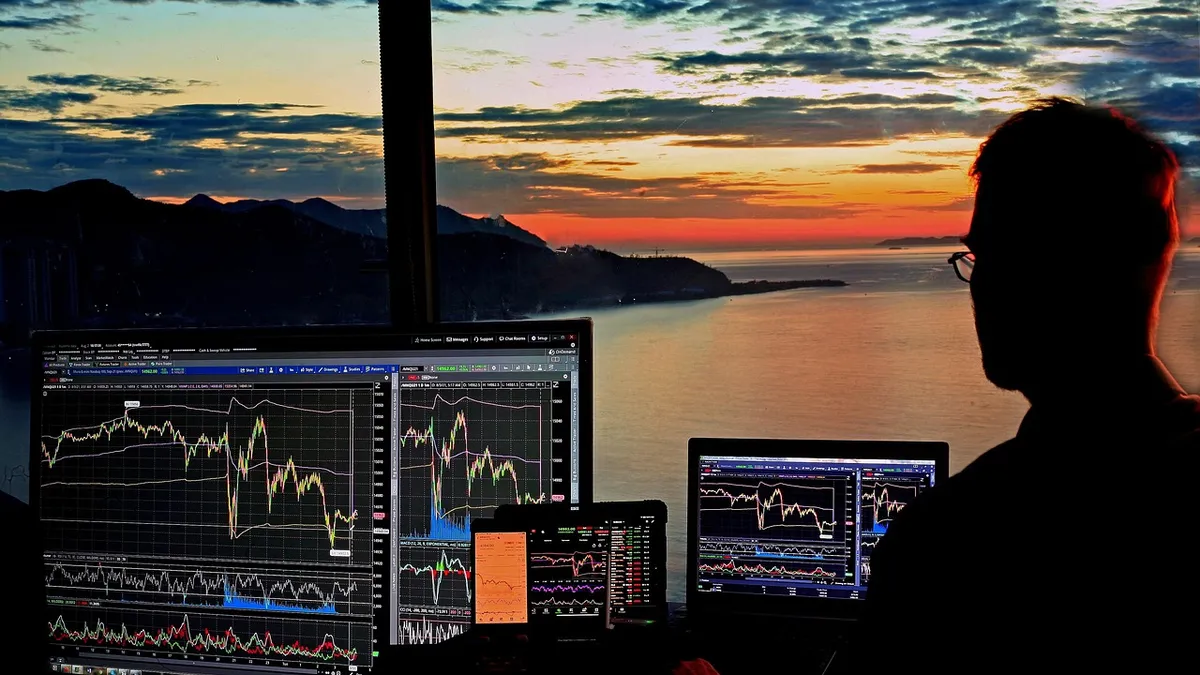
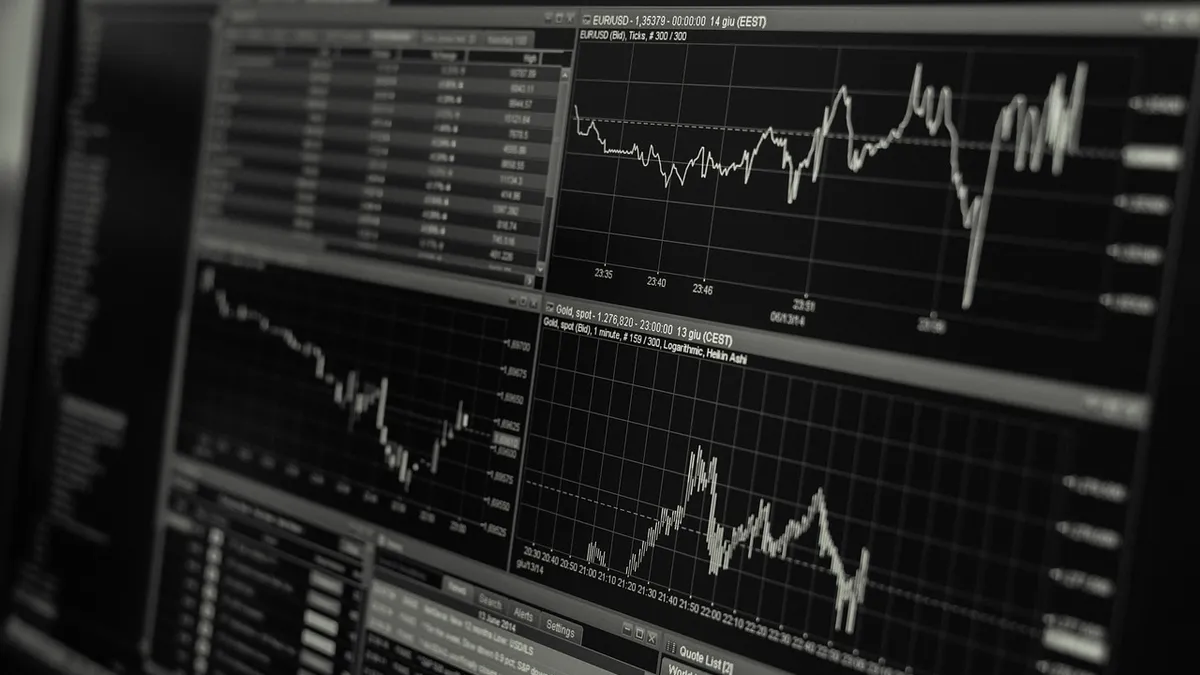

    The evidence: ASIC Report 828 (January 2026) recorded 26,243 retail clients using copy trading in FY2023–24, with interest described as “growing.” By contrast, only 121 clients used fully managed-account services — suggesting most Australians want to remain involved in their trading rather than handing it over entirely. Signals and copy trading sit in the middle: informed participation without full manual execution.

    Expert tip: When Crazii JTVertex evaluates a Telegram signals channel, one of the first things checked is whether the provider posts losing trades with the same frequency as winning ones. Providers who only post screenshots of green trades and go quiet after a bad week are not running a signals service — they are running a highlight reel. Silence after a loss is the single most reliable warning sign in this space.

    Jamie, by the way, eventually moved to a MetaTrader Signals provider with a two-year verified track record and a maximum drawdown he could stomach. He also learned to size positions at half the suggested ratio until he had three months of live results to calibrate against. That single adjustment changed his experience completely — not because the signals got better, but because his exposure to any single bad run was finally manageable. The right app is not always the most sophisticated one. Sometimes it is the one you will actually stick with when the market turns against you for a fortnight.
    MetaTrader signals marketplace copy trading Australian traders Crazii JTVertex
    The three main signals app categories used by Australian retail traders in 2026 — each with distinct risk and workflow implications. · Photo: TheInvestorPost / Pixabay
    You know which apps exist. But knowing the name of a tool and knowing whether it is right for you are two very different things. The next section is where that gap closes.

    How do you evaluate a signals app before putting real money on it?

    How do you evaluate a signals app before putting real money on it?
    💡

    Key points: Evaluating a trading signals app before committing real capital requires checking five specific data points: verified trade count, maximum drawdown, win rate in context of risk-reward ratio, signal frequency relative to your schedule, and the provider’s transparency around losing periods.

    You are probably thinking: “I have seen evaluation checklists before — they all say the same things.” Fair. So here is what most checklists leave out. Win rate means almost nothing on its own. A signals provider with a 70% win rate and a 1:0.5 risk-reward ratio (risking two dollars to make one) will lose money over time. A provider with a 45% win rate and a 1:2 risk-reward ratio will make money over time, even though they lose more often than they win. The number that matters is the combination of both — and most signals marketing shows you only the win rate because it sounds better. Here is how to evaluate properly, in a sequence that actually works.
    1

    Check the verified trade count first

    On MT5 Signals, trade history is publicly auditable. On Telegram channels, ask for a link to a third-party tracker like Myfxbook or FX Blue. Crazii JTVertex’s personal threshold is one hundred closed trades minimum — below that, the sample is too small to draw any meaningful conclusion about edge. This is a heuristic, not a rule, but it is a useful filter.

    2

    Calculate the actual risk-reward ratio from the history

    Take the average winning trade size and divide it by the average losing trade size. If wins average fifty pips and losses average one hundred pips, the provider needs to be right more than 67% of the time just to break even — before fees. Run this number yourself; do not rely on the provider’s summary statistics.

    3

    Find the maximum drawdown and translate it to dollar terms

    A 20% maximum drawdown on a $5,000 account means your balance dropped to $4,000 at the worst point. Ask yourself honestly: if your account fell to that level over a two-week period, would you close the subscription in panic? If yes, that signals provider is not the right fit regardless of long-term performance. Drawdown tolerance is personal, and no signals app can fix a mismatch between its volatility and your psychology.

    4

    Check signal frequency against your actual availability

    A signals app that fires alerts during the London session (roughly 5 pm to midnight AEST) is largely useless to a full-time worker in Sydney who cannot monitor positions after dinner. Match the signal timing to your life, not to an idealised version of your schedule.

    5

    Run it on a demo account for thirty days before going live

    This is the step most traders skip because it feels slow. It is also the step that would have saved Jamie eight months of frustration. Thirty days on demo gives you a real sense of how the signals feel to follow in real time — the wait between signals, the moments of doubt when a trade goes against you before recovering, the emotional texture of the strategy. You cannot get that from a backtest.

    The evidence: ASIC Report 828 (January 2026) found that among active traders placing fifty or more open positions per month, 19% of those who would otherwise have been profitable ended up losing money after fees. That is roughly one in five active traders flipped from profit to loss purely by trading too frequently. More signals, more trades, more fees — the relationship is not always in your favour.

    For a deeper grounding in the analytical frameworks behind signal evaluation, the best trading signals book every serious trader should own covers position sizing and signal filtering in a way that no app tutorial will.
    how to evaluate trading signals app performance history drawdown Crazii JTVertex
    A five-step evaluation process for vetting any trading signals app before committing real capital. · Photo: sergeitokmakov / Pixabay
    You now know what to look for. But knowing the right criteria does not automatically stop you from making the mistakes that cost most traders the most money. That is what section four is about — and mistake three is the one almost nobody talks about.

    Ready to match signals to a platform that suits the Australian market?

    Crazii JTVertex recommends AIMS for Australian traders looking for a regulated environment to test and run signals-based strategies.

    Open an AIMS account

    What are the most common mistakes traders make with signals apps?

    What are the most common mistakes traders make with signals apps?
    💡

    Key points: The three most damaging mistakes Australian traders make with signals apps are: over-sizing positions relative to the signal provider’s account, ignoring fees as a component of net performance, and switching providers during a normal drawdown period rather than staying the course on a vetted strategy.

    Mistake 1
    Copying position sizes without adjusting for your own account

    A signal provider running a $50,000 account who opens a 2-lot trade is risking a specific percentage of their capital. If you copy that same 2-lot trade on a $5,000 account, you are risking ten times the proportion of your capital on the same signal. This is the single most common way traders blow up while following a genuinely profitable signals provider. The signal was right. The sizing was catastrophic. Always calculate what percentage of your own account each trade represents — not what percentage of the provider’s account it represents.

    Mistake 2
    Underestimating fees as a drag on performance

    ASIC Report 828 found that $73 million of the $458 million in net retail losses in FY2023–24 came directly from fees. To put that in perspective: 5% of retail clients would have made a net profit that year but ended up in a loss position purely because of fees. If you are running a signals strategy with high trade frequency, your spread costs and overnight financing charges compound quickly. A signals app that generates twenty trades a week on a tight-margin forex pair may look profitable in gross terms and be neutral or negative net of fees. Run the numbers with fees included before you evaluate any strategy.

    Mistake 3
    Abandoning a vetted strategy during a normal drawdown

    This is the one almost nobody discusses openly. Every signals strategy — including genuinely profitable ones — goes through losing streaks. A strategy with a 20% historical maximum drawdown will, at some point, draw down close to 20% again. If you cancel your subscription at 15% down because it “feels broken,” you will miss the recovery. Crazii JTVertex has watched traders cycle through five or six different signals providers in a year, abandoning each one during a normal losing period, and finishing the year worse than if they had stayed with their first choice and managed position size properly. The switching itself is the problem.

    The evidence: ASIC Report 828 (January 2026) shows that 74% of retail clients acquired through paid online advertising lost money in FY2023–24 — notably worse than the already-sobering 68% sector average. This suggests that traders who arrive via marketing tend to have less preparation, less evaluation rigour, and higher susceptibility to the mistakes above. The antidote is the evaluation process in section three, applied before any money moves.

    Expert tip: Crazii JTVertex’s rule for drawdown: if a signals provider hits 50% of their historical maximum drawdown, that is a review point — time to re-examine whether the market conditions have structurally changed. If they hit 100% of historical maximum drawdown, that is a stop point. But anything below 50% of the historical worst? That is normal. Stay the course, keep position sizes conservative, and do not make permanent decisions based on temporary performance.

    Jamie came back to this point in a later conversation. He admitted that the signals channel he left had actually recovered strongly in the two months after he cancelled. He had bailed at exactly the wrong moment. That is not a failure of discipline — it is a failure of expectation-setting at the start. If you know a strategy can draw down 18% and you have planned for it, a 12% drawdown feels manageable. If you were expecting smooth upward equity, a 12% drawdown feels like the end of the world.
    common mistakes trading signals apps position sizing drawdown Crazii JTVertex
    Three mistakes that cost Australian traders the most when using signals apps — and how to avoid each one. · Photo: sergeitokmakov / Pixabay
    Getting the app right and avoiding the mistakes still leaves one question on the table: where do signals actually fit in a complete trading approach? That is where the real leverage is.

    How do trading signals apps fit into a broader Australian trading strategy?

    How do trading signals apps fit into a broader Australian trading strategy?
    💡

    Key points: Trading signals apps are most effective as a first layer of market intelligence, not as a standalone decision engine. For Australian traders, the right sequence is: signals app for trade identification, execution platform for order management, and your own risk framework for position sizing. The tool is step one — not the whole system.

    Here is the reframe that changes how most traders think about signals apps: a signal is an input, not an instruction. The traders who use signals apps most effectively treat each alert as a hypothesis — “the market may be setting up for a move in this direction, based on the criteria this provider uses.” They then run that hypothesis through their own quick filter: does it align with the current session? Is there a major news event in the next four hours that could override the technical setup? Does the risk-reward make sense given current volatility? That takes maybe ninety seconds per signal. But it transforms the relationship from passive follower to active participant — which, as it turns out, is also better for your psychology when trades go against you. This is also where the sequencing of tools matters enormously. Crazii JTVertex’s view — and this is a firm one — is that a signals app is the right first tool, and a trading platform is the right second tool. You need to understand what signals are telling you before you can use a platform effectively. Trying to learn both simultaneously is like learning to drive and navigate a new city at the same time. For Australian traders specifically, there are a few context points worth building into your strategy. The Australian market operates in AEST/AEDT, which means the London and New York sessions — where the majority of forex liquidity sits — fall in the evening and late night. A signals app optimised for those sessions will fire alerts when many Australians are winding down or asleep. If that does not fit your life, look specifically for providers who focus on the Asian session or who offer signals across multiple session windows with clear labelling. The broader picture for Australian retail trading is also worth holding in mind. ASIC Report 828 noted that the active CFD client base in Australia stood at approximately 119,300 clients per quarter in FY2023–24 — down dramatically from pre-intervention levels of around 515,000 per quarter. The market is smaller and more regulated than it was five years ago. That is actually a positive for traders who do the work: the noise has reduced, the remaining participants tend to be more serious, and the signals services targeting this market have had to lift their standards to survive.

    The evidence: ASIC Report 828 (January 2026) recorded 119,300 active CFD trading clients per quarter in FY2023–24. That is a market that has contracted significantly from its peak, which means the remaining participants are generally more experienced and more deliberate. Signals apps serving this market are, on average, more sophisticated than they were in the high-volume era — but the responsibility for applying them correctly still sits with you.

    Expert tip: Crazii JTVertex recommends treating your first three months with any signals app as a calibration period, not a profit period. During calibration, the goal is to understand how the signals behave in live market conditions — how often they trigger, how long positions typically stay open, what the actual slippage looks like on your specific broker. Set position sizes at half your intended level during calibration. Once you have ninety days of live data, you have something real to optimise against.

    For a comprehensive view of how signals tools connect to the full range of trading resources available to Australian traders, the best trading signals and tools for Australian traders in 2026 pillar covers the complete landscape — from signals apps through to execution environments and analytical platforms. If you are specifically focused on forex signals as part of your strategy, the best trading signals for forex reviewed by active traders goes deeper on provider-specific performance across currency pairs.
    trading signals app Australian trading strategy session timing Crazii JTVertex
    Where signals apps sit within a complete Australian trading strategy — the first layer of a three-part system. · Photo: TheInvestorPost / Pixabay
    Jamie eventually built exactly this kind of layered approach. Signals app for identification. Platform for execution. His own position-sizing rule for risk. Three months of calibration before he treated any result as meaningful. He is not a professional trader. He is a project manager in Brisbane who now has a process he can actually follow — and that is the point.

    Frequently asked questions about trading signals apps

    Frequently asked questions about trading signals apps
    💡

    Key points: The questions Australian traders ask most often about signals apps cluster around cost, reliability, regulation, and how to start safely. The answers below are direct and ASIC-aware — no hype, no guarantees.

    Are trading signals apps legal to use in Australia?

    Yes. Using a trading signals app to inform your own trading decisions is legal in Australia. If a signals provider is managing money on your behalf or providing personal financial advice, they require an Australian Financial Services Licence (AFSL). Signals delivered as general information — which most apps provide — do not require an AFSL, but you remain responsible for your own trading decisions.

    Can a trading signals app guarantee profits?

    No signals app can guarantee profits, and any provider claiming otherwise is making a statement that should immediately end your interest in their service. ASIC data shows 68% of retail CFD clients lost money in FY2023–24. Signals can improve your decision-making process, but they cannot eliminate market risk.

    How much does a quality trading signals app cost?

    Costs range from free (MetaTrader’s built-in signals marketplace has free providers) to several hundred Australian dollars per month for premium services. Free does not mean low quality, and expensive does not mean reliable. Evaluate on verified performance data, not on price.

    What is the difference between a signals app and copy trading?

    A signals app sends you an alert that you then act on manually — you decide whether to place the trade, at what size, and when. Copy trading replicates a provider’s trades automatically in your account. Signals give you more control; copy trading gives you more automation. Both carry risk, and both require you to set appropriate position sizes for your own account.

    Which trading signals app is best for beginners in Australia?

    For beginners, the MetaTrader Signals marketplace is a practical starting point because the performance data is independently verified and the integration with MT4/MT5 is straightforward. Start with a demo account, choose a provider with at least one hundred verified closed trades and a maximum drawdown you can stomach, and run it for thirty days before going live with real capital.

    Want a direct conversation about which signals setup suits your situation?

    Crazii JTVertex offers direct support for Australian traders working through their first signals setup — no sales pitch, just practical guidance.

    Get in touch

    Note: Trading CFDs, forex, and other leveraged products involves significant risk and is not suitable for all investors. The information in this article is general in nature and does not take into account your personal financial situation, needs, or objectives. Past performance of any signals provider is not a reliable indicator of future results. Always read the Product Disclosure Statement and consider seeking independent financial advice before making any trading decisions.

  • Best Trading Signals For Stocks Australia — Best Trading Signals for Stocks That Beat the ASX A

    Best Trading Signals For Stocks Australia — Best Trading Signals for Stocks That Beat the ASX A

    The best trading signals for stocks Australia can be the difference between a well-timed entry and watching a position move against you for no clear reason. After years of testing signal providers, copy-trading platforms, and automated alert tools across Australian and global markets, Crazii JTVertex has put together this guide specifically for Australian traders who are ready to move beyond guesswork — and pick tools that actually hold up under real market conditions. By the time you finish reading, you will know exactly which signal types suit your trading style, what separates a credible provider from a noise machine, and how to evaluate any signal before you risk a single dollar on it.

    Start With the Right Tools — Not the Wrong Platform

    Signal quality only matters if your execution environment supports it. See how Crazii JTVertex pairs signal tools with the right trading setup for Australian traders.

    Explore the Setup
    Table of contents

    What Are the Best Trading Signals for Stocks in Australia Right Now?

    What Are the Best Trading Signals for Stocks in Australia Right Now?
    💡

    Key points: The best trading signals for stocks in Australia combine technical triggers with ASX-specific context — including sector rotation patterns, commodity correlations, and AEST session timing. No single provider dominates; the right choice depends on whether you trade ASX equities, CFDs, or global stocks through an Australian broker.

    Here is the honest answer most comparison sites will not give you. There is no single “best” signal provider for every Australian trader. What there is, however, is a clear framework for matching signal types to your actual situation — and once you understand that, the noise clears fast. For traders focused on ASX-listed equities, the most useful signals tend to combine price-action triggers on the daily chart with volume confirmation during the morning session (10:00–12:00 AEST). The ASX opens at 10:00 AEST and sees its heaviest liquidity in the first two hours — signals generated outside that window, particularly from US-based providers who do not account for this, often arrive stale or misaligned with local order flow. For traders using CFDs to access global stocks through an Australian broker, MetaTrader’s built-in signals marketplace is worth understanding. It currently hosts over 3,200 free and commercial signal providers across MT4 and MT5, according to MetaQuotes. That sounds like abundance. In practice, fewer than a handful of those providers have audited track records longer than twelve months with meaningful trade sample sizes. The signals worth paying attention to — whether you are running a manual strategy or using copy trading — share three characteristics. First, they specify the exact instrument, entry range, stop-loss level, and at least one take-profit target. Second, they come with a documented rationale (not just “RSI is oversold”). Third, they have a trade history of at least 100 completed positions, not paper trades. That last point is one minn applies as a personal rule of thumb, not a regulatory standard. But it matters because signal providers with fewer than 100 live trades are statistically too early to distinguish skill from luck.

    The evidence: ASIC’s Report 828 (published January 2026, covering FY2023–24) found that 68% of retail CFD clients in Australia lost money — 133,674 clients with net losses exceeding $458 million. Of that figure, $73 million was attributable to fees alone. That means the cost of trading is not a footnote; it is a primary driver of whether a signal-based strategy succeeds or fails.

    Expert tip: Crazii JTVertex has reviewed signal providers where the win rate looked excellent on paper — above 70% — but the average loss was three times the average win. The account still bled. Always calculate the expectancy formula: (Win Rate × Average Win) − (Loss Rate × Average Loss). If that number is negative, a 70% win rate means nothing.

    Signal Type Best For Key Limitation AEST Relevance
    ASX Technical Alerts Equity swing traders Requires manual execution High — ASX session aligned
    MT4/MT5 Copy Signals CFD traders, beginners Slippage on fast-moving markets Medium — depends on provider timezone
    Telegram Signal Groups Active day traders No audit trail, high variance Variable — check provider hours
    Algorithmic Screeners Systematic traders Requires backtesting knowledge High — can be set to ASX hours
    best trading signals for stocks Australia comparison chart Crazii JTVertex
    Comparing signal types for Australian stock and CFD traders — Crazii JTVertex · Photo: sergeitokmakov / Pixabay
    For a broader view of how signals fit into a complete trading toolkit, the best trading signals and tools for Australian traders in 2026 guide on this blog covers the full landscape, including platform integrations and risk management overlays.

    How Do Stock Trading Signals Actually Work — and Why Do Most Fail?

    How Do Stock Trading Signals Actually Work — and Why Do Most Fail?
    💡

    Key points: Stock trading signals are triggered alerts based on predefined technical, fundamental, or sentiment conditions. They fail most often not because the underlying logic is wrong, but because the trader receiving them lacks the execution discipline, position-sizing framework, or understanding of the signal’s original context to apply them correctly.

    Let me introduce you to Marcus. Marcus is a 34-year-old project manager from Brisbane who started trading ASX stocks in 2023. He is not reckless — he reads charts, he follows the news, and he subscribed to a signal service that had a decent-looking dashboard. Six months in, he was down on almost every position the service had flagged. The signals were not entirely wrong. The problem was that Marcus was entering positions two to three hours after the alert arrived, by which point the entry range had already moved. He was also sizing every trade the same way regardless of the signal’s stated confidence level. And he had no stop-loss discipline — he would widen stops when a trade moved against him, which is exactly backwards. This story matters because it is the most common failure mode, and it has nothing to do with the signal itself. Here is how signals actually work. A technical signal fires when a set of conditions is met — for example, when a stock’s RSI drops below 30 (indicating oversold territory on the standard Wilder scale) while price simultaneously tests a key support level and volume is above the 20-day average. That confluence is the signal. What happens next depends entirely on the trader. The mechanism breaks down at three points. First, latency: signals delivered via email or a delayed app push notification are often worthless for intraday trades. Second, context collapse: a signal generated for a US-listed stock using US session data does not automatically translate to an ASX-listed equivalent, even in the same sector. Third, and most importantly, position sizing is almost never included in a signal alert — yet it determines more of your outcome than the entry price does.

    The evidence: ASIC Report 828 found that among active traders making 50 or more open positions per month, 19% of those who would otherwise have been profitable ended up losing money after fees. More trading does not equal better outcomes. Signals that encourage high-frequency entries without fee awareness are quietly dangerous.

    Expert tip: We spent three months testing the same signal set with two different position-sizing rules — fixed dollar amount versus a percentage of account equity. The equity-based approach produced a materially different drawdown profile even though the signals and entries were identical. The signal is the starting point, not the strategy.

    Marcus, by the way, eventually rebuilt his approach. He stopped chasing signals and started treating them as one input among several. That shift changed everything — and we will come back to what he did differently in section five. If you are looking at signal apps specifically, the best trading signals apps Australian traders are using in 2026 breaks down the mobile and desktop tools that fit different execution styles.
    how stock trading signals work for ASX traders Crazii JTVertex
    Signal mechanics and common failure points for Australian stock traders — Crazii JTVertex · Photo: sergeitokmakov / Pixabay

    Get Signal Tools That Match Your Execution Style

    The right signal is useless without the right platform behind it. Crazii JTVertex connects Australian traders with tools built for ASX and global market timing.

    See the Platform

    What Should Australian Traders Look for When Comparing Signal Providers?

    What Should Australian Traders Look for When Comparing Signal Providers?
    💡

    Key points: When comparing stock signal providers in Australia, prioritise verified trade history over 100 completed positions, transparent drawdown data, AEST-compatible alert timing, and fee structures that do not erode your edge. Avoid any provider that cannot show audited results or that promises consistent returns.

    You are probably thinking: every signal provider claims to be the best. How do you actually tell them apart? That is the right question. And the answer is less about marketing copy and more about five specific things you can verify before you pay anything. The first is trade history volume. Minn’s personal threshold is 100 completed live trades minimum before taking any provider’s win rate seriously. Below that, you are looking at noise. A provider with 23 trades and an 87% win rate has told you almost nothing statistically useful. The second is drawdown transparency. Maximum drawdown — the largest peak-to-trough decline in the signal account — is the number most providers bury. If a provider’s maximum drawdown exceeds 20%, that is a flag worth examining carefully. Not necessarily a deal-breaker, but it tells you how much pain you would have had to sit through to reach the stated returns. That is a personal heuristic, not a regulatory standard. The third is timing compatibility. An Australian trader following a signal provider based in London or New York needs to check whether alerts fire during hours when ASX stocks or CFDs on global equities are actually liquid. A signal that fires at 2:00 AM AEST for an ASX position is operationally useless for most retail traders. The fourth is fee structure. ASIC Report 828 showed that 5% of retail clients who would have made a net profit ended up in a loss position purely because of fees. That is one in twenty profitable traders wiped out by costs. When you layer a signal subscription fee on top of spread, commission, and overnight financing, the maths can turn negative before a single trade closes. The fifth is what the signal does not include. Most signals give you an entry. Fewer give you a stop-loss. Almost none give you position sizing. A provider that includes all three — entry, stop, target, and suggested position size relative to account — is operating at a different level of professionalism than one that just sends a ticker and a direction.

    The evidence: According to ASIC Report 828, 74% of new retail clients acquired through paid online advertising lost money in FY2023–24 — worse than the sector average of 68%. Signal providers who rely heavily on social media advertising to acquire subscribers deserve extra scrutiny, not less.

    Expert tip: Crazii JTVertex has seen providers show a “live” performance dashboard that updates in real time but excludes closed losing trades from the visible feed. The trick is to ask for a full trade log export, not just the dashboard screenshot. If they cannot or will not provide it, that tells you everything.

    1

    Request the Full Trade Log

    Ask for every completed trade — wins and losses — over at least 90 days. Calculate win rate, average win, average loss, and expectancy yourself. Do not rely on the provider’s summary metrics.

    2

    Check Maximum Drawdown Against Your Risk Tolerance

    If the account dropped 35% at its worst before recovering, ask yourself honestly whether you would have stayed in at that point. Most traders would not — and that gap between paper performance and real behaviour is where strategies collapse.

    3

    Calculate the All-In Cost

    Add subscription fee, spread, commission, and overnight swap costs for a typical month of signals. Compare that total against the average monthly profit the provider claims. If the margin is thin, fees will eat it.

    4

    Paper Trade for Two Weeks First

    Follow every signal in a demo account for at least ten trading days before committing real capital. This tells you whether the signal timing is compatible with your schedule and whether the entry ranges are realistic to hit in practice.

    evaluating stock signal providers for Australian traders Crazii JTVertex
    Key criteria for comparing ASX and CFD signal providers — Crazii JTVertex · Photo: TheInvestorPost / Pixabay

    Which Common Mistakes Are Costing Australian Traders With Signals?

    Which Common Mistakes Are Costing Australian Traders With Signals?
    💡

    Key points: The most costly mistakes Australian traders make with stock signals are not about picking the wrong provider — they are about execution errors, fee blindness, and treating a signal as a complete strategy rather than one input. Fixing these three things improves outcomes regardless of which signal source you use.

    Mistake 1
    Treating the signal as the full strategy

    A signal tells you when to consider entering. It does not tell you how much to risk, when to exit early if conditions change, or how this trade fits into your overall portfolio exposure. Traders who follow signals without a surrounding framework are essentially outsourcing their entire decision-making process — and when the signal provider has a bad month, they have no fallback.

    Mistake 2
    Ignoring fees until they appear on the statement

    ASIC’s data is clear: $73 million of the $458 million in retail CFD losses in FY2023–24 came from fees. That is not a rounding error. If you are trading signals on leveraged products and you have not calculated your daily swap cost, your spread cost per trade, and your subscription fee as a percentage of your account, you are flying blind on the most controllable variable in your trading.

    Mistake 3
    Chasing win rate instead of expectancy

    A signal service with a 65% win rate can destroy an account if the average loss is twice the average win. Conversely, a service with a 45% win rate can be highly profitable if the average win is three times the average loss. Win rate is the metric providers advertise because it sounds good. Expectancy is the metric that actually predicts whether you make money.

    Mistake 4
    Using copy trading without understanding what you are copying

    ASIC noted 26,243 retail clients used copy trading in FY2023–24. Copy trading is genuinely useful — but copying a signal provider whose strategy involves holding positions through earnings announcements, or who trades instruments with low liquidity, without knowing that, is a silent risk. Read the strategy description. If there is not one, that is your answer.

    The evidence: ASIC Report 828 found that 85% of retail clients lost money trading options CFDs in FY2023–24 — a significantly worse outcome than standard CFDs. Signal providers who push options CFDs as a “higher return” vehicle without disclosing this loss rate differential are doing their subscribers a disservice.

    Expert tip: We once followed a signal provider for a full quarter where the win rate was above 60%. Then minn checked the actual account equity curve — it had barely moved because the average win was smaller than the average loss, and three large losing trades had offset everything. The dashboard showed “60% win rate” in large font. The equity curve told the real story. Always look at the equity curve, not the win rate.

    Marcus — the Brisbane project manager from earlier — made mistakes two and three simultaneously. He was paying a monthly subscription, trading on a platform with wide spreads, and following a provider with a strong win rate but poor expectancy. Once he recalculated his all-in costs and switched to an expectancy-first evaluation, his approach changed entirely. He is still trading. Most people in his situation were not by the end of the year. For traders who use Telegram-based signal groups, the patterns above appear frequently. The best trading signals Telegram groups that deliver real results covers how to separate accountable providers from the noise in that space.

    The Right Signal Needs the Right Account Behind It

    Crazii JTVertex works with AIMS to give Australian traders a properly structured trading environment — where signal execution, fee transparency, and risk tools are built in from the start.

    Open an Account

    How Do You Evaluate a Stock Signal Before You Risk Real Money?

    How Do You Evaluate a Stock Signal Before You Risk Real Money?
    💡

    Key points: Evaluating a stock signal before risking capital involves checking the signal’s documented rationale, testing it in a demo environment for at least ten trading sessions, calculating expectancy from the historical trade log, and confirming the alert timing aligns with your available trading hours in AEST.

    What does it actually feel like to get this right? Imagine it is 10:15 AEST on a Tuesday morning. The ASX has been open for fifteen minutes. A signal fires on a mid-cap resources stock — it has broken above a key resistance level on above-average volume, with RSI confirming momentum without being overbought. You already know from two weeks of paper trading that this provider’s signals in this sector have a positive expectancy. You know your position size before you open the order ticket. You know your stop-loss level. You know your first take-profit target. The execution takes under ninety seconds. That is not luck. That is preparation meeting a signal that has already been evaluated. Here is the evaluation process minn uses before committing real capital to any signal source. The starting point is the historical trade log. Not the summary. The full log. Every completed trade, including the losers. Calculate the expectancy yourself: multiply the win rate by the average winning trade, subtract the product of the loss rate and the average losing trade. If the result is positive, you have a signal worth continuing to evaluate. If it is negative, no amount of win-rate marketing changes that. The second step is the demo period. Two weeks minimum, ten trading sessions. Follow every signal exactly as it arrives — same entry, same stop, same target. Do not override. The point is to see whether the signal timing works for your schedule, whether the entry ranges are actually achievable in live market conditions, and whether the drawdown during that period is something you could tolerate emotionally with real money at stake. The third step is the cost audit. Take your monthly subscription fee, your average spread cost per trade multiplied by the number of signals in a typical month, any commission, and any overnight financing cost. That total needs to be meaningfully smaller than the average monthly profit from the signal’s historical record — with a buffer for variance. The fourth step is the context check. Does the signal provider understand the specific instruments you are trading? A provider generating signals for ASX-listed mining stocks needs to understand how commodity price moves overnight affect opening gaps. A provider generating signals for US tech stocks via CFDs needs to understand that Australian traders will execute those signals hours after the US session has already moved.

    The evidence: According to MetaQuotes, the MT5 signals marketplace hosts over 3,200 signal providers. The vast majority have track records under six months. Filtering for providers with more than 12 months of live trading history and more than 100 completed trades narrows the field dramatically — and that narrowing is the point.

    Expert tip: Crazii JTVertex has a rule that minn does not apply to signal providers in general — minn applies it specifically to signals on instruments where the spread is wide relative to the typical target. If the signal’s average target is 15 pips and the spread is 3 pips, you are giving up 20% of your potential gain before the trade even starts. On tighter-margin signals, that ratio makes the strategy unviable regardless of how good the win rate looks.

    Marcus applied this exact process after his first difficult year. He spent three weeks in demo, calculated expectancy on two different providers, and chose the one with a lower win rate but a far better expectancy ratio. His equity curve in the six months after that decision looked nothing like the previous six months. Different inputs, different outcomes. If you are also trading gold or other instruments alongside stocks, the how to trade in XAUUSD without blowing your account early guide covers the risk management principles that apply across instruments.
    evaluating ASX stock signals before risking capital Crazii JTVertex
    Step-by-step signal evaluation process for Australian stock traders — Crazii JTVertex · Photo: sergeitokmakov / Pixabay

    Frequently Asked Questions About Trading Signals for Stocks in Australia

    Frequently Asked Questions About Trading Signals for Stocks in Australia
    💡

    Key points: Australian traders most commonly ask about signal legality under ASIC rules, the difference between copy trading and signal following, how to assess signal quality without a finance background, whether free signals are worth using, and how signals interact with tax obligations on Australian stock profits.

    Are trading signals for stocks legal in Australia?

    Yes, using trading signals is legal for Australian retail traders. However, providers who charge for signals and make specific recommendations about financial products may need an Australian Financial Services Licence (AFSL) under ASIC rules. Always check whether a paid signal provider is appropriately licenced before subscribing.

    What is the difference between copy trading and following a signal manually?

    Copy trading automatically replicates another trader’s positions in your account in real time, proportional to your account size. Manual signals require you to place the trade yourself after receiving the alert. Copy trading removes execution delay but also removes your ability to filter individual trades. ASIC noted 26,243 retail clients used copy trading in FY2023–24.

    Can I use free trading signals for ASX stocks?

    Free signals exist, but they rarely come with audited track records or transparent drawdown data. The MetaQuotes marketplace includes free signal providers, but the quality varies widely. Treat free signals as a starting point for evaluation, not a finished product — apply the same expectancy and demo-testing process you would to any paid provider.

    How many trades should a signal provider have before I trust their win rate?

    Crazii JTVertex uses a personal minimum of 100 completed live trades before treating a win rate as statistically meaningful. This is a heuristic, not a regulatory standard. Below that threshold, a strong win rate may simply reflect a short run of favourable market conditions rather than a repeatable edge.

    Do trading signals affect how I report profits to the ATO?

    Following signals does not change your tax obligations. Profits from trading ASX stocks or CFDs are still assessable income or capital gains depending on your trading frequency and intent, as determined by the ATO. Signal-based trading that results in frequent short-term trades is typically treated as business income rather than capital gains. Consult a registered tax agent for your specific situation.

    What is a realistic expectation for signal-based stock trading returns?

    Minn will not give you a number here, because any number would be misleading without knowing your account size, risk per trade, instruments traded, and cost structure. What minn can say is this: ASIC data shows 68% of retail CFD clients lost money in FY2023–24. Signals alone do not flip that statistic. Signals combined with proper position sizing, fee awareness, and execution discipline give you a genuine chance of being in the 32% who did not.

    Which platforms support trading signals for Australian stock traders?

    MetaTrader 4 and MetaTrader 5 have built-in signal marketplaces and support copy trading natively. Several Australian brokers also offer proprietary signal tools through their platforms. The key is ensuring the platform supports the instruments you want to trade — ASX equities, global stocks, or stock CFDs — with alert timing compatible with AEST trading hours.

    Note: This content is general information only and does not constitute personal financial advice. Trading signals, CFDs, and leveraged products involve significant risk of loss. You should consider your own financial circumstances, objectives, and risk tolerance, and read all relevant Product Disclosure Statements and Financial Services Guides before making any trading decisions. If you are unsure, speak with a licensed financial adviser.

    Ready to Build a Signal-Based Strategy That Actually Holds Up?

    Join the Crazii JTVertex community on Telegram for direct support, signal discussions, and trading tool guidance built for Australian traders.

    Join the Group
  • Best Trading Signals in Telegram Channels Worth Subscribing To

    Best Trading Signals in Telegram Channels Worth Subscribing To

    The best trading signals in Telegram channels can genuinely shift how you approach the market — but only if you know which ones are worth your time and which ones will quietly drain your account. Drawing on years of live trading experience across forex, commodities, and indices, Crazii JTVertex has put together this guide to help Australian traders cut through the noise and subscribe to channels that actually deliver. By the end of this article, you will know exactly how to evaluate any Telegram signals channel, which green flags to look for, and how to protect your capital while using signals — without needing to become a full-time analyst yourself.

    Important disclaimer: This article contains general information only and does not constitute personal financial advice. Trading CFDs, forex, and related instruments carries significant risk. According to ASIC Report 828 (published January 2026), 68% of retail CFD clients in Australia lost money in FY2023–24. Please consider your own financial circumstances and read all relevant disclosure documents before trading.

    🛠️ Tools Crazii JTVertex Recommends Alongside Telegram Signals

    Copy Trading Platform

    AIMS — Start Copying Verified Traders

    Tired of manually acting on every signal before the price moves? AIMS lets you automate execution so you stop missing entries.

    Open AIMS Account
    Signals Community

    Crazii — Signals, Analysis, Live Support

    Want signals with context, not just entry numbers fired into a chat? Crazii pairs every alert with a rationale so you actually learn the trade.

    Join Crazii

    Not Sure Where to Start With Trading Signals?

    Join the Crazii JTVertex community on Telegram — live signals, market context, and a group of traders who actually answer questions.

    Join the Telegram Group
    Table of Contents

    What Are the Best Trading Signals in Telegram and How Do They Actually Work?

    What Are the Best Trading Signals in Telegram and How Do They Actually Work?
    💡

    Key points: The best trading signals in Telegram are real-time alerts — entry price, stop-loss, and take-profit levels — sent directly to your phone. Quality channels pair each signal with a brief rationale, so you understand the trade rather than blindly copy it. Channels without a track record or risk context are the ones that cost traders the most.

    Think of a Telegram trading signal as a text message from someone who has already done the chart analysis. It lands on your phone with three numbers: where to enter, where to cut the loss, and where to take profit. That is the mechanical definition. The reality is more nuanced. A good signal is not just three numbers — it is a judgment call backed by a specific thesis. Maybe the provider spotted a break-and-retest on the four-hour chart for EUR/USD, or they identified a commodity trend aligning with a broader macro shift. The best channels explain that thesis in one or two sentences. The worst channels just fire entry numbers into a chat and disappear. Here is how the mechanics actually work. The signal provider — a trader, an analyst, or increasingly an algorithm — monitors markets during their session. When a setup meets their criteria, they post to the Telegram channel. Subscribers receive a push notification. They open their broker platform, place the trade manually, and manage it according to the signal’s parameters. Some platforms, including AIMS, allow you to automate this step entirely, which eliminates the execution lag that kills so many manually-followed signals.

    The evidence: According to ASIC Report 828 (January 2026), 26,243 retail clients in Australia used copy trading in FY2023–24 — a figure ASIC describes as reflecting “a growing interest” in signal-following and automated execution. To put that in perspective, that is roughly one in every five active retail CFD clients choosing to follow someone else’s trades rather than generating their own signals from scratch.

    Expert tip from Crazii JTVertex: One thing we learned the hard way: a channel’s win rate means almost nothing in isolation. We once followed a channel boasting an 80% win rate, only to realise their average loss was four times their average win. The account still went backwards. What you actually need to check is the risk-reward ratio on each signal — and whether the provider posts losing trades as openly as winning ones. Channels that only post the wins are not signal providers. They are marketing channels.

    Telegram became the dominant delivery platform for trading signals because it is free, instant, and supports large broadcast groups without the algorithm throttling you get on social media. A provider can reach 50,000 subscribers with a single message in under a second. For time-sensitive entries, that speed matters. For Australian traders, there is an additional layer to consider. Most high-quality signal providers operate from Europe or the United States, meaning their active trading windows — London open and New York open — fall in the evening or early morning in Sydney and Melbourne. That is not a dealbreaker, but it means you need to either set alerts and wake up, or use a platform that executes automatically. Understanding this timing mismatch is one of the first practical things to sort out before subscribing to anything. The broader ecosystem of best trading signals and tools for Australian traders extends well beyond Telegram — but Telegram remains the fastest, most accessible starting point for most retail traders.
    best trading signals in Telegram channels explained — Crazii JTVertex
    How Telegram trading signals are delivered and acted on in real time. · Photo: TheInvestorPost / Pixabay

    How Do You Evaluate a Telegram Trading Signals Channel Before Subscribing?

    How Do You Evaluate a Telegram Trading Signals Channel Before Subscribing?
    💡

    Key points: Before subscribing to any Telegram signals channel, verify three things: a minimum of 100 completed trades in the public history, consistent posting of both wins and losses, and a clearly stated risk-reward ratio per signal. Channels that cannot show you all three are not ready to be trusted with your capital.

    So you have found a Telegram channel with a slick logo and a pinned message showing a string of green trades. Now what? Most traders do the wrong thing here. They scroll the pinned message, see the numbers look good, and subscribe. That is how you end up in a channel that posts only its best weeks and goes quiet every time the market turns against it. Here is a more reliable framework.
    1

    Check the trade history depth

    Any channel worth subscribing to should have at least 100 completed trades on record — entries, exits, and results, all posted in real time, not retrospectively. We personally treat anything under 100 trades as statistically meaningless. A provider with 20 wins in a row might just have had a good month. A provider with 300 trades and a consistent edge is a different conversation entirely.

    2

    Look at how they handle losses

    Scroll back through the channel history and find the losing trades. Every serious provider has them. What matters is whether they posted the loss in real time, explained what went wrong, and adjusted without blaming the market. Channels that delete losing trades or go silent after a bad week are showing you exactly who they are.

    3

    Verify the risk-reward ratio on individual signals

    Do not just look at win rate. Look at the actual stop-loss and take-profit distances on each signal. A channel that risks 50 pips to make 30 pips needs to win more than 60% of the time just to break even — and that is before fees. We look for signals where the take-profit is at least 1.5 times the stop-loss distance as a starting point.

    4

    Assess whether they explain the trade thesis

    The best channels post something like: “EUR/USD long at 1.0845, stop 1.0810, target 1.0920 — break above the daily resistance confirmed, waiting for a pullback to the level.” That one sentence tells you the provider has a reason for the trade. A channel that just posts “BUY EURUSD 1.0845 SL 1.0810 TP 1.0920” with no context is asking you to trust them blindly. That is a red flag, not a feature.

    The evidence: ASIC Report 828 (January 2026) found that among active retail CFD clients placing 50 or more open positions per month, 19% of those who would otherwise have been profitable ended up losing money after fees. That is a direct data point about what happens when traders follow signals at high frequency without accounting for transaction costs. More trades, more fees, worse net outcomes.

    Expert tip from Crazii JTVertex: Here is something most signal reviews do not mention: check whether the channel posts signals during major news events. Some providers go completely silent around NFP, CPI, or central bank decisions — which is actually fine if they say so upfront. What worries Crazii JTVertex is the channels that fire signals right into high-impact news windows without any warning. That is where retail traders get stopped out by a spike and the provider quietly moves on to the next trade as if nothing happened.

    For traders who want to go deeper on evaluating signals tools beyond Telegram, the guide on best trading signals apps Australian traders are using in 2026 covers the platform side of this evaluation in detail.
    how to evaluate Telegram trading signals channels — Crazii JTVertex
    Key criteria for assessing a Telegram signals channel before committing real capital. · Photo: TheInvestorPost / Pixabay

    Want Signals With Context, Not Just Numbers?

    The Crazii community on Telegram posts every signal with a trade rationale — so you understand the setup, not just the entry price.

    Try Crazii Signals

    Which Types of Telegram Signals Channels Suit Australian Traders in 2026?

    Which Types of Telegram Signals Channels Suit Australian Traders in 2026?
    💡

    Key points: Australian traders in 2026 are best served by Telegram channels that operate across the Asian and London sessions, cover forex majors and commodities relevant to the AUD, and pair signals with educational context. Channels built purely around US equities or crypto tend to misalign with both Australian trading hours and ASIC’s regulatory environment.

    Not all Telegram signals channels are built the same way — and more importantly, not all of them are built for you. This is where a lot of Australian traders make a costly assumption. They subscribe to a channel popular in the UK or the US, discover the signals fire at 2am Sydney time, and either lose sleep trying to follow them manually or miss entries entirely. Let us break down the main types and which ones actually fit an Australian context.
    Channel Type Best For Australian Timing Fit Key Watch-Out
    Forex Signals (Majors) Traders focused on EUR/USD, GBP/USD, USD/JPY Moderate — London/NY sessions are evening/night AEST Execution lag if following manually
    AUD Pairs Specialists Traders who want to trade during Australian hours Excellent — Asian session overlaps with business hours Fewer quality providers in this niche
    Commodities Signals (Gold, Oil) Traders following macro themes relevant to Australia Good — gold trades 24 hours, multiple entry windows Spreads can be wider during low-liquidity windows
    Crypto Signals Traders comfortable with high volatility Good — crypto markets never close Higher loss rates; ASIC notes 85% of retail options CFD clients lost money in FY2023–24
    Index Signals (ASX, US30) Stock-adjacent traders wanting index exposure Mixed — ASX hours align well, US indices do not Gaps at open can invalidate entry levels
    The channels that tend to serve Australian retail traders best are those covering gold and AUD-related forex pairs during the Asian session. Gold in particular trades around the clock, the signals can be acted on during normal waking hours, and the asset has direct relevance to the Australian economy given the country’s position as one of the world’s largest gold producers. For traders interested in Australian equities signals specifically, the article on best trading signals for stocks that beat the ASX covers that territory in depth.

    The evidence: ASIC Report 828 (January 2026) recorded 119,300 active CFD trading clients per quarter in FY2023–24. That is a significant retail market — but one where 68% of participants lost money. Knowing which signal types align with your hours and your risk tolerance is not a nice-to-have. It is what separates the 32% who made money from the majority who did not.

    Expert tip from Crazii JTVertex: We have noticed that traders who try to follow three or four different Telegram channels simultaneously tend to get worse results than those who follow one channel consistently. The reason is signal conflict — two channels post opposing positions on the same pair, you freeze, you either take both or neither, and the decision-making overhead kills your execution. Pick one channel that matches your session and your instruments. Master it before adding anything else.

    There is also a question of regulatory fit. Channels that promote highly leveraged crypto products or promise specific returns are operating in territory that ASIC actively monitors. Sticking to channels that acknowledge risk, disclose their methodology, and do not make income guarantees is not just good sense — it is the kind of due diligence that protects you legally and financially. For traders exploring crypto signals specifically, the guide on best crypto buy sell signals that remove emotional guesswork is worth reading alongside this one.
    types of Telegram trading signals channels for Australian traders — Crazii JTVertex
    Comparing Telegram signal channel types by session fit and instrument relevance for Australian traders. · Photo: TheInvestorPost / Pixabay

    What Are the Biggest Mistakes Traders Make With Telegram Signal Channels?

    What Are the Biggest Mistakes Traders Make With Telegram Signal Channels?
    💡

    Key points: The three most costly mistakes with Telegram trading signals are: following too many channels at once, ignoring the stated stop-loss levels, and treating signals as a substitute for understanding the market. Any one of these habits can turn a profitable signal provider into a losing experience for the subscriber.

    Here is the uncomfortable truth: most traders who lose money following signals do not lose because the signals were bad. They lose because of what they did with the signals.
    Mistake 1
    Moving or ignoring the stop-loss

    This is the single most common way traders turn a manageable loss into a catastrophic one. The signal says stop-loss at 1.0810. The price touches 1.0815 and bounces slightly. The trader thinks “it’s almost back” and moves the stop down to 1.0780. Then the price drops to 1.0760. What was meant to be a controlled 35-pip loss becomes an 85-pip loss — more than twice the original risk. The stop-loss in a signal is not a suggestion. It is the provider’s maximum pain threshold, calculated before emotion entered the picture.

    Mistake 2
    Subscribing to channels based on screenshot results

    Any Telegram channel can post a screenshot of a winning trade. Screenshots prove nothing. What you need is a live, scrollable history of signals posted in real time — not a curated highlight reel. ASIC Report 828 (January 2026) found that 74% of retail clients acquired through paid online advertising lost money in FY2023–24. Channels that rely heavily on paid promotion and screenshot-based marketing are drawing from exactly that pool of outcomes.

    Mistake 3
    Over-sizing positions on “high confidence” signals

    Some channels label certain signals as “premium”, “high probability”, or “A+ setup”. Traders respond by increasing their position size on these trades. The problem is that even genuinely high-probability setups fail regularly — that is the nature of probabilistic trading. We have a firm rule: position size stays the same regardless of how confident the signal provider sounds. The market does not care about their confidence rating.

    The evidence: ASIC Report 828 (January 2026) found that 5% of retail CFD clients who would have been profitable were pushed into a net loss purely by fees. Among active traders placing 50 or more positions per month, that figure rose to 19%. Fees are not a minor footnote — they are a structural drag that compounds over time. Every signal you follow has an execution cost attached to it.

    Expert tip from Crazii JTVertex: We used to think that following more signals meant more opportunities. It took a genuinely bad quarter to understand that each signal you act on is also a fee event — spread, commission, swap if held overnight. The traders who came out ahead in that period were the ones being selective, not the ones filling their calendars with trades. Quality over frequency is not just a cliché here. It is arithmetic.

    There is a version of this story that plays out in almost every trading community. A trader joins a Telegram channel, follows it perfectly for two weeks, builds confidence, then starts taking liberties — skipping the stop-loss on one trade, doubling position size on the next “A+ setup”, adding a second and third channel “just to diversify”. Within a month, the original discipline is gone and the account is underwater despite the channel’s signals performing reasonably well. The discipline to follow a signal exactly as posted — or not at all — is the actual skill being developed here. That is harder than it sounds when you are watching a position move against you at 11pm on a Tuesday.
    common mistakes with Telegram trading signal channels — Crazii JTVertex
    The three mistakes that turn good signals into losing trades for retail traders. · Photo: geralt / Pixabay

    Ready to Follow Signals With Proper Risk Management?

    AIMS lets you automate signal execution so you remove the emotional override that causes most of the mistakes above.

    Open AIMS Account

    How Do Telegram Signals Compare to Other Signal Delivery Methods?

    How Do Telegram Signals Compare to Other Signal Delivery Methods?
    💡

    Key points: Telegram delivers signals faster than email and with less noise than social media, but it lacks the built-in execution integration of dedicated platforms like MetaTrader’s signal marketplace. For Australian traders who need both speed and automation, combining a Telegram channel for context with a copy trading platform for execution is currently the most practical setup.

    You might be wondering: if signals are the goal, why Telegram specifically? Why not just use MetaTrader’s built-in signals marketplace, or follow a trader on a copy trading platform? Fair question. And the honest answer is that each delivery method has a different trade-off.
    Delivery Method Speed Execution Integration Context / Education Cost
    Telegram Channel Near-instant push notification Manual (unless paired with automation) Varies widely by provider Free to paid; wide range
    MetaTrader Signals Marketplace Automated — no manual step Built-in copy execution Minimal — mostly stats Subscription per provider
    Email Alerts Slow — depends on inbox Manual only Can include full analysis Often included with broker
    Social Media (Twitter/X) Variable — algorithm dependent Manual only Often short-form, low context Free
    Copy Trading Platform (AIMS) Automated Full — trades mirror automatically Profile stats available Performance fee or spread
    MetaTrader’s built-in marketplace is worth mentioning here because of its scale. According to MetaQuotes, the MT4/MT5 signals marketplace hosts more than 3,200 free and commercial signal providers. That is a significant pool — but the sheer volume makes quality filtering difficult, and the interface prioritises statistics over explanatory context. Telegram wins on community and communication. The best Telegram channels are not just signal feeds — they are communities where the provider answers questions, explains their reasoning, and occasionally posts educational content between setups. That combination of signal plus context is what helps traders build their own understanding over time, rather than remaining permanently dependent on someone else’s analysis. The practical recommendation from Crazii JTVertex: use Telegram for the signal and the context, and use a platform like AIMS for the execution. That combination gives you the educational value of a community channel and the speed of automated execution — without having to be awake at 3am to catch a London open entry.

    The evidence: ASIC Report 828 (January 2026) noted that only 121 retail clients used managed-account services in FY2023–24 — described as “not widely used” — while 26,243 used copy trading. The gap tells you where retail traders are actually going: not to fully managed accounts, but to copy trading and signal-following arrangements where they retain some control and visibility over individual trades.

    Expert tip from Crazii JTVertex: One nuance we rarely see discussed: when you follow a Telegram signal manually, you almost never get the exact entry price the provider got. By the time you read the notification, open your platform, and place the order, the price has moved. On fast-moving pairs like GBP/JPY or gold during a news event, that slippage can eat a significant portion of the signal’s intended risk-reward. This is the single biggest argument for automated execution — not laziness, but precision.

    The question is not really Telegram versus something else. It is about building a stack where each tool does what it is genuinely good at. Telegram for community and context. Automation for execution. A clear risk framework for everything in between.
    Telegram trading signals versus other signal delivery methods comparison — Crazii JTVertex
    Comparing signal delivery methods by speed, execution, and educational value for retail traders. · Photo: sergeitokmakov / Pixabay

    Frequently Asked Questions About Trading Signals on Telegram

    Frequently Asked Questions About Trading Signals on Telegram
    💡

    Key points: The most common questions about Telegram trading signals centre on safety, cost, legality in Australia, how to spot scams, and whether signals work for beginners. The short answers: signals are legal in Australia but unregulated; free channels can be legitimate but require the same scrutiny as paid ones; and beginners should prioritise learning over profit in the first months of following any channel.

    Are Telegram trading signals legal for Australian traders?

    Yes. Following trading signals posted on Telegram is legal in Australia. However, if a provider charges for signals and makes specific return promises, they may be operating a financial service that requires an Australian Financial Services Licence (AFSL). Traders should check whether a paid provider holds appropriate ASIC authorisation before subscribing.

    Are free Telegram trading signals worth following?

    Some free channels are run by genuine traders building a community or reputation. Others are free because they earn commission when you open an account with a specific broker. Neither is automatically bad, but you need to know the business model. Apply the same evaluation criteria to free channels as paid ones: trade history depth, consistent loss disclosure, and a stated risk-reward approach.

    How do I spot a Telegram signals scam?

    Key warning signs: no verifiable trade history, only screenshots of winning trades, promises of guaranteed or consistent returns, pressure to deposit urgently, and channels that block or remove members who ask critical questions. Legitimate providers welcome scrutiny. Scam channels avoid it. If a channel cannot show you a scrollable, real-time history of at least 100 trades, walk away.

    Can beginners use Telegram trading signals profitably?

    Beginners can use signals as a learning tool, but should not expect signals alone to produce profit in the early stages. ASIC data (Report 828, January 2026) shows 68% of retail CFD clients lost money in FY2023–24 — and beginners are disproportionately represented in that figure. Use signals to learn how experienced traders think about entries, exits, and risk. Treat the first months as education, not income generation.

    How many Telegram signal channels should I follow at once?

    We recommend starting with one channel and following it consistently for at least 30 completed trades before evaluating results. Following multiple channels simultaneously creates signal conflicts, increases fee exposure, and makes it impossible to fairly assess any single provider. More channels rarely means more profit — it usually means more confusion and more costs.

    frequently asked questions about Telegram trading signals for Australian retail traders
    Common questions Australian traders ask before subscribing to a Telegram signals channel. · Photo: AhmadArdity / Pixabay

    Have Questions About Which Signals Setup Suits You?

    Reach out directly — Crazii JTVertex is available to talk through your trading situation and help you find a signals approach that fits your schedule and risk tolerance.

    Contact Crazii JTVertex

    Important note: Trading CFDs, forex, and related instruments involves significant risk of loss. According to ASIC Report 828 (January 2026), 68% of retail CFD clients in Australia lost money in FY2023–24, with net losses exceeding $458 million across the sector. This article contains general information only and is not personal financial advice. Always consider your own financial circumstances, risk tolerance, and objectives, and read all relevant disclosure documents before trading. Past performance of any signal provider is not a reliable indicator of future results.