
The best trading signals to follow when markets turn unpredictable are not the loudest ones — they are the ones built on verified logic, clear risk parameters, and a track record you can actually audit. Drawing on years of hands-on experience in Australian retail trading, Crazii JTVertex has put together this guide so you can cut through the noise and make signal decisions that hold up when volatility spikes. By the time you finish reading this article, you will have a practical framework for evaluating, filtering, and acting on signals — even on days when the charts look like a seismograph during an earthquake.
Note: This content is general information only and does not constitute personal financial advice. Trading CFDs and margin FX products carries significant risk of loss. Please consider your own financial circumstances and read all relevant disclosure documents before acting on any signal or strategy mentioned here.
🛠️ Tools Crazii JTVertex Uses When Markets Get Choppy
Crazii — Real-Time Signal Feed
Staring at five indicators and still unsure which way to lean? A curated signal feed cuts that decision fatigue before the market opens.
Access Crazii SignalsAIMS — Execute With Confidence
A signal is only as good as the platform that fills it. AIMS gives Australian traders the execution speed and spread transparency that volatile sessions demand.
Open an AIMS AccountTable of contents
- 01 What makes a trading signal worth following in volatile markets?
- 02 Which types of trading signals actually hold up when conditions shift?
- 03 How do you evaluate a signal provider before trusting it with real money?
- 04 What mistakes do Australian traders make when following signals in choppy markets?
- 05 How does copy trading compare to following signals manually?
- 06 Frequently asked questions about the best trading signals to follow
What makes a trading signal worth following in volatile markets?

Key points: A signal worth following in volatile markets combines a verified win rate across at least 100 completed trades, a defined stop-loss level, and a risk-to-reward ratio stated before entry — not after. Without all three, you are trading on hope, not evidence.
The evidence: According to ASIC’s Report 828 (published January 2026, covering FY2023–24), 68% of retail CFD clients in Australia lost money — 133,674 clients with net losses exceeding $458 million in a single financial year. That is not a fringe outcome. That is the base rate. A signal without defined risk parameters pushes you firmly into that majority.
Expert tip from Crazii JTVertex: One thing most people never check: the maximum consecutive losses in a signal’s history. A provider might show a 65% win rate, but if they once hit 12 losing trades in a row, your account needs to survive that drawdown before the edge plays out. Minn nearly quit after her provider hit a seven-trade losing streak — but because she had checked the historical max drawdown upfront, she had sized positions small enough to ride it out. That single preparation decision saved her account.
Pull the full trade log, not the highlight reel
Ask for a complete export of all trades, including losses, over at least six months. If the provider cannot or will not supply this, that is your answer.
Check the drawdown depth and duration
Look for the worst losing streak in the history. Your account must be sized to survive it. If the maximum drawdown would wipe more than 20% of your capital, treat that as a red flag — though that threshold is a personal guideline, not a regulatory standard.
Confirm every signal carries a stop-loss level
Before you subscribe or follow, request a sample of recent signals. If any arrive without a stop, move on.
Which types of trading signals actually hold up when conditions shift?

Key points: In unpredictable markets, trend-following signals degrade fastest. Mean-reversion signals on higher timeframes and volatility-adjusted signals that widen stops during high-VIX periods tend to survive better — because they are built with the assumption that conditions will change.
The evidence: MetaQuotes reports that the MetaTrader platform hosts over 3,200 free and commercial signals in its built-in marketplace. The sheer volume means the quality range is enormous. Most of those signals have no volatility-adjustment mechanism whatsoever — they were built for one market condition and left running regardless.
Expert tip from Crazii JTVertex: Here is something the signal comparison articles never mention: look at what month the signal provider’s worst drawdown occurred. If their deepest loss happened during a low-volatility period, that is a serious warning sign — it means their system struggles even when conditions are easy. The providers worth following tend to have their worst months during genuine macro shocks, not during ordinary market chop. That distinction tells you a lot about whether the edge is real.
| Signal Type | Best Market Condition | Weakness in Volatile Markets | Key Indicator Used |
|---|---|---|---|
| Trend-Following | Strong directional trend | Whipsaws in choppy conditions | Moving averages, MACD |
| Mean-Reversion | Range-bound, high volatility | Can be overrun by strong breakouts | RSI (30/70), Bollinger Bands |
| Volatility-Adjusted | Any — adapts to conditions | Requires wider stops, more capital | ATR multiplier |
| News-Based | Around high-impact events | Spreads widen, slippage increases | Economic calendar triggers |
Get signals that are built for volatile conditions
Crazii JTVertex curates signal access through Crazii — a feed designed with risk parameters baked in, not bolted on as an afterthought.
Start with CraziiHow do you evaluate a signal provider before trusting it with real money?

Key points: Evaluating a signal provider means looking beyond the headline win rate. Check trade volume (fewer than 100 completed trades is insufficient sample size), maximum drawdown, fee structure, and whether the provider’s returns hold up after you subtract the cost of spreads and commissions.
The evidence: ASIC Report 828 also found that 74% of new retail clients acquired through paid online advertising lost money in FY2023–24 — a loss rate worse than the sector average of 68%. Signal providers who rely heavily on paid advertising to acquire subscribers deserve extra scrutiny for exactly this reason.
Expert tip from Crazii JTVertex: Ask the provider one specific question before subscribing: “What was your worst consecutive losing streak, and what did you do differently after it?” A provider who cannot answer that question — or who gets defensive — has not done the forensic work on their own system. The ones worth following can tell you exactly what happened, why, and what changed. That conversation takes five minutes and has saved me from several costly subscriptions.
Not sure which signal provider fits your trading style?
Join the Crazii JTVertex community group for honest, experience-based discussion — no sales pitch, just traders comparing notes.
Join the GroupWhat mistakes do Australian traders make when following signals in choppy markets?
Key points: The three most damaging mistakes Australian traders make with signals in volatile conditions are: over-trading by following too many signals simultaneously, abandoning a signal after a losing streak without checking whether the edge is intact, and ignoring the fee drag that turns marginal wins into net losses.
When markets get choppy, the instinct is to diversify across multiple signals to reduce risk. The opposite usually happens. Following five different signals simultaneously means five sets of positions, five sets of fees, and five times the cognitive load when the market moves against you at 2 am. Minn made this mistake in her second month — she was tracking four signal providers and could not remember which stop belonged to which trade. She closed two positions at the wrong levels. Concentration, not diversification, is the answer when conditions are uncertain.
A losing streak feels like evidence that the signal is broken. Sometimes it is. But often it is just the normal statistical variance of a working system. The mistake is quitting without distinguishing between the two. Before abandoning any signal after losses, check three things: Is the drawdown within the historical range you reviewed before subscribing? Has the market regime changed in a way the signal was never designed for? Has the provider changed anything about the signal parameters? If all three answers are “no,” the signal is probably still intact and you are experiencing normal variance at the worst possible emotional moment.
This is the one nobody wants to hear. A signal tells you when and where — it does not tell you why. Traders who follow signals without understanding the underlying logic cannot adapt when conditions change. They cannot decide whether to skip a signal during a major news event, or whether to reduce position size when volatility doubles. They are passengers, not drivers. The goal of using signals should be to learn from them, not to outsource your thinking permanently. Signals are a starting point, not a destination.
The evidence: ASIC’s Report 828 data shows that among active traders — those with 50 or more open positions per month — 19% of those who would otherwise have been profitable lost money after fees in FY2023–24. More trading, more fees, worse outcomes. The data does not support the instinct to trade more when markets are uncertain.
Expert tip from Crazii JTVertex: The most useful thing Crazii JTVertex ever did during a volatile period was create a “signal pause” rule: if the market’s average daily range expands to more than double its 20-day average, no new signals are followed until it contracts. It feels like missing opportunities. In practice, it avoids the worst whipsaw losses. The market will still be there next week.
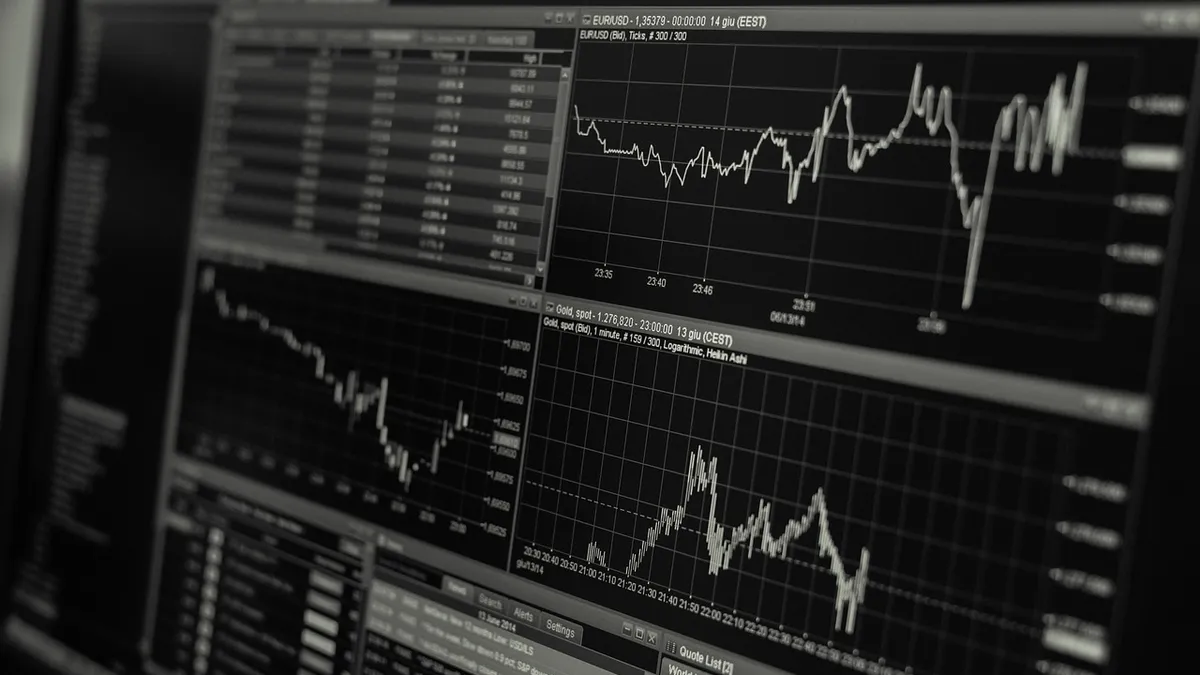
Ready to follow signals with a proper framework behind them?
The AIMS platform gives you the execution infrastructure to act on signals cleanly — with transparent spreads and fast fills when it matters most.
Open AIMS AccountHow does copy trading compare to following signals manually when markets are unpredictable?

Key points: Copy trading automates the execution of another trader’s positions in real time, while manual signal following requires you to place each trade yourself. In volatile markets, copy trading removes execution delay but also removes your ability to filter signals based on current conditions — a meaningful trade-off.
The evidence: The MetaTrader platform alone hosts over 3,200 free and commercial signals in its built-in marketplace. The range means you can find both high-quality and deeply problematic providers in the same interface. The platform does not distinguish between them for you.
Expert tip from Crazii JTVertex: When Crazii JTVertex evaluates a copy trading provider, the first filter is not win rate — it is the ratio of the provider’s account size to the typical follower’s account size. If the provider is trading a $200,000 account and you are copying with $5,000, position sizing distortions can make their “normal” trade a catastrophic oversize for you. Always check what the minimum copy allocation is relative to the provider’s actual position sizes. This detail is buried in most platform interfaces but it matters enormously.
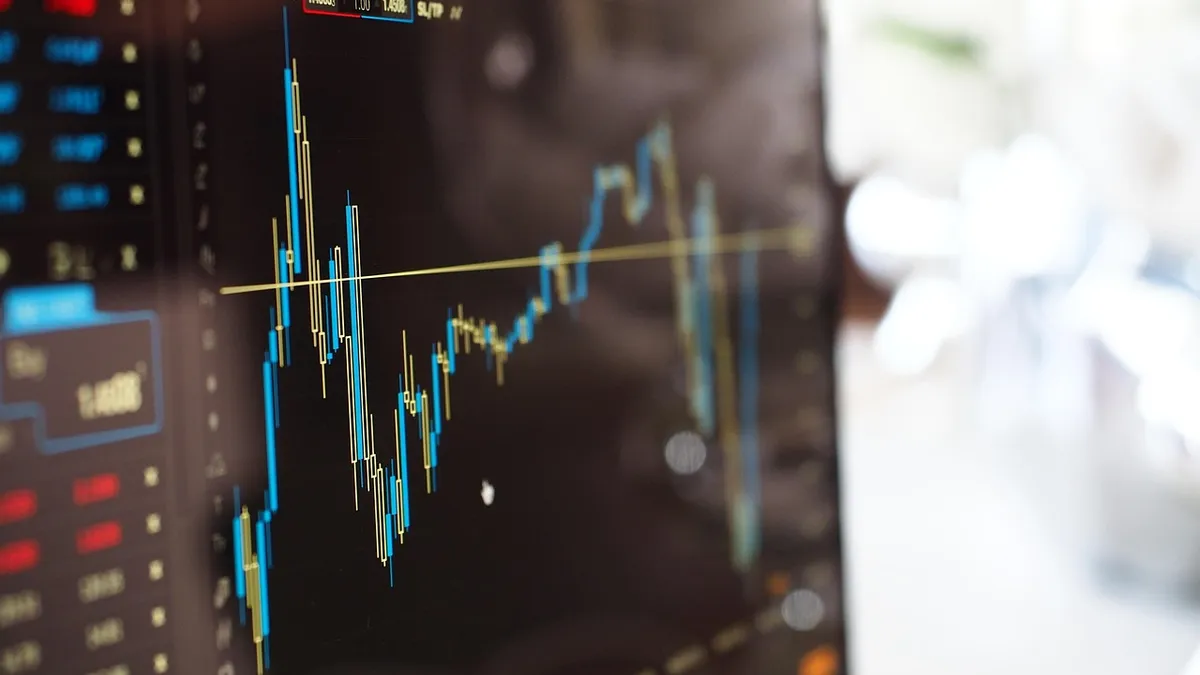
Frequently asked questions about the best trading signals to follow

Key points: The questions below address the most common points of hesitation Australian traders raise before committing to a signal provider or copy trading service — answered directly, without padding.
Are free trading signals worth following, or do paid signals perform better?
Free signals are not inherently worse than paid ones, but they are harder to verify. Paid providers have a commercial incentive to maintain a public track record. Free signals — particularly those shared in Telegram groups or social media — often lack any auditable history. Evaluate both by the same standard: full trade log, sample size above 100 trades, and stated stop-loss on every entry.
How many signals should I follow at the same time?
As a personal guideline, Crazii JTVertex recommends following no more than two signal sources simultaneously, especially during volatile periods. More than that and position management becomes difficult, fee drag multiplies, and the cognitive load of monitoring multiple open trades increases the chance of execution errors.
What should I do if a signal fires during a major news event?
Check the economic calendar before every trading session. If a high-impact event — such as an RBA decision, US non-farm payrolls, or a CPI release — falls within 30 minutes of a signal’s entry window, consider skipping that entry. Spreads widen during news events and the fill price you receive may be significantly worse than the signal’s intended entry level.
How do I know if a signal provider’s track record is real?
Request a third-party verified account statement rather than a screenshot or PDF. Platforms like Myfxbook or the MetaTrader Signals marketplace provide independently verified trade histories. If a provider cannot point you to a third-party verification, treat the claimed results with caution and request a trial period before committing capital.
Is following trading signals suitable for beginners?
Signals can be a useful learning tool for beginners, but only if the beginner also understands what the signal is doing and why. Following signals without that understanding means you cannot adapt when conditions change, cannot decide when to skip an entry, and cannot evaluate whether a losing streak is normal variance or a broken system. Use signals to learn, not to avoid learning.
Want a direct conversation about which signals suit your situation?
Reach out through the Crazii JTVertex contact page — no obligation, no sales script. Just a straight answer to where you are in your trading journey.
Get in TouchNote: Trading signals, CFDs, and margin FX products are high-risk instruments. ASIC’s Report 828 (January 2026) found that 68% of Australian retail CFD clients lost money in FY2023–24, with net losses exceeding $458 million. Past signal performance does not guarantee future results. This article is general information only — not personal financial advice. Please read all product disclosure statements and consider your own financial circumstances before trading.
Leave a Reply