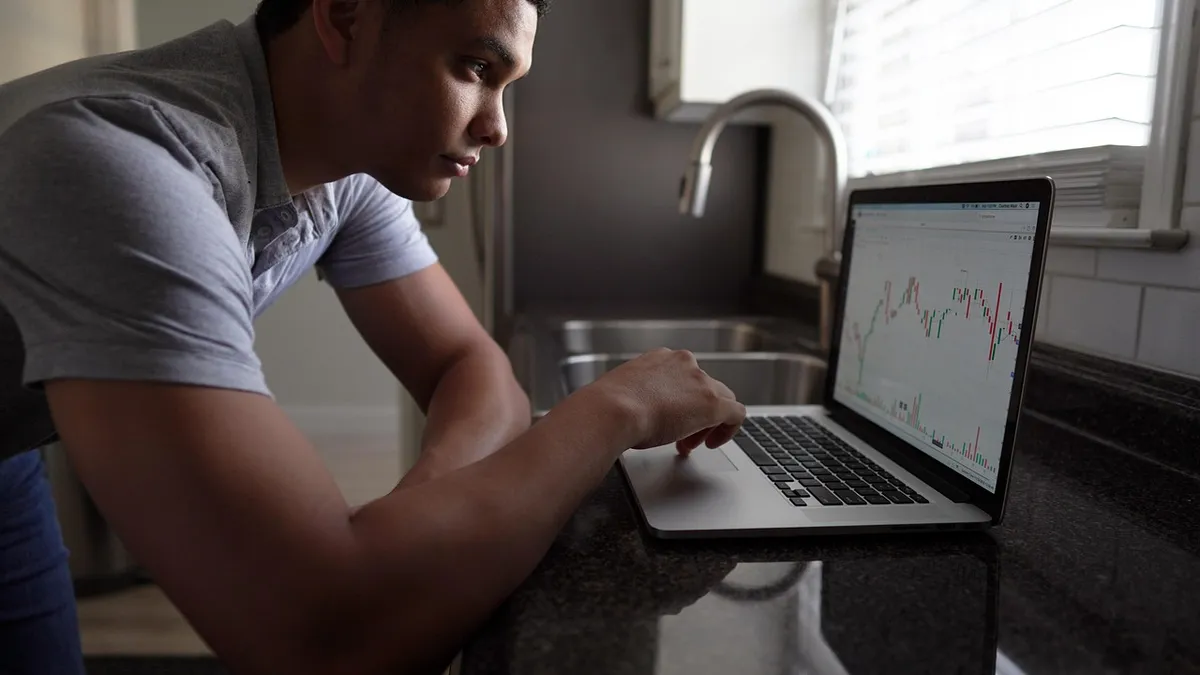
The best trading signals in Telegram channels can genuinely shift how you approach the market — but only if you know which ones are worth your time and which ones will quietly drain your account. Drawing on years of live trading experience across forex, commodities, and indices, Crazii JTVertex has put together this guide to help Australian traders cut through the noise and subscribe to channels that actually deliver. By the end of this article, you will know exactly how to evaluate any Telegram signals channel, which green flags to look for, and how to protect your capital while using signals — without needing to become a full-time analyst yourself.
Important disclaimer: This article contains general information only and does not constitute personal financial advice. Trading CFDs, forex, and related instruments carries significant risk. According to ASIC Report 828 (published January 2026), 68% of retail CFD clients in Australia lost money in FY2023–24. Please consider your own financial circumstances and read all relevant disclosure documents before trading.
🛠️ Tools Crazii JTVertex Recommends Alongside Telegram Signals
AIMS — Start Copying Verified Traders
Tired of manually acting on every signal before the price moves? AIMS lets you automate execution so you stop missing entries.
Open AIMS AccountCrazii — Signals, Analysis, Live Support
Want signals with context, not just entry numbers fired into a chat? Crazii pairs every alert with a rationale so you actually learn the trade.
Join CraziiNot Sure Where to Start With Trading Signals?
Join the Crazii JTVertex community on Telegram — live signals, market context, and a group of traders who actually answer questions.
Join the Telegram GroupTable of Contents
- 01 What Are the Best Trading Signals in Telegram and How Do They Actually Work?
- 02 How Do You Evaluate a Telegram Trading Signals Channel Before Subscribing?
- 03 Which Types of Telegram Signals Channels Suit Australian Traders in 2026?
- 04 What Are the Biggest Mistakes Traders Make With Telegram Signal Channels?
- 05 How Do Telegram Signals Compare to Other Signal Delivery Methods?
- 06 Frequently Asked Questions About Trading Signals on Telegram
What Are the Best Trading Signals in Telegram and How Do They Actually Work?
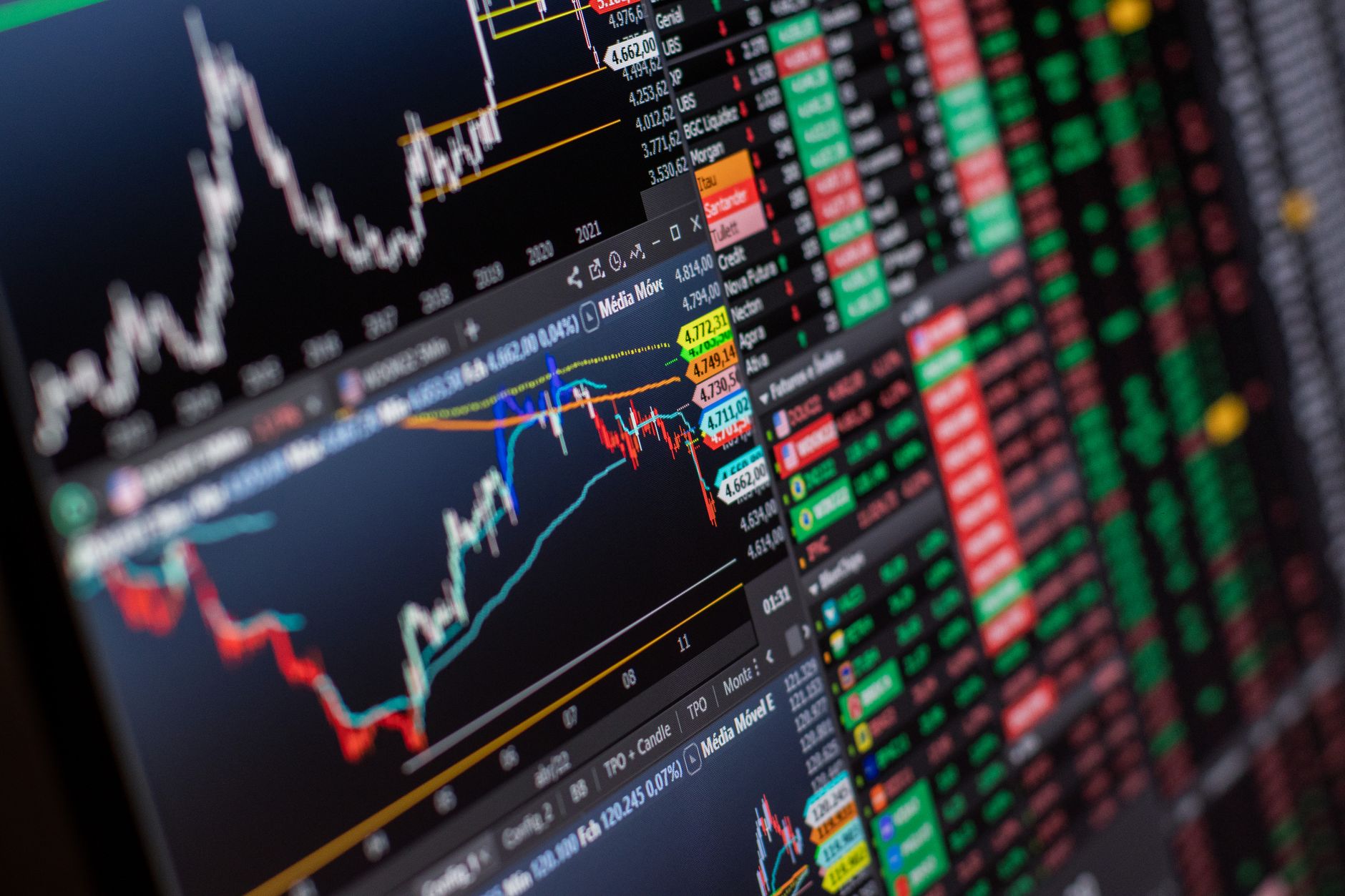
Key points: The best trading signals in Telegram are real-time alerts — entry price, stop-loss, and take-profit levels — sent directly to your phone. Quality channels pair each signal with a brief rationale, so you understand the trade rather than blindly copy it. Channels without a track record or risk context are the ones that cost traders the most.
The evidence: According to ASIC Report 828 (January 2026), 26,243 retail clients in Australia used copy trading in FY2023–24 — a figure ASIC describes as reflecting “a growing interest” in signal-following and automated execution. To put that in perspective, that is roughly one in every five active retail CFD clients choosing to follow someone else’s trades rather than generating their own signals from scratch.
Expert tip from Crazii JTVertex: One thing we learned the hard way: a channel’s win rate means almost nothing in isolation. We once followed a channel boasting an 80% win rate, only to realise their average loss was four times their average win. The account still went backwards. What you actually need to check is the risk-reward ratio on each signal — and whether the provider posts losing trades as openly as winning ones. Channels that only post the wins are not signal providers. They are marketing channels.
How Do You Evaluate a Telegram Trading Signals Channel Before Subscribing?

Key points: Before subscribing to any Telegram signals channel, verify three things: a minimum of 100 completed trades in the public history, consistent posting of both wins and losses, and a clearly stated risk-reward ratio per signal. Channels that cannot show you all three are not ready to be trusted with your capital.
Check the trade history depth
Any channel worth subscribing to should have at least 100 completed trades on record — entries, exits, and results, all posted in real time, not retrospectively. We personally treat anything under 100 trades as statistically meaningless. A provider with 20 wins in a row might just have had a good month. A provider with 300 trades and a consistent edge is a different conversation entirely.
Look at how they handle losses
Scroll back through the channel history and find the losing trades. Every serious provider has them. What matters is whether they posted the loss in real time, explained what went wrong, and adjusted without blaming the market. Channels that delete losing trades or go silent after a bad week are showing you exactly who they are.
Verify the risk-reward ratio on individual signals
Do not just look at win rate. Look at the actual stop-loss and take-profit distances on each signal. A channel that risks 50 pips to make 30 pips needs to win more than 60% of the time just to break even — and that is before fees. We look for signals where the take-profit is at least 1.5 times the stop-loss distance as a starting point.
Assess whether they explain the trade thesis
The best channels post something like: “EUR/USD long at 1.0845, stop 1.0810, target 1.0920 — break above the daily resistance confirmed, waiting for a pullback to the level.” That one sentence tells you the provider has a reason for the trade. A channel that just posts “BUY EURUSD 1.0845 SL 1.0810 TP 1.0920” with no context is asking you to trust them blindly. That is a red flag, not a feature.
The evidence: ASIC Report 828 (January 2026) found that among active retail CFD clients placing 50 or more open positions per month, 19% of those who would otherwise have been profitable ended up losing money after fees. That is a direct data point about what happens when traders follow signals at high frequency without accounting for transaction costs. More trades, more fees, worse net outcomes.
Expert tip from Crazii JTVertex: Here is something most signal reviews do not mention: check whether the channel posts signals during major news events. Some providers go completely silent around NFP, CPI, or central bank decisions — which is actually fine if they say so upfront. What worries Crazii JTVertex is the channels that fire signals right into high-impact news windows without any warning. That is where retail traders get stopped out by a spike and the provider quietly moves on to the next trade as if nothing happened.
Want Signals With Context, Not Just Numbers?
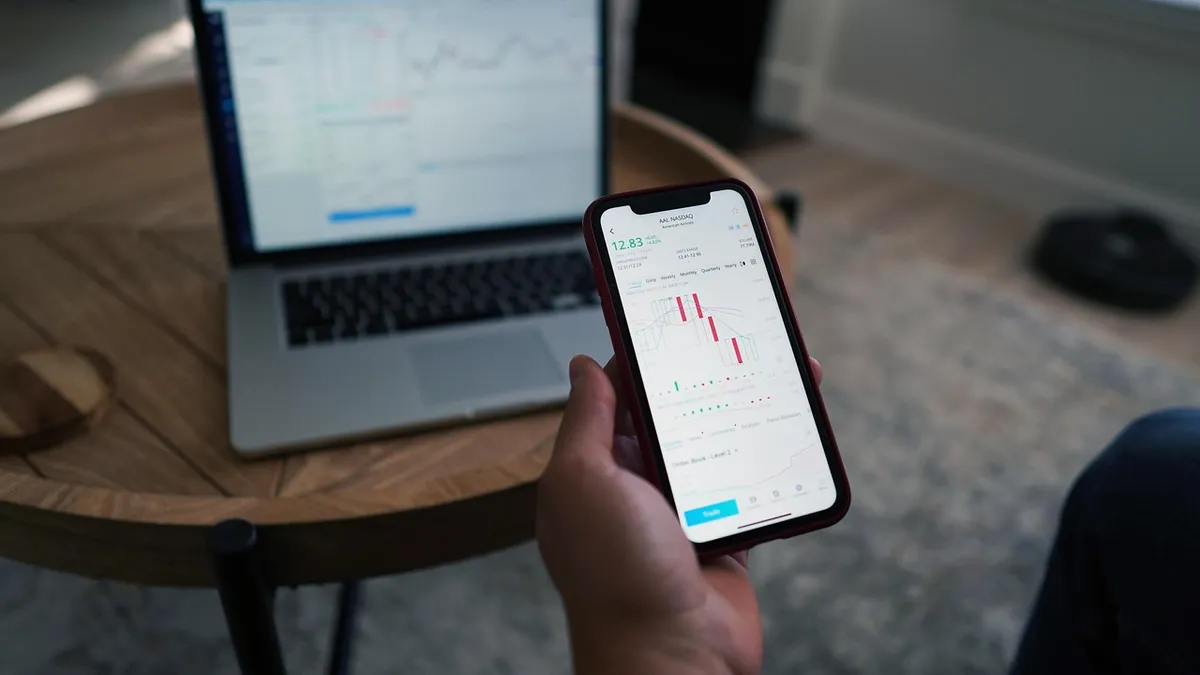
The Crazii community on Telegram posts every signal with a trade rationale — so you understand the setup, not just the entry price.
Try Crazii SignalsWhich Types of Telegram Signals Channels Suit Australian Traders in 2026?
Key points: Australian traders in 2026 are best served by Telegram channels that operate across the Asian and London sessions, cover forex majors and commodities relevant to the AUD, and pair signals with educational context. Channels built purely around US equities or crypto tend to misalign with both Australian trading hours and ASIC’s regulatory environment.
| Channel Type | Best For | Australian Timing Fit | Key Watch-Out |
|---|---|---|---|
| Forex Signals (Majors) | Traders focused on EUR/USD, GBP/USD, USD/JPY | Moderate — London/NY sessions are evening/night AEST | Execution lag if following manually |
| AUD Pairs Specialists | Traders who want to trade during Australian hours | Excellent — Asian session overlaps with business hours | Fewer quality providers in this niche |
| Commodities Signals (Gold, Oil) | Traders following macro themes relevant to Australia | Good — gold trades 24 hours, multiple entry windows | Spreads can be wider during low-liquidity windows |
| Crypto Signals | Traders comfortable with high volatility | Good — crypto markets never close | Higher loss rates; ASIC notes 85% of retail options CFD clients lost money in FY2023–24 |
| Index Signals (ASX, US30) | Stock-adjacent traders wanting index exposure | Mixed — ASX hours align well, US indices do not | Gaps at open can invalidate entry levels |
The evidence: ASIC Report 828 (January 2026) recorded 119,300 active CFD trading clients per quarter in FY2023–24. That is a significant retail market — but one where 68% of participants lost money. Knowing which signal types align with your hours and your risk tolerance is not a nice-to-have. It is what separates the 32% who made money from the majority who did not.
Expert tip from Crazii JTVertex: We have noticed that traders who try to follow three or four different Telegram channels simultaneously tend to get worse results than those who follow one channel consistently. The reason is signal conflict — two channels post opposing positions on the same pair, you freeze, you either take both or neither, and the decision-making overhead kills your execution. Pick one channel that matches your session and your instruments. Master it before adding anything else.
What Are the Biggest Mistakes Traders Make With Telegram Signal Channels?

Key points: The three most costly mistakes with Telegram trading signals are: following too many channels at once, ignoring the stated stop-loss levels, and treating signals as a substitute for understanding the market. Any one of these habits can turn a profitable signal provider into a losing experience for the subscriber.
This is the single most common way traders turn a manageable loss into a catastrophic one. The signal says stop-loss at 1.0810. The price touches 1.0815 and bounces slightly. The trader thinks “it’s almost back” and moves the stop down to 1.0780. Then the price drops to 1.0760. What was meant to be a controlled 35-pip loss becomes an 85-pip loss — more than twice the original risk. The stop-loss in a signal is not a suggestion. It is the provider’s maximum pain threshold, calculated before emotion entered the picture.
Any Telegram channel can post a screenshot of a winning trade. Screenshots prove nothing. What you need is a live, scrollable history of signals posted in real time — not a curated highlight reel. ASIC Report 828 (January 2026) found that 74% of retail clients acquired through paid online advertising lost money in FY2023–24. Channels that rely heavily on paid promotion and screenshot-based marketing are drawing from exactly that pool of outcomes.
Some channels label certain signals as “premium”, “high probability”, or “A+ setup”. Traders respond by increasing their position size on these trades. The problem is that even genuinely high-probability setups fail regularly — that is the nature of probabilistic trading. We have a firm rule: position size stays the same regardless of how confident the signal provider sounds. The market does not care about their confidence rating.
The evidence: ASIC Report 828 (January 2026) found that 5% of retail CFD clients who would have been profitable were pushed into a net loss purely by fees. Among active traders placing 50 or more positions per month, that figure rose to 19%. Fees are not a minor footnote — they are a structural drag that compounds over time. Every signal you follow has an execution cost attached to it.
Expert tip from Crazii JTVertex: We used to think that following more signals meant more opportunities. It took a genuinely bad quarter to understand that each signal you act on is also a fee event — spread, commission, swap if held overnight. The traders who came out ahead in that period were the ones being selective, not the ones filling their calendars with trades. Quality over frequency is not just a cliché here. It is arithmetic.

Ready to Follow Signals With Proper Risk Management?
AIMS lets you automate signal execution so you remove the emotional override that causes most of the mistakes above.
Open AIMS AccountHow Do Telegram Signals Compare to Other Signal Delivery Methods?
Key points: Telegram delivers signals faster than email and with less noise than social media, but it lacks the built-in execution integration of dedicated platforms like MetaTrader’s signal marketplace. For Australian traders who need both speed and automation, combining a Telegram channel for context with a copy trading platform for execution is currently the most practical setup.
| Delivery Method | Speed | Execution Integration | Context / Education | Cost |
|---|---|---|---|---|
| Telegram Channel | Near-instant push notification | Manual (unless paired with automation) | Varies widely by provider | Free to paid; wide range |
| MetaTrader Signals Marketplace | Automated — no manual step | Built-in copy execution | Minimal — mostly stats | Subscription per provider |
| Email Alerts | Slow — depends on inbox | Manual only | Can include full analysis | Often included with broker |
| Social Media (Twitter/X) | Variable — algorithm dependent | Manual only | Often short-form, low context | Free |
| Copy Trading Platform (AIMS) | Automated | Full — trades mirror automatically | Profile stats available | Performance fee or spread |
The evidence: ASIC Report 828 (January 2026) noted that only 121 retail clients used managed-account services in FY2023–24 — described as “not widely used” — while 26,243 used copy trading. The gap tells you where retail traders are actually going: not to fully managed accounts, but to copy trading and signal-following arrangements where they retain some control and visibility over individual trades.
Expert tip from Crazii JTVertex: One nuance we rarely see discussed: when you follow a Telegram signal manually, you almost never get the exact entry price the provider got. By the time you read the notification, open your platform, and place the order, the price has moved. On fast-moving pairs like GBP/JPY or gold during a news event, that slippage can eat a significant portion of the signal’s intended risk-reward. This is the single biggest argument for automated execution — not laziness, but precision.
Frequently Asked Questions About Trading Signals on Telegram
Key points: The most common questions about Telegram trading signals centre on safety, cost, legality in Australia, how to spot scams, and whether signals work for beginners. The short answers: signals are legal in Australia but unregulated; free channels can be legitimate but require the same scrutiny as paid ones; and beginners should prioritise learning over profit in the first months of following any channel.
Are Telegram trading signals legal for Australian traders?
Yes. Following trading signals posted on Telegram is legal in Australia. However, if a provider charges for signals and makes specific return promises, they may be operating a financial service that requires an Australian Financial Services Licence (AFSL). Traders should check whether a paid provider holds appropriate ASIC authorisation before subscribing.
Are free Telegram trading signals worth following?
Some free channels are run by genuine traders building a community or reputation. Others are free because they earn commission when you open an account with a specific broker. Neither is automatically bad, but you need to know the business model. Apply the same evaluation criteria to free channels as paid ones: trade history depth, consistent loss disclosure, and a stated risk-reward approach.
How do I spot a Telegram signals scam?
Key warning signs: no verifiable trade history, only screenshots of winning trades, promises of guaranteed or consistent returns, pressure to deposit urgently, and channels that block or remove members who ask critical questions. Legitimate providers welcome scrutiny. Scam channels avoid it. If a channel cannot show you a scrollable, real-time history of at least 100 trades, walk away.
Can beginners use Telegram trading signals profitably?
Beginners can use signals as a learning tool, but should not expect signals alone to produce profit in the early stages. ASIC data (Report 828, January 2026) shows 68% of retail CFD clients lost money in FY2023–24 — and beginners are disproportionately represented in that figure. Use signals to learn how experienced traders think about entries, exits, and risk. Treat the first months as education, not income generation.
How many Telegram signal channels should I follow at once?
We recommend starting with one channel and following it consistently for at least 30 completed trades before evaluating results. Following multiple channels simultaneously creates signal conflicts, increases fee exposure, and makes it impossible to fairly assess any single provider. More channels rarely means more profit — it usually means more confusion and more costs.
Have Questions About Which Signals Setup Suits You?
Reach out directly — Crazii JTVertex is available to talk through your trading situation and help you find a signals approach that fits your schedule and risk tolerance.
Contact Crazii JTVertexImportant note: Trading CFDs, forex, and related instruments involves significant risk of loss. According to ASIC Report 828 (January 2026), 68% of retail CFD clients in Australia lost money in FY2023–24, with net losses exceeding $458 million across the sector. This article contains general information only and is not personal financial advice. Always consider your own financial circumstances, risk tolerance, and objectives, and read all relevant disclosure documents before trading. Past performance of any signal provider is not a reliable indicator of future results.
Leave a Reply