
What are trading signals? They are data-driven alerts that tell you when to buy, sell, or hold a financial instrument — removing guesswork from your decisions. With over a decade of combined research and live trading experience, the team at Crazii JTVertex has tested dozens of signal systems across Australian and global markets, and everything we have learnt is captured right here in this guide on what are trading signals and why every trader needs them. Crazii JTVertex will help you trade with genuine confidence — without needing a finance degree or a Bloomberg terminal on your desk.
Table of Contents
- 01 What Are Trading Signals, Exactly?
- 02 How Do Trading Signals Actually Work?
- 03 What Types of Trading Signals Are Available to Australian Traders?
- 04 What Are the Most Common Mistakes Traders Make With Signals?
- 05 Why Does Every Trader — From Beginner to Experienced — Need Trading Signals?
- 06 Frequently Asked Questions About Trading Signals
What Are Trading Signals, Exactly?
Key point: Trading signals are actionable alerts generated by technical analysis, fundamental data, or algorithmic models that indicate the optimal moment to enter or exit a trade. They typically specify the asset, direction (buy or sell), entry price, stop-loss level, and take-profit target.
Marcus, 34, an electrician from Brisbane, used to spend his lunch breaks staring at candlestick charts he barely understood. Every afternoon the same routine: open the platform, feel overwhelmed, close it again. Three months of that. Zero trades placed.
Then one day a colleague mentioned trading signals. Marcus thought it sounded like a scam. He ignored it for another six weeks. When he finally tried a reputable signal service, he placed his first structured trade within 47 minutes — with a defined entry, a stop-loss already set, and a clear profit target. That is the difference a well-constructed signal makes.
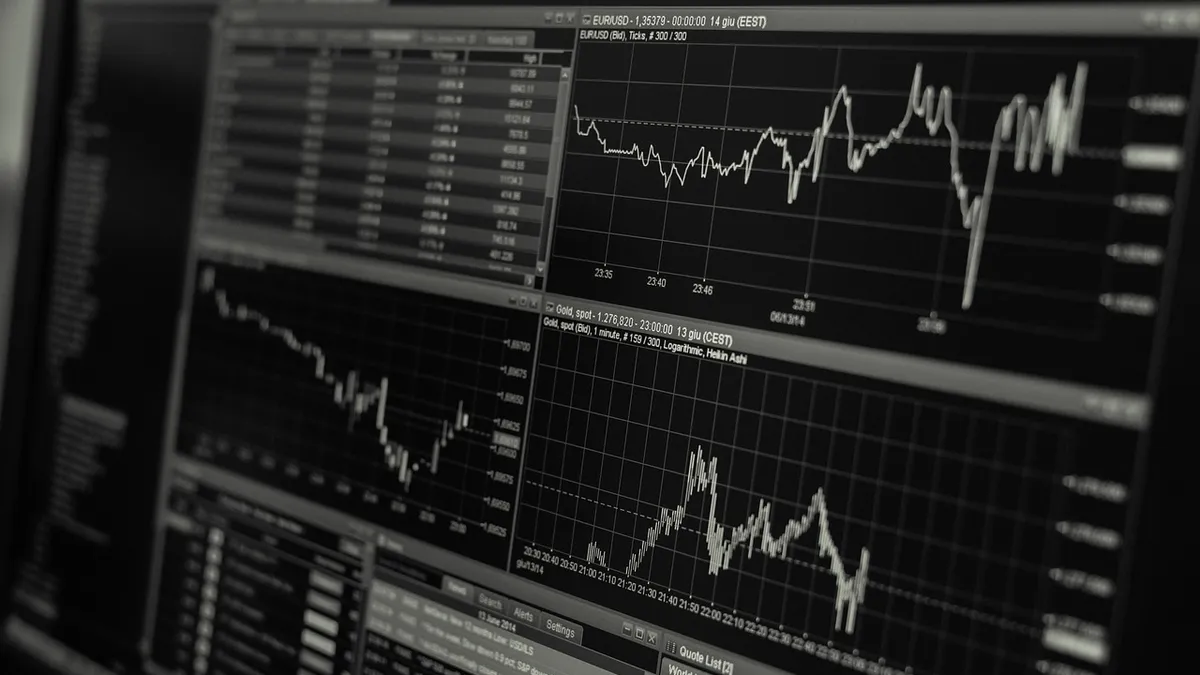
At their core, what are trading signals if not a structured decision prompt? They translate the noise of the market — price action, volume spikes, economic releases, sentiment shifts — into a single, readable instruction. You do not need to interpret every moving average yourself. The signal does that layer of work for you.
Signals can cover equities, forex pairs, commodities like gold or crude oil, and increasingly, cryptocurrency. The Australian Securities and Investments Commission (ASIC) recognises algorithmic and signal-based trading as a legitimate part of modern retail trading infrastructure, provided the underlying service meets its regulatory standards.
The science angle: Traders who use structured entry and exit criteria — the backbone of any signal — tend to make fewer emotionally driven decisions than those relying on discretion alone.
Expert tip: When we first started evaluating signals, the single biggest tell of a quality provider was transparency around loss rate. Any service claiming a win rate above 78% without an audited track record — walk away. Real signals lose sometimes. That is normal.
| Signal Component | What It Tells You | Why It Matters |
|---|---|---|
| Asset | Which market to trade (e.g., AUD/USD, ASX 200) | Keeps your focus narrow and deliberate |
| Direction | Buy (long) or Sell (short) | Removes directional ambiguity |
| Entry Price | The price level to open the position | Gives you a precise trigger point |
| Stop-Loss | Maximum acceptable loss level | Protects capital if the trade goes wrong |
| Take-Profit | Target price to close with a gain | Locks in reward without second-guessing |
That structure is why signals matter — not because they are magic, but because they impose discipline where emotion usually wins.
How Do Trading Signals Actually Work?
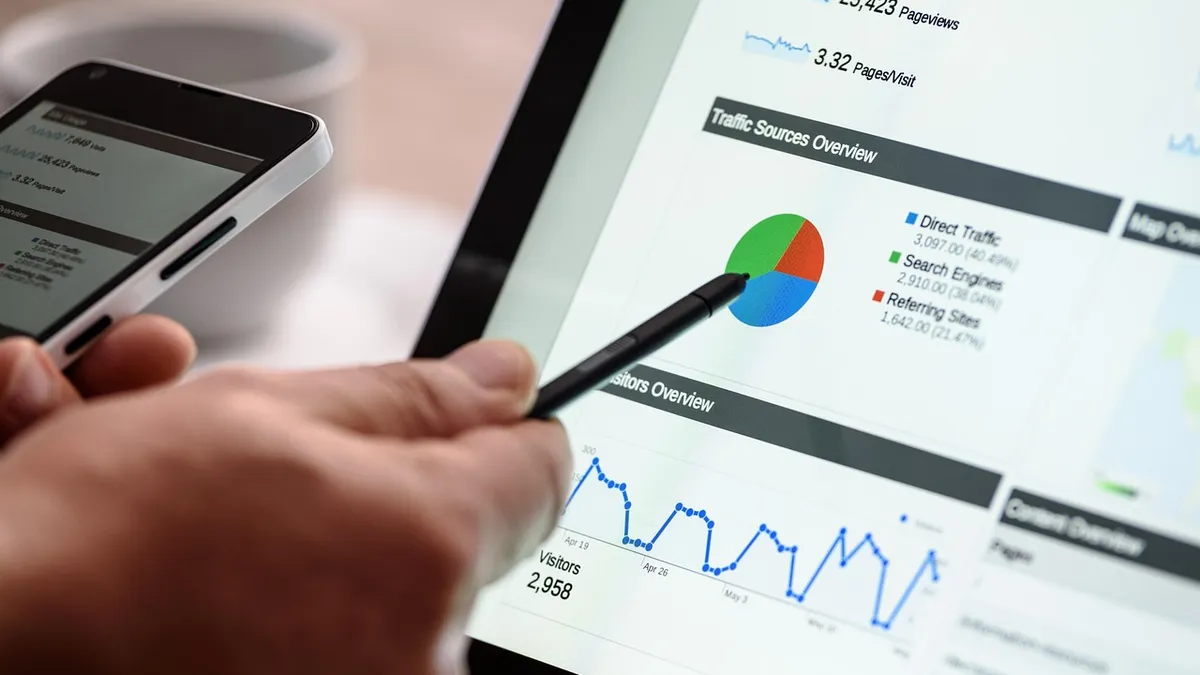
Key point: Trading signals work by scanning market data — price, volume, momentum indicators, and macroeconomic triggers — through a predefined ruleset or machine-learning model. When conditions align, the system fires an alert. The trader then decides whether to act on it manually or let an automated system execute the trade.
Picture this: it is 7:43 am on a Tuesday. The Sydney market opens in 17 minutes. Your phone buzzes. “BUY AUD/USD at 0.6531 — SL 0.6505 — TP 0.6580.” That notification arrived because a set of conditions — a moving average crossover, a relative strength index reading below 30, and a positive Australian trade balance release — all converged within a two-minute window.
The mechanism behind that alert is either rule-based or model-based. Rule-based signals follow a fixed logic: “if the 50-period EMA crosses above the 200-period EMA and RSI is between 45 and 60, generate a buy signal.” Model-based signals use machine learning to identify statistical patterns across thousands of historical data points, then apply those patterns to live data in real time.
The science angle: Technical indicators like the Relative Strength Index (RSI) and Moving Average Convergence Divergence (MACD) were developed to quantify momentum and trend strength. Studies from the Journal of Financial Economics indicate that momentum-based strategies have historically delivered statistically significant excess returns across multiple asset classes over rolling 12-month periods.
There is a third category worth knowing: human-curated signals. A professional analyst monitors the market, identifies a high-probability setup, and pushes an alert to subscribers. These are slower than algorithmic signals but often carry richer context — the analyst can explain why the setup exists, not just that it does.
Expert tip: We always recommends that newer traders start with human-curated or hybrid signals rather than pure algorithmic ones. The reasoning included in a curated signal teaches you the “why” — and after six months of reading those explanations, you start recognising the same setups yourself. That is how signals become a learning tool, not just a crutch.
The delivery mechanism matters too. Signals arrive via SMS, email, Telegram channel, or directly within a trading platform’s dashboard. Speed is critical in volatile markets — a signal delivered three minutes late on a fast-moving forex pair can mean the entry price has already moved past the optimal level.
If you want to go deeper on whether the signals you receive are genuinely reliable, the guide on Can My Trading Signals Be Trusted or Are They Just Noise breaks down exactly how to vet a signal provider before you risk a single dollar.
What Types of Trading Signals Are Available to Australian Traders?
Key point: Australian traders can access four main categories of trading signals: technical signals (based on chart patterns and indicators), fundamental signals (driven by economic data and earnings releases), sentiment signals (derived from retail and institutional positioning data), and automated algorithmic signals generated by trading bots or AI models.
Not all signals are built the same. Choosing the wrong type for your trading style is one of the fastest ways to lose money — not because the signal is wrong, but because it is designed for a different context than yours.
Technical Signals
Generated from price action, chart patterns, and indicators like Bollinger Bands, MACD, or Fibonacci retracement levels. Best suited for short-term traders — scalpers and day traders who operate on 15-minute to 4-hour charts. These signals are fast, frequent, and do not require knowledge of a company’s financials.
Fundamental Signals
Triggered by economic events — RBA interest rate decisions, Australian GDP releases, Non-Farm Payrolls from the US, or earnings reports from ASX-listed companies. These signals suit swing traders and position traders with a longer time horizon. They are slower to materialise but can produce larger moves.
Sentiment Signals
Derived from data like the Commitments of Traders (COT) report, retail trader positioning from broker dashboards, or social media sentiment indices. When 84% of retail traders are short on a currency pair, a contrarian long signal often has statistical backing. These signals reward patience and a contrarian mindset.
Algorithmic and AI-Generated Signals
Produced by trading bots and machine-learning models that scan multiple data streams simultaneously. These can process information faster than any human analyst. The risk: they can also amplify losses rapidly in abnormal market conditions — flash crashes, black swan events — that fall outside their training data.
The science angle: The Reserve Bank of Australia’s 2024 Financial Stability Review noted a measurable increase in retail participation in algorithmic and signal-assisted trading platforms among Australians aged 25–44, reflecting broader global trends in retail market access.
Expert tip: For most Australian traders starting out, we suggests a hybrid approach — use technical signals for timing and fundamental signals for direction. Think of it as: fundamentals tell you which way the river is flowing; technicals tell you the best moment to jump in.
The best trading signals for Australian traders in 2026 combine at least two of these signal types. If you want a curated breakdown of which providers deliver that combination, the pillar guide on the best trading signals for Australian traders in 2026 is the place to go next.
Ready to See What a Real Signal Looks Like?
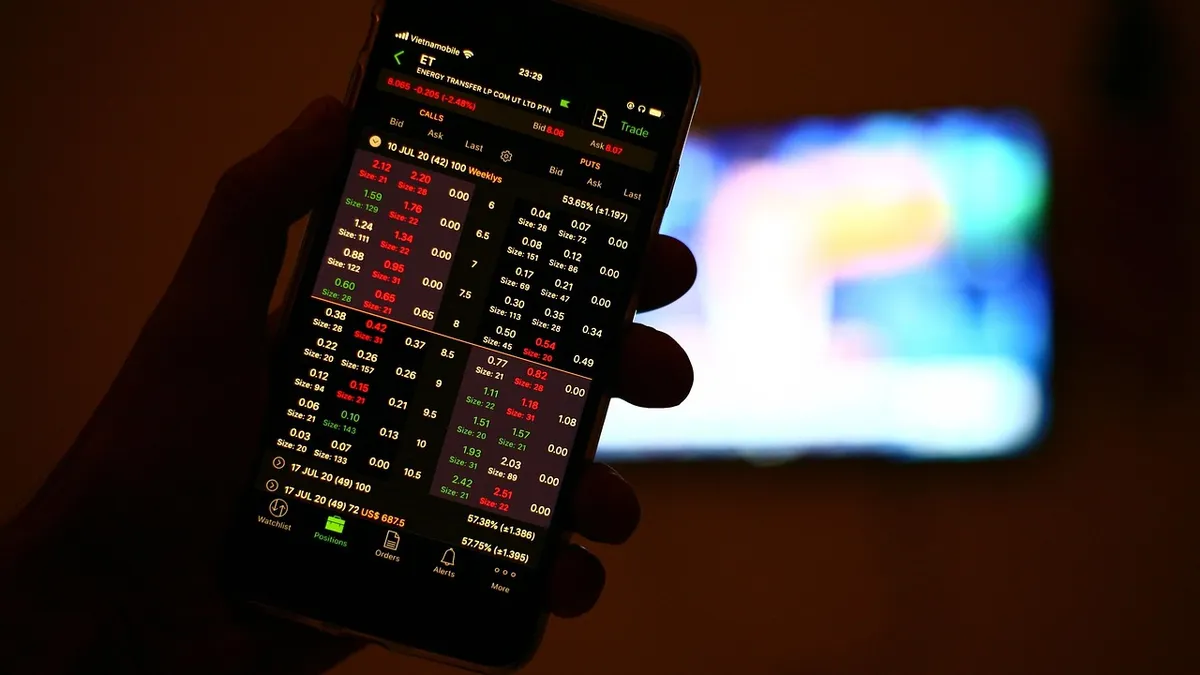
Crazii JTVertex publishes signal breakdowns built for Australian market hours — no jargon, no noise.
Explore Signal Resources at Crazii JTVertexWhat Are the Most Common Mistakes Traders Make With Signals?
Key point: The three most damaging mistakes traders make with signals are: acting on signals without understanding the underlying logic, using signals designed for one market in a completely different context, and abandoning a signal system after a short losing streak without statistical justification.
Here is the uncomfortable truth. Most traders who fail with signals do not fail because the signals were bad. They fail because of how they used them. We has watched this pattern repeat itself dozens of times.
No signal has a 100% accuracy rate. None. A signal is a probability statement, not a promise. Traders who bet oversized positions on a single signal — because “it looked really strong” — expose themselves to catastrophic drawdowns. Position sizing discipline is non-negotiable, even when the signal quality is high.
A signal generated on a daily chart is irrelevant to a scalper working on a 5-minute chart. Using a long-term fundamental signal to make a short-term entry is like using a weather forecast for next month to decide whether to carry an umbrella today. Match the signal’s time frame to your trading style — or the signal is noise.
Every signal system goes through drawdown periods. A strategy with a 61% win rate will still produce strings of six consecutive losses through normal statistical variance. Traders who abandon a system after three losses and jump to a new one never give any system enough time to prove its edge. The result: permanent loss-chasing.
More signals do not mean more profit. When three different providers fire conflicting alerts on the same asset at the same time, paralysis sets in. Worse, traders sometimes average the signals — taking a half-position on each — which dilutes every trade into mediocrity. Pick one provider, test it for 90 days, then evaluate.
Expert tip: We keeps a signal journal — not just trade outcomes, but the reason we took or skipped each signal. After 60 entries, patterns emerge. You start seeing which signal types you execute well and which ones you consistently mishandle. That journal is worth more than any course.
Understanding what not to do is half the battle. The other half is finding a signal source that is genuinely worth your time and money. The guide on how to get trading signals without paying a fortune in 2026 covers exactly that — including free and low-cost options that Australian traders are actually using right now.

Why Does Every Trader — From Beginner to Experienced — Need Trading Signals?
Key point: Trading signals benefit every experience level differently. Beginners gain structure and reduce costly emotional errors. Intermediate traders use signals to validate their own analysis and identify setups they might miss. Experienced traders integrate signals into systematic strategies to scale their activity without proportionally increasing screen time.
Right now, you might be sitting at your desk — or on your phone during a commute — feeling like the market is a conversation happening in a language you almost understand. You catch fragments. You see a chart move. You feel something. But you are not sure enough to act.
Imagine instead: a clear alert arrives. The setup is explained. The risk is defined before you enter. You place the trade with calm, not anxiety. Three hours later, the take-profit triggers. You did not watch the screen once.
That is not a fantasy. That is what a good signal system delivers — and the gap between those two experiences is the cost of doing nothing.
The science angle: Behavioural finance research from the University of California, Davis, found that individual investors who traded most frequently underperformed the market by 6.5 percentage points annually — largely due to emotionally driven timing errors. Signals reduce the frequency of impulsive, unstructured trades.
For experienced traders, the argument is different. At a certain point, you know what a good setup looks like. But you cannot watch every market simultaneously. A signal system acts as a second set of eyes — scanning forex, commodities, and indices while you focus on your primary market. It is leverage for your attention, not a replacement for your skill.
Expert tip: We uses signals not as a replacement for analysis but as a filter. When a signal aligns with we’s own read of the market, that confluence is the real trigger. Two independent systems pointing the same direction — that is a high-conviction trade.
There is also a longer-term picture here. The traders who build lasting careers are not the ones who found the perfect indicator. They are the ones who built a repeatable process. Signals are one of the earliest structural tools in that process. They teach discipline before you have enough experience to generate it yourself.
If you want to see which specific apps Australian traders are actually using to receive these signals, the independently tested breakdown at Best Trading Signals App Tested by Australian Traders in 2026 gives you real-world results — not marketing copy.

Frequently Asked Questions About Trading Signals
Key point: The most common questions about trading signals centre on accuracy, cost, legality in Australia, which markets they cover, and how to evaluate a provider before committing. These answers give you a quick-reference framework before you choose a signal service.
Are trading signals legal in Australia?
Yes. Using trading signals is legal for retail traders in Australia. Signal providers that offer financial advice as part of their service must hold an Australian Financial Services Licence (AFSL) issued by ASIC. Always verify a provider’s licence status on the ASIC register before subscribing.
How accurate are trading signals?
Accuracy varies widely. Reputable providers typically report verified win rates between 55% and 72% over audited periods. Any provider claiming above 80% without third-party verification should be treated with serious scepticism. Accuracy alone is also misleading — risk-to-reward ratio matters equally.
Can beginners use trading signals safely?
Yes, with the right approach. Beginners should start with signals that include explanations — not just entry and exit prices. Understanding why a signal was generated accelerates learning. Using a demo account to test signals before committing real capital is the single most important safeguard for new traders.
Do trading signals work for all asset classes?
Most signal providers specialise in one or two asset classes — typically forex and CFDs, or equities. Signals designed for high-liquidity forex pairs like EUR/USD do not necessarily translate to ASX-listed stocks or cryptocurrency. Match the signal’s asset coverage to the markets you actually trade.
How much do trading signals cost in Australia?
Costs range from free community-based signals on Telegram to premium subscriptions at AUD $150–$400 per month for professionally managed services. Free signals exist and some are genuinely useful, but they often lack the risk parameters (stop-loss, take-profit) that make a signal actionable. Budget for quality, then verify before you commit.

Your Next Step Is One Click Away
Crazii JTVertex has compiled the most comprehensive signal resource for Australian traders — vetted providers, real performance data, and zero fluff.
See the Full Signal Guide at Crazii JTVertexImportant disclaimer: Trading financial instruments carries significant risk and is not suitable for all investors. The information in this article is educational in nature and does not constitute personal financial advice. Past performance of any signal system is not a reliable indicator of future results. Please consider your financial situation and objectives, and consult a licensed financial adviser before making any trading decisions. Crazii JTVertex content is general in nature only.
Leave a Reply