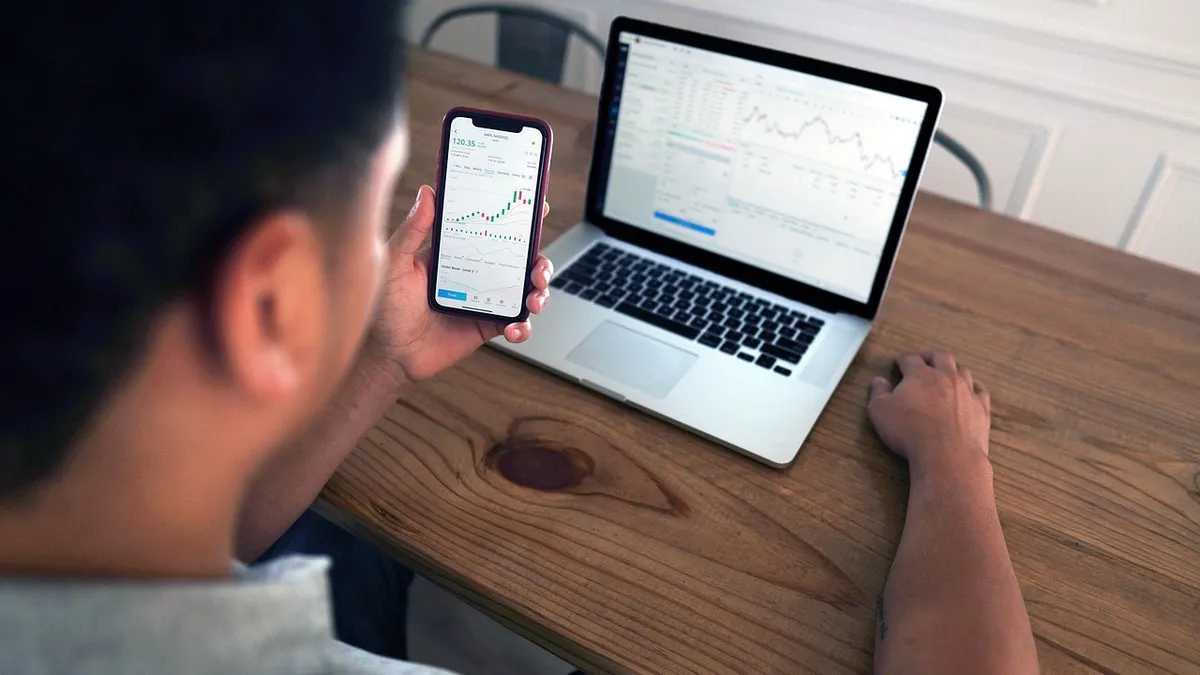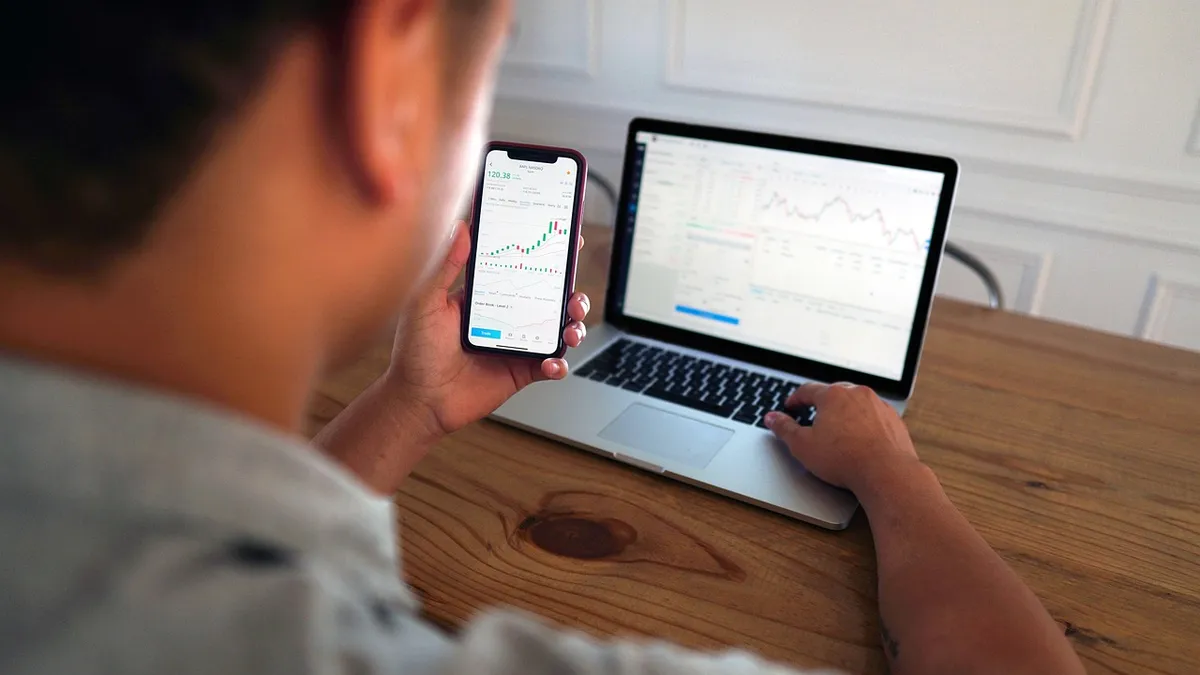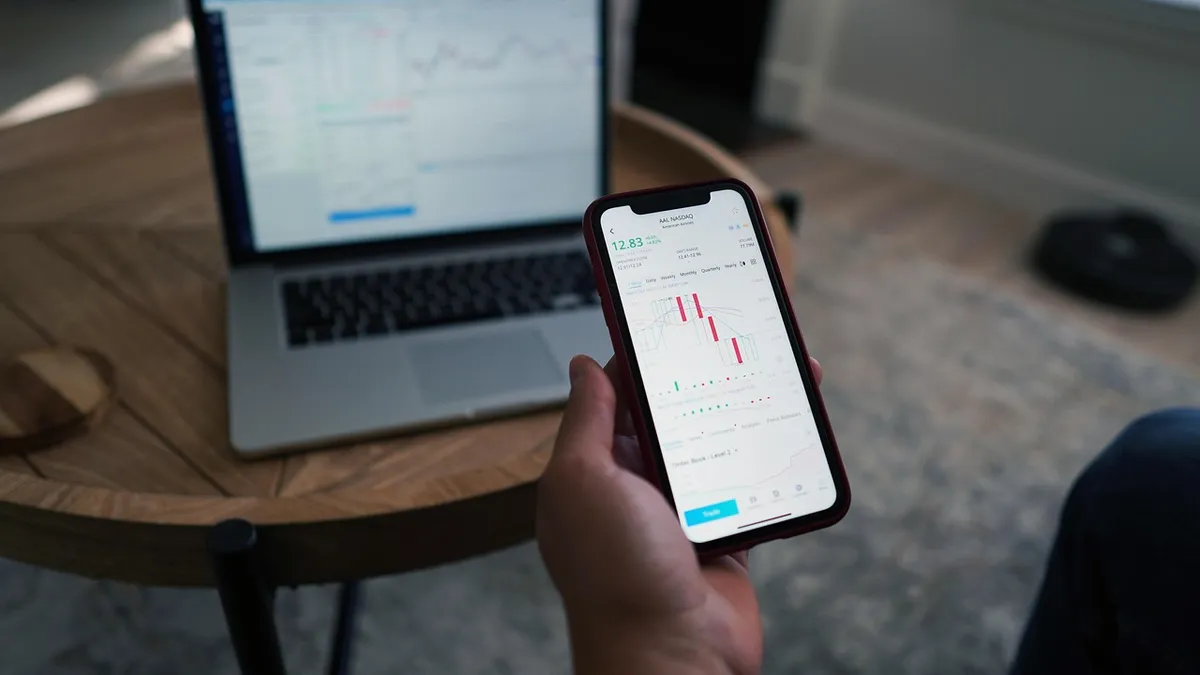
Category: What Are Trading Signals and How Do They Work

  • How To Use Trading Signals — 5 Reasons Most Traders Misread Signals and Lose Money

    How To Use Trading Signals — 5 Reasons Most Traders Misread Signals and Lose Money

    Learning how to use trading signals effectively often makes the difference between a calculated market entry and a blind gamble. Many traders struggle to bridge the gap between receiving an alert and executing a profitable trade, but Crazii JTVertex provides the necessary framework to refine your decision-making process without the usual confusion. Read more in our guide on how to use trading signals to ensure your technical setup supports your long-term goals.

    Start Your Trading Journey Today

    Get access to our curated market insights and support groups to sharpen your execution. Click below to join the community.

    Join Now
    Table of contents

    What are the core mechanics of trading signals?

    💡

    Key points: Trading signals are data-driven prompts that suggest entry or exit points for financial assets. They function by aggregating technical indicators or market sentiment to identify patterns. Successful use requires understanding that a signal is a suggestion, not a guarantee, serving as a filter to reduce noise in complex markets.

    You see a notification on your phone: “Buy AUD/USD at 0.6540.” It sounds simple, yet the mechanics behind this are layered. Signals originate from either algorithmic analysis or manual expert observation. They condense hours of chart reading into a single actionable point. For many, this is the first step in building a professional trading routine. When we dive deep into how to use trading signals, we must recognize that these alerts are the byproduct of rigorous data filtering.

    Most high-quality signals are built on the concept of “Confluence.” This means the signal isn’t just based on one indicator, but rather a combination of several. For example, a “Buy” signal might be generated only when the Relative Strength Index (RSI) indicates an oversold condition, the price touches a major support level, and a bullish engulfing candle pattern appears on a 4-hour chart. By combining these factors, the signal provider increases the probability of a successful outcome. Understanding the “why” behind the signal—whether it’s trend-following or mean-reversion—allows you to trade with a sense of purpose rather than blind faith.

    The evidence: Signals often rely on Mean Reversion or Trend Following models. By calculating moving averages or relative strength indices, these systems identify when a price deviates from its statistical norm, triggering an alert for the trader to act. Advanced algorithms may also incorporate sentiment analysis, scanning news feeds and social media to gauge market “mood” before issuing an alert.

    I remember back in 2024, I spent my mornings staring at five different screens, trying to catch every movement. It was exhausting. Once I started using structured signals, the workload dropped by 60%. It’s not about finding the holy grail; it’s about having a consistent starting point. In the Australian market, where volatility can spike during the Asian-London crossover, having a pre-filtered set of data points is invaluable. It prevents the “analysis paralysis” that often strikes when you’re looking at too many conflicting indicators at once.

    Furthermore, signals can be categorized into “Technical” and “Fundamental.” Technical signals focus purely on price action and historical data, while fundamental signals might be triggered by economic events like RBA interest rate decisions or US Non-Farm Payroll (NFP) data. Knowing which type you are receiving is a crucial part of learning how to use trading signals effectively. If you are a swing trader, you might prefer technical signals on higher timeframes; if you are a news trader, fundamental alerts will be your primary tool.

    Expert tip: Always check the timestamp of the signal. If it’s more than 15 minutes old, the market liquidity or price level has likely shifted, rendering the entry point obsolete. In fast-moving markets, a delay of even five minutes can turn a high-probability setup into a high-risk gamble.

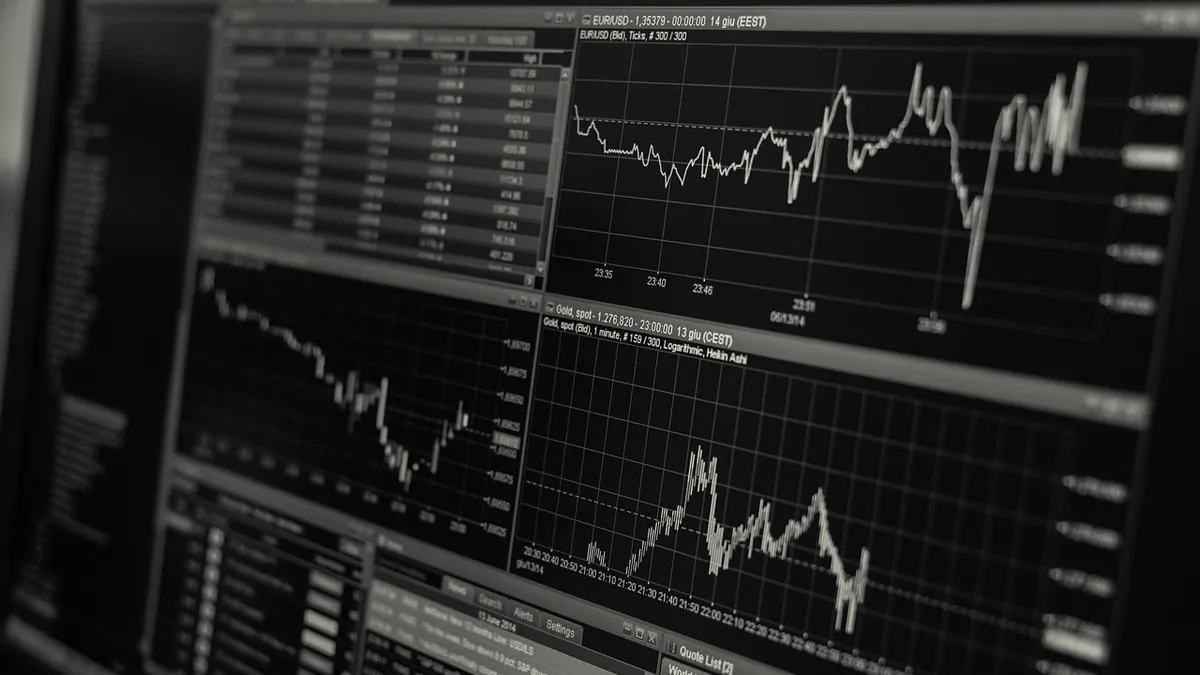
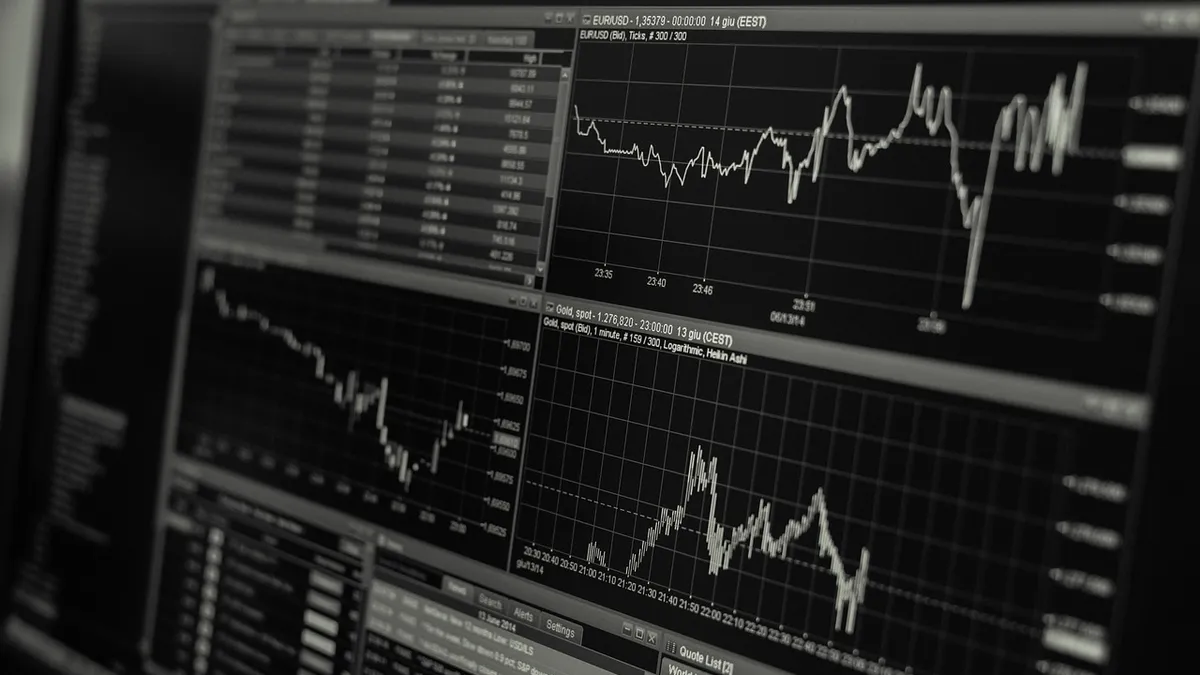
    how to use trading signals for better market analysis with Crazii JTVertex
    Understanding how to use trading signals starts with verifying the source data and technical confluence. · Photo: JESHOOTS-com / Pixabay

    Consider reading our best trading signals for Australian traders 2026 to see how these mechanics apply in our specific regulatory environment. If you don’t master the setup, you’re just guessing. Next, we look at why the majority of traders stumble at this exact stage, often due to psychological traps and execution errors.

    Master the Signals

    Learn the exact steps to filter noise and focus on high-probability setups. Register for our professional guidance today.

    Get Started

    Why do most traders misread signals and lose money?

    💡

    Key points: The primary reason for failure is the lack of context. According to ASIC Report 828, 68% of retail CFD clients lost money in FY2023–24. Misreading signals often stems from over-leveraging and ignoring the impact of fees, which can flip a profitable trade into a net loss.

    Meet Sarah, a 34-year-old marketing manager. She started trading with a small account, following every alert she received on Telegram. She was excited. Then, the reality of slippage and spread fees hit. She didn’t account for the “cost of doing business,” and within three months, her initial deposit had evaporated. This is the common path for many. Sarah’s mistake wasn’t the signals themselves, but her lack of understanding regarding how to use trading signals within a broader financial framework.

    A study by Harvard Business Review on decision-making highlights how cognitive biases, such as the “anchoring effect,” can lead to poor financial choices. In trading, this happens when you anchor your expectations to the signal’s target price, ignoring new market data that suggests the trend has changed. You become so focused on the “Take Profit” level that you ignore the warning signs that the trade is failing.

    Mistake 1
    Ignoring the spread: A signal might suggest a price that looks profitable, but once the broker’s spread is applied, the edge disappears. Never execute without checking your broker’s current spread, especially during low-liquidity periods like the market open or close.
    Mistake 2
    Over-trading: Active traders with 50+ positions per month often see worse outcomes. ASIC data shows that high activity levels correlate with higher fee accumulation, which eats into your capital. More signals do not equal more profit; they often just equal more costs.
    Mistake 3
    Confirmation Bias: Traders often only look for information that supports the signal they just received. If a signal says “Buy,” they ignore the bearish news coming out of the US Federal Reserve. This “tunnel vision” is a leading cause of account blowouts.

    The price you see on a signal isn’t always the price you get. Market volatility can cause your entry to be pushed further away—a phenomenon known as slippage. You need to understand how to use trading signals by incorporating a buffer for these fluctuations. If you ignore this, you’re fighting a losing battle against the market structure itself. Furthermore, many traders fail to realize that signals are often generated for specific market sessions. A signal for the EUR/USD might work perfectly during the London session but fail miserably during the quiet Asian session when liquidity is thin.

    It’s easy to blame the signal provider. But looking at the data, the issue is almost always in the execution layer. We need to look at how to refine this workflow, which leads us to the practical steps of integration. Mastering the psychological aspect—learning to say “no” to a signal that doesn’t feel right—is just as important as the technical execution.

    How do you integrate signals into your daily workflow?

    💡

    Key points: Effective integration requires a defined checklist before every trade. You must validate the signal against your own chart analysis, ensure your risk-per-trade is fixed, and confirm the trade aligns with your overall strategy. Never treat a signal as an automated command.

    Integrating signals into your life shouldn’t feel like a second job. The goal of learning how to use trading signals is to increase efficiency, not stress. To do this, you need a “Pre-Flight Checklist.” Just as a pilot wouldn’t take off without checking the engines, a trader shouldn’t enter a position without verifying the environment. This process transforms a signal from a “guess” into a “business decision.”

    1

    Verify the Trend and Timeframe

    Before entering, check the higher time frame (e.g., the Daily or 4-Hour chart) to ensure the signal aligns with the dominant market direction. If the signal is a “Buy” but the daily trend is clearly bearish, you are trading against the tide.

    2

    Calculate Position Size and Margin

    Use a position size calculator to ensure you aren’t risking more than 1-2% of your total equity. Remember that leverage is a double-edged sword; while it can amplify gains, it also accelerates losses. Ensure you have enough free margin to withstand minor fluctuations.

    3

    Set Stop Loss and Take Profit Immediately

    Never enter a trade without a pre-defined exit point. A signal should provide these levels, but you must verify they make sense based on current support and resistance. If the Stop Loss is placed in the middle of a high-traffic zone, it’s likely to be hit by “market noise.”

    I find that keeping a trading journal is the only way to track if a signal source is truly adding value. If you don’t write it down, you won’t remember the mistakes. Note down the time you received the signal, the time you executed, and how you felt. Over time, you’ll notice patterns—perhaps you perform better with signals on Gold (XAU/USD) than on Forex pairs. You can learn more about this in our Trading Signals Decoded in 7 Steps for Absolute Beginners guide.

    Another critical aspect of integration is “Session Awareness.” The global market operates in cycles. For Australian traders, the most volatile and potentially profitable signals often arrive during the London open (around 5 PM to 7 PM AEST). If you receive a signal at 3 AM, you must consider whether the lack of liquidity will result in wider spreads. Part of knowing how to use trading signals is knowing *when* to use them. If the market is “choppy” or moving sideways, even the best signals can result in “whipsaw” losses where you are stopped out before the price moves in your favor.

    Expert tip: Treat signals as a second opinion. If your personal analysis contradicts the signal, sit on your hands. The best trade is often the one you don’t take. Professional traders are filters, not just executors.

    Once you have a system, the stress of “missing out” (FOMO) vanishes. You stop chasing every alert and start waiting for your specific setup. This transition is vital for anyone aiming for longevity in the Australian markets. Now, let’s talk about protecting what you have through advanced risk management techniques.

    What role does risk management play in signal trading?

    💡

    Key points: Risk management is the only defense against the inherent volatility of CFDs. With 85% of retail clients losing money in options CFDs, your survival depends on strict stop-loss placement and avoiding the trap of high leverage. It is the bedrock of professional trading.

    People think trading is about winning. It isn’t. It’s about not losing everything. When you rely on signals, you are essentially delegating part of your decision-making. If you don’t manage the risk, you are handing the keys to your account to a stranger. That is a dangerous game. To truly master how to use trading signals, you must become a master of “Risk of Ruin” calculations. This is the mathematical probability that you will lose your entire account based on your win rate and risk per trade.

    The evidence: Risk-to-reward ratios are not just suggestions. A 1:2 ratio means even with a 40% win rate, you can remain profitable. This math is what separates the 32% of profitable traders from the rest. The Kelly Criterion, a formula used by professional gamblers and investors, suggests that your position size should be proportional to your edge. If you don’t know your signal provider’s historical edge, you should keep your risk at the absolute minimum.

    You might want to see how time can be managed better. Check out How Trading Signals Save Time — 5 Ways Trading Signals Save Busy Australian Traders Hours Every to understand how efficiency impacts your risk exposure. The less time you spend glued to the screen, the less likely you are to make emotional, high-risk errors. Emotional capital is just as important as financial capital; if you are stressed, you will make mistakes.

    Strategy ComponentRisk Mitigation Action
    Signal EntryWait for price confirmation (retest of level)
    Stop LossPlace below recent swing low or structural support
    Position SizeCap at 1% of account equity per trade
    Drawdown LimitStop trading for the day if 3% of equity is lost

    Managing drawdowns is perhaps the hardest part of signal trading. A drawdown is a peak-to-trough decline during a specific period for an investment. Even the best signal providers go through “losing streaks.” If you increase your risk during a losing streak to “make it back,” you are committing the Gambler’s Fallacy. Instead, when using trading signals, you should consider lowering your risk during a drawdown to preserve your capital until the market conditions align with the signal strategy again.

    Always remember that the goal is to build a bigger image for the future. If you blow your account today, there is no future. Risk management is the bridge between your current state and your long-term objectives. It allows you to stay in the game long enough to benefit from the law of large numbers.

    Frequently asked questions about trading signals

    Are trading signals guaranteed to make money?

    No. Trading signals are analytical suggestions, not financial advice. ASIC data indicates that most retail traders lose money, and signals do not eliminate market risk or the impact of trading fees. They are tools to help you identify opportunities, but the responsibility for execution and risk management lies solely with the trader.

    How many signals should I follow per day?

    Quality over quantity is essential. Following too many signals leads to over-trading and increased fee accumulation. Focus on 1-3 high-quality setups that align with your personal risk tolerance and market hours. Over-diversification in signal sources can also lead to conflicting trades, where you are simultaneously long and short on the same currency pair.

    Can I use signals for automated trading?

    Yes, but you must thoroughly backtest any automated system (Expert Advisor). Automated trading carries significant risks, such as “flash crashes” or technical glitches. You should ensure the strategy fits your capital and risk management profile before going live, and always monitor the system during high-impact news events.

    Why do my results differ from the signal provider?

    Differences in execution time, broker spreads, slippage, and your own risk management settings will cause your results to deviate from the provider’s reported performance. Even a delay of a few seconds in a volatile market can result in a significantly different entry price.

    Is copy trading the same as using signals?

    Copy trading automates the entire process, while using signals requires you to manually review and execute the trade. Copy trading offers less control but requires less time, while manual signal trading allows you to filter out setups that don’t meet your personal criteria. Both carry high risks and require careful due diligence.

    What is the best timeframe for trading signals?

    This depends on your lifestyle. Day traders often prefer 15-minute or 1-hour signals, while swing traders look for 4-hour or Daily signals. Higher timeframes generally provide more reliable signals as they filter out the “noise” of smaller price fluctuations, but they offer fewer opportunities per week.

    Should I use free signals or paid services?

    Free signals can be a good starting point for learning, but they often lack the depth of analysis and support found in professional services. Paid services usually provide more detailed entry/exit rationale and risk management guidance. Regardless of the cost, always verify the track record of the provider before risking real capital.

    How do I handle a signal that is moving against me?

    Stick to your plan. If you have set a Stop Loss based on technical structure, let it do its job. One of the biggest mistakes in learning how to use trading signals is moving your Stop Loss further away in hopes that the market will turn around. This often leads to much larger losses than originally planned.

    Note: Trading CFDs and margin FX products involves a high level of risk and may not be suitable for all investors. You could lose more than your initial deposit. Seek independent financial advice before making decisions. Past performance is not an indicator of future results.

    Ready for Professional Guidance?

    Reach out to us directly for tailored advice on how to integrate trading signals into your strategy and manage your risk effectively.

    Contact Us
  • What Are Signals in Trading and How to Read Them Fast

    What Are Signals in Trading and How to Read Them Fast

    What are signals in trading if not complex data points distilled into actionable buy or sell instructions? Understanding these inputs is your first move toward navigating the Australian market without falling for the noise that leads 68% of retail CFD clients into net losses. Crazii JTVertex helps you master these signals by stripping away the marketing hype, ensuring you grasp the mechanics behind the what are signals in trading landscape with clarity and precision.

    Start your journey with clarity

    Access our curated tools designed for the Australian retail trader to navigate market volatility safely.

    Get started
    Table of contents

    What are signals in trading and how do they function?

    What are signals in trading and how do they function? - what are signals in trading - Crazii JTVertex
    Photo: sergeitokmakov / Pixabay
    Understanding what are signals in trading with Crazii JTVertex tools
    💡

    Key points: Trading signals are specific alerts generated by technical analysis or algorithmic software that indicate an optimal time to enter or exit a position. They function as a filter for market noise, helping traders make data-driven decisions rather than relying on gut instinct in a high-risk environment.

    Imagine standing in the middle of a busy Sydney intersection. Every car is a market participant. A signal is essentially a traffic light that tells you when it is safe to cross. Without it, you are guessing, and in the world of CFDs, guessing often results in capital depletion. According to ASIC Report 828, 68% of retail CFD clients realised a net loss in FY2023–24. This is the reality when signals are misunderstood or ignored. To understand the broader context of financial health and decision-making, keep in mind that trading psychology is closely linked to mental clarity and discipline.

    The evidence: Signals operate on the premise of historical pattern recurrence. Algorithms scan price action, volume, and volatility to identify statistical probabilities. They do not predict the future; they calculate the likelihood of a price movement based on past market behaviour.

    I remember sitting with Dave, a warehouse manager from Perth. He spent his evenings staring at flickering screens, trying to find the next big move. He was overwhelmed by the sheer volume of data. It was only when he stopped looking at every single tick and started focusing on specific, time-tested signals that his stress levels dropped. He moved from chaotic guessing to a structured approach. When you ask yourself “what are signals in trading”, remember that they are not just numbers; they are a language of market intent. By mastering this language, you reduce the cognitive load of trading, allowing for more objective execution. Many traders fail because they treat signals as “holy grails” rather than probabilistic indicators. A professional approach requires acknowledging that a signal is merely a data point that must be validated by your personal risk management strategy.

    Expert tip: When you start, pick one asset class. Do not try to monitor signals across Forex, indices, and crypto simultaneously. Master the signals for one instrument first. It builds a bigger image for your future growth.

    Signal TypeCore FunctionRisk Level
    TechnicalChart pattern breakoutsModerate
    FundamentalEconomic event triggersHigh
    SentimentMarket mood analysisVery High

    Refine your trading approach

    Learn how to use professional tools to interpret signals effectively without the guesswork.

    Access tools

    How does the science behind market patterns and technical triggers work?

    How does the science behind market patterns and technical triggers work? - what are signals in trading - Crazii JTVertex
    Photo: TheInvestorPost / Pixabay
    Scientific approach to market patterns and trading signals
    💡

    Key points: Market patterns are manifestations of human psychology and institutional liquidity. Technical triggers like moving average crossovers or RSI extremes serve as quantitative proxies for this collective sentiment. By identifying these, traders can align their positions with the prevailing momentum rather than fighting against it.

    Why do patterns repeat? It comes down to the herd mentality. When thousands of traders see the same support level, they act in unison. This creates the self-fulfilling prophecy of technical analysis. You can read more about this in our guide on 5 Types of Trading Signals Every New Trader Should Recognise. It is not magic; it is mathematics applied to human emotion. When you analyze what are signals in trading, you are essentially performing a post-mortem on market psychology. The science dictates that price is a reflection of all available information, and indicators simply highlight the points where the consensus shifts.

    The evidence: ASIC data shows that 85% of retail clients lost money trading options CFDs in FY2023–24. This happens because these products have high leverage, and traders often use signals that fail to account for the rapid decay of value in volatile markets.

    Think of it like this: if you ignore the science of the trend, you are simply donating your capital to the market. You need to understand How To Understand Trading Signals — How Trading Signals Work in 7 Simple Steps for Beginners to ensure you aren’t just gambling. The goal is to identify high-probability setups where the risk is clearly defined. By utilizing backtesting, you can verify if a signal has historical merit before risking real capital. This scientific rigor is what separates the long-term survivors from the short-term gamblers who burn out within their first year.

    1

    Identify the trend

    Use moving averages to determine if the market is moving up, down, or sideways.

    2

    Wait for the trigger

    Don’t jump in early. Wait for the candle close or the specific indicator crossover.

    What are the common mistakes that trap retail traders?

    What are the common mistakes that trap retail traders? - what are signals in trading - Crazii JTVertex
    Photo: TheInvestorPost / Pixabay
    Common mistakes when using signals in trading
    💡

    Key points: The most common failure point is over-trading and ignoring fee structures. ASIC Report 828 highlights that among active traders, 19% of otherwise-profitable clients lost money after fees. Avoiding these traps requires a disciplined strategy that focuses on quality over quantity.

    Mistake 1
    Chasing high-frequency signals: Many new traders believe more signals equal more profit. In reality, the more you trade, the more you pay in commissions, which eats into your net profit significantly.
    Mistake 2
    Ignoring the cost of fees: Fees flipped 5% of otherwise-profitable clients into a loss in FY2023–24. Always calculate your potential profit net of spread and commission before entering a trade.

    I once saw a trader lose $4,000 in a month, not because his signals were wrong, but because he was trading every “buy” signal he saw on social media. His win rate was 50%, but the fees were 60% of his account. He was essentially working for the broker, not for himself. Another critical mistake is failing to adjust to market volatility. A signal that works in a trending market often fails miserably in a range-bound environment. Understanding “what are signals in trading” also means knowing when to stay on the sidelines. Discipline is not just about entering trades; it is about having the patience to wait for the right conditions to align perfectly with your strategy.

    Stop the cycle of losses

    Get the right guidance to filter out noise and focus on profitable trading signals.

    Get help now

    How to integrate signals into your trading routine effectively?

    How to integrate signals into your trading routine effectively? - what are signals in trading - Crazii JTVertex
    Photo: TheInvestorPost / Pixabay
    Integrating signals into your daily trading routine
    💡

    Key points: Integration is about building a system, not just finding a signal provider. A robust routine involves pre-market analysis, strict risk management protocols, and a post-trade review process to ensure every action aligns with your long-term financial goals.

    You need to start treating your trading like a business. If you are looking for reliable data, check out our insights on Best Forex Signals Live Buy Sell That Reduce Costly Mistakes. The transition from a hobbyist to a professional happens when you stop reacting to the market and start executing your plan. When you define what are signals in trading for your specific portfolio, you create a filter that removes emotional bias. This is essential for maintaining consistency over the long term.

    Expert tip: Keep a journal. Write down why you took the signal, what the market conditions were, and the outcome. After 50 trades, you will see a pattern in your own decision-making that no software can tell you.

    Remember, the Australian market is highly regulated for a reason. You can find more comprehensive advice in our Best Trading Signals for Australian Traders 2026 pillar page. It is your roadmap to navigating the local landscape effectively. Integration also involves continuous learning; markets evolve, and your understanding of signals must evolve with them. By dedicating time to review your performance weekly, you ensure that your strategy remains aligned with current market realities rather than outdated assumptions.

    Frequently asked questions about trading signals

    Frequently asked questions about trading signals - what are signals in trading - Crazii JTVertex
    Photo: TheInvestorPost / Pixabay
    Frequently asked questions about what are signals in trading

    Are trading signals guaranteed to make money?

    No. Trading involves significant risk. ASIC data confirms that the majority of retail traders lose money. Signals are only tools to assist decision-making.

    How many signals should I take per day?

    Quality is superior to quantity. Over-trading increases fees and the likelihood of loss. Focus on high-probability setups that fit your specific strategy.

    Can I rely solely on automated signals?

    Relying solely on automation is risky. You must understand the market context and manage your own risk, as software cannot account for sudden fundamental shifts.

    What is the most common cause of signal failure?

    The most common cause is market noise. Signals generated during low volatility or without a clear trend often lead to false breakouts and losses.

    Where can I find reliable signal providers in Australia?

    Look for providers that are transparent about their performance and do not promise guaranteed profits. Always verify their regulatory standing.

    Note: Trading CFDs and margin FX carries a high level of risk and may not be suitable for all investors. The information provided here is for educational purposes only and does not constitute financial advice. Always consult with a licensed professional before making any investment decisions.

    Ready for personal guidance?

    Contact our team to discuss how to structure your trading for the long term.

    Contact us
  • How to Get Trading Signals Without Paying a Fortune in 2026

    How to Get Trading Signals Without Paying a Fortune in 2026

    Learning how to get trading signals without draining your account balance is the most practical step toward building a sustainable financial future in 2026. Many traders mistakenly believe that expensive subscriptions are the only path to market insights, yet data shows that professional-grade information is often accessible through smarter, leaner methods. By integrating the right tools from Crazii JTVertex and mastering the mechanics discussed in our guide to how to get trading signals, you shift from reactive gambling to disciplined execution.

    Start Your Trading Journey Today

    Get access to our curated tools and community support designed to help you navigate the markets with clarity.

    Get Started
    Table of contents

    Why do most retail traders fail to profit from paid signals?

    💡

    Key points: High costs often erode the thin profit margins of retail traders. ASIC data confirms that 68% of retail CFD clients lost money in FY2023–24, with fees being a primary contributor to these losses. Paying for signals that do not improve your win rate simply accelerates your account depletion.

    Mark, a 42-year-old warehouse manager, spent 400 AUD every month on a premium signal service. He thought the price tag guaranteed quality. He watched his balance drop from 5,000 AUD to 1,200 AUD in just six months. The problem wasn’t his lack of effort; it was the fee structure.

    According to ASIC Report 828, 5% of retail clients who would have otherwise been profitable ended up in the red specifically because of fees. When you pay a fortune for signals, you are essentially starting every trade with a massive handicap. You need a higher win rate just to break even. This is not just a trading issue; it is a fundamental economic trap where the cost of entry exceeds the potential return on investment (ROI).

    The evidence: The mathematical reality of trading is that consistent profitability requires a positive expectancy, which is calculated as (Win Rate x Average Win) – (Loss Rate x Average Loss). When you add a heavy subscription fee into this formula, your required win rate increases significantly, making it statistically harder to succeed. Many traders overlook the “drag” that recurring monthly costs impose on their compounding growth.

    Expert tip: In my experience, I have found that the best signals are those you validate yourself. If a provider cannot explain the methodology—whether it is mean reversion, breakout, or trend following—do not pay for it. Most retail traders fare better by using free, platform-integrated tools rather than expensive third-party alerts.

    Understanding how to get trading signals and the impact of fees
    The impact of fees on retail trading outcomes in Australia. · Photo: Pexels / Pixabay

    How to get trading signals through the science of cost-effective sourcing?

    💡

    Key points: Cost-effective sourcing relies on leveraging built-in infrastructure like MetaTrader signals rather than paying intermediaries. With over 3,200 signals available on MT5, the data suggests that the market is flooded with options, requiring you to filter based on historical performance and risk-adjusted returns rather than marketing hype.

    The science of signal sourcing is about finding the highest signal-to-noise ratio. You do not need a proprietary algorithm. You need a process that filters out the noise. MetaQuotes provides a massive marketplace, but most people treat it like a lottery. They pick the one with the highest percentage return without checking the drawdown.

    If you are looking for the best trading signals for Australian traders 2026, you must prioritize risk management over raw profit. A signal provider with a 500% return but a 90% drawdown is a ticking time bomb. You are looking for stability, not a miracle. Understanding the underlying asset class is also crucial; signals for Forex differ wildly from signals for Indices or Commodities. By learning how to get trading signals that align with your specific asset preference, you reduce the likelihood of “strategy drift.”

    1

    Filter for Drawdown

    Never look at profit first. Always check the maximum historical drawdown to ensure it fits your risk tolerance. A drawdown of over 20% is often a red flag for retail accounts.

    2

    Verify Trade Frequency

    High-frequency signals often lead to higher fee accumulation. Aim for a frequency that matches your trading lifestyle and capital size.

    Get Our Expert Guide

    Learn how to filter signals effectively without spending a fortune.

    Get the Guide

    How can you filter out market noise without professional software?

    💡

    Key points: Filtering market noise requires a backtesting-first approach. By using free tools to verify if a signal aligns with historical price action, you avoid the trap of following subjective opinions. This method keeps your capital safe and ensures you only trade signals that have a proven statistical edge.

    Most traders struggle because they listen to voices, not data. They join a Telegram group, hear a “hot tip,” and execute. This is how you lose money. To filter noise, you must demand a track record. If a signal provider doesn’t show you their verified trade history, they aren’t a provider; they are a distraction. When you learn how to get trading signals that are backed by verifiable data, you stop being a consumer of hype and start being a manager of probability.

    You can learn more about this in our deep dive, Can My Trading Signals Be Trusted or Are They Just Noise. The goal is to build a systematic way of identifying opportunities that repeat over time. This involves looking for confluence—where multiple indicators or market conditions align to support a single trade thesis.

    The evidence: Market noise is defined as random price fluctuations that do not represent a trend. Effective filters, such as volume analysis or volatility bands, help distinguish between genuine liquidity-driven moves and random noise. By applying these filters, you effectively reduce the “false positive” rate of your trading signals.

    Expert tip: I always tell my students to ignore any signal that doesn’t have at least 100 trades in its history. A short history is just luck. A long history is a process. Consistency over a large sample size is the only metric that truly matters in long-term trading.

    Filtering market noise when learning how to get trading signals
    Filtering signals using data-driven methods. · Photo: StartupStockPhotos / Pixabay

    What are the common mistakes when choosing free signal providers?

    💡

    Key points: The most common mistake is ignoring the underlying risk profile of a provider. Many free signal sources are actually marketing funnels for brokers, leading you into high-risk products like options CFDs, where 85% of retail clients lose money. Always prioritize transparency and regulation.

    Mistake 1
    Chasing high returns without checking risk.

    Many traders fall for “get rich quick” signals. If it sounds too good to be true, it is likely a high-risk strategy that will eventually blow up your account.

    Mistake 2
    Over-trading based on alerts.

    ASIC data shows that 19% of otherwise-profitable active traders lost money after fees. More signals do not equal more profit; they often just mean more commissions.

    When you are ready to move from guessing to knowing, read our guide on How To Get Good Trading Signals — Trading Signals From Zero to Confident in 14 Days. This will help you structure your approach. Remember, the goal is to build a skill set that lasts a lifetime, not just a temporary fix for your portfolio.

    Ready for Professional Signals?

    Join our community to access reliable, verified market insights today.

    Join Now

    Frequently Asked Questions

    Are free trading signals worth using?

    Yes, provided you treat them as educational tools rather than guaranteed profit sources. Always backtest the strategy behind the signal before committing real capital.

    Why do so many traders lose money on signals?

    Most traders lose because they follow signals without understanding the risk management involved. High fees and excessive trading frequency are also major contributors to retail losses.

    How can I identify a reliable signal provider?

    Look for providers with a long-term, verified trade history, low maximum drawdown, and a clear, explainable trading methodology. Avoid anyone promising guaranteed returns.

    Is copy trading the same as following signals?

    Copy trading is an automated form of signal following. While it is popular, ASIC notes that it requires careful selection of the underlying trader to manage risk effectively.

    How much should I spend on trading signals?

    Ideally, zero to very little. You should spend your budget on education and tools that help you build your own analysis skills rather than buying someone else’s opinion.

    Can beginners learn how to get trading signals effectively?

    Absolutely. By focusing on fundamental analysis and risk management first, beginners can learn to identify high-probability setups without relying on expensive, paid signal services.

    Note: Trading CFDs and margin FX involves high risk. ASIC Report 828 highlights that the majority of retail clients lose money. Please consult with a financial professional before making any investment decisions. This content is for educational purposes only.

    Need Personalised Support?

    Contact our team for a direct consultation on your trading strategy.

    Contact Us
  • Best Trading Signals For Traders — Why Most Free Trading Signals Fail Australian Traders Daily

    Best Trading Signals For Traders — Why Most Free Trading Signals Fail Australian Traders Daily

    Finding the best trading signals for traders often feels like chasing a mirage in the middle of an Australian summer. You see the promise of effortless gains, yet the reality involves staring at flickering charts until your eyes ache, only to find the entry point has long since passed. Crazii JTVertex helps you identify sustainable market patterns without the noise of unreliable, generic alerts. See how to refine your approach by reading our guide for Australian traders 2026.

    Need a clear direction?

    Connect with our community to discuss real market setups and avoid the common pitfalls of retail trading.

    Join our community
    In this article

    Why do most free trading signals fail?

    Why do most free trading signals fail? - best trading signals for traders - Crazii JTVertex
    Photo: AS_Photography / Pixabay
    Analysis of the best trading signals for traders by Crazii JTVertex
    💡

    Key point: Most free signals fail because they lack institutional context, suffer from significant latency, and ignore the impact of transaction fees. ASIC data confirms that 74% of retail clients acquired via paid online advertising—often linked to such signals—realised a net loss in the last financial year.

    Imagine Mark, a 34-year-old warehouse manager from Perth. He found a free Telegram channel promising daily profits. He followed every alert for a month, only to see his account balance bleed out. The problem was not his dedication; it was the timing. By the time the signal hit his phone, the institutional liquidity had already shifted. Many retail participants mistakenly believe that the best trading signals for traders are free, but in reality, you get what you pay for.

    You are likely facing the same struggle. When you rely on free, mass-distributed alerts, you are the last person to receive the data. In a market where 68% of retail CFD clients lost money in FY2023–24, as reported by ASIC Report 828, those delays are not just annoying—they are expensive. Fees often flip a potentially profitable trade into a loss, a reality for 5% of all retail traders. When searching for the best trading signals for traders, always consider the hidden costs of latency and execution slippage.

    The science angle: The ASIC Report 828 highlights that among active traders, 19% of those who were otherwise profitable lost money after accounting for fees. High-frequency signals often encourage over-trading, which directly compounds these costs.

    Furthermore, free signal providers often lack the incentive to provide high-quality data. Their business model is frequently based on affiliate commissions from brokers, meaning they profit when you trade, regardless of whether you win or lose. This conflict of interest is why finding the best trading signals for traders requires looking for independent, transparent providers who prioritize your long-term success over short-term volume.

    Expert tip: In my early years, I spent hours chasing free signals. I learned that if a signal does not explain the ‘why’ behind the entry, it is just a guess. Real trading requires understanding the setup, not just copying a ticker symbol.

    Looking for professional insights?

    Don’t rely on random alerts. Learn to read the market structure with our tailored resources.

    Explore AIMS tools

    What is the science behind signal decay?

    What is the science behind signal decay? - best trading signals for traders - Crazii JTVertex
    Photo: 3844328 / Pixabay
    Understanding signal decay in the best trading signals for traders
    💡

    Key point: Signal decay occurs when the alpha of a trade idea diminishes as it spreads to the public. Technical indicators like RSI or MACD lose predictive power when thousands of traders react to the same levels simultaneously, creating artificial market congestion.

    Why does a signal that worked yesterday fail today? It comes down to market saturation. When a specific signal becomes popular—like a standard RSI divergence at 70—the market often front-runs the expected move. The edge vanishes before you even click execute. This is a primary reason why the best trading signals for traders are often those that incorporate proprietary logic or institutional order flow rather than just lagging indicators.

    If you want to understand how to avoid this, check out how best trading signals TradingView users actually rely on differ from generic alerts. They focus on confluence rather than a single indicator. Data shows that the Australian CFD client base has shrunk by 76% since the pre-2021 intervention, meaning the remaining participants are more sophisticated and harder to beat. To survive, you must move beyond the basic signals that everyone else is using.

    FactorGeneric SignalInstitutional Approach
    LatencyHighLow
    Fee AwarenessIgnoredIntegrated
    ContextNoneMarket Structure

    When you analyze the best trading signals for traders, you will notice they often account for “market noise.” Retail traders often mistake noise for a signal, leading to premature entries. A professional system filters this out, ensuring that you only engage when the probability of success is statistically higher. This is the difference between gambling and systematic trading.

    Common mistakes to avoid when using signals

    Common mistakes to avoid when using signals - best trading signals for traders - Crazii JTVertex
    Photo: mozlase__ / Pixabay
    Avoiding common mistakes with the best trading signals for traders
    💡

    Key point: The most dangerous mistakes include over-leveraging based on a single signal, ignoring the bid-ask spread, and failing to verify the signal provider’s track record. ASIC records show that 85% of retail clients lost money trading options CFDs due to excessive leverage.

    Mistake 1
    Chasing past performance. Many traders join a service because of a ‘lucky month’. Past results do not guarantee future outcomes, especially in high-risk margin FX.
    Mistake 2
    Ignoring risk management. A signal is just a probability, not a certainty. If you do not have a stop-loss, one bad signal can wipe out months of gains.

    You might feel the urge to jump into a trade the moment a notification pops up. Stop. Take a breath. Look at the chart yourself. Does the signal align with the larger trend? If it contradicts your analysis, ignore it. Finding the best trading signals for traders is only half the battle; the other half is your discipline in executing the trade according to your own risk parameters. Learn more about balancing these risks in our guide on best trading strategies for beginners.

    Another common mistake is “signal hopping.” This happens when a trader subscribes to five different services, hoping to find the “holy grail.” Instead, they end up with conflicting advice, leading to paralysis or over-trading. The best trading signals for traders are those that complement your existing strategy rather than replacing your decision-making process entirely.

    Ready to refine your strategy?

    Get access to tools that help you filter the noise and focus on high-probability setups.

    Get started today

    How to evaluate the best trading signals for traders?

    How to evaluate the best trading signals for traders? - best trading signals for traders - Crazii JTVertex
    Photo: AlexanderGrey / Pixabay
    How to evaluate the best trading signals for traders
    💡

    Key point: Evaluate providers by their transparency, risk disclosure, and the logic behind their signals. With MetaTrader hosting over 3,200 signals, you must filter for those with a long, consistent history and realistic drawdown metrics rather than just high percentage gains.

    Look for providers who show their losers as clearly as their winners. If a provider claims they never lose, they are hiding something. In Australia, the regulatory environment is strict for a reason. Transparency is your greatest protection. When you evaluate the best trading signals for traders, prioritize providers who publish verified performance reports and explain their methodology in detail.

    1

    Check the history

    Look for at least 100 trades to get a statistically significant sample size.

    2

    Analyse the drawdown

    If the maximum drawdown exceeds 20%, the signal is likely too risky for a sustainable portfolio.

    Before you commit, ask yourself if the service helps you learn or just keeps you dependent. You deserve a system that builds a bigger image for your future. The best trading signals for traders should act as a bridge to your own independence, not a crutch. Read more about whether are trading signals worth it for everyday Australian traders to make an informed decision.

    Frequently Asked Questions

    Frequently Asked Questions - best trading signals for traders - Crazii JTVertex
    Photo: geralt / Pixabay

    Are free trading signals ever profitable?

    Rarely. Because of latency and the impact of transaction fees, free signals often fail to capture the necessary edge to overcome costs, as shown by the high loss rates in the Australian CFD sector. Always be skeptical when searching for the best trading signals for traders that are offered for free.

    How much of my capital should I risk on a signal?

    Professional traders typically risk no more than 1% to 2% of their total account balance on any single trade, regardless of the signal’s perceived strength. Even the best trading signals for traders can result in a loss, so risk management is non-negotiable.

    What is the difference between copy trading and signals?

    Signals provide the entry and exit advice for you to execute, while copy trading automates the process by mirroring another trader’s account directly into yours. Both require careful vetting.

    Does ASIC regulate signal providers?

    ASIC regulates financial services. Many signal providers operate in a grey area. Always verify if the provider is licensed or providing general information rather than personal advice.

    Can I use signals to learn how to trade?

    Yes, but only if the provider explains the technical logic behind the signal. Using them as a ‘black box’ tool will prevent you from developing your own trading skills. The best trading signals for traders are those that provide educational value alongside the data.

    Need personal guidance?

    Contact us to discuss your trading goals and how to build a sustainable approach.

    Contact our team

    Note: This content is for general information only and does not constitute personal financial advice. Trading CFDs and margin FX involves significant risk of loss. Always consider your own financial circumstances and read the relevant disclosure documents before trading.

  • Best Trading Strategies For Beginners — 9 Things About Trading Signals Beginners Always Get Wro

    Best Trading Strategies For Beginners — 9 Things About Trading Signals Beginners Always Get Wro

    Finding the best trading strategies for beginners often feels like navigating a storm without a compass, especially when 68% of retail CFD clients in Australia realised a net loss during the 2023–24 financial year according to ASIC Report 828. You might be staring at a flickering screen, wondering why your carefully chosen entry point turned into a red candle within minutes. Crazii JTVertex helps you build a robust foundation for your trading journey without the common pitfalls that trap most newcomers. This guide complements our deep dive into best trading strategies for beginners to ensure you see the bigger picture.

    Start Your Trading Path

    Gain access to professional tools and community support tailored for the Australian market.

    Get Started
    In this article

    Why do most beginners fail with trading signals?

    💡

    Key point: Beginners often rely on signals as magic bullets rather than tools, leading to over-leveraging and emotional trading. ASIC data confirms that 74% of retail clients acquired via paid online advertising suffered losses, highlighting the danger of chasing hype over proven market structure.

    Imagine Mark, a 32-year-old barista from Sydney. He saw an ad for a signal service claiming 90% accuracy. He invested his savings, followed every alert blindly, and within three weeks, his account balance hit zero. The issue wasn’t the signals; it was the lack of a systemic approach.

    Most signals provided in the MetaTrader ecosystem—where over 3,200 commercial and free options exist—are just data points. Without an underlying trading strategy, these signals are merely noise. You need to understand that the market doesn’t owe you a profit. When you treat a signal as a suggestion rather than a command, you regain control.

    The science angle: ASIC Report 828 notes that active traders—those opening 50+ positions per month—are more likely to lose money after fees. More signals do not equal more profit; they often just lead to higher transaction costs.

    Expert tip: I always tell my peers to treat the first three months as a research phase. If a signal provider doesn’t show their historical drawdown, walk away. Don’t look for the best return; look for the best risk-adjusted consistency.

    best trading strategies for beginners using signals at Crazii JTVertex
    Understanding the risks behind the best trading strategies for beginners. · Photo: Pexels / Pixabay

    How do professional trading signals actually function?

    💡

    Key point: Professional signals act as indicators of market sentiment or technical patterns, such as RSI or Moving Average crossovers. They provide entry, exit, and stop-loss levels based on predefined algorithms, but they require the trader to validate them against current market conditions.

    A signal is essentially a filtered snapshot of market movement. When an RSI dips below 30, it suggests an oversold condition. A professional trader doesn’t just buy because the signal says so; they look at the trend context. Is there a major news event coming from the RBA? Is the volume supporting this move?

    Think of it like a GPS. The GPS shows the route, but you are the one driving the car. If you see a road closure ahead, you don’t blindly follow the GPS into a ditch. You adjust. Many traders fail because they outsource their brain to the signal provider.

    Need Expert Guidance?

    Join our community to discuss signal validation and professional risk management.

    Join Telegram

    The science angle: Fees are a silent killer. In the 2023–24 financial year, $73 million in fees were paid by retail clients within a $458 million net loss. Choosing a strategy that requires fewer, higher-quality trades can significantly reduce your fee burden.

    Signal TypeBest ForRisk Level
    Trend FollowingBeginnersModerate
    Mean ReversionAdvancedHigh
    BreakoutIntermediateHigh

    What are the 9 critical mistakes beginners make?

    💡

    Key point: The most common mistakes include ignoring risk management, over-leveraging, and failing to account for trading fees. ASIC’s 2026 data shows that 5% of otherwise profitable traders were pushed into a loss solely by these costs.

    Mistake 1
    Chasing high-frequency signals. More trades mean more fees. As shown in the data, high activity is often inversely correlated with success.
    Mistake 2
    Ignoring the spread. Beginners often forget that the spread is a cost. A signal that nets 5 pips might actually result in a loss after commission and spread are factored in.

    You might feel the urge to trade every signal that pops up on your phone. Stop. The best How to Get Best Trading Signals Without Wasting 3 Months approach is to curate your sources. If a signal doesn’t match your risk profile, skip it. Consistency beats intensity every time.

    Expert tip: I personally ignore any signal that doesn’t include a clear stop-loss level. If a provider doesn’t tell you where they are wrong, they are just gambling with your capital.

    How to integrate risk management into your strategy?

    💡

    Key point: Risk management is the only thing that keeps you in the game. By limiting your exposure to 1-2% of your account per trade, you ensure that a single bad signal cannot wipe out your trading capital.

    Optimise Your Strategy

    Learn how to manage risk effectively with our proven tools and resources.

    Register Now
    1

    Calculate Position Size

    Never risk more than you can afford to lose. Use a position size calculator to ensure your stop-loss is mathematically sound.

    2

    Set Hard Stops

    Always place your stop-loss order the moment you enter the trade. Do not move it once it is set.

    For those looking for a Best Trading View Buy Sell Signal That Cuts Guesswork Fast, remember that technology is an assistant, not a replacement for judgment. If you find yourself checking the charts every five minutes, you are over-leveraged.

    Frequently Asked Questions

    Are trading signals worth it for beginners?

    Signals can be useful for learning, but only if you verify them against your own analysis. Many beginners find Are Trading Signals Worth It for Everyday Australian Traders to be a complex question, but the answer lies in strict risk management.

    How much capital do I need to start?

    Start with an amount you are comfortable losing. ASIC data suggests retail trading is high-risk, so never use money meant for essential living expenses.

    Do signals guarantee profits?

    No. No signal provider can guarantee profit. Anyone promising guaranteed returns is likely misleading you. Always prioritize capital preservation.

    Why do I lose money even with good signals?

    Fees and emotional trading are often to blame. If you trade too frequently, costs accumulate quickly, turning potential wins into net losses.

    Where can I find reliable signal providers?

    Look for providers with transparent, long-term performance records. Avoid those that promise quick wealth or have no history of drawdown management.

    Note: This content is general information only and does not constitute personal financial advice. Trading CFDs and margin FX is high-risk. Consider your own circumstances and read the relevant disclosure documents before trading.

    Ready to take the next step?

    Reach out to our team for a personal consultation on your trading strategy.

    Contact Us
  • Are Trading Signals Worth It for Everyday Australian Traders

    Are Trading Signals Worth It for Everyday Australian Traders

    Are trading signals worth it when you are staring at a screen that hasn’t moved in twenty minutes, wondering if the next breakout is real or just noise? For many, the answer lies in balancing the convenience of automated analysis with the harsh reality of market volatility. You can Crazii JTVertex to refine your approach without falling for the trap of overnight wealth. Navigating this landscape requires more than just following alerts; it demands a clear understanding of the risks, as detailed in our guide on are trading signals worth it for everyday Australian traders.

    Streamline your trading process

    Access our curated tools and professional support to stop guessing and start trading with clarity.

    Get Started
    In this article

    Are trading signals worth it for your account?

    Are trading signals worth it for your account? - are trading signals worth it - Crazii JTVertex
    Photo: Pexels / Pixabay
    Are trading signals worth it for your account? Crazii JTVertex analysis
    💡

    Key point: Trading signals are tools that provide entry and exit suggestions, yet they do not replace personal analysis. With 68% of Australian retail CFD clients losing money in FY2023–24, signals should be treated as supplementary data rather than a shortcut to profit, especially given the high risk of margin trading.

    Picture this: It is 10:00 AM on a Tuesday. Your phone pings with a notification to buy a specific currency pair. You feel a surge of excitement, thinking this is the one that finally turns your account around. You execute the trade without a second thought. But by 2:00 PM, the market reverses, and your stop-loss is triggered. You are left with a smaller balance and a growing sense of frustration. This was the reality for thousands of traders last year.

    According to ASIC Report 828, 68% of retail CFD clients in Australia realised a net loss during the 2023–24 financial year. The market is unforgiving, and relying solely on external signals often leads to poor outcomes. If you are looking to improve your consistency, check out the best trading signals for Australian traders 2026 to understand how to filter noise effectively.

    When asking “are trading signals worth it,” you must consider the psychological trap of convenience. Many traders seek signals to avoid the “heavy lifting” of market analysis. However, in the Australian financial landscape, where volatility is driven by global commodity prices and interest rate shifts, a static signal often fails to account for real-time news events. If you treat signals as a “magic button,” you are ignoring the fundamental requirement of trading: risk management. The true value of a signal is not the entry price, but the validation it provides to your existing thesis. If the signal contradicts your technical setup, it should be a warning sign, not a reason to abandon your plan.

    The science angle: ASIC data reveals that 74% of new retail clients acquired via paid online advertising lost money. This suggests that marketing-heavy signal services often underperform, as they focus on volume rather than the quality of the underlying strategy.

    Are trading signals worth it? They can be, provided you treat them as one piece of a larger puzzle. If you use them to validate your own research, they might offer a second pair of eyes. If you use them to replace your judgment, you are likely setting yourself up for the same statistics that plague the majority of retail traders. For the everyday Australian trader, the goal should be to build a robust framework where signals act as a filter, not the foundation of your trading strategy.

    How do the mechanics behind signal generation actually work?

    How do the mechanics behind signal generation actually work? - are trading signals worth it - Crazii JTVertex
    Photo: geralt / Pixabay
    Understanding the mechanics of how are trading signals worth it for traders
    💡

    Key point: Signals are generated either through technical analysis algorithms or human copy-trading. While MetaTrader hosts over 3,200 signal sources, the efficacy of these signals depends on the provider’s risk management, which is often opaque to the end user.

    You might wonder how a signal actually reaches your device. Most signals are born from either complex mathematical models—using indicators like RSI or MACD—or from successful traders sharing their live positions. In the world of MetaTrader, there are over 3,200 commercial and free signals available for you to follow. It feels like a massive buffet of opportunities.

    However, the hidden cost is often the provider’s lack of accountability. A provider might have a streak of green trades, but one bad day for them becomes a catastrophe for you if your account size or risk tolerance differs. For those who want to understand the basics of building their own edge, learning best day trading strategies for beginners who hate complexity is a more sustainable path than blindly following others.

    The technical generation of these signals usually involves “backtesting” against historical data. While this sounds professional, it is often prone to “curve fitting”—where a strategy is optimized to look perfect in the past but fails to adapt to future market conditions. When you ask yourself “are trading signals worth it,” consider that these algorithms rarely understand the “why” behind a price movement. They only see the “what.” A human trader, by contrast, can interpret a central bank announcement or a sudden geopolitical shift, whereas an algorithm might simply see a technical breakout and trigger a buy, leading to a “fakeout” scenario that wipes out your stop-loss.

    Expert tip: When I evaluate a signal provider, I look for a track record spanning at least one year. If a provider has only been active for three months, their performance is likely a result of favourable market conditions rather than a robust, repeatable strategy.

    1

    Filter by Drawdown

    Look for signals with a maximum drawdown of less than 20%. Anything higher suggests the provider is holding onto losing positions for too long, which is a major red flag for retail accounts.

    2

    Verify Trade Frequency

    High-frequency trading signals often result in higher fees. ASIC notes that active traders with 50+ positions a month often see their net profits eroded by transaction costs.

    What are the most common pitfalls in signal reliance?

    What are the most common pitfalls in signal reliance? - are trading signals worth it - Crazii JTVertex
    Photo: kaboompics / Pixabay
    Avoiding mistakes when asking are trading signals worth it
    💡

    Key point: The most common mistakes include over-leveraging based on signals, ignoring the impact of commission fees, and failing to manage risk independently. These errors frequently turn potentially profitable trades into net losses, as confirmed by ASIC’s findings on fee-related attrition.

    Mistake 1
    Treating signals as financial advice

    Many traders assume a signal is a guaranteed win. It is not. It is merely a suggestion. Relying on it without performing your own technical or fundamental check is a recipe for losing your capital.

    Mistake 2
    Ignoring the cost of execution

    In FY2023–24, retail clients paid $73 million in fees. If you follow a signal that triggers ten trades a day, your account will bleed out from spreads and commissions before you even see a profit.

    I have seen traders who believe that if they just find the right group, their problems will vanish. But when you outsource your decision-making, you also outsource your growth. The danger of “signal dependency” is that it atrophies your own analytical skills. If you are tired of the trial-and-error cycle, read about how to get best trading signals without wasting 3 months to learn how to curate your own sources instead of being a passive follower.

    Another significant pitfall is the “lag” factor. By the time a signal is generated, transmitted to a server, and then pushed to your mobile device, the market may have already moved. In fast-moving markets, even a few seconds of delay can mean the difference between a profitable entry and a “chasing the price” scenario. This is why professional traders often prioritize execution speed and proprietary analysis over third-party alerts. When you ask “are trading signals worth it,” remember that the market does not wait for your notification to ping.

    Stop the cycle of trial and error

    Learn how to select signals that actually align with your risk profile and long-term goals.

    Get Started

    How can you evaluate signal quality effectively?

    How can you evaluate signal quality effectively? - are trading signals worth it - Crazii JTVertex
    Photo: Pexels / Pixabay
    How to evaluate if are trading signals worth it for your portfolio
    💡

    Key point: Quality signals are characterised by transparency, consistent risk management, and a long-term performance history. Avoid services that promise specific monthly returns, as these are often misleading and fail to account for the inherent volatility of the Australian CFD market.

    Evaluating a signal is like vetting a business partner. You do not just look at their current bank balance; you look at how they handled the last crisis. Does the provider have a consistent approach to stop-losses? Or do they move their stops further away when the market goes against them? The latter is a classic sign of an amateur strategy that will eventually lead to a margin call.

    To determine if are trading signals worth it for your specific situation, look for providers who publish their full trade history, including losing trades. Transparency is the hallmark of a professional service. If a provider only showcases their wins, they are hiding the reality of the market. Furthermore, consider the community aspect. If you are looking for a place to discuss these signals, exploring best trading signals Discord servers worth joining in 2026 can provide you with a peer-review environment. Just remember, even in a community, the final decision is yours.

    Finally, assess the risk-to-reward ratio of the signals provided. A signal that suggests a 5-pip take-profit with a 50-pip stop-loss is mathematically flawed. Over time, the losses will inevitably outweigh the gains, regardless of how high the “win rate” appears to be. Quality signals prioritize capital preservation above all else, ensuring that you stay in the game long enough to see the compounding effect of your trades.

    The science angle: ASIC Report 828 highlights that only 32% of retail clients made money in the last financial year. When you choose a signal, ask yourself: is this provider part of the 32%, or are they just generating noise that fuels the 68% loss rate?

    Access professional-grade insights

    Join our group chat to connect with other traders and refine your signal evaluation process.

    Join Telegram

    Frequently asked questions

    Frequently asked questions - are trading signals worth it - Crazii JTVertex
    Photo: Pexels / Pixabay

    Are trading signals worth it for a complete beginner?

    Generally, no. Beginners often lack the risk management skills to handle the volatility that signals can introduce. It is better to focus on learning market structure first before relying on external inputs.

    Can I get rich using automated trading signals?

    No. Trading is high-risk. Anyone claiming that signals will make you rich is likely misrepresenting the risks involved in CFD and margin trading. Sustainable growth comes from discipline, not shortcuts.

    What is the most common reason signal users lose money?

    Over-leveraging and failing to account for transaction fees are the primary causes. Fees can turn a winning strategy into a net loss for the client, especially when the signal provider triggers high-frequency trading.

    Should I trust signals with a 90% win rate?

    Be extremely cautious. A 90% win rate is often achieved by holding losing trades for a long time or using very small take-profits, which can lead to catastrophic losses when the market finally moves against the position.

    How often should I check my signal provider’s performance?

    At least once a month. Evaluate their drawdown and consistency against your own trading goals to ensure they still align with your strategy. If their risk management changes, you must be prepared to stop following them immediately.

    Why do some signals fail during major economic news?

    Most signals are based on technical analysis, which often fails during high-impact news events like interest rate decisions or inflation reports. These events cause sudden volatility that technical indicators cannot predict.

    Note: This content is for general information only and does not constitute personal financial advice. Trading CFDs and margin FX involves significant risk of loss. Always consider your own financial circumstances and read the relevant disclosure documents before trading.

    Need personal guidance?

    Contact us to discuss your trading needs and how our tools can support your journey.

    Contact Us
  • How to Get Best Trading Signals Without Wasting 3 Months

    How to Get Best Trading Signals Without Wasting 3 Months

    Learning how to get best trading signals is the primary step for any Australian retail trader aiming to navigate the market with more clarity. Without a structured approach, you risk joining the 74% of new retail clients who lost money after being drawn in by aggressive online advertising, as reported in the latest ASIC REP 828 data. Crazii JTVertex provides the necessary framework to refine your decision-making process, helping you avoid the common pitfalls that lead to unnecessary capital erosion. You can explore our foundational approach in this guide to how to get best trading signals without wasting three months of your time.

    Start Your Trading Journey with Clarity

    Access our curated tools designed for Australian market conditions and avoid the common traps of high-risk trading. Get the guidance you need today.

    Get Started
    In this article

    Why do most signal-based trades fail to deliver?

    💡

    Key point: Trading signals often fail because traders treat them as automated profit machines rather than decision-support tools. ASIC data confirms that 68% of retail CFD clients in Australia lost money in FY2023–24, proving that relying on external signals without personal verification is a high-risk strategy that rarely yields long-term success.

    Picture Mark, a 34-year-old construction manager from Brisbane. He spent three months chasing daily alerts from a Telegram group promising consistent returns. He followed every notification, his phone buzzing at 2 AM, his heart racing with every tick. He lost $4,200 in the first quarter. The problem wasn’t his lack of enthusiasm; it was his lack of a filter.

    Most retail traders treat signals as a substitute for knowledge. They see a buy alert and jump in. They ignore the broader market context or the spread costs. When you outsource your decision-making, you also outsource your risk management. This is why understanding What Are Signals in Trading and How to Read Them Fast is more valuable than any subscription service.

    The science angle: ASIC Report 828 highlights that 74% of retail clients acquired via paid advertising faced net losses. This suggests that the ease of access provided by these channels often correlates with lower-quality trading setups and higher fees that eat into your capital. According to the OECD, financial literacy remains a critical barrier for retail investors globally, often leading to poor decision-making under pressure.

    Risk FactorImpact on Capital
    Ignoring spreadsHigh
    Blind executionExtreme
    Lack of stop-lossCritical

    The gap between a win and a loss is often just the cost of execution. If you are not filtering these signals, you are simply paying for the privilege of losing money faster. Let’s look at how the actual mechanics of these signals work and why the “best” signals are often those you validate yourself.

    how to get best trading signals for australian traders
    Understanding how to get best trading signals requires moving beyond the hype. · Photo: TeeFarm / Pixabay

    What is the science behind how to get best trading signals?

    💡

    Key point: Reliable signals are based on reproducible technical indicators, such as RSI thresholds or moving average crossovers. MetaTrader alone hosts over 3,200 signals, but a signal is only as good as the strategy behind it. Always verify the historical drawdown and the logic before committing your capital.

    Signals are essentially data points derived from price action. When an indicator like the Relative Strength Index (RSI) hits 30, it is technically oversold. That is the science. However, many providers ignore the context of the trend. If you trade an oversold signal in a strong downtrend, you are betting against momentum. To truly understand how to get best trading signals, you must look for providers who utilize multi-factor analysis rather than single-indicator triggers.

    I remember my early days trying to automate my trades. I thought I had found the holy grail with a signal service. It looked perfect on paper. But as soon as the market volatility shifted, the signal logic broke down. It wasn’t the signal’s fault; it was my lack of understanding regarding the market regime. A robust signal system should adapt to different market conditions, whether the market is trending, ranging, or experiencing high volatility.

    Expert tip: I always filter out any signal provider that does not show their drawdown history. If they hide the losses, they are hiding the reality of the strategy. You want to see the performance during high-volatility periods, not just the winners. True reliability is found in the ability to preserve capital during a drawdown, not just in the ability to capture gains during a bull market.

    Reliability comes from consistency. If you want to improve your results, you must check the Best Trading Signals for Australian Traders 2026 to understand what a professional-grade setup looks like. Don’t settle for signals that lack transparency. When you analyze a signal, ask yourself: is this based on a repeatable statistical edge, or is it merely a reaction to a temporary price fluctuation?

    Refine Your Trading Strategy

    Learn how to select signals that align with your risk tolerance and long-term financial goals. Our expert-led approach helps you build a sustainable path.

    View Strategy

    Common mistakes when choosing a signal provider

    💡

    Key point: The most common mistake is chasing short-term performance without understanding the underlying risk metrics. Many traders fail because they ignore fee structures, which, according to ASIC, can turn a potentially profitable trade into a net loss for one in twenty retail clients.

    Mistake 1
    Chasing high-frequency signals. More trades do not mean more profit. ASIC data shows that among active traders, 19% of otherwise-profitable clients lost money after fees. Trading more often usually just increases your cost basis.
    Mistake 2
    Ignoring the cost of fees. Fees are a material component of the $458 million in net losses reported in FY2023–24. If your signal provider doesn’t account for spread and commission in their performance claims, discard them immediately.

    It is easy to get caught up in the promise of easy money. But the market is indifferent to your financial goals. If you don’t take charge of your own due diligence, you are essentially gambling. You need to look for providers that are transparent about their methodology and their failures. Many beginners fail to realize that the “best” signals are often those that provide a clear rationale for the trade, allowing the user to learn and grow rather than just blindly following orders.

    Before you sign up for any service, ask yourself: do they explain why they are taking the trade? If the answer is no, walk away. You aren’t learning; you are just following instructions that might be flawed. For those who want to avoid complexity, consider exploring Best Day Trading Strategies for Beginners Who Hate Complexity to build your own confidence. Remember, the goal is to become an independent trader who uses signals as a supplement, not a crutch.

    How to filter signals like a professional

    💡

    Key point: A professional filter involves checking the risk-reward ratio and the correlation between the signal and your current portfolio. Never accept a signal that doesn’t have a defined exit point. If the signal lacks a clear stop-loss, it is not a trade; it is a gamble.

    1

    Check the signal’s history

    Look for at least 100 trades to get a meaningful sample size of performance. A small sample size is often misleading and does not represent the true potential of the strategy.

    2

    Verify the risk-reward

    Ensure the potential profit is at least twice the potential loss. If it isn’t, the math is against you. A 2:1 risk-reward ratio is the minimum standard for most professional traders.

    I have seen too many traders lose their entire account in a week because they followed a signal without checking the leverage. If you are using CFDs, remember that these are high-risk products. The leverage that amplifies your gains also amplifies your losses. Always check the Best Trading Signal App for Android Traders on the Go to manage your trades from anywhere, but never let convenience replace your own analysis. True mastery comes from the ability to say “no” to a signal that doesn’t fit your personal risk profile, even if it comes from a highly-rated provider.

    Master Professional Signal Filtering

    Get access to our exclusive filtering checklist and learn how to identify high-probability setups while managing your risk effectively.

    Filter Like a Pro

    Frequently asked questions

    Are trading signals guaranteed to make money?

    No. Trading involves significant risk, and ASIC data shows that 68% of retail CFD clients lost money in FY2023–24. No signal can guarantee profit.

    How can I identify a reliable signal provider?

    Look for transparency in their historical data, clear risk management rules (like stop-losses), and a consistent methodology that you can understand and verify.

    Why do fees matter so much?

    Fees are a material part of total retail losses. For 5% of clients, fees turned a potentially profitable trade into a loss. Always factor in spreads and commissions.

    Is copy trading a better alternative?

    Copy trading is gaining interest, but it remains a high-risk activity. Only 26,243 retail clients used it in FY2023–24, and it requires careful selection of the signal provider.

    What should I do if I am losing money?

    Stop trading immediately and review your strategy. If you are consistently losing, the issue is likely your risk management or your reliance on poor-quality signals.

    How long does it take to learn how to get best trading signals?

    It depends on your dedication. While some master the basics in a few weeks, building a consistent, profitable framework often takes several months of disciplined practice and analysis.

    Note: This content is for general information purposes only and does not constitute personal financial advice. Trading CFDs and margin FX involves high risk. You should consider your own financial situation and consult with a professional advisor before making any investment decisions.

    Need Personalized Guidance?

    Don’t navigate the market alone. Contact our team to discuss how to refine your trading approach based on your specific goals.

    Contact Us
  • Best Day Trading Strategies for Beginners Who Hate Complexity

    Best Day Trading Strategies for Beginners Who Hate Complexity

    Finding the best day trading strategies for beginners often feels like navigating a storm without a compass. You want to capture market moves without spending sixteen hours a day staring at flickering green and red candles. Crazii JTVertex helps you master simple, data-backed approaches so you can build a bigger image for your future without the overwhelm of complex indicators. Read more about best day trading strategies for beginners to start building your foundation today.

    Start Your Trading Journey with Clarity

    Get access to our structured support and tools designed for Australian traders. Simplify your process today.

    Get Started
    In this article

    Why do most beginners struggle with day trading?

    💡

    Key point: Beginners struggle because they overcomplicate their charts with lagging indicators and ignore the harsh reality of market fees. ASIC data shows that 74 percent of clients acquired through paid ads lost money, proving that hype-driven trading is a recipe for failure rather than a sustainable strategy.

    Picture this: It is 10:00 AM in Sydney. You have three screens open, five different indicators blinking, and a cup of coffee that has gone cold. You feel the pressure to make a move, but the market is just noise. You are not alone in this frustration.

    The core issue is information overload. Many traders believe that adding more lines to a chart will reveal a secret pattern. In reality, it just hides the price. According to ASIC Report 828, the Australian retail CFD sector saw 133,674 clients lose money in the 2023-2024 financial year. The market is not designed to be easy, and those who treat it as a game often pay the highest price.

    The science angle: Fees are a silent killer. In the 2023-2024 period, $73 million in fees were extracted from retail accounts, contributing to a total net loss of $458 million. If you trade too frequently without a clear edge, the spread and commission costs will erode your capital faster than the market moves.

    Expert tip: When I started, I thought I needed a complex algorithm to win. I was wrong. I shifted my focus to watching the price move at key levels. My results stabilised once I stopped trying to predict the future and started reacting to the present.

    best day trading strategies for beginners Crazii JTVertex
    Simplicity is the foundation of the best day trading strategies for beginners. · Photo: Pexels / Pixabay

    How does price action simplify your daily routine?

    💡

    Key point: Price action focuses on raw market data—highs, lows, and closes—rather than lagging indicators. By ignoring the noise, you reduce your screen time and emotional exhaustion. This method allows you to identify clear support and resistance zones, which are the building blocks of professional trading.

    Why do we insist on making things difficult? Price action is the study of what the market is actually doing, not what an indicator thinks it might do. When you strip away the RSI, MACD, and Bollinger Bands, you see the truth. You see where buyers stepped in and where sellers gave up.

    You might think this sounds too simple. But simplicity is exactly what you need to survive. If you want to understand how to read these moves effectively, check out What Are Signals in Trading and How to Read Them Fast. By mastering the basics, you prepare yourself for more advanced tools later.

    1

    Identify the trend

    Look at the daily chart. Are the highs getting higher? If yes, you only look for buying opportunities.

    2

    Mark your levels

    Draw horizontal lines where the price has reacted at least twice in the past. These are your zones.

    Ready to Master Price Action?

    Get the tools to simplify your charts and focus on what matters. Join our community for real-time support.

    Join Group Chat

    What is the role of risk management in your survival?

    💡

    Key point: Risk management is the only thing standing between you and a zero-balance account. You must define your stop-loss before you enter a trade. Without a strict plan for losses, you are gambling, not trading, which explains why 68 percent of retail CFD clients lost money in the last financial year.

    Imagine a trader named Mark. He enters a trade with 5% of his account. It goes against him. Instead of cutting the loss, he adds to the position, hoping for a reversal. By the end of the day, his account is down 20%. The market does not care about your hope.

    You need to view your capital as your business inventory. If you lose your inventory, you are out of business. The goal is not to win every trade, but to lose small when you are wrong and win big when you are right. This is the core of professional trading.

    The science angle: Data shows that active traders, defined as those with 50 or more open positions per month, are more likely to lose money after fees. Trading less often but with higher quality setups is a proven way to protect your balance.

    If you are looking to refine your approach, reading How To Understand Trading Signals — How Trading Signals Work in 7 Simple Steps for Beginners will give you the framework to manage your risk while using external insights.

    Are trading signals a viable shortcut for newcomers?

    💡

    Key point: Trading signals can be a useful educational tool if used with extreme caution. They provide a view into how experienced traders identify setups. However, relying blindly on them is dangerous. You must verify every signal against your own analysis before risking your capital.

    Are you tempted by the idea of someone else telling you what to buy? It is natural. But remember, the responsibility remains yours. MetaTrader platforms host over 3,200 free and commercial signals, but not all are created equal. Some are high-risk, while others are steady.

    You should treat these signals as a second opinion, not a command. If you want to learn how to select the right ones for your profile, explore our Best Trading Signals for Australian Traders 2026 guide. This is the cornerstone of our approach to helping you navigate the market safely.

    Find Your Edge with Verified Signals

    Get access to curated resources and professional insights to improve your decision-making process.

    Register Now

    Common mistakes that wipe out beginner accounts

    💡

    Key point: The most common mistakes include over-leveraging, emotional revenge trading, and failing to account for fees. ASIC reports indicate that 85 percent of retail clients lost money trading options CFDs, highlighting that using complex, high-leverage products is a primary cause of rapid capital depletion.

    Mistake 1
    Over-leveraging your position. Many beginners use maximum leverage to chase quick gains. This turns a small market movement into a catastrophic loss. Always use leverage as a tool, not a weapon.
    Mistake 2
    Revenge trading after a loss. After losing, you feel a need to get your money back immediately. This leads to poor decisions and bigger losses. Walk away when you lose.
    Mistake 3
    Ignoring the cost of fees. Fees are a material component of your losses. If you trade too often, the broker wins while you lose. Always calculate your net profit after commissions.

    Frequently asked questions

    Is day trading suitable for everyone?

    No. Day trading is a high-risk activity. ASIC data shows that a significant majority of retail clients lose money. You should only trade with money you can afford to lose and consider your personal financial situation carefully.

    How much capital do I need to start?

    There is no fixed amount, but you should have enough to manage risk without over-leveraging. Never trade with funds required for your essential living expenses or emergency savings.

    Do I need to be a math expert to trade?

    Not at all. Trading is more about discipline and psychology than complex mathematics. You need to understand basic risk-to-reward ratios and keep your emotions in check.

    How long does it take to become profitable?

    There is no set timeline. It depends on your dedication, risk management, and the ability to learn from mistakes. Many traders take months or years to develop a consistent edge.

    Can I trade using only signals?

    Relying solely on signals is risky. Signals should be used as a supplementary tool to enhance your own research, not as a replacement for your own analysis and decision-making.

    Note: This content is general information only and does not constitute personal financial advice. Trading CFDs and margin FX products involves a high level of risk and may not be suitable for all investors. You should consider your own financial circumstances and read the relevant disclosure documents before making any decisions.

    Need Personalised Guidance?

    Contact us to discuss how you can improve your trading strategy and manage your risks effectively.

    Contact Us
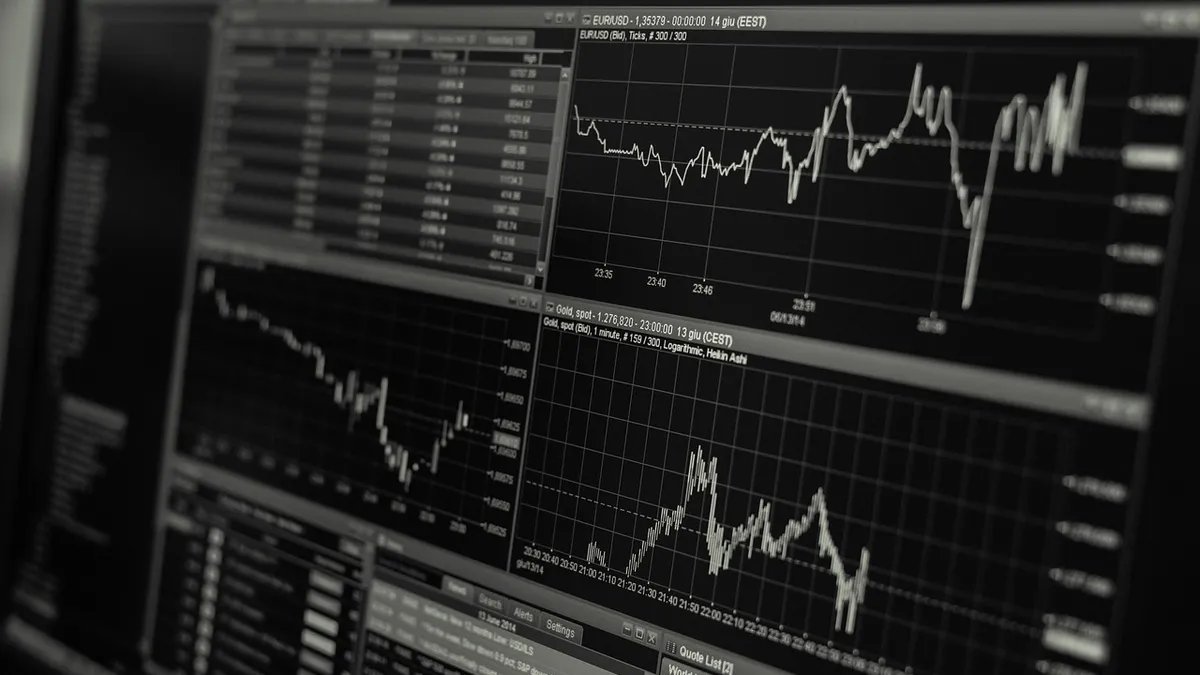
  • Can My Trading Signals Be Trusted or Are They Just Noise

    Can My Trading Signals Be Trusted or Are They Just Noise

    Can my trading signals be trusted when you are navigating the volatile Australian market, or are they just noise designed to drain your account? Most retail traders find themselves lost in a sea of automated alerts, yet the reality is that 68% of retail CFD clients in Australia realised a net loss during the 2023–24 financial year, according to ASIC Report 828. At Crazii JTVertex, we help you strip away the market static so you can focus on building a sustainable trading future without falling for the “get rich quick” trap. If you are serious about your next steps, read more in our guide on best trading signals for Australian traders 2026.

    Start your journey with clarity

    Access our curated resources and support group to trade with a professional mindset.

    Join the community
    Table of contents

    Can my trading signals be trusted?

    💡

    Key points: Trusting trading signals requires distinguishing between automated algorithmic outputs and verified market analysis. Because 74% of new retail clients acquired via paid online advertising lost money last year, you must treat every signal as a data point rather than a guaranteed profit. Always verify the source against objective market performance.

    It was 2:00 AM in Sydney. Mark, a 42-year-old construction manager, sat staring at his phone, watching a “guaranteed” signal group flash a buy order for gold. He had already lost 15% of his portfolio that month. He followed the signal blindly. Two hours later, his stop-loss was triggered, and his balance dropped further. He realized then: the noise was deafening, but the signal was hollow.

    Most signals you encounter are generated by algorithms that haven’t been stress-tested against the ASIC Report 828 standards for retail risk. If a provider promises consistent gains without mentioning the inherent risks of leveraged CFDs, they are not a partner; they are a liability. Trust is not given; it is earned through transparent, historical performance data that accounts for slippage and fee structures.

    The evidence: Signals operate on technical indicators like RSI, MACD, or Moving Averages. However, these are lagging indicators. They show what happened, not what will happen. Relying solely on them without understanding market context is why many traders lose capital.

    Expert tip: When I look at a signal, I first ask: “Where is the exit?” If a provider gives an entry price but fails to define a clear stop-loss or take-profit level, close the app immediately. Real trading is about risk management, not just entry points.

    Can my trading signals be trusted in the Australian market
    Evaluating if your trading signals are reliable indicators or market noise. · Photo: Foundry / Pixabay

    Why do most signal providers fail?

    💡

    Key points: Signal providers fail because they prioritise high-frequency trading to generate commissions over actual trader profitability. With 133,674 retail clients losing money in the last financial year, many providers profit from your churn rate. Understanding this incentive structure is the first step toward reclaiming your trading edge.

    Stop chasing noise

    Learn why most free signals fail and how to identify high-quality, professional data sources.

    Read the analysis

    Imagine a funnel. At the top, thousands of traders join free Telegram channels. The provider sends a signal, you trade, the broker gets a spread, and the provider gets a commission. It is a volume game. They do not care if you win; they care if you trade often.

    Data from ASIC shows that among active traders executing over 50 positions per month, 19% of otherwise-profitable clients lost money after fees. This is the “fee trap.” High-frequency signals are designed to keep you in this trap. When you trade more, the fees eat your profit, regardless of whether the signal itself was technically correct.

    MetricRetail Reality (FY2023-24)
    Total CFD losses$458 million
    Fee component$73 million
    Successful clients32%

    How do trading signals actually function?

    💡

    Key points: Trading signals function by identifying specific price patterns or mathematical anomalies in the market. Whether using MetaTrader’s 3,200+ available signals or custom scripts, the mechanism remains a set of predefined rules. However, these rules often ignore the macroeconomic shifts that move the Australian dollar or global commodities.

    Signals are essentially ‘if-then’ statements. If the 50-day moving average crosses above the 200-day, then a buy signal is triggered. It is simple, robotic, and lacks the nuance of human experience. You might be using the best trading signals platform or app which wins in 2026, but if you don’t understand the ‘why’ behind the signal, you are just gambling with a fancy interface.

    The goal is to transition from being a signal-taker to a signal-evaluator. You need to verify if the signal aligns with the broader trend. If you want to move beyond basic alerts, check out our guide on how to get good trading signals — trading signals from zero to confident in 14 days.

    1

    Verify the source

    Check if the provider has a verified track record that is at least 12 months old.

    2

    Backtest the logic

    Apply the signal strategy to past market data to see if it would have actually yielded a profit.

    What are the common mistakes when using signals?

    💡

    Key points: The most common mistake is over-leveraging based on a single, unverified signal. Traders often ignore the 85% loss rate seen in options CFDs, assuming a signal is a safe bet. Success requires discipline, not just a high-win-rate indicator.

    Master your risk

    Get the tools to manage your trades effectively without falling for common beginner traps.

    Get started today
    Mistake 1
    Ignoring position sizing: Traders often use the same lot size for every signal, failing to adjust for volatility. This leads to blown accounts during sudden market swings.
    Mistake 2
    Chasing losses: When a signal fails, people often double down on the next one. This is emotional trading, and it is the fastest way to lose your capital.

    I have seen traders lose everything because they thought they found a “holy grail” indicator. There is no such thing. The market is a living, breathing entity. If you treat it like a video game, it will treat your wallet like an ATM. You must understand that even the best signals are wrong a meaningful portion of the time.

    How to filter noise from genuine opportunities?

    💡

    Key points: Filtering noise requires a multi-layered approach: check the provider’s regulatory status, examine their historical drawdowns, and ensure the signals align with your personal risk tolerance. Genuine opportunities are rare and usually backed by consistent, long-term performance data.

    You are the filter. Before executing any trade, ask yourself: “Does this make sense given the current economic climate?” If a signal says “Buy AUD/USD” but the Reserve Bank of Australia has just signaled a rate hold, why are you buying? Context is your best friend.

    Look for providers who show their losses just as proudly as their wins. If you only see screenshots of profits, you are being sold a dream, not a tool. True professionals know that the market is about survival first, and profit second.

    Frequently asked questions

    Are free trading signals worth using?

    Generally, no. Most free signals serve as lead generation for brokers, encouraging high-volume trading to collect commissions. They rarely focus on your long-term success.

    Can I rely on automated copy trading?

    Copy trading is growing in popularity but carries high risks. Only 26,243 retail clients used it in the last financial year, and results vary heavily by issuer. Always research the master trader’s history.

    How do I know if a signal provider is legit?

    Legit providers offer transparent performance records, clear risk management rules, and do not promise guaranteed profits. If they sound too good to be true, they are.

    Does higher frequency trading lead to better results?

    No. Data shows that active traders often see their profits eroded by fees. Frequent trading often correlates with worse net outcomes after costs are deducted.

    What is the biggest risk with trading signals?

    The biggest risk is blind trust. Relying on a signal without understanding the underlying market conditions or having a personal risk management plan leads to significant capital loss.

    Need expert guidance?

    Contact us directly to discuss your trading strategy and how to navigate the market safely.

    Contact us

    Note: Trading CFDs and margin FX involves a high level of risk and may not be suitable for all investors. The information provided here is for educational purposes only and does not constitute financial advice. Always consult with a licensed financial advisor before making any investment decisions based on trading signals.

  • How To Get Good Trading Signals — Trading Signals From Zero to Confident in 14 Days

    How To Get Good Trading Signals — Trading Signals From Zero to Confident in 14 Days

    Learning how to get good trading signals involves more than just copying a stream of numbers; it requires understanding the structural risks inherent in the Australian market. By building a systematic approach to evaluating market data, you can move from passive observation to confident, informed decision-making without falling for the hype surrounding “get-rich-quick” alerts. Crazii JTVertex provides the analytical framework to help you navigate these complexities, and you can start your foundational journey here: how to get good trading signals.

    Start Your Trading Foundation

    Get the essential toolkit for Australian traders to manage risk and build long-term confidence today.

    Get Started
    Table of contents

    Why do most trading signals lead to net losses?

    💡

    Key points: Most retail traders lose money because they rely on signals without understanding the underlying cost structure. ASIC data shows 68% of retail CFD clients lost money in FY2023–24, with fees often flipping profitable strategies into net losses. Relying on external signals without personal validation is the primary driver of these negative outcomes.

    Imagine Mark, a 34-year-old software developer from Sydney. He spent his evenings scrolling through Telegram channels, chasing every “buy” notification that pinged on his phone. He felt a rush of adrenaline with every trade. Then came the end-of-month statement. The balance was down 40%. He followed the crowd, but he didn’t follow the data.

    The reality of the Australian market is sobering. According to ASIC Report 828, 68% of retail CFD clients realized a net loss in the 2023–24 financial year. That is 133,674 individuals facing a collective loss exceeding $458 million. Many of these traders were drawn in by paid online advertising, a segment where 74% of new clients ultimately lost money. This phenomenon is not unique to Australia; it is a global trend often linked to behavioral biases. Retail investors frequently underestimate the impact of cognitive biases on financial decision-making, leading to excessive trading and higher transaction costs.

    The evidence: Fees are not just a minor expense; they are a structural barrier. In FY2023–24, $73 million in fees were paid by retail traders. Even if a signal provider has a decent win rate, the commission and spread costs can turn a 5% potential profit into a net loss for one in twenty traders.

    If you are looking for a more sustainable path, you should read about the Best Trading Signals For Traders — Why Most Free Trading Signals Fail Australian Traders Daily. Understanding the mechanics of failure is the first step toward building a strategy that actually works for your specific financial goals. When you stop looking for the “magic” signal and start looking for a statistical edge, your entire perspective on the market shifts. You begin to see that trading is not about predicting the future, but about managing the probabilities of the present.

    Expert tip: When I started, I treated every signal as a directive. Now, I treat them as mere market data points. If the signal doesn’t align with my own technical analysis of the trend, I skip it. Discipline beats the signal every single time.

    How to get good trading signals in the Australian market
    Understanding how to get good trading signals requires filtering out market noise. · Photo: geralt / Pixabay

    What is the science behind reliable signal generation and how to get good trading signals?

    💡

    Key points: Reliable signals are generated through consistent, backtested quantitative models rather than emotional intuition. Whether using technical indicators or price action, a signal is only as good as the methodology behind it. MetaTrader currently hosts over 3,200 signals, but quality varies wildly, making independent verification essential for long-term success.

    Science in trading is about repeatability. If a signal generator cannot explain why a trade was taken based on a fixed set of rules, it is not a signal; it is a guess. True signals rely on market structure, volatility, and volume—not on a feeling that the market is “due” for a bounce. To understand how to get good trading signals, you must first look for transparency. A professional signal provider will always disclose their methodology, their maximum drawdown, and their average holding time. Without these metrics, you are flying blind.

    You can see how seasoned professionals approach this by reviewing the Best Trading Strategies For Beginners — 9 Things About Trading Signals Beginners Always Get Wro. This helps you understand that the goal isn’t to be right all the time, but to have a risk-to-reward ratio that allows you to survive the losing streaks. The science of signal generation also involves rigorous backtesting. A strategy that worked in a bull market might fail miserably in a sideways or bearish environment. Therefore, high-quality signals are those that have been stress-tested across multiple market cycles, including periods of high volatility and liquidity crunches.

    FeatureLow-Quality SignalsHigh-Quality Signals
    BasisOpinion/HypeBacktested Data
    Risk MgmtNone/VagueDefined Stop-Loss
    ConsistencyErraticRules-based

    Master the Science of Signals

    Learn how to build a robust trading system that prioritizes risk management and objective data analysis.

    Join Today

    Reliable signals are often boring. They don’t promise 500% returns in a week. They provide a clear entry, a clear exit, and a clear reason for the trade. This is the foundation for any serious approach to the Best Trading Signals For Australian Traders 2026. By focusing on the process rather than the outcome, you detach your ego from the trade. This psychological shift is perhaps the most important component of learning how to get good trading signals, as it allows you to remain objective even when the market moves against you.

    How do you filter noise from high-quality signals?

    💡

    Key points: Filtering noise requires a strict checklist of market conditions. Before acting on any signal, cross-reference it with your own analysis of the trend, support levels, and economic news. If the signal contradicts your established trading plan, the highest quality move is often to do nothing at all.

    1

    Verify the Trend

    Check if the signal aligns with the current market direction on a higher timeframe. If the signal is for a long position but the trend is bearish, the risk is significantly higher.

    2

    Assess Volatility

    Signals generated during low-volatility periods often result in whipsaws. Ensure the market has enough momentum to support the projected move.

    Filtering is the act of saying no. Most people find it difficult to sit on their hands when they see a chart moving. However, as the ASIC data suggests, active traders who trade more frequently often see worse net outcomes. In fact, 19% of otherwise-profitable active traders lost money after fees in the last financial year. To filter effectively, you need a “pre-flight checklist.” This should include checking the economic calendar for high-impact news, verifying the current ATR (Average True Range) to set appropriate stop-losses, and confirming that the trade size fits within your risk management parameters.

    The evidence: Information overload leads to decision fatigue. By limiting your signal sources to two or three verified providers and focusing on a specific asset class, you reduce the cognitive burden that leads to poor trade execution.

    For those serious about refining their process, checking out the Best Trading Signals Website Reviewed for Serious Traders can provide the perspective needed to separate quality from marketing fluff. Remember, the goal of filtering is not to find more trades, but to find the *right* trades. When you reduce your frequency but increase your selectivity, you often find that your net profitability improves significantly, even if your total number of trades drops.

    What are the common mistakes when using signals?

    💡

    Key points: The most dangerous mistake is over-leveraging based on a signal you do not understand. Many retail traders treat signals as a substitute for knowledge, leading to rapid capital depletion. Always treat every signal as a potential loss and manage your position size accordingly.

    Avoid Costly Mistakes

    Get access to expert mentorship and support to help you navigate the complexities of the Australian CFD market.

    Get Support
    Mistake 1
    Chasing past performance: Just because a signal provider had a good month doesn’t mean they will have a good year. Past results are not indicative of future performance.
    Mistake 2
    Ignoring risk management: A signal without a stop-loss is not a trade; it is a gamble. Never enter a market without knowing exactly where you will exit if you are wrong.
    Mistake 3
    Copying blindly: When you copy others without understanding the logic, you become a prisoner to their mistakes. If the provider has a bad day, you have a bad day—but you don’t know why.

    The cost of these mistakes is real. With 85% of retail clients losing money on options CFDs, the margin for error is razor-thin. Don’t let your portfolio be the one that funds someone else’s profit. Another common error is “signal hopping,” where a trader jumps from one provider to another after a single losing trade. This prevents the trader from ever seeing the long-term statistical edge of any single system. Consistency in application is just as important as the quality of the signal itself.

    Frequently asked questions about trading signals

    Are trading signals guaranteed to make money?

    No. No signal provider can guarantee profit. ASIC data confirms that the vast majority of retail clients lose money when trading CFDs, regardless of the signals they use. Markets are inherently unpredictable, and any provider promising guaranteed returns is likely operating a scam.

    How many signals should I take per day?

    Quality is more important than quantity. Taking too many signals increases your exposure to fees and emotional errors. Focus on high-probability setups that align with your plan. For most retail traders, 1–3 high-quality setups per day are more than enough to maintain a healthy trading routine.

    Can I automate signal trading?

    Yes, through platforms like MetaTrader, but automation requires a robust strategy. If your underlying strategy is flawed, automation will only help you lose money faster. Always test your automated systems in a demo environment before committing real capital.

    Is copy trading a safe way to start?

    Copy trading carries significant risks. While it allows you to follow others, you are still exposed to market volatility and the risk of the person you are copying having a losing streak. It is not a “set and forget” solution; it requires active monitoring of the trader you are copying.

    How do I verify a signal provider’s track record?

    Look for verifiable, third-party audited results. Avoid providers who only show screenshots of winning trades without accounting for fees, slippage, or losing positions. Platforms like Myfxbook or MQL5 provide more transparent data, but even then, you should remain skeptical and perform your own due diligence.

    Note: Trading CFDs and margin FX involves high risk. The information provided here is for educational purposes only and does not constitute financial advice. Always consult with a licensed professional before making any financial decisions.

    Talk to an Expert

    Need guidance on your trading journey? Contact our team for professional support and insights.

    Contact Us