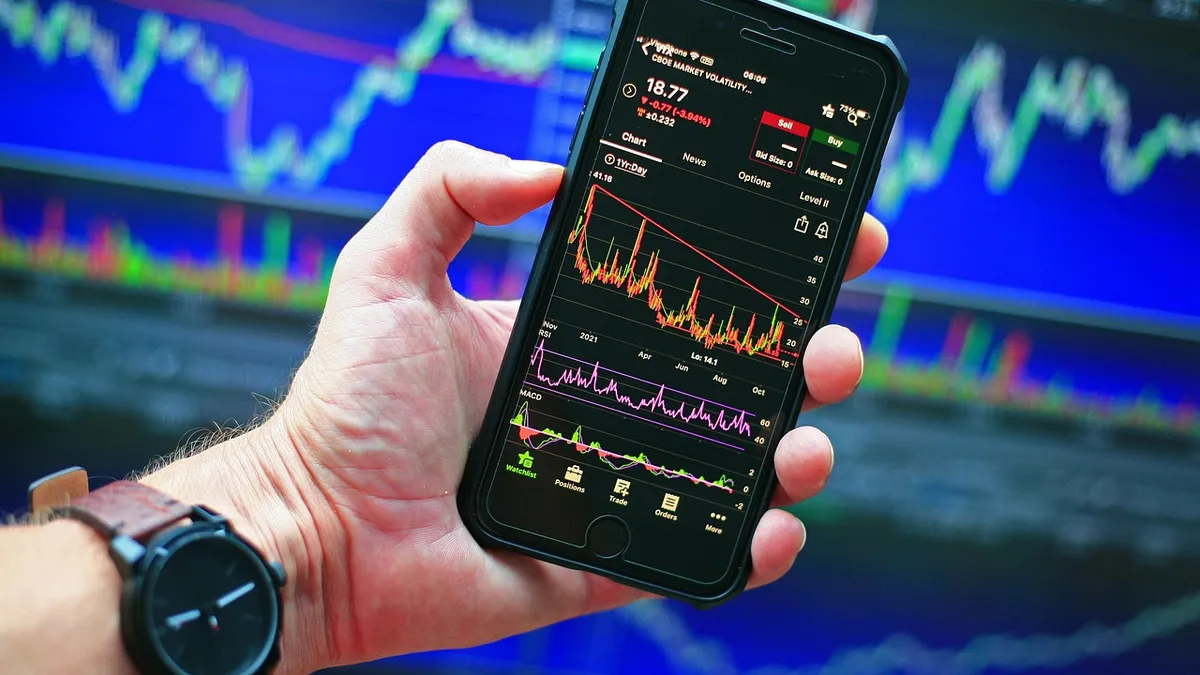
Are trading signals worth it when you are staring at a screen that hasn’t moved in twenty minutes, wondering if the next breakout is real or just noise? For many, the answer lies in balancing the convenience of automated analysis with the harsh reality of market volatility. You can Crazii JTVertex to refine your approach without falling for the trap of overnight wealth. Navigating this landscape requires more than just following alerts; it demands a clear understanding of the risks, as detailed in our guide on are trading signals worth it for everyday Australian traders.
Streamline your trading process
Access our curated tools and professional support to stop guessing and start trading with clarity.
Get StartedIn this article
Are trading signals worth it for your account?


Key point: Trading signals are tools that provide entry and exit suggestions, yet they do not replace personal analysis. With 68% of Australian retail CFD clients losing money in FY2023–24, signals should be treated as supplementary data rather than a shortcut to profit, especially given the high risk of margin trading.
Picture this: It is 10:00 AM on a Tuesday. Your phone pings with a notification to buy a specific currency pair. You feel a surge of excitement, thinking this is the one that finally turns your account around. You execute the trade without a second thought. But by 2:00 PM, the market reverses, and your stop-loss is triggered. You are left with a smaller balance and a growing sense of frustration. This was the reality for thousands of traders last year.
According to ASIC Report 828, 68% of retail CFD clients in Australia realised a net loss during the 2023–24 financial year. The market is unforgiving, and relying solely on external signals often leads to poor outcomes. If you are looking to improve your consistency, check out the best trading signals for Australian traders 2026 to understand how to filter noise effectively.
When asking “are trading signals worth it,” you must consider the psychological trap of convenience. Many traders seek signals to avoid the “heavy lifting” of market analysis. However, in the Australian financial landscape, where volatility is driven by global commodity prices and interest rate shifts, a static signal often fails to account for real-time news events. If you treat signals as a “magic button,” you are ignoring the fundamental requirement of trading: risk management. The true value of a signal is not the entry price, but the validation it provides to your existing thesis. If the signal contradicts your technical setup, it should be a warning sign, not a reason to abandon your plan.
The science angle: ASIC data reveals that 74% of new retail clients acquired via paid online advertising lost money. This suggests that marketing-heavy signal services often underperform, as they focus on volume rather than the quality of the underlying strategy.
Are trading signals worth it? They can be, provided you treat them as one piece of a larger puzzle. If you use them to validate your own research, they might offer a second pair of eyes. If you use them to replace your judgment, you are likely setting yourself up for the same statistics that plague the majority of retail traders. For the everyday Australian trader, the goal should be to build a robust framework where signals act as a filter, not the foundation of your trading strategy.
How do the mechanics behind signal generation actually work?


Key point: Signals are generated either through technical analysis algorithms or human copy-trading. While MetaTrader hosts over 3,200 signal sources, the efficacy of these signals depends on the provider’s risk management, which is often opaque to the end user.
You might wonder how a signal actually reaches your device. Most signals are born from either complex mathematical models—using indicators like RSI or MACD—or from successful traders sharing their live positions. In the world of MetaTrader, there are over 3,200 commercial and free signals available for you to follow. It feels like a massive buffet of opportunities.
However, the hidden cost is often the provider’s lack of accountability. A provider might have a streak of green trades, but one bad day for them becomes a catastrophe for you if your account size or risk tolerance differs. For those who want to understand the basics of building their own edge, learning best day trading strategies for beginners who hate complexity is a more sustainable path than blindly following others.
The technical generation of these signals usually involves “backtesting” against historical data. While this sounds professional, it is often prone to “curve fitting”—where a strategy is optimized to look perfect in the past but fails to adapt to future market conditions. When you ask yourself “are trading signals worth it,” consider that these algorithms rarely understand the “why” behind a price movement. They only see the “what.” A human trader, by contrast, can interpret a central bank announcement or a sudden geopolitical shift, whereas an algorithm might simply see a technical breakout and trigger a buy, leading to a “fakeout” scenario that wipes out your stop-loss.
Expert tip: When I evaluate a signal provider, I look for a track record spanning at least one year. If a provider has only been active for three months, their performance is likely a result of favourable market conditions rather than a robust, repeatable strategy.
Filter by Drawdown
Look for signals with a maximum drawdown of less than 20%. Anything higher suggests the provider is holding onto losing positions for too long, which is a major red flag for retail accounts.
Verify Trade Frequency
High-frequency trading signals often result in higher fees. ASIC notes that active traders with 50+ positions a month often see their net profits eroded by transaction costs.
What are the most common pitfalls in signal reliance?


Key point: The most common mistakes include over-leveraging based on signals, ignoring the impact of commission fees, and failing to manage risk independently. These errors frequently turn potentially profitable trades into net losses, as confirmed by ASIC’s findings on fee-related attrition.
Many traders assume a signal is a guaranteed win. It is not. It is merely a suggestion. Relying on it without performing your own technical or fundamental check is a recipe for losing your capital.
In FY2023–24, retail clients paid $73 million in fees. If you follow a signal that triggers ten trades a day, your account will bleed out from spreads and commissions before you even see a profit.
I have seen traders who believe that if they just find the right group, their problems will vanish. But when you outsource your decision-making, you also outsource your growth. The danger of “signal dependency” is that it atrophies your own analytical skills. If you are tired of the trial-and-error cycle, read about how to get best trading signals without wasting 3 months to learn how to curate your own sources instead of being a passive follower.
Another significant pitfall is the “lag” factor. By the time a signal is generated, transmitted to a server, and then pushed to your mobile device, the market may have already moved. In fast-moving markets, even a few seconds of delay can mean the difference between a profitable entry and a “chasing the price” scenario. This is why professional traders often prioritize execution speed and proprietary analysis over third-party alerts. When you ask “are trading signals worth it,” remember that the market does not wait for your notification to ping.
Stop the cycle of trial and error
Learn how to select signals that actually align with your risk profile and long-term goals.
Get StartedHow can you evaluate signal quality effectively?


Key point: Quality signals are characterised by transparency, consistent risk management, and a long-term performance history. Avoid services that promise specific monthly returns, as these are often misleading and fail to account for the inherent volatility of the Australian CFD market.
Evaluating a signal is like vetting a business partner. You do not just look at their current bank balance; you look at how they handled the last crisis. Does the provider have a consistent approach to stop-losses? Or do they move their stops further away when the market goes against them? The latter is a classic sign of an amateur strategy that will eventually lead to a margin call.
To determine if are trading signals worth it for your specific situation, look for providers who publish their full trade history, including losing trades. Transparency is the hallmark of a professional service. If a provider only showcases their wins, they are hiding the reality of the market. Furthermore, consider the community aspect. If you are looking for a place to discuss these signals, exploring best trading signals Discord servers worth joining in 2026 can provide you with a peer-review environment. Just remember, even in a community, the final decision is yours.
Finally, assess the risk-to-reward ratio of the signals provided. A signal that suggests a 5-pip take-profit with a 50-pip stop-loss is mathematically flawed. Over time, the losses will inevitably outweigh the gains, regardless of how high the “win rate” appears to be. Quality signals prioritize capital preservation above all else, ensuring that you stay in the game long enough to see the compounding effect of your trades.
The science angle: ASIC Report 828 highlights that only 32% of retail clients made money in the last financial year. When you choose a signal, ask yourself: is this provider part of the 32%, or are they just generating noise that fuels the 68% loss rate?
Access professional-grade insights
Join our group chat to connect with other traders and refine your signal evaluation process.
Join TelegramFrequently asked questions

Are trading signals worth it for a complete beginner?
Generally, no. Beginners often lack the risk management skills to handle the volatility that signals can introduce. It is better to focus on learning market structure first before relying on external inputs.
Can I get rich using automated trading signals?
No. Trading is high-risk. Anyone claiming that signals will make you rich is likely misrepresenting the risks involved in CFD and margin trading. Sustainable growth comes from discipline, not shortcuts.
What is the most common reason signal users lose money?
Over-leveraging and failing to account for transaction fees are the primary causes. Fees can turn a winning strategy into a net loss for the client, especially when the signal provider triggers high-frequency trading.
Should I trust signals with a 90% win rate?
Be extremely cautious. A 90% win rate is often achieved by holding losing trades for a long time or using very small take-profits, which can lead to catastrophic losses when the market finally moves against the position.
How often should I check my signal provider’s performance?
At least once a month. Evaluate their drawdown and consistency against your own trading goals to ensure they still align with your strategy. If their risk management changes, you must be prepared to stop following them immediately.
Why do some signals fail during major economic news?
Most signals are based on technical analysis, which often fails during high-impact news events like interest rate decisions or inflation reports. These events cause sudden volatility that technical indicators cannot predict.
Note: This content is for general information only and does not constitute personal financial advice. Trading CFDs and margin FX involves significant risk of loss. Always consider your own financial circumstances and read the relevant disclosure documents before trading.
Need personal guidance?
Contact us to discuss your trading needs and how our tools can support your journey.
Contact Us
Leave a Reply