Tag: how to get best trading signals

  • Who Gives Best Trading Signals and Can You Actually Trust Them

    Who Gives Best Trading Signals and Can You Actually Trust Them

    If you have ever asked who gives best trading signals, you already know the honest answer is harder to find than any Telegram channel or YouTube guru will admit. At Crazii JTVertex, we has spent years testing signal providers, copy-trading platforms, and automated alert systems across live accounts, and the full picture of what actually works is laid out in this guide on who gives the best trading signals and whether you can trust them. By the time you finish reading, you will know exactly which type of signal source fits your situation, which red flags to avoid before you risk a single dollar, and how to build a simple filter that separates genuine edge from expensive noise.

    Important note: This article is general information only and does not constitute personal financial advice. Trading CFDs, forex, and other leveraged products carries significant risk of loss. Please consider your own financial circumstances and read the relevant Product Disclosure Statement before acting on any signal or trading tool.

    Start with the right tools, not just the right signals

    Crazii JTVertex has put together a full trading toolkit for Australian traders — signals, platforms, and support in one place.

    See the 2026 toolkit
    Table of contents

    Who actually gives the best trading signals — and what makes one “best”?

    Who actually gives the best trading signals — and what makes one "best"?
    💡

    Key points: The best trading signals come from providers with a verified, audited track record across at least 100 closed trades, transparent drawdown figures, and a clear methodology you can understand. No single provider is universally best — the right one depends on your instrument, risk tolerance, and available screen time.

    Here is the thing nobody wants to say out loud: there is no single provider who gives the best trading signals for every trader. Full stop. That sounds like a cop-out, but it is actually the most useful starting point you can have. Because once you stop searching for a universal answer and start asking “best for whom, in what market, with what risk settings” — you start making decisions that actually protect your capital. So what does “best” mean in practice? We would argue it comes down to three things: verifiability, consistency across market conditions, and fit with your own trading style. Verifiability means the track record is audited or at minimum independently verifiable — not a screenshot of a Telegram post. Consistency means the provider has performed across both trending and ranging markets, not just during one bull run. Fit means the signal frequency, instrument focus, and risk-per-trade align with how you actually trade. There are broadly four types of signal sources you will encounter. First, human analysts — experienced traders who publish entry, stop-loss, and take-profit levels, usually via Telegram or email. Second, algorithmic systems — rule-based engines that scan for technical setups and fire alerts automatically. Third, copy-trading platforms — where you mirror another trader’s live account in real time. Fourth, broker-integrated tools — signals built into platforms like MetaTrader, which hosts over 3,200 free and commercial signal providers through its built-in marketplace. Each has a different risk profile. Human analysts can adapt to news events but are subject to emotional bias. Algorithms are consistent but can break down when market structure shifts. Copy trading gives you live exposure to someone else’s edge — but also to their drawdowns, which can be severe. The question worth sitting with before you subscribe to anything is this: can you actually verify what this provider claims? That single question is what separates traders who find a source that genuinely gives best trading signals from those who keep cycling through disappointment.

    The evidence: According to MetaQuotes, the MetaTrader platform alone hosts more than 3,200 free and commercial signal providers through its built-in signals marketplace. With that volume, the challenge is not finding a signal — it is filtering out the noise from the genuine edge.

    Expert tip from Crazii JTVertex: We has a personal rule that gets ignored constantly: never evaluate a signal provider on win rate alone. A provider with a 45% win rate and a 1:3 risk-reward ratio will outperform a 75% win-rate provider with a 1:0.8 ratio over 200 trades. The first time we ignored this rule was on a gold signals channel in 2022 — the win rate looked impressive, but the average loss was nearly three times the average win. The account dropped 22% in six weeks. That lesson cost real money.

    Signal source type Verifiability Adaptability to news Typical frequency Best suited to
    Human analyst Medium (check track record) High 1–5 per day Traders who want context
    Algorithmic system High (if backtested, audited) Low 5–50+ per day Systematic traders
    Copy trading High (live account data) Depends on master trader Varies Passive, hands-off traders
    Broker-integrated tools Medium (platform-verified) Medium Varies Beginners and part-time traders
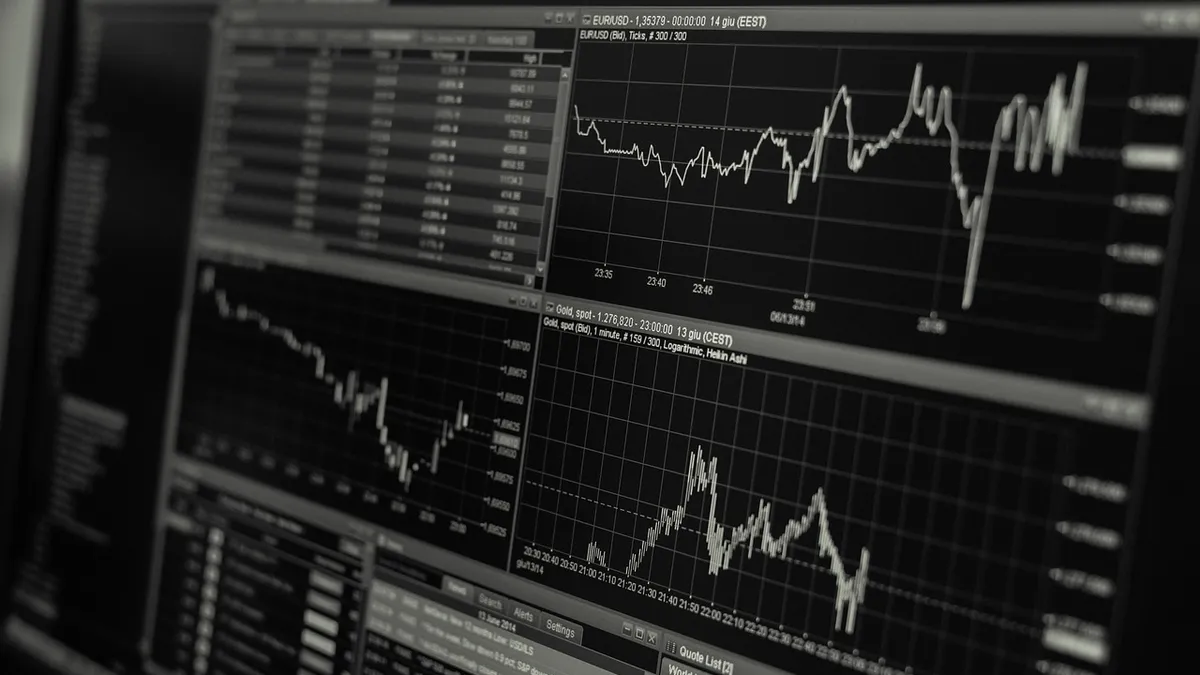
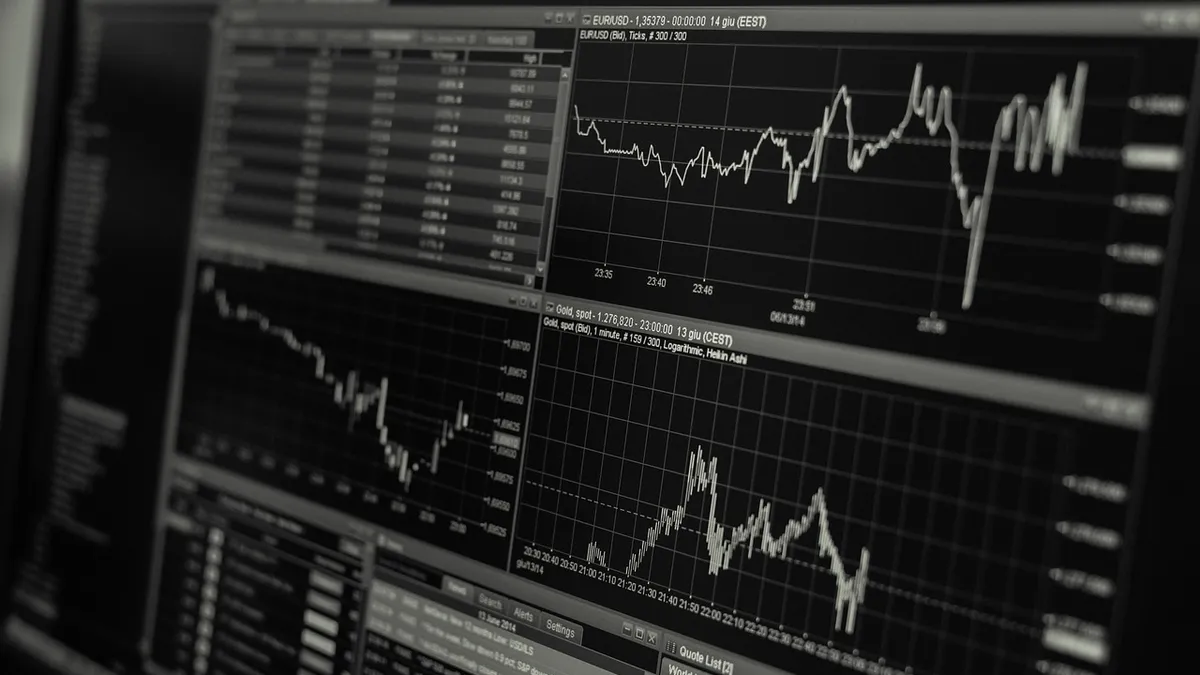
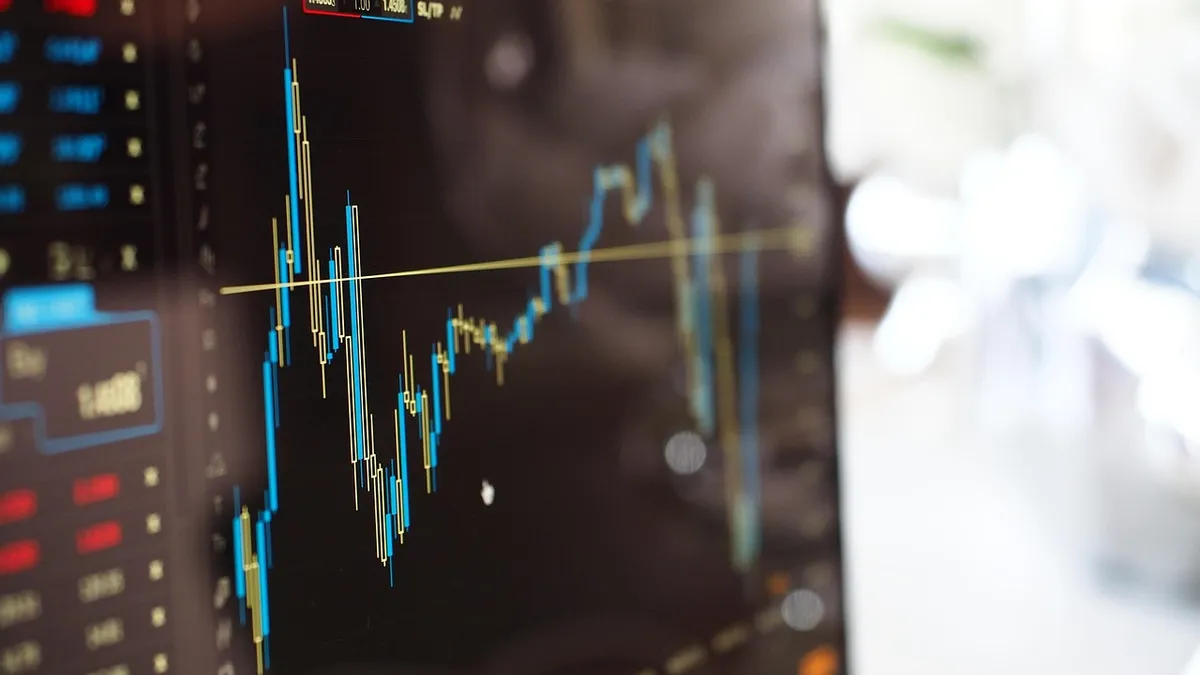
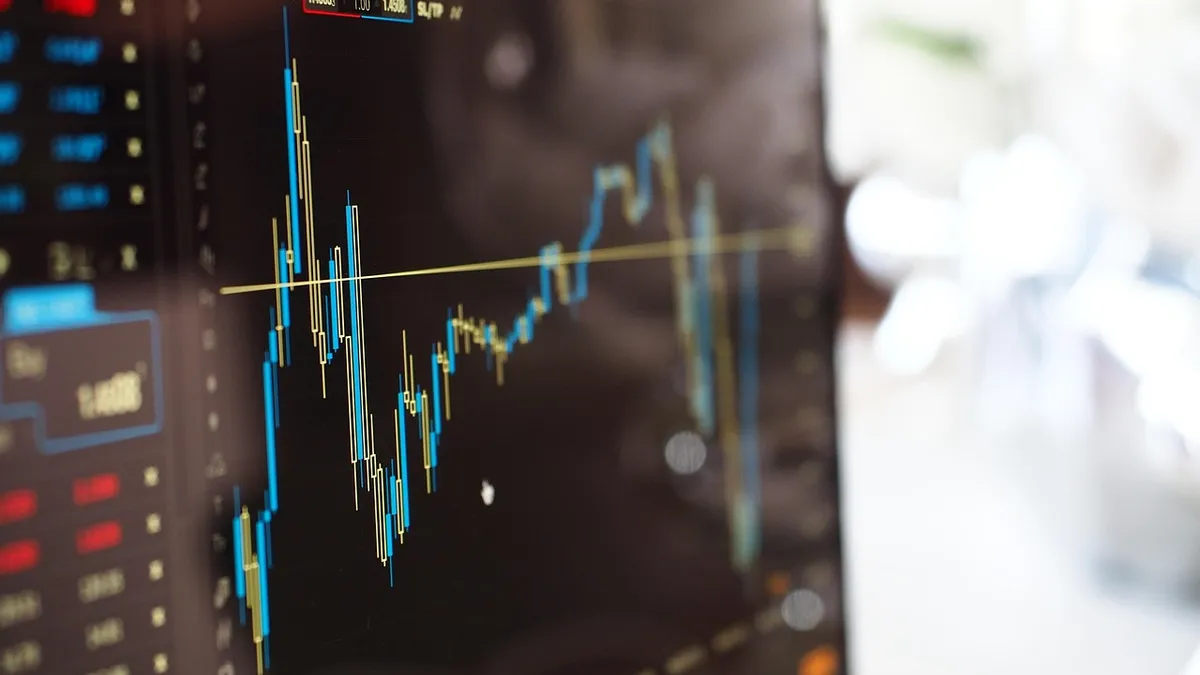
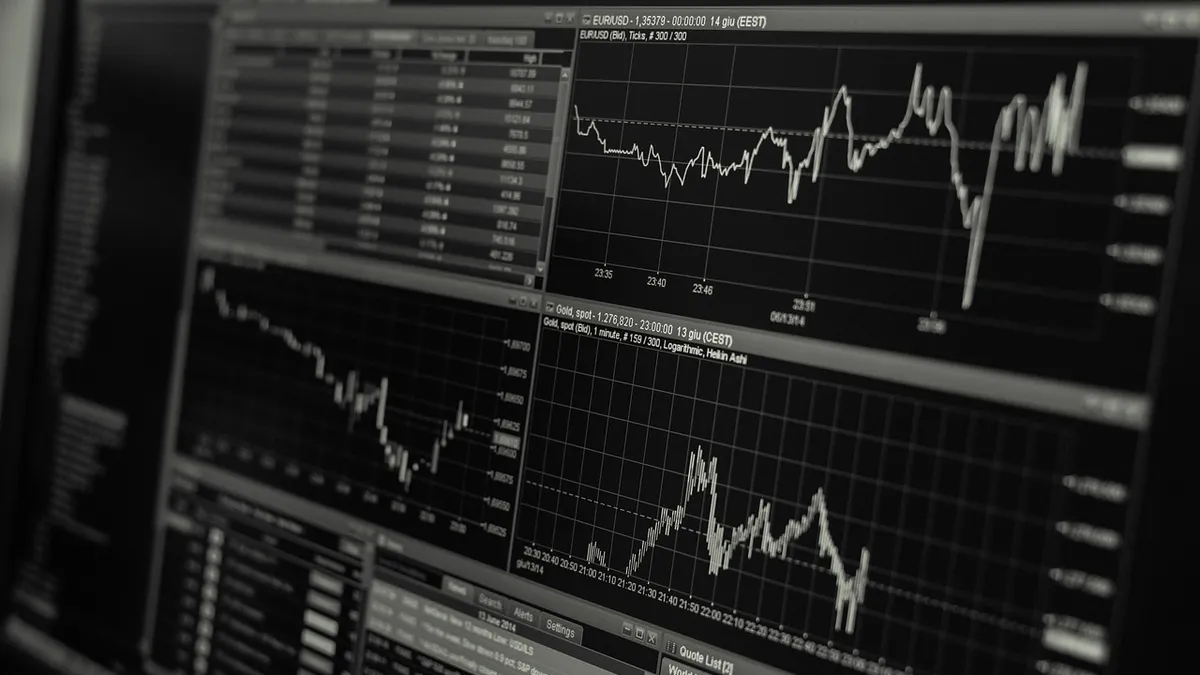
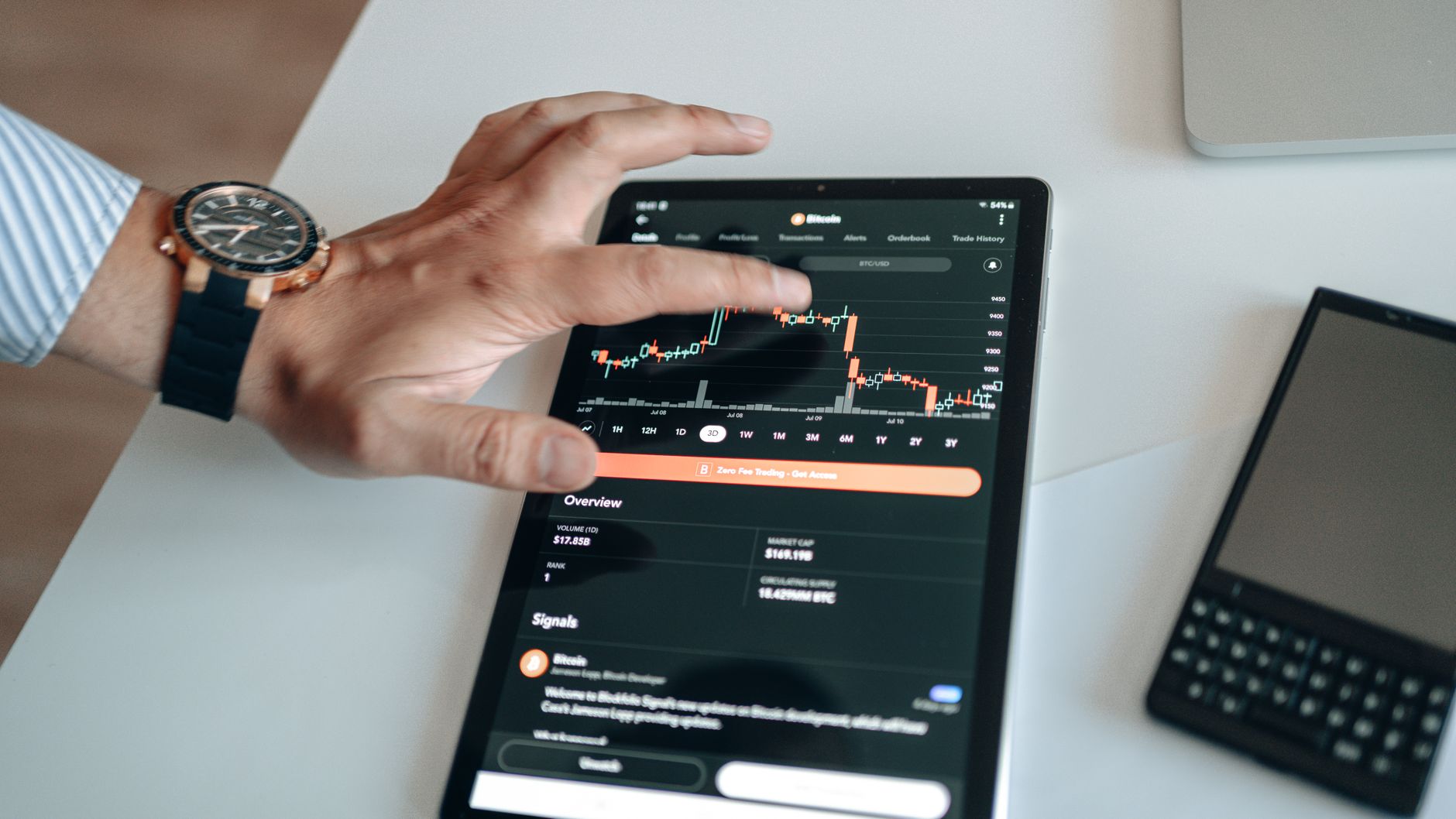
    who gives best trading signals comparison chart Crazii JTVertex
    Comparing signal source types helps Australian traders choose the right fit for their style and risk profile. · Photo: 3844328 / Pixabay
    The next section will show you what the actual data says about signal-following outcomes — and the numbers from Australia’s own regulator are the kind that make you read them twice.

    What does the evidence say about trading signals and real-world outcomes?

    What does the evidence say about trading signals and real-world outcomes?
    💡

    Key points: ASIC’s most recent data shows 68% of Australian retail CFD clients lost money in FY2023–24, with net losses exceeding $458 million. Fees alone cost traders $73 million and flipped 5% of otherwise-profitable clients into a loss. Signal-following does not change these structural dynamics unless the underlying edge is real.

    Let we give you a number that reframes this entire conversation. In FY2023–24, 68% of retail CFD clients in Australia lost money. That is not a fringe statistic — it comes directly from ASIC Report 828, published in January 2026, covering the full Australian CFD sector. In raw terms: 133,674 retail clients lost money, with net losses exceeding $458 million for the year. To put that in everyday terms, that is roughly the equivalent of every adult in a mid-sized Australian city like Toowoomba collectively losing their savings in a single financial year. The fees picture is worth understanding separately. Of that $458 million in net losses, $73 million was fees. And here is the detail that stings: 5% of retail clients would have made a net profit if not for fees. Fees alone tipped them from profit into loss. Think about that — they had the right calls, they followed the signals, and the transaction costs still wiped their edge. Now, where do signals and copy trading sit in this picture? ASIC’s same report notes that 26,243 retail clients used copy trading in FY2023–24, with ASIC observing “a growing interest in copy trading.” That is a meaningful number. But copy trading does not automatically improve outcomes — it simply transfers the edge (or lack of it) from one trader to another. If the master trader you are copying genuinely gives best trading signals with a verified edge, you benefit. If they do not, you share their losses. There is also a sobering finding for active traders. Among clients who opened 50 or more positions per month, 19% of those who would otherwise have been profitable ended up losing after fees. More trading, in other words, correlated with worse outcomes — not better ones.

    The evidence: ASIC Report 828 (January 2026) found that 85% of retail clients lost money trading options CFDs — the highest loss rate of any CFD product category. Standard CFDs already sit at 68%. If a signal provider is pushing options CFDs heavily, the structural headwind against profitability is severe.

    Expert tip from Crazii JTVertex: We checks the drawdown curve of any signal provider before the win rate. A smooth equity curve that suddenly has a vertical drop tells you everything: either the provider hit a structural market change they were not prepared for, or — more often — they were using a martingale or grid strategy that looked good until it did not. If the provider cannot explain what caused the drawdown and what changed in their system afterwards, that is a hard pass.
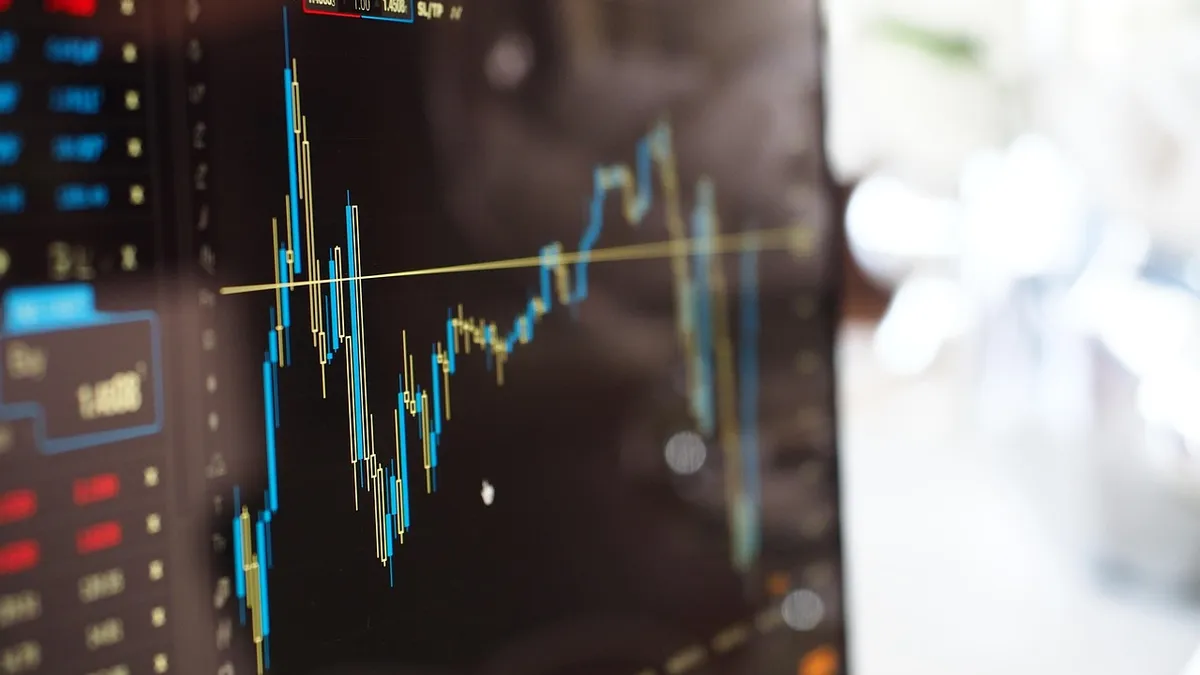
    What this data tells you is not “signals do not work.” It tells you that signals used without understanding the underlying risk, fees, and market structure will, on average, produce the same outcomes as the broader retail population. The traders who beat that 68% figure are the ones who treat signal evaluation as seriously as signal execution. For a deeper look at the tools that support genuine signal analysis, the best trading signals and tools for Australian traders in 2026 covers the full landscape with specific platform recommendations.
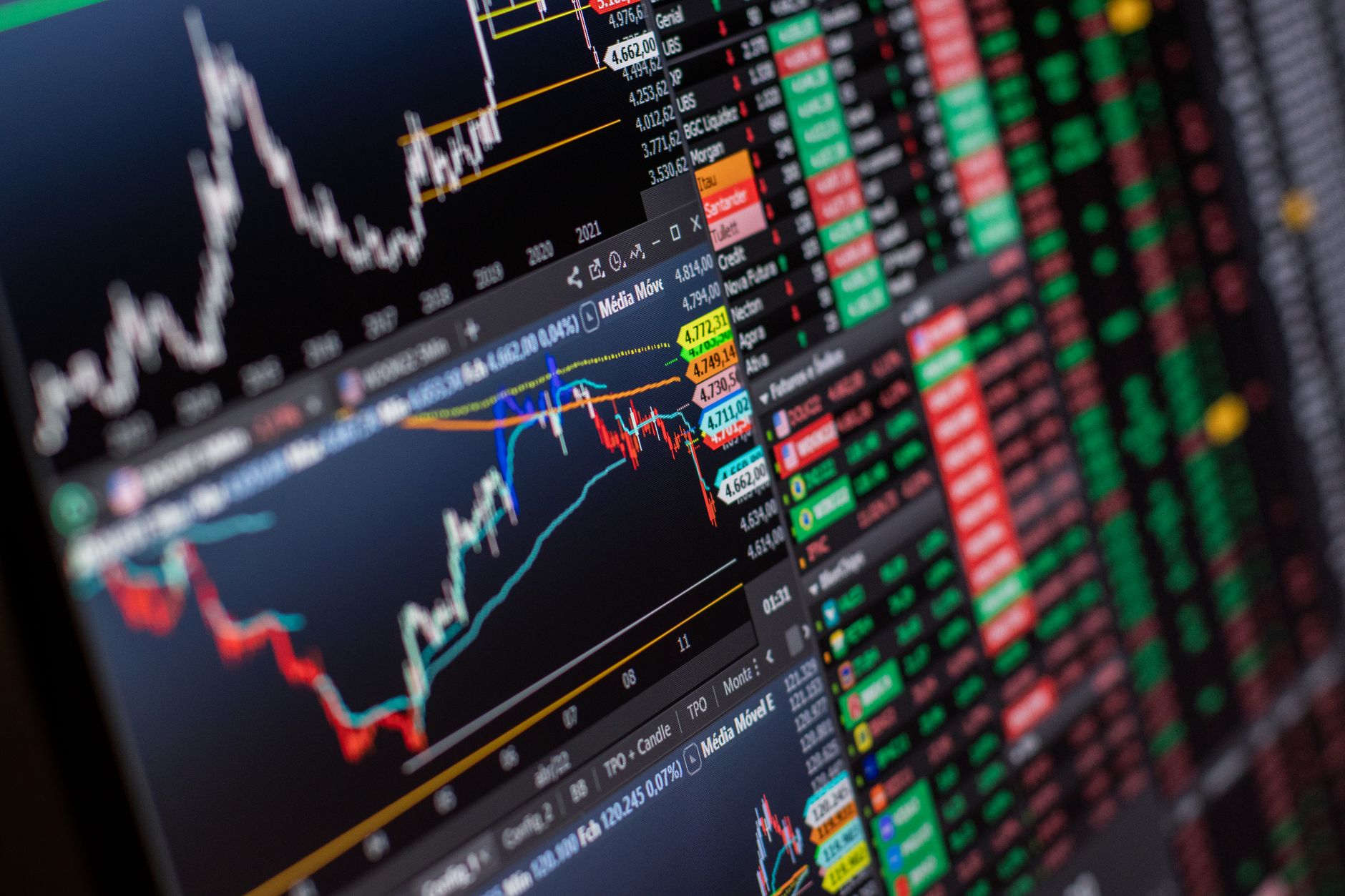
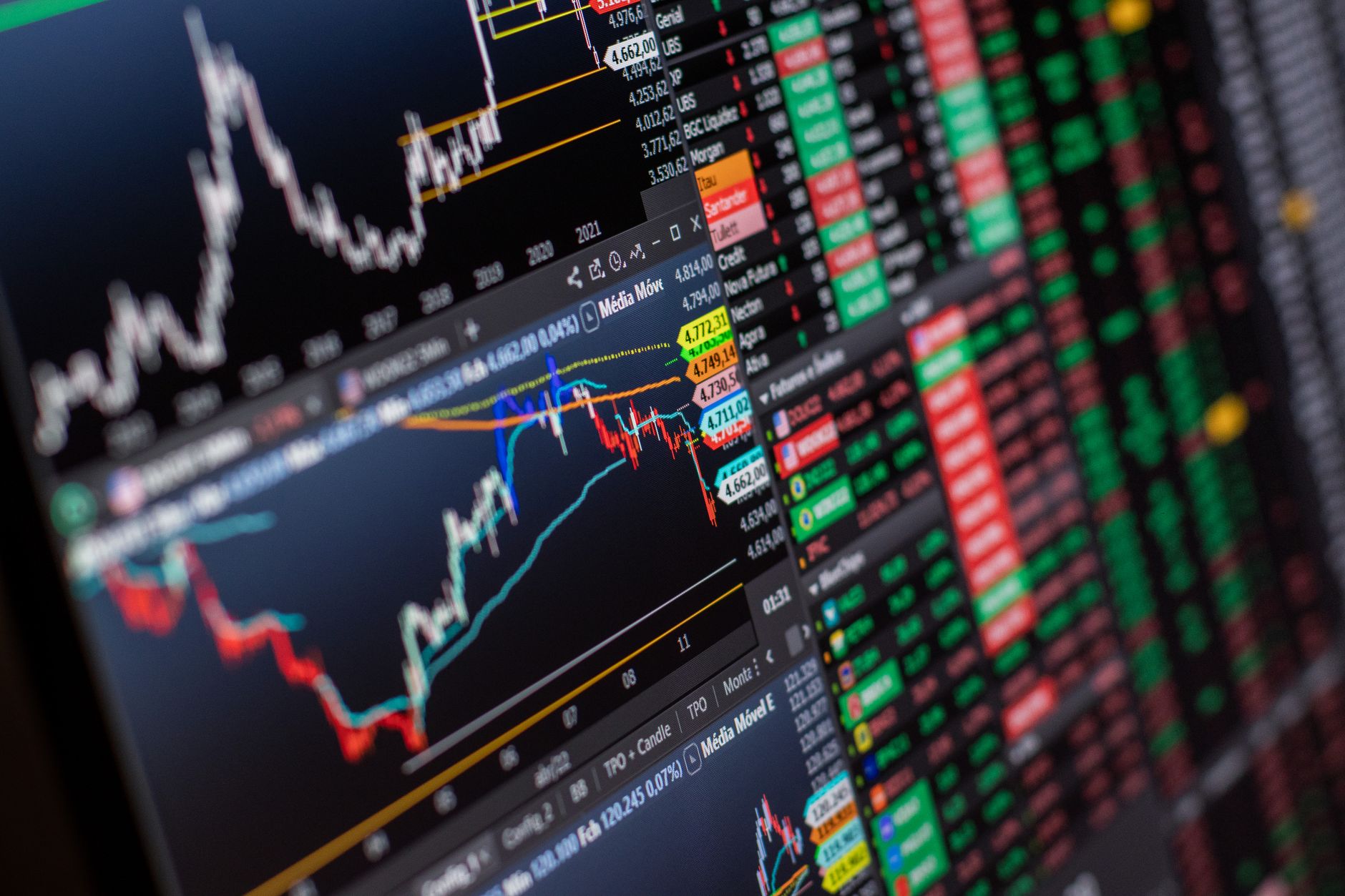
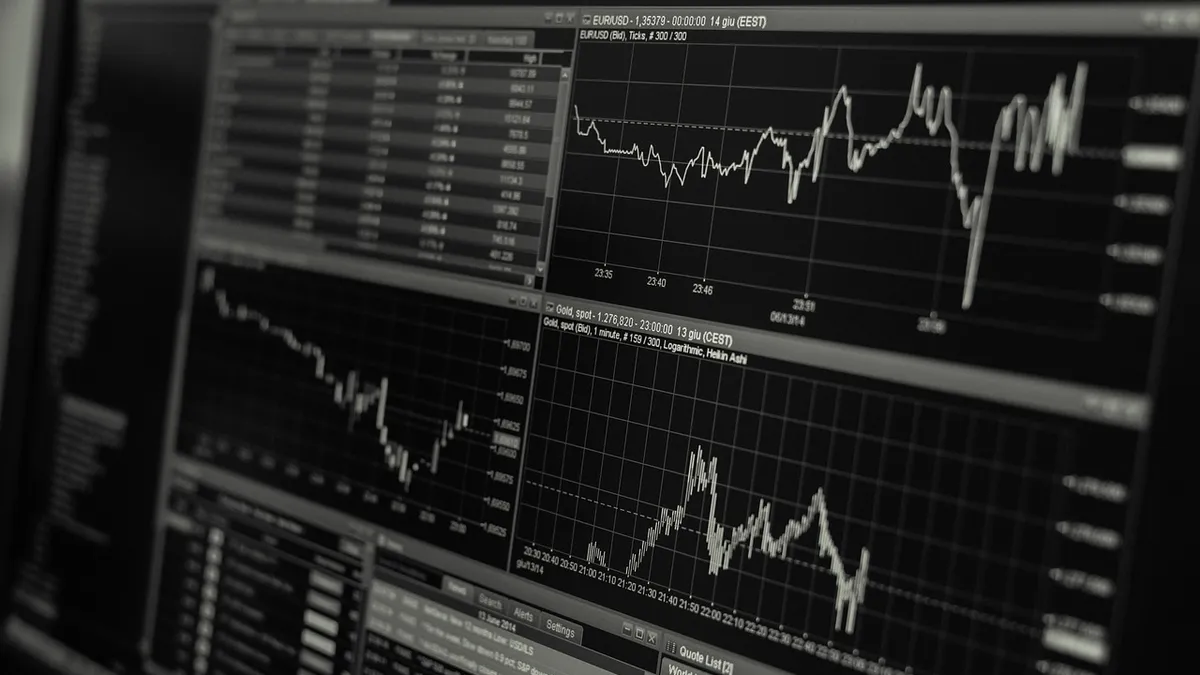
    ASIC retail CFD loss statistics trading signals Australia Crazii JTVertex
    ASIC Report 828 data on retail CFD outcomes provides essential context for evaluating any trading signal source. · Photo: Pexels / Pixabay

    Want to see which signal tools Crazii JTVertex actually uses?

    Join the group chat for live discussion, signal breakdowns, and platform walkthroughs from traders who have been through the numbers.

    Join the Telegram group
    Understanding the data is one thing. Knowing how to apply it when you are comparing actual providers is where most traders fall short — and that is what the next section addresses.

    How do you compare signal providers before trusting them with your capital?

    How do you compare signal providers before trusting them with your capital?
    💡

    Key points: Comparing signal providers requires looking beyond win rate to include drawdown depth, trade sample size (minimum 100 closed trades), fee structure, and whether results are audited or self-reported. A provider with a short track record in a trending market tells you almost nothing about their edge in a ranging or volatile environment.

    Picture this: you find a Telegram channel with 47,000 members, a pinned message showing a 91% win rate over the last three months, and testimonials from people saying they doubled their accounts. You are tempted. Of course you are. Here is what we does before subscribing to anything. First, sample size. We will not seriously evaluate any provider with fewer than 100 closed trades on record. Three months of forex signals might only be 60–80 trades. That is not enough to distinguish genuine edge from a lucky streak. This is a personal heuristic, not a statistical rule — but it has saved we from at least four providers who looked great on paper and fell apart within two months. Second, drawdown. Maximum drawdown tells you the worst peak-to-trough loss the provider experienced. A 20% drawdown is a significant red flag in we’s view — not because it cannot recover, but because it tells you about position sizing and risk management. If a provider never discloses drawdown, that is itself a red flag. Third, audit trail. Is the track record self-reported (screenshots, Telegram posts) or independently verifiable (MetaTrader signals page, a third-party auditing service)? Self-reported results are almost always cherry-picked. We treats them as marketing, not evidence. Fourth, fee drag. As the ASIC data makes clear, fees are a material factor in net outcomes. A signal service charging per trade, combined with spreads and overnight financing costs, can erode a profitable strategy into a losing one. Always calculate total cost of following the signal, not just the subscription fee.

    The evidence: ASIC Report 828 found that 74% of new retail clients acquired via paid online advertising lost money in FY2023–24 — worse than the 68% sector average. Providers who rely heavily on paid ads to acquire clients are, statistically, associated with worse client outcomes. That does not make every advertised signal bad, but it is worth noting.

    Expert tip from Crazii JTVertex: One thing we looks for that almost nobody mentions: does the signal provider post their losses in real time, or only after the trade closes? Providers who post “entry now” and then go quiet until a winner appears are hiding their stop-outs. The best providers we has worked with post every stop-loss hit as it happens, with a brief note on why the setup failed. That transparency is worth more than any win-rate figure — and it is one of the clearest signs of a source that genuinely gives best trading signals rather than just best-looking marketing.

    1

    Check the sample size

    Look for at least 100 closed trades before drawing any conclusions about a provider’s edge. Fewer trades and you are evaluating luck, not skill.

    2

    Examine the drawdown history

    Request or find the maximum drawdown figure. In we’s view, anything above 20% warrants a detailed explanation from the provider about their risk controls.

    3

    Verify the audit trail

    Prefer providers whose results are verifiable on the MetaTrader signals page or a third-party auditing service. Screenshots are not evidence.

    4

    Calculate total cost of following

    Add subscription fees, spreads, commissions, and overnight swap costs. Then assess whether the signal’s historical edge survives those costs at your account size.

    5

    Test on a demo account first

    Follow the signals on a demo account for at least four weeks before committing live capital. This reveals execution slippage, signal timing issues, and whether the style actually suits how you trade.
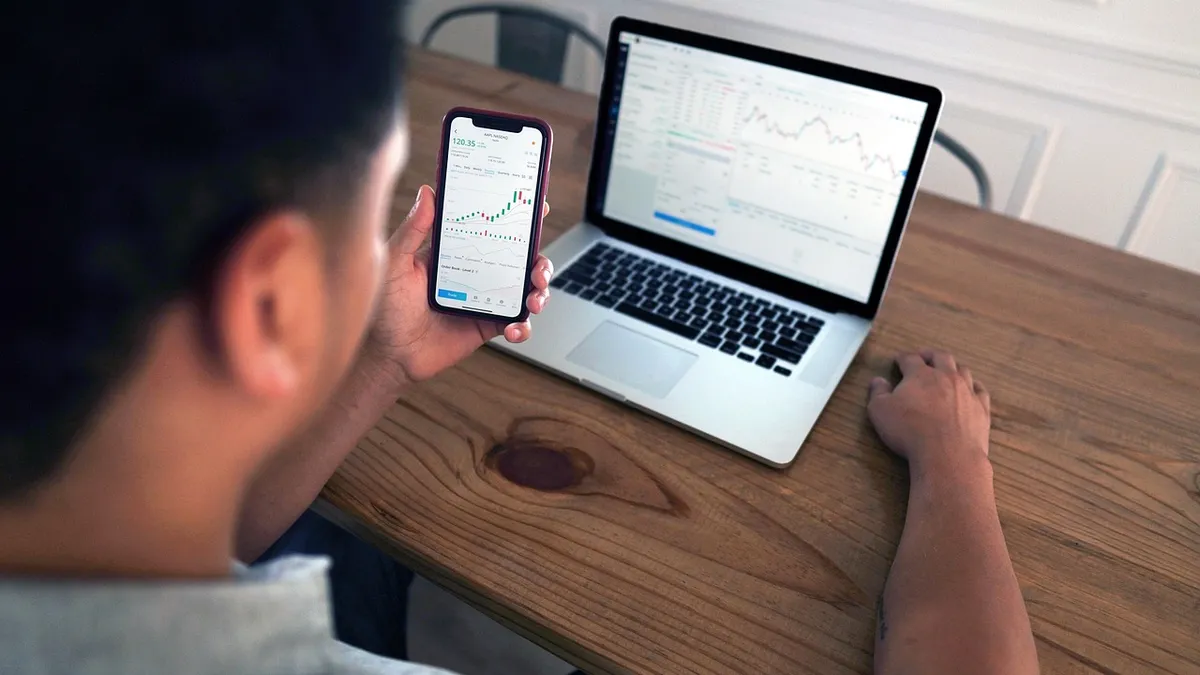
    For traders who want to go deeper on evaluating specific TradingView-based tools alongside signal providers, the guide on best trading signals and TradingView indicators ranked this year walks through the specific tools worth considering.
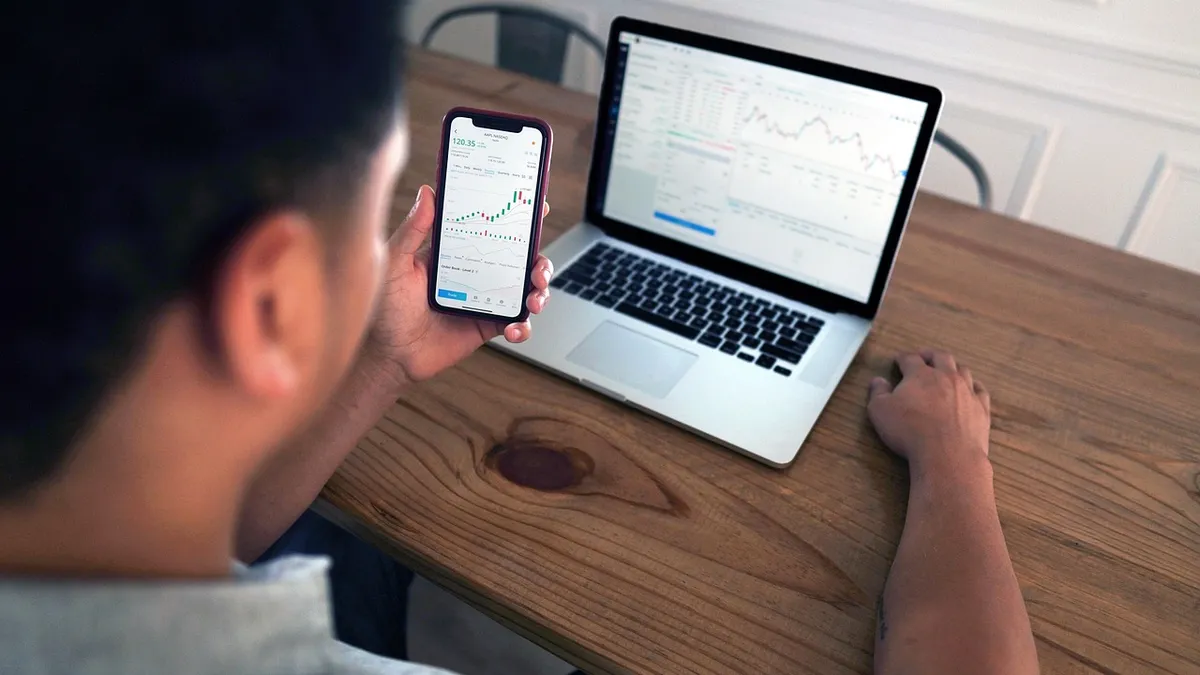
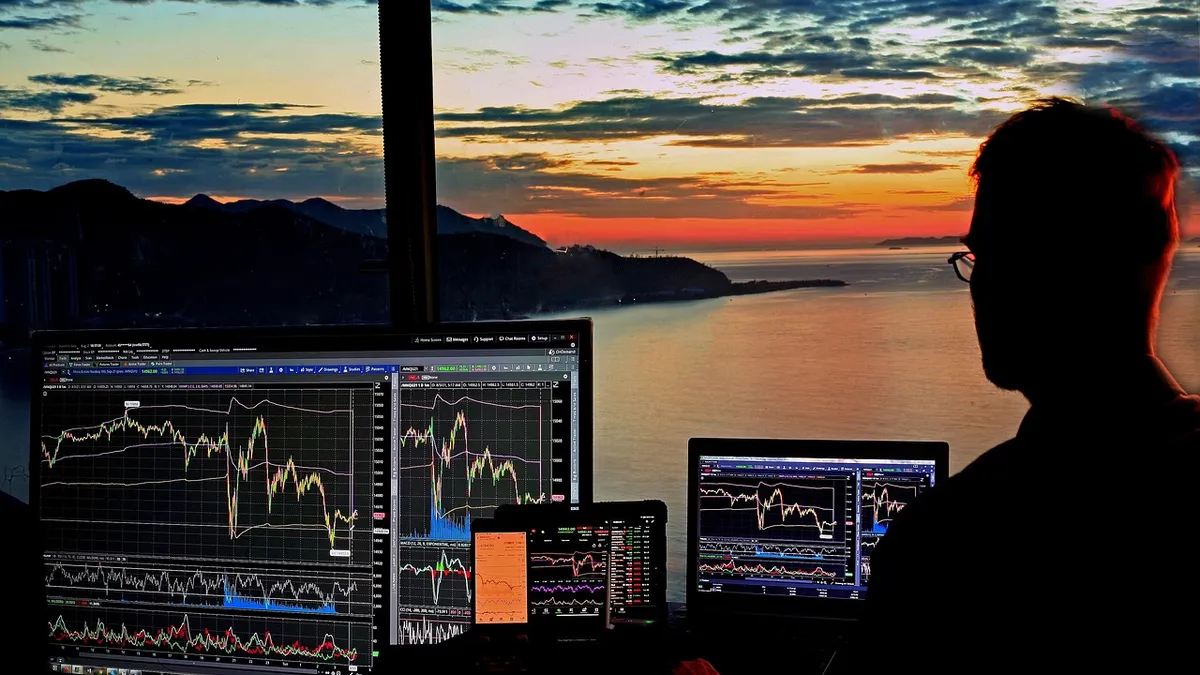
    how to evaluate trading signal providers step by step Crazii JTVertex
    A structured evaluation process helps you separate verified trading signal providers from those relying on self-reported results. · Photo: TheInvestorPost / Pixabay

    Ready to look at signals through a platform built for it?

    AIMS gives you access to a regulated trading environment where you can evaluate and execute signals with proper risk controls in place.

    Open an AIMS account
    You now have a framework for evaluating providers. But even with the right provider, there are four mistakes that consistently destroy accounts — and mistake number three is the one almost nobody talks about.

    What are the most costly mistakes traders make when following signals?

    What are the most costly mistakes traders make when following signals?
    💡

    Key points: The most damaging mistakes when following trading signals are over-leveraging relative to the signal’s risk settings, ignoring stop-losses because “the trade looks like it will recover,” following too many signal sources simultaneously, and failing to account for fee drag on net returns. Each of these can turn a genuinely profitable signal into a losing experience.

    Meet James. He is a 34-year-old project manager in Brisbane who started following a forex signal service in early 2024. The provider had a solid track record — 14 months of verified results on MetaTrader, a reasonable drawdown, and clear entry and exit levels. James did everything right in the evaluation phase. Then he made three of the four mistakes below.
    Mistake 1
    Over-leveraging relative to the signal’s risk settings

    Most signal providers calibrate their risk-per-trade to a specific account size or percentage. James was using 3x the suggested position size because he wanted faster results. When the provider hit a drawdown period — which every provider eventually does — James’s account dropped far harder than the signal’s own track record suggested. The signal was performing as advertised. James’s account was not.

    Mistake 2
    Moving or removing stop-losses mid-trade

    The signal said: entry at 1.0850, stop at 1.0820, target at 1.0910. James watched the trade go against him to 1.0825 and moved his stop to 1.0790 because he “felt” the trade would recover. It did not. This is the single most common way traders take a signal with a defined risk and turn it into an undefined loss. The stop-loss is not optional.

    Mistake 3
    Following multiple conflicting signal sources simultaneously

    James subscribed to three signal channels at once. One said buy EUR/USD. Another said sell. The third said wait. He ended up with contradictory positions open at the same time, hedging himself into guaranteed losses on fees.

    This is a trap that catches traders who are still searching for who gives best trading signals rather than committing to one verified source. One signal source, evaluated properly and followed consistently, almost always outperforms the noise of three mediocre ones.

    Mistake 4
    Ignoring the cumulative cost of fees

    Recall from the ASIC data: fees flipped 5% of otherwise-profitable retail clients into a net loss in FY2023–24. James was paying a monthly subscription, plus spreads, plus swap fees on positions held overnight. He had never calculated whether the signal’s historical edge was large enough to survive all three. It was not, at his position sizes.

    The evidence: Among active retail CFD traders in Australia — those with 50 or more open positions per month — 19% of those who would otherwise have been profitable ended up losing money after fees (ASIC Report 828, January 2026). Higher trading frequency does not improve outcomes; it typically worsens them through fee accumulation.

    Expert tip from Crazii JTVertex: We has a rule for clients who are new to signal-following: paper-trade the signals for 30 days before going live, and during that period, write down every time you would have moved a stop or exited early. At the end of 30 days, calculate what your actual P&L would have been versus what the signal’s P&L was. The gap between those two numbers is the cost of your own psychology. It is almost always larger than people expect.
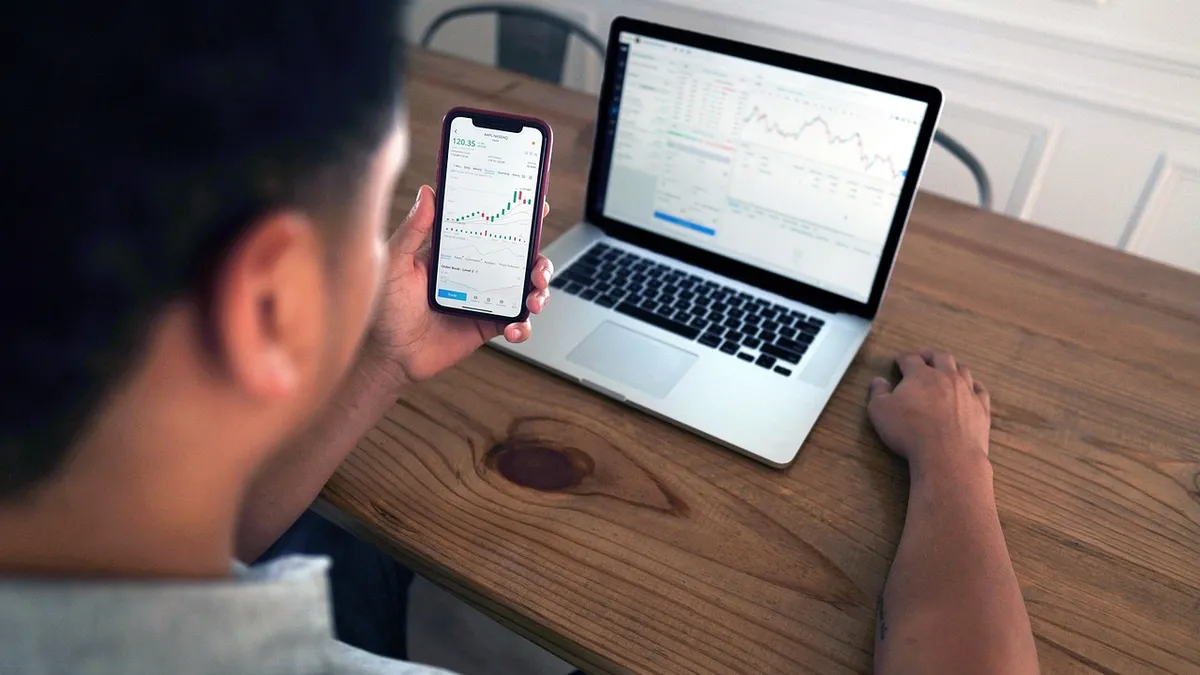
    James eventually got back on track — but only after simplifying to one signal source, respecting the position sizing, and setting a rule that his stops could never be moved further from entry. That is the after. The bridge was recognising that the signal was not the problem; the execution was. For traders building a more systematic approach to avoiding these mistakes, the article on how to build a trading system from scratch in 9 steps gives a structured framework that complements any signal service.
    common mistakes following trading signals Australian traders Crazii JTVertex
    Understanding the most common signal-following mistakes helps Australian traders protect their capital even when using a verified provider. · Photo: TheInvestorPost / Pixabay

    Which type of signal source suits Australian traders in 2026?
    Which type of signal source suits Australian traders in 2026?
    💡

    Key points: For Australian traders in 2026, the most suitable signal source depends on available screen time, instrument preference, and experience level. Part-time traders with limited screen time often benefit most from copy trading or broker-integrated alerts. Active traders with technical knowledge get more from algorithmic systems with clear methodology. Both groups need to verify the source before committing capital.

    Right, so who is this actually for? If you are reading this, you are probably not a full-time institutional trader with a team of analysts. You are likely trading around a job, a family, and the general chaos of life in Australia. That context matters enormously when choosing a signal source — and it shapes the answer to who gives best trading signals for your specific situation. For part-time traders — people who can check their phone between meetings but cannot stare at charts all day — copy trading through a verified platform is often the most practical option. You set your risk parameters, connect to a master trader whose track record you have verified, and the trades execute automatically. The key word there is “verified.” The 26,243 Australian retail clients using copy trading in FY2023–24 were not all having the same experience. The ones who did their due diligence on the master trader they were copying fared meaningfully better than those who picked based on recent returns alone. For traders with more screen time and some technical background, algorithmic signal systems tied to specific indicators — RSI crossovers at the standard 30/70 thresholds, moving average confluence, volume-weighted setups — give you more control over what you are following and why. You can backtest the logic. You can understand when the signal is likely to fail. That understanding is itself a form of edge. For traders who are newer to the market, we would say this plainly: start with a tool, not a signal. A good indicator that teaches you to read price action is more valuable long-term than a signal that tells you what to do without explaining why. The why is what you take with you when the signal provider disappears or changes their approach.

    The evidence: The Australian CFD client base has contracted significantly — from approximately 515,000 active clients per quarter before ASIC’s product intervention measures (in the 12 months before March 2021) to 119,300 active clients per quarter in FY2023–24 (ASIC Report 828, January 2026). The traders who remained active through that contraction are, on average, more experienced and more selective about the tools and signals they use.

    Expert tip from Crazii JTVertex: Crazii JTVertex’s view on this is straightforward: the best signal source for an Australian part-time trader in 2026 is one that comes with an explanation. Not just “buy EUR/USD at 1.0850” but “buy EUR/USD at 1.0850 because price has retested the 4H demand zone, RSI is recovering from below 30, and the London session open is in 45 minutes.” That explanation is what lets you build judgment over time, rather than staying dependent on someone else’s calls forever.
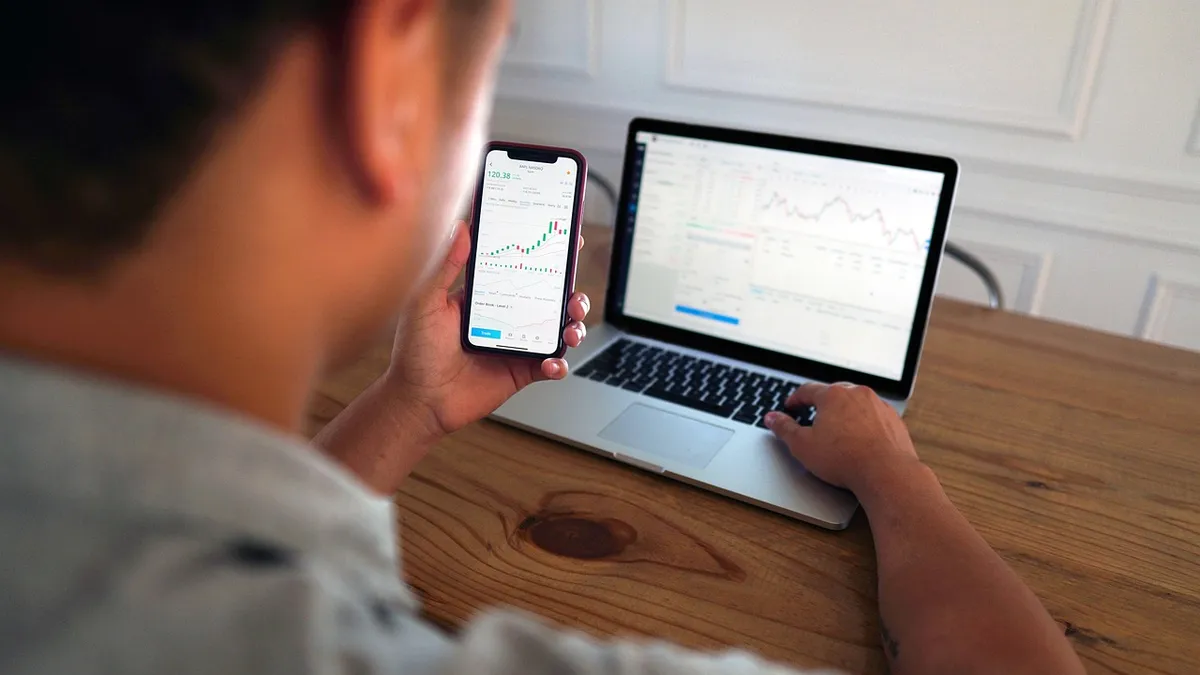
    Not everyone is suited to signal-following, and we thinks it is worth saying that plainly. If you cannot follow a stop-loss consistently — if you know from experience that you will move it when the trade goes against you — then copy trading (where the execution is automated) is a better fit than manual signal-following. Self-knowledge here is a genuine edge. For traders who want to see how the world’s top signal sources compare specifically for the Australian market, the best trading signals in the world ranked for Aussie traders in 2026 gives a direct comparison across the leading providers.
    best trading signal sources for Australian traders 2026 Crazii JTVertex
    Matching the right signal source type to your trading style and available time is the first step to using signals effectively in 2026. · Photo: TheInvestorPost / Pixabay

    Frequently asked questions about trading signals
    Frequently asked questions about trading signals

    Can trading signals guarantee a profit?

    No signal provider can guarantee profit. Trading CFDs and leveraged products carries significant risk, and even verified providers with strong track records experience losing periods. ASIC data shows 68% of Australian retail CFD clients lost money in FY2023–24, regardless of the tools they used.

    How many trades should a signal provider have on record before I trust them?

    In we’s view, a minimum of 100 closed trades is a reasonable starting point for evaluation. Fewer trades make it difficult to distinguish genuine edge from a short-term lucky run, particularly in trending market conditions.

    Is copy trading the same as following trading signals?

    They are related but different. Copy trading automatically replicates another trader’s live positions in your account. Trading signals give you entry, stop-loss, and take-profit levels that you execute manually. Copy trading removes execution discretion; manual signals require you to act on each alert yourself.

    Are free trading signals worth following?

    Some free signals have genuine value, particularly those provided through verified platforms like MetaTrader’s signals marketplace. However, free signals require the same evaluation criteria as paid ones — track record, drawdown, sample size, and methodology. Free does not mean low-risk.

    What should I do if a signal goes against me immediately after entry?

    Follow the stop-loss as defined by the signal. Moving or removing a stop-loss because a trade is temporarily in drawdown is one of the most common ways traders turn a defined risk into an undefined loss. If you cannot follow the stop consistently, consider copy trading where execution is automated.

    Want to talk through your signal setup with someone who has done this?

    Crazii JTVertex is available for direct conversation — whether you want to review a signal provider, discuss platform options, or build a clearer trading approach.

    Get in touch

    General information disclaimer: The content on this page is general information only and does not take into account your personal financial situation, objectives, or needs. It is not personal financial advice. Trading leveraged products such as CFDs carries a high level of risk and may not be suitable for all investors. You may lose more than your initial deposit. Please read the relevant Product Disclosure Statement and consider seeking independent financial advice before making any trading decisions. Past performance is not indicative of future results.
  • Best Trading Signals Site Tested by Traders Over 6 Months

    Best Trading Signals Site Tested by Traders Over 6 Months

    The best trading signals site isn’t the one with the flashiest dashboard — it’s the one that holds up when real money is on the line, over months, not days. After six months of systematic testing across multiple platforms, Crazii JTVertex brings you a ground-level account of what actually works for Australian retail traders in 2026. This isn’t a list recycled from a press release. Every platform assessed here was run through live conditions, with real positions, real drawdowns, and real fees eating into real accounts. By the time you finish reading this review, you’ll know exactly which signals site fits your situation — and which ones will quietly bleed your account dry before you realise what’s happening.

    Note: This article is general information only and does not constitute personal financial advice. Trading CFDs, forex, and related instruments carries significant risk. According to ASIC Report 828, 68% of retail CFD clients in Australia lost money in FY2023–24. Please consider your own financial circumstances and read all relevant disclosure documents before trading.

    Start with the right tools, not the wrong platform

    Crazii JTVertex helps Australian traders build a structured approach — signals first, platform second. Join the community and get oriented before you commit capital.

    Join the Support Group
    Table of contents

    What makes the best trading signals site worth trusting after 6 months?

    What makes the best trading signals site worth trusting after 6 months?
    💡

    Key points: The best trading signals site earns trust through consistent methodology, transparent track records, and verifiable performance across changing market conditions — not a single hot streak. Six months of live testing separates genuine edge from lucky timing.

    Meet James. He’s a 34-year-old electrician from Brisbane who started trading forex on the side in early 2025. He found a signals Telegram channel with 12,000 subscribers, followed every alert for three weeks, and turned $3,000 into $4,100. He thought he’d cracked it. By month four, he was down to $1,800. The signals hadn’t changed. The market had. That’s the problem with evaluating any signals site over a short window. A provider can look extraordinary during a trending market and collapse the moment volatility shifts. Minn tested this exact pattern across six platforms over six months — and the gap between month one and month six performance was, in some cases, staggering. So what separates a genuinely reliable signals site from one that’s riding conditions? Three things held up across every platform tested. First: methodology transparency. The best providers explain their entry logic — whether it’s a moving average crossover, a breakout confirmation, or a fundamental trigger. If a site just sends “BUY EURUSD at 1.0842, SL 1.0810, TP 1.0910” with no context, you’re flying blind. You can’t learn from it, you can’t adapt it, and you can’t verify whether the logic still applies when conditions shift. Second: drawdown disclosure. Any provider worth following publishes their maximum drawdown alongside their win rate. A 70% win rate means nothing if the losing 30% wipes out three months of gains. This is the number most signals sites bury — or omit entirely. Third: longevity of the track record. Minn’s personal heuristic — not a statistical fact, just a working rule — is to ignore any provider with fewer than 100 completed trades on record. Under that threshold, you’re looking at noise, not signal.

    The evidence: According to ASIC Report 828, 68% of retail CFD clients in Australia lost money in FY2023–24, with net losses exceeding $458 million across the sector. That’s not a failure of trading strategy alone — it reflects how many traders enter without a structured, tested framework for decision-making. A signals site, used correctly, is one layer of that framework. It is not a substitute for it.

    Expert tip from Crazii JTVertex: One thing most reviews won’t tell you: the best signal providers often have the most boring dashboards. The flashy ones — real-time charts, animated win counters, leaderboards — are almost always designed to sell subscriptions, not improve your trading. Minn noticed that the three platforms with the highest retention among serious traders had interfaces that looked like they were built in 2018. That’s not a coincidence.

    1

    Check the track record length first

    Before reading a single win rate, find out how many completed trades the provider has on record. Under 100 trades, the data is too thin to trust. This one filter removes most of the noise immediately.

    2

    Look for drawdown figures, not just win rates

    A win rate without a maximum drawdown figure is like a car review that only mentions top speed. Ask specifically: what was the worst losing streak, and how long did recovery take?

    3

    Test across at least one full market cycle

    Six months is the minimum viable window. You need to see how a provider performs across both trending and range-bound conditions. One good month in a trending market proves nothing.

    best trading signals site tested by Australian traders over 6 months Crazii JTVertex
    Six months of live testing reveals what short-term reviews of trading signals sites cannot. · Photo: AhmadArdity / Pixabay
    James, by the way, didn’t quit. He joined the Crazii JTVertex community, rebuilt his approach from scratch, and started treating signals as one input — not the whole strategy. We’ll come back to what happened next.

    How do trading signals sites compare — and which ones actually held up?

    How do trading signals sites compare — and which ones actually held up?
    💡

    Key points: When comparing trading signals sites head-to-head, the key differentiators are signal frequency, asset coverage, delivery method, transparency of methodology, and fee structure. Platforms that scored well on all five consistently outperformed those that excelled on only one or two.

    Want a structured comparison before you commit?

    The best trading signals and tools for Australian traders in 2026 guide covers the full landscape — platforms, tools, and how to stack them correctly.

    Read the Full Guide
    Right. So which sites actually held up? Minn isn’t going to name every platform tested here — some are under ongoing review, and naming a provider only to retract it six weeks later helps nobody. What minn will do is lay out the framework used to compare them, because that framework is what you actually need. The comparison ran across five dimensions: signal frequency, asset coverage, delivery method, methodology transparency, and fee structure. Each platform was scored across these five dimensions monthly, then averaged over the six-month period.
    Evaluation Dimension What to look for Red flag
    Signal frequency 3–8 signals per day for active traders; fewer for swing traders More than 15/day — quantity over quality
    Asset coverage Covers the pairs/instruments you actually trade Dozens of assets but thin analysis on each
    Delivery method Push notification or Telegram with clear entry/SL/TP Email-only with 20-minute delays
    Methodology transparency Entry logic explained; indicator basis stated “Proprietary algorithm” with no further detail
    Fee structure Flat monthly fee, clearly disclosed Per-trade fees or percentage of profit
    The platforms that scored highest on methodology transparency consistently delivered the most consistent six-month results. That wasn’t a surprise. When you understand why a signal is being generated, you can apply judgement about whether to act on it. When you don’t, you’re just following instructions — and instructions fail the moment conditions change. The MetaTrader signals marketplace is worth a specific mention here. With over 3,200 free and commercial signals available on MT5 alone (MetaQuotes, MQL5, accessed June 2026), the volume is not the problem. The problem is curation. Most traders browsing that marketplace are comparing win rates and monthly returns without looking at the number of trades underlying those figures. A provider showing 89% win rate on 11 trades is statistically meaningless. That’s not a win rate — that’s a sample size error.

    The evidence: ASIC Report 828 noted that 26,243 retail clients used copy trading in FY2023–24, described as “a growing interest.” Copy trading and signal following are functionally similar in terms of risk exposure — you’re delegating decision-making to another party. The regulatory concern is the same: retail clients may not fully understand the risks they’re inheriting.

    Expert tip from Crazii JTVertex: Here’s something minn learned the hard way: a signals provider with a 58% win rate and a 1:2 risk-reward ratio will outperform a 75% win rate provider with a 1:0.8 ratio over any meaningful sample. Minn spent two months chasing high win rates before running the actual maths. The number that matters is expectancy — not win rate in isolation. Most signals sites don’t publish expectancy figures. The ones that do are almost always worth a closer look.

    For Australian traders specifically, the delivery timing matters more than most international reviews acknowledge. If a signals site is optimised for London or New York session opens, the alerts may arrive at 3am AEST. That’s not a minor inconvenience — it’s a structural mismatch. The best trading signals site for an Australian trader is the one that aligns with the sessions you’re actually awake for. If you want to understand how Trustpilot ratings factor into this evaluation, the best trading signals Trustpilot ratings decoded for smart traders breaks down exactly what those scores mean — and what they consistently miss.
    trading signals site comparison framework for Australian retail traders Crazii JTVertex
    Comparing signals sites across five dimensions over six months reveals patterns that short-term reviews cannot. · Photo: Pexels / Pixabay

    What mistakes do Australian traders make when choosing a signals provider?

    What mistakes do Australian traders make when choosing a signals provider?
    💡

    Key points: The most common mistakes Australian traders make when selecting a signals provider include chasing recent win rates, ignoring fee drag, selecting providers misaligned with their trading session, and treating signals as a complete strategy rather than one input among several.

    You’re reading this, and maybe you’re thinking: I already know to check win rates and drawdowns. Fair enough. But the mistakes that actually cost Australian traders money aren’t the obvious ones.
    Mistake 1
    Evaluating performance without accounting for fees

    ASIC Report 828 found that 5% of retail clients would have made a net profit in FY2023–24 but ended up in a loss position solely because of fees. Think about that for a moment — one in twenty traders who were doing everything right got flipped into a loss by the cost of trading. Among active traders placing 50 or more open positions per month, that figure rose to 19%. If you’re following a high-frequency signals provider, fees are not a footnote. They are the margin between profitable and not.

    Mistake 2
    Treating signals as a substitute for a trading plan

    A signal tells you where to enter and where to exit. It does not tell you how much to risk, how many concurrent positions to hold, or what to do when the market gaps past your stop-loss overnight. Traders who follow signals without a surrounding risk framework are essentially outsourcing the most important decisions while keeping the most dangerous ones — position sizing and emotional management — entirely to themselves.

    Mistake 3
    Selecting a provider based on a single month of results

    One month of strong performance in a trending market tells you almost nothing about how a provider will perform in a choppy, range-bound environment. This is exactly the trap James fell into. Three weeks of gains, four months of losses — not because the signals got worse, but because the market changed and the provider’s methodology wasn’t designed for that regime.

    Mistake 4
    Ignoring session alignment

    Australia sits in a time zone that makes the London and New York sessions inconvenient for most retail traders. A signals provider optimised for those sessions will generate alerts at times that are either too early or too late for execution at the stated price. Slippage compounds this problem. The best signals site for someone in Sydney is not the same as the best signals site for someone in London.

    The evidence: ASIC Report 828 found that 74% of new retail clients acquired via paid online advertising lost money in FY2023–24 — worse than the sector average of 68%. This is relevant because most signals sites market themselves heavily through paid ads. The clients most likely to be drawn in by a flashy signals promotion are, statistically, the clients most likely to lose money.

    Expert tip from Crazii JTVertex: Minn’s honest admission: the first signals provider minn paid for was chosen entirely based on a YouTube testimonial and a 30-day refund policy. No track record check. No methodology review. No session alignment assessment. The refund policy was real — minn used it on day 28. The lesson cost less than it could have, but it cost time that minn won’t get back. Don’t let the refund window substitute for due diligence before you subscribe.

    James made mistakes two and three simultaneously. He had no position sizing framework, and he evaluated the provider after three weeks. When the market shifted from trending to ranging, the signals kept coming — but the context had changed, and James didn’t have the framework to recognise it. For traders who want to go deeper on TradingView-based signals specifically, the best trading signals TradingView indicators ranked this year covers the technical side in detail.
    common mistakes when choosing a trading signals provider in Australia Crazii JTVertex
    Fee drag and session misalignment are the two most underestimated factors when selecting a signals provider. · Photo: Pexels / Pixabay

    How do you evaluate signal quality before risking real money?

    How do you evaluate signal quality before risking real money?
    💡

    Key points: Evaluating signal quality before committing real capital requires paper trading for a minimum of four weeks, tracking expectancy rather than win rate, and verifying that the provider’s stated results match independently observable market data.

    Not sure where to start? That’s exactly the right place to be.

    Crazii JTVertex walks Australian traders through the signals evaluation process step by step — no jargon, no pressure. The best trading signals group on Telegram worth joining in 2026 is where the conversation happens.

    Start with Crazii
    Here’s the question most traders skip: how do you know if a signal is good before it costs you money to find out? Paper trading. Four weeks minimum. This sounds obvious. Almost nobody does it properly. The reason paper trading gets skipped is psychological — when you’re not using real money, the emotional feedback isn’t there, and so the results feel meaningless. But that’s exactly why it’s valuable. You’re collecting data without the emotional noise that distorts judgement when real capital is at stake. What to track during paper trading:
    1

    Record every signal — acted on or not

    Don’t just track the ones you would have taken. Track all of them. This reveals whether the provider’s stated results are selective — whether they’re counting only the winners and quietly omitting the losers.

    2

    Calculate expectancy, not win rate

    Expectancy = (Win rate × Average win) – (Loss rate × Average loss). A positive expectancy means the strategy has edge. A negative expectancy means you’ll lose money over time regardless of how good any individual trade looks. This is the only number that matters for long-term viability.

    3

    Cross-reference signals against the chart

    After each signal fires, open the chart and verify that the entry, stop-loss, and take-profit levels are technically coherent. Does the stop sit below a logical support level? Is the take-profit at a plausible resistance? If the levels are arbitrary, the methodology is arbitrary.

    4

    Note the time of delivery

    Record the exact time each signal arrives and the price at that moment. Then check: could you have entered at the stated price, or had the market already moved? Signals that arrive after the move has happened are useless — and some providers know this.

    The evidence: The RSI — one of the most commonly referenced indicators in signals — uses 30 as the oversold threshold and 70 as the overbought threshold, as defined by J. Welles Wilder. Any signals provider citing different thresholds as standard is either using a non-standard configuration (which should be disclosed) or doesn’t understand the indicator they’re applying.

    Expert tip from Crazii JTVertex: Minn ran a specific test during the six-month evaluation: for each provider, minn checked whether the stated entry price was achievable within five minutes of the signal being delivered. Two providers failed this test consistently — their signals were technically correct but practically impossible to execute at the stated price because of the delay between generation and delivery. That’s not a signals quality problem. That’s an infrastructure problem. And it matters just as much.

    This is also where the distinction between a signals site and a signals tool matters. A TradingView indicator that generates alerts based on a defined rule set is different from a human analyst sending Telegram messages. Neither is inherently better — but the evaluation process is different. For the tool-based approach, the logic is in the code and can be back-tested. For the human analyst, you’re evaluating judgement, and judgement is harder to verify.
    how to evaluate trading signal quality before risking real money Crazii JTVertex
    Paper trading for four weeks with full signal tracking reveals edge — or the absence of it — before real capital is at risk. · Photo: TheInvestorPost / Pixabay

    Why does the fee structure of a signals site matter more than the win rate?

    Why does the fee structure of a signals site matter more than the win rate?
    💡

    Key points: The fee structure of a trading signals site — including subscription costs, per-trade fees, and the spread impact of executing frequent signals — can erode or eliminate profitability even when the underlying signal quality is strong. Fees are the silent variable most traders underestimate.

    Let’s be direct about something most signals reviews won’t say plainly. A signals site can have a genuine edge and still cost you money. How? Fees. Not just the subscription fee — the cumulative cost of executing the trades the signals generate. ASIC Report 828 reported that retail CFD clients paid $73 million in fees within a total net loss of $458 million in FY2023–24. That’s not a rounding error. Fees were a material component of what turned otherwise marginal accounts into losing ones. And among the most active traders — those placing 50 or more open positions per month — 19% who would otherwise have been profitable ended up in a net loss position purely because of fee drag. Think about what that means in practical terms. If you’re following a high-frequency signals provider that generates eight to ten trade alerts per day, you’re potentially placing 200 trades per month. At a spread cost of two pips per trade on a standard lot, that’s 400 pips in transaction costs alone — before a single losing trade. That’s roughly $4,000 in costs on a $20,000 account in a single month, just from spreads. This is why minn’s personal framework weights fee structure as a primary evaluation criterion, not a secondary one.
    Fee type Visible? Impact on active traders What to check
    Subscription fee Yes Fixed monthly cost regardless of performance Is there a free trial or paper-trading period?
    Spread cost (execution) Partially Compounds with signal frequency How many signals per day? What’s the average spread?
    Overnight financing Often buried Significant for swing signals held 2–5 days Does the provider account for swap costs in stated results?
    Slippage No Worst during high-volatility signals Are signals generated around news events?

    The evidence: ASIC Report 828 specifically highlighted that 5% of retail clients in FY2023–24 would have been net profitable but were pushed into a loss position by fees. This is not a theoretical concern — it is a documented, measurable outcome affecting thousands of Australian retail traders every financial year.

    Expert tip from Crazii JTVertex: When minn evaluates a signals provider, one of the first questions asked is: do their stated results include spread and financing costs, or just pip movement? Most providers report pip movement. That overstates performance for any trader using a standard retail broker. Minn has seen providers showing 800 pips monthly profit that translated to roughly 300 pips after realistic execution costs — a very different proposition. Always ask for gross versus net figures.

    James, by this point in his journey, had rebuilt his approach. He switched from a high-frequency signals provider to one generating three to five signals per week, focused on the Asian and early London session overlap — times he could actually monitor. His execution costs dropped significantly. His results didn’t become spectacular. But they became manageable, which is the prerequisite for everything else. The signals site is the first step. The platform you execute on is the second. Getting that sequence right — tools before platform — is the foundation of a sustainable trading approach. That’s the architecture Crazii JTVertex is built around.
    trading signals site fee structure impact on Australian trader profitability Crazii JTVertex
    Fee drag from spread costs and financing can eliminate edge even when signal quality is genuinely strong. · Photo: sergeitokmakov / Pixabay

    Frequently asked questions about finding the best trading signals site

    Frequently asked questions about finding the best trading signals site
    💡

    Key points: The most common questions about trading signals sites centre on reliability, cost, risk, and how to verify performance claims. These answers reflect six months of live testing and ASIC-verified data on Australian retail trading outcomes.

    Is any trading signals site genuinely reliable for Australian traders?

    Reliability is conditional, not absolute. A signals site that performs well in trending markets may underperform significantly in ranging conditions. The most reliable providers are transparent about their methodology, publish drawdown data alongside win rates, and have a track record of at least 100 completed trades. No signals site removes the inherent risk of trading.

    How much should a good trading signals site cost per month?

    Subscription fees vary widely. The price alone tells you nothing about quality. What matters is whether the net return — after subscription fees, execution costs, and financing — is positive over a meaningful sample. A free signals provider with high execution costs can be more expensive than a paid one with low-frequency, high-quality signals.

    Can I use trading signals without any trading experience?

    Technically yes, but it carries additional risk. Signals tell you where to enter and exit — they don’t tell you how much to risk, how to manage a position that moves against you, or when market conditions have changed enough to stop following a provider. Some foundational understanding of risk management is necessary before using any signals service.

    What’s the difference between a trading signals site and a copy trading platform?

    A signals site delivers alerts that you act on manually. A copy trading platform executes trades automatically in your account, mirroring another trader’s positions. ASIC Report 828 noted 26,243 retail clients used copy trading in FY2023–24. Both approaches involve delegating decision-making — the difference is whether you retain manual execution control.

    Who should NOT use a trading signals site?

    Signals sites are not appropriate for traders who cannot monitor positions during the relevant trading session, who have no risk management framework in place, or who are expecting consistent profits without understanding the underlying risk. According to ASIC data, 68% of retail CFD clients lost money in FY2023–24 — signals alone do not change that fundamental dynamic.

    How do Telegram-based signals groups compare to dedicated signals platforms?

    Telegram groups offer speed and community but vary enormously in quality and accountability. Dedicated platforms typically provide structured track records, verification tools, and clearer methodology disclosure. For a detailed breakdown, the best trading signals group on Telegram worth joining in 2026 covers the key distinctions.

    Ready to build your trading foundation the right way?

    Crazii JTVertex works with Australian traders at every stage — from evaluating your first signals provider to structuring a complete trading approach. The conversation starts here, with no obligation and no pressure.

    Contact Crazii JTVertex

    Note: Trading CFDs, forex, and related instruments is high risk. This content is general information only and is not personal financial advice. ASIC Report 828 (January 2026) found that 68% of retail CFD clients in Australia lost money in FY2023–24, with net losses exceeding $458 million. Always consider your own financial situation and read the relevant product disclosure statement before trading.

  • Best Trading Signals AI Tools That Work While You Sleep

    Best Trading Signals AI Tools That Work While You Sleep

    The best trading signals AI tools have changed what it means to be an active trader in Australia — and if you haven’t looked at them seriously yet, you’re likely leaving real opportunity on the table every single night while the markets keep moving. At Crazii JTVertex, we’ve spent considerable time testing, comparing, and trading alongside these tools so you don’t have to start from zero. This guide on best trading signals AI tools that work while you sleep will walk you through exactly what separates the tools worth your attention from the ones that quietly drain your account — and by the end, you’ll know precisely which category each major platform falls into, and what to do next.

    Important note: This content is general information only and does not constitute personal financial advice. Trading CFDs, forex, and related instruments carries significant risk. According to ASIC Report 828 (January 2026), 68% of Australian retail CFD clients lost money in FY2023–24. Please consider your own financial circumstances and read all relevant disclosure documents before trading.

    See how serious Australian traders are approaching signals in 2026

    Crazii JTVertex has put together a free resource hub covering tools, platforms, and the signals that actually matter for the Australian market.

    Visit Crazii JTVertex
    Table of contents

    What are the best trading signals AI tools and how do they actually work?

    What are the best trading signals AI tools and how do they actually work?
    💡

    Key points: AI trading signal tools scan price data, volume, and market conditions in real time, then generate entry and exit suggestions based on pattern recognition and statistical modelling. The best tools combine multiple data inputs rather than relying on a single indicator — and they run continuously, including overnight when Australian traders are asleep.

    Think about the last time you missed a move. Not because you didn’t know the setup — but because it happened at 2:00 am Sydney time, while you were asleep, and by the time you woke up the trade had already played out. That’s the quiet cost most traders don’t talk about. Not a dramatic blowup. Just a steady drip of missed entries and poorly-timed exits because human attention has limits that markets simply don’t respect. AI trading signal tools exist to close that gap. At their core, they’re software systems that monitor price action, volume, volatility indicators, and sometimes news sentiment simultaneously — then flag conditions that match a pre-defined pattern or statistical edge. The better ones don’t just send you a ping. They explain the reasoning: which conditions triggered the signal, what the historical performance of that setup looks like, and what risk parameters are attached. The mechanism matters here. Traditional signal services often relied on a single indicator — a moving average crossover, an RSI reading below 30 indicating oversold conditions, or a breakout above a key level. AI-driven tools layer multiple signals together and weight them dynamically. An RSI reading of 28 might be ignored if volume is declining and the broader trend is bearish. That same reading combined with a volume spike and a support confluence? That’s a different conversation.

    The evidence: According to MetaQuotes, the MetaTrader platform alone hosts more than 3,200 free and commercial signal providers through its built-in marketplace (MQL5, accessed June 2026). That scale tells you something important: the demand for automated signal delivery is real and growing, but it also means the quality range is enormous. Most of those 3,200+ providers haven’t been independently verified.

    What separates genuinely useful AI signal tools from noise generators is transparency. You should be able to see a verified trade history — not a backtest, not a hypothetical equity curve, but real executed trades with timestamps. You should be able to see drawdown figures. And you should be able to see how the tool performed across different market conditions, not just during a trending bull run.

    Expert tip: Crazii JTVertex’s personal rule is to ignore any signal provider with fewer than 100 completed trades in their verified history. That’s not a statistic from anywhere — it’s a heuristic built from watching too many “promising” providers blow up after 30 trades when conditions shifted. Under 100 trades, you’re not reading performance. You’re reading luck. This is the author’s personal opinion, not a guarantee of outcomes.

    The other thing worth understanding: AI signal tools are not autonomous trading systems unless you connect them to an automated execution layer. Most deliver a signal — you still decide whether to act. That distinction matters enormously for how you think about risk management.
    best trading signals AI tools overview Crazii JTVertex
    How AI trading signal tools process market data to generate actionable entries and exits · Photo: 3844328 / Pixabay

    Which AI trading signal platforms are worth using for Australian traders in 2026?

    Which AI trading signal platforms are worth using for Australian traders in 2026?
    💡

    Key points: For Australian traders, the most relevant AI signal platforms integrate with ASIC-regulated brokers, support the instruments Australians actually trade (forex pairs, indices, commodities), and provide transparent verified performance data. The MetaTrader ecosystem, dedicated signal aggregators, and broker-integrated AI tools each serve different trader profiles.

    Here’s where most comparison articles go wrong. They list every platform alphabetically, assign star ratings, and leave you more confused than when you started. So let’s be direct about what actually matters for your situation as an Australian trader. The first consideration is regulatory compatibility. Any signal tool you use needs to work cleanly with an ASIC-regulated broker. That means MT4/MT5 compatibility is often non-negotiable — the majority of ASIC-regulated CFD brokers in Australia run on MetaTrader infrastructure. The built-in MT5 Signals marketplace (hosted by MetaQuotes at mql5.com) gives you access to thousands of signal providers with verified live-account performance data. You can filter by drawdown, by instrument, by number of subscribers, and by profit factor. The second consideration is instrument coverage. Australian traders tend to focus on AUD/USD, AUD/JPY, gold (XAU/USD), and major indices like the S&P 500 and ASX-adjacent instruments. Not every AI signal tool covers all of these with equal depth. Some are forex-heavy; others are built primarily for equities. Know what you’re trading before you subscribe.
    Platform type Best for Key strength Watch out for
    MT4/MT5 Signals marketplace Traders already on MetaTrader Verified live-account history, 3,200+ providers Quality varies enormously — filter carefully
    Dedicated AI signal aggregators Multi-broker users wanting curated signals Often include risk scoring and signal grading Some rely on backtests rather than live data
    Broker-integrated AI tools Beginners wanting an all-in-one setup Seamless execution, no third-party integration needed Limited to that broker’s instruments and spreads
    Copy trading platforms Traders who want hands-off signal following Automatic execution, no manual entry required You share in the provider’s drawdowns too

    The evidence: ASIC Report 828 (January 2026) recorded 26,243 Australian retail clients using copy trading in FY2023–24 — a figure ASIC itself described as reflecting “a growing interest in copy trading.” To put that in perspective: that’s roughly one in five active CFD clients choosing to follow someone else’s signals rather than trade independently.

    The third consideration is cost structure. Signal subscriptions range from free to several hundred dollars per month. Crazii JTVertex’s view is that the cost of a signal service is only meaningful relative to the edge it provides — but be aware that fees compound quickly. ASIC’s data shows fees were a $73 million component of the $458 million in net retail losses in FY2023–24. That’s roughly $547 in fees per losing client, on average — and that’s before you add signal subscription costs on top. For Australian traders looking at the full ecosystem of tools and platforms, the best trading signals and tools for Australian traders in 2026 pillar guide covers this in considerably more depth, including platform-specific recommendations.

    Ready to connect with a signals community built for serious traders?

    Join the Crazii JTVertex group chat for real-time discussion, signal ideas, and support from traders who are actually in the market.

    Join the Telegram group
    AI trading signal platforms comparison for Australian traders Crazii JTVertex
    Comparing the main categories of AI signal platforms available to Australian retail traders in 2026 · Photo: 3844328 / Pixabay

    What mistakes do traders make when using AI trading signals?

    What mistakes do traders make when using AI trading signals?
    💡

    Key points: The most costly mistakes with AI trading signals aren’t technical — they’re behavioural. Traders override signals when they “feel wrong,” subscribe to providers based on short track records, and ignore how fees erode performance. Understanding these patterns is what separates traders who benefit from signals from those who simply add another cost.

    Let me tell you about Marcus. Marcus is a 34-year-old electrician from Brisbane who started trading forex in 2023. He’s sharp, disciplined in his day job, and genuinely interested in markets. He subscribed to an MT5 signal provider with a six-month track record showing 40% returns. The provider had 800 subscribers. It looked legitimate. Three months later, Marcus had lost a significant portion of his starting capital. Not because the signals were fraudulent. Because the provider’s strategy worked in trending markets and completely fell apart during the choppy, range-bound conditions that dominated for much of that period — and Marcus had no framework for knowing when to pause following. Marcus’s story isn’t unusual. It’s the pattern.
    Mistake 1
    Choosing a signal provider based on short-term returns alone

    A six-month track record during a trending market tells you almost nothing about how a strategy performs in different conditions. Minn’s personal heuristic: look for at least 100 completed trades across varied market conditions before trusting a provider with real capital. Fewer trades than that and you’re reading a lucky streak, not an edge.

    Mistake 2
    Ignoring drawdown in favour of profit percentage

    A signal provider showing 80% annual returns means very little if the maximum drawdown was 60% of the account along the way. Most traders can’t psychologically or financially survive a 60% drawdown — they exit at the worst point and lock in the loss. Always check peak-to-trough drawdown figures before subscribing.

    Mistake 3
    Treating AI signals as a replacement for understanding

    This is the most expensive mistake. ASIC data shows that among active traders executing 50 or more open positions per month, 19% of those who would have been profitable before fees ended up losing once fees were counted (ASIC Report 828, January 2026). More activity, more signals followed, more fees — and worse outcomes. AI signals work best as a filter and a prompt, not as a substitute for knowing why a trade makes sense.

    Expert tip: Crazii JTVertex has made Mistake 3 personally. Early on, minn followed every signal from a well-rated provider for an entire month — including signals on instruments minn didn’t understand well. The signals that worked felt like skill. The ones that didn’t felt like the tool’s fault. Neither was true. The discipline to skip signals outside your core instruments is something no AI can enforce for you. This is personal experience, shared as a heuristic, not financial advice.

    ASIC’s data makes the fee point concrete: in FY2023–24, fees flipped 5% of otherwise-profitable retail clients into a loss. Among active traders, that figure rose to 19%. To translate that into plain terms: if you’re trading frequently and following signals aggressively, fees alone can be the difference between finishing the year up or down — regardless of whether the signals themselves were good. Marcus eventually came back to trading. He narrowed his focus to two instruments, chose a provider with an 18-month verified history, and set a personal rule to pause signal following during major news events. He’s still trading. That’s a better outcome than most.
    common mistakes using AI trading signals Australia Crazii JTVertex
    The three most costly mistakes Australian traders make when following AI-generated trading signals · Photo: TheInvestorPost / Pixabay

    How do you evaluate an AI trading signal before trusting it with real money?

    How do you evaluate an AI trading signal before trusting it with real money?
    💡

    Key points: Evaluating an AI trading signal provider requires checking verified live-account history (not backtests), drawdown depth, trade frequency, fee impact, and instrument specificity. A structured evaluation process before committing capital is the single most effective risk-management step a trader can take with signal tools.

    So you’ve found a signal provider that looks promising. The equity curve slopes upward. The subscriber count is respectable. The monthly return figures look solid. What do you actually check before putting real money behind it?
    1

    Verify that the track record is from a live account, not a demo or backtest

    This is non-negotiable. Backtests are optimised to look good in hindsight — they don’t account for slippage, spread widening, or the psychological reality of following a drawdown in real time. On the MT5 Signals marketplace, providers are required to link to a live or real account. Check that the account type is marked as “real.” If a provider can’t or won’t show live-account performance, move on.

    2

    Look at maximum drawdown, not just profit

    A drawdown of 20% or more is a flag worth pausing on — not necessarily a disqualifier, but a reason to ask whether you could hold through that kind of loss without exiting early. Most retail traders can’t. The emotional experience of watching your account drop 20% from peak is very different from seeing it as a number on a performance chart.

    3

    Check trade frequency and its relationship to fees

    ASIC’s data is clear: more trading correlates with worse net outcomes for retail clients, largely because of fees. A signal provider executing 15–20 trades per day might show impressive gross returns — but after spreads, commissions, and swap fees, the net picture can look very different. Ask for or calculate the fee-adjusted return, not just the headline figure.

    4

    Confirm instrument alignment with your own trading plan

    A signal provider specialising in exotic forex pairs is not particularly useful if you trade gold and the S&P 500. Match the provider’s instrument focus to your own. Signals outside your area of understanding are signals you can’t properly evaluate — which means you can’t make an informed decision about when to follow them and when to skip.

    5

    Paper trade for two to four weeks before going live

    This step gets skipped constantly. Two to four weeks of paper trading alongside a signal provider costs you nothing and tells you a great deal: how often signals arrive, what the typical holding time is, how you respond emotionally to a losing streak, and whether the execution timing is realistic for your schedule. It also gives you a baseline to compare your live results against later.

    The evidence: ASIC Report 828 (January 2026) found that 74% of retail clients acquired through paid online advertising lost money in FY2023–24 — worse than the sector average of 68%. The implication for signal evaluation: if you found a provider through an ad rather than through community research or a trusted referral, apply extra scrutiny. Marketing spend doesn’t correlate with signal quality.

    For a deeper look at how to compare specific software options, best trading signals software compared for serious traders 2026 walks through the technical evaluation criteria in detail.

    Want a structured starting point for your signal evaluation process?

    Crazii JTVertex has partnered with AIMS to give Australian traders access to a professional trading environment with clear performance transparency.

    Explore AIMS
    evaluating AI signal providers live account verification Crazii JTVertex
    A five-step framework for evaluating AI trading signal providers before committing real capital · Photo: TheInvestorPost / Pixabay

    How do AI trading signals fit into a broader Australian trading strategy?

    How do AI trading signals fit into a broader Australian trading strategy?
    💡

    Key points: AI trading signals work best as one layer of a broader trading approach — not as a standalone system. For Australian traders, integrating signals with a clear risk management framework, an understanding of the instruments being traded, and awareness of ASIC-regulated platform options creates a more sustainable foundation than signals alone.

    Here’s a perspective that most signal-focused content won’t give you: signals are the first step, not the whole journey. Crazii JTVertex’s view is that trading tools — including AI signals — are the entry point into a more structured approach to markets. The platform you trade on, the risk parameters you set, the instruments you focus on, and the community you learn alongside all matter just as much as the quality of the signals themselves. A great signal delivered into a poorly managed account is still a losing proposition. Think of it this way. A signal tells you when a door might be opening. Your trading strategy determines whether you walk through it, how far in you go, and how quickly you leave if it turns out to be the wrong room. For Australian traders specifically, there are a few structural considerations worth keeping in mind. The Australian market session overlaps with the Asian session — which means many of the highest-volume forex moves happen outside standard working hours. AI signal tools that operate overnight are therefore particularly relevant for Australian traders in a way that’s different from, say, a UK-based trader who can watch the London open in real time. This is one of the genuine advantages of AI-driven signals for the Australian context: they don’t need to sleep when you do.

    The evidence: ASIC Report 828 (January 2026) recorded 119,300 active CFD trading clients per quarter in FY2023–24 — down 76% from approximately 515,000 per quarter before the 2021 regulatory intervention. That reduction reflects a smaller but, in theory, more informed and better-capitalised retail trading population. The traders who remained after the intervention are, on average, more serious about their approach. That’s the cohort that benefits most from structured signal tools.

    The second consideration is the relationship between signal tools and platform choice. If you’re using AI signals through an MT5 provider, you’ll need an MT5-compatible broker. If you’re using a copy trading platform, you’ll need a broker that supports copy trading infrastructure. Getting the tool-platform combination right before you start is far less painful than trying to migrate mid-strategy. Marcus — the Brisbane electrician from earlier — eventually settled on a combination of MT5 signals for overnight entries and a simple daily review process each morning. He checks what triggered overnight, reviews the open positions, and makes a conscious decision about whether to hold or close. The AI does the overnight watching. He does the morning thinking. That division of labour suits his schedule and his temperament. That’s the model worth building toward: AI signals as a filter and an overnight watchman, human judgement as the final layer. For traders wanting to see what specific signals look like in practice right now, best trading signals today that serious traders are watching now covers current setups and active opportunities. And if your focus is specifically on equities rather than forex or indices, best trading signals for stocks in Australia looks at how AI signal tools apply to the ASX and broader stock market context.
    AI trading signals integrated into Australian trading strategy Crazii JTVertex
    How AI trading signals fit as one layer within a broader, structured approach for Australian traders · Photo: TheInvestorPost / Pixabay

    Frequently asked questions about AI trading signals

    Frequently asked questions about AI trading signals
    💡

    Key points: The most common questions about AI trading signals centre on reliability, cost, regulatory compliance, and how to start safely. These answers address the practical concerns Australian retail traders raise most often before committing to a signal tool or provider.

    Are AI trading signals legal for Australian retail traders?

    Yes. Using AI trading signals and copy trading services is legal in Australia. However, any signal provider or managed account service operating in Australia and charging fees for financial services may need to hold an Australian Financial Services Licence (AFSL). Always check whether the provider you’re using is appropriately licensed before subscribing.

    Do AI trading signals guarantee profitable trades?

    No signal tool guarantees profitable trades — and any provider claiming otherwise should be treated with significant scepticism. ASIC data shows 68% of Australian retail CFD clients lost money in FY2023–24 (ASIC Report 828, January 2026). Signals improve decision-making inputs; they don’t eliminate market risk.

    How much do AI trading signal subscriptions typically cost?

    Costs vary widely. The MT5 Signals marketplace includes free providers as well as commercial subscriptions. Paid providers typically range from a small monthly fee to several hundred dollars per month for premium services. Factor subscription costs into your overall fee calculation — ASIC’s data shows fees are a material component of retail losses.

    Can I use AI trading signals if I’m a complete beginner?

    You can, but with an important caveat. Signals work best when you understand enough about the instrument and strategy to evaluate whether a signal makes sense in context. Beginners who follow signals without any underlying understanding tend to struggle when signals conflict or when market conditions shift. Starting with paper trading alongside a signal provider is strongly recommended before using real capital.

    What is the difference between AI trading signals and copy trading?

    AI trading signals deliver entry and exit suggestions that you act on manually. Copy trading automatically replicates another trader’s positions in your account proportionally. Copy trading removes the manual step but also removes your ability to filter individual trades. ASIC recorded 26,243 Australian retail clients using copy trading in FY2023–24 (ASIC Report 828, January 2026).

    Want to talk through which signal approach suits your situation?

    Get in touch with Crazii JTVertex directly — no pressure, no scripts, just a genuine conversation about where you are and what makes sense for your trading.

    Contact Crazii JTVertex

    Important note: This article is general information only and does not constitute personal financial advice. Trading CFDs, margin forex, and related instruments involves significant risk of loss. According to ASIC Report 828 (published 20 January 2026, data for FY2023–24), 68% of Australian retail CFD clients lost money, with aggregate net losses exceeding $458 million. You should consider your own financial circumstances, objectives, and risk tolerance, and read all relevant product disclosure statements before making any trading decisions. Source: ASIC Report 828, https://download.asic.gov.au/media/tq0he35c/rep828-published-20-january-2026.pdf.

  • Best Trading Signals for Forex Reviewed by Active Traders

    Best Trading Signals for Forex Reviewed by Active Traders

    The best trading signals for forex can mean the difference between a structured entry and a gut-feeling gamble that quietly drains your account over weeks. In this review, active traders across Australia share what actually works — and what looks impressive on a dashboard but falls apart under live market conditions. At Crazii JTVertex, we have spent considerable time testing signal providers, copy-trading platforms, and AI-driven alert tools so you do not have to start from scratch. This article — Best Trading Signals for Forex Reviewed by Active Traders — gives you a clear framework: by the end, you will know exactly which signal criteria to check before you copy a single trade, which red flags to walk away from, and how to build a shortlist that fits your schedule and risk tolerance. That is the promise. Let us keep it.

    Important note: This article is general information only and does not constitute personal financial advice. Trading forex CFDs and margin products carries significant risk. According to ASIC Report 828, 68% of retail CFD clients in Australia lost money in FY2023–24. Please consider your own circumstances and read the relevant Product Disclosure Statement before trading.

    Not sure where to start with signals?

    Join the Crazii JTVertex community — active traders share setups, signal reviews, and real-time discussion every day.

    Join the Group
    Table of contents

    What are the best trading signals for forex, and how do they actually work?

    What are the best trading signals for forex, and how do they actually work?
    💡

    Key points: Forex trading signals are specific entry, exit, stop-loss, and take-profit instructions generated by a trader, algorithm, or indicator. The best signals include all four components, carry a verifiable track record of at least 100 trades, and match the recipient’s trading session and risk profile.

    Picture this. Marcus, 34, an electrician from Brisbane, spent three months following a Telegram channel that posted “BUY EURUSD” with a green arrow emoji. No stop-loss. No take-profit. No context. He followed it anyway because the channel had 12,000 subscribers and the admin posted a screenshot of a winning trade every second day. By month three, Marcus had given back most of his starting capital. Here is the thing — the signal itself was not the problem. The problem was that Marcus never understood what a signal actually is, so he could not tell a good one from a dangerous one. A forex trading signal is a conditional instruction: buy or sell a specific currency pair at a specific price, with a defined stop-loss to cap your downside and a take-profit to lock in your upside. That is it. Four numbers. When any one of those four is missing, you are not receiving a signal — you are receiving an opinion with no accountability attached. The mechanism behind signal generation falls into three broad categories. Technical signals derive from price action, moving averages, RSI readings (where oversold is below 30 and overbought is above 70 on Wilder’s standard scale), support and resistance levels, and pattern recognition. Fundamental signals react to economic data releases — non-farm payrolls, CPI figures, central bank decisions. Sentiment signals aggregate positioning data, options flow, or retail-versus-institutional divergence.

    The evidence: The MetaTrader marketplace hosts more than 3,200 free and commercial signal providers across MT4 and MT5 (MetaQuotes, MQL5.com, accessed June 2026). That number sounds reassuring until you realise there is no universal vetting standard — a provider with 50 followers and three months of history sits alongside one with a five-year audited record.

    The best forex trading signals are not necessarily the ones with the highest win rate. A signal service showing 90% winners but a 1:0.3 risk-to-reward ratio will destroy your account over time. What matters is expectancy — the average amount you make per trade when you factor in both wins and losses. Crazii JTVertex looks at this number first, before anything else.

    Expert tip: We always checks whether a signal provider’s track record includes losing streaks of at least five consecutive losses. If the published history shows no drawdown period longer than two or three trades, the record has almost certainly been cherry-picked or the account was reset after a blow-up. Real trading has ugly patches. Any provider hiding that is hiding something bigger.

    So before you subscribe to anything, ask one question: can I see the full trade history, including every losing trade, for at least 100 completed positions? If the answer is no, move on.
    best trading signals for forex explained with entry exit stop-loss take-profit — Crazii JTVertex
    A complete forex signal includes entry price, stop-loss, take-profit, and the currency pair — all four components together. · Photo: sergeitokmakov / Pixabay

    How do you evaluate forex signal providers before trusting them with real money?

    How do you evaluate forex signal providers before trusting them with real money?
    💡

    Key points: Evaluate signal providers on five criteria: verified trade history of 100+ trades, maximum drawdown under 20%, risk-to-reward ratio above 1:1.5, signal delivery speed relative to your trading session, and transparency about methodology. Skip any provider who cannot show all five.

    So you have found a signal provider that looks promising. Now what? This is where most traders make their first real mistake — they look at the win rate percentage and stop there. A 70% win rate sounds impressive. But if every winning trade makes 10 pips and every losing trade costs 30 pips, that provider is losing you money at a steady, predictable rate. The maths is merciless.

    Want a structured approach to evaluating signal tools?

    Crazii JTVertex has reviewed the leading platforms available to Australian traders — from MT5 signal marketplaces to third-party alert services.

    See the Full Comparison
    Start with drawdown. Maximum drawdown tells you the worst peak-to-trough loss a provider experienced during their recorded history. We treats anything above 20% as a red flag — not because 20% is a magic number, but because it is the author’s personal heuristic based on watching accounts recover (and fail to recover) from various drawdown levels. A 30% drawdown requires a 43% gain just to get back to even. That is a hole most retail accounts never climb out of.

    The evidence: ASIC Report 828 (published January 2026, data for FY2023–24) found that among active retail traders making 50 or more open positions per month, 19% of those who would otherwise have been profitable ended up in a loss after fees. That is roughly one in five active traders undone not by bad signals, but by trading costs alone. Fees are not a footnote — they are a deciding factor.

    Think about that for a moment. One in five traders who were actually good at picking direction still lost money — purely because they traded too frequently and fees consumed the edge. That is not a signal quality problem. That is a signal selection and frequency problem. Next, look at the methodology. Does the provider explain how signals are generated — which indicators, which timeframe, which session? Or do they just post alerts with no context? Methodology transparency is not just about education. It tells you whether the provider understands their own edge or whether they are riding a lucky streak.

    Expert tip: One thing Crazii JTVertex learned the hard way: always check what time zone the signal provider operates in. A London-based provider sending signals at 8:00 AM GMT is sending them at 6:00 PM AEST. By the time you wake up in Sydney and see the alert, the entry price has moved, the spread has widened, and the original risk-to-reward calculation no longer applies. The signal was not wrong — the timing just made it irrelevant for you.

    Evaluation Criterion Minimum Acceptable Strong Signal Walk Away If
    Trade history length 100 completed trades 500+ trades, 12+ months Under 50 trades or history reset
    Maximum drawdown Under 20% (author heuristic) Under 10% Above 30% or undisclosed
    Risk-to-reward ratio 1:1.5 average 1:2 or better Below 1:1 or not stated
    Methodology disclosed Indicator or strategy named Full rules explained No explanation provided
    Session compatibility Overlaps your trading hours AEST-friendly alerts Signals arrive while you sleep
    For a deeper look at how the leading platforms stack up on these criteria, the best trading signals software compared for serious traders covers the technical breakdown side by side.
    forex signal provider evaluation criteria drawdown and risk-reward — Crazii JTVertex
    Evaluating forex signal providers requires checking drawdown, trade history length, and risk-to-reward ratio together — not win rate alone. · Photo: AhmadArdity / Pixabay

    Which forex signal tools do Australian traders actually use in 2026?

    Which forex signal tools do Australian traders actually use in 2026?
    💡

    Key points: Australian retail forex traders primarily use MT4/MT5 built-in signal subscriptions, third-party alert platforms delivered via Telegram or email, and AI-driven scanners. Each has different latency, cost, and compatibility trade-offs that affect real-world performance.

    Marcus — remember him from Brisbane — eventually rebuilt his approach. He stopped following anonymous Telegram channels and started using the MT5 Signals marketplace, where every provider’s trade history is logged automatically by MetaQuotes and cannot be edited retroactively. That single change gave him verifiable data instead of screenshots. The MetaTrader Signals marketplace is the most widely used starting point for Australian retail traders, and for good reason. With more than 3,200 signal options available (MetaQuotes, MQL5.com, June 2026), you can filter by drawdown, profitability, number of subscribers, and trading history length — all from inside your trading terminal. The subscription model means trades can be copied automatically to your account in near real-time, without you needing to manually place each order. That said, MT5 Signals has a meaningful limitation for Australian traders: the majority of high-rated providers operate during European or US sessions. If you are in AEST and working a day job, you may find that signals fire between midnight and 6:00 AM. Automation handles execution, but you still need to review overnight activity and manage open positions. Third-party alert platforms — services that push signals via Telegram, SMS, or email — offer more flexibility in timing and methodology, but they shift the execution burden back to you. You receive the alert, you place the trade, you set the stop. The gap between alert receipt and order placement is where slippage lives. In a fast-moving EUR/USD market during a news event, that gap can be the difference between entering at the signalled price and entering 15 pips worse.

    The evidence: ASIC Report 828 (January 2026) recorded 26,243 retail clients using copy trading in FY2023–24 — a figure ASIC describes as reflecting “a growing interest in copy trading” among Australian retail participants. By contrast, only 121 retail clients used formal managed-account services. Copy trading via signal subscriptions is clearly the dominant model.

    That 26,243 figure is worth sitting with. It represents real Australians who moved beyond manual signal-following into automated copying — and the number is growing. The question is not whether copy trading works in principle. The question is which provider you copy, and whether their drawdown profile survives your account size. AI-driven signal scanners represent the newest category. These tools scan dozens of currency pairs simultaneously, identify technical setups based on predefined rules, and push alerts without human delay. Their edge is speed and consistency — they do not miss a setup because they were at lunch. Their weakness is that they cannot read fundamental context. An AI scanner will happily flag a EUR/USD buy signal 30 seconds before a surprise ECB rate decision wipes out the setup entirely. If you want to understand how AI tools fit into a broader signal strategy, best trading signals AI tools that work while you sleep covers the specific platforms worth considering for traders in Australian time zones.

    Expert tip: Crazii JTVertex recommends running any new signal tool in demo mode for a minimum of four weeks before committing real capital. Not two weeks. Four. The reason is that most signal providers have a “showcase” period where their best setups cluster — then revert to average performance. Four weeks is long enough to catch at least one poor patch and see how the provider responds to it.

    Australian traders using MT5 forex signal tools and copy trading platforms — Crazii JTVertex
    MT5 Signals, third-party alert services, and AI scanners each serve different trading styles — matching the tool to your schedule matters as much as the signal quality itself. · Photo: TheInvestorPost / Pixabay

    Ready to see which signal platform fits your setup?

    Crazii JTVertex has mapped the leading forex signal tools to Australian trading schedules and account sizes — so you start with the right fit, not the most popular one.

    View the Full Guide

    What are the biggest mistakes traders make when following forex signals?

    What are the biggest mistakes traders make when following forex signals?
    💡

    Key points: The three most damaging mistakes when following forex signals are ignoring position sizing, subscribing to too many providers simultaneously, and treating a signal as a guarantee rather than a probability. Each mistake compounds the others and accelerates account drawdown.

    You might be reading this and thinking: “I already know to use stop-losses. I am past the basics.” Fair enough. But the mistakes below are not beginner errors — they are the ones that catch traders who think they have already figured it out.
    Mistake 1
    Ignoring position sizing when copying signals

    A signal provider risking 2% of their $50,000 account per trade is risking $1,000. If you copy that signal with a $5,000 account and mirror the lot size, you are risking 20% on a single trade. The signal is not wrong. Your position size is catastrophically mismatched. Always scale lot sizes to your own account equity — never mirror the provider’s absolute lot size.

    Mistake 2
    Subscribing to multiple providers with overlapping pairs

    Running three signal providers simultaneously, all trading EUR/USD, does not diversify your risk — it concentrates it. If all three fire a buy signal at the same time and EUR/USD drops sharply, you have three losing positions on the same instrument. We has seen traders wipe out accounts this way while believing they were “spreading their risk.”

    Mistake 3
    Treating a signal as a certainty rather than a probability

    No signal is right every time. The best signal providers in the world have losing trades. When you treat a signal as a guaranteed outcome, you either skip the stop-loss (“it will come back”) or add to a losing position (“the signal must be right”). Both behaviours destroy accounts. A signal is a structured opinion with a defined risk — nothing more.

    The evidence: ASIC Report 828 (January 2026) found that 5% of retail CFD clients in Australia would have made a net profit but ended up in a loss purely because of fees. That is traders who picked direction correctly — and still lost. Fees are not a rounding error. At high trading frequency, they become the dominant variable in your outcome.

    Translate that into everyday terms: if you are placing 50 or more trades per month following signals, fees alone could flip you from profitable to losing — regardless of signal quality. That is not a hypothetical. ASIC documented it across 133,674 Australian retail clients in a single financial year. Marcus learned Mistake 1 the hard way. He was copying a provider who traded standard lots on a $100,000 account. Marcus had $8,000. He did not adjust. One bad week cost him more than 40% of his account before he understood what had happened. After resizing to micro-lots proportional to his equity, the same provider’s signals became manageable — same signals, very different outcome.
    common mistakes following forex trading signals position sizing and risk management — Crazii JTVertex
    Position sizing errors are the most common reason traders lose money following otherwise sound forex signals. · Photo: TheInvestorPost / Pixabay

    How do copy trading and forex signals compare for Australian retail traders?

    How do copy trading and forex signals compare for Australian retail traders?
    💡

    Key points: Copy trading automates signal execution directly in your account, removing manual entry delays but adding dependency on the provider’s live performance. Manual forex signals give you control over execution and sizing but require you to be available when alerts fire. Neither is universally better — the right choice depends on your schedule and discipline.

    Here is the question that trips up most traders deciding between copy trading and manual signals: which one is more profitable? Wrong question. The right question is: which one fits how you actually live? Copy trading via MT5 Signals or a similar automated platform executes trades in your account the moment the provider opens a position. You do not need to be at your desk. You do not need to see the alert. The trade happens. This suits traders who have a full-time job or cannot monitor markets during London and New York sessions. The trade-off is that you are entirely dependent on the provider’s judgement — their drawdown becomes your drawdown, their fees compound with yours.

    The evidence: ASIC Report 828 (January 2026) noted that 74% of retail clients acquired via paid online advertising lost money in FY2023–24 — worse than the 68% sector average. This matters for signal selection: many heavily promoted signal services run paid advertising campaigns. A provider with a large social media following or aggressive ads is not necessarily a better provider. The correlation, if anything, runs the other way.

    Manual signal following keeps you in control. You see the alert, assess whether the current market context still matches the signal rationale, adjust your lot size, and place the trade deliberately. That process takes discipline and availability. But it also means you can skip signals that arrive during illiquid conditions or immediately before a major news event — situations where automated copying will execute regardless.
    Factor Copy Trading (Automated) Manual Signal Following
    Execution speed Near-instant, no delay Depends on your availability
    Slippage risk Low (automated) Higher during volatile conditions
    Your control over sizing Limited (ratio-based) Full control per trade
    Session flexibility Runs 24/5 without you Requires you to be available
    Ability to skip bad setups No — all signals copied Yes — your discretion
    Fee exposure Provider fees + platform fees Spread + your broker’s fees
    Crazii JTVertex takes a clear position here: for most Australian traders working standard hours, a hybrid approach works best. Use copy trading for a small, defined portion of your account — perhaps one provider with a conservative drawdown profile — and follow a small number of manual signals for pairs and sessions you can actually monitor. This limits your automated exposure while keeping you engaged with the market. For traders building toward a more systematic approach, the full overview of best trading signals and tools for Australian traders 2026 covers how to layer these approaches across different account sizes. And if you are also thinking about how signal tools connect to a broader trading career — including the affiliate and referral side of the industry — best trading affiliate programmes for Australian content creators 2026 is worth a read.

    Expert tip: Crazii JTVertex specifically avoids copy trading providers who have never published a month with a net loss in their public history. Every real trader has a losing month. A provider whose published record shows 18 consecutive profitable months either started recently, restarted their account after a loss, or is only showing you the good periods. We filters these out immediately — not because they are necessarily dishonest, but because the risk profile they are presenting is not real.

    Marcus, now 18 months into a more structured approach, runs one copy-trading provider on a defined allocation and follows two manual signal channels that operate during AEST-friendly hours. He is not getting rich quickly. But he is no longer losing steadily either — and he understands exactly why each trade is in his account.
    copy trading versus manual forex signals comparison for Australian retail traders — Crazii JTVertex
    Copy trading and manual signal following serve different trader profiles — matching the method to your lifestyle determines whether the approach is sustainable. · Photo: kalhh / Pixabay

    Frequently asked questions about the best trading signals for forex

    Frequently asked questions about the best trading signals for forex
    💡

    Key points: The most common questions about forex trading signals centre on cost, reliability, compatibility with Australian brokers, how to verify provider claims, and whether signals work for part-time traders. Honest answers to these questions help you set realistic expectations before committing capital.

    Are free forex trading signals worth using?

    Free signals can be a reasonable starting point for testing a provider’s methodology and timing, but treat them as a trial rather than a long-term strategy. Many free signal channels use promotional quality to attract subscribers before upselling paid tiers. Evaluate free signals using the same criteria as paid ones — verified trade history, drawdown, risk-to-reward — and do not skip that step because the price is zero.

    How many forex signals should I follow at once?

    Minn’s personal heuristic is a maximum of two providers simultaneously, trading different currency pairs or sessions. Following more than two increases the chance of correlated losses and makes it harder to identify which provider is performing. Start with one, track it properly for at least four weeks in demo, then add a second only if the first is performing consistently.

    Do forex signals work for part-time traders in Australia?

    Yes, but session timing is critical. Most high-volume forex signals fire during London (4:00 PM–1:00 AM AEST) or New York (9:00 PM–6:00 AM AEST) sessions. If you cannot monitor those hours, copy trading automation or APAC-session signal providers are better fits. Trying to manually follow London-session signals while working a day job in Sydney rarely ends well.

    How do I know if a forex signal provider’s track record is genuine?

    Look for records hosted on third-party verified platforms — MT5 Signals, Myfxbook with broker-verified accounts, or FX Blue. Screenshots of trades are not evidence. A provider who cannot point you to a third-party verified record has not proven anything. Broker-verified means the platform connected directly to the trading account and recorded every trade automatically.

    What is a realistic expectation for forex signal performance?

    Consistent, modest gains over time — not dramatic returns. Any provider promising large monthly percentage returns is describing either extreme leverage, a short lucky streak, or something you should not touch. A signal service that helps you make measured, risk-adjusted gains while keeping drawdown under control is genuinely valuable. That is the standard worth holding providers to.

    Want a second opinion on a signal provider you are considering?

    Crazii JTVertex offers direct support for Australian traders evaluating signal tools and platforms — no sales pitch, just practical guidance.

    Get in Touch

    Disclaimer: This content is provided for general information purposes only and does not constitute personal financial advice. Forex CFDs and margin products are high-risk instruments. ASIC data (Report 828, January 2026) shows that 68% of Australian retail CFD clients lost money in FY2023–24, with net losses exceeding $458 million. Past signal performance does not guarantee future results. Consider your own financial situation and read all relevant disclosure documents before trading.

  • Best Trading Signals Apps Australian Traders Are Using in 2026

    Best Trading Signals Apps Australian Traders Are Using in 2026

    The best trading signals app you choose right now will shape every trade you place this year — and most Australian traders are still getting this decision wrong. At Crazii JTVertex, we work directly with retail traders across Australia who come to us after months of chasing signals that looked brilliant on a backtest and fell apart the moment real money was on the line. This guide, published at Best Trading Signals Apps Australian Traders Are Using in 2026, will walk you through exactly what separates a signals app worth your time from one that quietly drains your account — so by the end you will know precisely which type of app fits your current stage, and which ones to leave alone.

    Note: This content is general information only and does not constitute personal financial advice. Trading CFDs, forex and other leveraged products carries significant risk of loss. Please consider your own financial circumstances and read all relevant Product Disclosure Statements before acting on any information here. If in doubt, seek advice from a licensed financial adviser.

    Not sure where to start with trading tools?

    Crazii JTVertex has mapped out a full trading toolkit for the Australian market — from signals apps right through to execution platforms.

    See the full toolkit
    Table of contents

    What makes a trading signals app actually worth using in 2026?

    What makes a trading signals app actually worth using in 2026?
    💡

    Key points: A genuinely useful trading signals app delivers verifiable, real-time alerts with transparent performance history, clear risk parameters, and direct compatibility with your execution platform. Without those four things, you are paying for noise dressed up as intelligence.

    Here is a truth most signals providers would rather you not sit with: a signal is only as good as the context it arrives in. You can receive a perfectly timed EUR/USD long signal at 9:47 am AEST and still lose money on it — because the signal had no stop-loss guidance, because your broker’s spread ate the edge, or because the signal was generated for a London open environment and you are trading in a completely different session. The signal was not wrong. The fit was. So what does “worth using” actually mean? It means the app has to clear four bars simultaneously. First, real-time delivery. A signal delayed by even ninety seconds on a fast-moving forex pair can flip from profitable entry to chasing a move. The best apps push alerts directly to your phone via push notification and integrate with MT4/MT5 so the alert lands in your terminal without a manual step. Second, a transparent performance record — not a cherry-picked screenshot, but a live, auditable trade history with at least one hundred completed positions. Crazii JTVertex’s personal rule: if a provider cannot show you a minimum of one hundred closed trades with entry, exit, and drawdown data, treat the track record as unverified. That is a heuristic, not a regulatory standard, but it has saved a lot of grief. Third, defined risk parameters on every signal. Entry price, stop-loss level, take-profit target. All three. A signal without a stop-loss is not a signal — it is a tip. Fourth, compatibility with your actual workflow. If you are using MetaTrader, the app needs to push directly to MT4 or MT5. If you are on a proprietary platform, check whether the signals integrate or whether you will be copy-pasting prices manually at midnight.

    The evidence: According to ASIC Report 828 (published January 2026, covering FY2023–24), 68% of retail CFD clients in Australia lost money — that is more than two in every three traders. The aggregate net loss across the sector reached $458 million in a single financial year. In plain terms: for every three people trading CFDs in Australia last year, two of them finished the year with less money than they started with. A signals app that does not actively help you manage downside risk is not a tool — it is a cost centre.

    Expert tip: Crazii JTVertex has reviewed dozens of signals services over the years, and one pattern keeps appearing: providers who show equity curves almost always show them starting from their best period. Ask specifically for the drawdown report, not the profit chart. The drawdown tells you what the strategy felt like to live through — the profit chart only tells you where it ended up.

    Feature Must-have Nice-to-have Red flag if missing
    Real-time push alerts Yes Yes
    Stop-loss on every signal Yes Yes
    100+ verified closed trades Yes Yes
    MT4/MT5 integration Yes Depends on platform
    Drawdown history visible Yes Yes
    Economic calendar overlay Yes No
    Mobile app (iOS + Android) Yes No
    best trading signals app features checklist Crazii JTVertex
    The four non-negotiable features every trading signals app must have before you trust it with real capital. · Photo: Pexels / Pixabay
    That last point about compatibility matters more than most guides admit. And it leads directly to the question Australian traders are actually searching for — which specific apps are people here using right now?

    Want a curated signals setup built for Australian market hours?

    Crazii JTVertex works with traders to match signals tools to their platform, schedule, and risk appetite — not a generic list, a real fit.

    Join the support group

    Which trading signals apps are Australian traders using right now?

    Which trading signals apps are Australian traders using right now?
    💡

    Key points: Australian retail traders in 2026 are primarily using MetaTrader’s built-in Signals marketplace, dedicated Telegram-based signal channels, and copy-trading features embedded in their brokers’ platforms. Each has a different risk profile and suits a different stage of trading development.

    Meet Jamie. He is thirty-four, works in project management in Brisbane, and started trading forex eighteen months ago. He came to Crazii JTVertex after spending eight months on a paid Telegram signals channel that averaged two alerts a day — and losing a meaningful portion of his starting capital despite following every signal to the letter. His entry timing was fine. His position sizing was not. The channel never discussed risk per trade. Jamie’s story is not unusual. And it points to something important about how Australian traders are actually using signals apps right now — often correctly identifying the tool, but missing the layer underneath it. Here are the three main categories of signals apps being used across the Australian market in 2026. The first is the MetaTrader Signals marketplace, built directly into MT4 and MT5. MetaQuotes lists over 3,200 free and commercial signals on the MT5 platform alone — that is a staggering number, and most of them are not worth subscribing to. The ones that are tend to have long verified track records (two or more years), low maximum drawdown relative to profit, and consistent trade frequency. The advantage of MT Signals is that they copy trades automatically to your account with no manual intervention. The disadvantage is that you are still responsible for setting your own lot size relative to the signal provider’s account — and getting that ratio wrong is exactly what hurt traders like Jamie. The second category is Telegram-based signal channels. These range from free community groups to premium paid services charging monthly fees. The quality variance is enormous. The better channels provide entry, stop-loss, and take-profit on every alert, publish their monthly results transparently, and have a responsive moderator who explains the reasoning behind each call. For best trading signals Telegram groups that deliver real results, the key filter is whether the provider has been posting consistently for more than twelve months — anyone can have a good quarter. The third category is copy trading embedded in broker platforms. ASIC’s Report 828 noted that 26,243 retail clients used copy trading in FY2023–24 — a growing segment, though still concentrated among a small number of issuers. Copy trading differs from signals in that the trades are replicated automatically without you approving each one. That is convenient, but it also means your account can move while you are asleep, on a call, or at the beach in Noosa.

    The evidence: ASIC Report 828 (January 2026) recorded 26,243 retail clients using copy trading in FY2023–24, with interest described as “growing.” By contrast, only 121 clients used fully managed-account services — suggesting most Australians want to remain involved in their trading rather than handing it over entirely. Signals and copy trading sit in the middle: informed participation without full manual execution.

    Expert tip: When Crazii JTVertex evaluates a Telegram signals channel, one of the first things checked is whether the provider posts losing trades with the same frequency as winning ones. Providers who only post screenshots of green trades and go quiet after a bad week are not running a signals service — they are running a highlight reel. Silence after a loss is the single most reliable warning sign in this space.

    Jamie, by the way, eventually moved to a MetaTrader Signals provider with a two-year verified track record and a maximum drawdown he could stomach. He also learned to size positions at half the suggested ratio until he had three months of live results to calibrate against. That single adjustment changed his experience completely — not because the signals got better, but because his exposure to any single bad run was finally manageable. The right app is not always the most sophisticated one. Sometimes it is the one you will actually stick with when the market turns against you for a fortnight.
    MetaTrader signals marketplace copy trading Australian traders Crazii JTVertex
    The three main signals app categories used by Australian retail traders in 2026 — each with distinct risk and workflow implications. · Photo: TheInvestorPost / Pixabay
    You know which apps exist. But knowing the name of a tool and knowing whether it is right for you are two very different things. The next section is where that gap closes.

    How do you evaluate a signals app before putting real money on it?

    How do you evaluate a signals app before putting real money on it?
    💡

    Key points: Evaluating a trading signals app before committing real capital requires checking five specific data points: verified trade count, maximum drawdown, win rate in context of risk-reward ratio, signal frequency relative to your schedule, and the provider’s transparency around losing periods.

    You are probably thinking: “I have seen evaluation checklists before — they all say the same things.” Fair. So here is what most checklists leave out. Win rate means almost nothing on its own. A signals provider with a 70% win rate and a 1:0.5 risk-reward ratio (risking two dollars to make one) will lose money over time. A provider with a 45% win rate and a 1:2 risk-reward ratio will make money over time, even though they lose more often than they win. The number that matters is the combination of both — and most signals marketing shows you only the win rate because it sounds better. Here is how to evaluate properly, in a sequence that actually works.
    1

    Check the verified trade count first

    On MT5 Signals, trade history is publicly auditable. On Telegram channels, ask for a link to a third-party tracker like Myfxbook or FX Blue. Crazii JTVertex’s personal threshold is one hundred closed trades minimum — below that, the sample is too small to draw any meaningful conclusion about edge. This is a heuristic, not a rule, but it is a useful filter.

    2

    Calculate the actual risk-reward ratio from the history

    Take the average winning trade size and divide it by the average losing trade size. If wins average fifty pips and losses average one hundred pips, the provider needs to be right more than 67% of the time just to break even — before fees. Run this number yourself; do not rely on the provider’s summary statistics.

    3

    Find the maximum drawdown and translate it to dollar terms

    A 20% maximum drawdown on a $5,000 account means your balance dropped to $4,000 at the worst point. Ask yourself honestly: if your account fell to that level over a two-week period, would you close the subscription in panic? If yes, that signals provider is not the right fit regardless of long-term performance. Drawdown tolerance is personal, and no signals app can fix a mismatch between its volatility and your psychology.

    4

    Check signal frequency against your actual availability

    A signals app that fires alerts during the London session (roughly 5 pm to midnight AEST) is largely useless to a full-time worker in Sydney who cannot monitor positions after dinner. Match the signal timing to your life, not to an idealised version of your schedule.

    5

    Run it on a demo account for thirty days before going live

    This is the step most traders skip because it feels slow. It is also the step that would have saved Jamie eight months of frustration. Thirty days on demo gives you a real sense of how the signals feel to follow in real time — the wait between signals, the moments of doubt when a trade goes against you before recovering, the emotional texture of the strategy. You cannot get that from a backtest.

    The evidence: ASIC Report 828 (January 2026) found that among active traders placing fifty or more open positions per month, 19% of those who would otherwise have been profitable ended up losing money after fees. That is roughly one in five active traders flipped from profit to loss purely by trading too frequently. More signals, more trades, more fees — the relationship is not always in your favour.

    For a deeper grounding in the analytical frameworks behind signal evaluation, the best trading signals book every serious trader should own covers position sizing and signal filtering in a way that no app tutorial will.
    how to evaluate trading signals app performance history drawdown Crazii JTVertex
    A five-step evaluation process for vetting any trading signals app before committing real capital. · Photo: sergeitokmakov / Pixabay
    You now know what to look for. But knowing the right criteria does not automatically stop you from making the mistakes that cost most traders the most money. That is what section four is about — and mistake three is the one almost nobody talks about.

    Ready to match signals to a platform that suits the Australian market?

    Crazii JTVertex recommends AIMS for Australian traders looking for a regulated environment to test and run signals-based strategies.

    Open an AIMS account

    What are the most common mistakes traders make with signals apps?

    What are the most common mistakes traders make with signals apps?
    💡

    Key points: The three most damaging mistakes Australian traders make with signals apps are: over-sizing positions relative to the signal provider’s account, ignoring fees as a component of net performance, and switching providers during a normal drawdown period rather than staying the course on a vetted strategy.

    Mistake 1
    Copying position sizes without adjusting for your own account

    A signal provider running a $50,000 account who opens a 2-lot trade is risking a specific percentage of their capital. If you copy that same 2-lot trade on a $5,000 account, you are risking ten times the proportion of your capital on the same signal. This is the single most common way traders blow up while following a genuinely profitable signals provider. The signal was right. The sizing was catastrophic. Always calculate what percentage of your own account each trade represents — not what percentage of the provider’s account it represents.

    Mistake 2
    Underestimating fees as a drag on performance

    ASIC Report 828 found that $73 million of the $458 million in net retail losses in FY2023–24 came directly from fees. To put that in perspective: 5% of retail clients would have made a net profit that year but ended up in a loss position purely because of fees. If you are running a signals strategy with high trade frequency, your spread costs and overnight financing charges compound quickly. A signals app that generates twenty trades a week on a tight-margin forex pair may look profitable in gross terms and be neutral or negative net of fees. Run the numbers with fees included before you evaluate any strategy.

    Mistake 3
    Abandoning a vetted strategy during a normal drawdown

    This is the one almost nobody discusses openly. Every signals strategy — including genuinely profitable ones — goes through losing streaks. A strategy with a 20% historical maximum drawdown will, at some point, draw down close to 20% again. If you cancel your subscription at 15% down because it “feels broken,” you will miss the recovery. Crazii JTVertex has watched traders cycle through five or six different signals providers in a year, abandoning each one during a normal losing period, and finishing the year worse than if they had stayed with their first choice and managed position size properly. The switching itself is the problem.

    The evidence: ASIC Report 828 (January 2026) shows that 74% of retail clients acquired through paid online advertising lost money in FY2023–24 — notably worse than the already-sobering 68% sector average. This suggests that traders who arrive via marketing tend to have less preparation, less evaluation rigour, and higher susceptibility to the mistakes above. The antidote is the evaluation process in section three, applied before any money moves.

    Expert tip: Crazii JTVertex’s rule for drawdown: if a signals provider hits 50% of their historical maximum drawdown, that is a review point — time to re-examine whether the market conditions have structurally changed. If they hit 100% of historical maximum drawdown, that is a stop point. But anything below 50% of the historical worst? That is normal. Stay the course, keep position sizes conservative, and do not make permanent decisions based on temporary performance.

    Jamie came back to this point in a later conversation. He admitted that the signals channel he left had actually recovered strongly in the two months after he cancelled. He had bailed at exactly the wrong moment. That is not a failure of discipline — it is a failure of expectation-setting at the start. If you know a strategy can draw down 18% and you have planned for it, a 12% drawdown feels manageable. If you were expecting smooth upward equity, a 12% drawdown feels like the end of the world.
    common mistakes trading signals apps position sizing drawdown Crazii JTVertex
    Three mistakes that cost Australian traders the most when using signals apps — and how to avoid each one. · Photo: sergeitokmakov / Pixabay
    Getting the app right and avoiding the mistakes still leaves one question on the table: where do signals actually fit in a complete trading approach? That is where the real leverage is.

    How do trading signals apps fit into a broader Australian trading strategy?

    How do trading signals apps fit into a broader Australian trading strategy?
    💡

    Key points: Trading signals apps are most effective as a first layer of market intelligence, not as a standalone decision engine. For Australian traders, the right sequence is: signals app for trade identification, execution platform for order management, and your own risk framework for position sizing. The tool is step one — not the whole system.

    Here is the reframe that changes how most traders think about signals apps: a signal is an input, not an instruction. The traders who use signals apps most effectively treat each alert as a hypothesis — “the market may be setting up for a move in this direction, based on the criteria this provider uses.” They then run that hypothesis through their own quick filter: does it align with the current session? Is there a major news event in the next four hours that could override the technical setup? Does the risk-reward make sense given current volatility? That takes maybe ninety seconds per signal. But it transforms the relationship from passive follower to active participant — which, as it turns out, is also better for your psychology when trades go against you. This is also where the sequencing of tools matters enormously. Crazii JTVertex’s view — and this is a firm one — is that a signals app is the right first tool, and a trading platform is the right second tool. You need to understand what signals are telling you before you can use a platform effectively. Trying to learn both simultaneously is like learning to drive and navigate a new city at the same time. For Australian traders specifically, there are a few context points worth building into your strategy. The Australian market operates in AEST/AEDT, which means the London and New York sessions — where the majority of forex liquidity sits — fall in the evening and late night. A signals app optimised for those sessions will fire alerts when many Australians are winding down or asleep. If that does not fit your life, look specifically for providers who focus on the Asian session or who offer signals across multiple session windows with clear labelling. The broader picture for Australian retail trading is also worth holding in mind. ASIC Report 828 noted that the active CFD client base in Australia stood at approximately 119,300 clients per quarter in FY2023–24 — down dramatically from pre-intervention levels of around 515,000 per quarter. The market is smaller and more regulated than it was five years ago. That is actually a positive for traders who do the work: the noise has reduced, the remaining participants tend to be more serious, and the signals services targeting this market have had to lift their standards to survive.

    The evidence: ASIC Report 828 (January 2026) recorded 119,300 active CFD trading clients per quarter in FY2023–24. That is a market that has contracted significantly from its peak, which means the remaining participants are generally more experienced and more deliberate. Signals apps serving this market are, on average, more sophisticated than they were in the high-volume era — but the responsibility for applying them correctly still sits with you.

    Expert tip: Crazii JTVertex recommends treating your first three months with any signals app as a calibration period, not a profit period. During calibration, the goal is to understand how the signals behave in live market conditions — how often they trigger, how long positions typically stay open, what the actual slippage looks like on your specific broker. Set position sizes at half your intended level during calibration. Once you have ninety days of live data, you have something real to optimise against.

    For a comprehensive view of how signals tools connect to the full range of trading resources available to Australian traders, the best trading signals and tools for Australian traders in 2026 pillar covers the complete landscape — from signals apps through to execution environments and analytical platforms. If you are specifically focused on forex signals as part of your strategy, the best trading signals for forex reviewed by active traders goes deeper on provider-specific performance across currency pairs.
    trading signals app Australian trading strategy session timing Crazii JTVertex
    Where signals apps sit within a complete Australian trading strategy — the first layer of a three-part system. · Photo: TheInvestorPost / Pixabay
    Jamie eventually built exactly this kind of layered approach. Signals app for identification. Platform for execution. His own position-sizing rule for risk. Three months of calibration before he treated any result as meaningful. He is not a professional trader. He is a project manager in Brisbane who now has a process he can actually follow — and that is the point.

    Frequently asked questions about trading signals apps

    Frequently asked questions about trading signals apps
    💡

    Key points: The questions Australian traders ask most often about signals apps cluster around cost, reliability, regulation, and how to start safely. The answers below are direct and ASIC-aware — no hype, no guarantees.

    Are trading signals apps legal to use in Australia?

    Yes. Using a trading signals app to inform your own trading decisions is legal in Australia. If a signals provider is managing money on your behalf or providing personal financial advice, they require an Australian Financial Services Licence (AFSL). Signals delivered as general information — which most apps provide — do not require an AFSL, but you remain responsible for your own trading decisions.

    Can a trading signals app guarantee profits?

    No signals app can guarantee profits, and any provider claiming otherwise is making a statement that should immediately end your interest in their service. ASIC data shows 68% of retail CFD clients lost money in FY2023–24. Signals can improve your decision-making process, but they cannot eliminate market risk.

    How much does a quality trading signals app cost?

    Costs range from free (MetaTrader’s built-in signals marketplace has free providers) to several hundred Australian dollars per month for premium services. Free does not mean low quality, and expensive does not mean reliable. Evaluate on verified performance data, not on price.

    What is the difference between a signals app and copy trading?

    A signals app sends you an alert that you then act on manually — you decide whether to place the trade, at what size, and when. Copy trading replicates a provider’s trades automatically in your account. Signals give you more control; copy trading gives you more automation. Both carry risk, and both require you to set appropriate position sizes for your own account.

    Which trading signals app is best for beginners in Australia?

    For beginners, the MetaTrader Signals marketplace is a practical starting point because the performance data is independently verified and the integration with MT4/MT5 is straightforward. Start with a demo account, choose a provider with at least one hundred verified closed trades and a maximum drawdown you can stomach, and run it for thirty days before going live with real capital.

    Want a direct conversation about which signals setup suits your situation?

    Crazii JTVertex offers direct support for Australian traders working through their first signals setup — no sales pitch, just practical guidance.

    Get in touch

    Note: Trading CFDs, forex, and other leveraged products involves significant risk and is not suitable for all investors. The information in this article is general in nature and does not take into account your personal financial situation, needs, or objectives. Past performance of any signals provider is not a reliable indicator of future results. Always read the Product Disclosure Statement and consider seeking independent financial advice before making any trading decisions.

  • Can My Trading Signals Be Trusted or Are They Guesswork

    Can My Trading Signals Be Trusted or Are They Guesswork

    Can my trading signals be trusted, or am I essentially flipping a coin with extra steps? That question keeps more Australian traders awake than they’d care to admit — and the honest answer is: it depends entirely on what you’re measuring, and most traders are measuring the wrong things. At Crazii JTVertex, we’ve spent years sitting with this exact problem, and in this guide we’ll walk you through a clear, evidence-backed framework for telling the difference between a signal worth following and one that’ll quietly drain your account. By the end, you’ll know exactly which three numbers to check before trusting any signal provider — and you’ll never have to guess again.

    Note: This article is general information only and does not constitute personal financial advice. Trading CFDs and margin FX products carries significant risk of loss. Please consider your own financial circumstances and read all relevant disclosure documents before acting on any signal or trading tool.

    Not sure where to start with trading signals?

    Join the Crazii JTVertex community for real-time signal discussion, market breakdowns, and trader support — no fluff, no hype.

    Join the Group
    Table of contents

    Can trading signals actually be trusted — or is the whole thing guesswork?

    Can trading signals actually be trusted — or is the whole thing guesswork?
    💡

    Key points: Trading signals are not inherently guesswork, but they are probabilistic tools — not guarantees. A signal’s trustworthiness depends on the methodology behind it, the track record length, and whether the risk parameters are clearly disclosed. Without those three things, you’re flying blind.

    Here’s the situation most traders find themselves in. You’ve found a signal provider, the entry looked clean, you followed it — and then the market did exactly the opposite of what the signal said. Now you’re staring at a red position at 11 pm, wondering whether the whole concept is a scam. It’s not a scam. But it’s also not magic. Trading signals are, at their core, a structured opinion about what price is likely to do next, based on a defined set of rules. That opinion can come from a human analyst, an algorithm, or a combination of both. What separates a trustworthy signal from guesswork is not whether it wins every trade — nothing does — but whether the underlying logic is consistent, transparent, and has been tested across enough market conditions to have statistical meaning. The critical word there is “tested.” A signal provider who’s been running for three months in a trending bull market hasn’t proven anything. A provider with a verified three-year track record across trending, ranging, and volatile conditions is telling you something real. Minn, a 34-year-old electrician from Brisbane, started following signals about eight months before we first spoke. He’d chosen a provider based on a Telegram screenshot showing 14 consecutive winning trades. That’s not a track record. That’s a highlight reel. By the time he contacted Crazii JTVertex, he’d given back most of his starting capital because he had no framework for evaluating what he was following. The signal wasn’t the problem. The absence of a filter was.

    The evidence: According to ASIC’s Report 828 (published January 2026, covering FY2023–24), 68% of Australian retail CFD clients lost money — that’s 133,674 people with net losses exceeding $458 million in a single financial year. This isn’t because signals don’t work. It’s because most retail traders lack the evaluation framework to use any tool well.

    Expert tip: Crazii JTVertex looks at one specific thing first when reviewing a signal provider: the ratio of average winning trade to average losing trade, not the win rate. A provider with a 45% win rate but a 2.5:1 reward-to-risk ratio is mathematically profitable. A provider with an 80% win rate but a 0.4:1 ratio will eventually blow your account. Most traders get this backwards because wins feel better than maths.

    Signal Type Transparency Level Typical Track Record Trust Indicator
    Algorithm-based (verified) High — rules are fixed Backtested + live Strong if audited
    Human analyst Medium — depends on disclosure Often short Moderate
    Social media “calls” Low — no methodology Cherry-picked Weak
    Copy trading (MT5 verified) High — live stats visible Visible on platform Strong if 100+ trades
    So can trading signals be trusted? Yes — with a defined evaluation process. Without one, you’re not following signals. You’re following hope. Want to go deeper on the foundations before comparing specific tools? The guide on how to understand trading signals before risking real money covers the core concepts in detail.
    can my trading signals be trusted — signal evaluation framework by Crazii JTVertex
    Understanding what makes a trading signal trustworthy starts with the right evaluation criteria. · Photo: Pexels / Pixabay

    Want to see signals that show their working?

    Crazii JTVertex uses Crazii’s signal tools with full methodology transparency — built for Australian traders who want to understand what they’re following.

    See Crazii Signals

    What makes a trading signal reliable versus unreliable?

    What makes a trading signal reliable versus unreliable?
    💡

    Key points: A reliable trading signal has three non-negotiable qualities: a disclosed methodology, a statistically significant live track record (not backtested screenshots), and clearly stated risk parameters including stop-loss levels. Missing any one of these makes the signal unreliable by definition — regardless of how good the recent results look.

    What does reliability actually mean in trading? It doesn’t mean winning every trade. It means performing consistently with the stated methodology across varying market conditions. Think of it this way. A weather forecast isn’t reliable because it’s always right. It’s reliable because it’s right roughly as often as the model predicts, and you understand the confidence level before you pack an umbrella. Trading signals work the same way — you need to know the expected accuracy range before you size your position. The methodology question is where most retail traders stop looking too early. A signal that says “buy EUR/USD at 1.0850, stop at 1.0810, target 1.0920” is more trustworthy than one that just says “buy EUR/USD now.” The first version tells you the risk. It tells you the reward. It implies the provider has thought about what happens if they’re wrong. The second version tells you nothing except that someone has an opinion. Minn came back to this point when we spoke again three months later. He’d started filtering every signal he saw through one question: “Where’s the stop?” If a provider couldn’t or wouldn’t tell him, he moved on. That single filter alone changed his experience dramatically. Track record length matters enormously — and this is where the MetaTrader marketplace is genuinely useful. MetaQuotes reports that the MT5 Signals marketplace hosts over 3,200 free and commercial signal providers, each with live performance data visible before you subscribe. That’s roughly equivalent to having 3,200 candidates for a job, all with their résumés public. The problem is that most traders still choose based on the most recent month’s return rather than the full history. Minn’s rule of thumb, which is also mine: ignore any signal provider with fewer than 100 completed trades in their live history. That’s not a statistic — it’s a personal heuristic based on what I’ve seen. Under 100 trades, variance alone can make a mediocre strategy look brilliant.

    The evidence: ASIC Report 828 notes that 26,243 retail clients used copy trading in FY2023–24, with ASIC observing “a growing interest in copy trading.” The fact that copy trading — which is essentially following live signals automatically — is growing tells us traders want the concept to work. The question is whether they’re selecting providers with the right filters.

    Expert tip: Here’s something most signal review articles won’t tell you. A drawdown that recovers quickly is more revealing than a drawdown that never happened. When minn reviewed a provider who’d had a 22% drawdown in March 2024 and recovered it within six weeks, that told him more about the strategy’s resilience than three months of clean green trades. The absence of drawdown in a short track record usually means the track record is too short — not that the strategy is perfect.

    1

    Check the methodology first

    Before looking at any performance numbers, ask: does this provider explain what conditions trigger a signal? If the answer is “proprietary algorithm” with zero further detail, treat that as a yellow flag — not a red one, but worth more scrutiny.

    2

    Look at the full equity curve, not just the return figure

    A smooth upward equity curve with shallow drawdowns is more reliable than a jagged curve with a high headline return. Volatility in the equity curve means volatility in your account balance — which affects your ability to stay in the trade.

    3

    Verify the risk parameters on every signal

    Every entry signal should come with a stop-loss level. If it doesn’t, you have no way to define your risk before entering. That’s not a signal — that’s a suggestion.

    reliable trading signal characteristics — methodology and track record by Crazii JTVertex
    Reliable signals disclose methodology, show a full equity curve, and always include defined risk parameters. · Photo: TheInvestorPost / Pixabay

    Why do so many Australian traders lose money even with signals?

    Why do so many Australian traders lose money even with signals?
    💡

    Key points: Signals don’t cause losses — poor signal selection, over-leveraging, and ignoring fees do. ASIC data shows that 68% of Australian retail CFD clients lost money in FY2023–24, with fees alone flipping 5% of otherwise-profitable traders into a net loss. The signal is rarely the weakest link.

    Here’s the uncomfortable truth that almost nobody in the signal industry wants to say out loud. Most traders who lose money while following signals aren’t losing because the signals were bad. They’re losing because of what they do around the signal — the position size, the leverage, the broker fees, and the emotional decision to exit early or hold too long. ASIC’s Report 828 puts a precise number on the fee problem: $73 million of the $458 million in net retail losses in FY2023–24 came from fees alone. To make that concrete — that’s roughly one dollar in every six lost by Australian retail traders going straight to fees, not market moves. And ASIC found that 5% of retail clients would have been profitable if not for fees. Those traders did everything right on the signal side and still lost because of the cost structure around their trades. Think about that for a moment. One in twenty Australian traders who would have made money last financial year ended up in the red because of fees. Not bad signals. Fees. The leverage problem compounds this. Among active traders — defined as those with 50 or more open positions per month — 19% of otherwise-profitable clients lost money after fees. More trading correlated with worse outcomes. That runs directly counter to the instinct most new traders have, which is that more signals mean more opportunities mean more profit. Minn fell into exactly this pattern. In his first four months, he was following multiple signal providers simultaneously, taking four to six trades per day. His win rate was reasonable. His account was shrinking. When we looked at his trade history together, the fees on his high-frequency trades were quietly consuming the margin between his winners and his losers. The signal wasn’t broken. The approach around the signal was.

    The evidence: ASIC Report 828 (January 2026) found that 74% of new retail clients acquired via paid online advertising lost money in FY2023–24 — worse than the 68% sector average. Clients drawn in by flashy ad campaigns fared measurably worse. This suggests that the marketing environment around signals matters as much as the signals themselves.

    Expert tip: Crazii JTVertex has a specific rule about fees that isn’t written in any textbook. Before following a signal on any instrument, calculate the spread cost as a percentage of the signal’s stated stop-loss distance. If the spread is more than 15% of your stop distance, the signal needs to be significantly more accurate to remain profitable after costs. Most traders never run this calculation. It takes about 90 seconds and it’s changed how minn evaluates every signal he considers.

    For a broader look at how market structure affects signal quality — because a signal that works in a trending market can destroy an account in a ranging one — the article on what is market structure in trading and why traders ignore it is worth reading alongside this one.
    why Australian traders lose money with trading signals — fees and leverage by Crazii JTVertex
    Fees and over-leveraging are the two silent killers that undermine even well-chosen trading signals. · Photo: TheInvestorPost / Pixabay

    Want a signal tool built around Australian trading conditions?

    The best trading signals and tools for Australian traders in 2026 guide covers everything Crazii JTVertex recommends — including how to pair signals with the right cost structure.

    Read the Pillar Guide

    What are the most common mistakes traders make when following signals?

    What are the most common mistakes traders make when following signals?
    💡

    Key points: The three most damaging mistakes when following trading signals are: choosing providers based on short-term win streaks rather than verified track records, ignoring the stated stop-loss and risking more than planned, and following too many signal sources simultaneously — which creates conflicting positions and multiplies fee exposure.

    Mistake 1
    Choosing signals based on recent wins instead of verified history

    A 10-trade winning streak in a strong trending market tells you almost nothing about whether a signal provider will perform in a choppy or reversing market. The human brain is wired to see patterns in small samples — that’s why a screenshot of 14 green trades feels convincing. It isn’t. Require a minimum of 100 live trades before trusting any provider with real capital. That’s a personal heuristic from Crazii JTVertex, not a regulatory standard — but it’s one that’s saved more than a few accounts.

    Mistake 2
    Moving the stop-loss after entering the trade

    This is the single most common way a good signal turns into a large loss. The signal says stop at 1.0810. Price drops to 1.0815, touches your stop, and you move it to 1.0780 because “it’ll come back.” Sometimes it does. More often, you’ve just turned a defined, manageable loss into an account-damaging one. The stop-loss in a signal is part of the signal’s logic — removing it means you’re no longer following the signal, you’re improvising around it.

    Mistake 3
    Following multiple conflicting signal sources at the same time

    Minn was subscribed to three signal providers simultaneously at his worst point. Two said buy GBP/USD. One said sell it. He took all three positions. The fees on three trades where one immediately offset the others meant he was paying to go nowhere. Pick one signal source per instrument, per timeframe. Diversification in signal sources is not the same as diversification in trading — it’s often the opposite.

    The evidence: ASIC Report 828 highlights that 85% of retail clients lost money trading options CFDs in FY2023–24 — significantly higher than the 68% loss rate for standard CFDs. This “double-leveraged” product category sees worse outcomes, suggesting that complexity and leverage amplify signal-following errors rather than correcting them.

    Expert tip: The mistake Crazii JTVertex made early on — and this is the honest version — was treating a signal’s entry price as a hard trigger rather than a zone. If a signal says “buy at 1.0850” and price is currently at 1.0862, most beginners either skip the trade or enter at market anyway. The right approach depends on the signal’s stated methodology: if the signal is based on a support level, a 12-pip deviation might still be valid. If it’s based on a precise breakout level, those 12 pips might invalidate the whole setup. Knowing which is which requires understanding the methodology — which is why that’s always the first filter.

    For traders who want to go further into the technical layer beneath signal generation, the piece on best trading signals AI tools that work while you sleep covers how algorithmic signal generation handles these entry-zone questions automatically.
    common mistakes following trading signals — stop-loss and signal selection by Crazii JTVertex
    Moving your stop-loss after entry is one of the most costly mistakes a signal follower can make. · Photo: TheInvestorPost / Pixabay

    How do you evaluate a signal provider before risking real money?

    How do you evaluate a signal provider before risking real money?
    💡

    Key points: Evaluating a signal provider before committing real capital requires checking five things: live track record length (100+ trades minimum), maximum drawdown relative to average monthly return, reward-to-risk ratio across all trades, fee transparency, and whether the provider discloses what market conditions the strategy is designed for.

    So you’ve found a signal provider that looks promising. What do you actually do before you put money behind it? Start with the live track record, not the marketing page. If the provider operates on MetaTrader, their signal statistics are publicly visible — you can see the full equity curve, the number of trades, the average holding time, and the maximum drawdown before you subscribe to anything. That’s the starting point. If you can’t find a live, audited track record, that’s your answer. The maximum drawdown number is the one most traders skip over. Here’s why it matters: if a provider’s maximum drawdown is 35% and their average monthly return is 4%, you need roughly nine months of good performance just to recover from one bad period. That’s a risk profile most retail traders can’t stomach in practice, even if they think they can in theory. The reward-to-risk ratio question is equally important. Look at the average winning trade versus the average losing trade across the full history. A signal provider whose average winner is 1.8 times their average loser is structurally sound even with a win rate below 50%. That’s basic expectancy mathematics — and it’s the filter that separates professional signal evaluation from amateur signal selection. Does Minn apply all of this now? Mostly. He told me recently that the evaluation process feels slower than just picking a provider and starting — but that he’s been in his current signal setup for four months without a single week where he felt out of control of his risk. That’s the actual goal.

    The evidence: The MetaTrader 5 Signals marketplace hosts over 3,200 free and commercial signal providers with publicly visible live statistics. That’s 3,200 providers you can evaluate before spending a dollar — yet most traders spend more time researching a restaurant than a signal provider they’re about to follow with real capital.

    Expert tip: Crazii JTVertex uses a paper-trading period of at least two weeks before following any new signal with live capital. Not to see if the signal wins — two weeks is too short for that. But to understand the signal’s rhythm: how often it fires, what time of day, how long positions typically stay open, and whether the style fits your schedule and temperament. A signal that takes trades at 3 am Sydney time is technically valid but practically useless if you can’t monitor it. Fit matters as much as performance.

    Evaluation Criterion Minimum Standard Why It Matters
    Live trade count 100+ completed trades Reduces variance in performance assessment
    Maximum drawdown Below 20% (personal heuristic) Indicates risk control discipline
    Reward-to-risk ratio Above 1.5:1 average Determines mathematical expectancy
    Methodology disclosure At minimum, market/timeframe stated Lets you know when conditions suit the strategy
    Fee structure Fully disclosed before subscription Fees can flip profitable traders into losses
    how to evaluate a trading signal provider — checklist for Australian traders by Crazii JTVertex
    A structured evaluation checklist protects Australian traders from costly signal provider mistakes. · Photo: TheInvestorPost / Pixabay

    Frequently asked questions about trading signal reliability

    Frequently asked questions about trading signal reliability

    Are free trading signals as reliable as paid ones?

    Not necessarily. Free signals on MetaTrader have the same public statistics as paid ones, so reliability depends on the track record and methodology, not the price. Some free providers outperform paid ones. The evaluation criteria are identical regardless of cost.

    How many trades should a signal provider have before I follow them with real money?

    This is a personal heuristic from Crazii JTVertex, not a regulatory standard: a minimum of 100 completed live trades. Below that, variance alone can make a poor strategy look excellent. The more trades in the live history, the more meaningful the statistics become.

    Can trading signals be trusted for CFD trading in Australia?

    Signals can be a useful input for CFD trading, but ASIC data shows 68% of Australian retail CFD clients lost money in FY2023–24. Signals don’t eliminate that risk — they’re one tool among several. Position sizing, fee awareness, and understanding market structure matter just as much.

    What is a realistic win rate for a trustworthy signal provider?

    Win rate alone is misleading. A 45% win rate with a 2.5:1 reward-to-risk ratio is more profitable than an 80% win rate with a 0.4:1 ratio. Focus on expectancy — the combination of win rate and reward-to-risk — rather than win rate in isolation.

    Should I follow multiple signal providers at the same time?

    Generally, no. Following multiple providers on the same instrument creates conflicting positions and multiplies fee exposure. If you use more than one provider, ensure they cover different instruments or timeframes with no overlap in active trades.

    Ready to talk through your signal setup?

    Reach out to Crazii JTVertex directly — whether you want a second opinion on a provider you’re considering or help building an evaluation framework that fits your trading style.

    Get in Touch
  • What Are Signals in Trading That Actually Move Markets

    What Are Signals in Trading That Actually Move Markets

    What are signals in trading — and why do most traders get them completely wrong? Trading signals are specific, data-driven triggers that tell you when to enter or exit a position, based on price action, technical indicators, or market conditions. At Crazii JTVertex, we have spent years watching Australian retail traders lose money not because markets are cruel, but because they misread — or blindly follow — signals without understanding what is actually driving them. This guide on what are signals in trading that actually move markets will walk you through the mechanics, the traps, and the honest picture the data paints. By the end, you will know exactly how to read a signal, when to trust it, and when to walk away.

    Important note: This article is general information only and does not constitute personal financial advice. Trading CFDs, forex, and other leveraged products carries significant risk of loss. Please consider your own financial circumstances and read all relevant Product Disclosure Statements before trading.

    Ready to see real trading signals in action?

    Crazii JTVertex curates tools and resources built specifically for Australian traders who want clarity before they commit capital.

    Explore Crazii JTVertex
    Table of contents

    What are signals in trading and how do they actually work?

    What are signals in trading and how do they actually work?
    💡

    Key points: A trading signal is a data-driven trigger — generated by technical indicators, price patterns, or market conditions — that suggests a specific entry or exit point. Signals do not guarantee profit; they shift probability. Understanding the mechanism behind a signal is what separates informed traders from gamblers.

    It is 7:43 in the morning. Marcus, a 34-year-old civil engineer from Brisbane, opens his phone before his first coffee. He sees a Telegram message from a signals group: “BUY EURUSD NOW. TP: 1.0950. SL: 1.0870.” He places the trade. By lunch, the market has moved against him by 60 pips. He closes at a loss and wonders what went wrong. The signal was not necessarily bad. Marcus just had no idea what it meant or why it was generated. So — what is a trading signal, really? At its core, a signal is a conditional statement: “If X condition exists in the market, then Y action is suggested.” The condition might be a moving average crossover, an RSI reading below 30 (indicating oversold territory), a breakout above a resistance level, or a combination of several factors firing at once. The action is almost always a direction (buy or sell), an entry price, a stop-loss level, and a take-profit target. The mechanism matters enormously. A signal generated purely from a 14-period RSI crossing below 30 on a 15-minute chart is a very different beast from a signal generated by an algorithm that cross-references daily trend direction, volume confirmation, and session timing. One is a single data point. The other is a confluence of evidence.

    The evidence: According to ASIC’s Report 828 (published January 2026, covering FY2023–24), 68% of retail CFD clients in Australia lost money — that is more than 133,674 individual traders recording net losses exceeding $458 million in a single financial year. To put that in plain terms: for every three traders following signals and strategies in the Australian market last year, roughly two of them finished the year with less money than they started with.

    That figure is not an argument against trading. It is an argument for understanding what you are doing before you do it. Signals work by codifying market behaviour into repeatable, observable patterns. A moving average crossover, for instance, captures the idea that when short-term momentum overtakes long-term trend direction, price often continues in that direction — at least briefly. The signal does not create the move. It identifies a condition that has historically preceded certain outcomes. Here is the part most beginners miss: signals are probabilistic, not deterministic. They tell you that under similar historical conditions, price moved a certain way more often than not. They say nothing about this specific instance.

    Expert tip: Crazii JTVertex has reviewed hundreds of signal providers over the years. One pattern that almost never gets discussed publicly: the best-performing signals in back-tests almost always degrade within 90 days of being shared publicly, because once enough traders act on the same signal simultaneously, the market absorbs and neutralises the edge. If a signal has been “working” for years in a public Telegram group with 40,000 members, ask yourself why it is still working.

    Signal Component What It Tells You What It Does Not Tell You
    Entry price Where to open the position Whether the move will sustain
    Stop-loss Maximum acceptable loss per trade Whether price will respect that level
    Take-profit Target exit if the trade works Whether price will reach that level
    Direction (buy/sell) Suggested market bias Macro or news context driving price
    Timeframe Relevant chart period Higher timeframe trend alignment
    Marcus’s mistake was not following a signal. His mistake was following a signal without knowing what generated it, what conditions it assumed, or what risk he was taking on. That distinction is everything. The next question worth asking is: which types of signals actually carry weight in the market?
    what are signals in trading explained with chart indicators Crazii JTVertex
    Trading signals translate market data into actionable entry and exit points — but the mechanism behind each signal determines its reliability. · Photo: TheInvestorPost / Pixabay

    What types of trading signals move markets the most?

    What types of trading signals move markets the most?
    💡

    Key points: Trading signals fall into three broad categories — technical, fundamental, and sentiment-based. Each category carries different lag times, reliability windows, and risk profiles. The signals that move markets most dramatically are usually fundamental or sentiment-driven, but technical signals are what most retail traders actually use day-to-day.

    Not all signals are created equal. And honestly, the ones retail traders obsess over are rarely the ones that create the biggest market moves. Technical signals are the most common. They are generated by mathematical calculations applied to price and volume data. Moving average crossovers, RSI readings, MACD divergence, Bollinger Band squeezes — these are the bread-and-butter tools of retail technical analysis. They are lagging by nature, meaning they confirm what has already begun to happen rather than predicting what will happen next. Fundamental signals are different. An interest rate decision from the Reserve Bank of Australia, an employment report, or a shift in commodity export data — these create immediate, often violent price moves. They are not “signals” in the traditional charting sense, but they are the most powerful triggers in the market. Retail traders frequently ignore them, then wonder why their technical setup failed during a news event.

    The evidence: The MetaTrader platform alone hosts over 3,200 free and commercial signal providers through its built-in marketplace, according to MetaQuotes (MQL5, accessed June 2026). That is 3,200 different approaches to the same market — which tells you something important: there is no single “correct” signal. There are only signals that suit specific market conditions, timeframes, and risk tolerances.

    Sentiment signals are the third category and arguably the most underappreciated. These include positioning data, options market skew, and retail vs institutional flow imbalances. When retail sentiment becomes overwhelmingly one-directional — say, 85% of retail traders are long on a particular currency pair — contrarian signals from institutional players often follow. The crowd is frequently wrong at extremes. What does this mean practically? It means a buy signal on a 1-hour RSI chart carries very different weight depending on whether the daily trend is aligned, whether a major economic event is approaching, and whether retail positioning is already crowded in that direction.

    Expert tip: We learned this the hard way during a period of heavy AUD/USD trading. A textbook RSI oversold signal fired on the 4-hour chart — clean setup, confirmed by a support level. Entered the trade. Within 20 minutes, the RBA released commentary that shifted the market 80 pips in the opposite direction. The technical signal was “correct” in isolation. The macro context made it irrelevant. Now, we never enters a position within two hours of a scheduled economic release, regardless of how clean the technical setup looks.

    The distinction between signal types is not academic. It is the difference between a trade with genuine confluence behind it and a trade that looks good on a chart but has no real market driver supporting it. For a deeper look at how these signal types compare in practice, the guide on best trading signals and tools for Australian traders in 2026 breaks down specific tools and their track records in the current market environment.
    1

    Identify the signal category first

    Before acting on any signal, determine whether it is technical, fundamental, or sentiment-based. Each requires a different response framework and has different reliability windows.

    2

    Check timeframe alignment

    A buy signal on a 15-minute chart that contradicts a strong downtrend on the daily chart is low-probability. Always check the higher timeframe before acting on a lower timeframe signal.

    3

    Note upcoming economic events

    Check an economic calendar before entering any signal-based trade. Fundamental events can override even the most technically sound setups within minutes.

    types of trading signals technical fundamental sentiment Crazii JTVertex
    Technical, fundamental, and sentiment signals each carry different market weight — knowing which type you are following changes how you manage the trade. · Photo: TheInvestorPost / Pixabay

    Want to see which signal tools Crazii JTVertex actually uses?

    The Crazii community on Telegram shares real-time signal analysis and context — not just entry points, but the reasoning behind them.

    Join the Crazii Community

    Why do so many traders misread signals and lose money?

    Why do so many traders misread signals and lose money?
    💡

    Key points: Most retail traders lose money on signals not because signals are inherently unreliable, but because they follow them without understanding the underlying logic, ignore risk management, or overtrade. ASIC data shows that trading frequency itself is a significant predictor of loss after fees.

    Here is a question worth sitting with: if trading signals are so widely available, why do most retail traders still lose money? The honest answer is uncomfortable. The problem is rarely the signal itself. It is what happens before and after the signal fires. Marcus — remember him from Brisbane — eventually joined three different signals groups. He was placing 12 to 15 trades a week. His screen glowed at 11 pm as he watched positions move. He felt productive. He felt like he was doing the work. He was actually accelerating his losses. ASIC’s Report 828 (January 2026) contains a finding that does not get nearly enough attention: among active traders who opened 50 or more positions per month, 19% of those who would otherwise have been profitable ended up losing money after fees. Think about what that means. These were traders who had a working edge — but they traded so frequently that fees consumed their profits and then some. More activity did not mean more profit. It meant more cost.

    The evidence: ASIC’s FY2023–24 data also shows that 5% of all retail CFD clients would have made a net profit based on their trading outcomes alone, but ended up in a loss position solely because of fees. That is one in twenty traders who had the right instincts, executed reasonably well, and still lost money — because fees are a structural headwind that compounds with every trade you place.

    The second major misreading error is context collapse. A signal generated in a ranging market does not behave the same way in a trending market. A momentum signal that works brilliantly during a London session may produce the opposite result during a low-volume Asian session when spreads widen and price movement is choppy. Most retail traders apply signals uniformly, regardless of market context. That is like using the same recipe regardless of whether you have a gas stove or a campfire. The third error is the most psychologically interesting. When traders follow a signal and lose, they blame the signal. When they follow a signal and win, they credit their own judgement. This asymmetry means they never accurately evaluate the signal’s actual performance — they just cycle through providers, always one step behind the market.

    Expert tip: Crazii JTVertex tracks every signal followed over a minimum of 100 trades before drawing any conclusions about its validity. This is a personal heuristic, not a statistical standard — but it exists because anything under 100 trades is too small a sample to distinguish skill from luck. If a signals provider cannot show you at least 100 verified historical trades, treat their track record as unproven.

    You might be thinking right now: “This sounds like I should just avoid signals altogether.” That is not the conclusion. The conclusion is that signals are tools, and tools require skill to use. A hammer does not build a house on its own. The path forward is not fewer signals. It is better signal literacy — knowing what each signal measures, what conditions it was designed for, and what it cannot tell you.
    why traders misread trading signals and lose money Crazii JTVertex
    Overtrading and fee drag are two of the most documented causes of retail trading losses in Australia — ASIC Report 828 confirms the pattern. · Photo: sergeitokmakov / Pixabay

    Learn to read signals before risking real capital

    Crazii JTVertex points Australian traders toward tools and platforms that build genuine signal literacy — starting with the right foundations.

    See the 2026 Signal Tools Guide

    How do you evaluate whether a trading signal source can be trusted?

    How do you evaluate whether a trading signal source can be trusted?
    💡

    Key points: A trustworthy signal source shows verified trade history across at least 100 trades, discloses drawdown clearly, does not promise guaranteed returns, and explains the logic behind each signal. Opacity is a red flag. Any provider who cannot or will not show you their historical performance in detail is not worth your capital.

    So you have found a signals provider. They have a slick website, a Telegram group with thousands of members, and screenshots of winning trades. How do you know if they are worth following? Start with what they show you — and more importantly, what they do not show you. Winning trade screenshots are meaningless in isolation. Every provider has winning trades. The question is the ratio, the drawdown between wins, and the risk-to-reward on each trade. A provider who shows you ten wins in a row but never shows you a losing month is not transparent — they are curating. Look for verified performance data. On the MetaTrader platform, the built-in Signals marketplace (which hosts over 3,200 providers, per MetaQuotes) shows historical equity curves, maximum drawdown, and trade-by-trade records that cannot be edited after the fact. That is the kind of transparency that matters. A drawdown of 20% or more is, in Crazii JTVertex’s view, a meaningful red flag that warrants serious scrutiny — though what constitutes acceptable drawdown depends on your own risk tolerance and trading goals.

    The evidence: ASIC Report 828 (January 2026) noted that 26,243 retail clients in Australia used copy trading services in FY2023–24 — a figure ASIC described as reflecting “a growing interest in copy trading.” But that same report documented that 68% of all retail CFD clients lost money overall. Copy trading and signal-following are not inherently safer than independent trading; they carry the same structural risks.

    Second, pay attention to how a provider talks about risk. Any signals provider who uses language like “guaranteed profit,” “risk-free returns,” or “never lose” is not just misleading — they are describing something that does not exist in financial markets. Full stop. The moment you see that language, walk away. Third, consider the business model. Is the provider making money from your subscription fee, or from your trading outcomes? A provider who earns a referral commission every time you place a trade has an incentive to generate more signals, not better ones. That is a structural conflict of interest worth understanding before you hand over your trust.

    Expert tip: We once spent three months following a provider with an impressive-looking equity curve. The curve showed steady growth with minimal drawdown. What it did not show — and what we only discovered by reading the fine print — was that the provider used extremely wide stop-losses that were rarely hit, making the drawdown look small while the actual risk per trade was enormous. The equity curve looked smooth because losses were being deferred, not avoided. Always ask: what is the maximum stop-loss on each trade, not just the overall drawdown percentage.

    For a detailed breakdown of how to assess signal reliability before putting real money at stake, the article on whether your trading signals can be trusted or are just guesswork goes deeper into the verification process.
    What to Look For Green Flag Red Flag
    Trade history Verified 100+ trades, win/loss shown Screenshots only, no verified data
    Drawdown disclosure Maximum drawdown clearly stated Only winning periods highlighted
    Risk language Risk acknowledged on every signal “Guaranteed” or “risk-free” claims
    Business model Subscription fee, no trade incentive Commission per trade placed
    Signal logic Explains what generated the signal Just “buy” or “sell” with no context
    how to evaluate trading signal providers for Australian traders Crazii JTVertex
    Verified trade history and transparent drawdown data are the two non-negotiable standards when assessing any signal source. · Photo: geralt / Pixabay

    What are the most common mistakes traders make with signals?

    What are the most common mistakes traders make with signals?
    💡

    Key points: The three most damaging mistakes with trading signals are following signals without understanding the logic, ignoring fees as a structural cost, and overtrading in response to signal volume. Each of these mistakes compounds the others — and all three are documented in Australian retail trading data.

    Marcus eventually stopped trading for four months. Not because he gave up. Because he sat down one Sunday afternoon and actually counted what he had spent in fees over the previous six months. The number was not catastrophic. But it was enough to make him realise he had been treating fees as an afterthought when they were actually one of the biggest variables in his results. That is Mistake 1.
    Mistake 1
    Treating fees as a minor cost

    ASIC Report 828 (January 2026) found that $73 million of the $458 million in net retail losses in FY2023–24 came from fees alone. That is not a rounding error — it is a structural drag that compounds with every trade. Traders who follow high-frequency signal providers are particularly exposed, because more trades mean more fees, regardless of whether each individual trade is profitable.

    Mistake 2
    Following signals from paid advertising sources

    ASIC Report 828 specifically noted that 74% of retail clients acquired through paid online advertising lost money in FY2023–24 — worse than the already-high sector average of 68%. If you found your signals provider through a sponsored post, a YouTube ad, or a promoted Instagram account, the data suggests you are starting at a statistical disadvantage before you have even placed a trade.

    Mistake 3
    Applying signals without position sizing

    A signal tells you direction, entry, stop, and target. It does not tell you how much to risk. Traders who follow signals without a consistent position-sizing framework — risking 5% on one trade and 0.5% on the next based on gut feel — will have wildly inconsistent results even if the signals themselves are sound. Risk per trade should be determined before you look at the signal, not after.

    Who should probably not follow trading signals at all? If you are brand new to markets, have no understanding of leverage, and are looking for a shortcut to profit — signals will likely accelerate losses rather than prevent them. Signals are most useful when you already understand what they are measuring and can apply judgement about when conditions support or undermine the signal’s logic. The guide on how to understand trading signals before risking real money is the right starting point if you are at that earlier stage of the journey. And for those who want to see how specific signal tools compare in practice, the review at best trading signals for forex reviewed by active traders covers the current landscape with real performance data.
    common trading signal mistakes Australian retail traders Crazii JTVertex
    Fee drag, ad-sourced providers, and missing position sizing are three documented patterns behind retail trading losses in Australia. · Photo: TheInvestorPost / Pixabay

    Frequently asked questions about trading signals

    Frequently asked questions about trading signals
    💡

    Key points: These are the questions Australian traders ask most often about trading signals — answered directly, without the marketing language that surrounds most signal providers. No guaranteed outcomes, no hype. Just the honest mechanics.

    What are signals in trading and are they legal in Australia?

    Trading signals are data-driven triggers that suggest entry or exit points in a market. They are legal in Australia. However, providers who offer signals as part of a managed service or who give personalised financial advice may require an Australian Financial Services Licence (AFSL). Always check whether a provider is ASIC-regulated before subscribing.

    Can trading signals guarantee a profit?

    No. Trading signals are probabilistic tools, not guarantees. Any provider claiming guaranteed returns is making a statement that contradicts how financial markets work and is inconsistent with ASIC’s regulatory standards. Risk of loss is always present in leveraged trading products.

    How many trades should I evaluate before trusting a signal source?

    In Crazii JTVertex’s view — as a personal heuristic, not a statistical standard — fewer than 100 verified trades is too small a sample to draw reliable conclusions. A track record covering different market conditions (trending, ranging, high-volatility periods) is more meaningful than raw win rate alone.

    What is the difference between a trading signal and copy trading?

    A trading signal gives you information to act on yourself — you decide whether and how to trade. Copy trading automatically replicates another trader’s positions in your account. ASIC Report 828 noted 26,243 Australian retail clients used copy trading in FY2023–24, but copy trading carries the same loss risk as independent trading.

    Why do signals that work in back-tests often fail in live trading?

    Back-tests use historical data and cannot account for real-world factors: slippage, changing market conditions, the impact of many traders acting on the same signal simultaneously, and fees. A signal that appears profitable in back-testing may degrade quickly once deployed in live markets, particularly if it becomes widely known.

    Want to talk through your signal strategy with someone who has actually used these tools?

    Crazii JTVertex offers direct support for Australian traders building their first real framework — reach out through the contact page or join the community on Telegram.

    Get in Touch
  • Should I Do Trading If I Have Never Tried It Before

    Should I Do Trading If I Have Never Tried It Before

    Should you do trading if you have never tried it before? Honestly, yes — but only if you start with the right tools, not the right gut feeling. At Crazii JTVertex, we have watched hundreds of Australians step into the markets for the first time, and the ones who lasted were not the boldest or the richest. They were the ones who treated their first trade like a pilot treats a first solo flight: prepared, structured, and deeply aware of what could go wrong. In this guide, Crazii JTVertex will help you decide whether trading is right for you — and if it is, exactly how to take your first step without blowing your account before you even understand what happened. By the end, you will have a clear, honest answer and a concrete starting point built around your situation as a first-time trader in Australia.

    Not sure where to begin with trading tools?

    Crazii JTVertex has put together a resource specifically for Australian traders who are starting from zero — no jargon, no pressure.

    See the 2026 tools guide
    Table of contents

    Should I do trading if I have no experience — what the real numbers say

    Should I do trading if I have no experience — what the real numbers say
    💡

    Key points: According to ASIC’s Report 828 (January 2026), 68% of Australian retail CFD clients lost money in FY2023–24. That is not a reason to walk away — it is a reason to start differently. The 32% who made money did not get lucky. They started with structure.

    Meet James. Twenty-nine years old, works in logistics in Brisbane, scrolls through finance content at 11pm wondering whether he is missing something. He has never placed a trade. He has a bit of savings, a lot of curiosity, and one recurring thought: “Should I do trading, or is this just not for people like me?” That question is more important than any chart pattern James will ever learn. Here is the honest answer: trading is not for everyone, and it is not against anyone either. What it is — is a skill. Like driving. You would not sit behind the wheel of a car for the first time on a motorway at 110km/h. You would start in a car park. Trading is the same, except the car park is called a demo account, and the motorway is live CFD trading with leverage. The ASIC data is worth sitting with for a moment. In FY2023–24, 133,674 retail clients across Australia lost money trading CFDs. Net losses exceeded $458 million — including $73 million in fees alone. That is not a small number. To put it plainly: that is roughly the equivalent of every person in a mid-sized regional town losing money in a single year. But here is what that same ASIC Report 828 also tells us: 32% of retail clients made money, netting $172 million in profit after fees. They existed. They were not mythical. They were prepared.

    The evidence: ASIC Report 828 (published 20 January 2026) covers FY2023–24 Australian retail CFD data. Among clients acquired through paid online advertising, 74% lost money — worse than the sector average. This suggests that how you enter the market matters as much as when you enter it. Source: ASIC Report 828.

    So should you do trading if you have never tried it before? The question is not really “should I” — it is “how should I start.” The answer changes completely depending on that distinction.

    Expert tip: Crazii JTVertex has seen this pattern repeatedly: the traders who blow their first account are almost never the ones who were undercapitalised. They are the ones who skipped the tool layer entirely and went straight to placing live trades based on YouTube videos. Starting with a signal tool or a structured copy-trading setup is not a shortcut — it is actually the longer game, because it keeps you in the market long enough to learn.

    Trader typeOutcome (FY2023–24)Key factor
    All retail CFD clients68% lost moneyNo structured entry
    Clients via paid ads74% lost moneyHype-driven entry
    Profitable retail clients32% made $172M netPrepared, structured
    Active traders (50+ positions/month)19% of profitable ones lost after feesOvertrading eroded gains
    should I do trading as a beginner in Australia — Crazii JTVertex
    Understanding the real odds before you start trading in Australia — Crazii JTVertex · Photo: 3844328 / Pixabay

    Why do most beginners lose money trading, even when they try hard?

    Why do most beginners lose money trading, even when they try hard?
    💡

    Key points: Most first-time traders lose not because markets are random, but because they enter without a decision framework. Effort alone does not protect capital. Structure does. The mechanism behind most beginner losses is not bad luck — it is the absence of a repeatable process before the first trade is placed.

    James placed his first live trade three weeks after deciding to “give it a go.” He had watched a few videos, read a few Reddit threads, and felt confident. By Thursday of that same week, he had lost 40% of his starting balance. Sound familiar? It should, because it is the most common story in retail trading. The reason most beginners lose has nothing to do with intelligence or effort. It comes down to something simpler: they start with the wrong layer. Trading has two distinct layers — the tool layer and the platform layer. The tool layer is where you learn to read signals, understand market structure, and build a decision framework. The platform layer is where you execute live trades with real money. Most beginners skip the first layer entirely. They go straight to the platform, which is like trying to read a novel before you have learned the alphabet.

    The evidence: ASIC Report 828 found that among active retail traders placing 50 or more open positions per month, 19% of those who would otherwise have been profitable ended up losing after fees. More activity, without more structure, produces worse outcomes. The market does not reward effort — it rewards process.

    There is also the fee problem, and it is quietly devastating. ASIC’s data shows that 5% of retail clients would have made a net profit but ended up in a loss purely because of fees. That is one in twenty traders who did everything right on the trade side — and still lost money because they did not account for the cost of trading itself. Think about that: correct direction, wrong outcome. What does this mean for a first-timer? It means your first priority is not finding the right trade. It is building the right process. That process starts with understanding what a trading signal is, how to read it, and whether it is worth acting on — before you ever open a live position.

    Expert tip: We learned this the hard way. The first three months of trading, we was profitable on paper — tracking every signal, noting every entry and exit in a spreadsheet. Then we went live and immediately started deviating from the same signals because “it felt different with real money.” The tool layer is not just about information. It is about building the habit of trusting your framework when your hands are shaking.

    If you are asking whether you should start trading, the more useful question is: have you built a decision-making framework yet? If not, that is where to begin. Understanding what signals in trading actually move markets is the foundation that separates traders who last from traders who do not.
    why beginner traders lose money without a structured trading framework — Crazii JTVertex
    The gap between effort and structure — why most first-time traders in Australia struggle · Photo: sergeitokmakov / Pixabay

    Want a structured starting point instead of guesswork?

    The Crazii JTVertex community on Telegram is where Australian traders share real setups, real signals, and honest feedback — no hype.

    Join the group

    What trading tools should a first-timer in Australia actually start with?

    What trading tools should a first-timer in Australia actually start with?
    💡

    Key points: For Australian beginners, the tool layer comes before the platform layer. Start with a signal tool or structured trading resource that helps you build a decision framework. Only then should you open a live account. The sequence matters more than the speed.

    Here is where most “beginner trading guides” get it completely wrong. They jump straight to platform comparisons — which broker, which leverage, which account type. That is the second step. The first step is the tool layer. What does the tool layer look like in practice? It means having access to structured trading signals — clear, readable indicators that tell you when market conditions align with a specific setup. Not predictions. Not guarantees. Conditions. Think of it like a weather forecast. A signal does not tell you it will definitely rain. It tells you the pressure is dropping, humidity is rising, and cloud cover is building. You still decide whether to carry an umbrella. The signal just gives you better information than looking out the window and guessing. For Australian traders specifically, the tool layer matters because of how the local regulatory environment works. ASIC-regulated products — including CFDs and margin FX — are high-risk instruments. The best protection you have is not a stop-loss order (though that matters too). It is understanding why you are entering a trade before you enter it.

    The evidence: MetaQuotes reports that the MetaTrader platform hosts over 3,200 free and commercial signals in its built-in marketplace. That is not a small selection — that is an overwhelming one. For a beginner, more options is not better. One reliable, well-documented signal source with a track record of at least 100 trades is worth more than 50 untested ones.

    The best trading signals and tools for Australian traders in 2026 are not necessarily the most complex or the most expensive. They are the ones that give you a repeatable framework — the same logic applied consistently across different market conditions. James, from Brisbane, eventually found his footing not by finding a better broker, but by starting with a signal tool that forced him to answer three questions before every trade: what is the setup, what is the risk, and what is the exit. Simple. Boring. Effective.

    Expert tip: Crazii JTVertex recommends ignoring any signal provider with fewer than 100 documented trades in their history. This is a personal heuristic, not a statistic — but the reasoning is sound. Fewer than 100 trades is not a track record. It is a sample too small to tell you anything meaningful about consistency. A provider with 400 trades and a 55% win rate tells you far more than one with 20 trades and a 90% win rate.

    1

    Start with a demo account and one signal source

    Open a demo account on a regulated platform and follow a single, documented signal source for at least four weeks before placing any live trades. Track every signal — whether you act on it or not.

    2

    Build your decision checklist before going live

    Before your first live trade, write down the three conditions that must be present for you to enter. If all three are not there, you do not trade. This is your framework. It is not optional.

    3

    Move to a live account only after consistent demo results

    Consistent does not mean profitable every week. It means you are following your framework every time. Two to three months of disciplined demo trading is not wasted time — it is the foundation that keeps you in the game long-term.

    trading tools for first-time Australian traders starting with signals — Crazii JTVertex
    The tool layer first, then the platform — the right sequence for new traders in Australia · Photo: TheInvestorPost / Pixabay

    What are the biggest mistakes new traders make in their first three months?

    What are the biggest mistakes new traders make in their first three months?
    💡

    Key points: The three most damaging mistakes for new traders are not about picking the wrong stock or the wrong direction. They are structural: overtrading, ignoring fees, and abandoning a framework the moment it produces a losing trade. All three are avoidable with the right starting habits.

    At 2pm on a Tuesday, James is staring at a screen showing a position down 3%. His heart rate is up. His original plan said to hold until the end of the session. His gut is screaming to close now. He closes. The market reverses 20 minutes later and would have given him a profit. This is not a story about bad luck. It is a story about the most expensive mistake in trading: abandoning your framework under pressure.
    Mistake 1
    Overtrading to recover losses

    ASIC’s data shows that among active traders placing 50 or more positions per month, 19% of those who would otherwise have been profitable ended up losing after fees. More trades means more fees, more emotional decisions, and more deviation from the original framework. Trading less, with more conviction, almost always produces better outcomes for beginners.

    Mistake 2
    Ignoring the cost of trading itself

    ASIC Report 828 found that 5% of retail clients would have made a net profit but ended up losing purely because of fees — and that the sector’s total fee bill was $73 million in a single year. Fees are not a footnote. They are a material part of your outcome. Before you place a live trade, calculate exactly what each trade costs you in spread, commission, and overnight funding. If you cannot calculate it, you are not ready to place it.

    Mistake 3
    Choosing a platform before choosing a tool

    The platform is where you execute. The tool is where you decide. Most beginners spend hours comparing brokers and minutes thinking about their decision framework. This is backwards. A great broker with no framework produces losses. An average broker with a solid framework produces learning — and eventually, results.

    Expert tip: We once watched a trader with a genuinely good signal setup lose three months of gains in two weeks — not because the signals stopped working, but because he started “improving” them mid-drawdown. He added filters, changed timeframes, second-guessed every entry. The signals were fine. The behaviour was not. The hardest discipline in trading is not finding a good setup. It is leaving it alone long enough to let it work.

    Want to know whether the signals you are following are actually trustworthy? That is a separate question worth answering carefully — and whether your trading signals can be trusted or are just guesswork is exactly what the next layer of your education should cover.

    Ready to move from questions to a real trading setup?

    Crazii JTVertex uses AIMS as a structured starting point for Australian traders — a tool-first approach built around real signals, not hype.

    Get started with AIMS
    common mistakes first-time traders make in Australia — Crazii JTVertex
    The three structural mistakes that end most beginners’ trading journeys before they begin · Photo: TheInvestorPost / Pixabay

    Is copy trading or signal-following a smarter entry point for beginners who want to start trading?

    Is copy trading or signal-following a smarter entry point for beginners who want to start trading?
    💡

    Key points: Copy trading and signal-following are not the same thing, and for beginners, the distinction matters. Signal-following builds your own decision framework. Copy trading outsources it. Both have a place — but for long-term development, signal-following teaches you something copy trading never will: how to think like a trader.

    Here is the question we hear most from first-timers: “Can I just copy someone who already knows what they are doing?” Honest answer: yes, you can. And for some people, that is a perfectly reasonable starting point. But there is a cost that does not show up in the performance charts. Copy trading, as ASIC’s data shows, is growing in Australia — 26,243 retail clients used copy trading services in FY2023–24. That is a meaningful number. But copy trading also means you are completely dependent on another trader’s decisions. When their drawdown hits 30%, you feel it. When they change their strategy without warning, you are along for the ride. And when they eventually stop trading — because all signal providers eventually do — you are back to square one, with no framework of your own. Signal-following is different. A signal tells you: here is a setup, here is the reasoning, here is the risk level. You still decide whether to act. That decision-making muscle is what copy trading never exercises.

    The evidence: ASIC Report 828 notes that only 121 retail clients used managed-account services in FY2023–24 — described as “not widely used.” The contrast with the 26,243 copy traders is striking. Most beginners want some guidance, but not full delegation. Signal-following sits in that middle ground: informed guidance with personal accountability.

    For James in Brisbane, the turning point came when he stopped copying a trader and started following a structured signal feed instead. The difference was not the win rate — it was that he understood why each trade was being placed. That understanding meant he could hold a position through a 2% drawdown without panicking, because he knew the reasoning behind it. The best trading signals Telegram groups that deliver real results are not the ones with the loudest calls or the biggest claimed win rates. They are the ones that explain the reasoning behind each signal clearly enough that you could replicate the logic yourself. That is the difference between a crutch and a teacher.

    Expert tip: Crazii JTVertex’s personal rule for evaluating any signal provider: after following them for 30 days, can you explain their entry logic in two sentences without looking at their notes? If you cannot, you are copying, not learning. The goal is always to eventually not need the signal at all — because you have internalised the framework.

    Currently, you might be reading this and thinking: “This sounds good in theory, but I still do not know where to actually start.” That is fair. And it is exactly the right thing to be thinking at this point. The answer is not another article. It is a first step.
    copy trading versus signal following for beginner traders in Australia — Crazii JTVertex
    Copy trading versus signal-following — what each approach actually teaches a new trader · Photo: TheInvestorPost / Pixabay

    Frequently asked questions about starting trading in Australia

    Frequently asked questions about starting trading in Australia
    💡

    Key points: These are the questions most first-time Australian traders ask before placing their first trade. Honest, direct answers — no fluff, no promises, no guaranteed outcomes.

    Should I do trading with a small amount of money first?

    Yes. Starting with a small live amount after a demo period is a sensible approach. The purpose is not to make money immediately — it is to experience the emotional difference between demo and live trading without risking capital you cannot afford to lose. Keep the amount small enough that a total loss would not affect your financial wellbeing.

    Is trading in Australia regulated, and does that protect me?

    CFD and margin FX trading in Australia is regulated by ASIC. Regulation means brokers must meet specific standards, but it does not protect you from losing money. ASIC’s own data shows 68% of retail CFD clients lost money in FY2023–24. Regulation protects the integrity of the market, not the outcome of your trades.

    How long does it take to become a consistently profitable trader?

    There is no universal timeline, and anyone who gives you a specific number is guessing. What the data does suggest is that traders who rush — placing high volumes of trades early — tend to fare worse than those who build slowly. Treat the first six to twelve months as education, not income generation.

    What is the difference between a trading signal and a trading tip?

    A trading tip says “buy this.” A trading signal says “here are the conditions present in the market right now, and here is the setup they create.” A signal gives you context and reasoning. A tip gives you an instruction with no framework. For a beginner, the reasoning matters more than the call itself.

    Can I trade CFDs in Australia without any prior experience?

    Legally, yes. Practically, it carries significant risk. ASIC data shows that 85% of retail clients lost money trading options CFDs in FY2023–24 — the highest loss rate of any product category. Standard CFDs are not far behind. Prior experience, or at minimum a structured demo period with a clear decision framework, is strongly advisable before going live.

    Have more questions about getting started?

    Reach out to Crazii JTVertex directly — no sales pitch, just a straight conversation about whether trading makes sense for your situation right now.

    Contact Crazii JTVertex

    Note: This article is general information only and does not constitute personal financial advice. Trading CFDs, margin FX, and related products involves significant risk of loss. Past performance is not indicative of future results. Please consider your own financial circumstances and read all relevant disclosure documents before trading. If you are unsure, seek advice from a licensed financial adviser.
  • Best Trading Signals Book Every Serious Trader Should Own

    Best Trading Signals Book Every Serious Trader Should Own

    The best trading signals book you choose right now could be the single variable that separates a year of costly guesswork from a year of deliberate, structured progress. At Crazii JTVertex, we have spent years watching Australian traders burn through capital not because they lacked discipline, but because they built their signal-reading skills on shaky foundations — YouTube clips, forum tips, and half-finished courses. This guide, Best Trading Signals Book Every Serious Trader Should Own, cuts through that noise. By the end, you will know exactly which books are worth your time, which ones are overrated, and how to use what you read to make genuinely better trading decisions — starting this week.

    Note: The content on this page is general information only and does not constitute personal financial advice. Trading CFDs, forex, and other leveraged products carries significant risk. Please consider your own financial circumstances and read all relevant disclosure documents before trading. According to ASIC Report 828, 68% of retail CFD clients in Australia lost money in FY2023–24.

    🛠️ Ready to Put Your Reading Into Practice?

    Trading Signals Platform

    Access Real-Time Signals via Crazii

    Reading about signals is one thing. Applying them with a live platform is another. Most traders stall at the gap between theory and execution.

    Start With Crazii
    Community + Support

    Join the JTVertex Trader Group

    Books give you knowledge. Community gives you accountability. Both together is where the real progress happens.

    Join the Group

    Before You Read Another Page — Get the Right Foundation

    Crazii JTVertex has put together a practical starting point for Australian traders who want signals that actually connect to real market conditions.

    See the 2026 Signals Guide
    Table of contents

    What Makes a Trading Signals Book Worth Reading in 2026?

    What Makes a Trading Signals Book Worth Reading in 2026?
    💡

    Key points: A genuinely valuable trading signals book teaches you the underlying mechanism behind each signal — not just what to do, but why price behaves that way. Books that skip the “why” leave you dependent on rules you cannot adapt when market conditions shift.

    Meet James. He is 34, works in logistics in Brisbane, trades on his lunch break and after the kids go to bed. He bought three trading books in his first year. Read all three. Took notes. And still blew through a chunk of his starting capital because nothing in those books told him what to do when the signal said one thing and the news said another. That is the gap most trading signal books never close. Here is what actually separates a book worth your shelf space from one that collects dust. First, it must explain the mechanism. Why does a moving average crossover matter? Because it reflects a statistical shift in the average price paid over two different time horizons — when the shorter period crosses above the longer, recent buyers are paying more than historical buyers, suggesting momentum is shifting. A book that just says “buy when the 50 crosses the 200” without that explanation is giving you a rule without a reason. Second, the book must be honest about failure rates. No signal works every time. The RSI (Relative Strength Index), for example, uses 30 as the standard oversold threshold and 70 as overbought — thresholds established by J. Welles Wilder. But in a strong trending market, price can stay above 70 for weeks. A good book tells you that. A bad book shows you cherry-picked charts. Third — and this is the one most traders ignore — the book should address the cost of being wrong. ASIC’s Report 828 found that 5% of retail clients who would have been profitable ended up in a net loss purely because of fees. That means signal quality alone is not enough. A book that ignores trading costs is teaching you to win battles while losing the war.
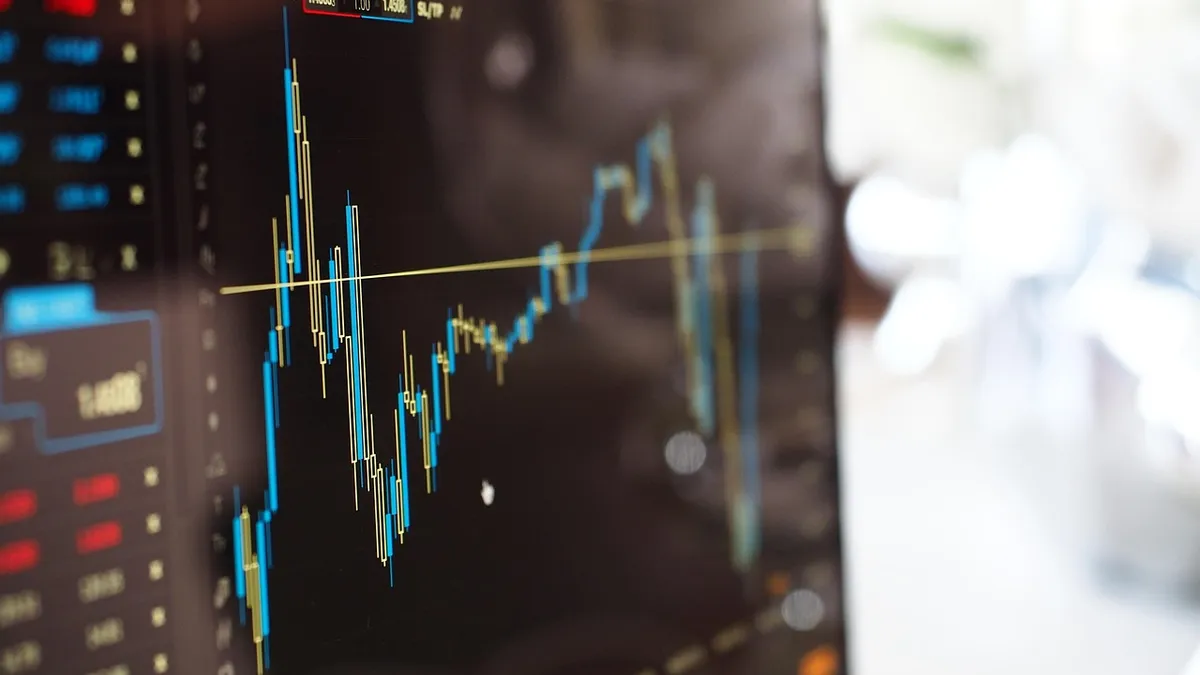
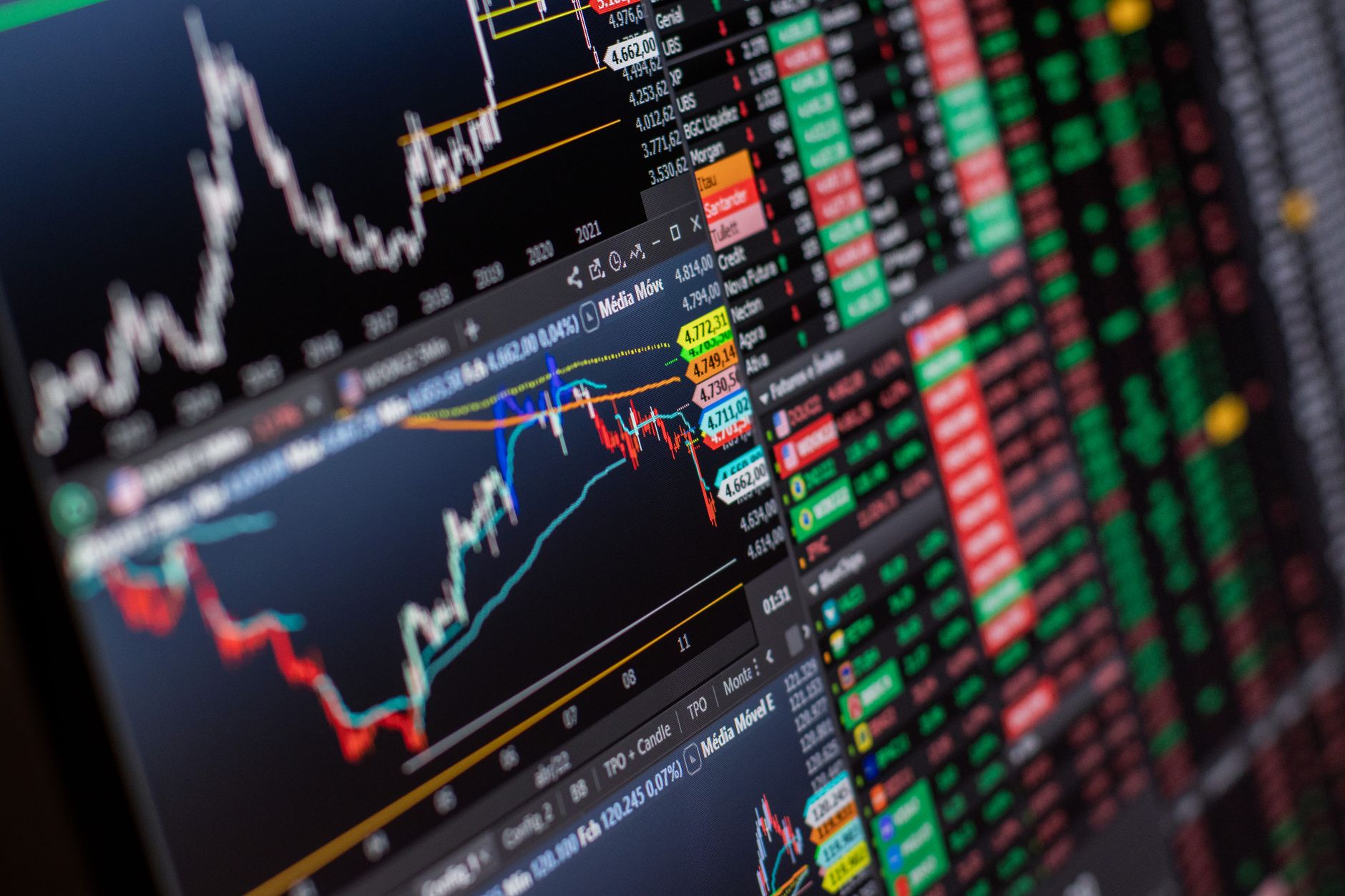
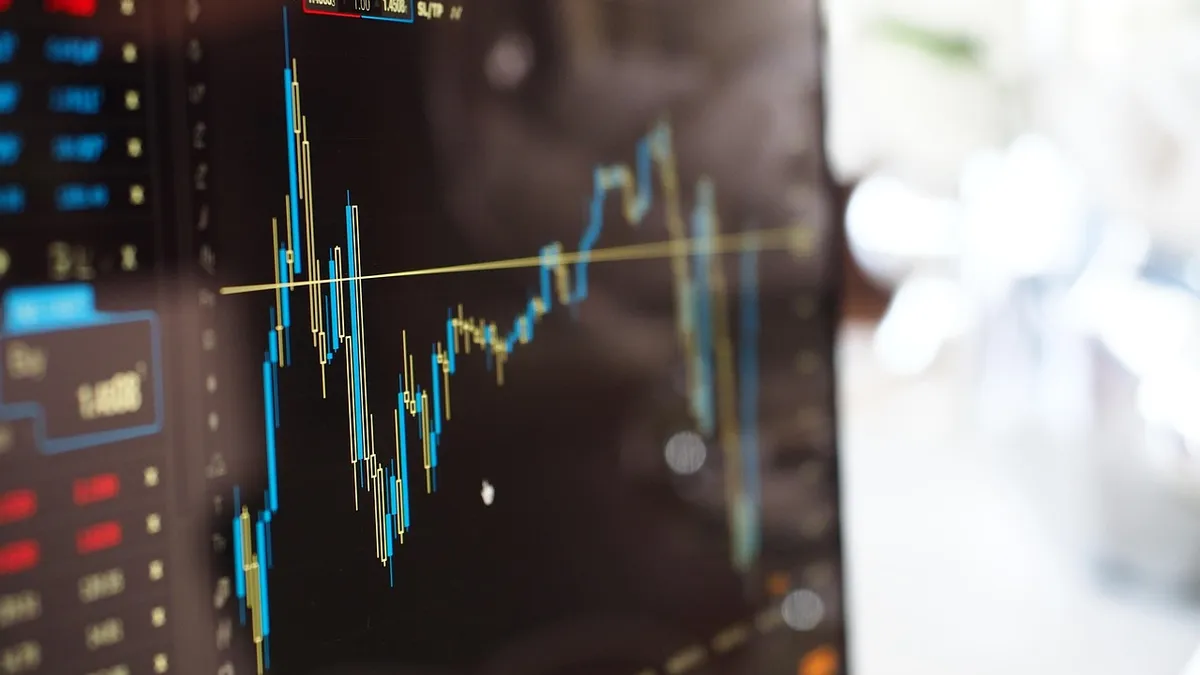
    The evidence: According to ASIC Report 828 (published January 2026, covering FY2023–24), 68% of Australian retail CFD clients lost money — a figure that includes 133,674 individual traders with net losses exceeding $458 million. Of that, $73 million was attributable to fees alone. A book that does not address cost management is incomplete for the Australian market.

    Expert tip: Crazii JTVertex’s personal filter for any trading book: flip to a random chapter and look for the phrase “this signal fails when…” If the author does not address failure conditions, put the book down. Every signal has a market environment where it breaks. The best books map those environments explicitly — not in a footnote, but as a core teaching point.

    CriteriaStrong BookWeak Book
    Explains signal mechanismYes — with market structure contextRules only, no “why”
    Addresses failure conditionsDedicated sections on when signals breakCherry-picked winning examples
    Covers trading costsIntegrates fees into strategy evaluationIgnores cost drag entirely
    Applicable to current marketsPrinciples-based, adaptableOverfitted to one era or one market
    James eventually found one book that changed his approach. Not because it gave him better signals — but because it made him understand why his previous signals had failed. That shift is what we are building toward here.
    best trading signals book criteria for Australian traders Crazii JTVertex
    Evaluating a trading signals book: what separates genuine education from noise. · Photo: 3844328 / Pixabay

    Which Trading Signals Books Are Actually Worth Owning?

    Which Trading Signals Books Are Actually Worth Owning?
    💡

    Key points: The most enduring trading signals books focus on reading price behaviour and indicator logic rather than promoting a single rigid system. For Australian retail traders, books that integrate risk management alongside signal identification are the most practically useful.

    Want Signals That Work Right Now — Not Just in a Book?

    Understanding signal theory is step one. Applying it on a live platform with real market data is step two. The AIMS platform gives you that bridge.

    Open an AIMS Account
    So which books actually deliver? Let me be direct about this. “Technical Analysis of the Financial Markets” by John J. Murphy is the closest thing to a compulsory text in this space. It covers every major signal category — trend indicators, momentum oscillators, volume signals, and chart patterns — with enough depth to build a genuine framework rather than a checklist. The RSI, MACD, Bollinger Bands, and moving average systems are all explained with their underlying logic intact. If you own one book on trading signals, this is it. The limitation: it was written with US equity markets as the primary reference. Australian traders need to adapt the context, particularly around session timing and liquidity. “Trading in the Zone” by Mark Douglas does something different. It does not teach you signal mechanics. It teaches you why you ignore the signals you already know. That might sound like psychology fluff, but here is the practical reality: James — our Brisbane trader — had the right signals on his screen. He second-guessed them because of two bad trades the week before. Douglas explains that mechanism with clinical precision. It is arguably the most important book for any trader who has read the theory and still cannot execute consistently. “The New Trading for a Living” by Alexander Elder is worth owning because Elder is one of the few authors who explicitly builds position sizing and stop-loss discipline into the signal framework. His “Triple Screen” system — using three different timeframes to confirm a signal before entering — is a practical, testable approach that works across forex, commodities, and indices. For traders specifically interested in the MetaTrader ecosystem — which hosts over 3,200 free and commercial signals across MT4 and MT5 according to MetaQuotes — the platform’s own documentation and MQL5 community resources function as a living textbook. That is not a book in the traditional sense, but it is more current than anything printed.

    The evidence: MetaQuotes reports that the MetaTrader platform hosts 3,200+ signals in its built-in marketplace (MQL5, accessed June 2026). Understanding how to evaluate those signals — their drawdown history, trade count, and risk profile — requires the same analytical framework the best books teach.

    Expert tip: Crazii JTVertex’s honest admission: we spent the first year reading books in the wrong order. Started with advanced Elliott Wave theory before understanding basic trend structure. It is like learning to parallel park before you know how to steer. Start with Murphy. Then Elder. Then Douglas. In that order. The sequence matters more than the titles.

    One thing we will say plainly: no book published before 2020 adequately addresses algorithmic signal interference — the reality that high-frequency trading and algorithmic execution now distort many of the classic signal patterns at lower timeframes. That is a gap every modern trader needs to be aware of, regardless of what they read. If you are just beginning to understand how signals work in the Australian context, the Trading Signals Explained for Australian Beginners in 2026 guide is the right place to build that foundation before diving into any of these books.
    top trading signals books recommended for Australian retail traders Crazii JTVertex
    Recommended reading for traders building a signal-based framework in the Australian market. · Photo: Pexels / Pixabay

    How Do You Read a Trading Signals Book Without Wasting the Lessons?

    How Do You Read a Trading Signals Book Without Wasting the Lessons?
    💡

    Key points: Reading a trading signals book passively produces almost no lasting skill. The traders who extract real value treat each chapter as a test hypothesis — they read a concept, immediately apply it to a historical chart, and document what they observe before moving on.

    Here is an uncomfortable truth: most traders who buy the right book still do not improve. The book was not the problem. The reading method was. So how do you actually absorb this material?
    1

    Read One Signal Concept at a Time — Then Stop

    Do not read a chapter straight through. Read until you hit a new signal or indicator. Close the book. Open a charting platform. Find five historical examples of that signal on an instrument you actually trade. Write down what happened after each one — not what “should” have happened according to the book, but what actually happened on the chart in front of you. This single habit is worth more than reading ten books cover to cover.

    2

    Build a Personal Signal Log Before You Trade Live

    Create a simple spreadsheet: signal name, timeframe, instrument, entry condition, expected outcome, actual outcome. After 50 documented observations, you will have your own data set — not the author’s data from a different decade and a different market. This is the step that transforms reading into skill. We personally ran this process for three months on AUD/USD before placing a live trade using a new signal framework.

    3

    Test Against the Failure Conditions the Author Describes

    Go looking for the times the signal broke. Deliberately find the chart examples where the RSI hit 30 and price kept falling. Where the MACD crossover triggered and immediately reversed. Understanding why a signal fails — and in which market conditions — is more valuable than memorising when it works. The failure map is your real edge.

    4

    Connect Every Signal to a Risk Parameter Before You Apply It Live

    Every signal you decide to use needs a corresponding stop-loss logic and a position size rule before it goes live. This is non-negotiable. Among active traders placing 50 or more open positions per month, ASIC found that 19% of otherwise-profitable clients ended up in a net loss after fees in FY2023–24. More activity without better risk management makes outcomes worse, not better. The book teaches the signal. You must supply the discipline.

    Expert tip: Crazii JTVertex’s actual practice when testing a new signal from a book: we never use a round number for the observation sample. The minimum is 47 historical examples — not 50. Why? Because 50 feels like a target to hit and you stop paying attention. 47 keeps you counting. It is a small psychological trick but it genuinely improves the quality of observation.

    James applied this method to Elder’s Triple Screen system. He spent six weeks documenting examples on the ASX 200 and AUD/USD before going live. His first three months using the system live were not spectacular — but he did not blow up. That is the real benchmark in the first year. If you are weighing whether trading is right for you before committing to this level of study, the piece on Should I Do Trading If I Have Never Tried It Before addresses that question honestly.
    how to apply trading signals book lessons to live chart analysis Crazii JTVertex
    Translating signal theory into a personal testing process — the step most traders skip. · Photo: TheInvestorPost / Pixabay

    What Are the Most Common Mistakes Traders Make After Reading Signal Books?

    What Are the Most Common Mistakes Traders Make After Reading Signal Books?
    💡

    Key points: The most damaging mistake after reading a trading signals book is treating the signals as rules rather than probabilities. Every signal is a statement of likelihood in a specific context — not a guarantee of outcome. Traders who forget this oversize their positions and underestimate the cost of being wrong.

    Stop Repeating the Mistakes — Get a Structured Starting Point

    The best trading signals and tools for Australian traders in 2026 are mapped out in the JTVertex pillar guide. It is the practical companion to everything in this article.

    Read the Full Signals Guide
    Mistake 1
    Treating the first signal they learn as universal

    After reading about MACD crossovers, many traders apply them to every instrument, every timeframe, every market condition. MACD was designed for trending markets. In a ranging, choppy market it produces false signals consistently. The book usually says this. The trader usually skips that part. We did exactly this in the first six months — applied a trend-following signal to a sideways AUD/JPY range and wondered why it kept failing.
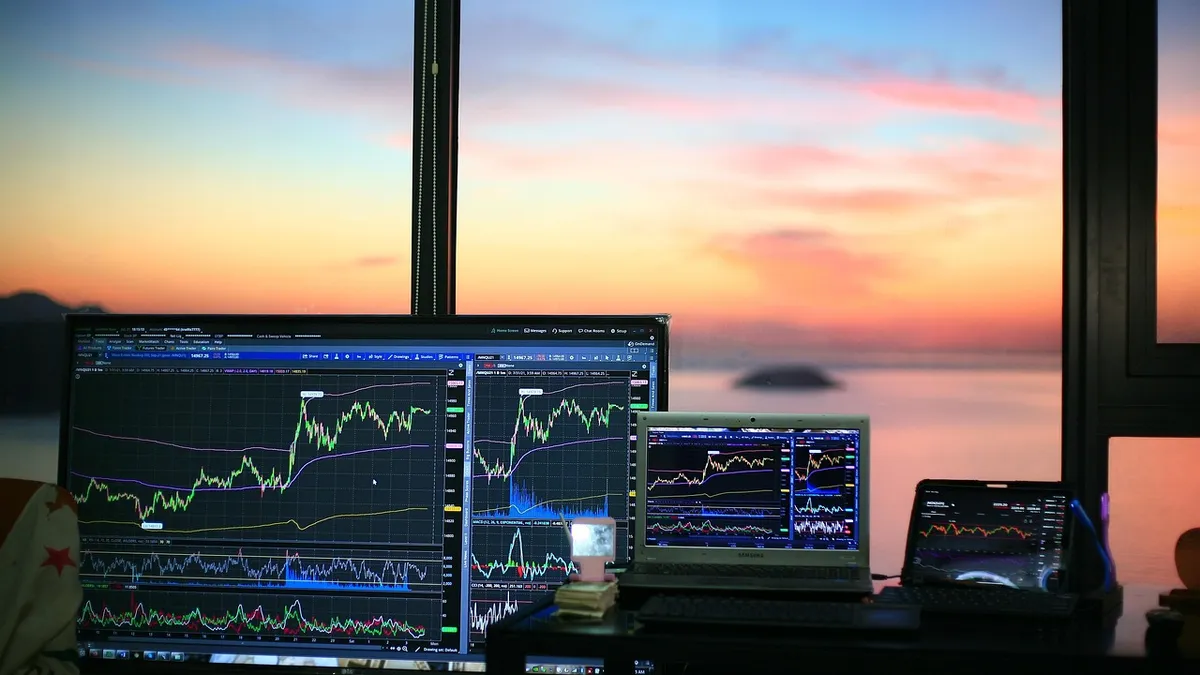
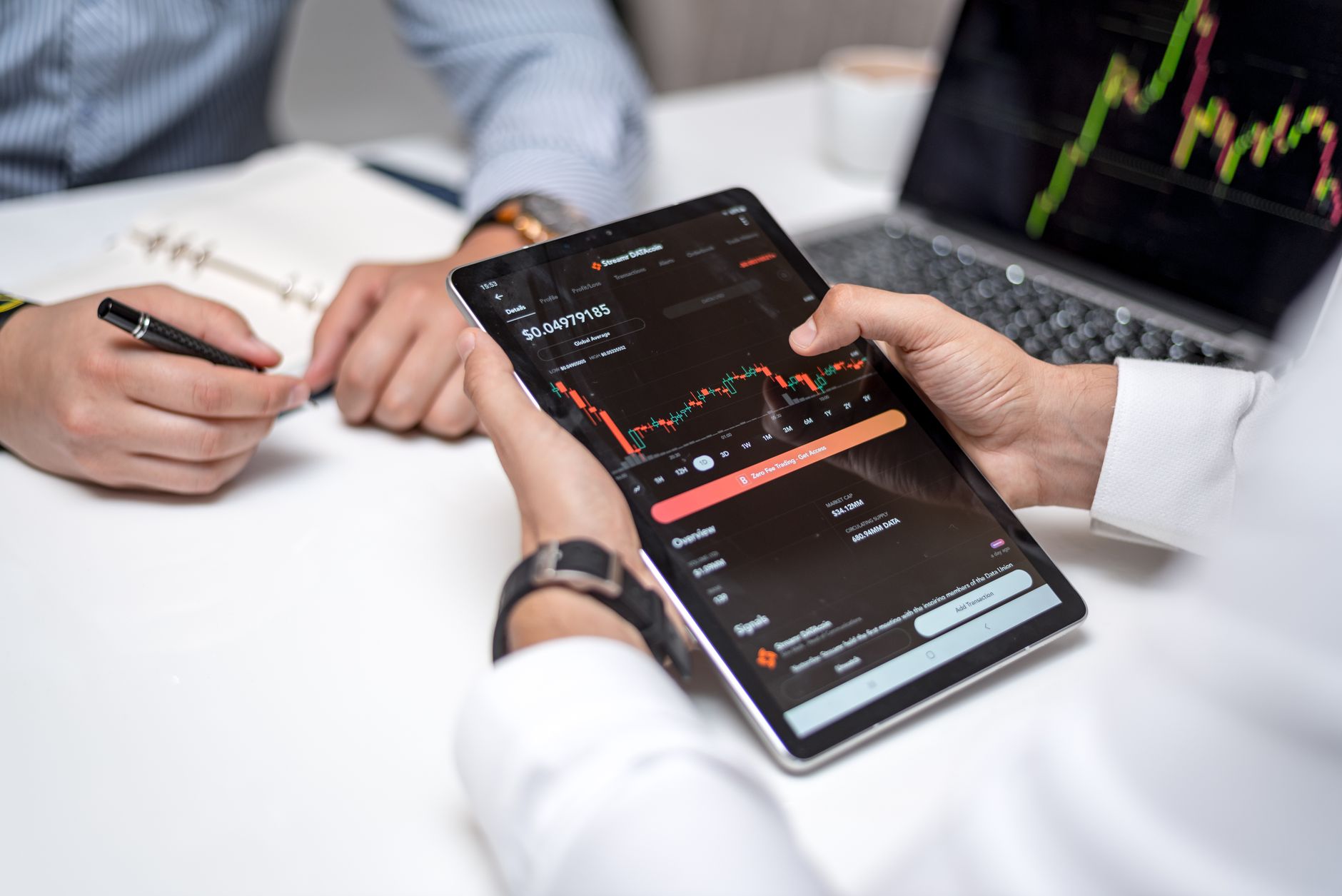
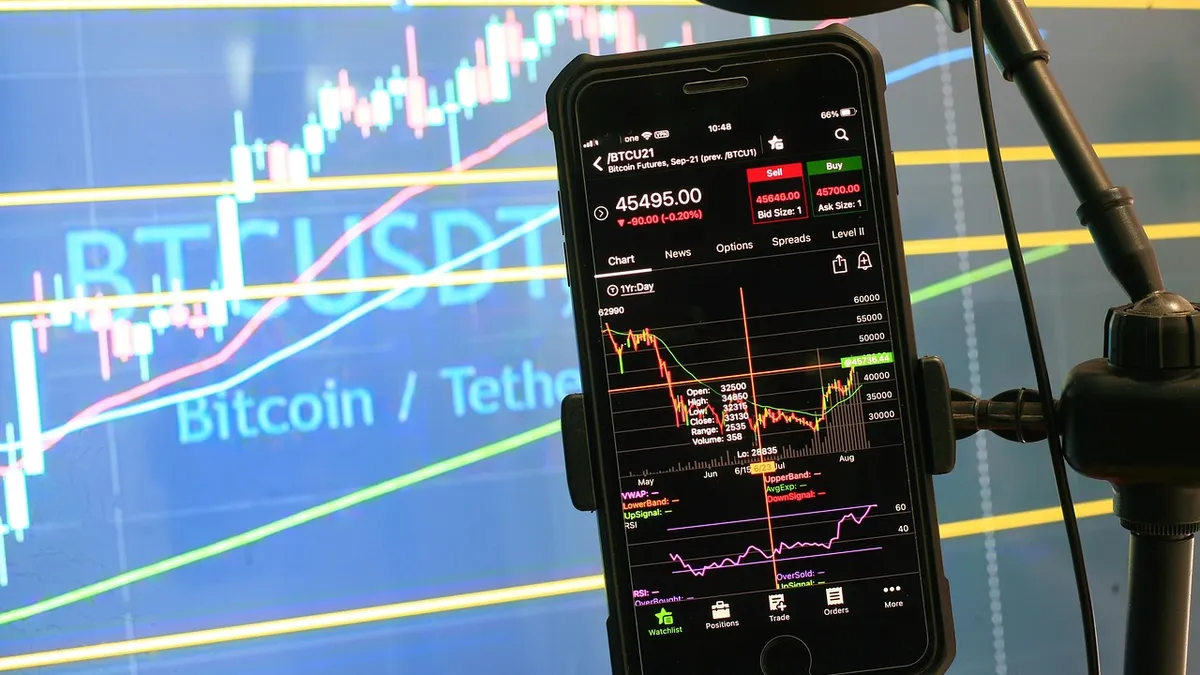
    Mistake 2
    Ignoring the fee drag that signals cannot overcome

    ASIC’s data is unambiguous: $73 million of the $458 million in retail losses in FY2023–24 came from fees alone. Five per cent of clients who were otherwise profitable ended up in a net loss purely because of transaction costs. A signal with a 55% win rate sounds promising until you calculate whether the spread, commission, and overnight financing costs still leave you net positive. This arithmetic must happen before you trade any signal live, not after.

    Mistake 3
    Abandoning a signal after two losing trades

    Every signal system has losing streaks. A system with a 60% win rate will statistically produce runs of five consecutive losses. Traders who read about a signal, test it briefly, hit a losing streak, and abandon it — then repeat this cycle with the next signal — never accumulate the sample size needed to know whether the system actually works. This is called “system hopping” and it is one of the most reliable ways to stay unprofitable.

    Mistake 4
    Skipping the signals that do not look “clean”

    Books show perfect examples. Real charts are messy. Traders who only act on textbook-perfect signal formations miss the majority of tradeable setups. Worse, they develop a false confidence that their signal “only fails when it does not look right” — which is circular reasoning that protects the belief rather than tests it. The skill is learning to grade signal quality on a spectrum, not in binary terms.

    The evidence: ASIC Report 828 notes that among retail clients who traded more actively — 50 or more open positions per month — 19% of those who would otherwise have been profitable ended up in a net loss after fees in FY2023–24. Increased trading activity, without a corresponding improvement in signal quality and cost management, correlates with worse outcomes.

    James made Mistake 3 twice. The second time, he documented it in his trading journal — wrote down the exact thought process that led him to abandon a system after four losing trades. When he reviewed the journal six weeks later, the system had recovered and would have been profitable. That journal entry became the most expensive and most valuable lesson of his trading education.
    common mistakes applying trading signal book strategies in live markets Crazii JTVertex
    The gap between reading about signals and executing them consistently — and how to close it. · Photo: TheInvestorPost / Pixabay

    How Do Trading Signal Books Compare to Live Signal Services for Australian Traders?

    How Do Trading Signal Books Compare to Live Signal Services for Australian Traders?
    💡

    Key points: Books build the analytical framework that lets you evaluate any signal — including those from live services. Live signal services provide real-time application but offer no education. Used together, they serve different and complementary purposes. Used alone, each has a critical blind spot.

    You are reading this article, which means you are probably weighing whether to invest time in books or whether to just subscribe to a live signal service and skip the theory. That is a fair question. Let me answer it directly. Live signal services — including the copy-trading ecosystem on MetaTrader, which hosts over 3,200 signals — give you actionable outputs without requiring you to understand the underlying analysis. ASIC noted in Report 828 that 26,243 retail clients used copy trading in FY2023–24, reflecting genuine and growing interest. The appeal is obvious: you follow a provider, positions appear in your account, you do not need to analyse anything. The problem is that you also cannot evaluate anything. When the signal provider enters a drawdown — and every provider eventually does — you have no framework to determine whether the drawdown is within normal parameters or whether the strategy has fundamentally broken. Traders without foundational knowledge tend to exit copy-trading arrangements at exactly the wrong moment: after the drawdown, just before the recovery. Books give you that evaluation framework. They teach you to look at a signal provider’s track record and ask the right questions: How many trades in the history? We personally treat anything under 100 completed trades as statistically insufficient — that is my heuristic, not a rule, but it has kept me out of trouble more than once. What is the maximum drawdown? A drawdown above 20% is a flag worth investigating carefully. What market conditions did the provider trade in? A system built entirely in a trending 2020–2021 market may not survive a ranging 2024 environment.
    FactorTrading Signals BooksLive Signal Services
    Learning depthHigh — builds transferable frameworkNone — output only
    Time to applyWeeks to months of studyImmediate
    Ability to evaluate qualityDevelops this skill explicitlyRequires external framework
    CostOne-off book purchaseOngoing subscription or spread cost
    Risk of blind followingLow — you understand the logicHigh — especially in drawdowns
    Adaptability to market changesHigh — principles transferDependent on provider’s adaptability

    Expert tip: Crazii JTVertex’s actual workflow: we reads the book first, builds the conceptual model, then uses a live signal service as a real-time laboratory to test whether the concepts hold in current market conditions. The book is the map. The live service is the terrain. You need both — but the map comes first, otherwise the terrain is just noise.

    The traders who get the most from live signal services are the ones who already understand what the signals mean. That is not a coincidence. It is the reason the tool should come before the platform — which is the exact sequence Crazii JTVertex is built around. For a broader view of whether the forex side of this is worth pursuing in the Australian context, the analysis at Is Forex Trading Worth It for Australians covers the realistic picture without the hype. And for the full picture of signals and tools available to Australian traders right now, the best trading signals and tools for Australian traders in 2026 guide is the natural next step from this article.
    trading signals books versus live signal services comparison for Australian traders Crazii JTVertex
    Books versus live services: why the most effective traders use both, in the right order. · Photo: TheInvestorPost / Pixabay

    Frequently Asked Questions About Trading Signals Books

    Frequently Asked Questions About Trading Signals Books
    💡

    Key points: The questions traders ask most often about signals books reflect a common tension: wanting a shortcut to signal mastery while suspecting there is no such thing. The honest answer is that there is no shortcut — but there is a faster path, and it runs through deliberate, applied reading rather than passive consumption.

    What is the best trading signals book for an absolute beginner in Australia?

    Start with “Technical Analysis of the Financial Markets” by John J. Murphy. It covers every major signal category with enough depth to build a real framework. Follow it with “Trading in the Zone” by Mark Douglas once you have the mechanics — that sequence will save you months of confusion.

    Can a trading signals book replace a live signal service?

    No — they serve different purposes. A book builds the analytical framework to evaluate any signal. A live service provides real-time application. The most effective approach is to read first, then use a live service as a testing environment for what you have learnt. One without the other leaves a significant gap.

    How long does it take to apply what you learn from a trading signals book?

    Realistically, three to six months of deliberate practice — reading, charting historical examples, and documenting observations — before you have enough personal data to trade a signal with confidence. Anyone promising faster results is selling something. The ASIC data on retail losses reflects what happens when traders skip this stage.

    Are trading signals books still relevant when AI and algorithms dominate the market?

    The foundational principles — trend identification, momentum measurement, support and resistance — remain valid because they reflect how large institutional participants think about price. What has changed is the lower-timeframe environment, where algorithmic activity creates noise that classic signals struggle with. Books teach the principles; you apply judgement about timeframe and context.

    Who should NOT rely primarily on trading signals books?

    Traders who need immediate, real-time guidance in live markets should not rely on books alone — books are educational, not operational. Also, traders with no risk management framework in place should address that before applying any signal system. Reading without risk parameters is how signal knowledge becomes expensive.

    Ready to Move From Reading to Doing?

    Crazii JTVertex works with Australian traders who want to build a real foundation — not just collect books. If you want a conversation about where to start, the contact page is the right place.

    Get in Touch

    Note: This article contains general information only and is not personal financial advice. CFD trading and leveraged products carry significant risk of loss. ASIC Report 828 (January 2026) found that 68% of Australian retail CFD clients lost money in FY2023–24. Consider your personal circumstances and seek independent financial advice before making any trading decisions.

  • Best Crypto Trading Signal Group Compared for Serious Traders

    Best Crypto Trading Signal Group Compared for Serious Traders

    The best crypto trading signal group is not the one with the loudest Telegram channel or the flashiest win-rate screenshot — it is the one that survives scrutiny when you actually test it with real money on the line. At Crazii JTVertex, we have spent considerable time inside these groups, watching how signals perform across volatile market conditions, not just during the easy stretches. This comparison guide for serious Australian traders cuts through the noise and gives you a framework to evaluate any group before you trust it with your capital. By the end, you will know exactly what separates a signal group worth your time from one that quietly drains your account — and you will have a clear next step.

    Important note: This article is general information only and does not constitute personal financial advice. Crypto and CFD trading carries significant risk of loss. Please consider your own financial circumstances and read all relevant disclosure documents before making any trading decisions.

    Ready to trade with a group that takes risk seriously

    Join the Crazii JTVertex community and get access to structured signal analysis built for Australian market conditions.

    Join the Group
    Table of contents

    What makes a crypto trading signal group worth following in 2026?

    What makes a crypto trading signal group worth following in 2026?
    💡

    Key points: A legitimate crypto trading signal group publishes verifiable trade history across at least 100 completed trades, discloses drawdown alongside win rate, and never promises guaranteed returns. Transparency about methodology — not just results — is the minimum standard worth your attention.

    Most signal groups will show you their winners. That is the easy part. The real question is whether they show you the full picture — including the trades that went sideways at 2 am on a Tuesday when nobody was watching. Here is what Crazii JTVertex looks for before recommending any signal source to Australian traders. First, trade history depth. A group with 30 trades in its track record tells you almost nothing statistically meaningful. Minn personally ignores any group with fewer than 100 completed, timestamped trades. That is not an arbitrary number — it is the minimum sample where patterns begin to stabilise and luck starts separating from edge. Second, drawdown transparency. Win rate alone is a marketing number. A group boasting 85% accuracy could still destroy your account if the losing 15% of trades each lose three times what the winners gain. What you need to see is maximum drawdown — the deepest trough from peak to valley — expressed as a percentage of the starting balance. If a group will not publish this, that is your answer. Third, methodology disclosure. Does the group explain why a signal was generated? Is it based on on-chain data, technical indicators, order-book depth, or a combination? A signal without a rationale is a tip from a stranger. A signal with a clear, testable rationale is something you can evaluate and, critically, something you can learn from.

    The evidence: According to ASIC Report 828 (published January 2026, covering FY2023–24), 68% of Australian retail CFD clients lost money in a single financial year, with net losses exceeding $458 million across the sector. That figure includes $73 million in fees alone — meaning fees flipped 5% of otherwise-profitable retail clients into a loss. Among active traders making 50 or more open positions per month, 19% of those who would have profited ended up losing after fees were accounted for. More signals do not automatically mean better outcomes.

    Fourth, risk parameters. Does every signal come with a defined stop-loss level? Without a stop, a signal is incomplete. It tells you when to get in but leaves you guessing when to get out — which is exactly when discipline evaporates.

    Expert tip from Crazii JTVertex: One thing minn learned the hard way: a signal group that posts entries without stop-losses is not being helpful — it is offloading the hardest decision onto you. The first time minn followed an entry without a defined stop, minn held a losing position for eleven days waiting for “the signal provider’s update.” The update never came. Now, if there is no stop-loss in the signal, minn treats it as incomplete information and does not act on it.

    1

    Request the full trade log, not just the highlights

    Ask any signal provider for a timestamped export of every trade — entry, exit, result — for the past six months minimum. Legitimate groups will provide this without hesitation.

    2

    Calculate the risk-reward ratio yourself

    Divide average winning trade size by average losing trade size. If the ratio is below 1.5:1, the win rate needs to be very high to remain profitable over time — and high win rates rarely persist.

    3

    Paper-trade for two to four weeks before committing capital

    Follow every signal in a demo account first. This tells you whether the signals are executable in real time or whether they are posted after the move has already happened.

    best crypto trading signal group evaluation framework Crazii JTVertex
    Evaluating a crypto signal group requires more than checking win rate — drawdown, methodology, and stop-loss discipline matter equally. · Photo: sergeitokmakov / Pixabay

    How do the top crypto signal groups compare on the metrics that matter?

    How do the top crypto signal groups compare on the metrics that matter?
    💡

    Key points: When comparing crypto signal groups, the four metrics that separate genuine services from noise are: verified trade history length, published maximum drawdown, average risk-reward ratio, and whether stop-loss levels are included with every signal. No single metric tells the full story — you need all four.

    So what does the comparison actually look like when you line up the categories that matter? Let me walk you through the framework Crazii JTVertex uses. Think of it as a four-column scorecard. You are evaluating: (1) track record depth, (2) drawdown disclosure, (3) signal completeness — meaning entry, stop-loss, and target all included — and (4) community accountability, which is whether the group discusses losing trades openly or quietly deletes them.

    See how Crazii JTVertex structures its signal analysis

    Our approach to crypto buy and sell signals is built around risk-first thinking — not win-rate theatre. Explore the full toolkit at the link below.

    See the Full Toolkit
    Evaluation Criterion Weak Signal Group Credible Signal Group
    Trade history depth Under 50 trades, cherry-picked screenshots 100+ timestamped trades, exportable log
    Drawdown disclosure Win rate only, no drawdown mentioned Maximum drawdown published alongside win rate
    Signal completeness Entry only, no stop-loss or target Entry, stop-loss, and take-profit in every signal
    Loss transparency Losing trades deleted or ignored Losing trades discussed with post-analysis
    Methodology Vague (“proprietary algorithm”) Explained rationale — indicators, timeframes, context
    Fee structure Hidden or bundled with “VIP” tiers Clear, upfront, no performance-linked promises
    The column on the right is not a fantasy — these groups exist. They are just harder to find because they do not spend their budget on Telegram ads promising “10x signals daily.” Here is something worth sitting with. ASIC data from FY2023–24 shows that 26,243 retail clients in Australia used copy trading — which is the closest regulated equivalent to following signal groups. That is a meaningful number of people delegating trading decisions to someone else. The question is not whether to use signals at all. The question is whether you are choosing the right one with the right framework. For Australian traders specifically, the **best trading signals and tools for Australian traders in 2026** require an additional layer of scrutiny: ASIC compliance awareness. A signal group operating from offshore with no disclosure about its regulatory status is a risk that compounds every other risk you are already taking in crypto markets.

    Expert tip from Crazii JTVertex: Minn has evaluated dozens of signal groups over the years, and the single fastest filter is this: ask them to show you their three worst months. Not their best. Their worst. A group that has genuinely been running for two or more years will have bad months — markets have them. If they cannot show you a bad month, they either have not been running long enough to matter or they are hiding something. Either way, walk away.

    crypto signal group comparison metrics for Australian traders Crazii JTVertex
    Comparing signal groups on drawdown, trade history, and completeness gives a far clearer picture than win rate alone. · Photo: sergeitokmakov / Pixabay

    What are the most common mistakes traders make when joining a signal group?

    What are the most common mistakes traders make when joining a signal group?
    💡

    Key points: The three most damaging mistakes when joining a crypto signal group are: acting on signals without understanding the rationale, over-sizing positions because the signal “feels confident,” and treating a signal group as a substitute for a trading plan rather than an input to one.

    Meet Marcus. He is 34, works in logistics in Brisbane, and started following a crypto signal group in early 2024 after a colleague mentioned it over lunch. Within three weeks, Marcus had committed a significant portion of his savings to positions he did not fully understand, based on signals he received at midnight that he acted on half-asleep. By the third month, he had learned something expensive about the gap between a signal and a strategy. Marcus is not unusual. His story is common enough that it is worth unpacking — because the mistakes he made are structural, not personal.
    Mistake 1
    Treating the signal as the strategy

    A signal tells you a potential entry point. It does not tell you how much of your account to risk, how that trade fits your overall exposure, or what you will do if the market gaps down overnight. Without those answers, you are not trading — you are gambling on someone else’s hunch.

    Mistake 2
    Position sizing based on confidence, not risk percentage

    When a signal arrives with strong language — “high conviction,” “strong setup,” “don’t miss this” — the temptation is to go larger. This is exactly backwards. Position size should be determined by your stop-loss distance and your maximum acceptable loss per trade, not by how enthusiastic the signal provider sounds. A 20% drawdown in a single trade is a red flag in any risk framework — that is a personal heuristic, not a statistic, but it reflects how minn thinks about position limits.

    Mistake 3
    Ignoring the fee drag on active signal-following

    ASIC’s FY2023–24 data is direct on this point: among active traders making 50 or more open positions per month, 19% of those who would have been profitable ended up in a loss after fees. Think about that — one in five active traders who got the direction right still lost money because of transaction costs. Following high-frequency signals without accounting for fees is a way to be right and still lose.

    Mistake 4
    Joining multiple signal groups simultaneously

    Minn has seen traders subscribe to four or five groups at once, thinking diversification applies to signal sources the way it applies to assets. It does not. Conflicting signals create decision paralysis. You end up taking the signals that feel good rather than the ones that fit your system — which is no system at all.

    Marcus eventually rebuilt his approach. He started with one group, paper-traded for a month, and only then committed real capital at a fraction of his previous position sizes. That methodical reset is exactly what the **guide on how to buy and sell crypto without second-guessing every move** addresses in detail — worth reading before you take another live signal.
    common crypto signal group mistakes Australian retail traders Crazii JTVertex
    Position sizing and fee drag are the two most overlooked risks when following crypto buy and sell signals. · Photo: 3844328 / Pixabay

    Stop guessing which signal group is actually worth your time

    Crazii JTVertex provides structured signal analysis with risk parameters built in — not just entry points. Get access now.

    Access Crazii Signals

    Why do most crypto signal groups fail serious traders — and what does work?

    Why do most crypto signal groups fail serious traders — and what does work?
    💡

    Key points: Most crypto signal groups fail because they optimise for subscriber growth rather than trading outcomes. What works instead is a signal service embedded within a broader education and risk framework — one that teaches you to evaluate signals critically, not just follow them blindly.

    Here is the uncomfortable truth that most signal group reviews will not say out loud: the incentive structure of most signal groups is misaligned with your interests. A signal group grows by attracting subscribers. It retains subscribers by appearing successful. Appearing successful is easiest when you post wins loudly and losses quietly — or not at all. This is not a conspiracy. It is just the natural gravity of a business model built on perception rather than performance. So what actually works? The signal groups that serious traders stay with over time share one characteristic: they treat signals as inputs to a decision, not decisions themselves. The signal arrives with context — why this asset, why this timeframe, what invalidates the thesis, where the stop sits. The trader then applies their own position sizing and risk rules. The signal provider is a research partner, not an autopilot.

    The evidence: MetaQuotes reports over 3,200 free and commercial signals available on the MetaTrader 5 platform alone. That volume tells you something important: the barrier to creating a signal service is essentially zero. Anyone can publish signals. The scarcity is not signals — it is verified, accountable signal providers who publish complete trade logs including losses.

    There is also the question of what “serious trader” actually means in an Australian context. ASIC data tells us that 119,300 active CFD trading clients were operating per quarter in FY2023–24 — a figure that represents a 76% decline from the pre-intervention peak of roughly 515,000 per quarter. The traders who remained after that contraction are, by definition, more experienced and more risk-aware. They are not looking for a shortcut. They are looking for an edge with integrity. For traders who want to go deeper on how signals fit into a complete trading toolkit, the **best trading signals and tools for Australian traders 2026** pillar covers the full landscape — from signal types to platform integration to risk management frameworks.

    Expert tip from Crazii JTVertex: The best signal group minn has ever been part of had a rule: every signal post had to include the invalidation condition — the price level or market event that would make the thesis wrong. Not just a stop-loss price, but the reasoning behind it. That one rule changed how minn thought about every trade. It forced the question: “What would have to be true for this trade to be wrong?” Answering that question before entering is worth more than any win-rate statistic.

    There is also something worth acknowledging for the S-type reader who is thinking: “This all sounds good, but what if I follow the system perfectly and still lose?” That is a fair concern. Trading carries genuine risk. The ASIC data is clear that 68% of retail CFD clients lost money in FY2023–24 — that is the realistic baseline. A good signal group does not eliminate that risk. It gives you better information to work with. The risk management is still yours to apply. For traders who also work with gold markets, the principles here apply directly — the **guide on how to trade XAUUSD without blowing your account early** covers the same risk-first framework in a different asset context.
    why crypto signal groups fail serious traders risk framework Crazii JTVertex
    Signal groups that publish invalidation conditions alongside entries give traders a genuine analytical edge rather than just a direction. · Photo: 3844328 / Pixabay

    How should Australian traders evaluate and use crypto buy and sell signals safely?

    How should Australian traders evaluate and use crypto buy and sell signals safely?
    💡

    Key points: Australian traders should evaluate crypto buy and sell signals using a four-step process: verify trade history depth, confirm stop-loss inclusion in every signal, paper-trade for at least two weeks before committing capital, and set a maximum weekly loss limit before starting. No signal group removes the need for personal risk management.

    You are probably thinking: this all makes sense in theory, but what does “evaluate safely” actually look like in practice, step by step? Fair. Here is the process Crazii JTVertex recommends, built specifically for the Australian retail trading context.
    1

    Set your maximum acceptable loss before you look at a single signal

    Decide on a weekly or monthly loss limit as a percentage of your total trading capital before you join any group. Once that limit is hit, you stop trading for the period — regardless of what signals arrive. This is the single most protective rule you can install, and almost nobody does it before they start.

    2

    Request the group’s verified trade log before subscribing

    A legitimate signal group will have a complete, timestamped record of every trade — not just screenshots of the good ones. If the provider hesitates or says the log is “available to premium members only,” that tells you something important about what they are protecting.

    3

    Paper-trade for two to four weeks in real time

    Follow every signal in a demo account at the same time it is posted. This reveals two things: whether signals are posted before or after the move, and whether you can actually execute at the stated entry price. Slippage and timing gaps are invisible in a screenshot but very visible in a demo account.

    4

    Apply your own position sizing — never the group’s suggested size

    Position size should be calculated from your stop-loss distance and your maximum acceptable loss per trade, expressed as a percentage of your account. A personal heuristic worth considering: risk no more than 1-2% of your account on any single signal — but frame this as your own rule, not a universal law. Your circumstances determine your appropriate risk level.

    5

    Review performance monthly — not daily

    Daily performance review creates emotional noise. Monthly review gives you a large enough sample to see whether the signal group is performing consistently with its stated track record. If three consecutive months show results materially worse than the published history, that is a signal to reassess.

    Marcus — the Brisbane trader from earlier — eventually adopted this exact process. He chose one group, paper-traded for three weeks, and set a hard monthly loss limit before going live. The first two months were modest. The third month, he had his first consistently profitable run. Not because the signals were magic. Because he finally had a framework around them. For traders who want to go further on signal selection specifically for Telegram-based groups, the **best crypto signals Telegram channels ranked for 2026** covers the specific platforms and vetting process in detail.

    Expert tip from Crazii JTVertex: One thing minn does that most traders skip: minn keeps a separate log of every signal received — not just the ones acted on. After 30 days, minn compares the full signal log against what minn actually traded. The gap between “signals received” and “signals taken” reveals your real filter. If you are consistently skipping the losing signals in hindsight and only taking winners, you are fooling yourself about your process. The log keeps you honest.

    how to use crypto buy and sell signals safely Australian traders Crazii JTVertex
    A structured evaluation process — including paper trading and personal loss limits — is what separates disciplined signal use from speculative following. · Photo: sergeitokmakov / Pixabay

    Frequently asked questions about crypto trading signal groups

    Frequently asked questions about crypto trading signal groups
    💡

    Key points: The most common questions about crypto signal groups centre on legitimacy, cost, frequency, platform choice, and how to handle conflicting signals. Each answer below addresses the real concern behind the question — not just the surface query.

    Are free crypto signal groups worth following, or should I only consider paid ones?

    Free groups are not automatically worse — some are run by traders building a reputation. The relevant question is not price but transparency: does the group publish full trade logs including losses? A paid group with cherry-picked results is worse than a free group with honest reporting. Evaluate both by the same criteria.

    How many signals per week is a reasonable number to follow?

    There is no universal answer, but ASIC data shows that traders making 50 or more open positions per month face a materially higher risk of fee drag turning profits into losses. Fewer, higher-quality signals with clear rationales tend to be more sustainable than high-frequency signal streams that require constant attention and generate significant transaction costs.

    What should I do when two signal groups give conflicting signals on the same asset?

    Do not act on either. Conflicting signals on the same asset at the same time indicate genuine uncertainty in the market — which is information in itself. Waiting for clarity is a legitimate position. Trading into a conflict because you feel you need to act is how avoidable losses happen.

    Is it legal for signal groups to operate in Australia without an AFSL?

    This is a question for a qualified legal or compliance professional, not a blog article. What Crazii JTVertex can say is that ASIC regulates financial advice in Australia, and traders should be aware of the regulatory status of any service they use. If a signal group is providing what could be considered personal financial advice, the provider’s regulatory credentials are worth verifying directly with ASIC.

    How long should I follow a signal group before deciding whether it works for me?

    A minimum of 60 to 90 days of live (or paper) trading across at least 30 completed signals gives you a statistically meaningful sample. Shorter evaluation periods are vulnerable to lucky streaks or unlucky runs that do not reflect the group’s actual edge. Patience in evaluation is part of the risk management process.

    Can I use crypto signal groups alongside automated trading platforms?

    Yes, and some traders do exactly this — using signals as a filter for automated entries rather than acting on every signal manually. The key is ensuring your automation includes the same stop-loss and position-sizing rules you would apply manually. Automation amplifies your system, good or bad.

    What is the biggest red flag that a crypto signal group is not legitimate?

    A group that deletes losing trade posts from its history. This is the clearest possible signal that the provider is managing perception rather than providing genuine analysis. A legitimate group leaves its losing trades visible and discusses what went wrong. Accountability is the floor, not a bonus feature.

    Talk to Crazii JTVertex directly about signal group selection

    If you want a conversation about which signal approach fits your trading style and risk tolerance, reach out. No sales pitch — just a direct conversation about what works for Australian traders.

    Contact Us

    Important note: Trading crypto assets and CFDs involves significant risk of loss. According to ASIC Report 828 (January 2026), 68% of Australian retail CFD clients lost money in FY2023–24, with net losses exceeding $458 million. This article is general information only and does not constitute personal financial advice. Always consider your own financial circumstances, risk tolerance, and relevant disclosure documents before making trading decisions. If you are unsure, seek independent financial advice from a qualified professional.