
Finding the best forex daily signals that keep drawdowns under control is the difference between a sustainable trading journey and losing your capital in a single market swing. If you are tired of high-risk strategies that wipe out your account, Crazii JTVertex provides the analytical framework to help you manage risk effectively while navigating the complexities of the Australian market. Read on to discover how to align your trading approach with proven market data, or explore our full guide on best trading signals for Australian traders 2026.
Start Your Journey with Proven Data
Access our curated signals and risk-management tools designed for Australian retail traders. Stop guessing and start trading with precision.
Get Started NowIn this article
Why do most retail traders fail with signals?


Key point: Most retail traders lose money because they chase high-frequency signals without accounting for the impact of fees and leverage. ASIC data shows that 68% of retail CFD clients realized a net loss in FY2023–24, proving that relying solely on external signals without a personal risk management plan is a fast track to capital depletion.
You might have seen an advert promising consistent returns from a simple signal service. You sign up, copy every trade, and watch your balance dwindle. It feels personal, like the market is targeting your account specifically. The truth is, the market does not care about your account size, but it does punish poor risk management. According to ASIC Report 828, published in January 2026, 133,674 retail clients in Australia suffered net losses exceeding $458 million in the last financial year. This data serves as a sobering reminder of the volatility inherent in financial markets, a concept further explored in global economic studies by organizations like the OECD, which tracks financial literacy and market stability trends.
When you look for the best forex daily signals, you are often looking for a shortcut. The problem arises when you treat a signal as an instruction rather than a data point. I remember working with a trader named Liam, a 34-year-old architect who thought he had found the holy grail with a high-frequency copy trading service. He was active, aggressive, and within eight months, he had lost 40% of his initial deposit. His mistake was not the signals themselves, but his lack of a drawdown filter. To succeed, one must treat trading as a disciplined business rather than a hobby, ensuring that every position is backed by rigorous analysis.
The science angle: ASIC data reveals that 74% of new retail clients acquired via paid online advertising ended up losing money in FY2023–24. This suggests that marketing-heavy signal services often underperform compared to data-driven, transparent methodologies.
If you are looking for more stability, you might want to look at best CFD trading signals that protect capital in volatile markets to understand how professional traders filter their entries. Liam stopped chasing “easy money” and started focusing on risk-per-trade. That shift in mindset is where your real progress begins. You need to stop looking for the perfect signal and start looking for the perfect process. By maintaining a consistent, data-backed approach, you insulate yourself from the emotional volatility that leads to impulsive decision-making.
How do you identify the best forex daily signals with low drawdown?
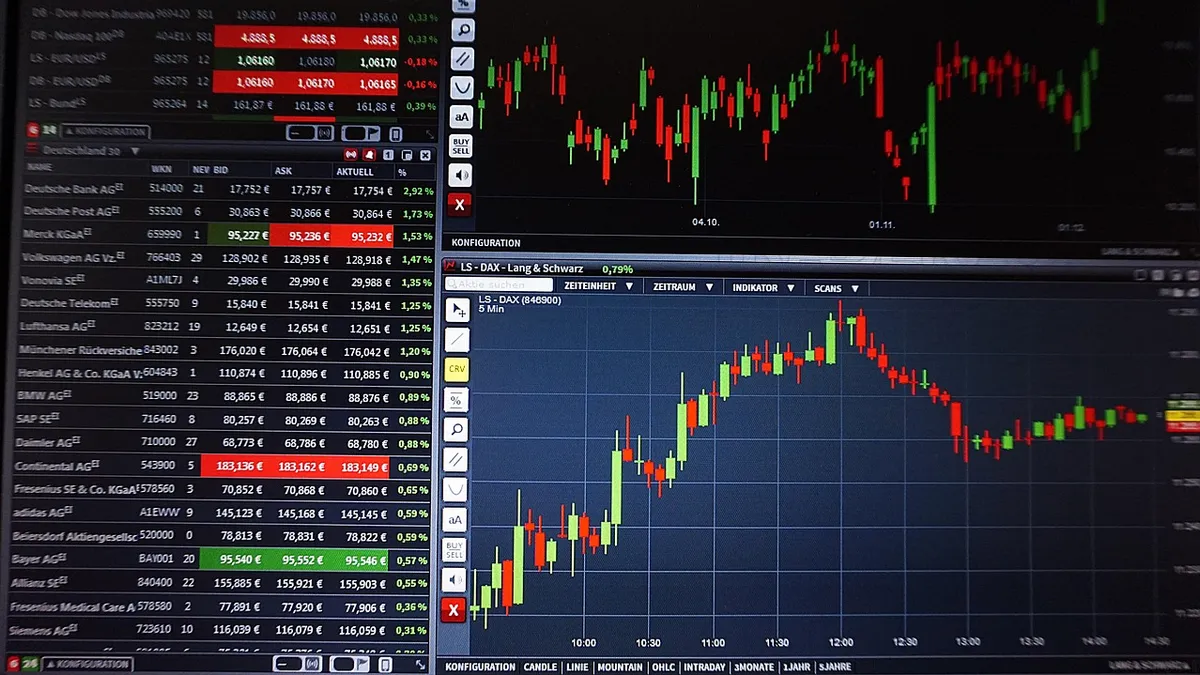
Key point: Identifying low-drawdown signals requires evaluating the historical maximum drawdown, the trade frequency, and the win-loss ratio. A reliable signal provider should offer transparency on their past performance, allowing you to assess whether their risk-per-trade aligns with your personal risk tolerance and account capacity.
Ready to Analyse Signals Professionally?
Join our community to access tools and insights for evaluating signal provider performance, keeping your drawdowns within manageable limits.
Join the CommunityMost traders look at the profit percentage and stop there. That is a trap. You need to look at the maximum drawdown. If a provider makes 50% but has a 40% drawdown, your account is essentially on a rollercoaster you cannot control. I always tell traders to look for providers with a maximum drawdown below 15%. Anything higher often implies the use of a martingale strategy or excessive leverage, both of which are common in the 85% of retail clients who lose money trading options CFDs. When searching for the best forex daily signals, prioritize longevity over short-term spikes in equity.
When you evaluate potential signals, ask yourself if the provider has a clear stop-loss policy. If they don’t, run. A signal without a predefined exit point is just a gamble. You should also verify if the signal frequency is sustainable. MetaTrader hosts over 3,200 commercial signals, but only a handful maintain a low-drawdown profile over a 12-month period. Be selective. A professional trader understands that capital preservation is the primary objective, and profit is merely a byproduct of sound risk management.
Expert tip: I personally ignore any signal provider who doesn’t show at least 100 closed trades. Short-term performance is often just luck. You need a data set large enough to show how they handle losing streaks.
| Metric | Professional Standard | Retail Pitfall |
|---|---|---|
| Max Drawdown | Under 15% | Over 30% |
| Trade History | 100+ trades | Under 20 trades |
| Risk Management | Defined Stop-Loss | No Stop-Loss |
Once you have identified a few candidates, compare them against your own goals. If you are a fast-paced trader, you might find best forex scalping signals telegram for fast-moving traders useful, but remember that higher frequency often leads to higher fees. Fees are the silent killer of account equity. By focusing on quality over quantity, you reduce the noise and improve your overall win rate.
What is the role of fees in your net performance?
Key point: Fees directly erode your net profit. ASIC’s FY2023–24 report highlights that $73 million in fees were paid by retail clients within a total net loss of $458 million. For many, fees were the difference between a profitable year and a loss, with 5% of otherwise-profitable clients failing due to costs.
You might think your broker’s commission or the signal provider’s subscription fee is just a cost of doing business. It is actually a performance-defining factor. If you trade 50 or more positions per month, the math starts to work against you significantly. ASIC reports that 19% of otherwise-profitable active traders saw their results turn into a net loss after accounting for fees. This is why it is critical to select best forex daily signals that do not encourage over-trading simply to generate volume for the provider.
Think of it this way: every time you open a trade, you are starting in the red. If your signals don’t account for the spread and commission, you are fighting an uphill battle. This is why I suggest checking your trade execution logs regularly. If your signals are short-term scalps, the fees might be eating up 30% or more of your gains. That is not sustainable. A professional approach involves calculating the “all-in” cost of every trade, including slippage and commission, to ensure the net expectancy remains positive.
The science angle: Among active traders (50+ open positions/month), 19% of profitable clients lost money after fees in FY2023–24. This confirms that over-trading, often encouraged by signal services to boost their own volume, is a primary cause of retail failure.
If you are trading gold specifically, you need to be even more careful with spreads. You might consider looking at best gold trading signals app for traders who value speed to see how they manage entry points to minimise slippage. Always calculate your net profit after all costs. If the numbers don’t add up, change your strategy. Remember, the market rewards those who are patient and cost-conscious, not those who trade the most.
How to integrate signals into your daily routine?

Key point: Successful signal integration involves using them as a confirmation tool, not a blind execution engine. You should cross-reference signals with your own technical analysis, such as RSI or support/resistance levels, to ensure you are only entering high-probability setups that fit your risk parameters.
Optimise Your Trading Routine
Learn how to filter signals effectively to avoid common mistakes. Get our expert-led guidance for a more disciplined approach to the markets.
Get Professional GuidanceYou need a routine. Without it, you are just reacting to notifications on your phone. I start my day by checking the economic calendar. If there is high-impact news, I ignore most signals regardless of their source. Volatility is great for some, but it is a nightmare for those who don’t know how to hedge. You should treat signals as a secondary opinion, not your primary source of truth. The best forex daily signals are those that complement your existing strategy rather than replacing your decision-making process.
When a signal arrives, perform a quick check. Is the RSI oversold at 30 or overbought at 70? Does the entry line up with a major support level? If the signal says “buy” but the price is hitting a strong multi-year resistance, ignore it. My personal rule is: if I can’t justify the trade in three sentences, I don’t take it. This keeps me out of bad trades and saves my capital for the ones that actually matter. Consistency in your daily routine is what separates the long-term survivors from the short-term speculators.
Expert tip: I use a simple “1% rule”. Regardless of the signal’s confidence, I never risk more than 1% of my account on any single trade. It is the only way to survive the inevitable losing streaks that even the best traders face.
You are the CEO of your trading account. A signal provider is just a consultant. You have the final say on every single order. Keep this in mind when you are managing your portfolio. By maintaining control, you ensure that your trading journey remains within your own risk parameters, regardless of market conditions.
Common pitfalls to avoid when choosing a provider
Key point: Avoiding providers who guarantee profits or use overly complex, non-transparent strategies is essential. Focus on providers who share their full trade history and operate within regulated frameworks to ensure your capital is not exposed to unnecessary risks or predatory fee structures.
The market is not a place for “get rich quick” schemes. It is a place for disciplined risk management. If you feel pressured to trade, step away. The market will still be there tomorrow. Always remember that 68% of retail clients lose money, and you don’t want to be in that statistic. By choosing your sources carefully and sticking to your risk limits, you are already ahead of the majority. When you finally find the best forex daily signals, you will realize that they are not about finding the next big win, but about consistently protecting your capital while capturing small, manageable gains.
Are forex signals reliable for beginners?
Generally, no. Signals should be used as a learning tool to cross-reference with your own analysis. Relying solely on them without understanding risk management often leads to significant capital loss, as evidenced by the high failure rates among retail CFD traders.
How much should I risk per trade?
Professional traders typically risk between 0.5% and 1% of their total account balance per trade. This ensures that a single bad signal or a string of losses does not wipe out your account, allowing you to stay in the market longer.
Does copy trading count as a signal service?
Yes, copy trading is a form of automated signal execution. ASIC notes a growing interest in this area, but it remains high-risk. Ensure you understand the underlying strategy and the fees involved before committing your capital to any copy trading platform.
What is a red flag in a signal provider?
Any provider promising guaranteed returns, using aggressive marketing language, or failing to provide a transparent, long-term trade history is a major red flag. Always verify their claims against the reality of the market.
How often should I review my trading performance?
Review your trades at least once a month. Analyse your win rate, average risk-reward ratio, and total fees paid. This helps you identify if your chosen signals are actually contributing to your growth or if they are simply costing you money.
Note: This content is for general information only and does not constitute personal financial advice. Trading CFDs and margin FX involves a high level of risk and is not suitable for everyone. Always consider your own financial circumstances and read the relevant disclosure documents before trading.
Need Personalised Guidance?
If you are struggling to find the right strategy or need help navigating the markets, reach out to us for a direct consultation.
Contact Us Now
Leave a Reply