Should you do trading if you have never tried it before? Honestly, yes — but only if you start with the right tools, not the right gut feeling. At Crazii JTVertex, we have watched hundreds of Australians step into the markets for the first time, and the ones who lasted were not the boldest or the richest. They were the ones who treated their first trade like a pilot treats a first solo flight: prepared, structured, and deeply aware of what could go wrong. In this guide, Crazii JTVertex will help you decide whether trading is right for you — and if it is, exactly how to take your first step without blowing your account before you even understand what happened. By the end, you will have a clear, honest answer and a concrete starting point built around your situation as a first-time trader in Australia.
Not sure where to begin with trading tools?
Crazii JTVertex has put together a resource specifically for Australian traders who are starting from zero — no jargon, no pressure.
See the 2026 tools guideTable of contents
- 01 Should I do trading if I have no experience — what the real numbers say
- 02 Why do most beginners lose money trading, even when they try hard?
- 03 What trading tools should a first-timer in Australia actually start with?
- 04 What are the biggest mistakes new traders make in their first three months?
- 05 Is copy trading or signal-following a smarter entry point for beginners?
- 06 Frequently asked questions about starting trading in Australia
Should I do trading if I have no experience — what the real numbers say

Key points: According to ASIC’s Report 828 (January 2026), 68% of Australian retail CFD clients lost money in FY2023–24. That is not a reason to walk away — it is a reason to start differently. The 32% who made money did not get lucky. They started with structure.
The evidence: ASIC Report 828 (published 20 January 2026) covers FY2023–24 Australian retail CFD data. Among clients acquired through paid online advertising, 74% lost money — worse than the sector average. This suggests that how you enter the market matters as much as when you enter it. Source: ASIC Report 828.
Expert tip: Crazii JTVertex has seen this pattern repeatedly: the traders who blow their first account are almost never the ones who were undercapitalised. They are the ones who skipped the tool layer entirely and went straight to placing live trades based on YouTube videos. Starting with a signal tool or a structured copy-trading setup is not a shortcut — it is actually the longer game, because it keeps you in the market long enough to learn.
| Trader type | Outcome (FY2023–24) | Key factor |
|---|---|---|
| All retail CFD clients | 68% lost money | No structured entry |
| Clients via paid ads | 74% lost money | Hype-driven entry |
| Profitable retail clients | 32% made $172M net | Prepared, structured |
| Active traders (50+ positions/month) | 19% of profitable ones lost after fees | Overtrading eroded gains |
Why do most beginners lose money trading, even when they try hard?

Key points: Most first-time traders lose not because markets are random, but because they enter without a decision framework. Effort alone does not protect capital. Structure does. The mechanism behind most beginner losses is not bad luck — it is the absence of a repeatable process before the first trade is placed.
The evidence: ASIC Report 828 found that among active retail traders placing 50 or more open positions per month, 19% of those who would otherwise have been profitable ended up losing after fees. More activity, without more structure, produces worse outcomes. The market does not reward effort — it rewards process.
Expert tip: We learned this the hard way. The first three months of trading, we was profitable on paper — tracking every signal, noting every entry and exit in a spreadsheet. Then we went live and immediately started deviating from the same signals because “it felt different with real money.” The tool layer is not just about information. It is about building the habit of trusting your framework when your hands are shaking.
Want a structured starting point instead of guesswork?
The Crazii JTVertex community on Telegram is where Australian traders share real setups, real signals, and honest feedback — no hype.
Join the groupWhat trading tools should a first-timer in Australia actually start with?
Key points: For Australian beginners, the tool layer comes before the platform layer. Start with a signal tool or structured trading resource that helps you build a decision framework. Only then should you open a live account. The sequence matters more than the speed.
The evidence: MetaQuotes reports that the MetaTrader platform hosts over 3,200 free and commercial signals in its built-in marketplace. That is not a small selection — that is an overwhelming one. For a beginner, more options is not better. One reliable, well-documented signal source with a track record of at least 100 trades is worth more than 50 untested ones.
Expert tip: Crazii JTVertex recommends ignoring any signal provider with fewer than 100 documented trades in their history. This is a personal heuristic, not a statistic — but the reasoning is sound. Fewer than 100 trades is not a track record. It is a sample too small to tell you anything meaningful about consistency. A provider with 400 trades and a 55% win rate tells you far more than one with 20 trades and a 90% win rate.
Start with a demo account and one signal source
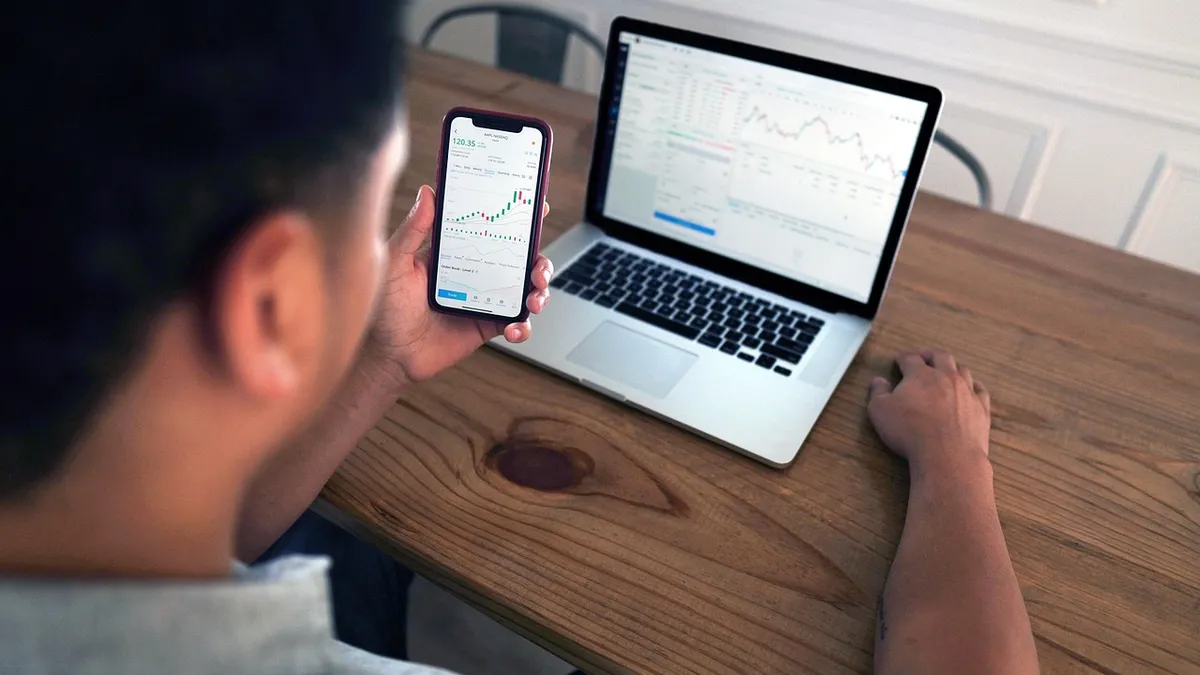
Open a demo account on a regulated platform and follow a single, documented signal source for at least four weeks before placing any live trades. Track every signal — whether you act on it or not.
Build your decision checklist before going live
Before your first live trade, write down the three conditions that must be present for you to enter. If all three are not there, you do not trade. This is your framework. It is not optional.
Move to a live account only after consistent demo results
Consistent does not mean profitable every week. It means you are following your framework every time. Two to three months of disciplined demo trading is not wasted time — it is the foundation that keeps you in the game long-term.
What are the biggest mistakes new traders make in their first three months?

Key points: The three most damaging mistakes for new traders are not about picking the wrong stock or the wrong direction. They are structural: overtrading, ignoring fees, and abandoning a framework the moment it produces a losing trade. All three are avoidable with the right starting habits.
ASIC’s data shows that among active traders placing 50 or more positions per month, 19% of those who would otherwise have been profitable ended up losing after fees. More trades means more fees, more emotional decisions, and more deviation from the original framework. Trading less, with more conviction, almost always produces better outcomes for beginners.
ASIC Report 828 found that 5% of retail clients would have made a net profit but ended up losing purely because of fees — and that the sector’s total fee bill was $73 million in a single year. Fees are not a footnote. They are a material part of your outcome. Before you place a live trade, calculate exactly what each trade costs you in spread, commission, and overnight funding. If you cannot calculate it, you are not ready to place it.
The platform is where you execute. The tool is where you decide. Most beginners spend hours comparing brokers and minutes thinking about their decision framework. This is backwards. A great broker with no framework produces losses. An average broker with a solid framework produces learning — and eventually, results.
Expert tip: We once watched a trader with a genuinely good signal setup lose three months of gains in two weeks — not because the signals stopped working, but because he started “improving” them mid-drawdown. He added filters, changed timeframes, second-guessed every entry. The signals were fine. The behaviour was not. The hardest discipline in trading is not finding a good setup. It is leaving it alone long enough to let it work.
Ready to move from questions to a real trading setup?
Crazii JTVertex uses AIMS as a structured starting point for Australian traders — a tool-first approach built around real signals, not hype.
Get started with AIMS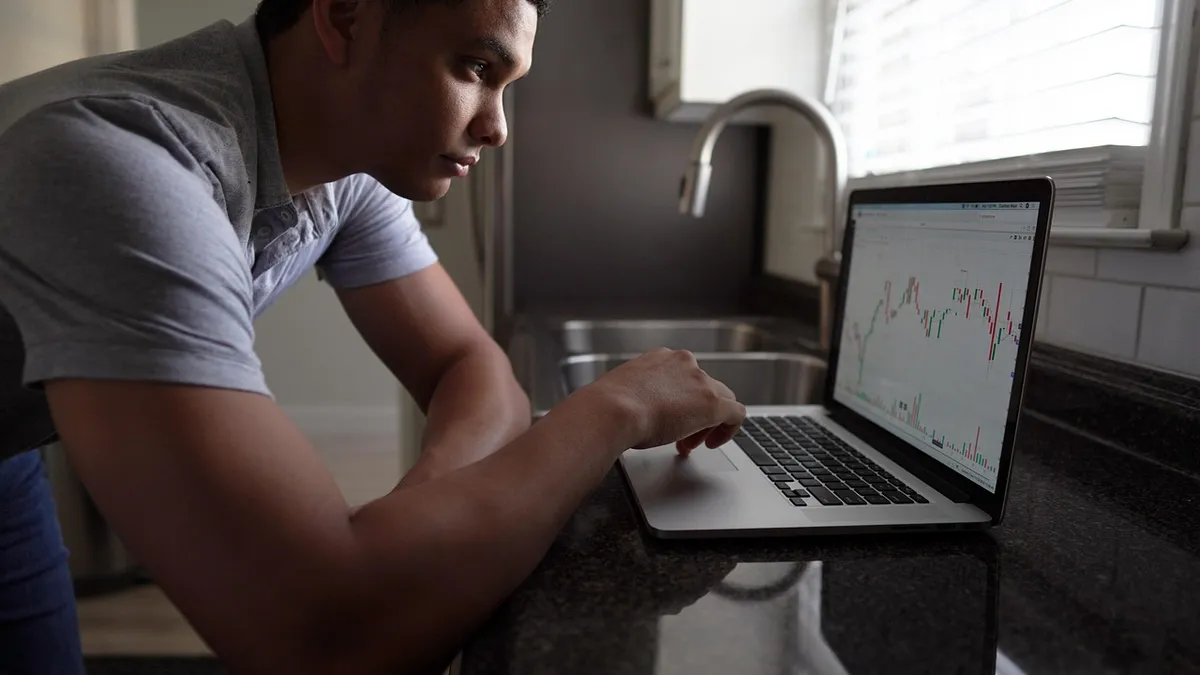
Is copy trading or signal-following a smarter entry point for beginners who want to start trading?

Key points: Copy trading and signal-following are not the same thing, and for beginners, the distinction matters. Signal-following builds your own decision framework. Copy trading outsources it. Both have a place — but for long-term development, signal-following teaches you something copy trading never will: how to think like a trader.
The evidence: ASIC Report 828 notes that only 121 retail clients used managed-account services in FY2023–24 — described as “not widely used.” The contrast with the 26,243 copy traders is striking. Most beginners want some guidance, but not full delegation. Signal-following sits in that middle ground: informed guidance with personal accountability.
Expert tip: Crazii JTVertex’s personal rule for evaluating any signal provider: after following them for 30 days, can you explain their entry logic in two sentences without looking at their notes? If you cannot, you are copying, not learning. The goal is always to eventually not need the signal at all — because you have internalised the framework.
Frequently asked questions about starting trading in Australia
Key points: These are the questions most first-time Australian traders ask before placing their first trade. Honest, direct answers — no fluff, no promises, no guaranteed outcomes.
Should I do trading with a small amount of money first?
Yes. Starting with a small live amount after a demo period is a sensible approach. The purpose is not to make money immediately — it is to experience the emotional difference between demo and live trading without risking capital you cannot afford to lose. Keep the amount small enough that a total loss would not affect your financial wellbeing.
Is trading in Australia regulated, and does that protect me?
CFD and margin FX trading in Australia is regulated by ASIC. Regulation means brokers must meet specific standards, but it does not protect you from losing money. ASIC’s own data shows 68% of retail CFD clients lost money in FY2023–24. Regulation protects the integrity of the market, not the outcome of your trades.
How long does it take to become a consistently profitable trader?
There is no universal timeline, and anyone who gives you a specific number is guessing. What the data does suggest is that traders who rush — placing high volumes of trades early — tend to fare worse than those who build slowly. Treat the first six to twelve months as education, not income generation.
What is the difference between a trading signal and a trading tip?
A trading tip says “buy this.” A trading signal says “here are the conditions present in the market right now, and here is the setup they create.” A signal gives you context and reasoning. A tip gives you an instruction with no framework. For a beginner, the reasoning matters more than the call itself.
Can I trade CFDs in Australia without any prior experience?
Legally, yes. Practically, it carries significant risk. ASIC data shows that 85% of retail clients lost money trading options CFDs in FY2023–24 — the highest loss rate of any product category. Standard CFDs are not far behind. Prior experience, or at minimum a structured demo period with a clear decision framework, is strongly advisable before going live.
Have more questions about getting started?
Reach out to Crazii JTVertex directly — no sales pitch, just a straight conversation about whether trading makes sense for your situation right now.
Contact Crazii JTVertexNote: This article is general information only and does not constitute personal financial advice. Trading CFDs, margin FX, and related products involves significant risk of loss. Past performance is not indicative of future results. Please consider your own financial circumstances and read all relevant disclosure documents before trading. If you are unsure, seek advice from a licensed financial adviser.