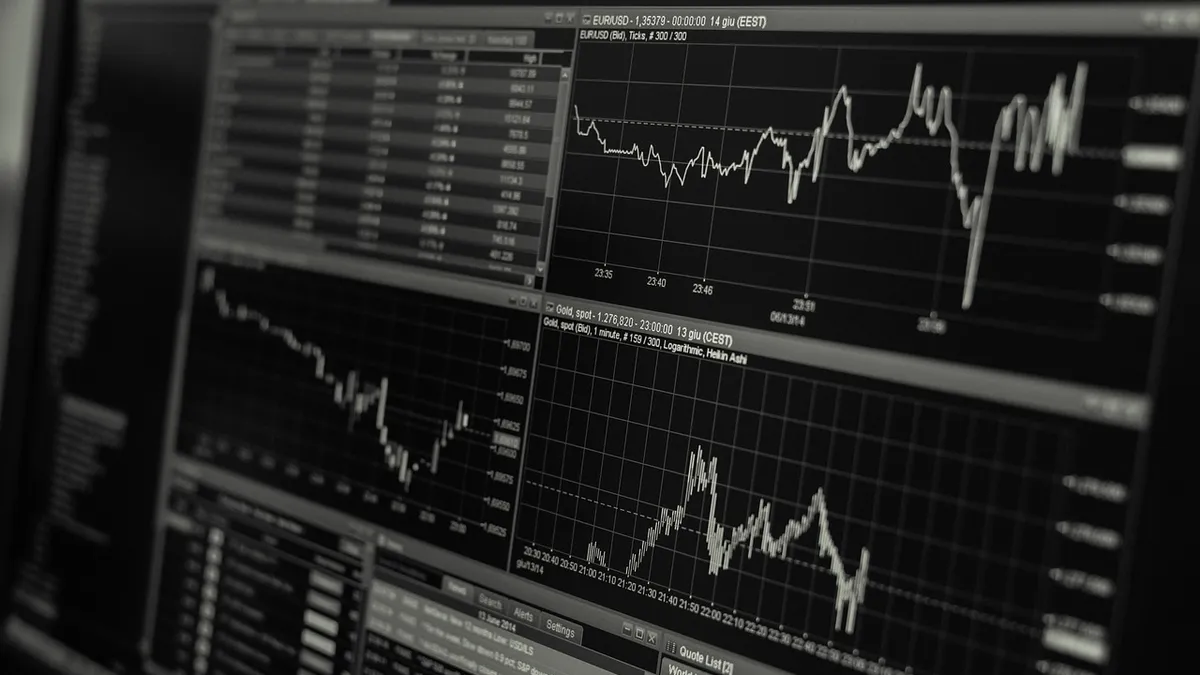
Learning how to get good trading signals involves more than just copying a stream of numbers; it requires understanding the structural risks inherent in the Australian market. By building a systematic approach to evaluating market data, you can move from passive observation to confident, informed decision-making without falling for the hype surrounding “get-rich-quick” alerts. Crazii JTVertex provides the analytical framework to help you navigate these complexities, and you can start your foundational journey here: how to get good trading signals.
Start Your Trading Foundation
Get the essential toolkit for Australian traders to manage risk and build long-term confidence today.
Get StartedTable of contents
Why do most trading signals lead to net losses?
Key points: Most retail traders lose money because they rely on signals without understanding the underlying cost structure. ASIC data shows 68% of retail CFD clients lost money in FY2023–24, with fees often flipping profitable strategies into net losses. Relying on external signals without personal validation is the primary driver of these negative outcomes.
Imagine Mark, a 34-year-old software developer from Sydney. He spent his evenings scrolling through Telegram channels, chasing every “buy” notification that pinged on his phone. He felt a rush of adrenaline with every trade. Then came the end-of-month statement. The balance was down 40%. He followed the crowd, but he didn’t follow the data.
The reality of the Australian market is sobering. According to ASIC Report 828, 68% of retail CFD clients realized a net loss in the 2023–24 financial year. That is 133,674 individuals facing a collective loss exceeding $458 million. Many of these traders were drawn in by paid online advertising, a segment where 74% of new clients ultimately lost money. This phenomenon is not unique to Australia; it is a global trend often linked to behavioral biases. Retail investors frequently underestimate the impact of cognitive biases on financial decision-making, leading to excessive trading and higher transaction costs.
The evidence: Fees are not just a minor expense; they are a structural barrier. In FY2023–24, $73 million in fees were paid by retail traders. Even if a signal provider has a decent win rate, the commission and spread costs can turn a 5% potential profit into a net loss for one in twenty traders.
If you are looking for a more sustainable path, you should read about the Best Trading Signals For Traders — Why Most Free Trading Signals Fail Australian Traders Daily. Understanding the mechanics of failure is the first step toward building a strategy that actually works for your specific financial goals. When you stop looking for the “magic” signal and start looking for a statistical edge, your entire perspective on the market shifts. You begin to see that trading is not about predicting the future, but about managing the probabilities of the present.
Expert tip: When I started, I treated every signal as a directive. Now, I treat them as mere market data points. If the signal doesn’t align with my own technical analysis of the trend, I skip it. Discipline beats the signal every single time.

What is the science behind reliable signal generation and how to get good trading signals?
Key points: Reliable signals are generated through consistent, backtested quantitative models rather than emotional intuition. Whether using technical indicators or price action, a signal is only as good as the methodology behind it. MetaTrader currently hosts over 3,200 signals, but quality varies wildly, making independent verification essential for long-term success.
Science in trading is about repeatability. If a signal generator cannot explain why a trade was taken based on a fixed set of rules, it is not a signal; it is a guess. True signals rely on market structure, volatility, and volume—not on a feeling that the market is “due” for a bounce. To understand how to get good trading signals, you must first look for transparency. A professional signal provider will always disclose their methodology, their maximum drawdown, and their average holding time. Without these metrics, you are flying blind.
You can see how seasoned professionals approach this by reviewing the Best Trading Strategies For Beginners — 9 Things About Trading Signals Beginners Always Get Wro. This helps you understand that the goal isn’t to be right all the time, but to have a risk-to-reward ratio that allows you to survive the losing streaks. The science of signal generation also involves rigorous backtesting. A strategy that worked in a bull market might fail miserably in a sideways or bearish environment. Therefore, high-quality signals are those that have been stress-tested across multiple market cycles, including periods of high volatility and liquidity crunches.
| Feature | Low-Quality Signals | High-Quality Signals |
|---|---|---|
| Basis | Opinion/Hype | Backtested Data |
| Risk Mgmt | None/Vague | Defined Stop-Loss |
| Consistency | Erratic | Rules-based |
Master the Science of Signals
Learn how to build a robust trading system that prioritizes risk management and objective data analysis.
Join TodayReliable signals are often boring. They don’t promise 500% returns in a week. They provide a clear entry, a clear exit, and a clear reason for the trade. This is the foundation for any serious approach to the Best Trading Signals For Australian Traders 2026. By focusing on the process rather than the outcome, you detach your ego from the trade. This psychological shift is perhaps the most important component of learning how to get good trading signals, as it allows you to remain objective even when the market moves against you.
How do you filter noise from high-quality signals?
Key points: Filtering noise requires a strict checklist of market conditions. Before acting on any signal, cross-reference it with your own analysis of the trend, support levels, and economic news. If the signal contradicts your established trading plan, the highest quality move is often to do nothing at all.
Verify the Trend
Check if the signal aligns with the current market direction on a higher timeframe. If the signal is for a long position but the trend is bearish, the risk is significantly higher.
Assess Volatility
Signals generated during low-volatility periods often result in whipsaws. Ensure the market has enough momentum to support the projected move.
Filtering is the act of saying no. Most people find it difficult to sit on their hands when they see a chart moving. However, as the ASIC data suggests, active traders who trade more frequently often see worse net outcomes. In fact, 19% of otherwise-profitable active traders lost money after fees in the last financial year. To filter effectively, you need a “pre-flight checklist.” This should include checking the economic calendar for high-impact news, verifying the current ATR (Average True Range) to set appropriate stop-losses, and confirming that the trade size fits within your risk management parameters.
The evidence: Information overload leads to decision fatigue. By limiting your signal sources to two or three verified providers and focusing on a specific asset class, you reduce the cognitive burden that leads to poor trade execution.
For those serious about refining their process, checking out the Best Trading Signals Website Reviewed for Serious Traders can provide the perspective needed to separate quality from marketing fluff. Remember, the goal of filtering is not to find more trades, but to find the *right* trades. When you reduce your frequency but increase your selectivity, you often find that your net profitability improves significantly, even if your total number of trades drops.
What are the common mistakes when using signals?
Key points: The most dangerous mistake is over-leveraging based on a signal you do not understand. Many retail traders treat signals as a substitute for knowledge, leading to rapid capital depletion. Always treat every signal as a potential loss and manage your position size accordingly.
Avoid Costly Mistakes
Get access to expert mentorship and support to help you navigate the complexities of the Australian CFD market.
Get SupportThe cost of these mistakes is real. With 85% of retail clients losing money on options CFDs, the margin for error is razor-thin. Don’t let your portfolio be the one that funds someone else’s profit. Another common error is “signal hopping,” where a trader jumps from one provider to another after a single losing trade. This prevents the trader from ever seeing the long-term statistical edge of any single system. Consistency in application is just as important as the quality of the signal itself.
Frequently asked questions about trading signals
Are trading signals guaranteed to make money?
No. No signal provider can guarantee profit. ASIC data confirms that the vast majority of retail clients lose money when trading CFDs, regardless of the signals they use. Markets are inherently unpredictable, and any provider promising guaranteed returns is likely operating a scam.
How many signals should I take per day?
Quality is more important than quantity. Taking too many signals increases your exposure to fees and emotional errors. Focus on high-probability setups that align with your plan. For most retail traders, 1–3 high-quality setups per day are more than enough to maintain a healthy trading routine.
Can I automate signal trading?
Yes, through platforms like MetaTrader, but automation requires a robust strategy. If your underlying strategy is flawed, automation will only help you lose money faster. Always test your automated systems in a demo environment before committing real capital.
Is copy trading a safe way to start?
Copy trading carries significant risks. While it allows you to follow others, you are still exposed to market volatility and the risk of the person you are copying having a losing streak. It is not a “set and forget” solution; it requires active monitoring of the trader you are copying.
How do I verify a signal provider’s track record?
Look for verifiable, third-party audited results. Avoid providers who only show screenshots of winning trades without accounting for fees, slippage, or losing positions. Platforms like Myfxbook or MQL5 provide more transparent data, but even then, you should remain skeptical and perform your own due diligence.
Note: Trading CFDs and margin FX involves high risk. The information provided here is for educational purposes only and does not constitute financial advice. Always consult with a licensed professional before making any financial decisions.
Talk to an Expert
Need guidance on your trading journey? Contact our team for professional support and insights.
Contact Us