Tag: best trading view buy sell signal

  • Best Trading View Buy Sell Signal Setups That Work in 2026

    Best Trading View Buy Sell Signal Setups That Work in 2026

    The best trading view buy sell signal setups that actually work in 2026 are not the flashiest ones — they are the ones you can read in under three seconds and act on with a clear head. At Crazii JTVertex, we have spent years in the Australian market watching traders chase every blinking arrow on their screen, only to exit positions at exactly the wrong moment. This guide, built on real screen time and the latest ASIC data, walks you through the setups worth your attention — and the ones quietly draining your account. By the time you finish reading, you will know which signal configurations to build, which to bin, and the one step that separates traders who stay profitable from those who quietly disappear from the market by year-end. That is the promise. Let us keep it.

    Ready to trade with a clearer edge?

    Join the Crazii JTVertex community and get access to real-time signal discussions, setup breakdowns, and a support group that actually responds.

    Join the Group Chat
    Table of contents

    What Makes a TradingView Buy Sell Signal Setup Actually Work?

    What Makes a TradingView Buy Sell Signal Setup Actually Work?
    💡

    Key points: A TradingView buy sell signal setup works when it combines a momentum indicator, a trend filter, and a clearly defined entry rule — not when it has the most arrows on the chart. Fewer signals with higher confluence beat more signals with lower accuracy every single session.

    Here is the honest truth most signal guides skip: the setup is not the signal. The signal is just the trigger. What makes it work is everything around it — the trend context, the timeframe alignment, and the discipline to wait for the full picture before you click buy or sell. Think about Marcus, a 34-year-old electrician from Brisbane who started trading AUD/USD on the side in 2024. He loaded TradingView with six different buy/sell indicators, all firing at once, all disagreeing. Within three months he had taken 47 trades and felt exhausted. The chart looked like a Christmas tree. He was not trading a system — he was reacting to noise. The setups that genuinely work share three structural qualities. First, they have a trend filter — something that tells you whether the broader market is moving up, down, or sideways before the signal fires. Second, they have a momentum trigger — an indicator that confirms the move has energy behind it, not just price drifting. Third, they have a defined exit rule built in from the start, not added as an afterthought when the position goes against you.

    The evidence: According to ASIC Report 828 (published January 2026, covering FY2023–24), 68% of retail CFD clients in Australia lost money — that is more than two-thirds of the market. The data does not say signals are the problem. It says undisciplined use of leverage without a structured approach is. A well-built signal setup is one layer of that structure.

    The trend filter does not need to be complicated. A 200-period exponential moving average on the daily chart tells you the direction of the dominant flow. If price is above it, you are looking for buy signals on lower timeframes. Below it, you look for sell signals. Simple. Boring. Effective. The momentum trigger is where most traders get creative — and sometimes get into trouble. RSI crossing above 30 from oversold territory, or MACD histogram flipping positive after a bearish run, are classic triggers for a reason. They have been tested across decades of market data. The RSI standard thresholds are 30 for oversold and 70 for overbought — not 32, not 68, exactly 30 and 70as Wilder defined them.

    Expert tip: Crazii JTVertex has noticed that traders who set up alerts on TradingView instead of watching the chart live make better decisions. When you stare at a chart for two hours, your brain starts seeing patterns that are not there. The alert fires, you check the context, you decide. That small change — reactive checking instead of active watching — removes a surprising amount of emotional noise from the trade.
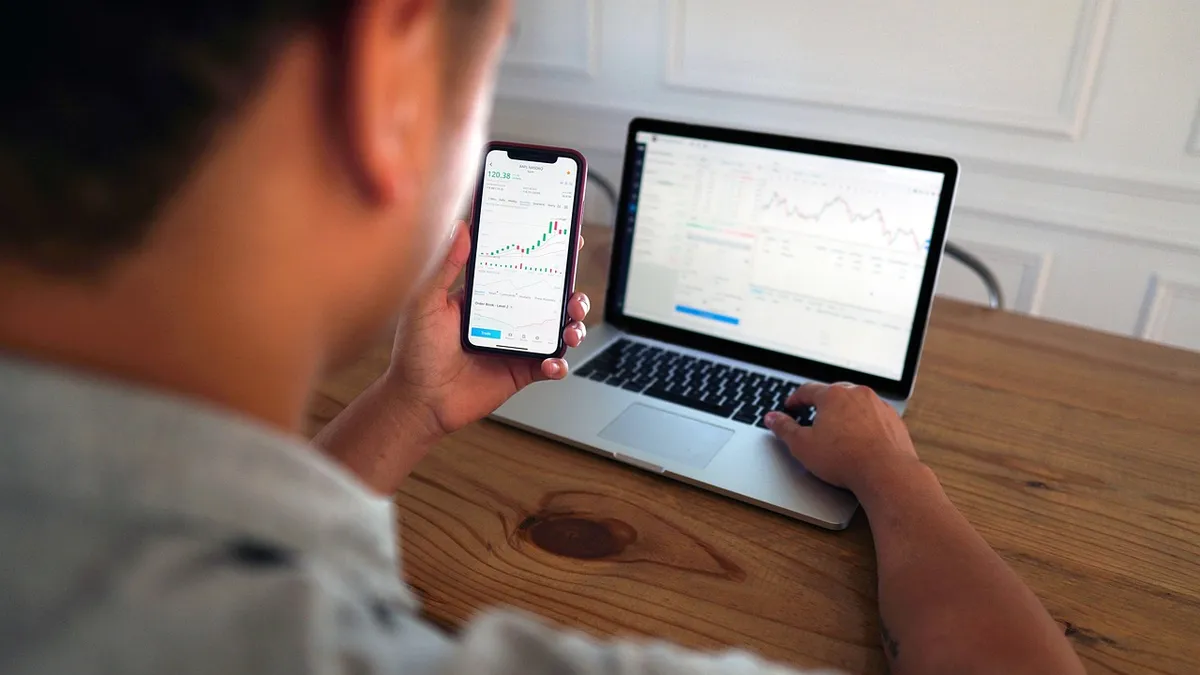
    What Marcus eventually did was strip his chart back to two things: a 200 EMA and a standard RSI. His signal count dropped from 47 trades in three months to about 12. His results changed noticeably. Not because the signals were magic. Because he finally had a rule that said no. That is the part nobody puts on the thumbnail.
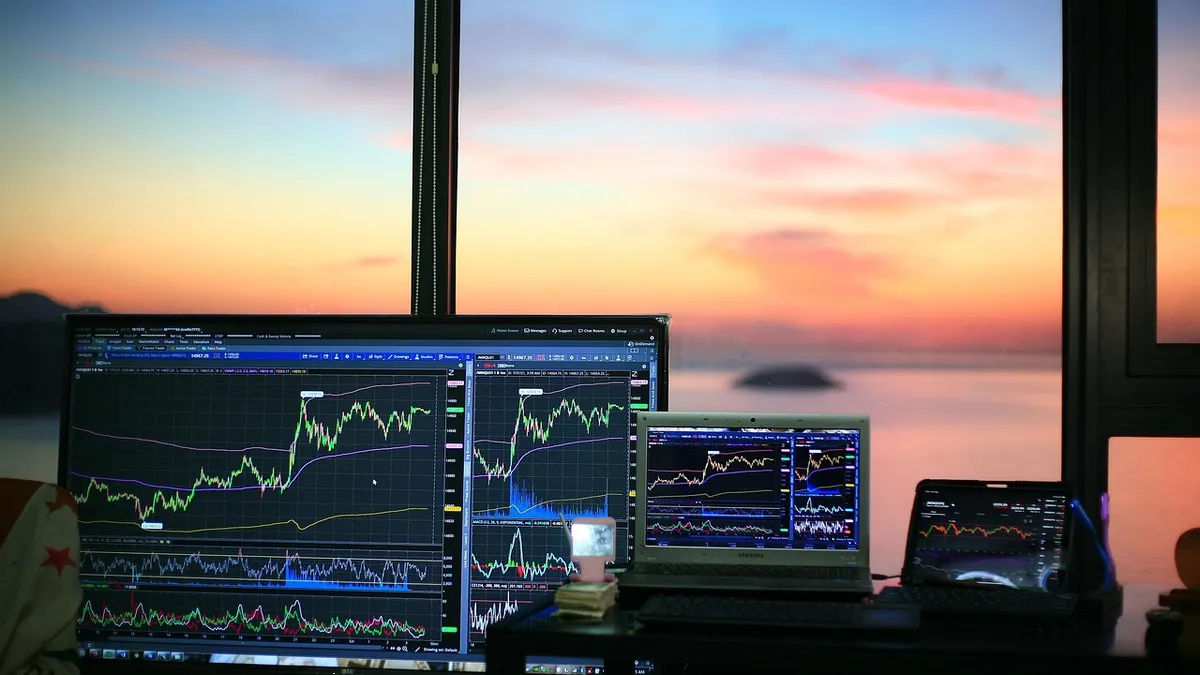
    best trading view buy sell signal setup with EMA and RSI on TradingView chart — Crazii JTVertex
    A clean TradingView buy sell signal setup using a trend filter and momentum trigger — the foundation of any working system. · Photo: TheInvestorPost / Pixabay

    Which TradingView Buy Sell Signal Indicators Are Worth Your Time in 2026?

    Which TradingView Buy Sell Signal Indicators Are Worth Your Time in 2026?
    💡

    Key points: In 2026, the TradingView indicators worth using for buy sell signals are those with transparent logic, adjustable parameters, and a track record you can backtest yourself. Avoid any script that promises “automatic profits” — no indicator does that, and ASIC regulations are clear on what constitutes financial advice.

    Want a curated signal setup you can actually use?

    Crazii JTVertex works with AIMS — a platform built for traders who want structure, not guesswork.

    Try AIMS Now
    You are reading this because you want a shortlist. Here it is — but with the reasoning behind each choice, because a tool you understand is worth ten tools you just copy. The TradingView Pine Script community is enormous. There are thousands of free and paid scripts available on the platform. The problem is not scarcity. The problem is that most traders cannot tell the difference between a well-coded indicator and one that repaints — meaning it changes its historical signals after the fact, making the backtest look better than reality.
    Indicator Signal Type Best Used For Key Risk
    RSI (14) Momentum Identifying oversold/overbought zones at 30/70 Fails in strong trending markets
    MACD (12,26,9) Trend + Momentum Confirming trend reversals and continuations Lags on fast-moving pairs
    Bollinger Bands (20,2) Volatility Spotting breakouts and mean-reversion entries Whipsaws in choppy conditions
    EMA 200 Trend Filter Defining the dominant trend direction Slow to respond to sharp reversals
    Volume Profile Structure Identifying high-value price zones Less reliable on low-liquidity assets
    The repainting issue is the single biggest trap in TradingView scripts. An indicator that repaints will show you a perfect buy arrow on a candle that has already closed — but when you were in that trade live, the arrow was not there, or it was pointing the other way. Always test any new script on a live chart for at least two to four weeks before trusting it with real capital.

    The evidence: ASIC Report 828 notes that 74% of retail clients acquired via paid online advertising lost money in FY2023–24 — worse than the sector average of 68%. Many of those ads promote “plug-and-play” signal tools. The data is not coincidental. Traders who rely on marketed signal products without understanding the underlying logic tend to fare worse.

    For Australian traders specifically, the pairs and instruments you trade matter for indicator selection. AUD/USD during the Sydney-London overlap behaves differently to gold during the New York session. A signal setup calibrated for one will misfire on the other. This is not a flaw in the indicators — it is a context problem.

    Expert tip: When Crazii JTVertex evaluates any TradingView script, the first thing checked is whether it has a “barstate.isconfirmed” condition in the Pine code. Scripts without this condition almost always repaint. You do not need to understand the full code — just search for that phrase in the script editor. If it is missing, treat the signal history with real scepticism.
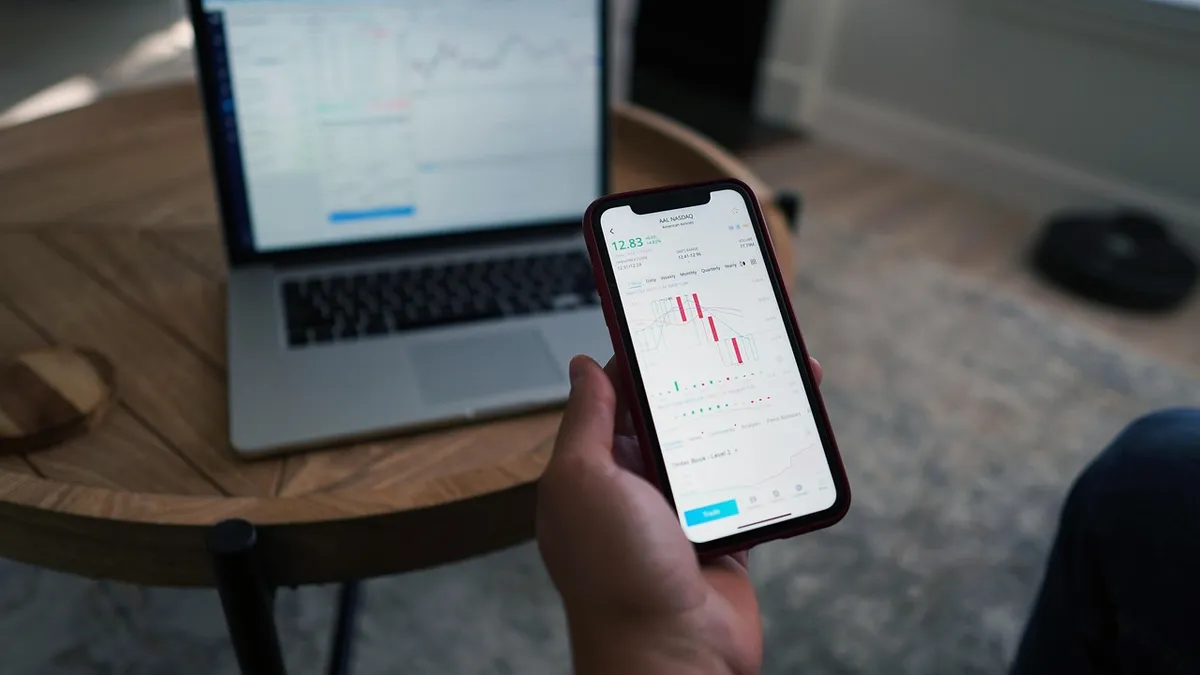
    For traders who want a broader view of which platforms and tools support signal-based trading in Australia, the best trading signals and tools for Australian traders in 2026 covers the full landscape — including how TradingView fits into a broader trading toolkit.
    TradingView buy sell signal indicators comparison chart for Australian traders — Crazii JTVertex
    Comparing core TradingView signal indicators — understanding each tool’s limitations is as important as knowing its strengths. · Photo: TheInvestorPost / Pixabay

    How Do You Build a Buy Sell Signal Setup That Filters Out the Noise?

    How Do You Build a Buy Sell Signal Setup That Filters Out the Noise?
    💡

    Key points: Building a buy sell signal setup that filters noise means using at least two non-correlated indicators on the same chart, setting alerts instead of watching live, and defining your entry criteria before the market opens — not while a candle is forming. Structure removes emotion.

    So what does the actual build process look like? Step by step, not in theory.
    1

    Choose your trend filter first

    Open TradingView on the daily timeframe for your chosen instrument. Add the 200 EMA. Do not add anything else yet. Spend one week simply noting whether price is above or below it each day. This single habit reframes how you read every signal that comes after.

    2

    Add one momentum indicator — just one

    Drop to your trading timeframe (many Australian retail traders use the 4-hour or 1-hour chart). Add RSI set to 14 periods. Your rule: only take buy signals when RSI crosses back above 30 from below, and only when daily price is above the 200 EMA. Only take sell signals when RSI crosses below 70 from above, and daily price is below the 200 EMA. That is your entire entry system. Write it down.

    3

    Set your alert, then close the chart

    TradingView’s alert system is genuinely underused. Set a price alert or indicator alert for your entry condition. When it fires, you open the chart, check the context in thirty seconds, and decide. This is not laziness — it is discipline. Traders who watch charts continuously overtrade. The data on active traders with 50 or more open positions per month is telling: according to ASIC Report 828, 19% of otherwise-profitable active traders ended up losing money after fees in FY2023–24. More activity, worse outcomes.

    4

    Define your stop and target before you enter

    This is where most setups collapse. The entry is clear, but the exit is vague. Before any trade, write down: where does this setup become wrong? That is your stop. Where does it reach its logical target? That is your exit. If you cannot answer both questions before clicking buy or sell, the setup is not ready.

    5

    Run it on paper for 20 trades before going live

    This is the step that separates traders who build lasting systems from those who cycle through setups every month. Twenty trades is enough to see whether a setup has a structural edge or whether it was just lucky in the first five. It takes patience. It also takes about four to eight weeks depending on how often your signal fires — and that is fine.

    Marcus — the Brisbane electrician from earlier — ran exactly this process after stripping his chart back. He spent six weeks paper trading his simplified setup before committing real capital. His observation after the paper period: “The signals were boring. That was the point.”

    Expert tip: Crazii JTVertex recommends ignoring any signal provider or script with fewer than 100 completed trades in their public history. That is a personal heuristic, not a statistical rule — but it is grounded in the reality that small sample sizes hide losing strategies. Fifty trades can look brilliant by chance. A hundred trades starts to show the truth.
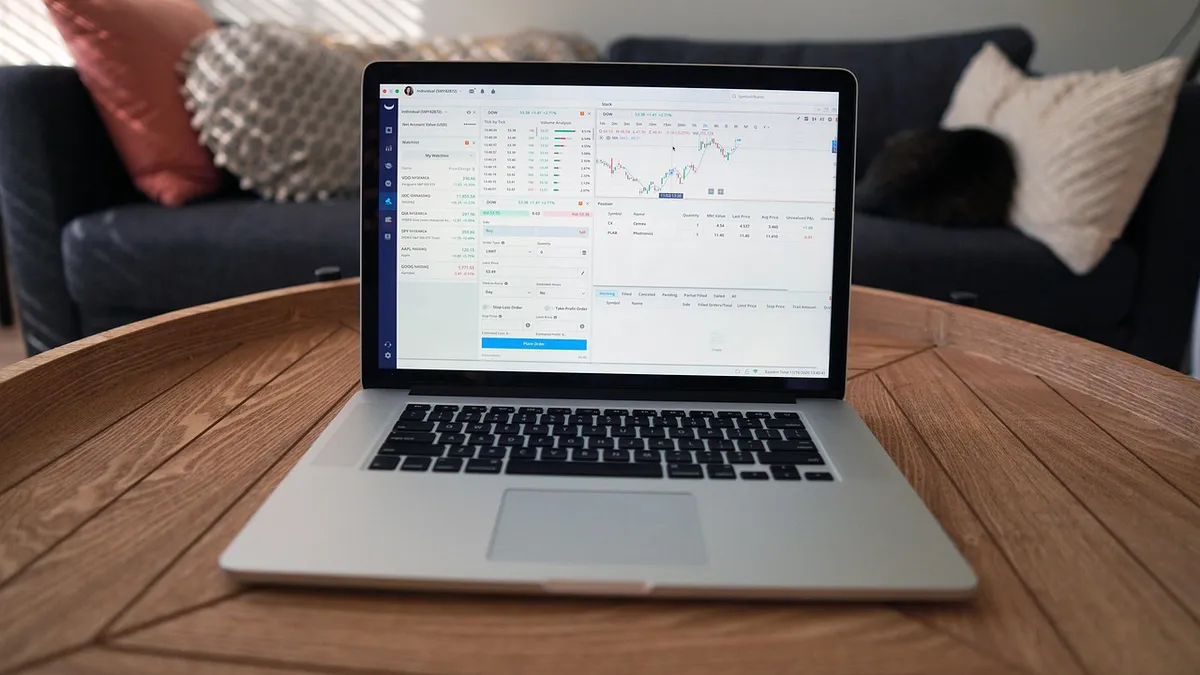
    For traders who are new to this process and want a gentler starting point, the guide on what are the best trading signals for beginners right now walks through the fundamentals before you get to the build stage.
    step-by-step TradingView signal setup build process for noise filtering — Crazii JTVertex
    A structured five-step build process for a TradingView buy sell signal setup — clarity before capital. · Photo: TheInvestorPost / Pixabay

    Build your setup with the right platform behind you

    Crazii JTVertex connects you to a trading environment where signal setups are supported with real community feedback — not just algorithms.

    Explore Crazii

    What Are the Most Common Mistakes Traders Make With Buy Sell Signals?
    What Are the Most Common Mistakes Traders Make With Buy Sell Signals?
    💡

    Key points: The most common mistakes with TradingView buy sell signals are using too many indicators at once, ignoring the broader trend context, and treating every signal as mandatory. A signal is a suggestion. Your job is to decide whether the context supports acting on it.

    You already know signals can work. So why do so many traders end up on the wrong side of the statistics?
    Mistake 1
    Stacking correlated indicators and calling it confluence

    Adding RSI, Stochastic RSI, and CCI to the same chart feels like triple confirmation. It is not. All three are momentum oscillators derived from price. They will agree most of the time — and they will all be wrong at the same time. True confluence comes from non-correlated sources: a momentum indicator plus a volume indicator plus a trend filter. Different data inputs, not different names for the same calculation.

    Mistake 2
    Taking signals against the daily trend

    A buy signal on the 15-minute chart during a strong daily downtrend is not an opportunity. It is a counter-trend scalp with the full weight of the larger timeframe working against you. The signal fires, you enter, price bounces briefly, then continues lower. The indicator was technically correct on the 15-minute. The context was wrong. Always check the daily before you act on anything below it.

    Mistake 3
    Treating every signal as a trade

    This one is quiet and expensive. According to ASIC Report 828, fees alone flipped 5% of retail clients from profit to loss in FY2023–24 — meaning those traders would have made money if they had simply traded less. Think about that: one in twenty profitable traders ended the year in the red purely because of transaction costs. Every unnecessary trade has a cost. Selectivity is a skill, and it is one that the signal-heavy approach actively works against.

    Mistake 4
    Using a signal setup without a defined drawdown limit

    A 20% drawdown on your trading account is a meaningful warning sign — not a fact about where you must stop, but a personal heuristic worth taking seriously. If a setup loses 20% of your account before producing a winning run, the setup may be fundamentally flawed, or the position sizing is too aggressive. Either way, continuing without reviewing the approach is the mistake. The setup should have a review trigger built in before you start, not after the damage is done.

    The evidence: ASIC Report 828 reports that 85% of retail clients lost money trading options CFDs in FY2023–24 — the highest loss rate of any product category in the report. Options CFDs carry additional complexity on top of standard CFD risk. If your signal setup involves these products, the bar for setup quality and risk management is proportionally higher.

    Here is the number that should sit with you: 133,674 retail clients lost money in Australian CFD markets in FY2023–24, with net losses exceeding $458 million. That is not a statistic about bad luck. It is a statistic about the cumulative cost of undisciplined signal use, over-trading, and inadequate risk management. Translated into something more tangible: that is roughly the cost of a house deposit, lost every year, across the Australian retail trading population. The traders who avoid this pattern are not smarter. They are more selective.
    common trading signal mistakes on TradingView with indicator overload — Crazii JTVertex
    Indicator overload is one of the most common — and most avoidable — mistakes in TradingView signal setups. · Photo: geralt / Pixabay

    TradingView Signal Setups vs Manual Chart Reading: Which Is Better for Australian Traders?

    TradingView Signal Setups vs Manual Chart Reading: Which Is Better for Australian Traders?
    💡

    Key points: TradingView signal setups and manual chart reading are not opposites — the best approach for most Australian retail traders is a hybrid: use signals to flag opportunities, then apply manual context to decide whether to act. Pure automation without discretion tends to underperform in volatile or news-driven conditions.

    This is the question that sits underneath most of the others. And the honest answer is: it depends on what you are trying to solve. If your problem is that you miss entries because you cannot watch the chart all day — a signal setup with alerts solves that. You are working a full-time job, you are trading AUD/USD or gold on the side, and you need a system that flags opportunities without requiring you to be glued to a screen at 2pm on a Tuesday. That is a real problem. Signal setups with TradingView alerts are a real solution. If your problem is that you take too many bad trades because you are impulsive — adding more signals will make it worse, not better. More signals means more temptation to act. What you need in that case is a rule-based filter that reduces the signal count, not one that increases it.
    Approach Best For Key Advantage Key Limitation
    TradingView Signal Setup (automated alerts) Part-time traders, busy schedules Removes screen time; reduces emotional trading Can miss contextual nuance in fast markets
    Manual Chart Reading Full-time traders, experienced discretionary traders Adapts to changing market conditions in real time Time-intensive; prone to emotional bias
    Hybrid (signals + discretionary filter) Most Australian retail traders Efficiency of automation plus human context check Requires discipline to not override the system constantly
    The copy trading data from ASIC is worth noting here. In FY2023–24, 26,243 retail clients used copy trading services — a number ASIC describes as reflecting “a growing interest.” That is a meaningful segment choosing to follow signals or strategies set by others rather than building their own. Whether that approach works depends entirely on whose signals you are copying and whether you understand the risk profile of what you are following.

    The evidence: MetaQuotes reports over 3,200 free and commercial signals available on the MetaTrader platform alone. The sheer volume means selection quality matters enormously — and personal heuristics like checking trade count history (the author’s rule of thumb: look for at least 100 completed trades before trusting a signal provider’s track record) become a practical filter in a crowded marketplace.

    For traders who need signals on the go — not just on desktop TradingView — the breakdown of what is the best trading signal app for busy Australian traders covers the mobile-first options that pair well with a TradingView desktop setup. Marcus, by the way, eventually settled on the hybrid approach. He uses TradingView alerts to flag his RSI/EMA setup conditions, then spends two minutes checking the daily chart before deciding whether to enter. He does not enter every alert. That is the point.

    Expert tip: Crazii JTVertex has found that traders who write a one-sentence trade rationale before entering — literally typing “entering because RSI crossed 30 from below on 4H, daily trend is up” into a trade journal — make materially fewer impulsive exits. The act of writing forces a moment of conscious decision-making that breaks the reflex loop. It takes 20 seconds. It changes the outcome of the trade more often than any indicator adjustment.
    And for those moments when the market stops behaving the way any signal suggests it should, the guide on best trading signals to follow when markets are unpredictable is worth reading before those conditions arrive — not during them.
    TradingView signal setup vs manual chart reading comparison for Australian retail traders — Crazii JTVertex
    Signal setups and manual reading work best together — the hybrid approach suits most Australian retail traders in 2026. · Photo: sergeitokmakov / Pixabay

    Frequently Asked Questions About TradingView Buy Sell Signal Setups

    Frequently Asked Questions About TradingView Buy Sell Signal Setups
    💡

    Key points: The most common questions about TradingView buy sell signal setups centre on accuracy, indicator choice, timeframe selection, and risk. The answers below reflect real trading experience and publicly available data — not theoretical ideals.

    Are TradingView buy sell signal indicators accurate?

    No indicator is accurate in isolation. Accuracy improves when signals are filtered by trend context and confirmed by a second non-correlated indicator. The goal is not a high signal count — it is a high-quality signal count. Fewer, better signals with defined risk parameters consistently outperform high-frequency signal approaches in retail trading environments.

    What is the best timeframe for a TradingView buy sell signal setup?

    For most Australian retail traders with limited screen time, the 4-hour chart offers a practical balance between signal frequency and noise reduction. Day traders may prefer the 1-hour or 15-minute chart, but these require active monitoring. Always check the daily chart for trend direction before acting on signals from any lower timeframe.

    Can I use TradingView buy sell signals for ASX stocks?

    Yes. TradingView supports ASX-listed equities, and the same signal logic — trend filter plus momentum trigger — applies. However, ASX stocks have lower liquidity outside market hours, so signal setups that rely on volume data should be interpreted with the trading session in mind. Signals generated outside ASX trading hours carry less weight.

    Do TradingView buy sell signal scripts repaint?

    Some do, and this is a serious issue. A repainting script changes its historical signals after the candle closes, making past performance look better than it was in real time. To check: look for “barstate.isconfirmed” in the Pine Script code. Scripts without this condition are more likely to repaint. Always verify any new script on a live chart before trusting its backtest results.

    Who should not use automated TradingView buy sell signal setups?

    Traders who do not understand what the underlying indicator measures should not rely on automated signals without further education. Signal setups are tools, not decisions. If you cannot explain why a signal fired, you cannot evaluate whether the context supports acting on it. Building that understanding first — even if it takes a few extra weeks — is the more reliable path.

    Note: This content is general information only and does not constitute personal financial advice. Trading CFDs, margin FX, and other leveraged products carries significant risk — according to ASIC Report 828, 68% of retail CFD clients in Australia lost money in FY2023–24. You should consider your own financial circumstances, objectives, and risk tolerance, and read all relevant Product Disclosure Statements before trading. If in doubt, seek advice from a licensed financial adviser.

    Want to talk through your setup before you go live?

    Crazii JTVertex is available for direct questions — reach out through the contact page or join the group chat for community support from traders who are in the market daily.

    Contact Crazii JTVertex


  • Best Trading View Buy Sell Signal That Cuts Guesswork Fast

    Best Trading View Buy Sell Signal That Cuts Guesswork Fast

    Finding the best trading view buy sell signal that cuts guesswork fast is often the difference between a calculated move and a blind gamble. Relying on gut feeling in a market where 68% of retail CFD clients lost money in the last financial year is a recipe for disaster. Crazii JTVertex provides the clarity you need to navigate these high-risk waters, helping you refine your strategy without the emotional noise that clouds judgment. By integrating tools designed for professional-grade analysis, you can focus on building a sustainable trading future, as detailed in our guide to the best trading signals for Australian traders 2026.

    Streamline your market analysis

    Gain access to professional-grade tools that strip away the guesswork and provide actionable market insights. Start your journey with Crazii JTVertex today.

    Get started now
    In this article

    What defines a reliable buy sell signal?

    💡

    Key point: A reliable signal is not a magic prediction but a data-driven trigger based on verifiable technical conditions. It requires clear entry and exit parameters, risk management rules, and consistency across multiple timeframes to effectively filter out market noise for the Australian retail trader.

    You have likely seen countless indicators promising quick wins. But let us be honest, most are just lagging shadows of past price action. A true signal provides a mathematical edge, not a promise of wealth. When you look for the best trading view buy sell signal, you need to see the logic behind the line.

    The science angle: Technical indicators rely on historical price and volume data to forecast potential movements. A robust signal uses confluence—where multiple indicators like RSI (oversold at 30, overbought at 70) and Moving Averages align—to increase the probability of a successful trade outcome.

    Take Sarah, a 34-year-old marketing manager from Sydney. She spent months chasing “hot tips” on social media. She lost 15% of her capital before she stopped guessing and started using a rules-based system. Now, she waits for specific chart patterns before acting. Her stress levels dropped, and her consistency improved. She learned that a signal is only as good as the discipline you apply to it.

    Expert tip: I always ignore signals that do not come with a pre-defined stop-loss. If an indicator tells you when to buy but leaves you guessing when to exit, it is not a tool—it is a trap. Always prioritise capital preservation over potential profit.

    best trading view buy sell signal technical analysis
    Identifying a reliable best trading view buy sell signal requires confluence. · Photo: 422737 / Pixabay

    Ready to refine your strategy?

    Join our community to access reliable signals and professional support. Take control of your trading journey with Crazii JTVertex.

    Join the community

    Why do most retail traders lose money with signals?

    💡

    Key point: Retail traders often fail because they treat signals as shortcuts rather than tools. ASIC data shows that 74% of clients acquired via paid ads lost money, often due to over-trading and high fees, which can flip a profitable strategy into a net loss.

    It is tempting to blame the market. But the reality is often closer to home. Fees eat into your margins, and over-trading turns minor errors into account-draining events. If you follow a signal without understanding the underlying risk, you are essentially flying blind.

    Mistake 1
    Chasing high-frequency signals. Trading too often increases your exposure to fees. ASIC reports indicate that active traders with 50+ positions per month see worse net outcomes after fees.

    Think about the cost of entry. In the FY2023–24 period, retail clients lost $458 million, with $73 million tied directly to fees. When you trade frequently based on low-quality signals, you are working for the broker, not for yourself. You need to be selective.

    The science angle: Market volatility often triggers false signals. Using a filter—such as only trading in the direction of the daily trend—can help reduce the frequency of losing trades and preserve your capital against unnecessary fee accumulation.

    You might want to check out Best Trading Signals Discord Servers Worth Joining in 2026 to see how professional communities vet their signals before taking action. It is about quality, not quantity.

    How do you integrate signals into your daily routine?

    💡

    Key point: Successful integration involves a structured workflow: pre-market analysis, signal validation, and strict execution. By treating signals as a secondary confirmation rather than the primary reason for a trade, you maintain control over your risk management and psychological state.

    You have a life outside of trading. You cannot watch the charts 24/7. That is where a structured routine saves you. You should spend your time planning, not reacting. If you find yourself constantly checking your phone, you are likely over-leveraged.

    1

    Define your session

    Decide whether you are a scalper or a swing trader. Use Best Forex Scalping Signals Telegram for Fast-Moving Traders if you need rapid updates, but ensure it fits your schedule.

    2

    Validate the signal

    Check the signal against your own chart analysis. Does it align with support and resistance levels? If not, skip it.

    Expert tip: I keep a trading journal. Every time I take a signal, I write down why I entered and what the risk was. If I lose, I look back to see if it was a bad signal or a bad decision on my part.

    For those always on the move, consider the Best Trading Signal App for Android Traders on the Go to stay informed without being glued to your desktop. Consistency is your greatest asset.

    Are automated signals better than manual analysis?

    💡

    Key point: Automation removes emotional bias but introduces technical risk. While MetaTrader hosts over 3,200 signals, relying entirely on them is dangerous. A hybrid approach—where you use automated data for speed but apply human judgment for final validation—is typically more sustainable.

    Master the hybrid approach

    Learn how to balance automated tools with your own analysis for better outcomes. Get our expert-led trading roadmap today.

    Get the roadmap

    Automation sounds perfect, right? No emotions, no hesitation. But machines do not understand context. They do not know about upcoming economic news or shifts in market sentiment. If you rely solely on a black-box system, you are one glitch away from a significant loss.

    Mistake 2
    Blindly following copy trading. While interest is growing, copy trading means you are at the mercy of another person’s risk appetite. If they have a bad day, so do you.

    The key is to use automation to filter the noise. Let the computer scan the thousands of assets, but you make the final call. This keeps you in the driver’s seat. It builds a bigger image for your future, ensuring you learn the craft rather than just copying it.

    The science angle: Algorithmic signals are highly efficient at pattern recognition but often fail during “black swan” events or extreme volatility where historical data no longer applies. Diversifying your signal sources and maintaining manual oversight is essential for risk mitigation.

    Comparing top signal platforms for 2026

    💡

    Key point: Choosing a platform depends on your trading style. Whether you prefer the deep integration of MetaTrader or the customisation of TradingView, the best platform is one that aligns with your risk tolerance and provides transparency in performance reporting.

    FeatureManual AnalysisCopy TradingAutomated Signals
    EffortHighLowMedium
    ControlTotalMinimalModerate
    RiskUser-definedManager-dependentSystem-dependent

    When you compare these options, think about what you are actually paying for. Is it convenience or performance? Most professional traders use a mix. They use automated signals for market scanning and manual analysis for execution.

    Expert tip: Don’t jump into the most expensive subscription. Start with a free trial or a demo account. If the platform cannot prove its performance over a 6-month period, walk away. Your capital is too valuable to gamble on unproven tools.

    Remember, the goal is not to find a “perfect” signal but to build a process that works for you. Start small, track your results, and adjust as you go. You are building a career, not a lottery ticket.

    How do I know if a signal provider is legitimate?

    Look for transparency. A legitimate provider shares historical performance, clearly states their risk management strategy, and does not promise guaranteed returns. If they use words like “easy money,” avoid them entirely.

    Are trading signals suitable for beginners?

    Signals can be helpful for learning, but they are high-risk. Beginners should focus on understanding the basics of risk management before relying on any external signal provider.

    Can I use signals for long-term investing?

    Most signals are designed for short-term CFD or FX trading. For long-term investing, fundamental analysis and market trends are generally more reliable than technical buy/sell signals.

    How much capital do I need to start?

    There is no minimum, but you should only trade with money you can afford to lose. Many Australian traders start with small, manageable amounts to test their strategy without risking their financial security.

    What is the most common mistake with signals?

    The most common mistake is over-trading. Many traders try to follow every signal they receive, which leads to excessive fees and emotional exhaustion. Focus on quality setups only.

    Note: This content is for general information only and does not constitute personal financial advice. Trading CFDs and margin FX involves high risk. You should consider your own financial circumstances and read the relevant product disclosure documents before making any trading decisions.

    Need personal guidance?

    Our team is here to help you navigate your trading journey with clarity and confidence. Connect with us to discuss your goals.

    Chat with us