
Tag: best trading strategies for beginners

  • Best Trading Strategies For Beginners — 9 Things About Trading Signals Beginners Always Get Wro

    Best Trading Strategies For Beginners — 9 Things About Trading Signals Beginners Always Get Wro

    Finding the best trading strategies for beginners often feels like navigating a storm without a compass, especially when 68% of retail CFD clients in Australia realised a net loss during the 2023–24 financial year according to ASIC Report 828. You might be staring at a flickering screen, wondering why your carefully chosen entry point turned into a red candle within minutes. Crazii JTVertex helps you build a robust foundation for your trading journey without the common pitfalls that trap most newcomers. This guide complements our deep dive into best trading strategies for beginners to ensure you see the bigger picture.

    Start Your Trading Path

    Gain access to professional tools and community support tailored for the Australian market.

    Get Started
    In this article

    Why do most beginners fail with trading signals?

    💡

    Key point: Beginners often rely on signals as magic bullets rather than tools, leading to over-leveraging and emotional trading. ASIC data confirms that 74% of retail clients acquired via paid online advertising suffered losses, highlighting the danger of chasing hype over proven market structure.

    Imagine Mark, a 32-year-old barista from Sydney. He saw an ad for a signal service claiming 90% accuracy. He invested his savings, followed every alert blindly, and within three weeks, his account balance hit zero. The issue wasn’t the signals; it was the lack of a systemic approach.

    Most signals provided in the MetaTrader ecosystem—where over 3,200 commercial and free options exist—are just data points. Without an underlying trading strategy, these signals are merely noise. You need to understand that the market doesn’t owe you a profit. When you treat a signal as a suggestion rather than a command, you regain control.

    The science angle: ASIC Report 828 notes that active traders—those opening 50+ positions per month—are more likely to lose money after fees. More signals do not equal more profit; they often just lead to higher transaction costs.

    Expert tip: I always tell my peers to treat the first three months as a research phase. If a signal provider doesn’t show their historical drawdown, walk away. Don’t look for the best return; look for the best risk-adjusted consistency.

    best trading strategies for beginners using signals at Crazii JTVertex
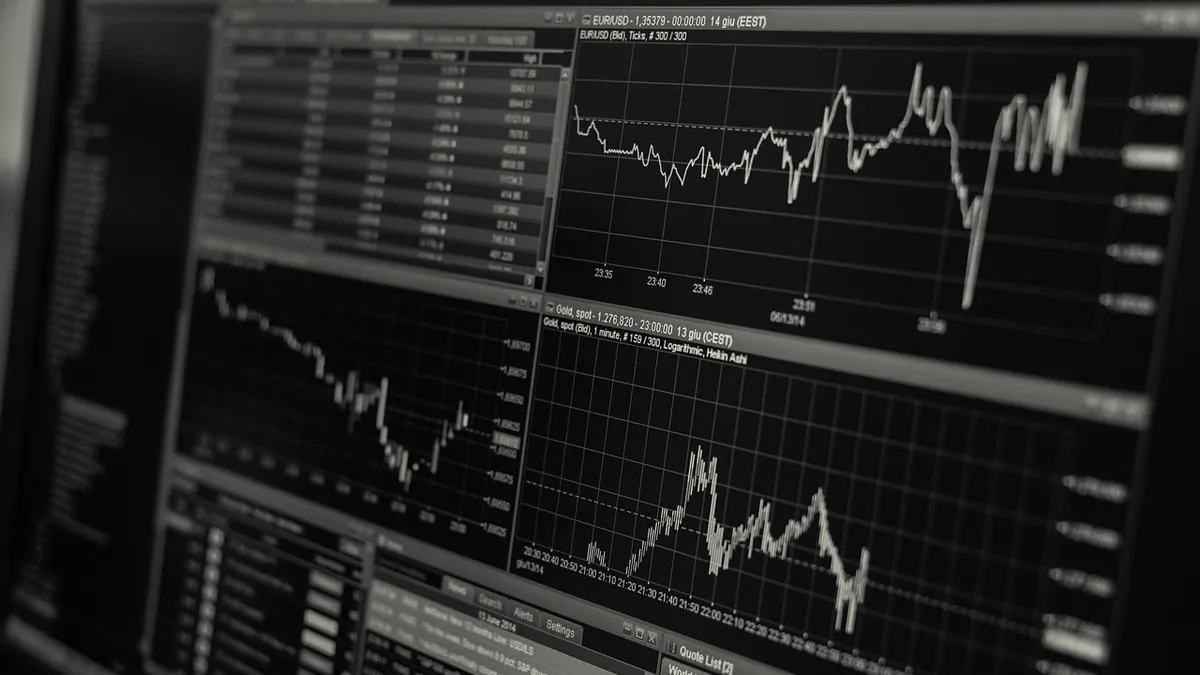
    Understanding the risks behind the best trading strategies for beginners. · Photo: Pexels / Pixabay

    How do professional trading signals actually function?

    💡

    Key point: Professional signals act as indicators of market sentiment or technical patterns, such as RSI or Moving Average crossovers. They provide entry, exit, and stop-loss levels based on predefined algorithms, but they require the trader to validate them against current market conditions.

    A signal is essentially a filtered snapshot of market movement. When an RSI dips below 30, it suggests an oversold condition. A professional trader doesn’t just buy because the signal says so; they look at the trend context. Is there a major news event coming from the RBA? Is the volume supporting this move?

    Think of it like a GPS. The GPS shows the route, but you are the one driving the car. If you see a road closure ahead, you don’t blindly follow the GPS into a ditch. You adjust. Many traders fail because they outsource their brain to the signal provider.

    Need Expert Guidance?

    Join our community to discuss signal validation and professional risk management.

    Join Telegram

    The science angle: Fees are a silent killer. In the 2023–24 financial year, $73 million in fees were paid by retail clients within a $458 million net loss. Choosing a strategy that requires fewer, higher-quality trades can significantly reduce your fee burden.

    Signal TypeBest ForRisk Level
    Trend FollowingBeginnersModerate
    Mean ReversionAdvancedHigh
    BreakoutIntermediateHigh

    What are the 9 critical mistakes beginners make?

    💡

    Key point: The most common mistakes include ignoring risk management, over-leveraging, and failing to account for trading fees. ASIC’s 2026 data shows that 5% of otherwise profitable traders were pushed into a loss solely by these costs.

    Mistake 1
    Chasing high-frequency signals. More trades mean more fees. As shown in the data, high activity is often inversely correlated with success.
    Mistake 2
    Ignoring the spread. Beginners often forget that the spread is a cost. A signal that nets 5 pips might actually result in a loss after commission and spread are factored in.

    You might feel the urge to trade every signal that pops up on your phone. Stop. The best How to Get Best Trading Signals Without Wasting 3 Months approach is to curate your sources. If a signal doesn’t match your risk profile, skip it. Consistency beats intensity every time.

    Expert tip: I personally ignore any signal that doesn’t include a clear stop-loss level. If a provider doesn’t tell you where they are wrong, they are just gambling with your capital.

    How to integrate risk management into your strategy?

    💡

    Key point: Risk management is the only thing that keeps you in the game. By limiting your exposure to 1-2% of your account per trade, you ensure that a single bad signal cannot wipe out your trading capital.

    Optimise Your Strategy

    Learn how to manage risk effectively with our proven tools and resources.

    Register Now
    1

    Calculate Position Size

    Never risk more than you can afford to lose. Use a position size calculator to ensure your stop-loss is mathematically sound.

    2

    Set Hard Stops

    Always place your stop-loss order the moment you enter the trade. Do not move it once it is set.

    For those looking for a Best Trading View Buy Sell Signal That Cuts Guesswork Fast, remember that technology is an assistant, not a replacement for judgment. If you find yourself checking the charts every five minutes, you are over-leveraged.

    Frequently Asked Questions

    Are trading signals worth it for beginners?

    Signals can be useful for learning, but only if you verify them against your own analysis. Many beginners find Are Trading Signals Worth It for Everyday Australian Traders to be a complex question, but the answer lies in strict risk management.

    How much capital do I need to start?

    Start with an amount you are comfortable losing. ASIC data suggests retail trading is high-risk, so never use money meant for essential living expenses.

    Do signals guarantee profits?

    No. No signal provider can guarantee profit. Anyone promising guaranteed returns is likely misleading you. Always prioritize capital preservation.

    Why do I lose money even with good signals?

    Fees and emotional trading are often to blame. If you trade too frequently, costs accumulate quickly, turning potential wins into net losses.

    Where can I find reliable signal providers?

    Look for providers with transparent, long-term performance records. Avoid those that promise quick wealth or have no history of drawdown management.

    Note: This content is general information only and does not constitute personal financial advice. Trading CFDs and margin FX is high-risk. Consider your own circumstances and read the relevant disclosure documents before trading.

    Ready to take the next step?

    Reach out to our team for a personal consultation on your trading strategy.

    Contact Us

  • Best Day Trading Strategies for Beginners Who Hate Complexity

    Best Day Trading Strategies for Beginners Who Hate Complexity

    Finding the best day trading strategies for beginners often feels like navigating a storm without a compass. You want to capture market moves without spending sixteen hours a day staring at flickering green and red candles. Crazii JTVertex helps you master simple, data-backed approaches so you can build a bigger image for your future without the overwhelm of complex indicators. Read more about best day trading strategies for beginners to start building your foundation today.

    Start Your Trading Journey with Clarity

    Get access to our structured support and tools designed for Australian traders. Simplify your process today.

    Get Started
    In this article

    Why do most beginners struggle with day trading?

    💡

    Key point: Beginners struggle because they overcomplicate their charts with lagging indicators and ignore the harsh reality of market fees. ASIC data shows that 74 percent of clients acquired through paid ads lost money, proving that hype-driven trading is a recipe for failure rather than a sustainable strategy.

    Picture this: It is 10:00 AM in Sydney. You have three screens open, five different indicators blinking, and a cup of coffee that has gone cold. You feel the pressure to make a move, but the market is just noise. You are not alone in this frustration.

    The core issue is information overload. Many traders believe that adding more lines to a chart will reveal a secret pattern. In reality, it just hides the price. According to ASIC Report 828, the Australian retail CFD sector saw 133,674 clients lose money in the 2023-2024 financial year. The market is not designed to be easy, and those who treat it as a game often pay the highest price.

    The science angle: Fees are a silent killer. In the 2023-2024 period, $73 million in fees were extracted from retail accounts, contributing to a total net loss of $458 million. If you trade too frequently without a clear edge, the spread and commission costs will erode your capital faster than the market moves.

    Expert tip: When I started, I thought I needed a complex algorithm to win. I was wrong. I shifted my focus to watching the price move at key levels. My results stabilised once I stopped trying to predict the future and started reacting to the present.

    best day trading strategies for beginners Crazii JTVertex
    Simplicity is the foundation of the best day trading strategies for beginners. · Photo: Pexels / Pixabay

    How does price action simplify your daily routine?

    💡

    Key point: Price action focuses on raw market data—highs, lows, and closes—rather than lagging indicators. By ignoring the noise, you reduce your screen time and emotional exhaustion. This method allows you to identify clear support and resistance zones, which are the building blocks of professional trading.

    Why do we insist on making things difficult? Price action is the study of what the market is actually doing, not what an indicator thinks it might do. When you strip away the RSI, MACD, and Bollinger Bands, you see the truth. You see where buyers stepped in and where sellers gave up.

    You might think this sounds too simple. But simplicity is exactly what you need to survive. If you want to understand how to read these moves effectively, check out What Are Signals in Trading and How to Read Them Fast. By mastering the basics, you prepare yourself for more advanced tools later.

    1

    Identify the trend

    Look at the daily chart. Are the highs getting higher? If yes, you only look for buying opportunities.

    2

    Mark your levels

    Draw horizontal lines where the price has reacted at least twice in the past. These are your zones.

    Ready to Master Price Action?

    Get the tools to simplify your charts and focus on what matters. Join our community for real-time support.

    Join Group Chat

    What is the role of risk management in your survival?

    💡

    Key point: Risk management is the only thing standing between you and a zero-balance account. You must define your stop-loss before you enter a trade. Without a strict plan for losses, you are gambling, not trading, which explains why 68 percent of retail CFD clients lost money in the last financial year.

    Imagine a trader named Mark. He enters a trade with 5% of his account. It goes against him. Instead of cutting the loss, he adds to the position, hoping for a reversal. By the end of the day, his account is down 20%. The market does not care about your hope.

    You need to view your capital as your business inventory. If you lose your inventory, you are out of business. The goal is not to win every trade, but to lose small when you are wrong and win big when you are right. This is the core of professional trading.

    The science angle: Data shows that active traders, defined as those with 50 or more open positions per month, are more likely to lose money after fees. Trading less often but with higher quality setups is a proven way to protect your balance.

    If you are looking to refine your approach, reading How To Understand Trading Signals — How Trading Signals Work in 7 Simple Steps for Beginners will give you the framework to manage your risk while using external insights.

    Are trading signals a viable shortcut for newcomers?

    💡

    Key point: Trading signals can be a useful educational tool if used with extreme caution. They provide a view into how experienced traders identify setups. However, relying blindly on them is dangerous. You must verify every signal against your own analysis before risking your capital.

    Are you tempted by the idea of someone else telling you what to buy? It is natural. But remember, the responsibility remains yours. MetaTrader platforms host over 3,200 free and commercial signals, but not all are created equal. Some are high-risk, while others are steady.

    You should treat these signals as a second opinion, not a command. If you want to learn how to select the right ones for your profile, explore our Best Trading Signals for Australian Traders 2026 guide. This is the cornerstone of our approach to helping you navigate the market safely.

    Find Your Edge with Verified Signals

    Get access to curated resources and professional insights to improve your decision-making process.

    Register Now

    Common mistakes that wipe out beginner accounts

    💡

    Key point: The most common mistakes include over-leveraging, emotional revenge trading, and failing to account for fees. ASIC reports indicate that 85 percent of retail clients lost money trading options CFDs, highlighting that using complex, high-leverage products is a primary cause of rapid capital depletion.

    Mistake 1
    Over-leveraging your position. Many beginners use maximum leverage to chase quick gains. This turns a small market movement into a catastrophic loss. Always use leverage as a tool, not a weapon.
    Mistake 2
    Revenge trading after a loss. After losing, you feel a need to get your money back immediately. This leads to poor decisions and bigger losses. Walk away when you lose.
    Mistake 3
    Ignoring the cost of fees. Fees are a material component of your losses. If you trade too often, the broker wins while you lose. Always calculate your net profit after commissions.

    Frequently asked questions

    Is day trading suitable for everyone?

    No. Day trading is a high-risk activity. ASIC data shows that a significant majority of retail clients lose money. You should only trade with money you can afford to lose and consider your personal financial situation carefully.

    How much capital do I need to start?

    There is no fixed amount, but you should have enough to manage risk without over-leveraging. Never trade with funds required for your essential living expenses or emergency savings.

    Do I need to be a math expert to trade?

    Not at all. Trading is more about discipline and psychology than complex mathematics. You need to understand basic risk-to-reward ratios and keep your emotions in check.

    How long does it take to become profitable?

    There is no set timeline. It depends on your dedication, risk management, and the ability to learn from mistakes. Many traders take months or years to develop a consistent edge.

    Can I trade using only signals?

    Relying solely on signals is risky. Signals should be used as a supplementary tool to enhance your own research, not as a replacement for your own analysis and decision-making.

    Note: This content is general information only and does not constitute personal financial advice. Trading CFDs and margin FX products involves a high level of risk and may not be suitable for all investors. You should consider your own financial circumstances and read the relevant disclosure documents before making any decisions.

    Need Personalised Guidance?

    Contact us to discuss how you can improve your trading strategy and manage your risks effectively.

    Contact Us