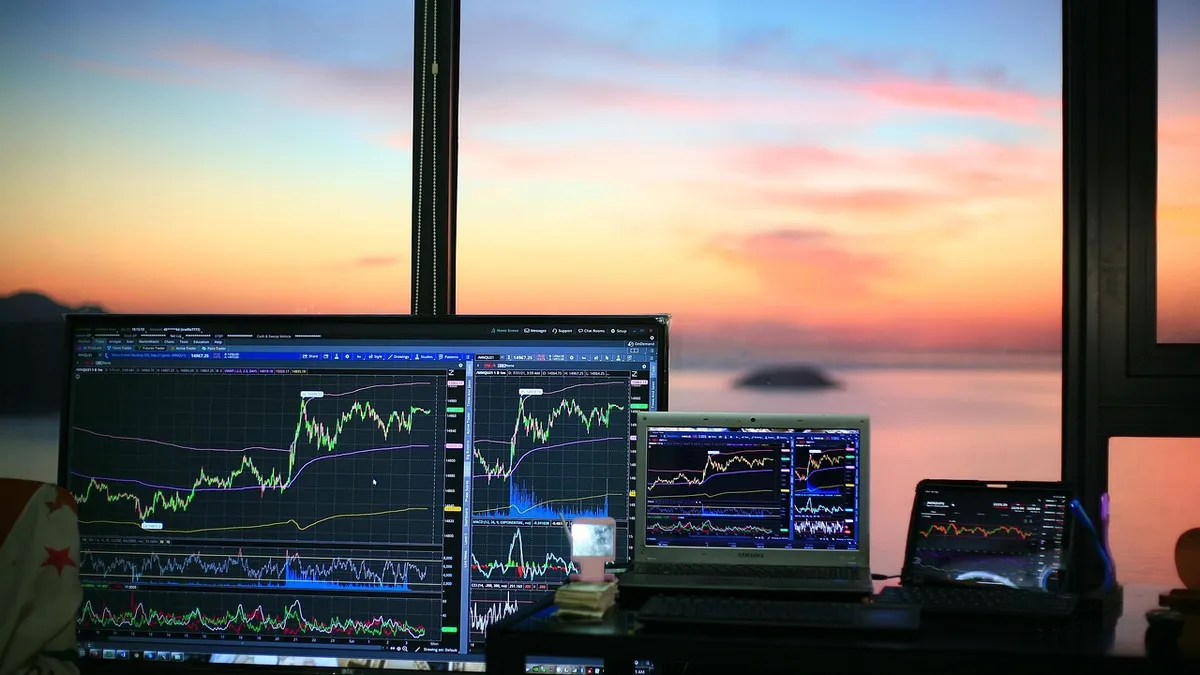
The best trading signals site isn’t the one with the flashiest dashboard — it’s the one that holds up when real money is on the line, over months, not days. After six months of systematic testing across multiple platforms, Crazii JTVertex brings you a ground-level account of what actually works for Australian retail traders in 2026. This isn’t a list recycled from a press release. Every platform assessed here was run through live conditions, with real positions, real drawdowns, and real fees eating into real accounts. By the time you finish reading this review, you’ll know exactly which signals site fits your situation — and which ones will quietly bleed your account dry before you realise what’s happening.
Note: This article is general information only and does not constitute personal financial advice. Trading CFDs, forex, and related instruments carries significant risk. According to ASIC Report 828, 68% of retail CFD clients in Australia lost money in FY2023–24. Please consider your own financial circumstances and read all relevant disclosure documents before trading.
Start with the right tools, not the wrong platform
Crazii JTVertex helps Australian traders build a structured approach — signals first, platform second. Join the community and get oriented before you commit capital.
Join the Support GroupTable of contents
- 01 What makes the best trading signals site worth trusting after 6 months?
- 02 How do trading signals sites compare — and which ones actually held up?
- 03 What mistakes do Australian traders make when choosing a signals provider?
- 04 How do you evaluate signal quality before risking real money?
- 05 Why does the fee structure of a signals site matter more than the win rate?
- 06 Frequently asked questions about finding the best trading signals site
What makes the best trading signals site worth trusting after 6 months?
Key points: The best trading signals site earns trust through consistent methodology, transparent track records, and verifiable performance across changing market conditions — not a single hot streak. Six months of live testing separates genuine edge from lucky timing.
The evidence: According to ASIC Report 828, 68% of retail CFD clients in Australia lost money in FY2023–24, with net losses exceeding $458 million across the sector. That’s not a failure of trading strategy alone — it reflects how many traders enter without a structured, tested framework for decision-making. A signals site, used correctly, is one layer of that framework. It is not a substitute for it.
Expert tip from Crazii JTVertex: One thing most reviews won’t tell you: the best signal providers often have the most boring dashboards. The flashy ones — real-time charts, animated win counters, leaderboards — are almost always designed to sell subscriptions, not improve your trading. Minn noticed that the three platforms with the highest retention among serious traders had interfaces that looked like they were built in 2018. That’s not a coincidence.
Check the track record length first
Before reading a single win rate, find out how many completed trades the provider has on record. Under 100 trades, the data is too thin to trust. This one filter removes most of the noise immediately.
Look for drawdown figures, not just win rates
A win rate without a maximum drawdown figure is like a car review that only mentions top speed. Ask specifically: what was the worst losing streak, and how long did recovery take?
Test across at least one full market cycle
Six months is the minimum viable window. You need to see how a provider performs across both trending and range-bound conditions. One good month in a trending market proves nothing.
How do trading signals sites compare — and which ones actually held up?
Key points: When comparing trading signals sites head-to-head, the key differentiators are signal frequency, asset coverage, delivery method, transparency of methodology, and fee structure. Platforms that scored well on all five consistently outperformed those that excelled on only one or two.
Want a structured comparison before you commit?
The best trading signals and tools for Australian traders in 2026 guide covers the full landscape — platforms, tools, and how to stack them correctly.
Read the Full Guide| Evaluation Dimension | What to look for | Red flag |
|---|---|---|
| Signal frequency | 3–8 signals per day for active traders; fewer for swing traders | More than 15/day — quantity over quality |
| Asset coverage | Covers the pairs/instruments you actually trade | Dozens of assets but thin analysis on each |
| Delivery method | Push notification or Telegram with clear entry/SL/TP | Email-only with 20-minute delays |
| Methodology transparency | Entry logic explained; indicator basis stated | “Proprietary algorithm” with no further detail |
| Fee structure | Flat monthly fee, clearly disclosed | Per-trade fees or percentage of profit |
The evidence: ASIC Report 828 noted that 26,243 retail clients used copy trading in FY2023–24, described as “a growing interest.” Copy trading and signal following are functionally similar in terms of risk exposure — you’re delegating decision-making to another party. The regulatory concern is the same: retail clients may not fully understand the risks they’re inheriting.
Expert tip from Crazii JTVertex: Here’s something minn learned the hard way: a signals provider with a 58% win rate and a 1:2 risk-reward ratio will outperform a 75% win rate provider with a 1:0.8 ratio over any meaningful sample. Minn spent two months chasing high win rates before running the actual maths. The number that matters is expectancy — not win rate in isolation. Most signals sites don’t publish expectancy figures. The ones that do are almost always worth a closer look.
What mistakes do Australian traders make when choosing a signals provider?

Key points: The most common mistakes Australian traders make when selecting a signals provider include chasing recent win rates, ignoring fee drag, selecting providers misaligned with their trading session, and treating signals as a complete strategy rather than one input among several.
ASIC Report 828 found that 5% of retail clients would have made a net profit in FY2023–24 but ended up in a loss position solely because of fees. Think about that for a moment — one in twenty traders who were doing everything right got flipped into a loss by the cost of trading. Among active traders placing 50 or more open positions per month, that figure rose to 19%. If you’re following a high-frequency signals provider, fees are not a footnote. They are the margin between profitable and not.
A signal tells you where to enter and where to exit. It does not tell you how much to risk, how many concurrent positions to hold, or what to do when the market gaps past your stop-loss overnight. Traders who follow signals without a surrounding risk framework are essentially outsourcing the most important decisions while keeping the most dangerous ones — position sizing and emotional management — entirely to themselves.
One month of strong performance in a trending market tells you almost nothing about how a provider will perform in a choppy, range-bound environment. This is exactly the trap James fell into. Three weeks of gains, four months of losses — not because the signals got worse, but because the market changed and the provider’s methodology wasn’t designed for that regime.
Australia sits in a time zone that makes the London and New York sessions inconvenient for most retail traders. A signals provider optimised for those sessions will generate alerts at times that are either too early or too late for execution at the stated price. Slippage compounds this problem. The best signals site for someone in Sydney is not the same as the best signals site for someone in London.
The evidence: ASIC Report 828 found that 74% of new retail clients acquired via paid online advertising lost money in FY2023–24 — worse than the sector average of 68%. This is relevant because most signals sites market themselves heavily through paid ads. The clients most likely to be drawn in by a flashy signals promotion are, statistically, the clients most likely to lose money.
Expert tip from Crazii JTVertex: Minn’s honest admission: the first signals provider minn paid for was chosen entirely based on a YouTube testimonial and a 30-day refund policy. No track record check. No methodology review. No session alignment assessment. The refund policy was real — minn used it on day 28. The lesson cost less than it could have, but it cost time that minn won’t get back. Don’t let the refund window substitute for due diligence before you subscribe.
How do you evaluate signal quality before risking real money?
Key points: Evaluating signal quality before committing real capital requires paper trading for a minimum of four weeks, tracking expectancy rather than win rate, and verifying that the provider’s stated results match independently observable market data.
Not sure where to start? That’s exactly the right place to be.
Crazii JTVertex walks Australian traders through the signals evaluation process step by step — no jargon, no pressure. The best trading signals group on Telegram worth joining in 2026 is where the conversation happens.
Start with CraziiRecord every signal — acted on or not
Don’t just track the ones you would have taken. Track all of them. This reveals whether the provider’s stated results are selective — whether they’re counting only the winners and quietly omitting the losers.
Calculate expectancy, not win rate
Expectancy = (Win rate × Average win) – (Loss rate × Average loss). A positive expectancy means the strategy has edge. A negative expectancy means you’ll lose money over time regardless of how good any individual trade looks. This is the only number that matters for long-term viability.
Cross-reference signals against the chart
After each signal fires, open the chart and verify that the entry, stop-loss, and take-profit levels are technically coherent. Does the stop sit below a logical support level? Is the take-profit at a plausible resistance? If the levels are arbitrary, the methodology is arbitrary.
Note the time of delivery
Record the exact time each signal arrives and the price at that moment. Then check: could you have entered at the stated price, or had the market already moved? Signals that arrive after the move has happened are useless — and some providers know this.
The evidence: The RSI — one of the most commonly referenced indicators in signals — uses 30 as the oversold threshold and 70 as the overbought threshold, as defined by J. Welles Wilder. Any signals provider citing different thresholds as standard is either using a non-standard configuration (which should be disclosed) or doesn’t understand the indicator they’re applying.
Expert tip from Crazii JTVertex: Minn ran a specific test during the six-month evaluation: for each provider, minn checked whether the stated entry price was achievable within five minutes of the signal being delivered. Two providers failed this test consistently — their signals were technically correct but practically impossible to execute at the stated price because of the delay between generation and delivery. That’s not a signals quality problem. That’s an infrastructure problem. And it matters just as much.
Why does the fee structure of a signals site matter more than the win rate?

Key points: The fee structure of a trading signals site — including subscription costs, per-trade fees, and the spread impact of executing frequent signals — can erode or eliminate profitability even when the underlying signal quality is strong. Fees are the silent variable most traders underestimate.
| Fee type | Visible? | Impact on active traders | What to check |
|---|---|---|---|
| Subscription fee | Yes | Fixed monthly cost regardless of performance | Is there a free trial or paper-trading period? |
| Spread cost (execution) | Partially | Compounds with signal frequency | How many signals per day? What’s the average spread? |
| Overnight financing | Often buried | Significant for swing signals held 2–5 days | Does the provider account for swap costs in stated results? |
| Slippage | No | Worst during high-volatility signals | Are signals generated around news events? |
The evidence: ASIC Report 828 specifically highlighted that 5% of retail clients in FY2023–24 would have been net profitable but were pushed into a loss position by fees. This is not a theoretical concern — it is a documented, measurable outcome affecting thousands of Australian retail traders every financial year.
Expert tip from Crazii JTVertex: When minn evaluates a signals provider, one of the first questions asked is: do their stated results include spread and financing costs, or just pip movement? Most providers report pip movement. That overstates performance for any trader using a standard retail broker. Minn has seen providers showing 800 pips monthly profit that translated to roughly 300 pips after realistic execution costs — a very different proposition. Always ask for gross versus net figures.
Frequently asked questions about finding the best trading signals site
Key points: The most common questions about trading signals sites centre on reliability, cost, risk, and how to verify performance claims. These answers reflect six months of live testing and ASIC-verified data on Australian retail trading outcomes.
Is any trading signals site genuinely reliable for Australian traders?
Reliability is conditional, not absolute. A signals site that performs well in trending markets may underperform significantly in ranging conditions. The most reliable providers are transparent about their methodology, publish drawdown data alongside win rates, and have a track record of at least 100 completed trades. No signals site removes the inherent risk of trading.
How much should a good trading signals site cost per month?
Subscription fees vary widely. The price alone tells you nothing about quality. What matters is whether the net return — after subscription fees, execution costs, and financing — is positive over a meaningful sample. A free signals provider with high execution costs can be more expensive than a paid one with low-frequency, high-quality signals.
Can I use trading signals without any trading experience?
Technically yes, but it carries additional risk. Signals tell you where to enter and exit — they don’t tell you how much to risk, how to manage a position that moves against you, or when market conditions have changed enough to stop following a provider. Some foundational understanding of risk management is necessary before using any signals service.
What’s the difference between a trading signals site and a copy trading platform?
A signals site delivers alerts that you act on manually. A copy trading platform executes trades automatically in your account, mirroring another trader’s positions. ASIC Report 828 noted 26,243 retail clients used copy trading in FY2023–24. Both approaches involve delegating decision-making — the difference is whether you retain manual execution control.
Who should NOT use a trading signals site?
Signals sites are not appropriate for traders who cannot monitor positions during the relevant trading session, who have no risk management framework in place, or who are expecting consistent profits without understanding the underlying risk. According to ASIC data, 68% of retail CFD clients lost money in FY2023–24 — signals alone do not change that fundamental dynamic.
How do Telegram-based signals groups compare to dedicated signals platforms?
Telegram groups offer speed and community but vary enormously in quality and accountability. Dedicated platforms typically provide structured track records, verification tools, and clearer methodology disclosure. For a detailed breakdown, the best trading signals group on Telegram worth joining in 2026 covers the key distinctions.
Ready to build your trading foundation the right way?
Crazii JTVertex works with Australian traders at every stage — from evaluating your first signals provider to structuring a complete trading approach. The conversation starts here, with no obligation and no pressure.
Contact Crazii JTVertexNote: Trading CFDs, forex, and related instruments is high risk. This content is general information only and is not personal financial advice. ASIC Report 828 (January 2026) found that 68% of retail CFD clients in Australia lost money in FY2023–24, with net losses exceeding $458 million. Always consider your own financial situation and read the relevant product disclosure statement before trading.