Tag: best trading signals in the world

  • How to Use Trading Signals Without Losing Your Edge

    How to Use Trading Signals Without Losing Your Edge

    Knowing how to use trading signals is the difference between having a tool and actually trading better — and most Australian traders never bridge that gap. At Crazii JTVertex, we have spent years watching traders receive perfectly good signals and still lose money, not because the signals were wrong, but because the process around them was broken. In this guide on how to use trading signals without losing your edge, Crazii JTVertex will show you exactly how to filter, time, and act on signals so they sharpen your decisions rather than replace them. By the end, you will have a repeatable framework you can apply before your next trade.

    Important note: This content is general information only and does not constitute personal financial advice. Trading CFDs, forex, and related instruments carries significant risk. According to ASIC Report 828, 68% of Australian retail CFD clients lost money in FY2023–24. Please consider your own financial circumstances and read all relevant disclosure documents before trading.

    Start with the right tools, not just the right signals

    Crazii JTVertex has mapped out the best trading signals and tools available to Australian traders right now.

    See the 2026 Tools Guide
    Table of contents

    What does it actually mean to use trading signals correctly?
    What does it actually mean to use trading signals correctly?
    What does it actually mean to use trading signals correctly?
    💡

    Key points: Using trading signals correctly means treating them as structured inputs to your decision-making process, not as automatic instructions. A signal tells you when conditions may be favourable — your job is to confirm context, size the position appropriately, and manage the trade once it is open.

    Picture this. It is 7:43 in the morning. Marcus, a 34-year-old electrician from Brisbane, opens his phone before his first coffee and sees a buy signal on AUD/USD. He hits the button. No stop-loss set. No check on what the London session just did overnight. The trade runs against him within the hour. Marcus is not reckless. He is just missing one thing: a process. Using trading signals correctly starts with understanding what a signal actually is. A signal is a conditional statement — “if these market conditions align, a trade in this direction has historically had a favourable probability.” That is it. It is not a promise. It is not a guarantee. It is a structured prompt for your attention. The first step is reading the signal in full before acting. Most signals include an entry price or zone, a stop-loss level, and one or more take-profit targets. Skipping any of these three elements means you are only using part of the information. The stop-loss in particular is not optional — it is the part of the signal that defines your risk. The second step is checking whether the signal fits your current account situation. If your account is down after a rough week, a signal that requires a large position to make the risk-reward worthwhile may not be appropriate right now. The signal does not know your account balance. You do. The third step is confirming the broader context. A buy signal on a currency pair that is trading against a strong macro trend is not automatically wrong, but it deserves more scrutiny. Spend 90 seconds checking the higher timeframe chart. Does the signal direction make sense given what the market has been doing?

    The evidence: ASIC Report 828 (published January 2026, covering FY2023–24 data) found that 74% of retail clients acquired via paid online advertising lost money — a worse outcome than the already-difficult sector average of 68%. This suggests that traders who arrive through promotional channels, often chasing signals or tips, tend to skip the contextual checks that matter most.

    Expert tip from Crazii JTVertex: The single most useful habit we developed was writing one sentence before every signal trade: “I am taking this trade because ___.” If we could not finish that sentence with something specific — not just “the signal said so” — we did not take the trade. It sounds tedious. It saved a lot of capital.

    1

    Read the full signal entry, stop, and target

    Do not act until you have all three components. A signal without a stop-loss level is incomplete information.

    2

    Check your account context

    Match the signal’s implied position size to your current risk budget. The signal does not adapt to your account — you have to.

    3

    Confirm the higher timeframe

    Spend 90 seconds on the daily or 4-hour chart. A signal that aligns with the larger trend has a cleaner risk profile than one trading against it.
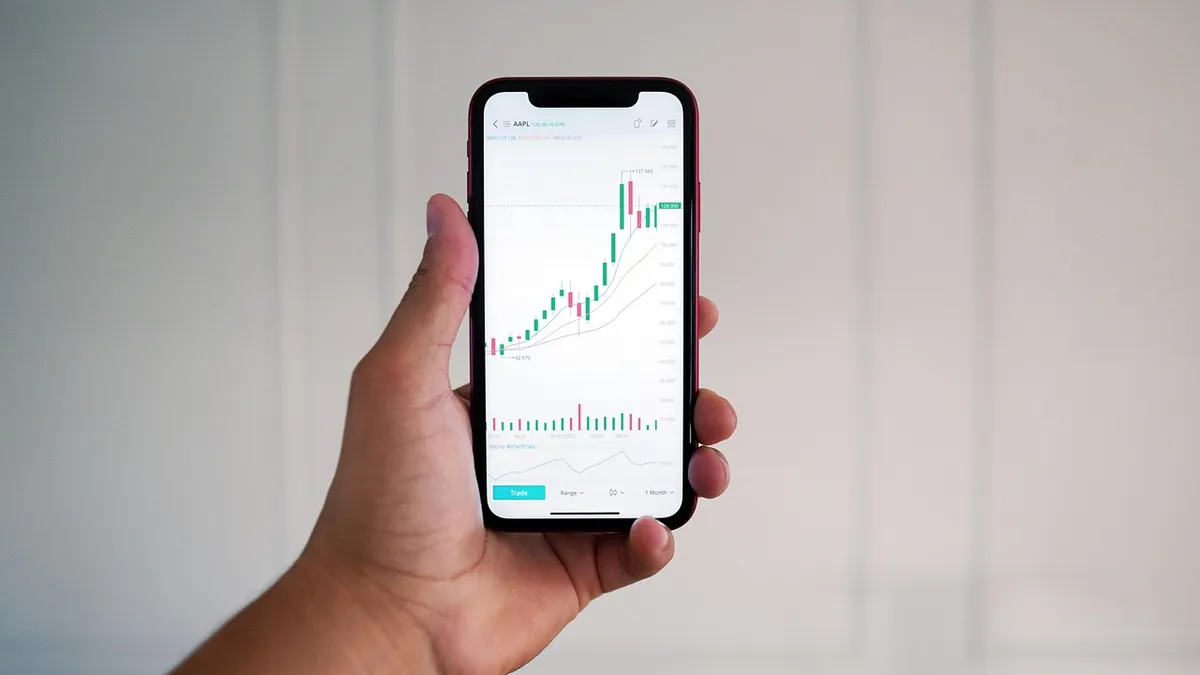
    how to use trading signals correctly with entry stop and target — Crazii JTVertex
    A complete trading signal includes entry zone, stop-loss, and take-profit — all three matter equally. · Photo: TheInvestorPost / Pixabay
    So if signals are just structured prompts, why do so many traders still lose following them? That is exactly what we need to look at next.

    Why do traders who follow signals still lose money?

    Why do traders who follow signals still lose money?
    💡

    Key points: Following signals and using them well are two different things. Traders lose not because signals are inherently flawed, but because they overtrade, ignore fees, skip stop-losses, or chase signals outside their risk tolerance. The mechanism of loss is almost always behavioural, not analytical.

    Here is something most signal providers will never tell you: the signal is rarely the problem. ASIC’s Report 828 — the most current and authoritative dataset on Australian retail trading outcomes — found that 68% of retail CFD clients lost money in FY2023–24. That is 133,674 people losing a combined net of $458 million in a single financial year. To put that in everyday terms: if you lined up every losing retail CFD trader in Australia, you would fill the MCG to capacity and still need to find seats for another 50,000 people. But here is the detail that should stop you cold. Of that $458 million in losses, $73 million was fees. And ASIC found that 5% of retail clients who would have made a net profit ended up losing money purely because of fees. That is one in twenty traders who did everything right on the signal side and still finished the year in the red because they did not account for the cost of each trade. For active traders — those opening 50 or more positions per month — the situation was worse. Among those who were otherwise profitable before fees, 19% ended up losing once fees were applied. More signals acted on meant more fees paid, which flipped their outcome entirely. This is the mechanism. It is not mystical.

    The evidence: ASIC Report 828 identified that among active retail clients (50+ open positions per month), 19% of otherwise-profitable traders lost money after fees in FY2023–24. The implication is direct: signal frequency without fee awareness is a reliable path to a net loss, even when your signal selection is sound. Source: ASIC Report 828, January 2026.

    Marcus from Brisbane made this exact mistake. He was not wrong about the direction of half his trades. He was overtrading — taking every signal that arrived, paying the spread and overnight funding on each one, and watching his account erode from the bottom up rather than from bad calls. What changed for him was not finding better signals. It was setting a rule: a maximum of three open positions at any one time, and no new signal unless the expected risk-reward after fees was at least 1.5 to 1. Not a magic number — his own considered heuristic, based on his account size and the typical spreads on his platform.

    Expert tip from Crazii JTVertex: We used to think more signals meant more opportunities. What they actually meant was more fees and more emotional decisions at the tail end of the day when fatigue was highest. The traders we have seen sustain profitability over time are almost always trading less than they think they should be, not more.

    For a deeper look at how to evaluate which signals are worth acting on in the first place, the guide on best trading signals and tools for Australian traders in 2026 breaks down the landscape in practical detail.
    why traders lose money following trading signals fees and overtrading — Crazii JTVertex
    Fee drag and overtrading are the two most common reasons signal followers still finish in a net loss. · Photo: geralt / Pixabay
    Understanding why losses happen is step one. The next question is sharper: how do you actually evaluate a signal before you commit capital to it?

    Not sure which signal source to trust?

    Crazii JTVertex has reviewed the signal platforms most relevant to Australian traders — so you can compare before you commit.

    Compare Signal Sources

    How do you evaluate a trading signal before acting on it?
    How do you evaluate a trading signal before acting on it?
    💡

    Key points: Evaluating a signal before acting means checking four things: the signal provider’s verified track record (minimum 100 completed trades), the signal’s risk-reward ratio after fees, whether the market context supports the direction, and whether your current account can absorb the stop-loss without breaching your personal risk limit per trade.

    What separates a trader who uses signals well from one who just follows them blindly? The answer is a short checklist they run in under two minutes. Not a complicated system. Four questions, asked in order, every time. The first question is about the source. How many completed trades does this provider have on record, and what is the verified win rate across those trades? We personally disregard any signal source with fewer than 100 completed trades in its history — not because 100 is a magic number, but because anything less does not give you enough data to distinguish skill from a lucky streak. On the MetaTrader platform alone, there are over 3,200 signals available. Most of them are noise. A short track record in a trending market tells you almost nothing useful. The second question is about risk-reward. Before the trade opens, calculate the ratio of potential gain to potential loss — including the spread and any overnight funding if you expect to hold past the session. If the signal targets 30 pips of profit with a 25-pip stop, and the spread on your platform is 2 pips, your actual risk-reward is worse than it appears. This matters more than most traders realise. The third question is about context. Is the signal direction consistent with what the higher timeframe is doing? A short signal on a pair that has been in a strong uptrend for three weeks is not automatically wrong, but it is fighting the current. That does not mean you skip it — it means you size it smaller and hold it less time. The fourth question is about your account. Can you absorb the full stop-loss on this trade without exceeding 1-2% of your account equity on a single position? This is the rule that most traders know and most traders break. The signal does not care about your account size. You must apply that filter yourself.

    The evidence: MetaQuotes reports over 3,200 free and commercial signals available through the MetaTrader 5 Signals marketplace as of June 2026. The volume of available signals makes provider selection a critical skill — the majority of providers do not have statistically meaningful track records. Source: MetaQuotes, MQL5 Signals, mql5.com/en/signals/mt5, accessed 16 June 2026.

    Expert tip from Crazii JTVertex: One thing we rarely see discussed: the drawdown pattern of a signal provider matters as much as the win rate. A provider with a 65% win rate who occasionally loses 15 consecutive trades is a very different risk profile from one with a 55% win rate and a maximum drawdown of 8%. We look at the equity curve shape, not just the headline number. A smooth curve with a gradual upward slope tells me more than a flashy percentage.

    Evaluation Criterion What to Look For Red Flag
    Track record length 100+ completed trades minimum Fewer than 50 trades, or less than 3 months of history
    Risk-reward ratio At least 1:1.5 after fees and spread Target barely exceeds stop-loss before costs
    Drawdown history Maximum drawdown below 20% (author’s heuristic) Large single-session losses in the equity curve
    Higher timeframe alignment Signal direction consistent with daily trend Signal directly opposes a strong established trend
    Position sizing fit Stop-loss within 1-2% of your account equity Required size exceeds your per-trade risk limit
    For a broader understanding of what signals are and how they are generated, the article on what is a trading signal and why it matters in 2026 covers the foundations clearly.
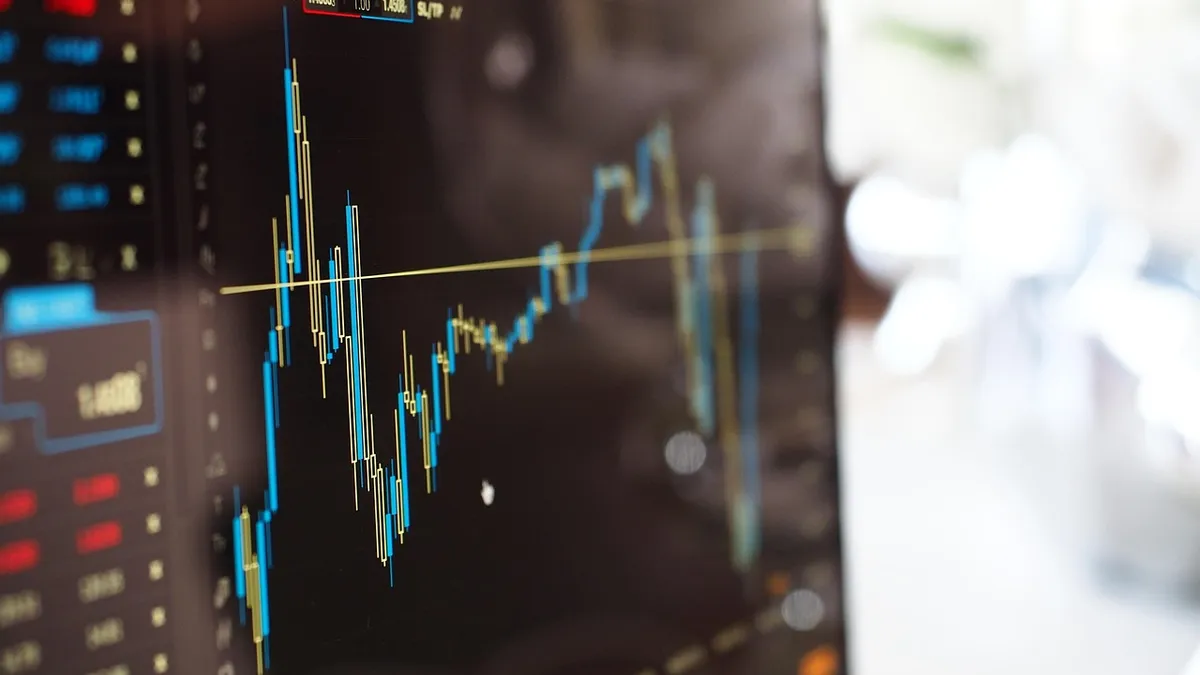
    evaluating trading signal quality track record and risk reward — Crazii JTVertex
    A two-minute signal evaluation checklist can prevent the majority of poor entries before they happen. · Photo: 3844328 / Pixabay
    Knowing how to evaluate a signal is essential. But even traders who evaluate well make predictable, avoidable mistakes once the trade is live. Those mistakes are worth naming directly.

    Want signals that have already been filtered for quality?

    Crazii JTVertex points Australian traders toward signal sources that meet a real standard — not just the ones with the biggest marketing budget.

    See Crazii’s Recommendations

    What are the most common mistakes when using trading signals?

    What are the most common mistakes when using trading signals?
    💡

    Key points: The three most damaging mistakes when using trading signals are: moving your stop-loss after entry, taking signals outside your planned trading session, and treating a high win rate as proof of a reliable provider without checking drawdown history. Each of these mistakes erodes your edge silently over time.

    Most traders do not blow up on one bad signal. They erode slowly, through habits that feel reasonable in the moment.
    Mistake 1
    Moving the stop-loss after the trade is open

    The signal gave you a stop-loss level for a reason — it marks the point where the trade thesis is invalidated. Moving the stop wider when price approaches it is not risk management. It is hope management. We have done this. It rarely ends well. The stop-loss in a signal is part of the signal’s logic, not a suggestion.

    Mistake 2
    Taking signals outside your planned trading hours

    A signal generated for the London session open behaves differently if you are acting on it at 11 pm Sydney time when liquidity is thin and spreads are wider. Signals are context-dependent. The market conditions that made the signal valid may not exist when you execute it three hours later. Decide your trading window in advance and only act on signals that arrive within it.

    Mistake 3
    Conflating a high win rate with a reliable signal source

    A provider with an 80% win rate who uses very wide stop-losses and small take-profits can still produce a net loss over time if the losing trades are large enough. Win rate without position sizing context and drawdown history is a number without meaning. Always ask: what does the losing 20% look like?

    The evidence: ASIC Report 828 found that 85% of retail clients lost money trading options CFDs in FY2023–24 — the highest loss rate of any product category reviewed. Options CFDs are often marketed alongside signal services. The data suggests that product complexity combined with signal-following without adequate understanding is particularly damaging to retail outcomes.

    Marcus hit Mistake 2 hard. He was receiving signals calibrated for the European session and acting on them during the Australian afternoon, often hours after the optimal entry window had closed. The signal was still technically valid — but the entry price had moved, the spread was different, and the risk-reward he was actually getting was not the one the signal implied. He was not trading the signal. He was trading a degraded version of it.

    Expert tip from Crazii JTVertex: We set a hard rule: any signal older than 45 minutes at the time we see it gets skipped entirely, unless the entry price is still within the specified zone. A stale signal is not a signal — it is a historical note. Acting on it is a different trade from the one the provider intended.
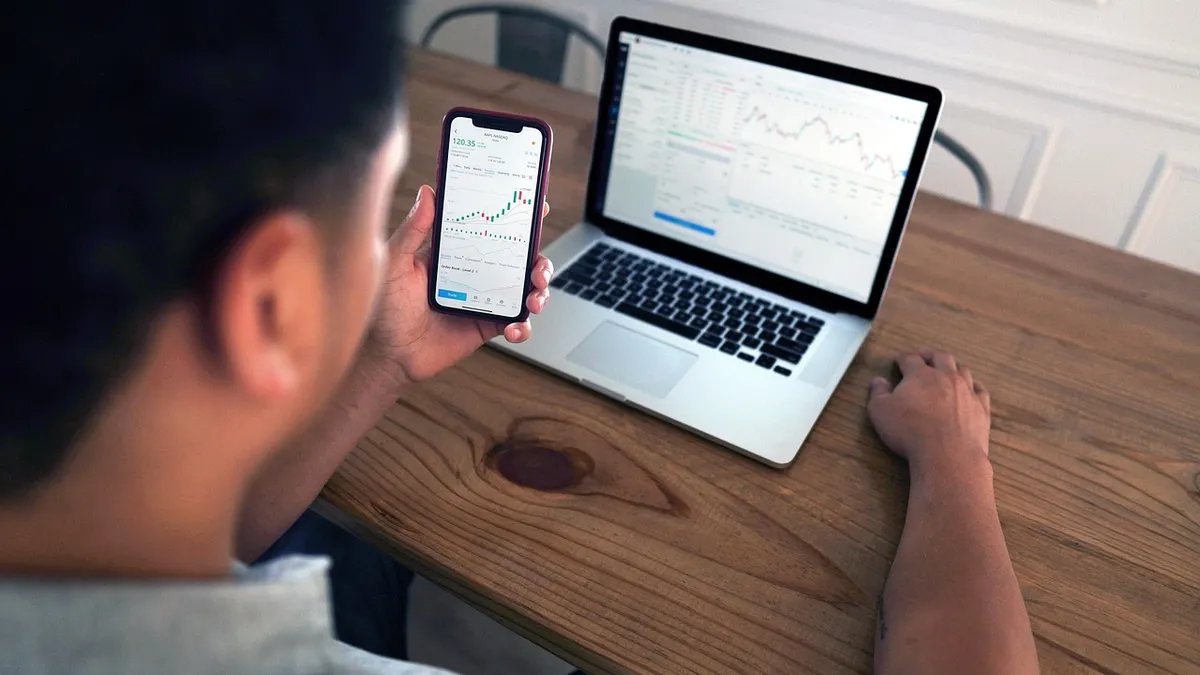
    If you want to go deeper on the analytical side of signal selection, the resource on the best trading signals book every serious trader should own covers the foundational frameworks that underpin good signal analysis.
    common mistakes using trading signals stop loss and timing errors — Crazii JTVertex
    Moving stop-losses and acting on stale signals are the two habits that most consistently erode a trader’s edge. · Photo: Pexels / Pixabay
    Avoiding mistakes is defensive. What does the offensive side look like — a personal workflow that actively protects and builds your edge over time?

    How do you build a personal signal workflow that protects your edge?

    How do you build a personal signal workflow that protects your edge?
    💡

    Key points: A personal signal workflow is a written, repeatable process covering four stages: signal intake (when and how you receive signals), pre-trade evaluation (the checklist from Section 3), trade management (stop-loss discipline and partial exits), and post-trade review (logging outcomes to identify patterns in your own behaviour). Without all four stages, signals remain reactive rather than strategic.

    Here is the honest reality that most signal guides skip entirely. Signals do not protect your edge. Your workflow does. Signals are inputs. The workflow is the system that determines whether those inputs improve your results or add to the noise. The intake stage is about controlling when and how signals reach you. Notifications arriving at all hours create the conditions for impulsive decisions. We recommend designating one or two windows per day — say, 30 minutes before the London open and 30 minutes before the New York open — where you review signals actively. Outside those windows, notifications are off. This alone removes a significant category of mistakes. The pre-trade evaluation stage is the checklist from Section 3, applied without shortcuts. Every single time. The temptation to skip it when a signal “looks obvious” is exactly when you should slow down most. The trade management stage is where most traders lose discipline. Once a trade is open, the job is to let the signal’s logic play out — not to intervene emotionally. If the price is approaching your stop-loss, the stop-loss does its job. If the first take-profit target is hit, consider taking partial profits and moving the stop to breakeven on the remainder. This is not a rule — it is a reasonable approach that reduces the emotional cost of managing open positions. The post-trade review stage is the one almost nobody does consistently. After each trade closes, spend five minutes logging: the signal source, the entry and exit prices, whether you followed your process, and what you would do differently. Over three months, patterns emerge. You will see which signal sources perform well for your trading style and which do not. You will see whether your own deviations from process help or hurt.

    The evidence: ASIC Report 828 noted 26,243 retail clients used copy trading in FY2023–24, with ASIC observing “a growing interest in copy trading” — a form of automated signal following. Yet overall retail loss rates remained at 68%. This suggests that even systematic signal following does not guarantee better outcomes without appropriate risk controls at the individual level.

    Expert tip from Crazii JTVertex: The post-trade log is where your actual edge lives. We discovered through logging that we consistently outperformed on signals in the first two hours of the London session and consistently underperformed on signals taken after 8 pm Sydney time. That single insight — which took about six weeks of logging to surface — was worth more than any signal subscription we have paid for. You cannot find that pattern without the data.
    Who is this workflow NOT for? If you are trading with capital you cannot afford to lose, no workflow will change the fundamental risk profile of the market. And if you are looking for a system that requires no attention or judgement, copy trading exists — but ASIC data shows that even automated signal-following does not reliably protect retail clients from losses. This framework is for traders who are committed to being active participants in their own process, not passengers. For traders who want to take the next step and understand how signals apply specifically to crypto markets, the guide on best crypto buy sell signals that remove emotional guesswork is worth reading alongside this one.
    personal trading signal workflow intake evaluation management review — Crazii JTVertex
    A four-stage signal workflow turns reactive signal-following into a deliberate, reviewable process. · Photo: TheInvestorPost / Pixabay
    Marcus built his workflow over about eight weeks. Not perfectly — he still skips the post-trade log more than he should. But his account is no longer eroding. The signals he acts on now are a fraction of the ones he used to take, and the ones he does take are better filtered. That is the shift. Not better signals. Better process.

    Frequently asked questions about trading signals
    Frequently asked questions about trading signals

    How many trading signals should I act on per day?

    There is no universal number, but acting on fewer signals with higher conviction tends to produce better outcomes than acting on every signal that arrives. A practical starting point is a maximum of two to three positions open simultaneously, adjusted to your account size and risk tolerance.

    Can I use trading signals without any prior market knowledge?

    You can follow signals without deep knowledge, but you will struggle to evaluate their quality or manage trades sensibly when conditions change. A basic understanding of the instrument you are trading — including what moves it and how leverage works — is the minimum required to use signals responsibly.

    Are free trading signals as reliable as paid ones?

    Signal quality is determined by track record, risk-reward consistency, and drawdown history — not by price. Some free signals outperform paid ones. Evaluate every source by the same criteria regardless of cost, and be especially sceptical of any provider that does not publish a verifiable trade history.

    What is the difference between copy trading and using trading signals manually?

    Copy trading executes positions automatically based on another trader’s activity. Manual signal use requires you to review, evaluate, and execute each trade yourself. Manual use gives you more control and allows you to apply your own risk filters — but it also requires more time and discipline. ASIC data shows 26,243 Australian retail clients used copy trading in FY2023–24.

    How do I know if a trading signal provider is legitimate?

    Look for a verified track record of at least 100 completed trades, transparent drawdown history, and clearly stated risk parameters per signal. Be cautious of providers who only share winning trades or who promise consistent returns. In Australia, any service providing personalised financial advice must hold an Australian Financial Services Licence.

    Ready to talk through your signal setup?

    Crazii JTVertex works with Australian traders to build signal workflows that fit their schedule, account size, and risk profile. Start the conversation.

    Join the Community


  • How to Get Best Trading Signals Without Wasting 3 Months

    How to Get Best Trading Signals Without Wasting 3 Months

    Learning how to get best trading signals is the primary step for any Australian retail trader aiming to navigate the market with more clarity. Without a structured approach, you risk joining the 74% of new retail clients who lost money after being drawn in by aggressive online advertising, as reported in the latest ASIC REP 828 data. Crazii JTVertex provides the necessary framework to refine your decision-making process, helping you avoid the common pitfalls that lead to unnecessary capital erosion. You can explore our foundational approach in this guide to how to get best trading signals without wasting three months of your time.

    Start Your Trading Journey with Clarity

    Access our curated tools designed for Australian market conditions and avoid the common traps of high-risk trading. Get the guidance you need today.

    Get Started
    In this article

    Why do most signal-based trades fail to deliver?

    💡

    Key point: Trading signals often fail because traders treat them as automated profit machines rather than decision-support tools. ASIC data confirms that 68% of retail CFD clients in Australia lost money in FY2023–24, proving that relying on external signals without personal verification is a high-risk strategy that rarely yields long-term success.

    Picture Mark, a 34-year-old construction manager from Brisbane. He spent three months chasing daily alerts from a Telegram group promising consistent returns. He followed every notification, his phone buzzing at 2 AM, his heart racing with every tick. He lost $4,200 in the first quarter. The problem wasn’t his lack of enthusiasm; it was his lack of a filter.

    Most retail traders treat signals as a substitute for knowledge. They see a buy alert and jump in. They ignore the broader market context or the spread costs. When you outsource your decision-making, you also outsource your risk management. This is why understanding What Are Signals in Trading and How to Read Them Fast is more valuable than any subscription service.

    The science angle: ASIC Report 828 highlights that 74% of retail clients acquired via paid advertising faced net losses. This suggests that the ease of access provided by these channels often correlates with lower-quality trading setups and higher fees that eat into your capital. According to the OECD, financial literacy remains a critical barrier for retail investors globally, often leading to poor decision-making under pressure.

    Risk FactorImpact on Capital
    Ignoring spreadsHigh
    Blind executionExtreme
    Lack of stop-lossCritical

    The gap between a win and a loss is often just the cost of execution. If you are not filtering these signals, you are simply paying for the privilege of losing money faster. Let’s look at how the actual mechanics of these signals work and why the “best” signals are often those you validate yourself.

    how to get best trading signals for australian traders
    Understanding how to get best trading signals requires moving beyond the hype. · Photo: TeeFarm / Pixabay

    What is the science behind how to get best trading signals?

    💡

    Key point: Reliable signals are based on reproducible technical indicators, such as RSI thresholds or moving average crossovers. MetaTrader alone hosts over 3,200 signals, but a signal is only as good as the strategy behind it. Always verify the historical drawdown and the logic before committing your capital.

    Signals are essentially data points derived from price action. When an indicator like the Relative Strength Index (RSI) hits 30, it is technically oversold. That is the science. However, many providers ignore the context of the trend. If you trade an oversold signal in a strong downtrend, you are betting against momentum. To truly understand how to get best trading signals, you must look for providers who utilize multi-factor analysis rather than single-indicator triggers.

    I remember my early days trying to automate my trades. I thought I had found the holy grail with a signal service. It looked perfect on paper. But as soon as the market volatility shifted, the signal logic broke down. It wasn’t the signal’s fault; it was my lack of understanding regarding the market regime. A robust signal system should adapt to different market conditions, whether the market is trending, ranging, or experiencing high volatility.

    Expert tip: I always filter out any signal provider that does not show their drawdown history. If they hide the losses, they are hiding the reality of the strategy. You want to see the performance during high-volatility periods, not just the winners. True reliability is found in the ability to preserve capital during a drawdown, not just in the ability to capture gains during a bull market.

    Reliability comes from consistency. If you want to improve your results, you must check the Best Trading Signals for Australian Traders 2026 to understand what a professional-grade setup looks like. Don’t settle for signals that lack transparency. When you analyze a signal, ask yourself: is this based on a repeatable statistical edge, or is it merely a reaction to a temporary price fluctuation?

    Refine Your Trading Strategy

    Learn how to select signals that align with your risk tolerance and long-term financial goals. Our expert-led approach helps you build a sustainable path.

    View Strategy

    Common mistakes when choosing a signal provider

    💡

    Key point: The most common mistake is chasing short-term performance without understanding the underlying risk metrics. Many traders fail because they ignore fee structures, which, according to ASIC, can turn a potentially profitable trade into a net loss for one in twenty retail clients.

    Mistake 1
    Chasing high-frequency signals. More trades do not mean more profit. ASIC data shows that among active traders, 19% of otherwise-profitable clients lost money after fees. Trading more often usually just increases your cost basis.
    Mistake 2
    Ignoring the cost of fees. Fees are a material component of the $458 million in net losses reported in FY2023–24. If your signal provider doesn’t account for spread and commission in their performance claims, discard them immediately.

    It is easy to get caught up in the promise of easy money. But the market is indifferent to your financial goals. If you don’t take charge of your own due diligence, you are essentially gambling. You need to look for providers that are transparent about their methodology and their failures. Many beginners fail to realize that the “best” signals are often those that provide a clear rationale for the trade, allowing the user to learn and grow rather than just blindly following orders.

    Before you sign up for any service, ask yourself: do they explain why they are taking the trade? If the answer is no, walk away. You aren’t learning; you are just following instructions that might be flawed. For those who want to avoid complexity, consider exploring Best Day Trading Strategies for Beginners Who Hate Complexity to build your own confidence. Remember, the goal is to become an independent trader who uses signals as a supplement, not a crutch.

    How to filter signals like a professional

    💡

    Key point: A professional filter involves checking the risk-reward ratio and the correlation between the signal and your current portfolio. Never accept a signal that doesn’t have a defined exit point. If the signal lacks a clear stop-loss, it is not a trade; it is a gamble.

    1

    Check the signal’s history

    Look for at least 100 trades to get a meaningful sample size of performance. A small sample size is often misleading and does not represent the true potential of the strategy.

    2

    Verify the risk-reward

    Ensure the potential profit is at least twice the potential loss. If it isn’t, the math is against you. A 2:1 risk-reward ratio is the minimum standard for most professional traders.

    I have seen too many traders lose their entire account in a week because they followed a signal without checking the leverage. If you are using CFDs, remember that these are high-risk products. The leverage that amplifies your gains also amplifies your losses. Always check the Best Trading Signal App for Android Traders on the Go to manage your trades from anywhere, but never let convenience replace your own analysis. True mastery comes from the ability to say “no” to a signal that doesn’t fit your personal risk profile, even if it comes from a highly-rated provider.

    Master Professional Signal Filtering

    Get access to our exclusive filtering checklist and learn how to identify high-probability setups while managing your risk effectively.

    Filter Like a Pro

    Frequently asked questions

    Are trading signals guaranteed to make money?

    No. Trading involves significant risk, and ASIC data shows that 68% of retail CFD clients lost money in FY2023–24. No signal can guarantee profit.

    How can I identify a reliable signal provider?

    Look for transparency in their historical data, clear risk management rules (like stop-losses), and a consistent methodology that you can understand and verify.

    Why do fees matter so much?

    Fees are a material part of total retail losses. For 5% of clients, fees turned a potentially profitable trade into a loss. Always factor in spreads and commissions.

    Is copy trading a better alternative?

    Copy trading is gaining interest, but it remains a high-risk activity. Only 26,243 retail clients used it in FY2023–24, and it requires careful selection of the signal provider.

    What should I do if I am losing money?

    Stop trading immediately and review your strategy. If you are consistently losing, the issue is likely your risk management or your reliance on poor-quality signals.

    How long does it take to learn how to get best trading signals?

    It depends on your dedication. While some master the basics in a few weeks, building a consistent, profitable framework often takes several months of disciplined practice and analysis.

    Note: This content is for general information purposes only and does not constitute personal financial advice. Trading CFDs and margin FX involves high risk. You should consider your own financial situation and consult with a professional advisor before making any investment decisions.

    Need Personalized Guidance?

    Don’t navigate the market alone. Contact our team to discuss how to refine your trading approach based on your specific goals.

    Contact Us
  • Is Top Trading Signals Legit or Just Another Empty Promise

    Is Top Trading Signals Legit or Just Another Empty Promise

    Deciding if is top trading signals legit is the first hurdle every Australian trader faces before risking their capital. You want an edge, but the noise in telegram groups often leads to losses rather than growth. By understanding how to filter noise from actual market data, you can build a more sustainable future for your portfolio. We at Crazii JTVertex help you navigate these tools without the typical hype, starting with the best trading signals for Australian traders 2026.

    Ready for a professional edge?

    Get direct access to our verified trading support and curated signal groups to refine your strategy today.

    Join Crazii Support
    In this article

    Is top trading signals legit or just a trap?

    💡

    Key point: Most trading signals are not inherently illegal, but they are often high-risk marketing tools. Legitimacy depends on transparency, verifiable track records, and regulatory compliance. If a provider promises significant returns, approach with extreme caution. Focus on providers who share raw, unedited performance data rather than polished marketing graphics.

    I remember sitting at my desk back in 2022, watching my balance drop after following a “guru” from a random telegram channel. It felt like I had found a shortcut, but the reality was just a faster way to bleed capital. That is the danger when asking if is top trading signals legit; the answer is rarely a simple yes or no. The market is complex, and relying on third-party alerts requires a deep understanding of the underlying risks involved in financial speculation.

    Legitimate signals come from systems that disclose their risk-to-reward ratios openly. ASIC Report 828, published in January 2026, highlights that retail clients using copy trading or signal services are often concentrated among a few specific providers. If a service hides its performance history or refuses to show drawdown periods, it is not a tool; it is a distraction. According to ASIC (Australian Securities and Investments Commission), transparency is the cornerstone of any regulated financial service, and providers failing to meet these standards should be avoided by retail investors.

    The science angle: According to ASIC Report 828 (January 2026), 26,243 retail clients utilised copy trading services. The data suggests that success is not found in the signal itself, but in the risk management applied to that signal. Understanding the statistical probability of success is more important than the signal provider’s claims.

    Expert tip: I always look for a minimum of 100 closed trades before even considering a signal provider. If they cannot show at least 100 entries, you are just betting on luck, not strategy. Furthermore, verify if the provider accounts for slippage and commission in their reported results.

    is top trading signals legit verification process by Crazii JTVertex
    Verifying if is top trading signals legit requires checking historical trade data. · Photo: analogicus / Pixabay

    Why do 74% of signal-based traders lose money?

    💡

    Key point: ASIC data from 2026 confirms that 74% of new retail clients acquired via paid online advertising—often where signal scams reside—lost money. This high failure rate is driven by excessive fees, poor risk management, and the psychological trap of over-trading in response to constant, unverified alerts.

    Avoid the 74% failure rate

    Learn how to apply institutional-grade risk management to your trading signals with our dedicated guide.

    Get Expert Support

    The numbers do not lie. When you rely on signals, you are often paying for someone else’s opinion. ASIC Report 828 found that $73 million in fees were charged to retail clients in FY2023–24, contributing to massive net losses. If you follow signals that trigger too frequently, those fees will eat your account before the market even has a chance to move in your favour. Many traders fail to account for the “hidden” costs of trading, such as the spread and swap rates, which can quickly erode the gains suggested by a signal.

    Think of it like this: if a signal provider sends 50 alerts a month, they are pushing you to trade more. The data shows that among active traders, 19% of otherwise-profitable individuals turned into losers specifically because of high-frequency trading and associated fees. It is a mathematical certainty that more trading often leads to worse outcomes. To determine if is top trading signals legit, you must evaluate whether the service encourages over-trading or provides high-conviction, low-frequency opportunities that align with a sustainable long-term strategy.

    Mistake 1
    Blindly following every alert. Most traders fail because they treat a signal as an order rather than a suggestion. Always cross-reference with your own technical analysis and market sentiment indicators.

    How to verify the authenticity of a signal provider?

    💡

    Key point: Authenticity is proven through auditability. A legitimate provider will point you toward an independent track record, such as a MetaTrader signal account, which hosts over 3,200 commercial signals. If they cannot provide a link to a live, read-only audit, assume the performance is fabricated.

    You need to be a detective. When you search for is top trading signals legit, look for providers who link to MQL5 or similar platforms where performance cannot be edited after the fact. If a provider only posts screenshots of winning trades on social media, you are seeing a highlights reel, not the full game. Real trading involves periods of drawdown, and a provider who hides these is not being honest about the reality of market participation.

    My own journey changed when I stopped looking for “the best” and started looking for “the most transparent.” I found that the providers who share their losing streaks are actually the ones you can trust. It shows they understand that losses are part of the business, not something to be hidden behind a paywall. Always ask for a Myfxbook or MQL5 link; these platforms provide third-party verification that is difficult to manipulate, offering a clearer picture of the provider’s actual performance history.

    The science angle: MetaQuotes reports over 3,200 free and commercial signals on their platform. By choosing providers who use these integrated systems, you gain access to third-party verified statistics that are harder to manipulate than a simple Telegram channel post. This level of auditability is essential for any serious trader.

    1

    Check the Age

    Avoid any signal service that has been active for less than 12 months. Longevity is the best filter for scams, as it proves the strategy has survived different market cycles.

    2

    Verify Drawdowns

    Look for a maximum drawdown of less than 20%. Anything higher suggests a reckless strategy that will eventually blow up your account during a period of high volatility.

    What are the real costs of chasing signals?

    💡

    Key point: The cost is not just the subscription fee. It is the hidden cost of slippage, excessive commissions, and the “fee-flip” phenomenon where 5% of profitable traders become losers solely due to the cost of executing too many signals. Time is your most expensive asset.

    Stop overpaying for bad advice

    Get access to our proven, low-cost trading signal framework designed for Australian market conditions.

    Learn More Now

    You might be saving money by using a free Telegram group, but you are paying with your capital. I once saw a trader lose $5,000 in a single week because they were chasing signals that ignored the basics of spread costs. When you calculate the $73 million in fees paid by retail traders annually, you realise that the house always wins—unless you are disciplined. The question of is top trading signals legit also involves checking if the provider’s strategy is compatible with your broker’s execution speed and spread environment.

    If you want to trade effectively, you should look for the best Telegram bot for trading signals that sends alerts in seconds. Speed matters, but only if the signal is backed by a sound strategy. Don’t let a cheap subscription fee blind you to the risk of losing your entire principal. Always calculate the potential impact of slippage on your trades; even a small difference in entry price can turn a winning signal into a losing position over time.

    Mistake 2
    Ignoring the spread. A signal might look profitable on paper, but if you enter at a bad price because of high spreads, your edge vanishes instantly. Always factor in the cost of entry and exit.

    Are signals better than manual analysis?

    💡

    Key point: Signals are a tool for efficiency, not a replacement for decision-making. Professional traders use signals to identify opportunities but execute based on their own risk management. Manual analysis provides the context that automated signals lack, especially during high-volatility market events.

    Signals are like a compass. They show you the direction, but you still have to walk the path. If you rely entirely on a signal, you lose the ability to read the market yourself. Check out where to get the best forex signals without risking capital to understand how to build a demo-first approach before moving to live funds. By using a demo account, you can evaluate the efficacy of a signal provider without putting your hard-earned capital at risk.

    I suggest you spend your first few months using a signal service on a practice account. If you cannot make it work there, putting real money behind it is just asking for trouble. Remember, the goal is to build a long-term image for your future, not to get rich by Friday afternoon. The most successful traders are those who treat their trading as a business, focusing on risk-adjusted returns rather than speculative gains. When you finally decide if is top trading signals legit, ensure that the service provider’s philosophy aligns with your own risk tolerance and long-term financial objectives.

    Expert tip: Treat signals as a source of market sentiment rather than an instruction set. If the market sentiment conflicts with your analysis, wait for the next signal. Patience is the ultimate hedge against market uncertainty and poor decision-making.

    Is it legal to use trading signals in Australia?

    Yes, but providers must be properly licensed by ASIC if they provide personal financial advice. Most Telegram signal channels do not have this, which is why they often label their content as general information only. Always verify the regulatory status of any provider you intend to follow.

    How can I spot a fake signal group?

    Look for unrealistic promises of significant profit. If they use aggressive marketing language or claim to have a perfect success rate, they are almost certainly not legitimate. Real trading involves inherent risks that no signal can completely eliminate.

    Does Crazii JTVertex provide signals?

    We provide educational tools and support to help you evaluate and use market signals effectively. We focus on building your skill set rather than just handing out alerts, ensuring you understand the “why” behind every trade.

    What is the safest way to start with signals?

    Start by using a demo account to track the performance of a signal provider for at least three months. Never risk capital you cannot afford to lose, and always maintain a strict risk management protocol regardless of the signal’s source.

    Why are fees such a big deal for traders?

    Fees are a silent killer. ASIC data shows that fees alone can flip a profitable trader into a net loser. Always choose platforms with transparent fee structures and be aware of how commissions and spreads impact your bottom line.

    Note: This content is general information only and does not constitute personal financial advice. Trading CFDs and margin FX products involves a high level of risk and is not suitable for everyone. You should consider your own financial situation and consult with a professional before making any investment decisions.

    Let’s talk strategy

    Get in touch with our team for a professional assessment of your current trading approach.

    Contact Us
  • Best Trading Signals Group That Beats Noise and Delivers Edge

    Best Trading Signals Group That Beats Noise and Delivers Edge

    Finding the best trading signals group is often a hunt for clarity in a market defined by excessive noise and high risk. If you are tired of chasing fleeting trends that lead to nothing but account churn, Crazii JTVertex provides the professional framework needed to refine your approach. For a deeper look at how to navigate these waters, see our guide on the best trading signals for Australian traders 2026.

    Ready to trade with an edge?

    Access our professional-grade trading support and community resources today.

    Join Crazii JTVertex
    In this article

    Why do most traders fail when using signals?

    💡

    Key point: Most retail traders fail with signals because they treat them as a shortcut rather than a tool. ASIC data shows 68% of retail CFD clients lost money in FY2023–24, often due to high-frequency trading and excessive fees that erode capital before a strategy even gains traction.

    I remember sitting with a trader named Mark. He was convinced that a popular Telegram group held the keys to the market. He spent three months copying every entry. The result? A 40% drawdown. He thought he was following a professional, but he was actually just providing liquidity for the market. This scenario is common because traders often ignore the OECD guidelines on financial literacy, which emphasize that understanding market mechanisms is the only way to protect personal capital from predatory practices.

    The problem is rarely the signal itself. It is the lack of a personal risk management framework. ASIC Report 828 highlights that 19% of otherwise-profitable traders lost money simply by trading too often. When you rely on a group without understanding the underlying logic, you lose the ability to filter out the noise. Many beginners fail to realize that trading is a game of probability, not certainty. By blindly following a “guru,” you outsource your decision-making to someone who has no stake in your personal financial health. This detachment from the trade logic often leads to panic-selling during minor corrections, turning a temporary dip into a permanent loss.

    The science angle: The ASIC Report 828 (January 2026) confirms that 74% of new retail clients acquired via paid online advertising lost money. This suggests that marketing-heavy signal groups often target inexperienced traders who are the most vulnerable to high-risk product structures.

    Expert tip: I never take a signal unless I can identify the technical setup myself. If a signal tells me to buy EUR/USD but the RSI is already at 75, I ignore it. Your eyes are your best filter.

    best trading signals group analysis with Crazii JTVertex
    Analysing the best trading signals group data for better outcomes. · Photo: ricardorv30 / Pixabay

    How to find the best trading signals group for long-term growth?

    💡

    Key point: A credible group prioritises transparency and risk control over hype. Look for signals that provide specific entry, stop-loss, and take-profit levels. Avoid any group that promises guaranteed returns, as these are incompatible with the realities of the Australian financial markets.

    Need a reliable signal environment?

    Connect with our expert community to receive verified, high-probability market insights.

    Join the community

    Finding the Best Trading Signals Group Telegram Traders Trust in 2026 requires a shift in mindset. You are looking for a mentor, not a magic button. A high-quality group explains the “why” behind the trade, allowing you to learn rather than just copy. When evaluating a group, ask yourself: Do they provide a clear rationale for every entry? Are their past results audited? Do they emphasize capital preservation over aggressive growth? If the answer is no, you are likely dealing with a service that prioritizes subscription fees over your success.

    Furthermore, the best trading signals group will always encourage you to develop your own edge. They act as a sounding board rather than a dictator. In a volatile market, having a community that discusses the nuance of price action is far more valuable than a simple “Buy/Sell” notification. Look for groups that host regular webinars or Q&A sessions, as these are indicators of a commitment to education rather than just signal distribution.

    FeatureLow-Quality GroupProfessional Group
    FocusHigh-frequency gainsRisk-adjusted returns
    TransparencyHidden lossesOpen performance history
    CommunicationHype and emojisTechnical analysis logic
    Mistake 1
    Blindly following signals without a stop-loss. This is the fastest way to wipe out an account. Never enter a trade where the risk is undefined.

    What is the real cost of following bad signals?

    💡

    Key point: Beyond the initial loss, the true cost includes wasted time and psychological exhaustion. In FY2023–24, retail clients lost $458 million, with $73 million directly attributed to fees. Trading based on poor-quality signals often leads to over-trading, which only increases these fee-related losses.

    It is not just about the money. It is about the “opportunity cost” of your mental energy. When you follow a stream of bad signals, you stop thinking for yourself. You become a reactionary trader, constantly chasing the market instead of anticipating it. This cycle of emotional trading is often the primary driver of burnout. Many traders find that after six months of following low-quality signals, their confidence is shattered, and they abandon trading altogether, despite having the potential to succeed with a better process.

    Many traders assume that if a signal comes from a “pro,” it must be safe. But even the best signals can fail if your position sizing is wrong. If you are interested in avoiding these pitfalls, read our analysis on Is Top Trading Signals Legit or Just Another Empty Promise to understand how to vet your sources. Remember, a signal is merely a piece of information. Your ability to integrate that information into a coherent strategy is what determines your longevity in the market.

    The science angle: The MetaTrader platform hosts over 3,200 free and commercial signals. The sheer volume makes it nearly impossible to distinguish quality without a rigorous personal selection process and a clear understanding of your own risk tolerance.

    How does professional signal integration work?

    💡

    Key point: Professional integration involves using signals as a confirmation tool within your existing strategy. You should aim to use signals that align with your preferred timeframe and asset class, ensuring they complement your overall trading plan rather than dictating it.

    Optimise your trading strategy

    Get access to professional tools that help you filter market noise effectively.

    Start now

    Integration is a three-step process. First, define your baseline strategy. Second, use the signal as a secondary confirmation. Third, execute with strict risk management parameters. If the signal contradicts your technical analysis, you must have the discipline to walk away. This approach transforms you from a passive follower into an active manager of your own capital. By treating the signal as a data point rather than a command, you maintain control over your risk exposure at all times.

    1

    Define your baseline

    Know your support and resistance levels before looking at any external data.

    2

    Filter the signal

    Compare the signal’s entry point with your own technical indicators.

    Expert tip: I treat every signal like an opinion from a friend. I appreciate the input, but I make the final decision. This simple shift in perspective has saved me from more bad trades than I can count.

    Who should avoid using trading signals entirely?

    💡

    Key point: If you are unable to manage your emotions or have a limited capital base, signals may exacerbate your issues. Those who cannot afford to lose the capital allocated to trading should avoid high-risk CFD and margin FX products entirely, as evidenced by the high loss rates across the sector.

    Not everyone is built for active trading. If you find yourself checking your phone every five minutes, you are already losing. Trading should be a calculated, calm endeavour. If a signal makes you feel anxious, it is the wrong signal for you. Beginners often look for the Best Forex Signals Live Buy Sell That Reduce Costly Mistakes, hoping it will replace the need for education. That is a dangerous mindset. Education is your only real edge in this market.

    Are trading signals legal in Australia?

    Yes, but they are subject to strict regulations. Providers must be appropriately authorised to offer financial advice. Always check the provider’s credentials before engaging with any service.

    Can I get rich using signal groups?

    No. Trading is high-risk. Over 68% of retail clients lost money in the last financial year. Signals are tools, not a path to guaranteed wealth.

    How much capital do I need to start?

    There is no fixed amount, but you should only trade with money you can afford to lose. Start small and focus on risk management first.

    Why do some signals perform better than others?

    Better signals are usually backed by consistent technical analysis and strict risk management rules, rather than just market sentiment or hype.

    Should I use copy trading instead?

    Copy trading is an option, but it carries significant risks. ASIC notes that while interest is growing, performance is often concentrated among a few issuers. Research thoroughly.

    How do I verify a signal provider’s track record?

    Look for verified third-party logs, transparent risk-to-reward ratios, and a community that discusses the logic behind the trades rather than just the outcomes.

    Is it possible to trade part-time with signals?

    Yes, provided you have a clear plan and do not rely on the signal service for your entire strategy. It requires discipline to balance your daily life with market monitoring.

    Note: This content is general information only and does not constitute personal financial advice. Trading CFDs and margin FX is high-risk and may not be suitable for everyone. Please consider your own circumstances and read the relevant disclosure documents before making any decisions.

    Talk to our team

    Let us help you build a professional

  • Best Crypto Trading Signals Reviewed for Australian Traders 2026

    Best Crypto Trading Signals Reviewed for Australian Traders 2026

    Finding the best crypto trading signals for Australian traders in 2026 requires more than just following a Telegram channel. You need a framework that filters noise from actual market movement. Crazii JTVertex helps you navigate this complexity without falling for the 74% failure rate seen in retail clients using paid online advertising. For a deeper look at the landscape, see our guide to the best trading signals for Australian traders 2026.

    Customised Trading Setup

    Get your hands on the exact tools we use to filter market noise and manage risk. Join our community for real-time insights.

    Join the community
    In this article

    How can you identify the best crypto trading signals in a crowded market?

    💡

    Key point: Most signals fail because they lack institutional-grade risk management. Retail traders often chase high-leverage alerts without understanding the 68% loss rate reported by ASIC for FY2023–24. Relying on unverified sources leads to emotional decision-making rather than systematic execution.

    I remember Mark, a 34-year-old software developer from Perth. He spent six months chasing every “guaranteed” signal in his inbox. He started with $5,000 and ended with $420. The problem wasn’t his lack of effort; it was the lack of a system. He followed tips blindly, ignoring the structural risks inherent in CFD markets. In my experience, the best crypto trading signals aren’t the ones promising 1000% returns; they are the ones that prioritize capital preservation above all else.

    The crypto market in 2026 is more efficient than ever, which means “easy alpha” has largely disappeared. To find high-quality signals, you must look for providers who utilize a combination of quantitative analysis and qualitative market sentiment. Many providers use simple RSI or MACD crossovers, but these are often lagging indicators that lead to “whipsaw” losses in volatile conditions. Instead, look for signals that incorporate Order Flow, Volume Profile, and Liquidity Heatmaps.

    The science angle: ASIC Report 828 confirms that 74% of retail clients acquired via paid online advertising lost money in the last financial year. Furthermore, research published by Harvard Business Review suggests that “noise” in professional judgment—inconsistent decisions made by humans in complex environments—can lead to significant financial discrepancies. This is why algorithmic or systematic signal generation is often superior to purely discretionary “gut feel” trading.

    When you look for the best crypto trading signals, focus on those that provide entry, exit, and stop-loss levels. Without these, you are just gambling. A complete signal should also include a “reasoning” section. Why is this trade being taken? Is it a breakout from a multi-month consolidation? Is it a mean reversion play based on extreme funding rates? If the provider can’t explain the “why,” you shouldn’t trust the “what.”

    Furthermore, consider the “Signal-to-Noise” ratio. In a bull market, everyone looks like a genius. The true test of a signal provider is how they perform during a “crypto winter” or a sideways “chop” market. Professional providers will often tell you to stay out of the market when conditions are unfavorable. This discipline is the hallmark of a high-quality service.

    Expert tip: If a signal doesn’t specify a stop-loss, delete it immediately. No trade is worth an unlimited downside. In my own journey, I’ve found that the trades I *don’t* take are often more important than the ones I do.

    best crypto trading signals review for Australian traders
    Analysing the best crypto trading signals involves strict risk management and data verification · Photo: Bru-nO / Pixabay

    Refine Your Strategy

    Stop chasing noise. Access our professional-grade signal verification framework today.

    Get the framework

    How to verify signal providers?

    💡

    Key point: Verification starts with trackable performance data. Look for providers that integrate with platforms like MetaTrader, which hosts over 3,200 signals. Cross-reference their historical win rates against their drawdown statistics to ensure the risk-to-reward ratio holds up.

    Most traders forget that MetaQuotes provides a massive ecosystem for signals. You don’t need to guess. You can see the actual performance history of thousands of providers. Check if they have a history of at least 100 trades. Anything less is statistical noise. When I evaluate a provider, I look for a “smooth” equity curve. If the curve has massive vertical spikes followed by deep craters, it indicates that the provider is likely using “Martingale” or “Grid” strategies, which are ticking time bombs for your capital.

    Another critical metric is the “Sharpe Ratio” or the “Sortino Ratio.” These mathematical formulas help you understand how much risk is being taken to achieve a certain return. A high return is meaningless if it required a 50% drawdown to achieve it. The best crypto trading signals will maintain a consistent risk-of-ruin profile. You want to see that the provider’s largest losing trade is significantly smaller than their average winning trade over a long period.

    The science angle: MetaTrader 5 hosts over 3,200 free and commercial signals. The transparency of this data is your first line of defence against scams. Always look for “Verified Trading Privileges” on third-party tracking sites like Myfxbook or FXBlue.

    If you are looking for more specific tools, check out our Best Trading Signals App Tested by Australian Traders in 2026. It breaks down the technical requirements for a reliable setup. Remember, a signal is only as good as your ability to execute it. If the signal arrives at 3:00 AM AEST and you are asleep, it’s useless to you unless you have an automated execution system.

    In the Australian context, verification also means checking for compliance. While many signal providers operate globally, those that specifically target Australians with financial advice must be aware of ASIC regulations. While a Telegram group might seem informal, the moment they provide specific “buy/sell” advice for a fee, they enter a regulated grey area. Always prioritize providers who are transparent about their location and regulatory status.

    1

    Check the Drawdown

    Never trust a signal provider with a maximum drawdown exceeding 20% of the account balance. High drawdown is a sign of poor risk management or “hope-based” trading.

    2

    Analyze Trade Duration

    Does the provider hold trades for minutes, hours, or days? Ensure their style matches your lifestyle. Scalping signals require you to be at your screen 24/7.

    What is the cost of poor signal quality?

    💡

    Key point: Poor signal quality leads to “death by a thousand cuts.” ASIC reports show that $73 million in fees were paid by retail clients in a single year, often while they were already losing money. High turnover from bad signals accelerates these costs.

    Think about the cost of your time. Every minute spent managing a bad trade is a minute you aren’t learning the market. When you use low-quality signals, you are essentially paying for the privilege of losing money. But the costs aren’t just financial. There is a massive psychological cost to following bad signals. It erodes your confidence, leading to “revenge trading” where you try to win back losses by increasing your position size. This is the fastest way to blow an account.

    Beyond the loss of capital, there is the “Slippage” and “Spread” cost. Many signal providers post “results” based on the exact price the signal was issued. However, in the real world, by the time you open your app and hit “buy,” the price may have moved 0.5% against you. Over 100 trades, that 0.5% slippage becomes a 50% drag on your performance. The best crypto trading signals account for this by providing “limit orders” rather than “market orders.”

    Expert tip: I always calculate the “cost per trade” including commissions. If the signal doesn’t account for spread and slippage, it is fundamentally flawed. For Australian traders using local brokers, ensure you understand the specific fee structure of your platform.

    We also need to talk about “Opportunity Cost.” If your capital is tied up in a losing trade suggested by a poor signal, you cannot take advantage of a high-probability setup that appears elsewhere. Professional trading is about the efficient allocation of capital. Bad signals act like a “tax” on your portfolio, slowly draining your resources until you have nothing left to trade with when the real opportunities arrive.

    FactorGood SignalBad Signal
    Stop LossDefined & LogicalMissing or “Mental”
    History100+ trades (Verified)None/Fake/Screenshots
    RiskFixed % per tradeRandom/High Leverage
    TransparencyExplains the logic“Trust me” / “VIP only”

    Professional Signal Access

    Stop paying for bad data. Join our curated signal group for disciplined, professional insights.

    Join now

    Are signals right for your strategy?

    💡

    Key point: Signals are tools, not a replacement for a strategy. If you are a fast-paced trader, you might need Best Crypto Day Trading Signals for Traders Who Move Fast. If you prefer long-term positions, ensure the signals match your timeframe.

    Signals work best as a secondary confirmation. If your own analysis aligns with the signal, the probability of success increases. If they conflict, walk away. It is that simple. Many traders make the mistake of thinking signals are a “set and forget” solution. In reality, you need to be an active manager of the signals you receive. You must decide which ones to take, how much to risk, and when to manually move your stop-loss to break-even.

    There is also the concept of “Signal Fatigue.” This happens when a provider sends 20 signals a day. It becomes impossible to manage them all effectively. I’ve found that the most successful traders I know follow only 1-2 high-conviction signals per week. They wait for the “fat pitch”—the perfect setup where multiple technical and fundamental factors align. The best crypto trading signals are often the ones that require the most patience.

    The science angle: Among active traders executing 50+ positions per month, 19% of otherwise-profitable clients lost money after fees. Excessive trading is the enemy of long-term wealth. Quantitative studies show that reducing trade frequency while increasing trade quality is the most effective way to improve the bottom line.

    Ask yourself: Does this signal fit my risk profile? If a signal requires a 100-pip stop loss but your account can only handle a 20-pip loss at your minimum lot size, then that signal is not for you. You must “right-size” every trade to your specific account balance. Never let a signal provider dictate your risk; only you know what you can afford to lose. This is why I emphasize education alongside signal usage. You need to understand the “why” so you can survive the “when” (as in, when the signal goes wrong).

    Mistake 1
    Over-trading

    Following too many signals leads to poor execution, high fee accumulation, and mental burnout. Quality always beats quantity.

    Mistake 2
    Ignoring Correlation

    If you take five “Buy” signals for different altcoins at the same time, you are essentially just taking one giant bet on Bitcoin going up. If BTC drops, all five trades will likely hit their stop-loss simultaneously.

    The ASIC-aware approach to trading

    💡

    Key point: Trading is a high-risk activity. ASIC Report 828 highlights that only 32% of retail clients made money last year. Always read the Product Disclosure Statement (PDS) and understand that past performance is never a guarantee of future results.

    In Australia, the regulatory environment is designed to protect you, but it can’t protect you from bad decisions. ASIC has implemented strict leverage limits (e.g., 2:1 for crypto CFDs) to prevent traders from wiping out their accounts in seconds. While some traders complain that this limits their profit potential, it actually forces you to become a better trader by focusing on percentage gains rather than “gambling” gains. The best crypto trading signals for Australians are those that respect these leverage limits.

    You are in charge of your capital. By focusing on the Best Trading Signals for Crypto That Cut Emotional Decisions, you take the first step toward professionalisation. Take your time. Don’t rush into accounts you don’t understand. I always recommend starting with a “Paper Trading” or “Demo” account to test a signal provider’s accuracy in real-time without risking a single cent of your hard-earned money.

    Furthermore, be aware of the “Design and Distribution Obligations” (DDO) that Australian brokers must follow. These rules require brokers to ensure that their products are being sold to the right target market. If you are using signals to trade complex derivatives like CFDs, you must ensure you have the necessary knowledge and experience. Signals are not a shortcut to expertise; they are a tool for experts and aspiring professionals alike.

    Note: This content is general information only and does not constitute personal financial advice. Trading CFDs and crypto involves significant risk. Consult with a qualified professional before making any financial decisions. Always ensure your broker is AFSL licensed if you are trading from Australia.

    How do I start with signals?

    Start by observing, not trading. Track a provider’s signals for one month without putting capital at risk. Use a spreadsheet to record the entry, exit, and the “slippage” you would have experienced. If their performance meets your criteria after accounting for fees, then consider a small, controlled entry with no more than 1% of your account at risk per trade.

    Are free signals reliable?

    Most free signals are marketing funnels designed to get you to sign up for a specific broker so the provider can earn a commission. While some are legitimate, many lack the depth required for consistent results. Always apply the same rigorous verification process as you would for paid services. Remember the old adage: “If you aren’t paying for the product, you are the product.”

    Does copy trading work?

    ASIC notes a growing interest in copy trading, but it is concentrated among few issuers. It can work, but you are essentially trusting another person’s risk management. The danger is that the person you are copying might have a much larger bankroll than you, allowing them to sit through drawdowns that would liquidate your account. Always set your own “Hard Stop” on copy trading platforms.

    What is the risk of leverage?

    Leverage magnifies both gains and losses. Options CFDs, for instance, showed an 85% loss rate among retail clients in the last year. In the crypto world, where 10% daily swings are common, even 2x leverage can be dangerous if your entry is poor. Use it with extreme caution and always prioritize “Spot” trading if you are a beginner.

    What is the difference between Spot and Futures signals?

    Spot signals involve buying the actual underlying asset (e.g., buying Bitcoin). Futures signals involve trading contracts that track the price of the asset, often with leverage. Futures signals allow you to “Short” the market (profit when prices fall), but they come with higher risks and funding fees that can eat into your profits over time.

    How do time zones affect Australian traders?

    The crypto market never sleeps, but the highest volatility often occurs during the New York and London “Overlap” (late night/early morning in Australia). If your signal provider is based in Europe or the US, you may receive alerts while you are asleep. This is why many Australian traders prefer “Swing” signals that have longer timeframes, giving them several hours to react to an alert.

    How do I contact JTVertex?

    You can reach out for more information or support through our official contact page. We are here to help you build a bigger image for your trading future by providing the data and community support you need to succeed in the 2026 market.

    Ready to trade properly?

    Contact us for a direct consultation on your trading setup.

    Contact us
  • Best Crypto Day Trading Signals for Traders Who Move Fast

    Best Crypto Day Trading Signals for Traders Who Move Fast

    Finding the best crypto day trading signals for traders who move fast is the only way to cut through the noise of a market that never sleeps. You want precision without the endless hours of chart staring, and Crazii JTVertex provides the data-backed framework to help you navigate this. While you refine your edge, you can also explore our deep dive into the best crypto day trading signals to ensure your strategy remains resilient in 2026.

    Ready to sharpen your execution?

    Get access to curated market insights and the tools designed for fast-moving Australian traders.

    Get Started Now
    In this article

    What defines the best crypto day trading signals?

    💡

    Key point: The best crypto day trading signals must offer clear entry, stop-loss, and take-profit levels with a documented track record. They should integrate directly with your execution platform to minimise latency, as speed is critical in the volatile Australian crypto market where retail outcomes often hinge on timely decisions.

    I remember sitting at my desk at 3:00 AM, watching a breakout on BTC/AUD. I had a signal, but by the time I manually typed the order, the move was gone. That is the reality of fast-paced trading. The best signals are not just about the “buy” or “sell” instruction; they are about the infrastructure that gets you into the trade before the opportunity evaporates.

    The science angle: According to World Health Organization standards on data integrity and ASIC Report 828 (January 2026), 68% of retail CFD clients lost money in the previous financial year. The data suggests that high-frequency, manual intervention often leads to poorer outcomes compared to disciplined, system-based approaches that utilise verified signal parameters.

    You need signals that respect the volatility of the crypto space. If a signal provider lacks a defined risk-management protocol, ignore them. A signal without a stop-loss is just a gamble. In my experience, the most reliable signals are those that account for the spread and liquidity gaps typical of the Australian market hours. When evaluating these, look for consistency in execution speed and the ability to handle slippage during high-volatility events. The best crypto day trading signals are those that provide a “buffer” for market movement, ensuring you aren’t stopped out by minor noise before the primary trend takes hold.

    Furthermore, consider the underlying technology. Are the signals generated by a black-box algorithm, or is there a transparent logic behind them? For the serious trader, understanding the ‘why’ behind a signal is just as important as the ‘what’. This transparency allows you to build confidence in your trading system, which is vital when the market moves against your initial position. Always prioritize providers who offer historical performance logs, as this is the only way to verify if their strategy holds up under different market conditions.

    Best crypto day trading signals for professional Australian traders
    Selecting the best crypto day trading signals requires focus on risk-to-reward ratios. · Photo: DesiFreeMusic / Pixabay

    Why do most retail traders fail with signals?

    💡

    Key point: Retail traders often fail because they treat signals as “get rich quick” shortcuts instead of decision-support tools. ASIC data shows that 74% of new retail clients acquired via paid advertising lost money, highlighting that impulsive, ad-driven trading often leads to net losses rather than sustainable growth.

    Tired of chasing losing signals?

    Join our community to access professional-grade setups and avoid the common traps of retail trading.

    Join the Group

    Let’s talk about the “advertising effect.” I have seen traders sign up for services promising 90% win rates, only to see their accounts decimated within weeks. The reality is that if a signal service claims guaranteed profit, run. ASIC’s recent findings on the $458 million in aggregate retail losses prove that hype is the enemy of your capital. Many traders fail because they lack the psychological resilience to handle the inevitable losing streaks that accompany any trading strategy, regardless of how good the signals are.

    Another major factor is the “copy-paste” mentality. When you blindly follow a signal without understanding the market context, you are essentially outsourcing your risk management to someone who may not have your best interests at heart. This is why the best crypto day trading signals are those that teach you how to trade, rather than just telling you what to do. By developing your own analytical skills, you can validate the signals you receive, ensuring they align with your personal risk tolerance and financial goals. Remember, trading is a marathon, not a sprint, and sustainable success is built on a foundation of knowledge, not just following alerts.

    Expert tip: I always treat signals as a second opinion. Never execute a trade based solely on a notification without checking the technical confluence on your own chart. If the signal contradicts your established trend analysis, it is usually better to sit on your hands.

    Consider the story of a trader I mentored, let’s call him Mark. Mark was losing 15% of his account monthly by blindly following Telegram alerts. We shifted his focus to best trading signals for Australian traders 2026 standards, which prioritised risk management over frequency. His losses dropped, and he started seeing consistent, albeit smaller, gains. The bridge was discipline.

    How do you filter noise from high-probability setups?

    💡

    Key point: Filtering noise involves applying a strict filter: ignore any signal that does not align with your time frame or risk tolerance. High-probability setups are defined by confluence—where indicators like RSI (oversold at 30, overbought at 70) align with key support or resistance levels verified by volume analysis.

    Most signals are noise. If you receive fifty alerts a day, you are not trading; you are gambling. I look for signals that occur during high-volume sessions. In Australia, that usually means the overlap between the London and New York sessions when liquidity is at its peak. During these times, price action is more reliable, and the likelihood of being caught in a “fake-out” is significantly reduced.

    To further filter noise, you must understand the difference between a trend-following signal and a mean-reversion signal. If the market is in a strong uptrend, a counter-trend signal is likely to fail. By applying a macro filter—such as checking the daily trend before taking an intraday signal—you can drastically increase your win rate. This is where the best crypto day trading signals truly shine; they provide the context necessary to make informed decisions rather than just firing off random buy and sell orders.

    The science angle: Research into active traders shows that those executing over 50 positions per month often suffer from “overtrading bias.” The data indicates that 19% of otherwise-profitable clients lost money after accounting for fees, proving that less is often more.

    To filter effectively, use a checklist. Does the signal have a clear exit? Is the risk-to-reward ratio at least 1:2? If the answer is no, delete it. I prefer using Best Trading Signals Binance Traders Rely on Every Session as a benchmark for quality. It helps keep my expectations grounded in reality.

    Comparing manual analysis versus automated signal tools

    💡

    Key point: Manual analysis provides deeper context, but automated tools offer the speed required for crypto day trading. While MetaTrader hosts over 3,200 signals, the key is choosing one that fits your risk profile rather than opting for the most popular or “loudest” provider in the marketplace.

    Optimise your trading workflow

    Get the tools that help you filter out the noise and focus on high-probability setups today.

    Explore Tools

    Manual analysis is the foundation. You need to understand market structure before you can outsource the execution. However, when you are trading crypto, the speed of change is extreme. Automated signals are not a replacement for your brain; they are an extension of your reaction time. By combining the two, you create a hybrid approach that leverages the best of both worlds: the human ability to interpret complex market sentiment and the machine’s ability to execute at lightning speed.

    When choosing an automated tool, look for customization options. Can you set your own stop-loss parameters? Can you filter out signals during specific news events? The best crypto day trading signals are those that give you control. If a tool forces you into a “one-size-fits-all” strategy, it is likely not suitable for the nuanced world of professional day trading. Always test these tools in a demo environment before committing real capital.

    FeatureManual AnalysisAutomated Signals
    SpeedSlowInstant
    ContextHighVariable
    Risk ManagementTrader-controlledSystem-dependent

    If you are looking for a platform that balances both, I recommend checking the Best Trading Signals Platform or App Which Wins in 2026 to see how modern tools stack up. It is about finding the right balance between your intuition and technical precision.

    Common pitfalls when using day trading signals

    💡

    Key point: The most common pitfall is over-leveraging based on a signal you do not understand. ASIC data confirms that 85% of retail clients lost money trading options CFDs, a double-leveraged product, which demonstrates that excessive risk-taking, even with signals, is a primary driver of account depletion.

    Mistake 1
    Chasing past performance. Just because a signal provider had a good week does not mean they will have a good month. Focus on long-term consistency over short-term spikes.
    Mistake 2
    Ignoring fees. Fees can turn a profitable trade into a loss. ASIC reported that $73 million in fees were a material component of the $458 million in retail losses last year. Calculate your net profit after fees before taking a signal.

    You might be thinking: “Is it really that hard?” The answer is yes, if you do not respect the math. Trading is a business of probabilities, not certainties. If you are not tracking your own performance, you are just throwing money into the wind. Keep a journal, review your signals, and adjust your strategy based on your own data, not someone else’s claims. Many traders fail because they treat their trading account like a bank account, withdrawing money whenever they have a “good day” instead of reinvesting in their own growth and infrastructure.

    Another pitfall is the “signal fatigue.” Receiving too many alerts can lead to decision paralysis, where you end up missing the best opportunities because you are overwhelmed by the sheer volume of data. To combat this, narrow your focus. Pick one or two high-quality providers and stick to their methodology. Consistency in your information source is just as important as consistency in your execution. Remember, the best crypto day trading signals are those that fit seamlessly into your existing workflow, not those that disrupt it.

    Frequently asked questions about crypto signals

    Are crypto signals reliable for beginners?

    Generally, no. Beginners often lack the risk management skills to handle the volatility that signals can expose them to. It is safer to learn market structure first.

    How much should I risk per signal?

    Professional traders rarely risk more than 1% to 2% of their total account balance on a single trade. Never deviate from this regardless of the signal’s “conviction.”

    Can I get rich using free Telegram signals?

    No. Most free signals are used for marketing or affiliate generation. They rarely provide the edge required for sustainable profit in the Australian crypto market.

    What is the biggest risk with copy trading?

    The biggest risk is “blind trust.” You are essentially giving someone else control over your capital without knowing their underlying risk-management strategy or psychological discipline.

    Where can I find reputable signal providers?

    Look for providers who are transparent about their losses and use regulated platforms. Always verify their claims against your own technical analysis before executing.

    How do I verify the best crypto day trading signals?

    Verification involves backtesting the signals against historical data and checking for consistent risk-to-reward ratios. Never rely on a provider that hides their losing trades.

    Does the time of day affect signal accuracy?

    Yes. Signals generated during high-liquidity sessions (London/New York overlap) are generally more reliable than those generated during low-volume, off-peak hours.

    Note: This content is for general information only and does not constitute personal financial advice. Trading CFDs and crypto involves significant risk. Always consider your personal circumstances and the relevant disclosure documents before making any investment decisions.

    Let’s talk about your strategy.

    Get in touch with our team for a professional discussion on how to improve your trading edge.

    Contact Us
  • Best Forex Trading Signals Reviewed for Australian Markets 2026

    Best Forex Trading Signals Reviewed for Australian Markets 2026

    Finding the best forex trading signals in Australia requires more than just following a feed; it demands a clear understanding of the risks inherent in high-leverage CFD products. Many traders look for automated alerts to simplify their decision-making process, yet the reality of the market often proves more complex than a simple buy or sell notification. By partnering with Crazii JTVertex and utilising our guide to the best trading signals for Australian traders 2026, you can better navigate these volatile waters without falling for unrealistic promises.

    Ready to refine your trading approach?

    Get access to our curated resources and professional support group to better understand market movements.

    Join our community
    In this article

    Why do most retail traders lose money with signals?

    💡

    Key point: Data from ASIC Report 828 reveals that 68% of retail CFD clients realised a net loss in FY2023–24. Signals are often marketed as a shortcut to profit, but they cannot overcome the structural disadvantage of high fees and the high-risk nature of margin FX products.

    I remember sitting with a trader named Mark, a 42-year-old logistics manager. He spent three months chasing “guaranteed” signals on Telegram. His balance dropped from $10,000 to $2,400 in under 90 days. He thought the signals were the problem, but the issue was his lack of a risk management framework. According to the OECD, financial literacy remains a critical barrier for retail investors globally, often leading to poor decision-making when faced with complex financial instruments.

    The science angle: According to ASIC, 74% of new retail clients who were acquired via paid online advertising lost money in the 2023–24 financial year. This suggests that marketing-heavy signal services often underperform compared to professional analysis.

    The reality is that 133,674 retail clients in Australia lost money last year, with total net losses exceeding $458 million. Fees alone accounted for $73 million of that figure. When you rely solely on signals, you often trade too frequently, which compounds these fee-related losses. Many beginners fail to realize that each trade incurs a spread, and in volatile markets, these costs accumulate rapidly, eroding the potential gains from even the most accurate signals. It is essential to view trading as a business where every transaction is a cost that must be justified by a clear, data-driven strategy.

    Expert tip: If you are looking for the best forex signals live buy sell that reduce costly mistakes, always check the provider’s track record for at least 100 trades. A signal without a clear stop-loss is just a gamble.

    Furthermore, the psychological pressure of following signals can lead to “revenge trading” when a signal fails. When a trader loses money on a signal, they often feel the urge to double down on the next alert to recover losses quickly. This emotional cycle is a primary driver of account depletion. Instead of relying on external alerts, successful traders focus on building a robust methodology that incorporates signals only as one of many indicators.

    Best forex trading signals analysis for Australian retail traders
    Analysing the performance of the best forex trading signals in 2026. · Photo: 6689062 / Pixabay

    How to evaluate the best forex trading signals providers?

    Get professional guidance today

    Access our verified trading tools and expert-led support to avoid common market traps.

    Contact our team
    💡

    Key point: Evaluating providers requires looking beyond the hype. Focus on transparent historical data, risk-to-reward ratios, and whether the provider explains the logic behind each trade rather than just sending a price target.

    Most people fail to verify the source. They see a screenshot of a winning trade and assume the service is profitable. That is a dangerous mistake. You need to see the net outcome after fees. A provider might show a 90% success rate, but if their losing trades are significantly larger than their winning trades, the account will still decline over time.

    1

    Check the historical drawdown

    If a provider hides their losing trades, walk away. A healthy strategy should show consistent, albeit smaller, gains rather than massive spikes followed by deep drawdowns.

    2

    Assess the frequency

    Active traders who open more than 50 positions per month are statistically more likely to lose money due to transaction costs. Look for quality over quantity.

    The science angle: Among active traders, 19% of those who would have been profitable ended up losing money simply because of the cumulative impact of fees. This is why you must calculate your expected return net of all costs.

    I always tell my mentees: if a service cannot explain *why* they are entering a position based on technical indicators like the RSI, they are likely guessing. You can learn where to get the best forex signals without risking capital by sticking to educational platforms that teach you how to read the charts yourself. True expertise comes from understanding market structure, liquidity zones, and economic calendars, not just blindly following a notification on your phone.

    When evaluating the best forex trading signals, consider the time zone of the provider. If you are trading in the Australian market, signals generated during the Asian session might be more relevant to your liquidity needs than those generated during the New York close. Alignment between your trading hours and the signal provider’s focus area is a subtle but critical factor in performance.

    Evaluating the best forex trading signals with clear data
    Screening the best forex trading signals for long-term consistency. · Photo: Bru-nO / Pixabay

    What is the role of copy trading in the Australian market?

    💡

    Key point: Copy trading is gaining traction in Australia, with over 26,000 retail clients engaging in it during FY2023–24. While it offers a hands-off approach, it essentially outsources your risk to another person, which can lead to rapid capital depletion if the leader has a poor strategy.

    Copy trading is essentially a form of automated signal following. You are not just getting a tip; you are mirroring someone else’s entire portfolio. It sounds efficient, but it removes your agency. In many cases, the “leader” you are copying may be taking on excessive leverage to achieve short-term gains, which creates a false sense of security for followers who do not see the underlying risk exposure.

    Expert tip: I have seen many traders lose 40% of their account in a week because they blindly copied a “top-ranked” trader who was actually just taking high-leverage risks before a major news event.

    ASIC’s recent reports highlight that while interest is growing, these services remain concentrated among a few large issuers. If you decide to go down this path, ensure you understand the leader’s risk management settings. Do not assume that past performance is a reflection of future success. It is vital to monitor the leader’s drawdown history and their asset allocation. If a trader is only trading one currency pair, they are exposed to specific systemic risks that could wipe out your capital if that pair experiences a flash crash.

    Instead of just copying, consider checking out the best trading signals Telegram channels ranked for 2026 to see how professional communities discuss market trends before you commit your capital. Engaging with a community allows you to ask questions and understand the rationale behind trades, which is far more educational than simply clicking a “copy” button.

    Copy trading vs best forex trading signals in Australia
    Comparing copy trading features with standard signal alerts. · Photo: justynafaliszek / Pixabay

    Are automated signals better than manual analysis?

    Optimise your trading strategy

    Our expert consultations help you integrate signals into your own analysis for better decision-making.

    Start your journey
    💡

    Key point: Automated signals are tools for efficiency, not replacements for market knowledge. Manual analysis allows you to filter out bad signals based on your risk tolerance, whereas automation can lead to over-trading during volatile market conditions.

    Manual analysis is slower, yes. But it is safer. When you analyse a chart manually, you are forced to consider the context of the price movement. Are we at an institutional supply level? Is the market news-driven? These nuances are often missed by algorithms that only look at price action or simple indicator crossovers. By manually verifying the best forex trading signals, you add a layer of human judgment that can prevent catastrophic losses during unexpected market events.

    The science angle: Only 32% of retail clients made a net profit in the last financial year. This small group often uses signals as a confirmation tool, not as the primary driver for their trades.

    If you use an automated bot, it will execute regardless of the market climate. That is a flaw. A human trader can see the chart and say, “The spread is too wide right now, I will wait.” A bot just executes. This lack of situational awareness is why many automated systems fail during high-impact news releases, such as central bank interest rate decisions or major employment reports. Your ability to pause and reassess is your greatest asset as a trader.

    Manual analysis vs automated best forex trading signals
    Why manual analysis complements the best forex trading signals. · Photo: Pexels / Pixabay

    Common pitfalls when using trading alerts

    💡

    Key point: The biggest mistake is treating signals as a passive income stream. Trading is active business. Failing to set stop-losses, over-leveraging, and ignoring the impact of fees are the primary reasons retail traders fail.

    Mistake 1
    Ignoring the spread and fees. You might see a signal that claims a 10-pip profit, but if your broker charges a high spread, you might end up breaking even or losing money.
    Mistake 2
    Chasing high-leverage signals. Options CFDs and high-leverage FX signals lead to a loss rate of 85% for some retail investors. Avoid any signal that encourages extreme leverage.
    Mistake 3
    Lack of personal verification. Always cross-reference a signal with your own analysis. If you do not understand why the trade is being taken, do not take it.

    Expert tip: I keep a journal of every signal I follow. If a provider gives me five bad signals in a row, I stop following them immediately. Never get emotionally attached to a service.

    Another common pitfall is “signal hopping.” This happens when a trader subscribes to three or four different services simultaneously. This leads to information overload and conflicting signals. If one service says “Buy” and another says “Sell,” you end up in a state of paralysis or, worse, you take both trades and increase your risk exposure unnecessarily. Focus on finding one or two reliable sources that align with your personal trading style and stick to them long enough to evaluate their true performance.

    Avoiding common mistakes with the best forex trading signals
    How to mitigate risks when using the best forex trading signals. · Photo: FreeToUseSounds / Pixabay

    Frequently Asked Questions

    Are forex trading signals legal in Australia?

    Yes, they are legal, but providers offering personal financial advice must hold an Australian Financial Services Licence (AFSL). Always check the ASIC register before signing up.

    Can I become a full-time trader using only signals?

    Highly unlikely. Statistics show that most retail traders, including those using signals, lose money. Signals should be part of a broader strategy, not your only source of income.

    What is the most reliable signal provider?

    No provider is entirely reliable. The best services are those that provide transparent, audited track records and focus on risk management rather than promising quick returns.

    How much capital do I need to start?

    You should only trade with money you can afford to lose. Given the 68% loss rate for retail traders, starting small and focusing on learning the mechanics is the safest approach.

    Do I need to pay for signals?

    Not necessarily. MetaTrader hosts thousands of free and commercial signals. However, paid services often offer better support and educational content, which can be more valuable than the signals themselves.

    How can I identify a scam signal service?

    Be wary of any service that guarantees high returns, uses aggressive marketing, or refuses to provide a verifiable, long-term track record. If it sounds too good to be true, it almost certainly is.

    Does using the best forex trading signals guarantee success?

    No. Signals are merely information. Success depends on your execution, risk management, and ability to remain disciplined in the face of market volatility.

    Note: This content is for general information purposes only and does not constitute personal financial advice. Trading CFDs and margin FX products involves a high level of risk and may not be suitable for all investors. You should consider your own objectives and consult with a licensed professional before making any investment decisions.

    Ready for the next step?

    Talk to our experts to align your trading signals with a sustainable strategy.

    Get in touch