The best trading signals channel on Telegram can be the difference between entering a trade with clarity and fumbling through charts at midnight wondering where it all went wrong. At Crazii JTVertex, we have spent considerable time evaluating what actually works for Australian retail traders — not what looks good on a landing page. This comparison of the best trading signals channels on Telegram in 2026 cuts through the noise so you can make a decision backed by evidence, not hype. By the end of this article, you will know exactly which channels deserve your attention, which red flags to avoid, and how to use signals as a genuine edge — not a crutch.
Important note: This content is general information only and does not constitute personal financial advice. Trading CFDs, forex, and other leveraged products carries significant risk. Please consider your own financial circumstances and read all relevant disclosure documents before acting on any signal or recommendation. According to ASIC Report 828, 68% of retail CFD clients in Australia lost money in FY2023–24.
🛠️ Tools Crazii JTVertex Recommends for Australian Traders
Crazii Telegram Group
Tired of signals with zero context? Join a community where every call comes with a rationale, not just an arrow pointing up or down.
Join the GroupAIMS Trading Platform
Signals mean nothing without a reliable execution platform. AIMS gives you the infrastructure to act on calls without slippage killing your edge.
Open an AccountWant signals that actually come with context?
Crazii JTVertex curates calls for Australian market hours — with reasoning attached, not just entry prices.
Join the Telegram GroupTable of Contents
- 01 What Makes the Best Trading Signals Channel on Telegram Worth Following?
- 02 How Do Telegram Trading Signal Channels Compare in 2026?
- 03 What Are the Biggest Mistakes Traders Make When Choosing a Signals Channel?
- 04 Why Do Most Free Telegram Trading Signals Fail Australian Traders?
- 05 How Should You Evaluate a Forex Signals Telegram Channel Before Committing?
- 06 Frequently Asked Questions About Telegram Trading Signal Channels
What Makes the Best Trading Signals Channel on Telegram Worth Following?
Key points: The best trading signals channel on Telegram delivers verified trade history, clear entry and exit logic, and consistent communication during active market hours. Follower count means nothing. Track record over at least 100 documented trades is the only number that matters.
The evidence: ASIC Report 828 (January 2026) found that among active retail traders placing 50 or more open positions per month, 19% of those who would have been profitable ended up in a net loss after fees. That is roughly one in five active traders undone not by bad signals, but by trading too often. A good signals channel is one that helps you trade less, not more.
Expert tip from Crazii JTVertex: We has a personal rule: ignore any signals channel that cannot show a consecutive 90-day log including losing trades. The channels that only post winners are not curating quality — they are curating your perception. The first time we applied this filter, it eliminated about 80% of the channels we was considering. That number is not a statistic from a report. It is a count from a spreadsheet we still have open.
| Quality Indicator | Strong Channel | Weak Channel |
|---|---|---|
| Trade history | Full log, wins and losses, timestamped | Screenshots of profitable trades only |
| Signal reasoning | Entry logic, invalidation level explained | Entry price and stop-loss, no context |
| Timing | Aligned with AEST/AEDT trading hours | Optimised for European or US sessions only |
| Risk management | Position sizing and R:R included | Entry only, risk management left to you |
| Transparency | Loss trades acknowledged publicly | Losses quietly ignored or deleted |
How Do Telegram Trading Signal Channels Compare in 2026?
Key points: In 2026, Telegram signals channels split into three tiers: free community channels with inconsistent quality, paid subscription channels with verified track records, and broker-affiliated channels with potential conflicts of interest. Knowing which tier you are in changes how you use the information.
Not sure which tier of signals channel suits you?
Crazii JTVertex runs a Telegram community built specifically for Australian traders who want context alongside every call.
See How It WorksThe evidence: MetaQuotes reports over 3,200 free and commercial signals available through the MetaTrader marketplace as of June 2026. The sheer volume of options makes independent evaluation essential — there is no central vetting body, and quality varies enormously across providers.
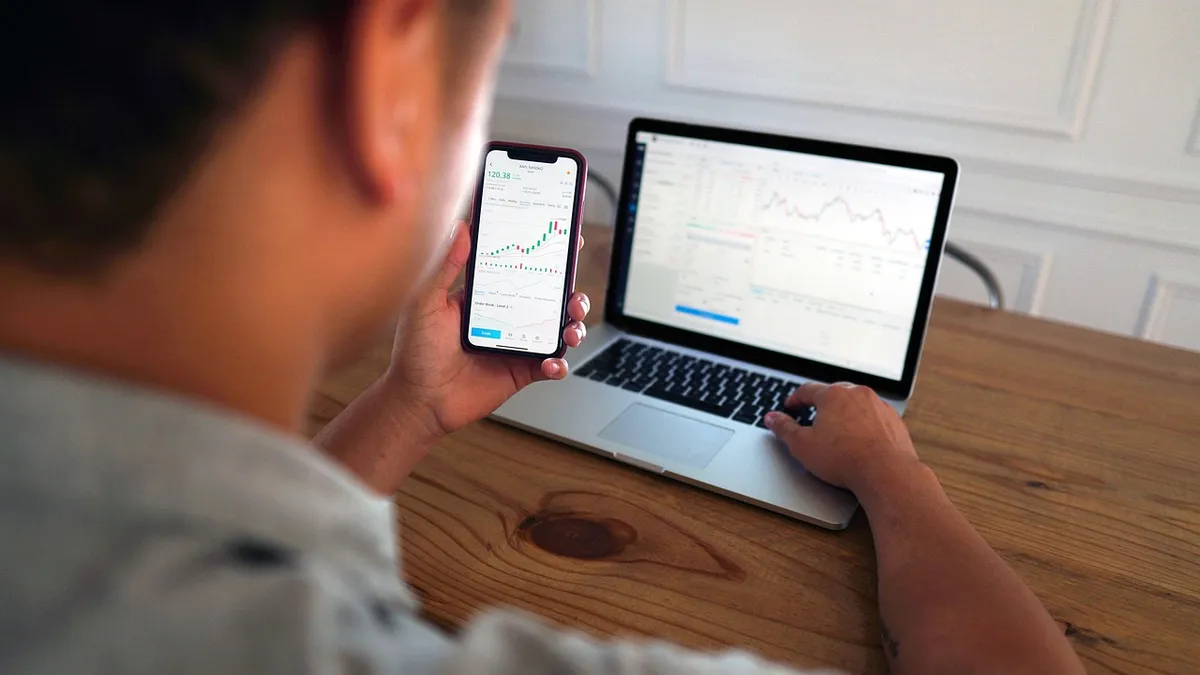
Expert tip from Crazii JTVertex: When we evaluates a new channel, the first thing we checks is not the win rate — it is the average risk-to-reward ratio on losing trades. A channel that consistently cuts losses at 1R and lets winners run to 2R or 3R will be profitable over time even with a win rate below 50%. Channels that advertise “90% win rates” almost always achieve that by taking tiny profits and letting losses run. That is the number that does not appear in the marketing material.
What Are the Biggest Mistakes Traders Make When Choosing a Signals Channel?

Key points: The three most damaging mistakes when selecting a trading signals channel are: prioritising follower count over verified track records, ignoring timezone misalignment, and treating signals as a substitute for understanding rather than a supplement to it. Each mistake compounds the next.
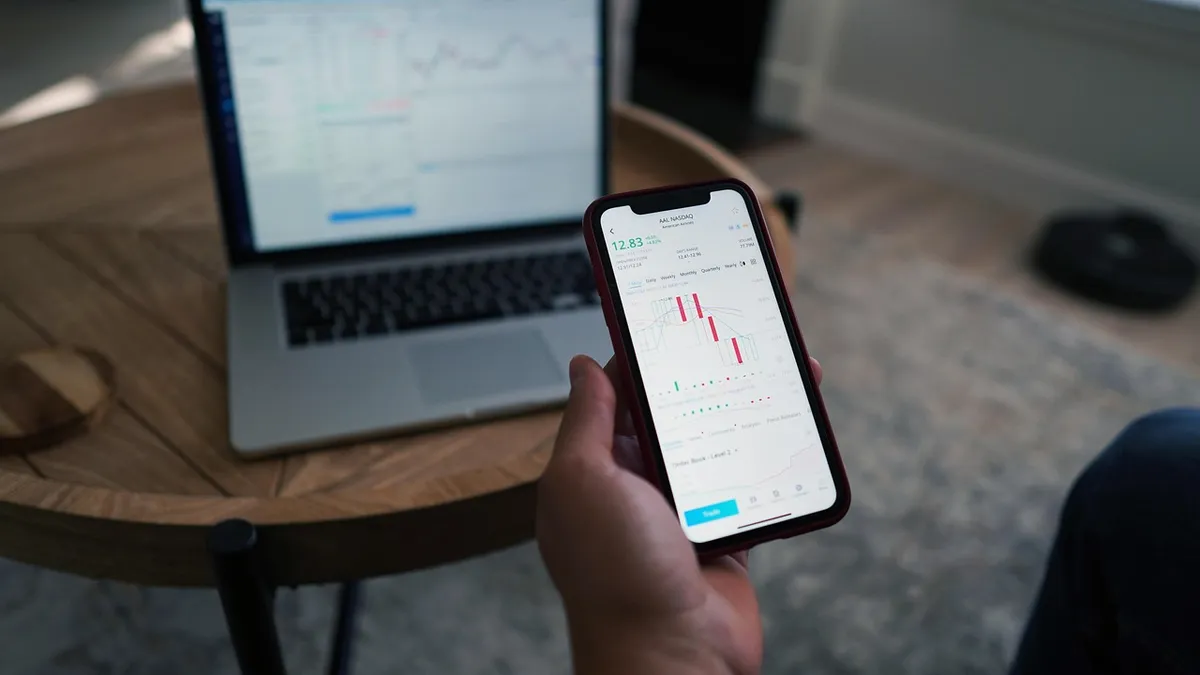
A large subscriber count tells you about a channel’s marketing ability, not its trading performance. Telegram channels can be grown through paid promotion, cross-posting, and giveaways. We has seen channels with under 2,000 members consistently outperform channels with 50,000 subscribers, simply because the smaller channel maintained a rigorous trade log and the larger one did not. Follower count is the least useful metric you can use when evaluating a signals channel.
This is the mistake that hurts Australian traders specifically. A signals channel optimised for the London open fires alerts around 6 pm to 8 pm AEST — manageable. But if the channel’s best signals come during the New York session, that is 11 pm to 1 am AEST. Acting on signals when you are half-asleep, rushing to enter before the level moves, is a reliable way to execute poorly on an otherwise decent setup. The signal quality is irrelevant if the timing does not suit your life.
This is the most expensive mistake of all, and it takes the longest to show up. A trader who follows signals without understanding why they were generated cannot adapt when market conditions change. They cannot filter out signals that do not suit their risk tolerance. And they cannot improve over time. Signals used well are a supplement to a developing skill set. Signals used as a shortcut create dependency — and dependency on someone else’s judgement is not a trading strategy.
The evidence: ASIC Report 828 recorded 133,674 retail clients losing money in FY2023–24, with net losses exceeding $458 million including $73 million in fees alone. That $73 million in fees is worth pausing on — it means a meaningful portion of retail losses were not from bad trades, but from the cost of making trades. High-frequency signal following amplifies this problem directly.
Why Do Most Free Telegram Trading Signals Fail Australian Traders?

Key points: Free Telegram trading signals fail most Australian traders not because the analysis is always wrong, but because free channels lack accountability structures, consistent documentation, and the timezone-specific context that makes signals actionable in the Australian market.
Free signals with no accountability are costing you more than a subscription would
Crazii JTVertex offers structured signals with documented reasoning — built around Australian market hours.
Access the ChannelThe evidence: ASIC Report 828 found that 74% of new retail clients acquired through paid online advertising lost money in FY2023–24 — compared to 68% across the sector overall. Channels that grow through aggressive promotion attract clients who are newer and less experienced on average. That is not a coincidence.
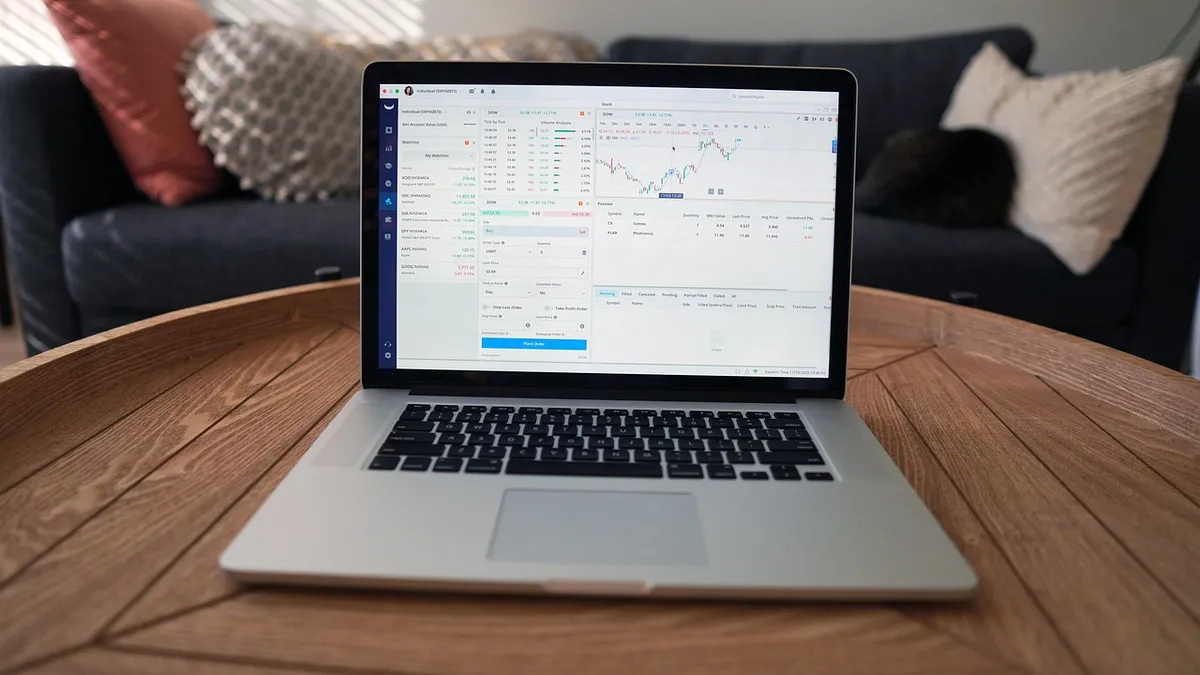
Expert tip from Crazii JTVertex: We once followed a free channel for six weeks specifically to document its performance independently. The channel claimed a monthly win rate above 70%. We’s log showed 51% — still above 50%, but nowhere near the claimed figure. The discrepancy came from two sources: the channel counted partial take-profit hits as full wins, and it quietly removed three signals that never hit entry. Neither of these practices is illegal. But they are worth knowing about before you trust someone else’s numbers.
How Should You Evaluate a Forex Signals Telegram Channel Before Committing?
Key points: Evaluating a forex signals Telegram channel before committing requires a structured four-step process: verify the trade history independently, assess risk-to-reward ratios across at least 100 trades, test timezone alignment over two weeks, and check whether the channel acknowledges losing periods publicly.
Request or locate the full trade history
Ask the channel operator directly for a complete log of signals — not a highlights reel. A credible operator will share this without hesitation. If the response is evasive, or if the only records available are screenshots of profitable trades, that tells you everything you need to know. Look for at least 100 documented trades with entry, exit, and outcome recorded. Fewer than that and the sample is not large enough to be meaningful.
Calculate the average risk-to-reward ratio independently
Do not rely on the channel’s own win rate claim. Take the trade log and calculate the average profit on winning trades versus the average loss on losing trades. A channel with a 45% win rate but an average 2.5R winner and 1R loser is more valuable than a channel claiming 80% wins with 0.5R winners and 2R losers. The maths is not complicated, but almost no one does it.
Observe for two weeks without trading
Join the channel and watch it operate in real time for two weeks before placing a single trade based on its signals. Note when signals fire relative to AEST/AEDT. Note whether the operator posts updates when a trade is running, or only when it closes in profit. Note whether losing trades are acknowledged or quietly ignored. Two weeks of observation costs nothing and reveals more than any marketing material.
Check how the channel handles a losing streak
Every signals channel will have losing periods. The question is how the operator responds. Do they explain what changed in the market? Do they acknowledge the drawdown and adjust their approach? Or do they go quiet and resurface when conditions improve? How a channel handles adversity is more revealing than how it handles a winning run. Scroll back through the channel history and find a losing period — then read what was posted during and after it.
The evidence: ASIC Report 828 noted that only 32% of retail CFD clients made money in FY2023–24, with net profits of $172 million after paying $26 million in fees. That means even the profitable minority paid significantly for the privilege. Choosing a signals channel that helps you reduce trade frequency and improve selectivity directly addresses the fee drag that erodes returns.
Expert tip from Crazii JTVertex: One thing we do before recommending any channel is check whether they have ever publicly posted a trade that went against them in real time — not just the final result, but the uncomfortable middle: “this trade is down 30 pips and here is why we am still holding it.” That level of transparency is rare. When we find it, we pay close attention. It suggests the operator is teaching, not performing.

Frequently Asked Questions About Telegram Trading Signal Channels
Key points: The most common questions about Telegram trading signal channels centre on cost, reliability, legal status in Australia, how to avoid scams, and whether signals can genuinely improve trading outcomes. Short answers follow — each one based on verifiable information, not marketing claims.
Are Telegram trading signals channels legal in Australia?
Providing financial product advice in Australia generally requires an Australian Financial Services (AFS) licence under the Corporations Act. Signals that constitute personal financial advice without a licence may breach ASIC regulations. General market commentary and educational analysis occupy a different category. If a channel is giving you specific trade recommendations, it is worth checking whether the operator holds an AFS licence or is operating under an exemption.
How many trades should a signals channel have on record before I trust it?
We treats 100 documented trades as the minimum threshold worth evaluating. Below that number, a good run can look like a track record when it is actually luck. This is a personal heuristic, not an industry standard — but it is the filter we apply before recommending any channel to Australian traders.
Can I use Telegram signals alongside copy trading?
Yes, and many traders do. ASIC Report 828 noted that 26,243 retail clients used copy trading in FY2023–24. Using Telegram signals as a way to understand the reasoning behind trades you are also copying via a platform can accelerate learning — as long as you are not doubling your exposure by acting on both simultaneously without adjusting position sizes accordingly.
What is a realistic win rate for a credible signals channel?
Win rate alone is not a useful metric without knowing the average risk-to-reward ratio. A channel with a 40% win rate and consistent 3R winners outperforms a channel with a 75% win rate and 0.5R winners over time. We would be sceptical of any channel claiming sustained win rates above 70% without a full, independently verifiable trade log to support it.
Should I follow signals from multiple channels at once?
We would not recommend it, particularly early on. Following multiple channels simultaneously makes it impossible to attribute outcomes to any one source, increases the likelihood of conflicting signals, and can push trade frequency higher — which ASIC data shows is associated with worse net outcomes for retail traders. Start with one channel, evaluate it properly, then decide whether a second adds genuine value.
Ready to talk through which signals approach suits your situation?
Crazii JTVertex is available for direct questions — no scripts, no sales pitch, just a straight conversation about what makes sense for where you are right now.
Get in TouchImportant note: Trading signals, CFDs, margin forex, and related products are high-risk financial instruments. This article is general information only and does not constitute personal financial advice. Past performance of any signals channel is not a reliable indicator of future results. ASIC Report 828 (January 2026) found that 68% of retail CFD clients in Australia lost money in FY2023–24, with aggregate net losses exceeding $458 million. Please read all relevant Product Disclosure Statements and consider your own financial circumstances before acting on any signal or market commentary.