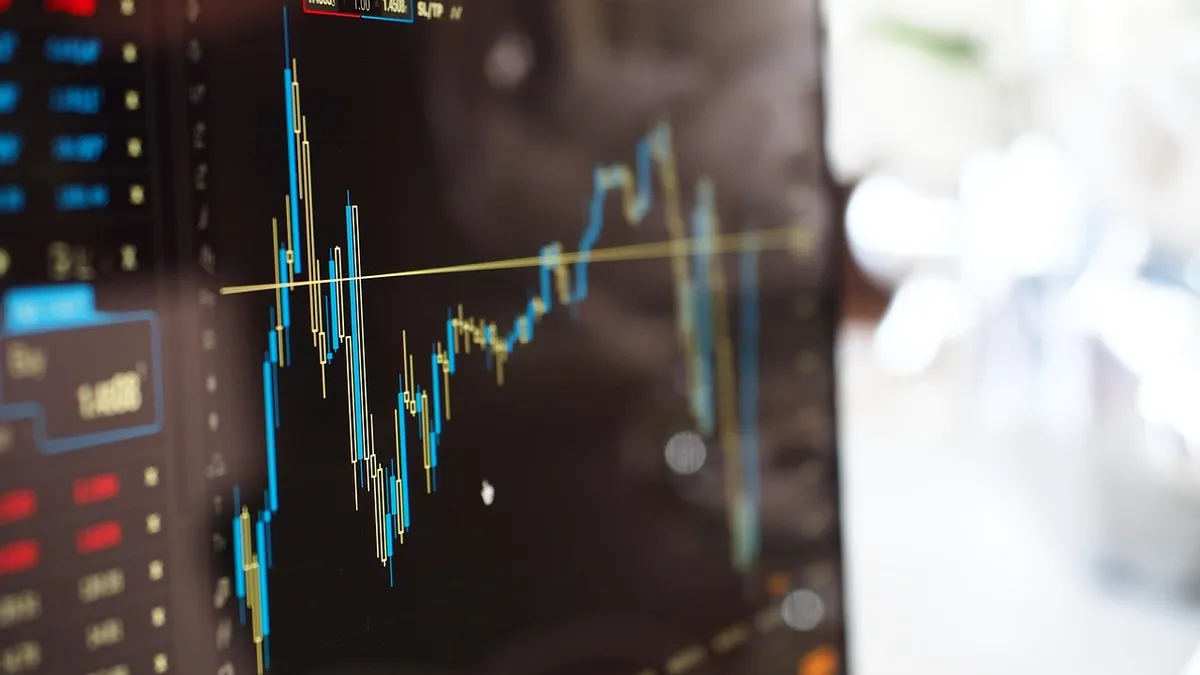
Finding the best gold trading signals requires balancing technical precision with the harsh reality of market volatility. Crazii JTVertex offers practical insights to help you navigate these fluctuations without falling for the myth of guaranteed returns, as detailed in our guide to best gold trading signals.
Need a clear path forward?
Get our curated list of trading tools designed to help you manage risk effectively. Start your journey with the right foundation.
Key point: Most gold trading signals struggle because they lack context regarding leverage and market liquidity. According to ASIC Report 828, 68% of retail CFD clients lost money in FY2023–24, proving that signals alone cannot compensate for poor risk management or excessive trading frequency.
You might think a signal is a golden ticket. It is not. I remember sitting with a trader, let’s call him Mark, who followed every alert he received on his phone. He lost 15% of his account in a month because he treated signals as facts rather than indicators. The reality is that the market moves faster than any SMS can travel.
The science angle: ASIC data indicates that 74% of new retail clients acquired via paid online advertising lost money. This suggests that marketing-heavy signal services often underperform compared to professional, data-backed strategies.
When you rely solely on external alerts, you lose your edge. You become a follower of someone else’s bias. Instead, look for best trading signals for Australian traders 2026 that prioritise transparency over hype. If a provider promises 90% accuracy, close the tab. It is not real.
Analysing the best gold trading signals for sustainable growth. · Photo: Pexels / Pixabay
Ready to refine your strategy?
Join our community to discuss signal reliability and trade management. Don’t go it alone.
Key point: To verify accuracy, you must track the provider’s performance against historical data, not just recent wins. MetaTrader hosts over 3,200 signals, but only those with a long-term, low-drawdown history deserve your attention. Always prioritise consistent risk-adjusted returns over short-term gains.
I once saw a signal channel boast about a 500-pip gold gain. Sounds great, right? But they neglected to mention the 400-pip drawdown they suffered to get there. That is how accounts blow up. You need to look for best forex gold signals Telegram channels beating the market by maintaining strict stop-loss discipline.
Expert tip: I always ignore any signal provider that does not show their full history of closed trades. If they only show the winners, they are hiding the truth about their risk management.
When you analyse these services, check the number of trades. A provider with only 10 trades is statistically insignificant. You want to see hundreds of trades over at least a year. That provides the data depth needed to see if they actually have a system or if they are just lucky.
Metric
What to look for
History
12+ months of data
Drawdown
Below 15%
Trade Volume
100+ trades
What are the common mistakes traders make with gold signals?
💡
Key point: The biggest mistake is over-leveraging based on a signal. ASIC Report 828 highlights that active traders—those with 50+ positions per month—actually saw 19% of their otherwise-profitable trades turn into losses after fees. Less is often more.
Mistake 1
Ignoring the spread. Gold signals often ignore the cost of entry. If you trade on a high-spread broker, your profits vanish before the trade even moves.
Mistake 2
Copying blindly. If you don’t understand why a signal was sent, you won’t know when to exit. You become a passenger in your own account.
Think about your own trading environment. Do you have the right platform? Check out the best trading signals for Australian traders 2026 to ensure your setup is optimised for the local market. Using the wrong broker can cost you thousands in hidden fees.
Optimise your trading setup
Learn how to choose the right broker and tools to minimise costs. It is the first step toward professional trading.
How do fees impact your net profit in gold trading?
💡
Key point: Fees are a silent killer. In FY2023–24, retail clients paid $73 million in fees, contributing to aggregate net losses of $458 million. For 5% of traders, fees were the specific reason they ended the year in the red instead of in profit.
It is easy to get distracted by the “profit” shown on a screen. But that is gross profit. What matters is what stays in your pocket after your broker takes their cut. If you trade gold frequently, those small commission charges stack up like a mountain.
The science angle: ASIC Report 828 confirms that 32% of retail clients made money, but this was after paying $26 million in fees. This highlights the importance of choosing low-cost, regulated providers.
If you want to see how to manage these costs, read our guide on best forex daily signals that keep drawdowns under control. It helps you understand that quality beats quantity every single time. Don’t let your broker eat your margin.
Frequently Asked Questions
Are gold trading signals worth the cost?
Only if they are backed by verifiable, long-term data. Most paid services do not outperform a simple, disciplined strategy. Always check the provider’s history before paying.
What is the safest way to use signals?
Use them as a secondary confirmation for your own technical analysis. Never trade a signal without checking your own charts first.
Do signals guarantee profit?
No. No signal provider can guarantee profit. Trading involves high risk, and the majority of retail traders lose money regardless of the tools they use.
How much should I risk per trade?
Professional traders often risk no more than 1-2% of their total account balance on a single trade to survive market volatility.
Why does ASIC warn about CFD trading?
ASIC warns about CFDs due to their high leverage and complexity. Data shows that 68% of retail clients lost money, making it a high-risk endeavour.
Note: This content is for general information only and does not constitute personal financial advice. Trading CFDs and margin FX involves significant risk of loss. Always consider your own financial circumstances and consult with a qualified professional before making any investment decisions.
You started here looking for a shortcut. Now you know that the real edge comes from discipline and data, not just the next notification. If you are ready to take your trading seriously, reach out to us for a structured approach.
Talk to an expert
Have specific questions about your trading journey? Let’s discuss your requirements.
Finding the best forex trading signals in Australia requires more than just following a feed; it demands a clear understanding of the risks inherent in high-leverage CFD products. Many traders look for automated alerts to simplify their decision-making process, yet the reality of the market often proves more complex than a simple buy or sell notification. By partnering with Crazii JTVertex and utilising our guide to the best trading signals for Australian traders 2026, you can better navigate these volatile waters without falling for unrealistic promises.
Ready to refine your trading approach?
Get access to our curated resources and professional support group to better understand market movements.
Why do most retail traders lose money with signals?
💡
Key point: Data from ASIC Report 828 reveals that 68% of retail CFD clients realised a net loss in FY2023–24. Signals are often marketed as a shortcut to profit, but they cannot overcome the structural disadvantage of high fees and the high-risk nature of margin FX products.
I remember sitting with a trader named Mark, a 42-year-old logistics manager. He spent three months chasing “guaranteed” signals on Telegram. His balance dropped from $10,000 to $2,400 in under 90 days. He thought the signals were the problem, but the issue was his lack of a risk management framework. According to the OECD, financial literacy remains a critical barrier for retail investors globally, often leading to poor decision-making when faced with complex financial instruments.
The science angle: According to ASIC, 74% of new retail clients who were acquired via paid online advertising lost money in the 2023–24 financial year. This suggests that marketing-heavy signal services often underperform compared to professional analysis.
The reality is that 133,674 retail clients in Australia lost money last year, with total net losses exceeding $458 million. Fees alone accounted for $73 million of that figure. When you rely solely on signals, you often trade too frequently, which compounds these fee-related losses. Many beginners fail to realize that each trade incurs a spread, and in volatile markets, these costs accumulate rapidly, eroding the potential gains from even the most accurate signals. It is essential to view trading as a business where every transaction is a cost that must be justified by a clear, data-driven strategy.
Furthermore, the psychological pressure of following signals can lead to “revenge trading” when a signal fails. When a trader loses money on a signal, they often feel the urge to double down on the next alert to recover losses quickly. This emotional cycle is a primary driver of account depletion. Instead of relying on external alerts, successful traders focus on building a robust methodology that incorporates signals only as one of many indicators.
Analysing the performance of the best forex trading signals in 2026. · Photo: 6689062 / Pixabay
How to evaluate the best forex trading signals providers?
Get professional guidance today
Access our verified trading tools and expert-led support to avoid common market traps.
Key point: Evaluating providers requires looking beyond the hype. Focus on transparent historical data, risk-to-reward ratios, and whether the provider explains the logic behind each trade rather than just sending a price target.
Most people fail to verify the source. They see a screenshot of a winning trade and assume the service is profitable. That is a dangerous mistake. You need to see the net outcome after fees. A provider might show a 90% success rate, but if their losing trades are significantly larger than their winning trades, the account will still decline over time.
1
Check the historical drawdown
If a provider hides their losing trades, walk away. A healthy strategy should show consistent, albeit smaller, gains rather than massive spikes followed by deep drawdowns.
2
Assess the frequency
Active traders who open more than 50 positions per month are statistically more likely to lose money due to transaction costs. Look for quality over quantity.
The science angle: Among active traders, 19% of those who would have been profitable ended up losing money simply because of the cumulative impact of fees. This is why you must calculate your expected return net of all costs.
I always tell my mentees: if a service cannot explain *why* they are entering a position based on technical indicators like the RSI, they are likely guessing. You can learn where to get the best forex signals without risking capital by sticking to educational platforms that teach you how to read the charts yourself. True expertise comes from understanding market structure, liquidity zones, and economic calendars, not just blindly following a notification on your phone.
When evaluating the best forex trading signals, consider the time zone of the provider. If you are trading in the Australian market, signals generated during the Asian session might be more relevant to your liquidity needs than those generated during the New York close. Alignment between your trading hours and the signal provider’s focus area is a subtle but critical factor in performance.
Screening the best forex trading signals for long-term consistency. · Photo: Bru-nO / Pixabay
What is the role of copy trading in the Australian market?
💡
Key point: Copy trading is gaining traction in Australia, with over 26,000 retail clients engaging in it during FY2023–24. While it offers a hands-off approach, it essentially outsources your risk to another person, which can lead to rapid capital depletion if the leader has a poor strategy.
Copy trading is essentially a form of automated signal following. You are not just getting a tip; you are mirroring someone else’s entire portfolio. It sounds efficient, but it removes your agency. In many cases, the “leader” you are copying may be taking on excessive leverage to achieve short-term gains, which creates a false sense of security for followers who do not see the underlying risk exposure.
Expert tip: I have seen many traders lose 40% of their account in a week because they blindly copied a “top-ranked” trader who was actually just taking high-leverage risks before a major news event.
ASIC’s recent reports highlight that while interest is growing, these services remain concentrated among a few large issuers. If you decide to go down this path, ensure you understand the leader’s risk management settings. Do not assume that past performance is a reflection of future success. It is vital to monitor the leader’s drawdown history and their asset allocation. If a trader is only trading one currency pair, they are exposed to specific systemic risks that could wipe out your capital if that pair experiences a flash crash.
Instead of just copying, consider checking out the best trading signals Telegram channels ranked for 2026 to see how professional communities discuss market trends before you commit your capital. Engaging with a community allows you to ask questions and understand the rationale behind trades, which is far more educational than simply clicking a “copy” button.
Comparing copy trading features with standard signal alerts. · Photo: justynafaliszek / Pixabay
Are automated signals better than manual analysis?
Optimise your trading strategy
Our expert consultations help you integrate signals into your own analysis for better decision-making.
Key point: Automated signals are tools for efficiency, not replacements for market knowledge. Manual analysis allows you to filter out bad signals based on your risk tolerance, whereas automation can lead to over-trading during volatile market conditions.
Manual analysis is slower, yes. But it is safer. When you analyse a chart manually, you are forced to consider the context of the price movement. Are we at an institutional supply level? Is the market news-driven? These nuances are often missed by algorithms that only look at price action or simple indicator crossovers. By manually verifying the best forex trading signals, you add a layer of human judgment that can prevent catastrophic losses during unexpected market events.
The science angle: Only 32% of retail clients made a net profit in the last financial year. This small group often uses signals as a confirmation tool, not as the primary driver for their trades.
If you use an automated bot, it will execute regardless of the market climate. That is a flaw. A human trader can see the chart and say, “The spread is too wide right now, I will wait.” A bot just executes. This lack of situational awareness is why many automated systems fail during high-impact news releases, such as central bank interest rate decisions or major employment reports. Your ability to pause and reassess is your greatest asset as a trader.
Why manual analysis complements the best forex trading signals. · Photo: Pexels / Pixabay
Common pitfalls when using trading alerts
💡
Key point: The biggest mistake is treating signals as a passive income stream. Trading is active business. Failing to set stop-losses, over-leveraging, and ignoring the impact of fees are the primary reasons retail traders fail.
Mistake 1
Ignoring the spread and fees. You might see a signal that claims a 10-pip profit, but if your broker charges a high spread, you might end up breaking even or losing money.
Mistake 2
Chasing high-leverage signals. Options CFDs and high-leverage FX signals lead to a loss rate of 85% for some retail investors. Avoid any signal that encourages extreme leverage.
Mistake 3
Lack of personal verification. Always cross-reference a signal with your own analysis. If you do not understand why the trade is being taken, do not take it.
Expert tip: I keep a journal of every signal I follow. If a provider gives me five bad signals in a row, I stop following them immediately. Never get emotionally attached to a service.
Another common pitfall is “signal hopping.” This happens when a trader subscribes to three or four different services simultaneously. This leads to information overload and conflicting signals. If one service says “Buy” and another says “Sell,” you end up in a state of paralysis or, worse, you take both trades and increase your risk exposure unnecessarily. Focus on finding one or two reliable sources that align with your personal trading style and stick to them long enough to evaluate their true performance.
How to mitigate risks when using the best forex trading signals. · Photo: FreeToUseSounds / Pixabay
Frequently Asked Questions
Are forex trading signals legal in Australia?
Yes, they are legal, but providers offering personal financial advice must hold an Australian Financial Services Licence (AFSL). Always check the ASIC register before signing up.
Can I become a full-time trader using only signals?
Highly unlikely. Statistics show that most retail traders, including those using signals, lose money. Signals should be part of a broader strategy, not your only source of income.
What is the most reliable signal provider?
No provider is entirely reliable. The best services are those that provide transparent, audited track records and focus on risk management rather than promising quick returns.
How much capital do I need to start?
You should only trade with money you can afford to lose. Given the 68% loss rate for retail traders, starting small and focusing on learning the mechanics is the safest approach.
Do I need to pay for signals?
Not necessarily. MetaTrader hosts thousands of free and commercial signals. However, paid services often offer better support and educational content, which can be more valuable than the signals themselves.
How can I identify a scam signal service?
Be wary of any service that guarantees high returns, uses aggressive marketing, or refuses to provide a verifiable, long-term track record. If it sounds too good to be true, it almost certainly is.
Does using the best forex trading signals guarantee success?
No. Signals are merely information. Success depends on your execution, risk management, and ability to remain disciplined in the face of market volatility.
Note: This content is for general information purposes only and does not constitute personal financial advice. Trading CFDs and margin FX products involves a high level of risk and may not be suitable for all investors. You should consider your own objectives and consult with a licensed professional before making any investment decisions.
Trading is a marathon, not a sprint. Before you look for another signal, look at your risk management plan first. If you want to refine your approach with a professional team, contact our support team to discuss your path forward.
Ready for the next step?
Talk to our experts to align your trading signals with a sustainable strategy.