Category: Best Crypto and Futures Trading Signals

  • Best Crypto Trading Signals Reviewed for Australian Traders 2026

    Best Crypto Trading Signals Reviewed for Australian Traders 2026

    Finding the best crypto trading signals for Australian traders in 2026 requires more than just following a Telegram channel. You need a framework that filters noise from actual market movement. Crazii JTVertex helps you navigate this complexity without falling for the 74% failure rate seen in retail clients using paid online advertising. For a deeper look at the landscape, see our guide to the best trading signals for Australian traders 2026.

    Customised Trading Setup

    Get your hands on the exact tools we use to filter market noise and manage risk. Join our community for real-time insights.

    Join the community
    In this article

    How can you identify the best crypto trading signals in a crowded market?

    💡

    Key point: Most signals fail because they lack institutional-grade risk management. Retail traders often chase high-leverage alerts without understanding the 68% loss rate reported by ASIC for FY2023–24. Relying on unverified sources leads to emotional decision-making rather than systematic execution.

    I remember Mark, a 34-year-old software developer from Perth. He spent six months chasing every “guaranteed” signal in his inbox. He started with $5,000 and ended with $420. The problem wasn’t his lack of effort; it was the lack of a system. He followed tips blindly, ignoring the structural risks inherent in CFD markets. In my experience, the best crypto trading signals aren’t the ones promising 1000% returns; they are the ones that prioritize capital preservation above all else.

    The crypto market in 2026 is more efficient than ever, which means “easy alpha” has largely disappeared. To find high-quality signals, you must look for providers who utilize a combination of quantitative analysis and qualitative market sentiment. Many providers use simple RSI or MACD crossovers, but these are often lagging indicators that lead to “whipsaw” losses in volatile conditions. Instead, look for signals that incorporate Order Flow, Volume Profile, and Liquidity Heatmaps.

    The science angle: ASIC Report 828 confirms that 74% of retail clients acquired via paid online advertising lost money in the last financial year. Furthermore, research published by Harvard Business Review suggests that “noise” in professional judgment—inconsistent decisions made by humans in complex environments—can lead to significant financial discrepancies. This is why algorithmic or systematic signal generation is often superior to purely discretionary “gut feel” trading.

    When you look for the best crypto trading signals, focus on those that provide entry, exit, and stop-loss levels. Without these, you are just gambling. A complete signal should also include a “reasoning” section. Why is this trade being taken? Is it a breakout from a multi-month consolidation? Is it a mean reversion play based on extreme funding rates? If the provider can’t explain the “why,” you shouldn’t trust the “what.”

    Furthermore, consider the “Signal-to-Noise” ratio. In a bull market, everyone looks like a genius. The true test of a signal provider is how they perform during a “crypto winter” or a sideways “chop” market. Professional providers will often tell you to stay out of the market when conditions are unfavorable. This discipline is the hallmark of a high-quality service.

    Expert tip: If a signal doesn’t specify a stop-loss, delete it immediately. No trade is worth an unlimited downside. In my own journey, I’ve found that the trades I *don’t* take are often more important than the ones I do.

    best crypto trading signals review for Australian traders
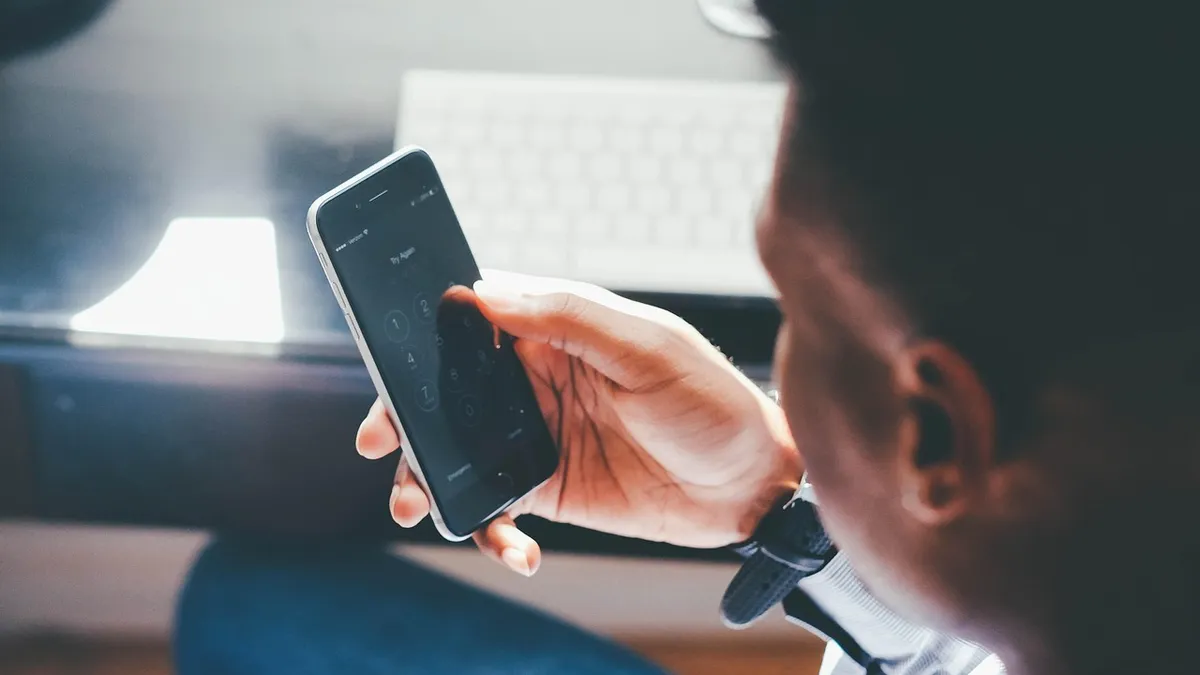
    Analysing the best crypto trading signals involves strict risk management and data verification · Photo: Bru-nO / Pixabay

    Refine Your Strategy

    Stop chasing noise. Access our professional-grade signal verification framework today.

    Get the framework

    How to verify signal providers?

    💡

    Key point: Verification starts with trackable performance data. Look for providers that integrate with platforms like MetaTrader, which hosts over 3,200 signals. Cross-reference their historical win rates against their drawdown statistics to ensure the risk-to-reward ratio holds up.

    Most traders forget that MetaQuotes provides a massive ecosystem for signals. You don’t need to guess. You can see the actual performance history of thousands of providers. Check if they have a history of at least 100 trades. Anything less is statistical noise. When I evaluate a provider, I look for a “smooth” equity curve. If the curve has massive vertical spikes followed by deep craters, it indicates that the provider is likely using “Martingale” or “Grid” strategies, which are ticking time bombs for your capital.

    Another critical metric is the “Sharpe Ratio” or the “Sortino Ratio.” These mathematical formulas help you understand how much risk is being taken to achieve a certain return. A high return is meaningless if it required a 50% drawdown to achieve it. The best crypto trading signals will maintain a consistent risk-of-ruin profile. You want to see that the provider’s largest losing trade is significantly smaller than their average winning trade over a long period.

    The science angle: MetaTrader 5 hosts over 3,200 free and commercial signals. The transparency of this data is your first line of defence against scams. Always look for “Verified Trading Privileges” on third-party tracking sites like Myfxbook or FXBlue.

    If you are looking for more specific tools, check out our Best Trading Signals App Tested by Australian Traders in 2026. It breaks down the technical requirements for a reliable setup. Remember, a signal is only as good as your ability to execute it. If the signal arrives at 3:00 AM AEST and you are asleep, it’s useless to you unless you have an automated execution system.

    In the Australian context, verification also means checking for compliance. While many signal providers operate globally, those that specifically target Australians with financial advice must be aware of ASIC regulations. While a Telegram group might seem informal, the moment they provide specific “buy/sell” advice for a fee, they enter a regulated grey area. Always prioritize providers who are transparent about their location and regulatory status.

    1

    Check the Drawdown

    Never trust a signal provider with a maximum drawdown exceeding 20% of the account balance. High drawdown is a sign of poor risk management or “hope-based” trading.

    2

    Analyze Trade Duration

    Does the provider hold trades for minutes, hours, or days? Ensure their style matches your lifestyle. Scalping signals require you to be at your screen 24/7.

    What is the cost of poor signal quality?

    💡

    Key point: Poor signal quality leads to “death by a thousand cuts.” ASIC reports show that $73 million in fees were paid by retail clients in a single year, often while they were already losing money. High turnover from bad signals accelerates these costs.

    Think about the cost of your time. Every minute spent managing a bad trade is a minute you aren’t learning the market. When you use low-quality signals, you are essentially paying for the privilege of losing money. But the costs aren’t just financial. There is a massive psychological cost to following bad signals. It erodes your confidence, leading to “revenge trading” where you try to win back losses by increasing your position size. This is the fastest way to blow an account.

    Beyond the loss of capital, there is the “Slippage” and “Spread” cost. Many signal providers post “results” based on the exact price the signal was issued. However, in the real world, by the time you open your app and hit “buy,” the price may have moved 0.5% against you. Over 100 trades, that 0.5% slippage becomes a 50% drag on your performance. The best crypto trading signals account for this by providing “limit orders” rather than “market orders.”

    Expert tip: I always calculate the “cost per trade” including commissions. If the signal doesn’t account for spread and slippage, it is fundamentally flawed. For Australian traders using local brokers, ensure you understand the specific fee structure of your platform.

    We also need to talk about “Opportunity Cost.” If your capital is tied up in a losing trade suggested by a poor signal, you cannot take advantage of a high-probability setup that appears elsewhere. Professional trading is about the efficient allocation of capital. Bad signals act like a “tax” on your portfolio, slowly draining your resources until you have nothing left to trade with when the real opportunities arrive.

    FactorGood SignalBad Signal
    Stop LossDefined & LogicalMissing or “Mental”
    History100+ trades (Verified)None/Fake/Screenshots
    RiskFixed % per tradeRandom/High Leverage
    TransparencyExplains the logic“Trust me” / “VIP only”

    Professional Signal Access

    Stop paying for bad data. Join our curated signal group for disciplined, professional insights.

    Join now

    Are signals right for your strategy?

    💡

    Key point: Signals are tools, not a replacement for a strategy. If you are a fast-paced trader, you might need Best Crypto Day Trading Signals for Traders Who Move Fast. If you prefer long-term positions, ensure the signals match your timeframe.

    Signals work best as a secondary confirmation. If your own analysis aligns with the signal, the probability of success increases. If they conflict, walk away. It is that simple. Many traders make the mistake of thinking signals are a “set and forget” solution. In reality, you need to be an active manager of the signals you receive. You must decide which ones to take, how much to risk, and when to manually move your stop-loss to break-even.

    There is also the concept of “Signal Fatigue.” This happens when a provider sends 20 signals a day. It becomes impossible to manage them all effectively. I’ve found that the most successful traders I know follow only 1-2 high-conviction signals per week. They wait for the “fat pitch”—the perfect setup where multiple technical and fundamental factors align. The best crypto trading signals are often the ones that require the most patience.

    The science angle: Among active traders executing 50+ positions per month, 19% of otherwise-profitable clients lost money after fees. Excessive trading is the enemy of long-term wealth. Quantitative studies show that reducing trade frequency while increasing trade quality is the most effective way to improve the bottom line.

    Ask yourself: Does this signal fit my risk profile? If a signal requires a 100-pip stop loss but your account can only handle a 20-pip loss at your minimum lot size, then that signal is not for you. You must “right-size” every trade to your specific account balance. Never let a signal provider dictate your risk; only you know what you can afford to lose. This is why I emphasize education alongside signal usage. You need to understand the “why” so you can survive the “when” (as in, when the signal goes wrong).

    Mistake 1
    Over-trading

    Following too many signals leads to poor execution, high fee accumulation, and mental burnout. Quality always beats quantity.

    Mistake 2
    Ignoring Correlation

    If you take five “Buy” signals for different altcoins at the same time, you are essentially just taking one giant bet on Bitcoin going up. If BTC drops, all five trades will likely hit their stop-loss simultaneously.

    The ASIC-aware approach to trading

    💡

    Key point: Trading is a high-risk activity. ASIC Report 828 highlights that only 32% of retail clients made money last year. Always read the Product Disclosure Statement (PDS) and understand that past performance is never a guarantee of future results.

    In Australia, the regulatory environment is designed to protect you, but it can’t protect you from bad decisions. ASIC has implemented strict leverage limits (e.g., 2:1 for crypto CFDs) to prevent traders from wiping out their accounts in seconds. While some traders complain that this limits their profit potential, it actually forces you to become a better trader by focusing on percentage gains rather than “gambling” gains. The best crypto trading signals for Australians are those that respect these leverage limits.

    You are in charge of your capital. By focusing on the Best Trading Signals for Crypto That Cut Emotional Decisions, you take the first step toward professionalisation. Take your time. Don’t rush into accounts you don’t understand. I always recommend starting with a “Paper Trading” or “Demo” account to test a signal provider’s accuracy in real-time without risking a single cent of your hard-earned money.

    Furthermore, be aware of the “Design and Distribution Obligations” (DDO) that Australian brokers must follow. These rules require brokers to ensure that their products are being sold to the right target market. If you are using signals to trade complex derivatives like CFDs, you must ensure you have the necessary knowledge and experience. Signals are not a shortcut to expertise; they are a tool for experts and aspiring professionals alike.

    Note: This content is general information only and does not constitute personal financial advice. Trading CFDs and crypto involves significant risk. Consult with a qualified professional before making any financial decisions. Always ensure your broker is AFSL licensed if you are trading from Australia.

    How do I start with signals?

    Start by observing, not trading. Track a provider’s signals for one month without putting capital at risk. Use a spreadsheet to record the entry, exit, and the “slippage” you would have experienced. If their performance meets your criteria after accounting for fees, then consider a small, controlled entry with no more than 1% of your account at risk per trade.

    Are free signals reliable?

    Most free signals are marketing funnels designed to get you to sign up for a specific broker so the provider can earn a commission. While some are legitimate, many lack the depth required for consistent results. Always apply the same rigorous verification process as you would for paid services. Remember the old adage: “If you aren’t paying for the product, you are the product.”

    Does copy trading work?

    ASIC notes a growing interest in copy trading, but it is concentrated among few issuers. It can work, but you are essentially trusting another person’s risk management. The danger is that the person you are copying might have a much larger bankroll than you, allowing them to sit through drawdowns that would liquidate your account. Always set your own “Hard Stop” on copy trading platforms.

    What is the risk of leverage?

    Leverage magnifies both gains and losses. Options CFDs, for instance, showed an 85% loss rate among retail clients in the last year. In the crypto world, where 10% daily swings are common, even 2x leverage can be dangerous if your entry is poor. Use it with extreme caution and always prioritize “Spot” trading if you are a beginner.

    What is the difference between Spot and Futures signals?

    Spot signals involve buying the actual underlying asset (e.g., buying Bitcoin). Futures signals involve trading contracts that track the price of the asset, often with leverage. Futures signals allow you to “Short” the market (profit when prices fall), but they come with higher risks and funding fees that can eat into your profits over time.

    How do time zones affect Australian traders?

    The crypto market never sleeps, but the highest volatility often occurs during the New York and London “Overlap” (late night/early morning in Australia). If your signal provider is based in Europe or the US, you may receive alerts while you are asleep. This is why many Australian traders prefer “Swing” signals that have longer timeframes, giving them several hours to react to an alert.

    How do I contact JTVertex?

    You can reach out for more information or support through our official contact page. We are here to help you build a bigger image for your trading future by providing the data and community support you need to succeed in the 2026 market.

    Ready to trade properly?

    Contact us for a direct consultation on your trading setup.

    Contact us
  • Best Binance Futures Trading Signals Compared Side by Side

    Best Binance Futures Trading Signals Compared Side by Side

    Finding the best binance futures trading signals is a common struggle for traders aiming to navigate volatile markets without spending sixteen hours a day staring at charts. Managing risk while hunting for entry points requires a structured approach, which is why Crazii JTVertex provides specific analytical frameworks to help you filter out the noise. If you are refining your strategy, check out our guide on best binance futures trading signals to better understand how to align your execution with market momentum.

    Ready to refine your trading approach?

    Get access to our curated resources and support channels designed for serious traders. Join the community today.

    Join now
    In this article

    Are trading signals actually reliable for Binance futures?

    💡

    Key point: Trading signals serve as data-driven indicators, not financial certainties. Reliability hinges on the methodology behind the signal rather than the provider’s claims. In the Australian market, where 68% of retail CFD clients realised a net loss in FY2023–24, relying on signals without personal risk management often leads to capital erosion.

    I remember watching a trader, let’s call him Mark, who started with a 5,000 AUD account. He followed a popular Telegram channel, blindly executing every signal. For two weeks, he felt like a genius. Then, a single trend reversal wiped out 40% of his balance in an afternoon. That is the reality of signal-based trading.

    Signals are simply interpretations of market data. Whether they come from automated bots or seasoned analysts, they lack the context of your specific risk appetite. According to ASIC Report 828, the high loss rate among retail clients highlights that external tools cannot replace the necessity of a sound trading plan.

    The science angle: Most signals rely on technical indicators like the Relative Strength Index (RSI). A standard RSI threshold for oversold conditions is 30, while 70 signals overbought conditions. If a signal ignores these fundamental technical boundaries, its reliability drops significantly.

    Expert tip: I personally ignore any signal that does not include a pre-defined stop-loss level. If the provider doesn’t care about protecting the downside, they don’t care about your account longevity.

    Best binance futures trading signals analysis for professional traders
    Analysing the best binance futures trading signals requires a disciplined, data-first approach. · Photo: Goumbik / Pixabay

    How do you distinguish between high-quality and low-quality signals?

    💡

    Key point: High-quality signals provide entry, exit, and stop-loss parameters with clear technical justification. Low-quality signals are typically hype-driven, lacking transparent backtesting or risk-reward ratios. Distinguishing between them requires checking for consistent performance data rather than promises of quick returns.

    Most beginners get lured by high-frequency signals. They see a win rate of 90% and assume it is sustainable. It rarely is. High-quality services often provide fewer, higher-conviction signals that align with broader market trends.

    When you look for the best trading signals website reviewed for serious traders, focus on the methodology. Is the provider using mean reversion or trend following? Do they account for the liquidity in the Binance futures market? These details matter far more than the raw number of alerts sent to your phone.

    Expert tip: My rule of thumb is to ignore any provider that doesn’t have at least 100 documented trades. A small sample size is statistically meaningless and often hides the true performance volatility.

    FeatureHigh-Quality SignalLow-Quality Signal
    TransparencyFull technical rationaleHidden logic/hype
    Risk ManagementDefined Stop-LossOften missing
    FrequencySelectively timedHigh-frequency spam

    Need a professional framework?

    Our team at Crazii JTVertex helps you build a system that manages risk effectively. Let us guide your process.

    Contact us

    What is the real cost of relying solely on external signals?

    💡

    Key point: The real cost isn’t just the subscription fee; it is the opportunity cost of not developing your own analytical skills. ASIC data shows that 74% of new retail clients acquired through paid online advertising lost money, suggesting that services marketed aggressively often lead to poorer financial outcomes.

    Many traders think they are saving time by outsourcing their decision-making. In reality, they are outsourcing their growth. If you don’t understand why a trade is taken, you won’t know when to exit if the market shifts unexpectedly.

    Fees are another silent killer. ASIC reported 73 million dollars in fees within the total retail loss of 458 million dollars for FY2023–24. When you follow signals that lead to excessive trading, you are essentially paying for the privilege of losing money.

    The science angle: Among active traders executing over 50 positions per month, 19% of otherwise-profitable clients ended up in a loss specifically due to the accumulation of fees. High-frequency signal following is a fast track to fee-related insolvency.

    How can you integrate signals into a personal trading system?

    💡

    Key point: Treat signals as an additional data layer rather than the primary decision-maker. Integrate them by cross-referencing alerts with your own technical analysis—such as support and resistance levels—before placing a trade. This validation step is vital for filtering out noise.

    If you are looking for the best trading signals Binance traders rely on every session, start by narrowing your scope. Don’t try to trade every crypto pair. Pick a few that you understand well.

    1

    Verify the trend

    Check the daily chart. If the signal goes against the primary trend, be extra cautious.

    2

    Check the volatility

    Use ATR (Average True Range) to see if the signal’s stop-loss is realistic for current market conditions.

    Build your trading edge

    Learn to integrate signals with professional strategies. Get the support you need for long-term growth.

    Get started

    Who should avoid using futures trading signals entirely?

    💡

    Key point: Traders with limited capital or those who cannot afford to lose their principal should avoid signals. Because 85% of retail clients lost money trading options CFDs, any high-leverage instrument requires extreme caution. If you are prone to emotional trading, signals will likely amplify your mistakes.

    Mistake 1
    Over-leveraging: Using signals to justify 20x or 50x leverage is a recipe for disaster. Most successful traders keep leverage low to survive market swings.
    Mistake 2
    Ignoring personal circumstances: Signals don’t know your account size or your financial goals. Blindly following them is like driving a car while someone else holds the steering wheel.

    If you are serious about your future, you need to learn the best future trading signals for traders chasing bigger moves while maintaining a robust risk management protocol. Remember, the goal is not to win every trade, but to stay in the game long enough to build a bigger image for your future.

    Are Binance futures signals worth the subscription cost?

    For most, no. The cost of the subscription plus the potential for losses often outweighs the benefits, especially if the signals lack a proven, transparent track record.

    Can I use AI to generate my own signals?

    Yes, many traders use platforms like MetaTrader which hosts 3,200+ signals. However, you must backtest any automated strategy extensively before committing real capital.

    What is the most common reason for failure when using signals?

    Lack of risk management. Traders often ignore stop-losses or increase their position sizes beyond what their account can handle, leading to rapid liquidation.

    How do I verify a signal provider’s history?

    Look for third-party verified results. Avoid providers who only show screenshots of winning trades, as these can be easily manipulated or curated to look better than they are.

    Is copy trading the same as using signals?

    It is related but different. Copy trading is automated, whereas signal following requires manual execution. Both carry high risks and require careful due diligence.

    Note: Trading futures involves significant risk. This information is general and does not constitute personal financial advice. Always consider your own financial circumstances and refer to relevant disclosure documents before trading.

    Need personal guidance?

    Contact our support team for a direct consultation on your trading strategy.

    Contact us
  • Best Crypto Day Trading Signals for Traders Who Move Fast

    Best Crypto Day Trading Signals for Traders Who Move Fast

    Finding the best crypto day trading signals for traders who move fast is the only way to cut through the noise of a market that never sleeps. You want precision without the endless hours of chart staring, and Crazii JTVertex provides the data-backed framework to help you navigate this. While you refine your edge, you can also explore our deep dive into the best crypto day trading signals to ensure your strategy remains resilient in 2026.

    Ready to sharpen your execution?

    Get access to curated market insights and the tools designed for fast-moving Australian traders.

    Get Started Now
    In this article

    What defines the best crypto day trading signals?

    💡

    Key point: The best crypto day trading signals must offer clear entry, stop-loss, and take-profit levels with a documented track record. They should integrate directly with your execution platform to minimise latency, as speed is critical in the volatile Australian crypto market where retail outcomes often hinge on timely decisions.

    I remember sitting at my desk at 3:00 AM, watching a breakout on BTC/AUD. I had a signal, but by the time I manually typed the order, the move was gone. That is the reality of fast-paced trading. The best signals are not just about the “buy” or “sell” instruction; they are about the infrastructure that gets you into the trade before the opportunity evaporates.

    The science angle: According to World Health Organization standards on data integrity and ASIC Report 828 (January 2026), 68% of retail CFD clients lost money in the previous financial year. The data suggests that high-frequency, manual intervention often leads to poorer outcomes compared to disciplined, system-based approaches that utilise verified signal parameters.

    You need signals that respect the volatility of the crypto space. If a signal provider lacks a defined risk-management protocol, ignore them. A signal without a stop-loss is just a gamble. In my experience, the most reliable signals are those that account for the spread and liquidity gaps typical of the Australian market hours. When evaluating these, look for consistency in execution speed and the ability to handle slippage during high-volatility events. The best crypto day trading signals are those that provide a “buffer” for market movement, ensuring you aren’t stopped out by minor noise before the primary trend takes hold.

    Furthermore, consider the underlying technology. Are the signals generated by a black-box algorithm, or is there a transparent logic behind them? For the serious trader, understanding the ‘why’ behind a signal is just as important as the ‘what’. This transparency allows you to build confidence in your trading system, which is vital when the market moves against your initial position. Always prioritize providers who offer historical performance logs, as this is the only way to verify if their strategy holds up under different market conditions.

    Best crypto day trading signals for professional Australian traders
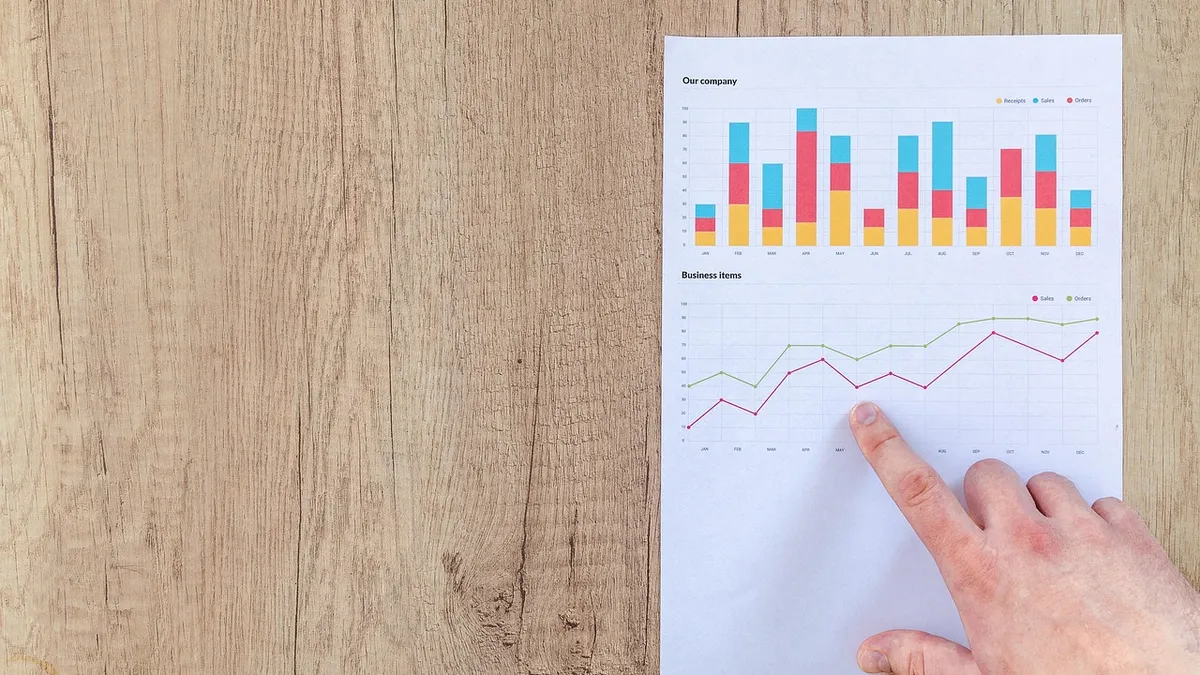
    Selecting the best crypto day trading signals requires focus on risk-to-reward ratios. · Photo: DesiFreeMusic / Pixabay

    Why do most retail traders fail with signals?

    💡

    Key point: Retail traders often fail because they treat signals as “get rich quick” shortcuts instead of decision-support tools. ASIC data shows that 74% of new retail clients acquired via paid advertising lost money, highlighting that impulsive, ad-driven trading often leads to net losses rather than sustainable growth.

    Tired of chasing losing signals?

    Join our community to access professional-grade setups and avoid the common traps of retail trading.

    Join the Group

    Let’s talk about the “advertising effect.” I have seen traders sign up for services promising 90% win rates, only to see their accounts decimated within weeks. The reality is that if a signal service claims guaranteed profit, run. ASIC’s recent findings on the $458 million in aggregate retail losses prove that hype is the enemy of your capital. Many traders fail because they lack the psychological resilience to handle the inevitable losing streaks that accompany any trading strategy, regardless of how good the signals are.

    Another major factor is the “copy-paste” mentality. When you blindly follow a signal without understanding the market context, you are essentially outsourcing your risk management to someone who may not have your best interests at heart. This is why the best crypto day trading signals are those that teach you how to trade, rather than just telling you what to do. By developing your own analytical skills, you can validate the signals you receive, ensuring they align with your personal risk tolerance and financial goals. Remember, trading is a marathon, not a sprint, and sustainable success is built on a foundation of knowledge, not just following alerts.

    Expert tip: I always treat signals as a second opinion. Never execute a trade based solely on a notification without checking the technical confluence on your own chart. If the signal contradicts your established trend analysis, it is usually better to sit on your hands.

    Consider the story of a trader I mentored, let’s call him Mark. Mark was losing 15% of his account monthly by blindly following Telegram alerts. We shifted his focus to best trading signals for Australian traders 2026 standards, which prioritised risk management over frequency. His losses dropped, and he started seeing consistent, albeit smaller, gains. The bridge was discipline.

    How do you filter noise from high-probability setups?

    💡

    Key point: Filtering noise involves applying a strict filter: ignore any signal that does not align with your time frame or risk tolerance. High-probability setups are defined by confluence—where indicators like RSI (oversold at 30, overbought at 70) align with key support or resistance levels verified by volume analysis.

    Most signals are noise. If you receive fifty alerts a day, you are not trading; you are gambling. I look for signals that occur during high-volume sessions. In Australia, that usually means the overlap between the London and New York sessions when liquidity is at its peak. During these times, price action is more reliable, and the likelihood of being caught in a “fake-out” is significantly reduced.

    To further filter noise, you must understand the difference between a trend-following signal and a mean-reversion signal. If the market is in a strong uptrend, a counter-trend signal is likely to fail. By applying a macro filter—such as checking the daily trend before taking an intraday signal—you can drastically increase your win rate. This is where the best crypto day trading signals truly shine; they provide the context necessary to make informed decisions rather than just firing off random buy and sell orders.

    The science angle: Research into active traders shows that those executing over 50 positions per month often suffer from “overtrading bias.” The data indicates that 19% of otherwise-profitable clients lost money after accounting for fees, proving that less is often more.

    To filter effectively, use a checklist. Does the signal have a clear exit? Is the risk-to-reward ratio at least 1:2? If the answer is no, delete it. I prefer using Best Trading Signals Binance Traders Rely on Every Session as a benchmark for quality. It helps keep my expectations grounded in reality.

    Comparing manual analysis versus automated signal tools

    💡

    Key point: Manual analysis provides deeper context, but automated tools offer the speed required for crypto day trading. While MetaTrader hosts over 3,200 signals, the key is choosing one that fits your risk profile rather than opting for the most popular or “loudest” provider in the marketplace.

    Optimise your trading workflow

    Get the tools that help you filter out the noise and focus on high-probability setups today.

    Explore Tools

    Manual analysis is the foundation. You need to understand market structure before you can outsource the execution. However, when you are trading crypto, the speed of change is extreme. Automated signals are not a replacement for your brain; they are an extension of your reaction time. By combining the two, you create a hybrid approach that leverages the best of both worlds: the human ability to interpret complex market sentiment and the machine’s ability to execute at lightning speed.

    When choosing an automated tool, look for customization options. Can you set your own stop-loss parameters? Can you filter out signals during specific news events? The best crypto day trading signals are those that give you control. If a tool forces you into a “one-size-fits-all” strategy, it is likely not suitable for the nuanced world of professional day trading. Always test these tools in a demo environment before committing real capital.

    FeatureManual AnalysisAutomated Signals
    SpeedSlowInstant
    ContextHighVariable
    Risk ManagementTrader-controlledSystem-dependent

    If you are looking for a platform that balances both, I recommend checking the Best Trading Signals Platform or App Which Wins in 2026 to see how modern tools stack up. It is about finding the right balance between your intuition and technical precision.

    Common pitfalls when using day trading signals

    💡

    Key point: The most common pitfall is over-leveraging based on a signal you do not understand. ASIC data confirms that 85% of retail clients lost money trading options CFDs, a double-leveraged product, which demonstrates that excessive risk-taking, even with signals, is a primary driver of account depletion.

    Mistake 1
    Chasing past performance. Just because a signal provider had a good week does not mean they will have a good month. Focus on long-term consistency over short-term spikes.
    Mistake 2
    Ignoring fees. Fees can turn a profitable trade into a loss. ASIC reported that $73 million in fees were a material component of the $458 million in retail losses last year. Calculate your net profit after fees before taking a signal.

    You might be thinking: “Is it really that hard?” The answer is yes, if you do not respect the math. Trading is a business of probabilities, not certainties. If you are not tracking your own performance, you are just throwing money into the wind. Keep a journal, review your signals, and adjust your strategy based on your own data, not someone else’s claims. Many traders fail because they treat their trading account like a bank account, withdrawing money whenever they have a “good day” instead of reinvesting in their own growth and infrastructure.

    Another pitfall is the “signal fatigue.” Receiving too many alerts can lead to decision paralysis, where you end up missing the best opportunities because you are overwhelmed by the sheer volume of data. To combat this, narrow your focus. Pick one or two high-quality providers and stick to their methodology. Consistency in your information source is just as important as consistency in your execution. Remember, the best crypto day trading signals are those that fit seamlessly into your existing workflow, not those that disrupt it.

    Frequently asked questions about crypto signals

    Are crypto signals reliable for beginners?

    Generally, no. Beginners often lack the risk management skills to handle the volatility that signals can expose them to. It is safer to learn market structure first.

    How much should I risk per signal?

    Professional traders rarely risk more than 1% to 2% of their total account balance on a single trade. Never deviate from this regardless of the signal’s “conviction.”

    Can I get rich using free Telegram signals?

    No. Most free signals are used for marketing or affiliate generation. They rarely provide the edge required for sustainable profit in the Australian crypto market.

    What is the biggest risk with copy trading?

    The biggest risk is “blind trust.” You are essentially giving someone else control over your capital without knowing their underlying risk-management strategy or psychological discipline.

    Where can I find reputable signal providers?

    Look for providers who are transparent about their losses and use regulated platforms. Always verify their claims against your own technical analysis before executing.

    How do I verify the best crypto day trading signals?

    Verification involves backtesting the signals against historical data and checking for consistent risk-to-reward ratios. Never rely on a provider that hides their losing trades.

    Does the time of day affect signal accuracy?

    Yes. Signals generated during high-liquidity sessions (London/New York overlap) are generally more reliable than those generated during low-volume, off-peak hours.

    Note: This content is for general information only and does not constitute personal financial advice. Trading CFDs and crypto involves significant risk. Always consider your personal circumstances and the relevant disclosure documents before making any investment decisions.

    Let’s talk about your strategy.

    Get in touch with our team for a professional discussion on how to improve your trading edge.

    Contact Us